Cain Denied the Judge Then Raised the Stone
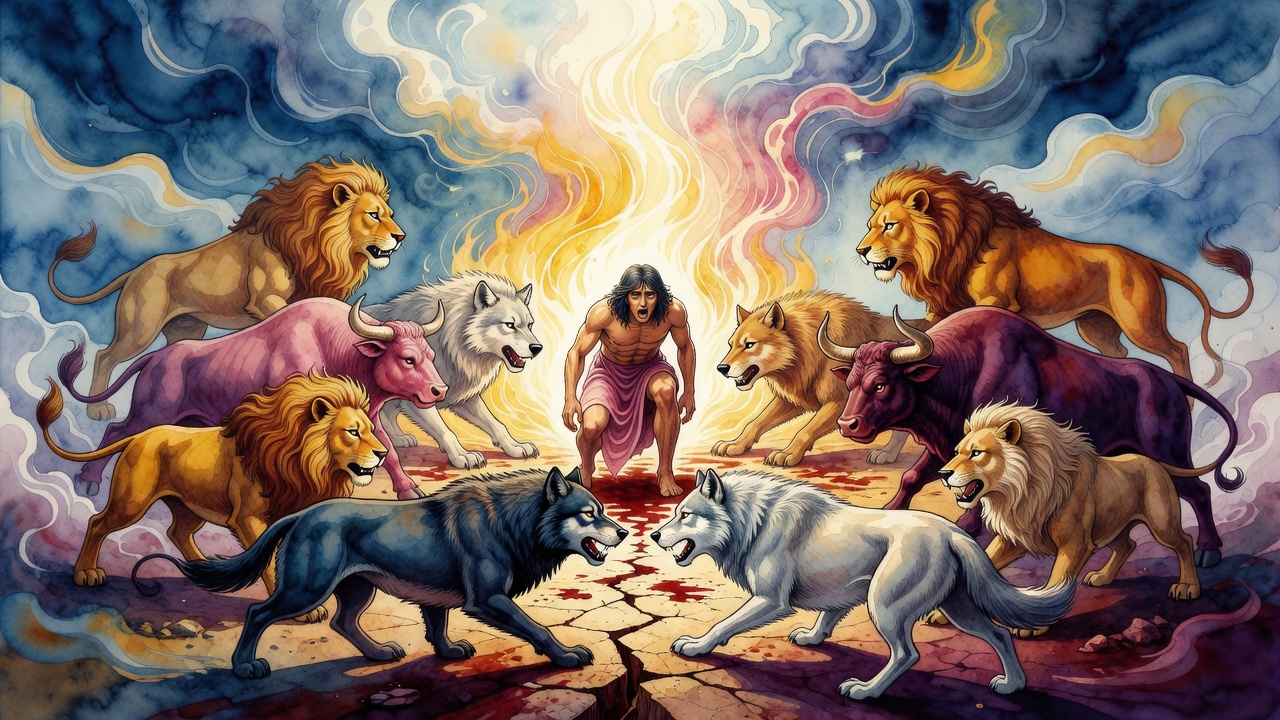
In the field Cain argued that no Judge ruled the world. Abel answered that judgment is real. Then a stone ended the debate.
Table of Contents
 Click for full size
Two Offerings, One Silence
Cain watched the smoke of Abel's gift rise clean while his own gift sat heavy on the ground. The field was still. The animals Abel had tended seemed to know whose work had been received. Cain's hands, which knew soil and seed, clenched until the nails bit his palms. A crow landed on a furrow and tilted its head as if waiting for a verdict the man would not accept.
The Torah leaves a blank where speech should be. "Cain said to Abel his brother." Then the field. Then murder (Genesis 4:8). The old Aramaic memory fills the blank with an argument that is worse than jealousy because it pretends to be philosophy. Cain did not only want his brother's place. He wanted a world in which no one could tell him he was wrong.
There Is No Judge
"I perceive that the world was created in goodness," Cain said, "but it is not governed according to the fruit of good works. There is respect of persons in judgment. That is why your offering was accepted and mine was not."
He had turned rejection into a theory. God picks favorites. Righteousness does not pay. The universe is rigged for the younger and the soft-spoken.
Abel answered without raising his voice. "In goodness was the world created, and according to the fruit of good works is it governed. There is no respect of persons in judgment. The fruits of my works were better than yours, and my gift was received with good will."
Cain pushed harder, past complaint into heresy. "There is neither judgment nor Judge, nor another world. No good reward will be given to the righteous, and no vengeance will be taken of the wicked."
Abel held the line as if he were holding a gate. "There is a judgment, and there is a Judge, and there is another world, and a good reward for the righteous, and vengeance for the wicked."
The air between them thickened. Theology had become a blade with two handles, and only one brother still believed the handle cut both ways.
The Stone in the Forehead
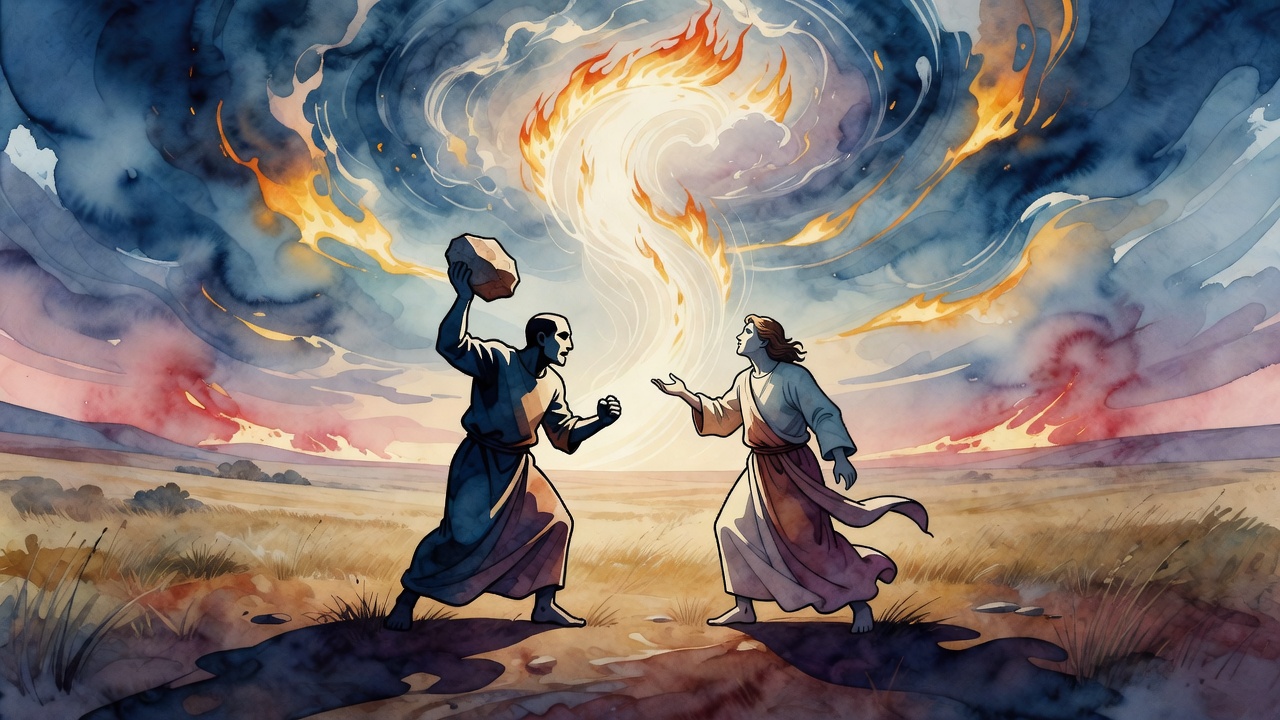
Words broke into hands. Cain found a stone the size of a fist, rough with the same earth that had refused his gift. He drove it into Abel's forehead until the voice that insisted the world made moral sense went quiet. Blood darkening the dust did not settle the question. It only removed the brother who had answered it.
Abel fell the way a prayer falls when no one is left to say the last word. Cain stood over him breathing hard, waiting for the sky to congratulate him. The sky did nothing. A fly found the wound first.
When God asked for Abel, Cain tried a shrug that has never worked since. "Am I my brother's keeper?" The ground answered instead, opening its mouth around the blood. Cain was sentenced to wander, marked so that no one would finish what he had started. The mark was not a prize. It was a fence around a man who had tried to erase the idea of fences.
A Garden Waiting in Exile
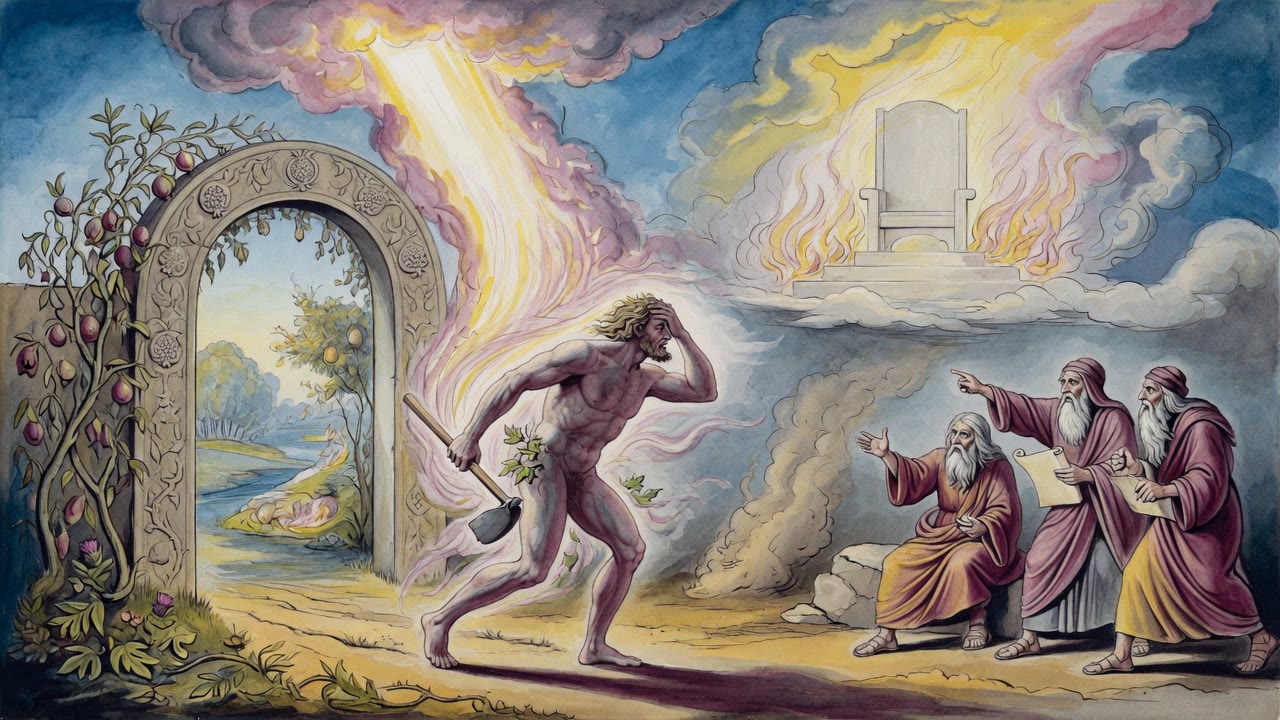
He went out to the land of Nod, the land of wandering, expecting barrenness. The sentence was restlessness, not comfort. Still the place prepared for him had been made beforehand like a second garden of Eden, green enough to live in, ordered enough to mock the chaos he had preached.
Trees stood where he had expected thorns only. Water moved where he had expected cracked clay. The Judge he denied had not abandoned him to pure nothing. Exile was real. Mercy ran under it like a hidden stream. Cain walked among leaves that recalled the first garden and carried a mark that recalled the first murder. He had tried to kill the idea of judgment. Judgment housed him anyway.
At night he could still hear Abel's last sentences, not as ghosts of guilt only, but as the argument that would not die when the body did. There is a Judge. There is another world. The stone never closed that case. It only made Cain the first man to learn that you can win a fight and lose the sky.
What the Field Kept
Years on, when travelers asked why a certain stretch of ground felt heavier than the hills around it, no one needed a plaque. The first field of philosophy turned into violence still held the shape of a forehead and a theory. Cain built and begot and wandered inside a life that would not stop reminding him: the brother is gone, the Judge is not.
He planted in Nod and watched green rise like a rebuke. Every harvest said the same quiet thing Abel had said with his mouth still open to argument. Order outlasts the man who swings a stone at it.
← All myths