5 min read

Cain Chased Abel Across Every Field He Owned

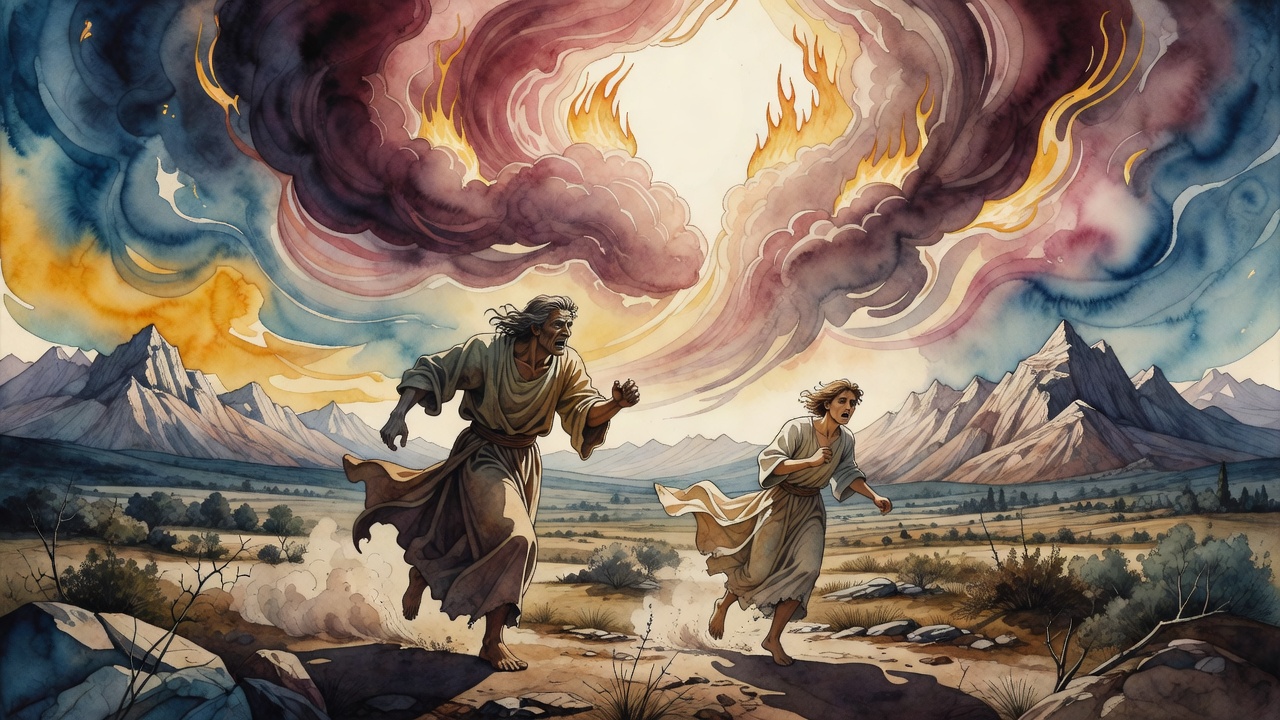
Cain took the land and left Abel the movable goods. Then he hunted his brother from valley to mountain, shouting that every path was his.

Curated by Arthur · Told by Maggid ·
Table of Contents
  1. Division That Was Never Peace
  2. The Blow in the Field
  3. A Field That Feeds Others
  4. Hunted by a Wind at His Heels

Cain looked at the first small world and decided it was not big enough for two brothers. The man of the evil eye hurried himself to take everything, and the field became a courtroom with no judge but blood.
Cain Chased Abel Across Every Field He Owned Click for full size

They were in the field when the quarrel found its shape (Genesis 4:8). Cain said, "Let us divide the world. You take the movable goods. I take the lands." He already planned to push Abel out of life itself.

Division That Was Never Peace

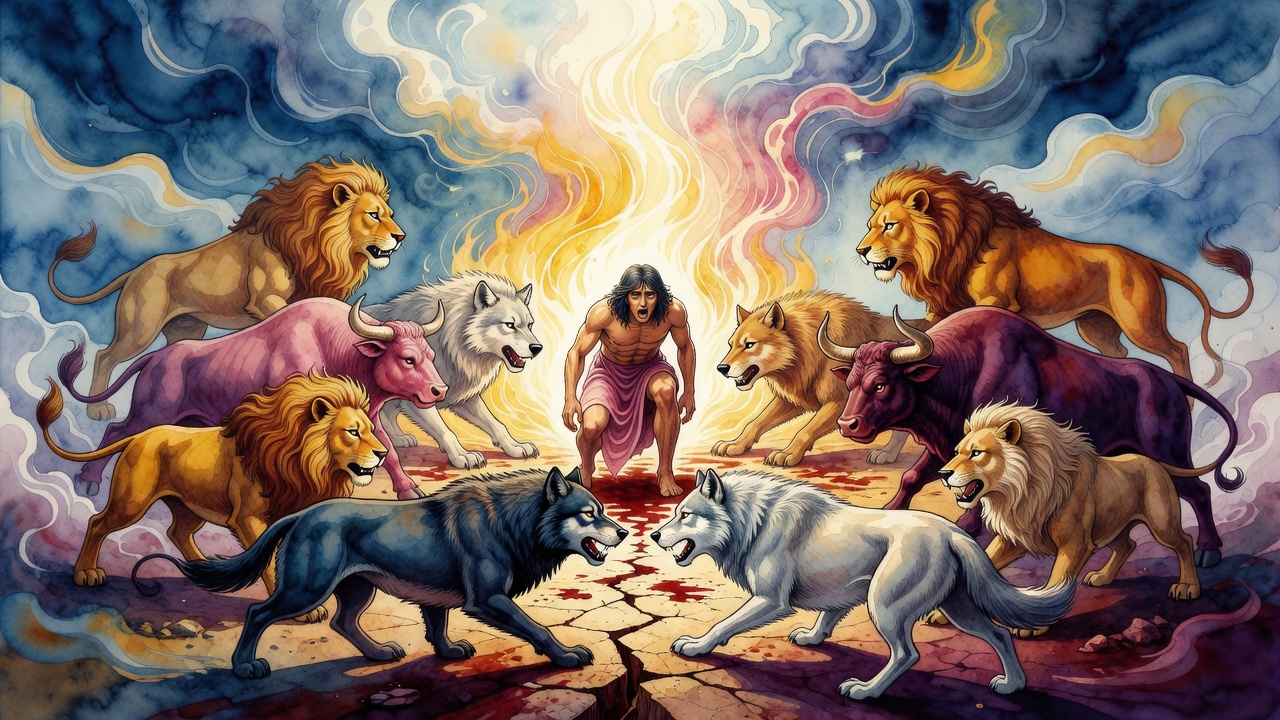
Abel took the flocks and tools that could walk or be carried. Cain took the ground. For a moment the deal looked clean. Then Abel walked, and wherever a sheep set its hoof, Cain arrived behind him.

"Get out of what is mine," Cain said in the valley. Abel fled to the hills. Cain followed. "This is mine too." The division had been a trap with a moving wall. Land that owns every path owns every brother who still needs a place to stand.

Solomon later names the type. A man of evil eye rushes toward wealth and does not know lack is coming for him. Cain is that man before money had a name, greedy for horizon rather than coin. He did not want a fair share of dirt. He wanted a map with one name on it.

Abel tried to live small. Smallness is no shelter when the other brother has claimed the circumference of the earth. A sheepfold is still a point on someone else's deed if the deed is written in envy.

The Blow in the Field

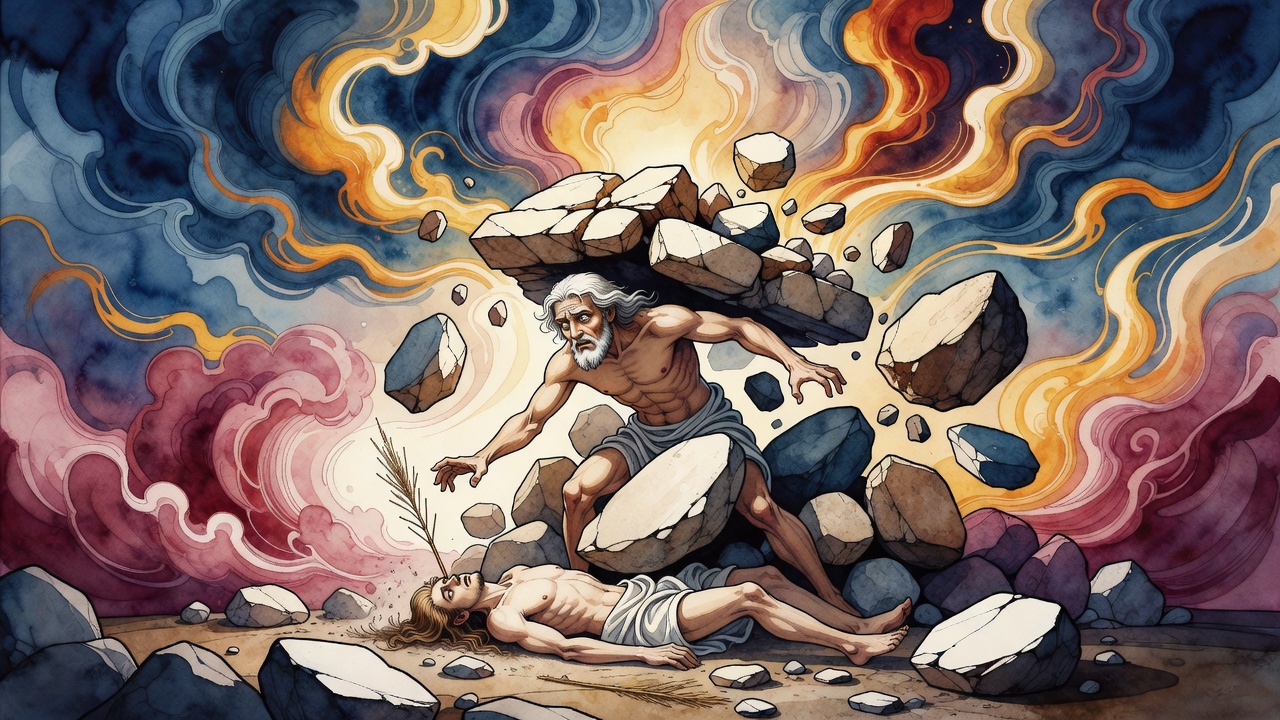
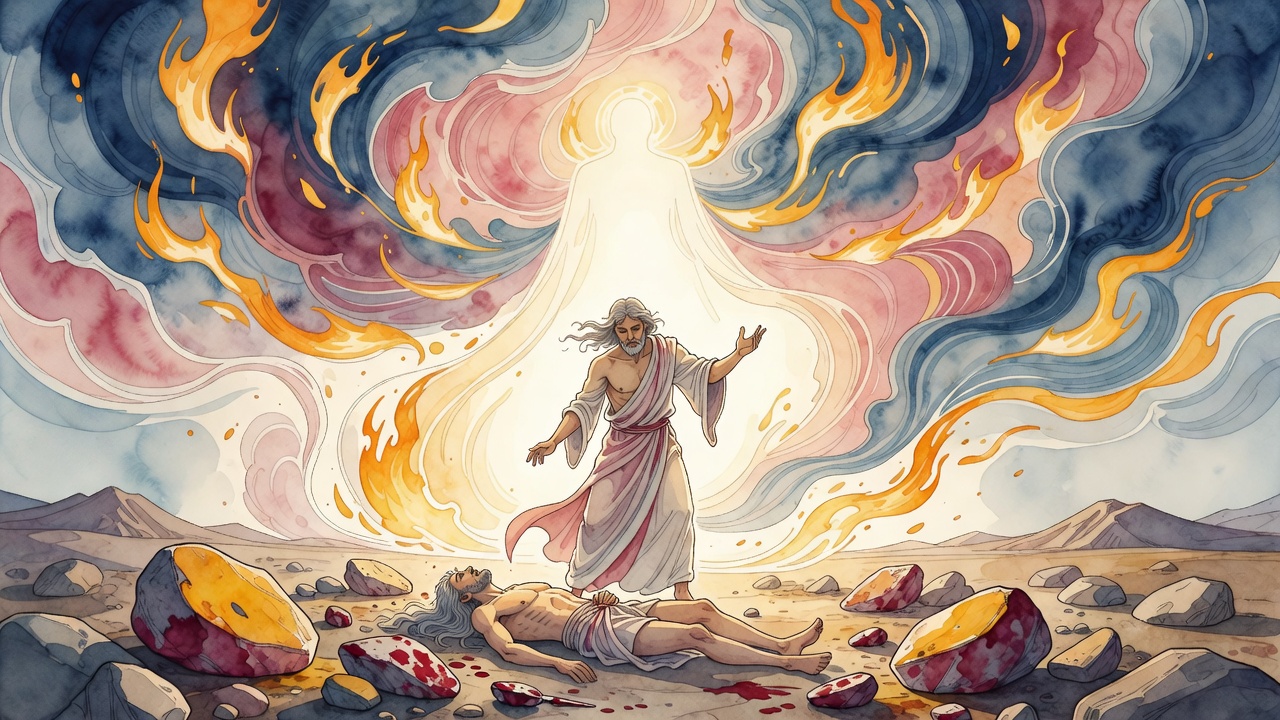
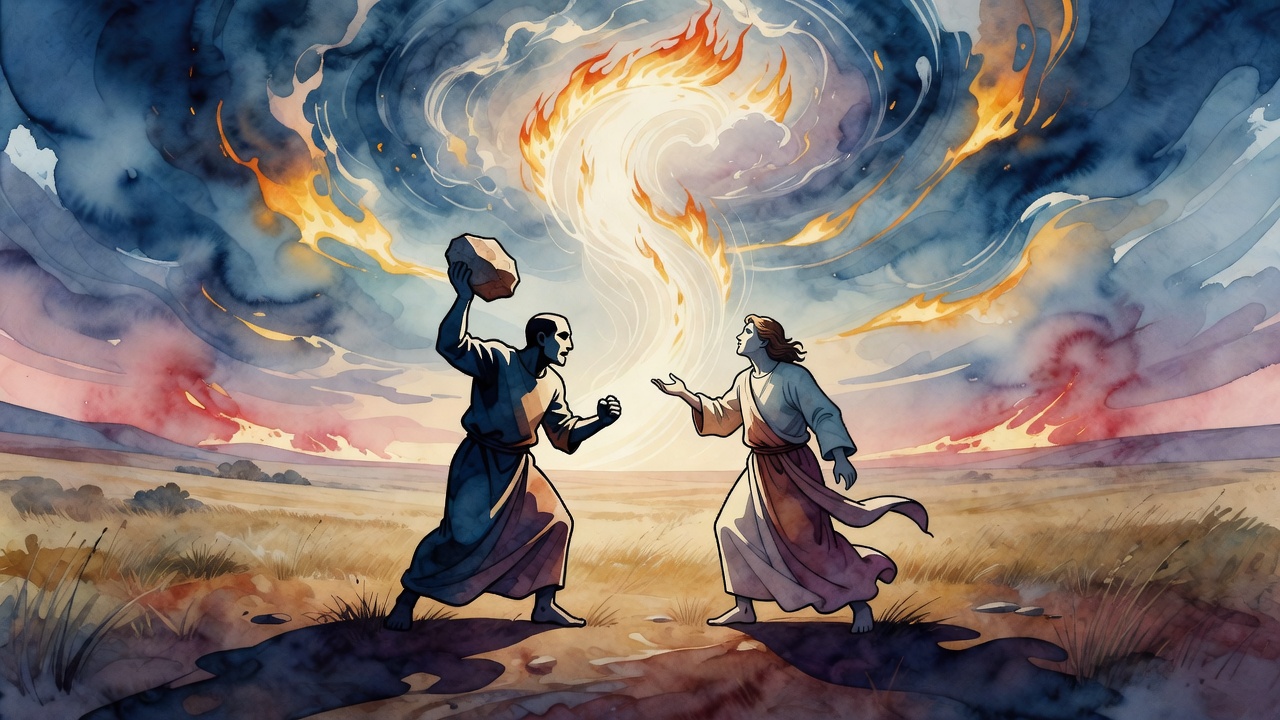
When there was nowhere left that Cain would not claim, he rose against Abel his brother and killed him (Genesis 4:8). The ground that he had called his inheritance opened its mouth and took the blood from his hand. Ownership became accusation. The soil that would not share now held a witness that would not be quiet.

God's sentence came in sparse words. "Now you are cursed." Rabban Shimon ben Gamliel notes how the verse speaks tersely in three hard places, curses and creations left without detail, as if some punishments are too wide for a list. Then the Torah names the shape of the curse. The ground will no longer give Cain its strength. He will be restless and wandering on the earth (Genesis 4:12).

The first murder did not need a city. It needed a field, a contract, and a chase that ended when the hills ran out. Abel's blood did not argue terms. It sank and spoke upward.

Cain stood over the quiet body with the deed still in his mouth. Mine. The word tasted thinner once there was no brother left to hear it. He looked at the flock that now had no shepherd and at the soil that had just learned a new appetite. Nothing in the bargain had mentioned this silence.

A Field That Feeds Others

Rabbi Elazar and Rabbi Yosei bar Hanina split over how deep the refusal goes. One says the earth will not give to Cain but will still give to others. The other says it will give neither to him nor to anyone under his hand, a blight that travels with the murderer. Either way, the man who wanted all fields loses the simple joy of a harvest that answers a hoe.

He had chased Abel to secure land. He received land that recoils. The midrash sees justice with a long memory. The mouth that swallowed blood will not open easily for bread. Cain's hands, which knew how to force a boundary, now know how to plant without hope.

Farmers after him would sweat and eat. Cain would sweat and taste the distance between labor and fruit. The curse was not theater. It was agronomy rewritten for a killer.

Hunted by a Wind at His Heels

Tanchuma does not leave Cain in quiet exile. Wherever he walked, the Holy One brought a harsh wind against his feet. It struck him and drove him, as if the world itself had joined Abel's side. The man who shouted "mine" at every mountain now could not claim a single calm mile.

Restless and wandering is not only a travel schedule. It is a body that never arrives. Cain wanted a world without a brother in it. He received a world without a resting place. Villages that did not yet exist would still have refused him. The wind was enough.

Mark on the forehead, fear of other hands, soil that sulks, weather that herds him like a bad sheep: the package fits the crime. He began by hunting a shepherd across property lines he invented on the spot. He ends as the one hunted by air.

The first murder began with a contract written in greed, a map drawn so that one man's share was the entire ground, and the other man's share was whatever could run. Running stopped. The wind did not.


← All myths
From the tradition

Sources

2 sources

The texts behind this telling. Some cards carry a translation of the source; others are our own retelling of it, and each card says which. Every card links out to the original.

Midrash Tanchuma, Mishpatim 13Midrash Tanchuma

Translation of the source text.Midrash Tanchuma -- Torat Emet · Public Domain

"If you lend money" (Exodus 22:24). This is what Scripture says: "A man with an evil eye hastens after wealth, and does not know that want will come upon him" (Proverbs 28:22). "A man with an evil eye," this is Cain, who hastened to seize the world. How so? When Cain and Abel were in the world, what is written concerning them? "And it came to pass when they were in the field" (Genesis 4:8). Over matters of the field Abel was killed.

Cain said to Abel: Let us divide the world; you take the movable goods and I will take the land. And this was because he thought to remove him from the world. They divided between them; Abel took the movable goods and Cain the lands, and Abel would walk about in the world while Cain pursued him and said to him: Get out from what is mine. He ran to the mountains, and he was after him, saying: This is mine, until he rose up against him and killed him, as it is said, "And Cain rose up against Abel his brother and killed him" (Genesis 4:8).

"And does not know that want will come upon him." What was his want? "A fugitive and a wanderer you shall be on the earth" (Genesis 4:12). In every place he went, the Holy One, blessed be He, would bring an evil spirit to his foot, and they would strike him and pursue him until they removed him from the world. And Solomon cries out: "If a man begets a hundred children and lives many years" (Ecclesiastes 6:3). So too with everyone who lends to his fellow at interest: in the end he becomes dependent on creatures, as it is said, "and does not know that want will come upon him."

What is written above the matter? "If you afflict, afflict; if he cries out, cries out; surely hear I will hear" (Exodus 22:22). It is all doubled, to teach you that the curtain is not closed before him. What is written after it? "And my anger will burn, and I will kill you" and so forth (Exodus 22:23). When? "If you lend money."

Full source
Bereshit Rabbah 22:10Bereshit Rabbah

Retold in our words. Read the original at the link below.The Sefaria Midrash Rabbah, 2022 · CC-BY

Bereshit Rabbah turns to The Precise Nature of Cain's Punishment From God.

The Torah tells us, "Now, you are cursed from the ground that opened its mouth to take your brother's blood from your hand" (Genesis 4:11). But what does that mean?

Rabban Shimon ben Gamliel points out something fascinating. He says that in three places, the Torah speaks tersely, without all the details. "Now you are cursed" is one of them. The other two? "If the Lord will create a creation" (Numbers 16:30) regarding Korah’s rebellion, and Jephthah’s rash vow, "I opened my mouth to the Lord" (Judges 11:35). We're left wondering what exactly the curse was, what kind of creation God would make, and what came out of Jephthah's mouth! The Torah doesn't always spell everything out for us, does it?

So, let’s dig into this curse. The very next verse says, "When you cultivate the ground, it will not continue giving its strength to you; restless and itinerant you shall be on the earth" (Genesis 4:12). This part gets a little more specific. But even here, there's room for interpretation.

What does it mean that the ground won't "continue giving its strength"?

Rabbi Elazar and Rabbi Yosei ben Rabbi Ḥanina offer two possibilities. Rabbi Elazar says the ground will give its strength, just not to Cain. It will give to others. Harsh. Cain has to watch others prosper while he struggles. Rabbi Yosei bar Ḥanina takes it a step further: the ground will give its strength to no one. Universal hardship because of Cain’s actions.

This reminds me of another verse, "Much seed you will take out to the field, [but little you will gather]" (Deuteronomy 28:38). This verse, part of a series of curses for disobedience, sparks a similar debate between Rabbi Yehuda and Rabbi Neḥemya. Rabbi Yehuda suggests that you'd plant a se’a (a unit of measurement) and only harvest a se’a. Just breaking even! Rabbi Neḥemya objects: how would anyone survive like that? Instead, he argues that fields that should produce twenty units will only produce sixteen, and those that should produce ten will only produce five. A significant decrease, but not total failure.

Back to Cain’s curse. There’s yet another interpretation offered: "Its strength it will not give to you, but your strength it will give to you." What does that mean? It means the ground will produce in direct proportion to the amount of sweat and toil Cain invests. He’ll have to work harder than anyone else just to get by.

But even then, there's a caveat. It won't give you all your strength back; it will give you some of your strength. You'll produce enough to subsist, to survive, but not enough to live comfortably. A life of constant struggle, a constant reminder of his terrible deed.

So, what are we left with? A curse that’s both specific and vague, a punishment that leaves room for interpretation and, perhaps, a glimmer of hope amidst the hardship. And it leaves us pondering the nature of justice, of divine retribution, and the enduring struggle between humanity and the earth.

Full source