5 min read

Cain Rose Against Abel and Died With His Soul Unsatisfied

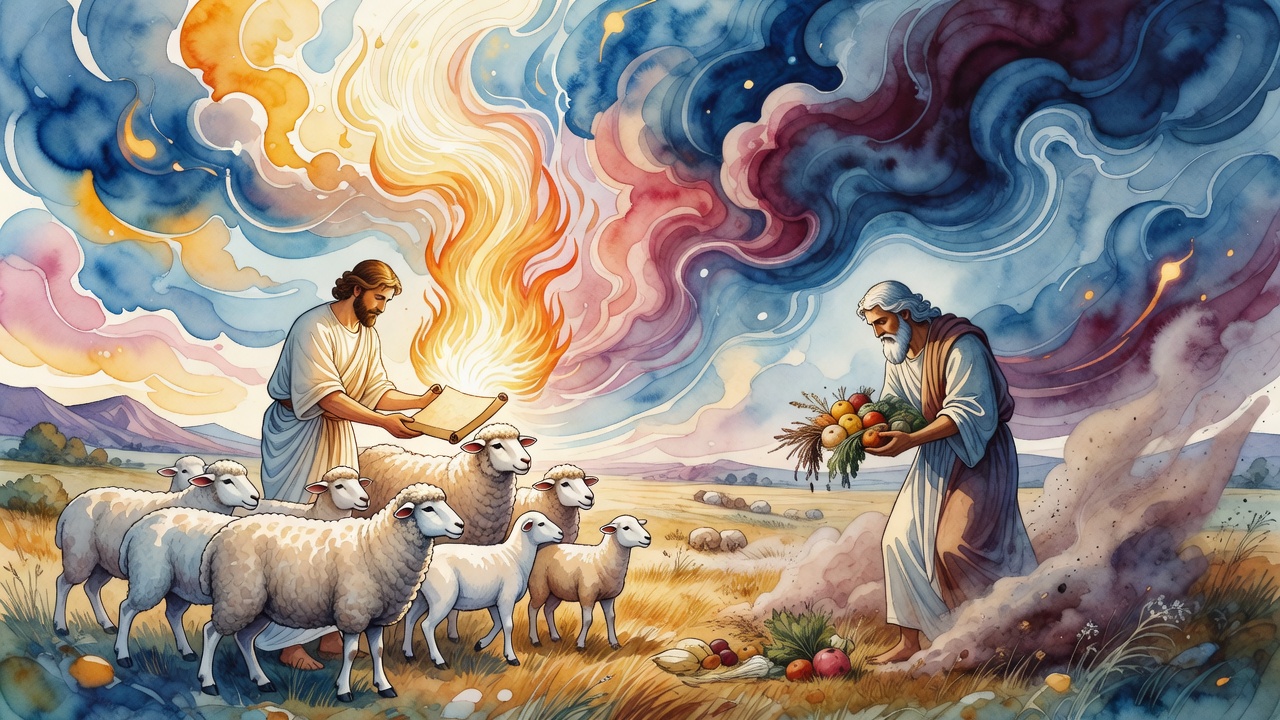
Cain brought fruit of the ground after some days. Abel brought the firstborn of his flock and their fat. One gift smelled of leftovers.

Curated by Arthur · Told by Maggid ·
Table of Contents
  1. Fruit After Some Days, Firstborn of the Flock
  2. Vayakom, He Arose
  3. A Hundred Sons and No Burial
  4. Three Who Loved the Ground
  5. What the Flood Took Last

Two brothers leave the same mother and choose two ways of feeding a world still young. Abel becomes a shepherd. Cain becomes a cultivator of the ground. The occupations look ordinary until the midrash lines them up with later disasters. Three men loved the soil too hard: Cain the farmer, Noah the man of the soil, and Uzziah with his mountain vineyards. Each enthusiasm for earth ends in a fall.

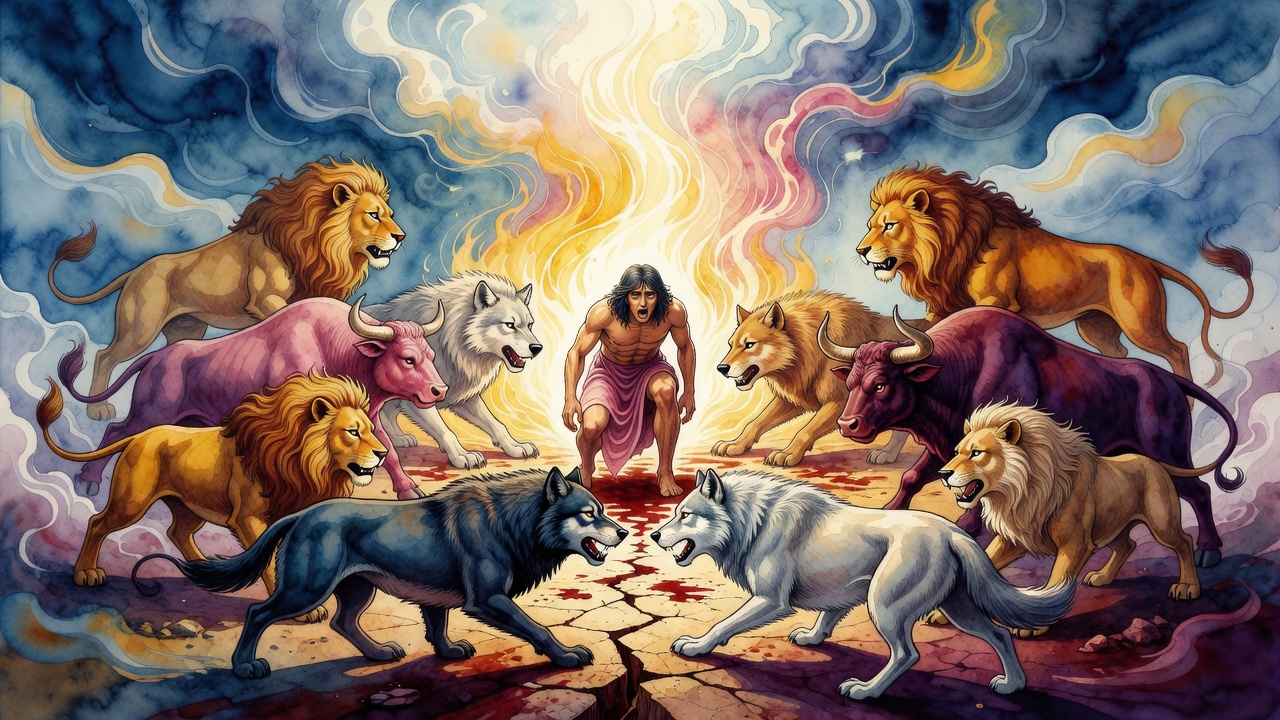
Cain Rose Against Abel and Died With His Soul Unsatisfied Click for full size

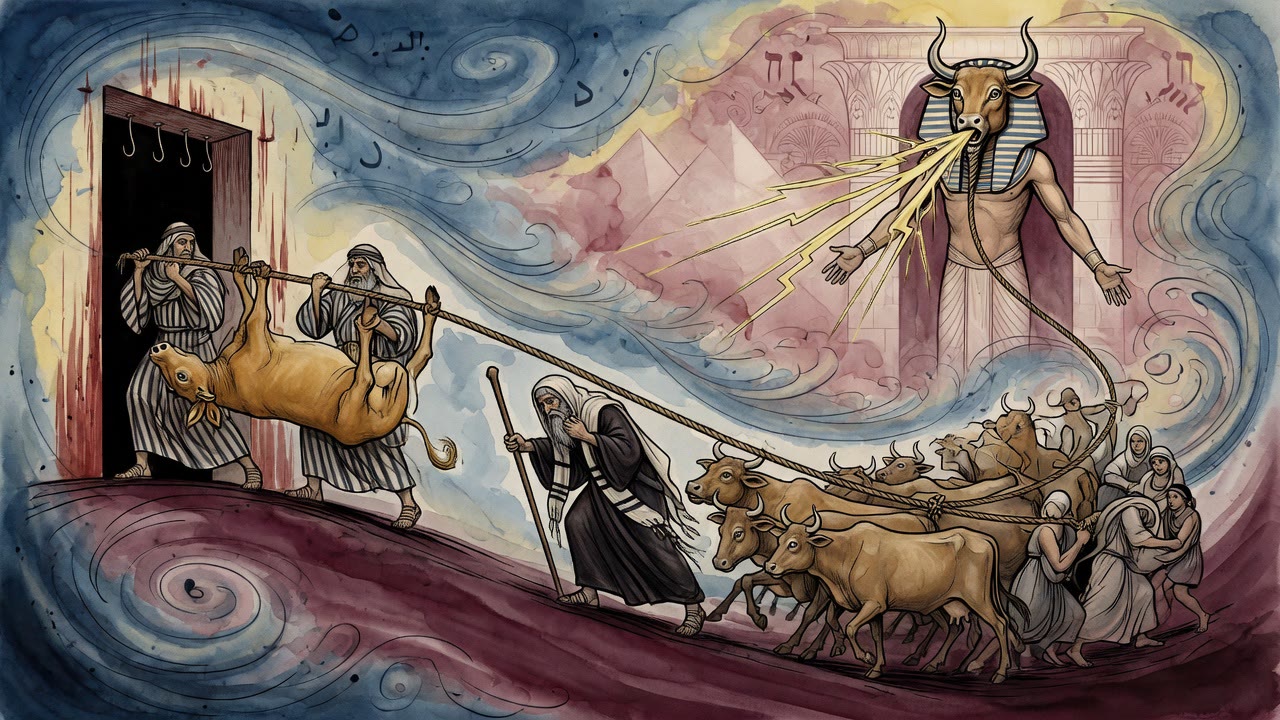
Some sages press the birth itself. "She gave birth once again, to his brother Abel." Rabbi Yehoshua ben Korcha hears a bed that two entered and seven left. Eve's house is crowded with life before it is crowded with blood. From that crowd, two gifts rise toward heaven, and only one is wanted. The field is already waiting for a quarrel it does not yet know how to name.

Fruit After Some Days, Firstborn of the Flock

Cain brings fruit of the ground after "some days." Abel brings the firstborn of his flock and their fat portions. The Midrash of Philo leans on the delay. After some days is not first. Firstborn is first. One gift smells of leftovers. The other smells of priority. Heaven's face turns. Cain's does not.

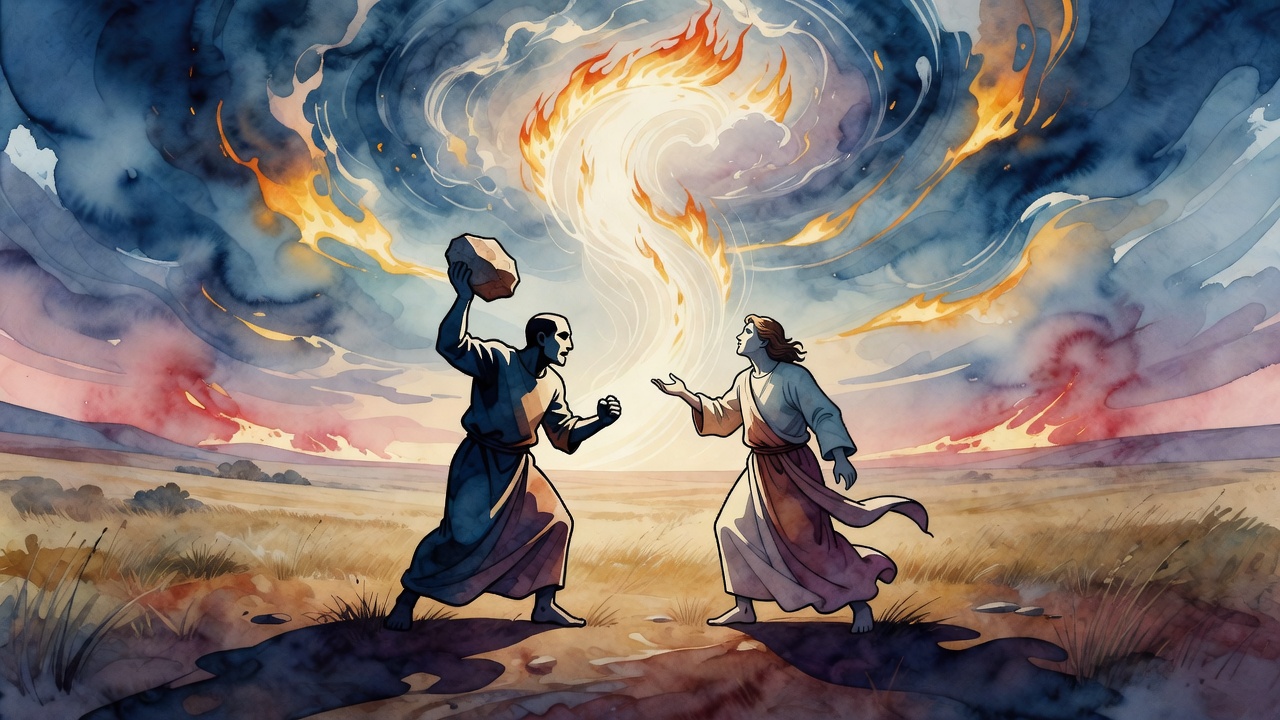
Jealousy does not need a long speech. It needs a field and a brother standing upright in it. The Torah's next motion is short. Cain speaks to Abel. They are in the field. Cain rises. The air between the offerings and the blow is thin enough to cut with a word that Scripture does not record.

Vayakom, He Arose

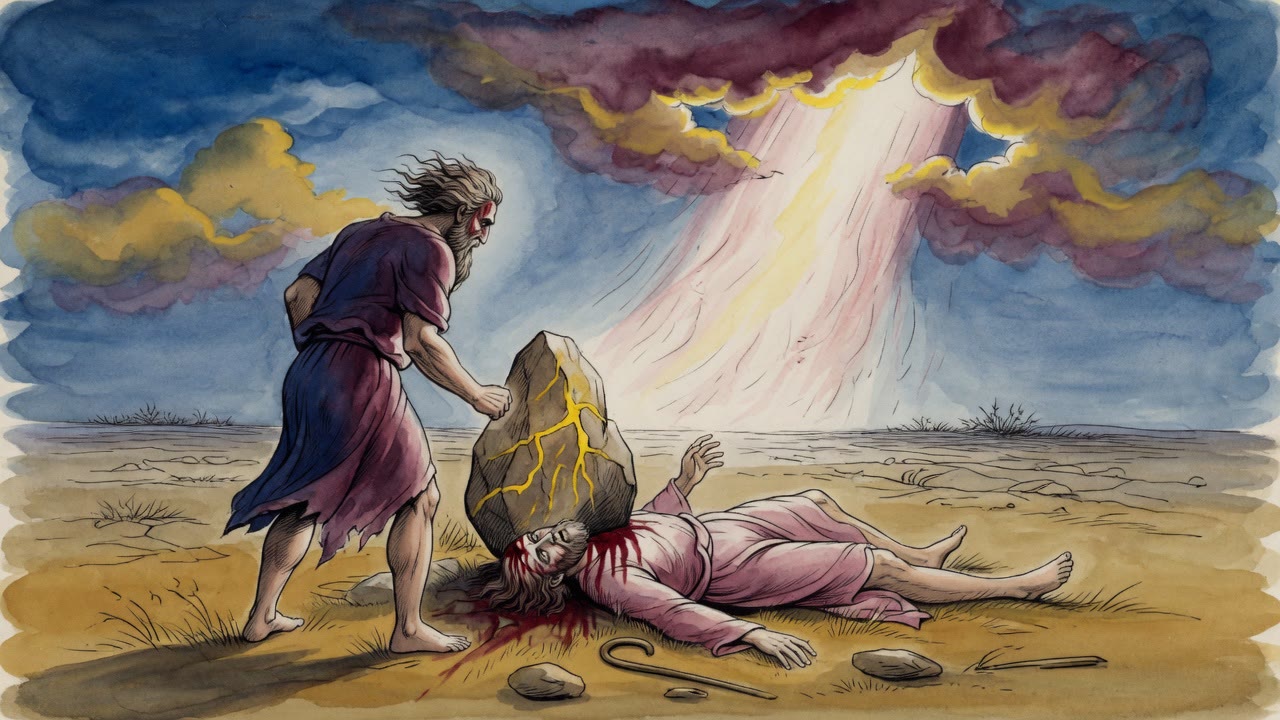
"Cain arose against Abel his brother and killed him" (Genesis 4:8). The verb vayakom, he arose, becomes a name the midrash will not release. Rabbi Shmuel hears in later obliteration the word yekum and says it is Cain himself, the one who rose. The murderer becomes the very noun of rising-to-kill. The ground that received his farming now receives his brother's blood and answers with a curse on Cain's labor.

Abel falls. A stillborn, the sages dare to say in one reading of Ecclesiastes, is better than a long life without good. Abel dies young. Cain lives. The mark that protects the killer from human revenge does not protect him from an empty soul. He wanders. He builds. He fathers. Nothing fills the space where a brother's face used to stand.

A Hundred Sons and No Burial

Kohelet Rabbah reads a hard verse over Cain's later years. A man may beget a hundred, live many years, and still his soul is not sated from the good, and he has no burial. Better a stillborn than he. The rabbis point the finger at Cain. He fathers a hundred. He lives long. Earthly goods never fill him. In the end he receives no proper burial, because the flood sweeps him away with the rest of the old yekum, the sustainers and the standing ones of that age.

Abel, dead early, is the stillborn of the comparison. Cain, living late, is the man whose soul never sits down to a full meal of good. Murder bought him years. Years bought him nothing that stayed. Rabbi Bon hears yekum as sustainers of the world. Rabbi Elazar hears possessions that help a man stand. Rabbi Shmuel hears Cain, who arose. All three readings drown together when the windows of heaven open in Noah's day.

Three Who Loved the Ground

Cain cultivates. Noah plants after the water. Uzziah multiplies farmers and vine-dressers. The midrash ties their zeal for soil to downfall, not because earth is evil, but because grasping earth as a master turns a man into a rival of heaven and of his brother. Abel's sheep move. Cain's furrows stay. The stationary claim hardens into possession, and possession hardens into rage when God prefers the moving gift.

The field becomes a courtroom without judges. Only two men, one offering rejected, one accepted, and a stone or a blow the text leaves unnamed. Blood answers from the ground when God asks for Abel. Cain's answer is a question that tries to dodge: am I my brother's keeper? The ground has already testified.

What the Flood Took Last

When water finally rises in Noah's day, it takes the long-lived murderer with the rest. Cain who rose is lowered under a sea he never saw coming when he stood over Abel. The man who would not be sated is erased. The brother whose blood cried from the ground has been dead for generations, and still the ground remembers enough to drown the line that began with that rising.

Two occupations. Two gifts. One verb of rising. A hundred sons. No burial worth the name. Cain outlived Abel and outlived every good he tried to clutch, until the flood wrote the last line over the first murder. The first farmer dies without a grave his children can visit. The first shepherd's blood has already spoken all the eulogy heaven needed.


← All myths

From the tradition

Sources

3 sources

The texts behind this telling. Some cards carry a translation of the source; others are our own retelling of it, and each card says which. Every card links out to the original.

Bereshit Rabbah 22:3Bereshit Rabbah

Retold in our words. Read the original at the link below.The Sefaria Midrash Rabbah, 2022 · CC-BY

Why Cain Became a Farmer and Abel a Shepherd is the question behind this passage from Bereshit Rabbah.

Consider the verse in (Genesis 4:2): "She gave birth once again, to his brother Abel. Abel was a shepherd, and Cain was a cultivator of the ground." Simple enough. But the rabbis of the Bereshit Rabbah, an ancient collection of rabbinic interpretations of Genesis, weren't content with the surface level.

"She gave birth once again, to his brother Abel" – this, the Bereshit Rabbah tells us, supports the opinion of Rabbi Yehoshua ben Korḥa, who said something truly astonishing: "Two entered the bed and seven descended." Wait, what? According to this tradition, Eve didn't just give birth to Cain and Abel sequentially. She gave birth to five children at once! Five! The verse, "She gave birth once again, to his brother Abel" is then interpreted to mean that she gave birth again, but she didn’t need to become pregnant again in order to do so.

The Bereshit Rabbah doesn't stop there. It explores the occupations of Cain and Abel: farmer and shepherd, respectively. "Abel was a shepherd, and Cain was a cultivator of the ground." This leads to a fascinating, and somewhat cautionary, tale about humanity's relationship with the earth. The text points out that there were three people who were enthusiastic about the earth, but ultimately, their efforts led to downfall. Who were they? Cain, described as "a cultivator of the land"; Noah, of whom it is written, "Noah, man of the soil, began." (Genesis 9:20); and Uzziah, who "had farmers and viticulturists in the mountains and on the fertile lands, as he was a lover of the soil" (II (Chronicles 26:1)0). Cain became a murderer. Noah, after all his hard work replanting, became a drunkard. And Uzziah? He was afflicted with leprosy.

Why this seemingly bleak outlook on working the land? The Bereshit Rabbah doesn’t explicitly say, but it invites us to consider the potential dangers of becoming too consumed by the material world. Perhaps it's a warning against hubris, against placing too much value on earthly pursuits at the expense of spiritual or ethical considerations. Maybe it's a reminder that even the most noble endeavors can be corrupted if we lose sight of our humanity, our connection to each other, and our relationship with God.

These ancient texts aren't just stories; they're invitations to think deeply about who we are, where we come from, and what it means to live a meaningful life. So, what do you take away from this glimpse into the lives of Cain, Abel, and their parents? What does it mean to be a "lover of the soil," and how can we avoid the pitfalls that befell those who came before us?

Full source
Kohelet Rabbah 3:1Kohelet Rabbah

Retold in our words. Read the original at the link below.The Sefaria Midrash Rabbah, 2022 · CC-BY

The Rabbis of the Midrash (rabbinic interpretive commentary), in Kohelet Rabbah, take this even further, using stories and interpretations to examine the weight of those feelings.

One particularly stark verse they dissect is (Ecclesiastes 6:3): “If a man begets one hundred, and lives many years, and the days of his years are many, but his soul is not sated from the good, and he did not have a burial; I say, a stillborn is better than he.” A pretty harsh assessment. So, who is this tragic figure?

The Rabbis offer a few interpretations, the first pointing to Cain. Yes, that Cain, the one who killed his brother Abel. Kohelet Rabbah reads into the verse, suggesting that Cain fathered a hundred sons and lived a long life, yet his soul remained unsatisfied. He was never sated by earthly goods, and ultimately, he didn't even receive a proper burial; the flood swept him away. As it says in (Genesis 7:23), God "obliterated all the yekum" from the face of the earth.

yekum is an interesting word. What does it mean here? Rabbi Bon suggests it refers to "sustainers" (okuminei) – those who develop and sustain the world, in other words, people. Rabbi Elazar says yekum refers to possessions, those things that bolster a person's standing, that help them "stand" (lakum). But Rabbi Shmuel offers a particularly chilling interpretation: yekum is Cain himself! Remember, the Torah says "Cain arose [vayakom] against Abel his brother, and killed him" (Genesis 4:8). So, this Cain, burdened by guilt and ultimately erased by the flood, is worse off than a stillborn – in this case, Abel. Even though Abel died young, he was spared Cain’s suffering and ignominious end.

It's a powerful image: a life of outward success masking an inner emptiness, culminating in complete obliteration.

But the Rabbis don’t stop there. They offer another example: Ahab, the infamous king of Israel. The text says, "If a man begets one hundred…” – this, the Rabbis say, is Ahab, who fathered a hundred sons. Wait, didn't II (Kings 10:1) say he only had seventy sons in Samaria? Rabbi Hoshaya clarifies, saying Ahab had seventy sons in Samaria and seventy in Yizre'el – more than a hundred in total! And these sons lived in luxury, each owning multiple palaces for different seasons, as alluded to in (Amos 3:15): “I will smite the winter house with the summer house.” Rabbi Yehuda ben Rabbi Simon even suggests they each had four houses – two for summer, two for winter! Others say six.

Yet, despite his power and his sons' extravagant lifestyles, Ahab, too, was unsatisfied. "His soul was not sated from the good," the Rabbis interpret. And, famously, Ahab also suffered an unceremonious end. Remember the story of Naboth's vineyard? As we read in I (Kings 21:19), because of Ahab's injustice, God declared that dogs would lick his blood in the same place they licked Naboth's. So, Ahab, like Cain, is deemed worse off than a stillborn, even “the stillborn of a prostitute,” who at least receives a burial.

What are we to make of these interpretations? Are they simply cautionary tales about the dangers of wealth and power? Perhaps. But they also speak to something deeper: the importance of meaning. It's not enough to simply exist, to accumulate possessions, or even to have children. We need to find something that truly satisfies our souls, something that gives our lives purpose and value. Otherwise, we risk becoming like Cain or Ahab – figures of outward success but inner emptiness, ultimately consumed by their own unfulfilled desires. And that, the Rabbis suggest, is a fate worse than never having lived at all.

Full source
The Midrash of Philo 3:1The Midrash of Philo

Retold in our words. Read the original at the link below.The Works of Philo Judaeus, trans. C. D. Yonge, London, H. G. Bohn, 1854-1890 · Public Domain

They often hold some of the biggest secrets. Take the story of Cain and Abel. The familiar version gives us the basics: brothers, offerings, jealousy, tragedy. But have you ever noticed a subtle difference in how the Torah describes their offerings to God?

Cain, after "some days," brought an offering of the fruit of the ground. Abel, on the other hand, brought the firstborn of his flock and their fat portions. Simple enough. But here's the kicker, and the question posed in The Midrash of Philo: Why does the Torah say Cain offered his after "some days" (miketz yamim), but it doesn't say that about Abel? What's up with those missing "some days"?

It's a fair question. One that's been puzzling scholars and storytellers for centuries. Why this little difference in wording? Is it just a stylistic quirk? Or is there something deeper, something more profound, hidden within those Hebrew words?

Well, Midrash (rabbinic interpretive commentary), that beautiful tradition of Jewish storytelling and interpretation, loves to dig into these kinds of questions. It seeks to unearth the layers of meaning embedded within the text. To fill in the gaps, to ask "what if," to bring the ancient words to life. And in this case, it offers a fascinating insight.

The absence of "after some days" in Abel's offering suggests immediacy, eagerness, a desire to give God the very best, right away. He's not holding back. He's not waiting to see what happens. He’s offering the choicest of his flock immediately, with joy and a full heart.

Cain, however… the inclusion of "after some days" implies a delay, a hesitation. Did he wait to see if the harvest was good? Was he offering leftovers, the stuff he didn't really need? Was he thinking about it for "some days," and not in a good way?

This subtle difference in timing reveals a profound difference in intention. It highlights the contrast in their hearts, their motivations, their relationship with God. It's not just about what they offered, but when and how they offered it. And perhaps, most importantly, why. How often do we wait for "some days" to pass before offering our best selves, our best efforts, our best gifts? Are we giving God (or the universe, or our loved ones) the first fruits of our labor, or the leftovers?

The story of Cain and Abel, as interpreted by The Midrash of Philo, isn't just an ancient tale of sibling rivalry. It's a timeless reminder to examine our own hearts, to be mindful of our intentions, and to offer our best selves, without delay. Because sometimes, those seemingly insignificant details can reveal the biggest truths about ourselves and our relationship with the Divine.

Full source