God Marked Cain, and Cain Walked the Road Utterly Alone
Cain cried that everyone who found him would kill him. Adam and Eve were nearly the whole earth. The Voice that used to meet him had already gone.
Table of Contents
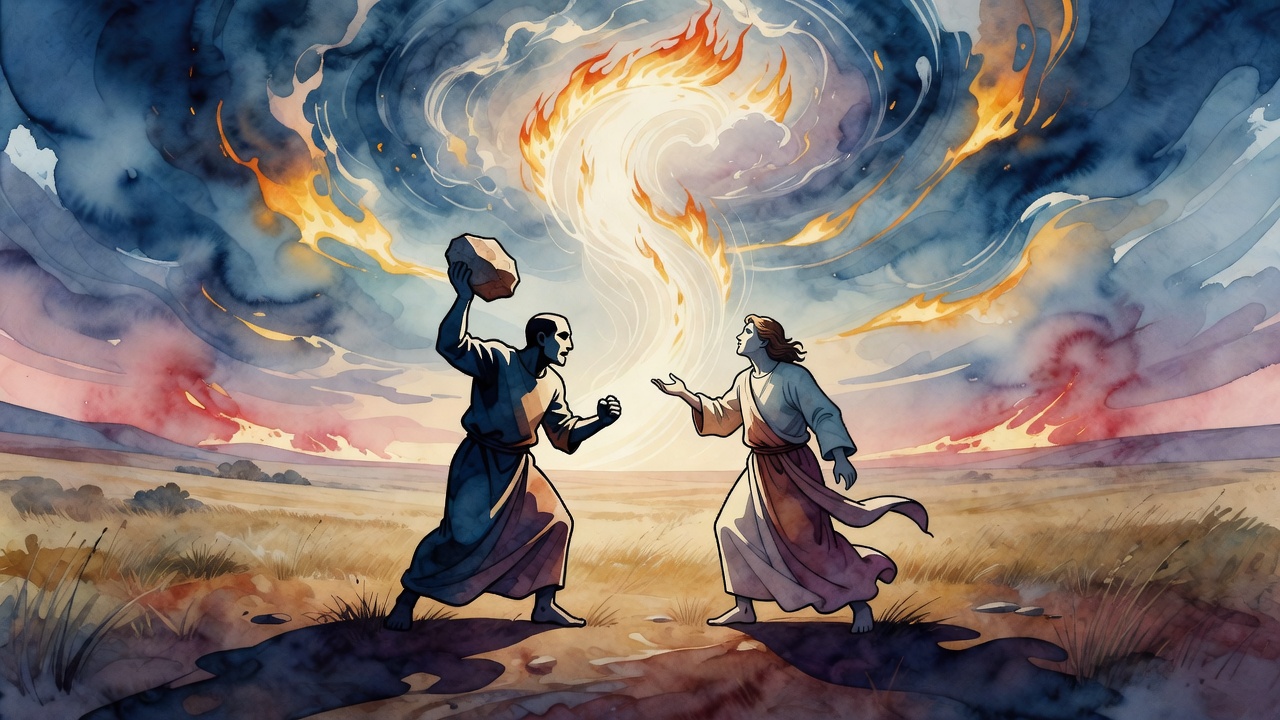
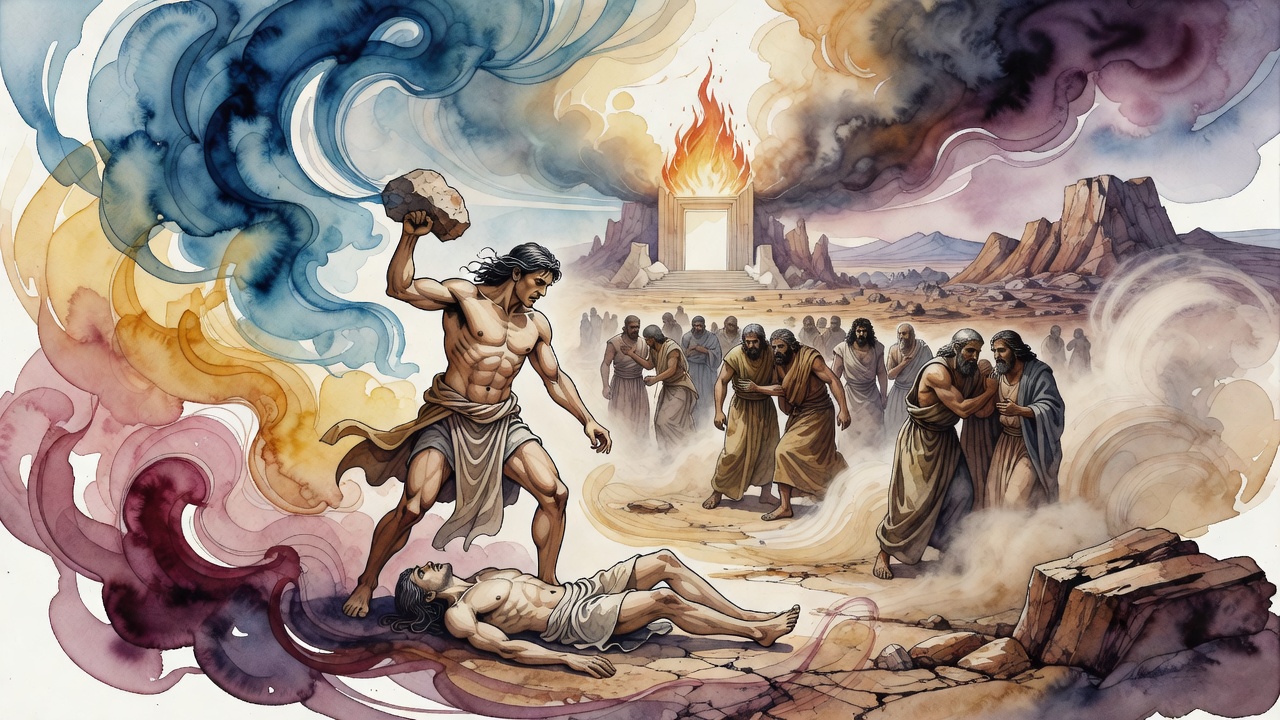
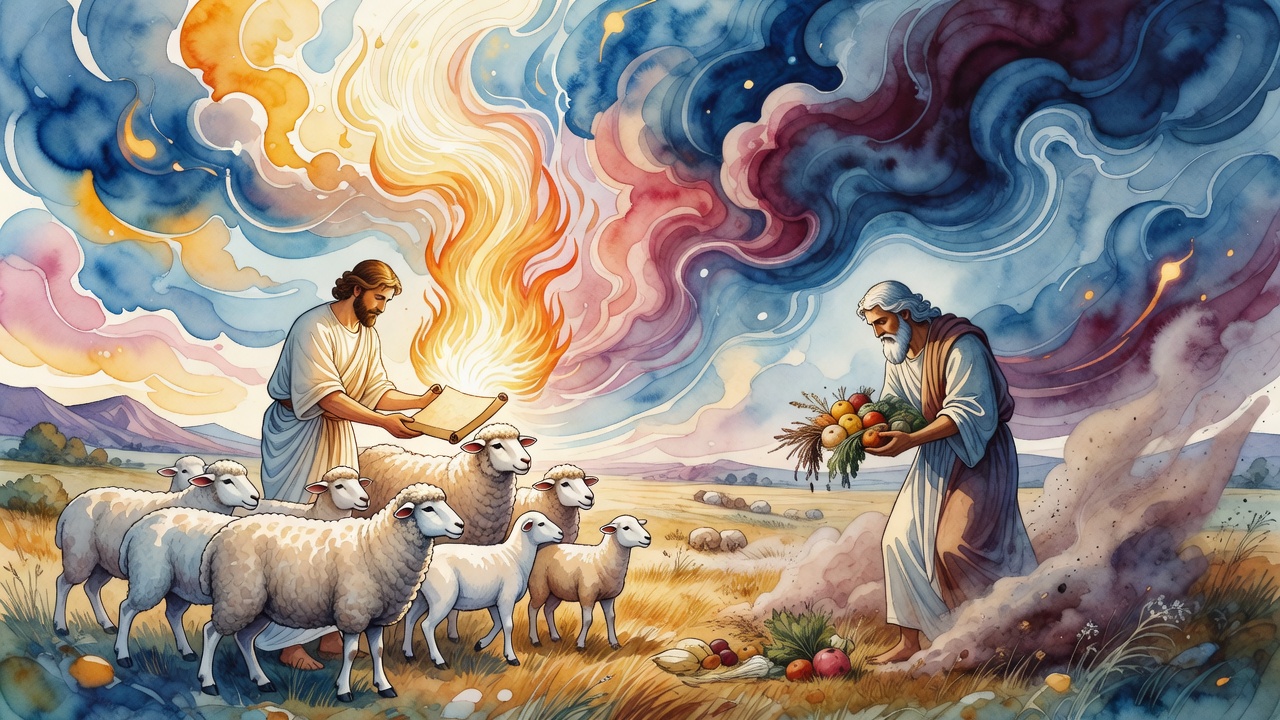
Cain stood over his brother and waited for the earth to refuse him.
 Click for full size
The ground took the blood without a sound. Wind moved the grain. No voice answered from the furrows. He had expected a blow from heaven. What arrived was quieter. Distance. A gap between his chest and God, who had spoken with him only a day before.
Blood on the Field
"Where is Abel your brother?" God asked.
"I do not know," Cain said. "Am I my brother's keeper?"
The blood had a keeper. It cried from the ground. The earth that had opened its mouth for Abel would no longer give Cain its strength. He would be a wanderer, a man the soil would not feed. That was the first sentence. The second was the one Cain spoke himself.
"Everyone who finds me will kill me" (Genesis 4:14).
The complaint sounded practical. The fear underneath it was not. Adam and Eve still lived. That was nearly the whole census. Who, then, was everyone? Abel did not rise to answer. The silence where a brother's breath should have been became the first room of Cain's exile, even before he took a step east.
He wiped his hands on the soil. Red crescents under his nails. Water would not soon forget them. He left the field with the grain still moving, as if the day had not noticed what it had held.
Everyone Who Finds Me
There is cruelty in lawless streets and sudden knives. Cain would have taken that. A chase has a face. A chase ends. What he carried instead had no clean name. He had fallen from the King. The mark on him kept human hands off, if any hands would ever come. It did not keep the abandonment out. He had become an outcast even where no crowd gathered to cast him.
He slept poorly. When he woke, the field still held the shape of a body that was no longer there. He tried to pray the way he had once brought produce. The words left his mouth and thinned into air that would not take them. He would have preferred a human chase to the clean, continuous fact that the Voice no longer met him in the old way.
God set a mark on him so that whoever found him would not kill him. The mark was mercy shaped like a lock. It kept him alive. It did not bring the Voice back. Alive and unheard is a long sentence. He walked with it.
Sleep That Proved He Was Dust
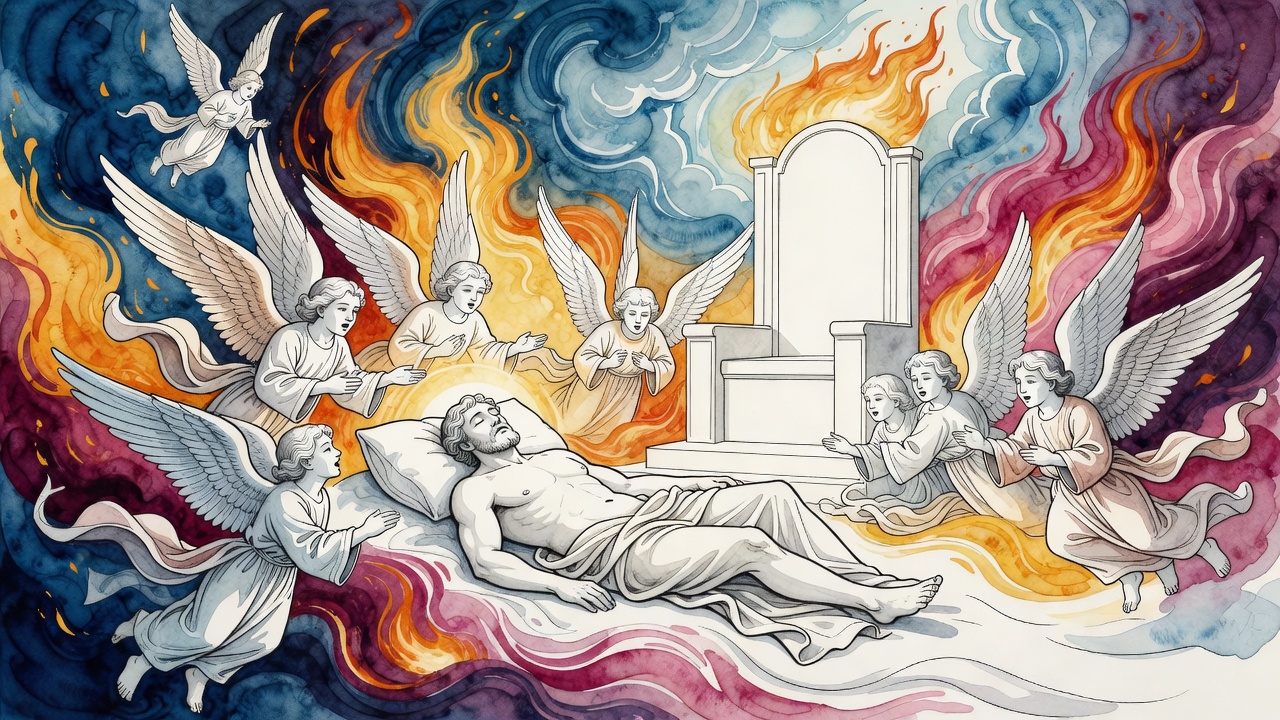
Before there was murder, there was a different kind of falling. When God first formed Adam, the angels looked at the new creature and nearly sang "Holy, holy, holy" before him, as if he were the Creator. God cast sleep upon Adam. Sleep made the difference plain. This was dust that would return to dust, not the King of kings. The ministering angels closed their mouths. A man who can be dropped into sleep is not the One they praise.
Cain had never been mistaken for God. He had only wanted to be preferred. Preference denied, he chose blood. The sleep that once protected heaven from idolizing man now seemed a kinder fate than the waking Cain carried. Adam slept and woke mortal. Cain walked and stayed marked.
"What was, its name was already called," says the Preacher (Ecclesiastes 6:10). Man cannot contend with what is mightier than he. Cain contended anyway, and lost his brother, and then lost the nearness that had made quarrel possible at all. Names already known do not always open doors. Sometimes they close them.
The Rider Who Did Not Come
God rides through the heavens to the help of Jeshurun. He is called father of orphans and judge of widows. He sets the lonely in families and leads prisoners out with singing, while the rebellious stay in a sun-scorched land.
Cain was not orphaned by parents. He was orphaned by Presence. The sun-scorched land was not only geography. It was the weather of a heart that had pushed away the only company that mattered. He listened for hooves overhead and heard wind. The rider goes out for the lonely. The rider did not come down for him.
He had spent that chance with a stone. Other lonely people can be set into families again. He was not those people. He walked, and the sky kept its distance, and the mark on him went on doing the one job it had been given: keeping him alive long enough to feel the distance.
East of Eden
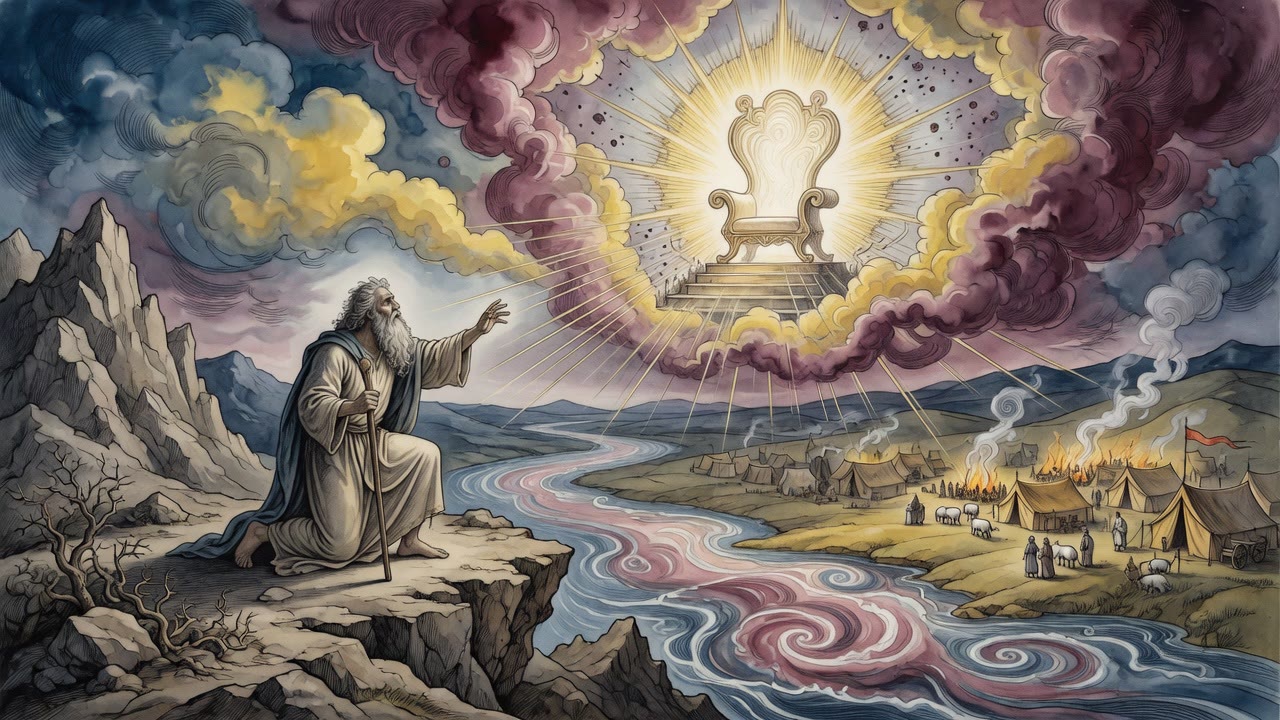
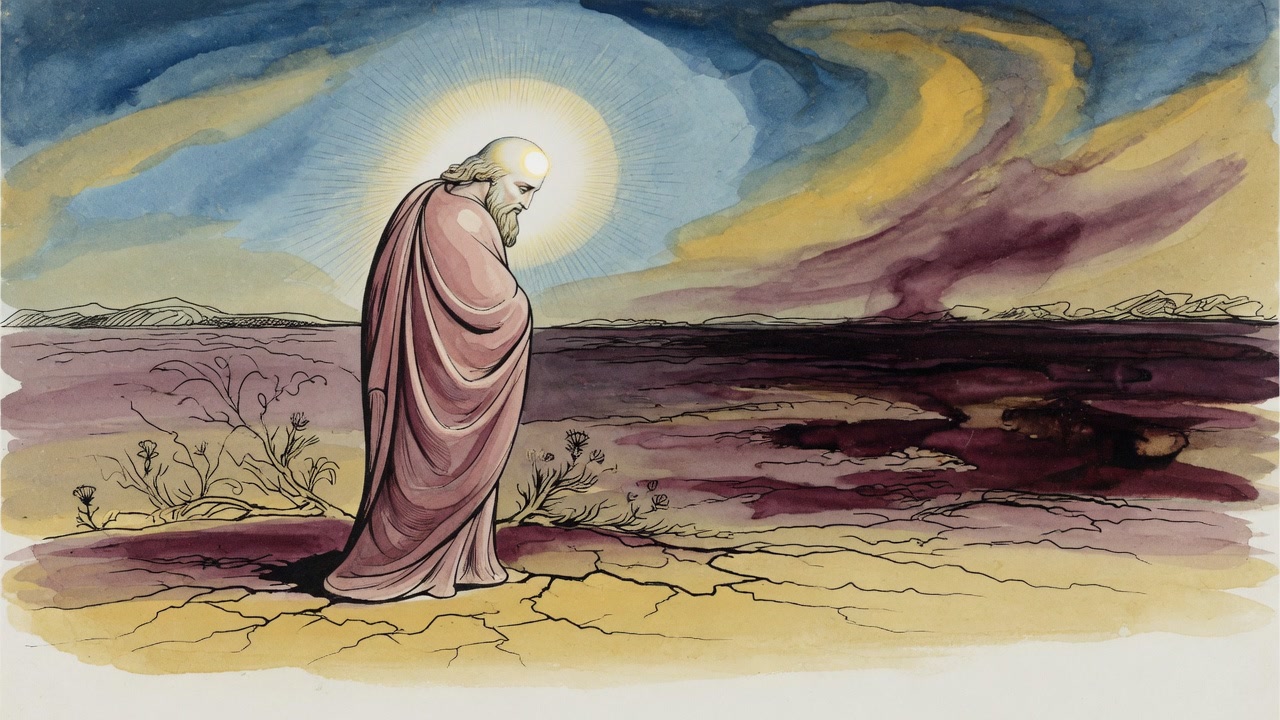
Cain walked east of Eden. The road did not forgive him. It only continued. Each mile proved he was still alive, which meant the sentence was not death but distance.
He listened for footsteps and heard only his own. Everyone never fully arrived as a mob. The fear stayed. The crowd he had named was himself walking.
Night after night he lay down under a sky that no longer answered in the old way. Day after day he rose with the mark still on him, protected from knives he half wanted, denied the nearness he had thrown away. Once he stopped and pressed his forehead to the dirt, as if the earth that took Abel's blood might also take a plea. The dirt stayed dirt. He stood and walked again.
The field behind him kept its silence. The road ahead kept its dust. Between them walked a man who had learned that the worst exile is not from a city but from the King who once spoke his name. Cities can be rebuilt. Nearness, once shattered by a brother's blood, does not stitch itself by miles alone.
← All myths