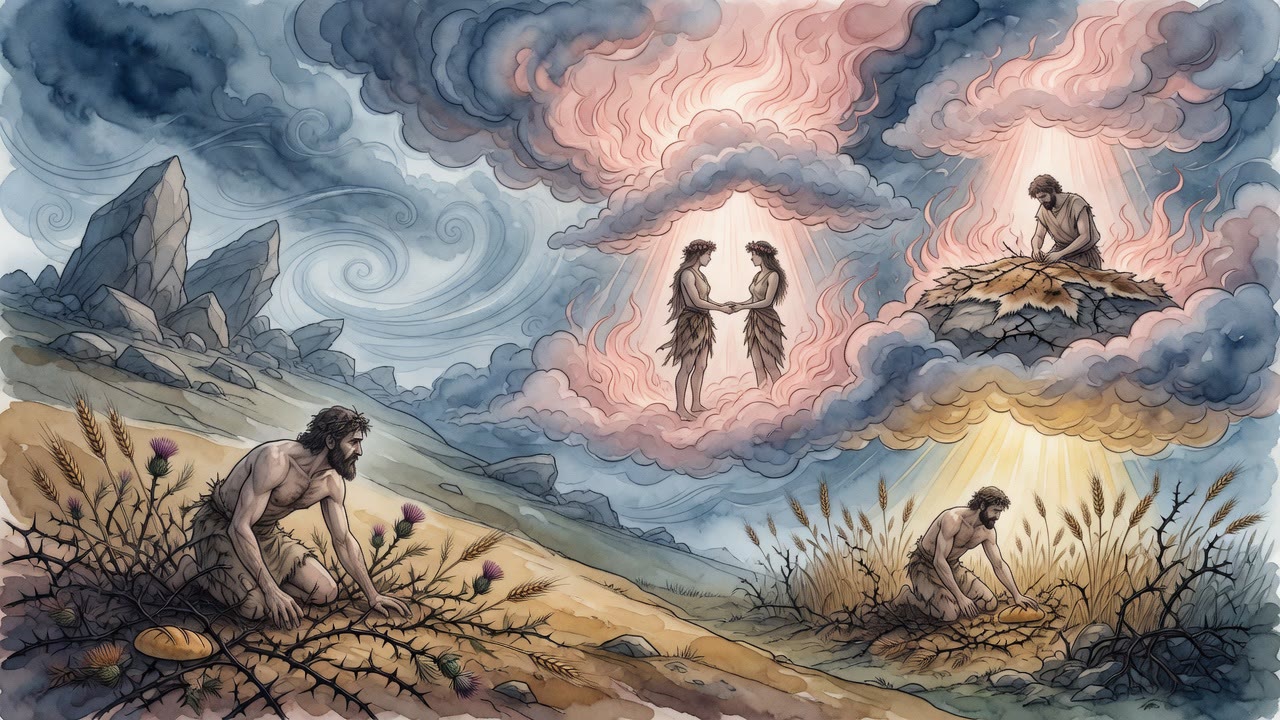
God Named the End of Cain's Bloodline One Child at a Time
Abel had his brother pinned in the field and let him up. God did not count one death afterward. He counted every child Abel would never father.
Table of Contents
 Click for full size
They Divided the World and Then Stood On It
"Come, let us split it," one of them said, and they did. Cain took the land. Abel took everything that could be carried, the flocks and the tents and the cloth.
Then they stood in a field and looked at each other.
"The ground under your feet is mine," Cain said.
"The coat on your back is mine," Abel said.
"Take it off."
"Get off my ground."
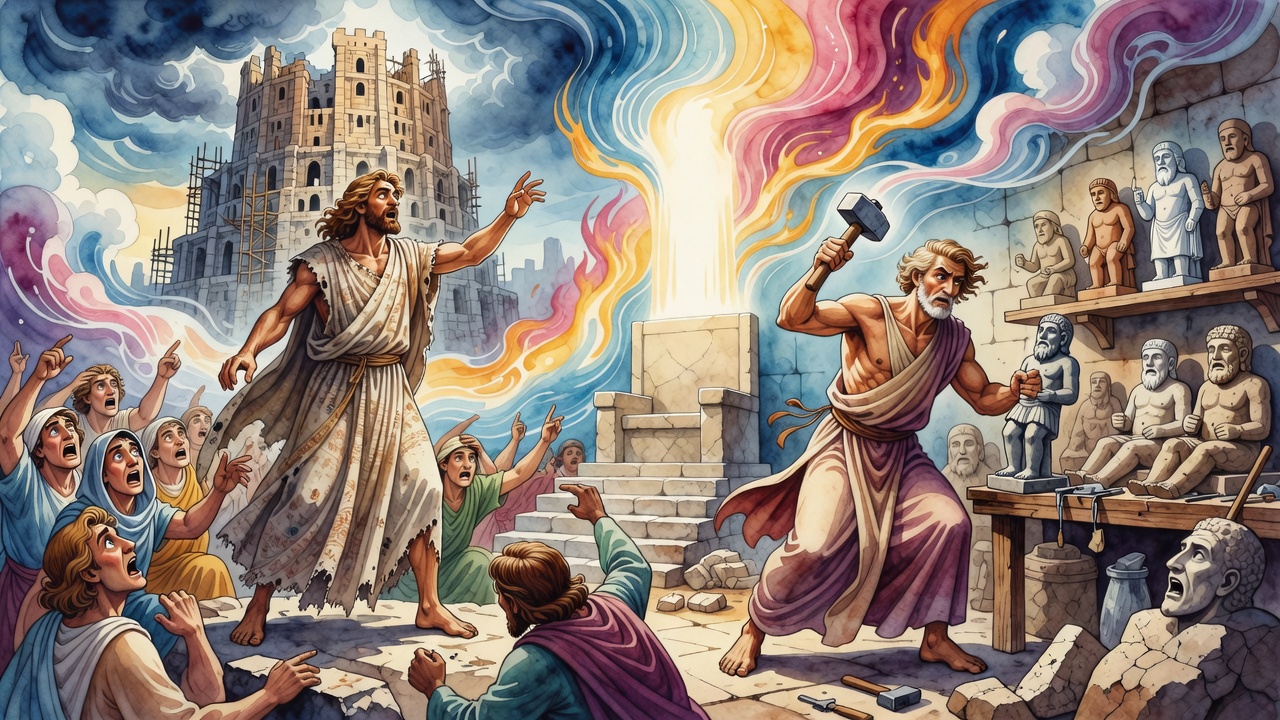
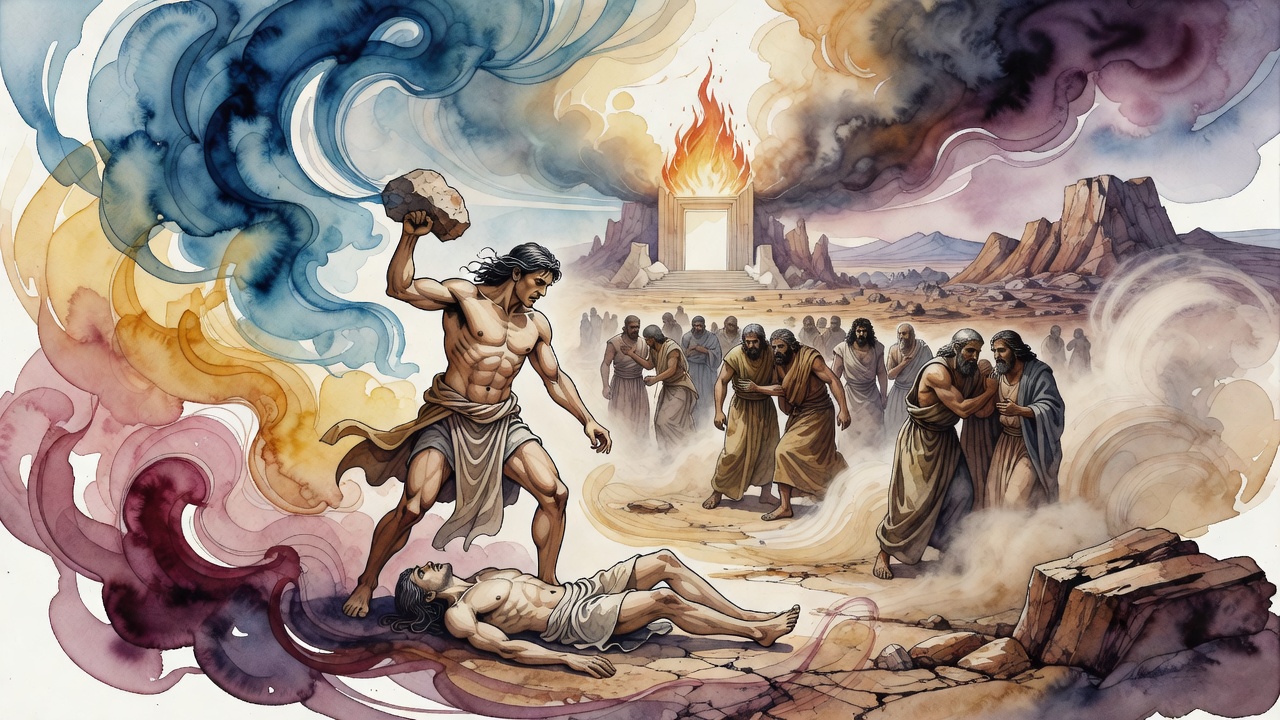
They went at each other there, but Abel won. He was the stronger of the two, which nobody expects, and Cain ended up flat on his back with his brother's weight on his chest. Scripture says Cain rose up. A man only rises from underneath.
Cain lay there and made the only argument he had left. "There are two of us in the whole world. What will you tell our father?" Pity moved in Abel then. He shifted his weight and let his brother stand. Cain stood, and killed him. From that field came the hard proverb they still repeat. "Do no favor for a wicked man, and no evil will find you."
He Did Not Know Where the Soul Goes Out
Cain had never seen a person die and had no idea how it was done. So he opened wound after wound on his brother, arms, chest, back, hunting for the place the life would leave from, but none of them worked, since Abel kept breathing through all of it.
Then Cain remembered watching his father slaughter a bull for an offering, and where the knife had gone in. He went for the throat, for the two soft cords in the neck that a slaughterer has to cut, and that finished it.
Nobody in the world knew what to do with a body. The birds of the sky came down, and the clean beasts came in from the field, and between them they dug and covered Abel over. God paid them for it. Both blessings a Jew says over an animal, the one before the slaughter and the one over the covering of the blood, are their wages for burying the first dead man.
What Is That Bleating Behind You
"Where is Abel your brother?"
"Am I my brother's guard?"
A man once walked into someone's garden, stripped a mulberry branch and ate his fill, and the owner came running. "What have you got in your hands?" "Nothing." "Then why are your hands stained?"
Another man went into a pasture, snatched up a kid, slung it across his shoulders and walked off, and the owner came running after him too. "What have you got?" "Nothing." "Then what is bleating behind you?"
That was the whole trial. Cain stood in front of the judge with nothing in his hands and a sound behind him he could not stop. "The voice of your brother's bloods is screaming at Me out of the ground."
Bloods, and Not Blood
The word came out plural, and that plural is the sentence.
A man who takes money can pay it back and be done with it, but a man who takes a life is not finished so easily. A man who takes a life takes his victim's blood and the blood of everyone his victim would have fathered, all of them, out to the end of the world. Abel died before he had a child. Cain did not kill one brother in a field. He killed a nation nobody would ever count, and their voices came up through the dirt together.
The ground drank what he spilled, and then it shut. It has opened its mouth since, for Korah and for the men who went down with him, but never again to take something in kindly. Whatever the earth swallowed after Abel, it swallowed as a punishment.
God Said It One Grandchild at a Time
Cain went east, built a city and hung his son's name over the gate, but the names after that came out wrong.
Irad, the next child in the line. "I will tear them out of the world," God said over the cradle. Then Mehujael. "I will blot them out of the world." Then Methushael. "I will wear them down until there is nothing left of them." Then Lamech, and God stopped naming a punishment and walked away from the family altogether. "What business have I with Lamech and anything he fathers."
Five generations, and every cradle in the house carried a threat spoken over it.
They lived like people who had heard it. Every man of that generation kept two wives. One he married to bear children, and she sat in her own house like a widow while her husband was alive. The other he kept for himself, and he fed her a cup brewed from roots so that nothing would ever take root in her, and she sat beside him painted and dressed like a woman for hire. The best man of the lot was Lamech, and Lamech did exactly this. Adah, whose name says she was put aside. Zillah, whose name says she sat in his shadow.
The water came for all of them. The ground that had closed its mouth after Abel never had to open it again.
← All myths