The Penny Thieves Who Brought Down the Flood
A man set down a basket of lupine beans in the market. Neighbors pinched it empty by dusk. No court would hear a case that small.
Table of Contents
The man set his basket down at the edge of the market and turned his back for as long as it takes to greet a neighbor. When he turned around, the lupine beans sat a little lower. Not much. A handful. Less than a court would hear a case about.
 Click for full size
He said nothing. What would he have said. The next man came, and the next, each of them pinching less than a coin's worth, each of them walking off clean. By dusk the basket was empty and no judge in the square would take the complaint. The theft was too small to name. Together the pinches were the whole day's food.
Noah walked that market on his way to the timber. He saw the empty baskets. He kept walking.
Too Small for Any Court
They did this all day, in every stall, at every exchange. A pinch of beans. A few dates. Whatever came in under a penny, the perutah (פרוטה), the copper coin that marked the floor of the law. Above that line a man could sue. Below it, the world belonged to whoever had the quicker hand. The thieves never took enough to be called thieves in court.
A woman counted her dates at noon and counted them again at the ninth hour and found the gap. She went to the court. The clerk asked the value. She told him. He shook his head. Go home.
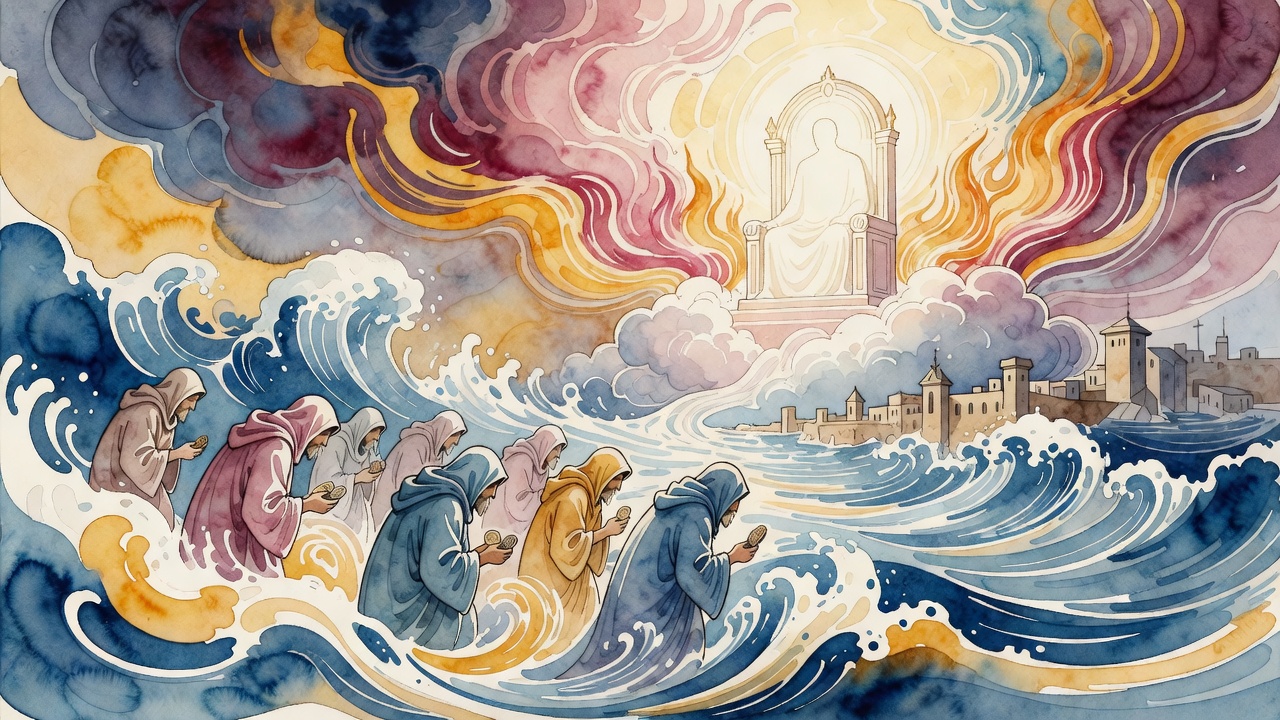
So they went home, and they did it back, because a person who is robbed in amounts the law will not see learns to rob the same way. The market became a place where everyone stole and no one could be caught. God looked at that arrangement and did not call it clever. He called it the end of all flesh.
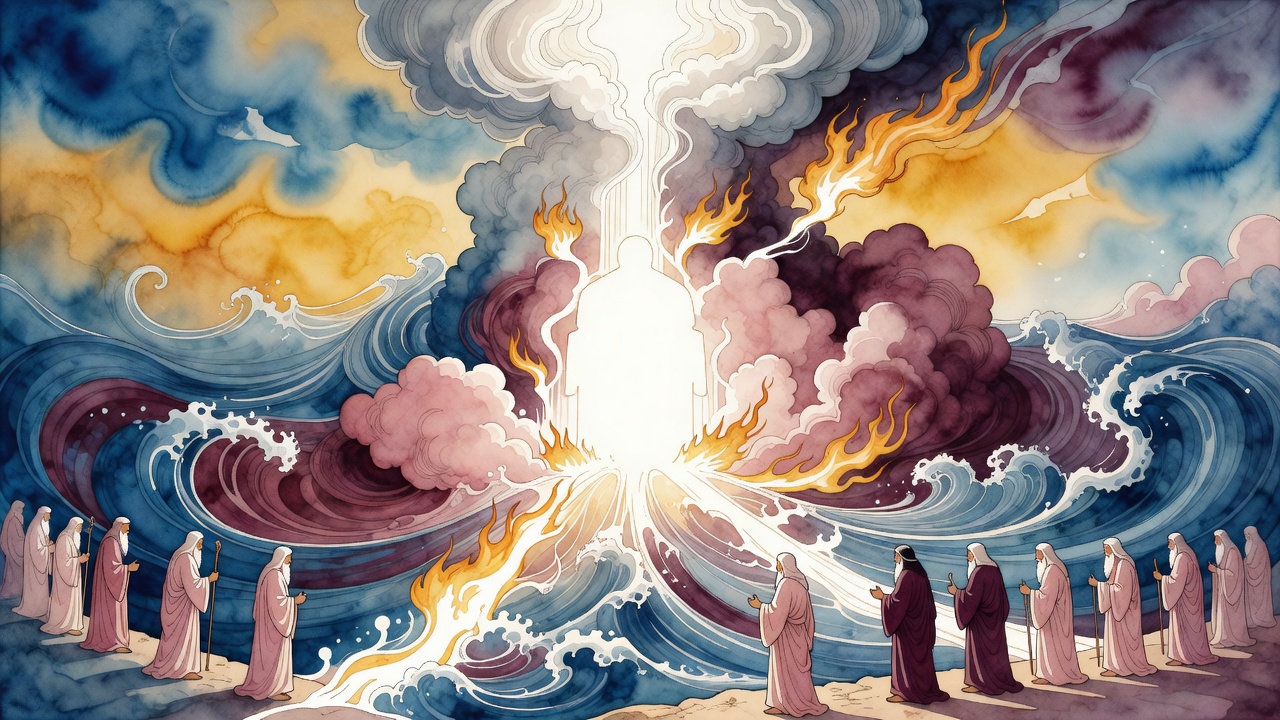
"You behaved outside the line," He said. "I will answer you outside the line."
The Sons of the Judges Came Calling
The Torah says the sons of God saw that the daughters of men were fair and took whatever women they chose (Genesis 6:2). In that generation the phrase did not mean angels. It meant the sons of the judges, the men who ran the courts, the men who lived long and well and without pain, long enough to lay their hands on everything they wanted.
A father watched one of those sons come to his door. The boy did not ask. He took. The father went to the court the next morning and found the boy's own father on the bench. There was no case. When the great commit the breach, no one calls it a breach. When the priest himself steals the god, who is left to swear by it.
They took the unmarried women. They took the married women. They took from all they chose. The daughters of men had no door that would hold, because the men who were supposed to hold the door were the same courts that had made the sons untouchable.
Noah heard the crying from the houses as he fitted another plank. He did not stop building.
The Earth Learned the Same Word
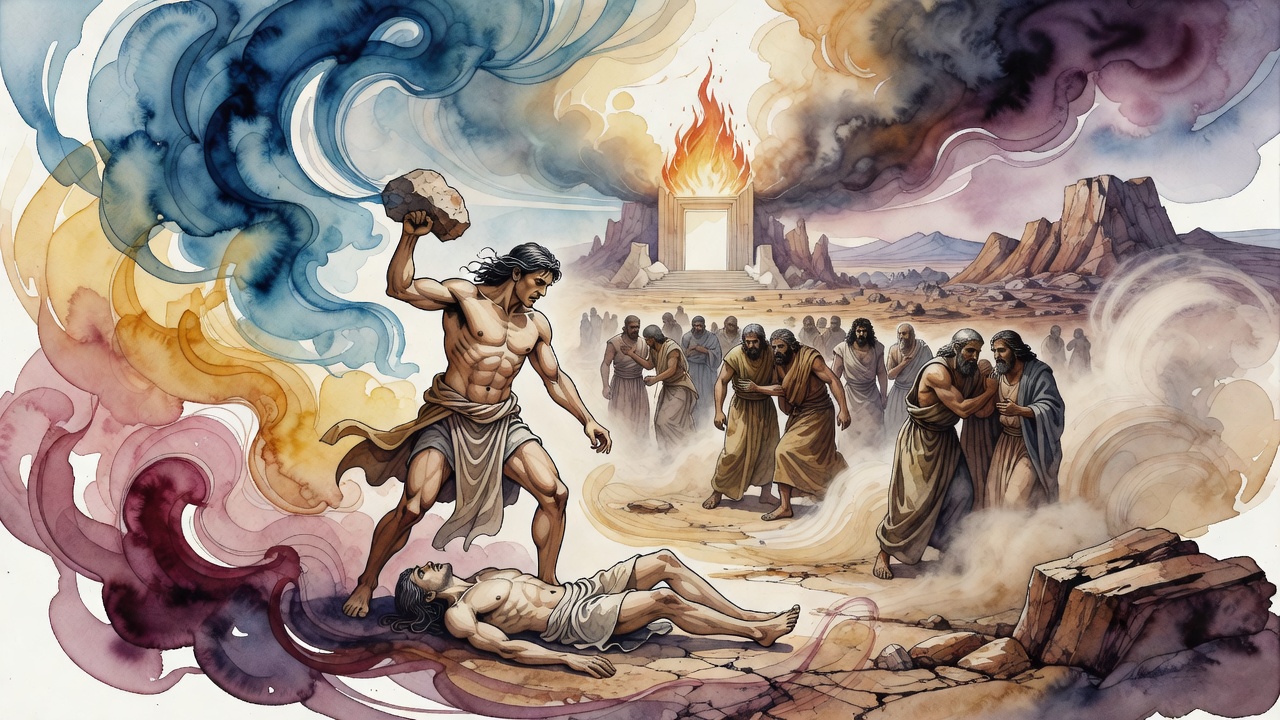
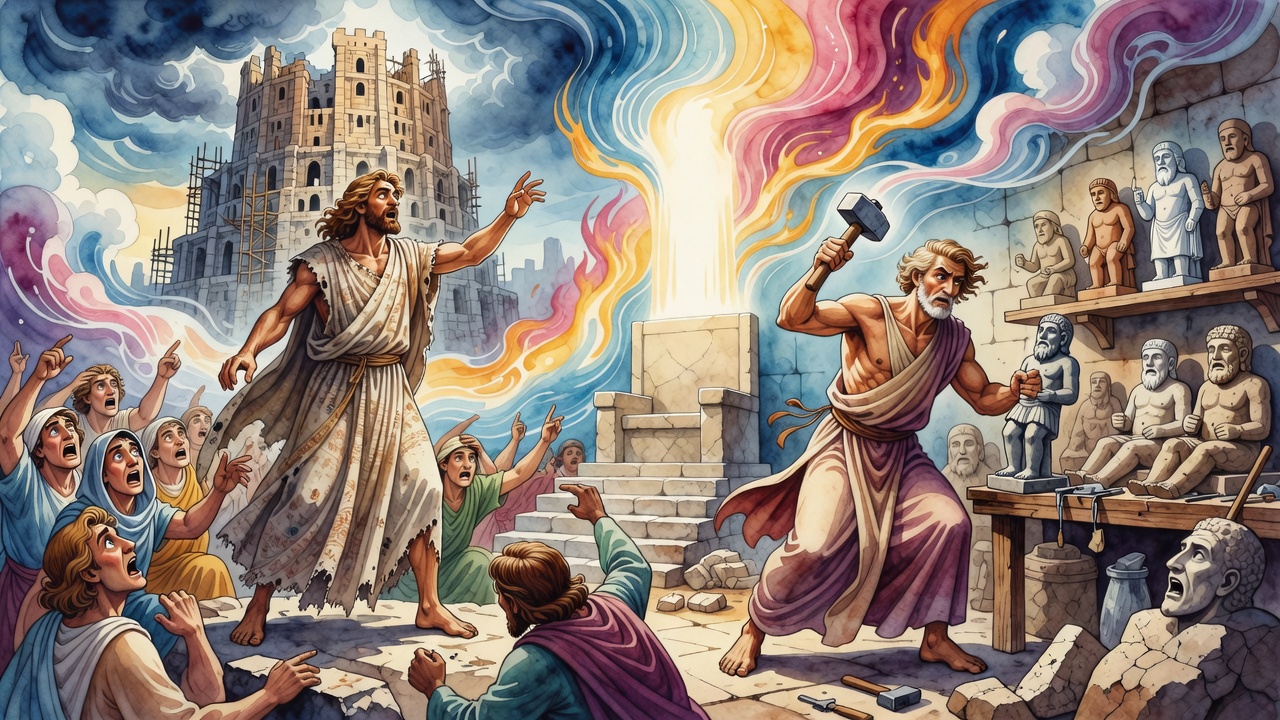
God told Noah the earth was filled with chamas (חמס), violence. In the town that word did not stay one crime. It was the pinch in the basket. It was the son in the doorway. It was blood on a threshold where a man had finally tried to stop the taking. It was a household bowing to a piece of wood and calling the wood its shield.
Robbery. The taking of bodies. Murder. Idols. Four names, one street.
Noah walked it on the last dry morning and saw all four before he reached the ark. A stall with an empty basket. A judge's son going into a house that was not his. A man face down in the alley with no one willing to say who put him there. A carved figure in a window, still being fed.
Then the rain started. The Flood had a beginning as small as a pinch, and those pinches brought a world down.
The Plowshare Cut Soft Ground
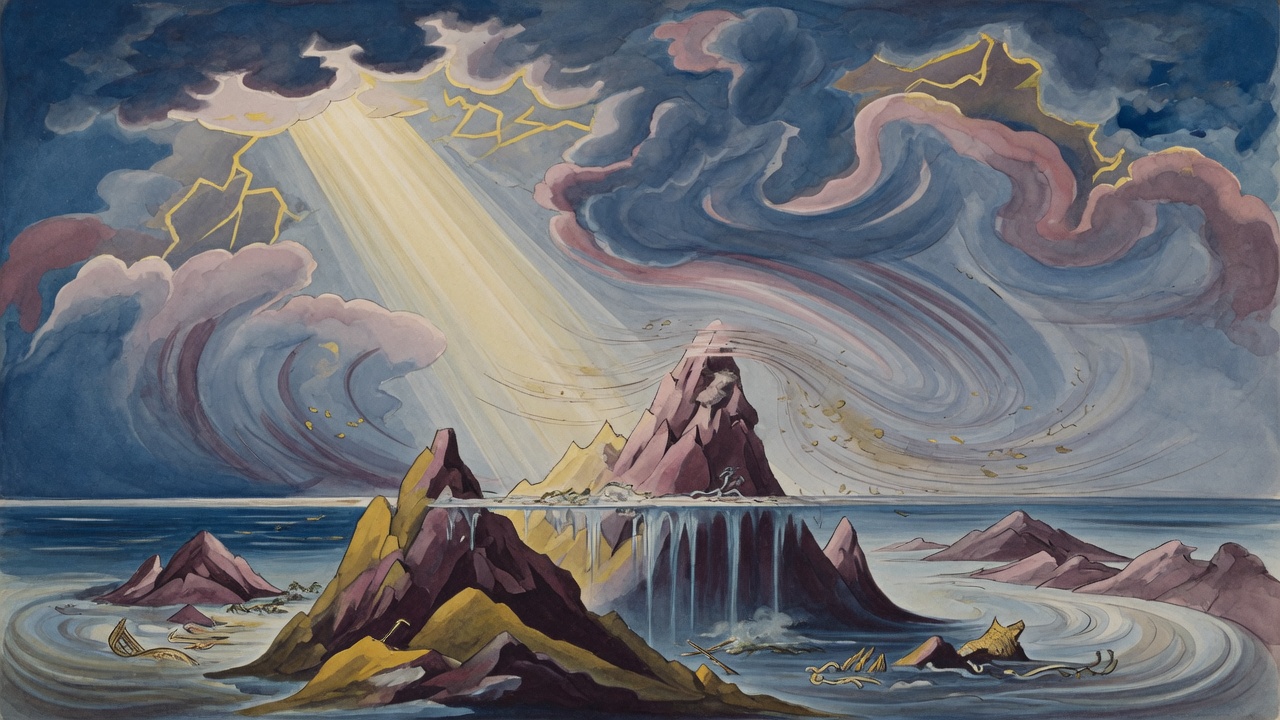
The water did not take the people and leave the land. God said He would destroy them with the earth. The ground that had fed them went under too.
A plowman who had stayed late in a far field felt the share go slack in his hands. The soil that should have held gave like wet meal. Three handbreadths down, the depth a plow cuts, the earth came apart and would not be earth anymore. He dropped the handles and ran for higher ground that was already not high enough.
The market went under. The court went under. The judges' houses went under. The baskets, the dates, the small coins no one would hear a case about, all of it rolled in the same water. Noah's ark lifted. The generation that had stolen in amounts too small to prosecute left no court behind to appeal the verdict.
When the water finally fell, the field was not the field it had been. The cut of the plow was gone. The world that came back had to be planted again from the start.
← All myths