God Cast Sleep on Adam Before the Angels Could Bow
The angels nearly sang Holy to the first man. God dropped Adam into sleep so heaven could tell dust from the Throne.
Table of Contents
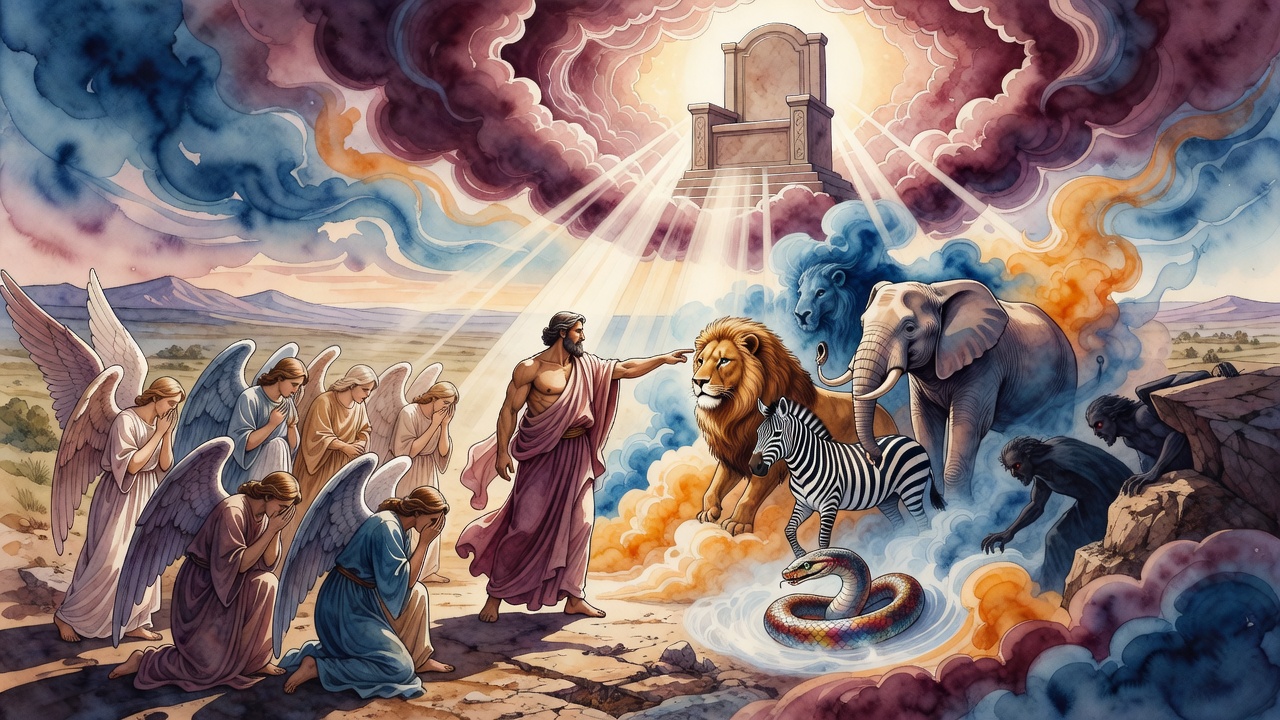
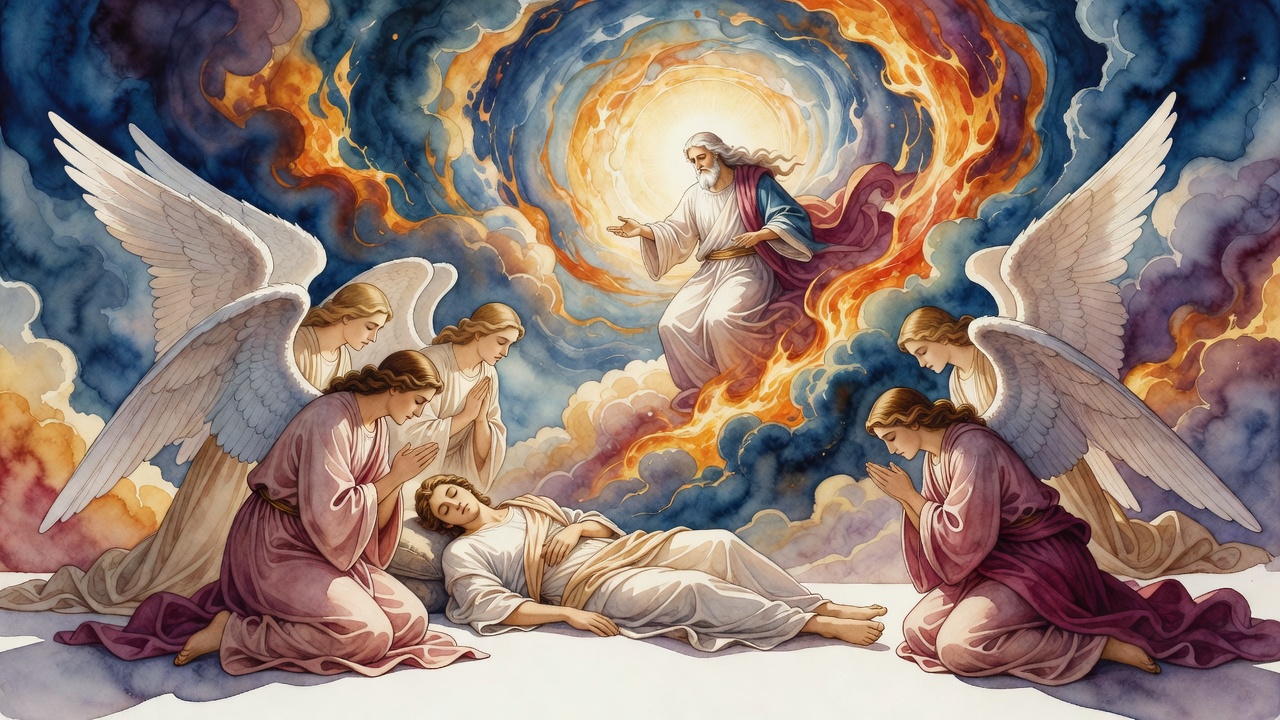
Adam stood upright in the first light, and the angels lost their footing. His skin held a shine they had only seen on the Throne. His face was still unmarked by hunger, shame, or sweat. They crowded closer until their ranks pressed like a wall of fire around a single body. One of them lifted his voice the way the choir lifts it before God.
 Click for full size
"Holy, holy, holy," the angel began, and others joined, aiming the threefold praise at the man, not at the Maker. Wings tightened. The sound rose as if the court had found a second center.
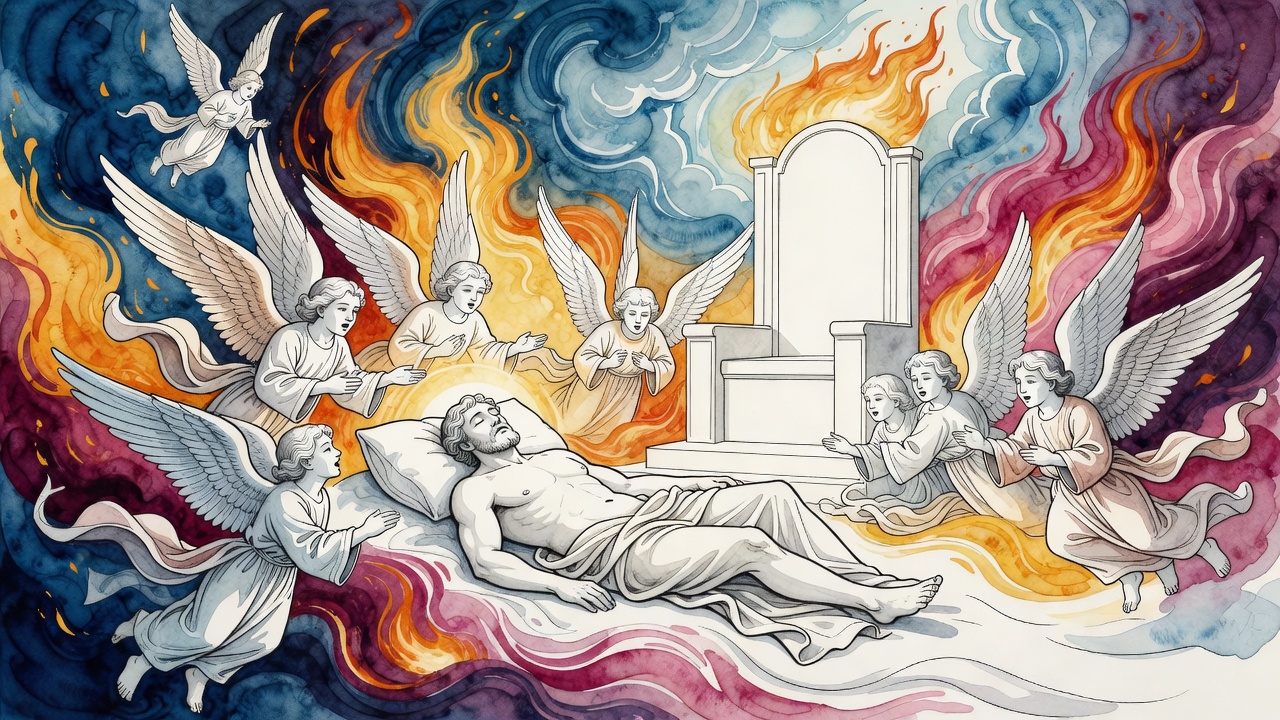
God did not argue with them. He cast sleep down on Adam like a cloak. The man's knees unlocked. His head tipped. The light that had fooled the court went out of his face the moment his eyes closed. Dust was still dust, even when it could walk.
The Choir Stops Mid-Note
The angels pulled back as if the floor had heated under their feet. The one who had started the hymn clamped his mouth shut. Another stared at Adam's chest rising and falling, slow and ordinary. A third lowered a wing that had been ready to bow. Sleep is a small death. It proves a boundary no angel needs.
God spoke the sentence that would later land hard on the man's ear after the garden broke: dust you are, and to dust you return (Genesis 3:19). The court heard it first as a correction of vision. What had been named already was man, not rival, not second glory. What was, its name was already called, and it is known that he is man, and he cannot contend with what is mightier than he (Ecclesiastes 6:10).
Adam dreamed without knowing he was on trial. His fingers uncurled against the new earth. A breath escaped him, thin and human. The angels watched the rise and fall of a chest that could stop. That was enough. The praise swung back to its true target, and the almost-error hung in the air like smoke after a near fire.
Moses Already Had a Name
The same pattern of naming returned when Moses stood at the bush and later at the Tent. The Lord called to Moses (Leviticus 1:1). Everyone who mattered already knew who he was: the messenger, the one sent to Pharaoh, the man whose name had been called before the mission finished testing him (Exodus 3:10). A called name can save a life. A called name can also crush the one who carries it.
On the mountain after the calf, God pushed Moses toward the people as if ownership itself had shifted. "Go down, because your people, whom you brought up out of Egypt, have become corrupt." Moses felt the weight of a name that could be praised too high or blamed too hard. He gripped the moment with both hands. He did not sleep through that crisis. He argued. He stayed awake while Israel staggered below in gold and panic.
Adam's first danger had been the opposite problem. The court almost raised him too high before he had taken a full day of breath. Sleep saved the difference between creature and Creator before the man could learn to enjoy the mistake. Moses' danger was to be left holding a people as if they were only his. Both men lived under a name fixed in advance. Only one of them had to be dropped into unconsciousness so heaven would stop bowing.
Wisdom as a Shoreline
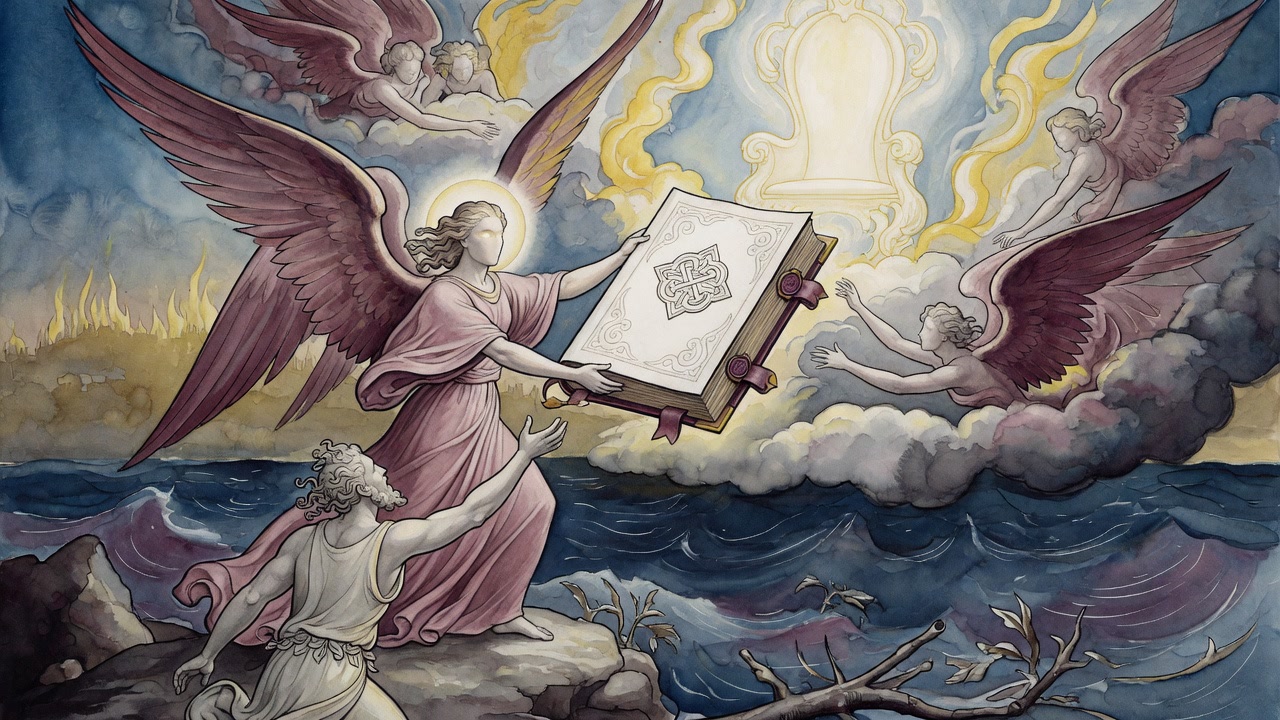
Long after the garden, Solomon received wisdom like sand on the seashore (I Kings 5:9). Sand holds the sea back. One opinion said his understanding gathered all Israel inside it, a nation compared to sand elsewhere in the promise (Genesis 22:17). Another, in the name of Rabbi Levi, said the gift itself was a shoreline: it kept him from flooding over the edge into sin for as long as he stayed inside its measure.
Solomon said he tried to become wise and found wisdom still far from him (Ecclesiastes 7:23). That confession is the waking version of Adam's sleep. Even the man called wiser than ha'adam, wiser than any man, including the first, could not dissolve the gap between human knowing and the mightier One (I Kings 5:11). Breadth of mind did not make him a second Throne.
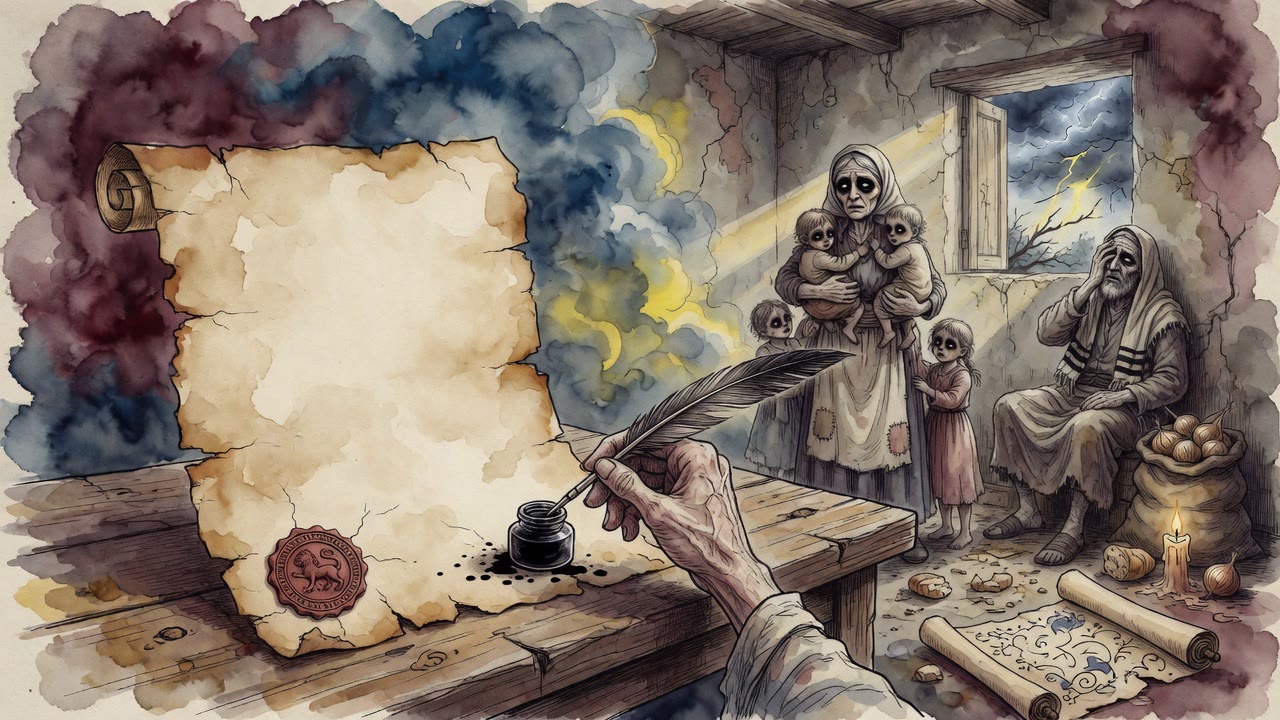
When he needed craftsmen for the Temple, he asked Pharaoh Nekho for help. Pharaoh's astrologers named the men destined to die that year, and Pharaoh sent those marked workers as a gift. Solomon saw through the trick. He dressed the return in linen endings. He sent the men home with shrouds and told Egypt to bury its own dead. Wisdom here was not ornament on a crown. It was a boundary that refused to let royal building become a quiet murder staged as friendship.
A Curse in the Bedroom
The warning moves from open court to private rooms. Even in your thought do not curse a king, and in your bedrooms do not curse the wealthy, for a bird of the heavens will carry the sound, and a winged one will tell the matter (Ecclesiastes 10:20). Ravens and winged carriers become the image for a secret that will not stay buried. A muttered line leaves the pillow. A wall grows ears.
God is the King in the sharper reading. Speech is the honor animals do not share. Beasts see and hear and eat. Humans form a curse with the same mouth that can form praise. To turn that honor into a whispered blasphemy is to misuse the gift that set Adam above the beasts. The man who almost received angelic praise is the same creature who can poison a closed room with a single bitter sentence.
Praise aimed wrong and curses aimed wrong both tear at the same seam. One inflates the dust until the choir confuses it with glory. The other spatters the Throne from under a blanket. Sleep taught the first lesson in public, with angels watching a chest rise and fall. The bedroom warning teaches the second in private, where no audience seems present and the bird still flies.
Dust That Still Stands
When Adam woke, the angels were no longer crowding him with hymns. The air had cooled. He stood, still beautiful, still first, and now correctly seen. A little soil clung to his cheek from the place where his head had rested. Mortality had been staged for heaven before it was sentenced for earth.
He would walk the garden with a name already fixed. He would fail later in ways sleep could not prevent. The court had learned what it needed in those few closed-eyed breaths: the man can shine and still fall. The man can be called and still be dust. The choir belongs to God alone.
Somewhere ahead of him in the long story, Moses would carry a name under pressure, and Solomon would measure a shoreline of wisdom against a king's appetite. Behind all of them remains the first image: angels mid-bow, a body going slack, and the Holy pulled back to its only rightful mouth.
← All myths