Parshat Bereshit5 min read

The Earth Drank Abel and Raised a Courtroom Cry

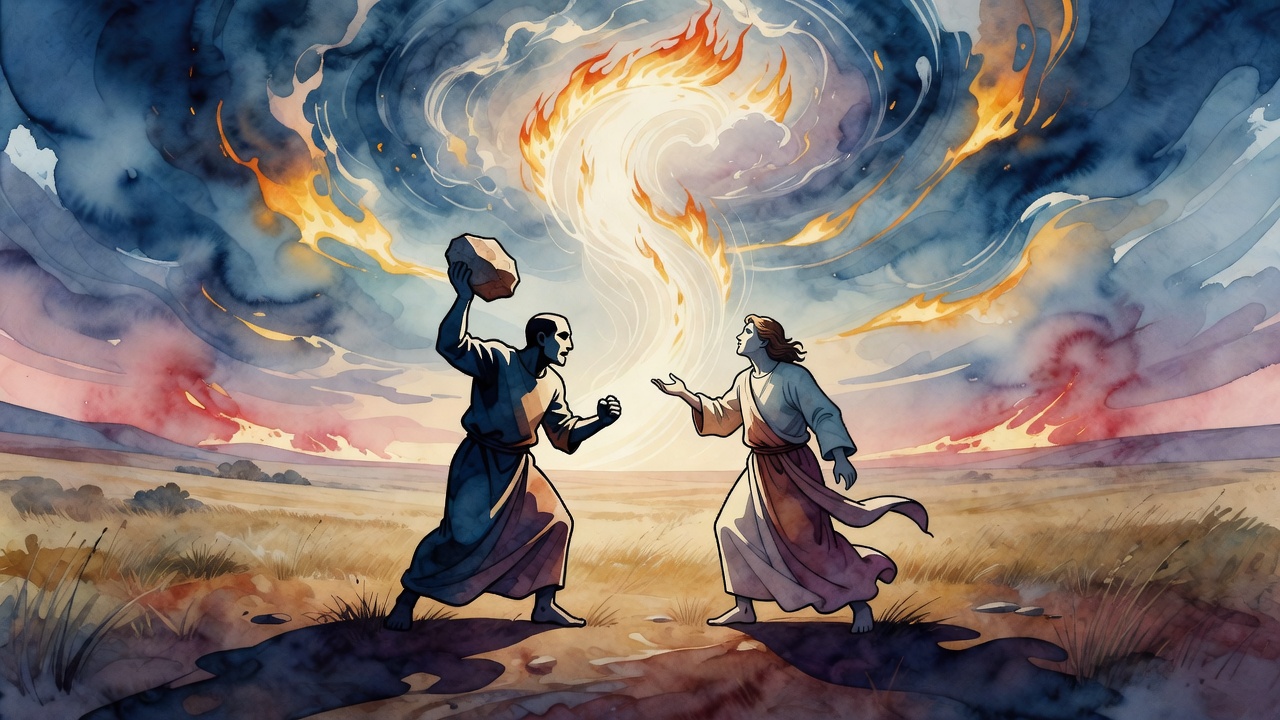
Cain drops the stone. The soil opens its mouth, swallows plural bloods, and the ground itself becomes witness and curse against the first killer.

Curated by Arthur · Told by Maggid ·
Table of Contents
  1. The Field After the Blow
  2. Bloods, Not Blood
  3. The Earth's Mouth
  4. What the Bandit Wanted
  5. The Mark and the Road
The Earth Drank Abel and Raised a Courtroom Cry Click for full size

The Field After the Blow

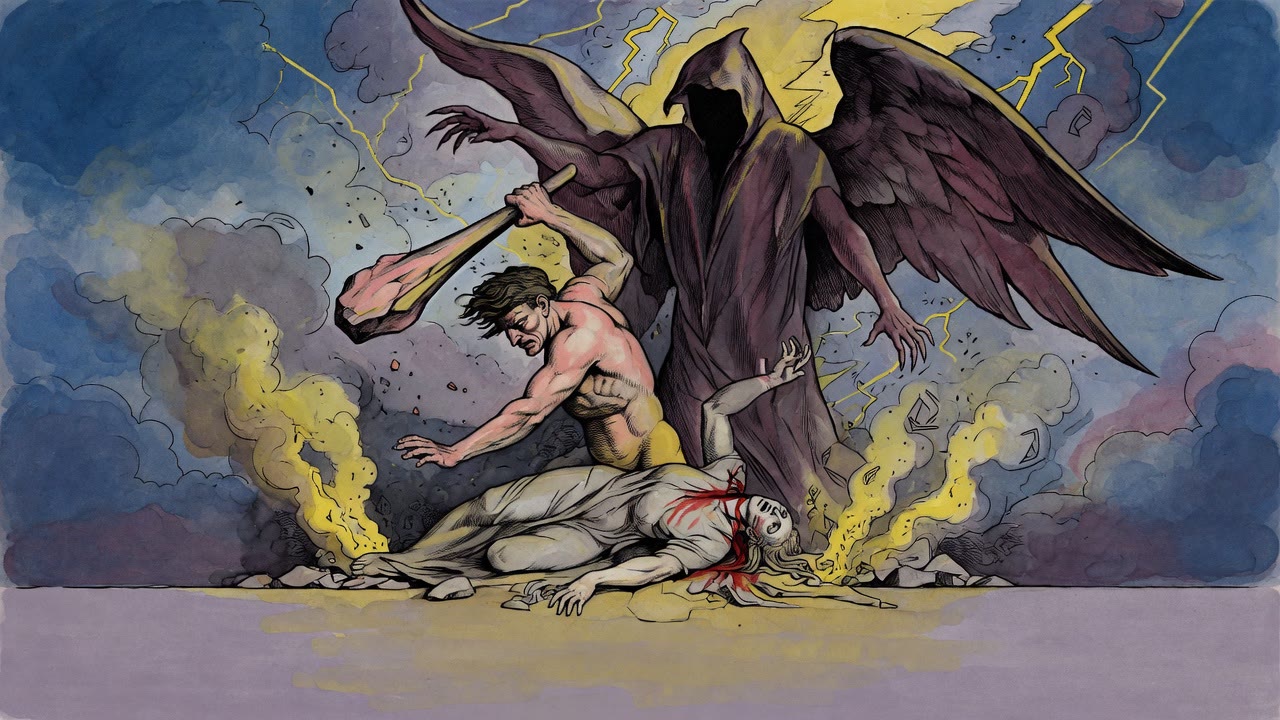
The stone is still warm in Cain's hand when the quiet breaks. Abel does not move. Birds keep circling as if the sky has not noticed. Dust settles on a face that will never lift again. Cain looks left and right for a place to hide what he has done, and finds only soil, ordinary soil that fed their flocks and their thin crops.

He pushes the body down. He scrapes dirt over cloth and blood. He stamps the mound flat with a heel that will not stop shaking. He walks away as if work can bury a brother. Behind him the ground does something no field has done before. It opens a mouth.

Not a crack from drought. A mouth. The first murder teaches the earth how to drink on purpose.

Bloods, Not Blood

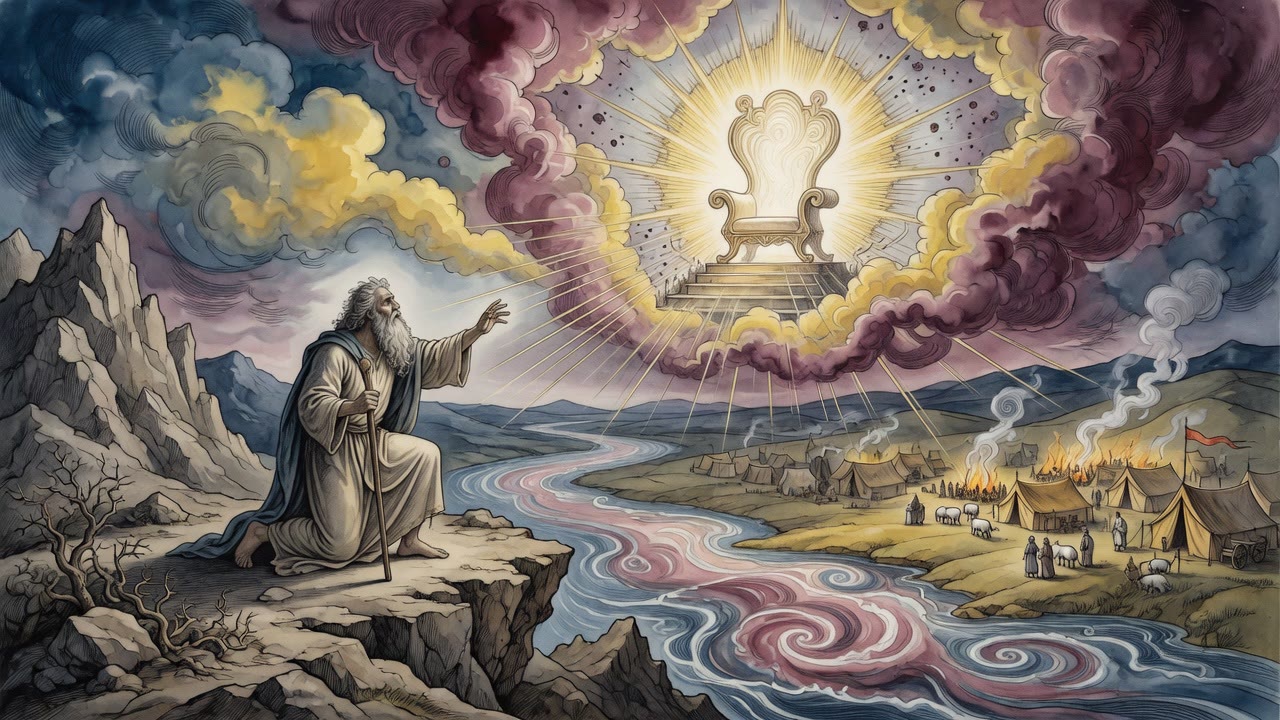
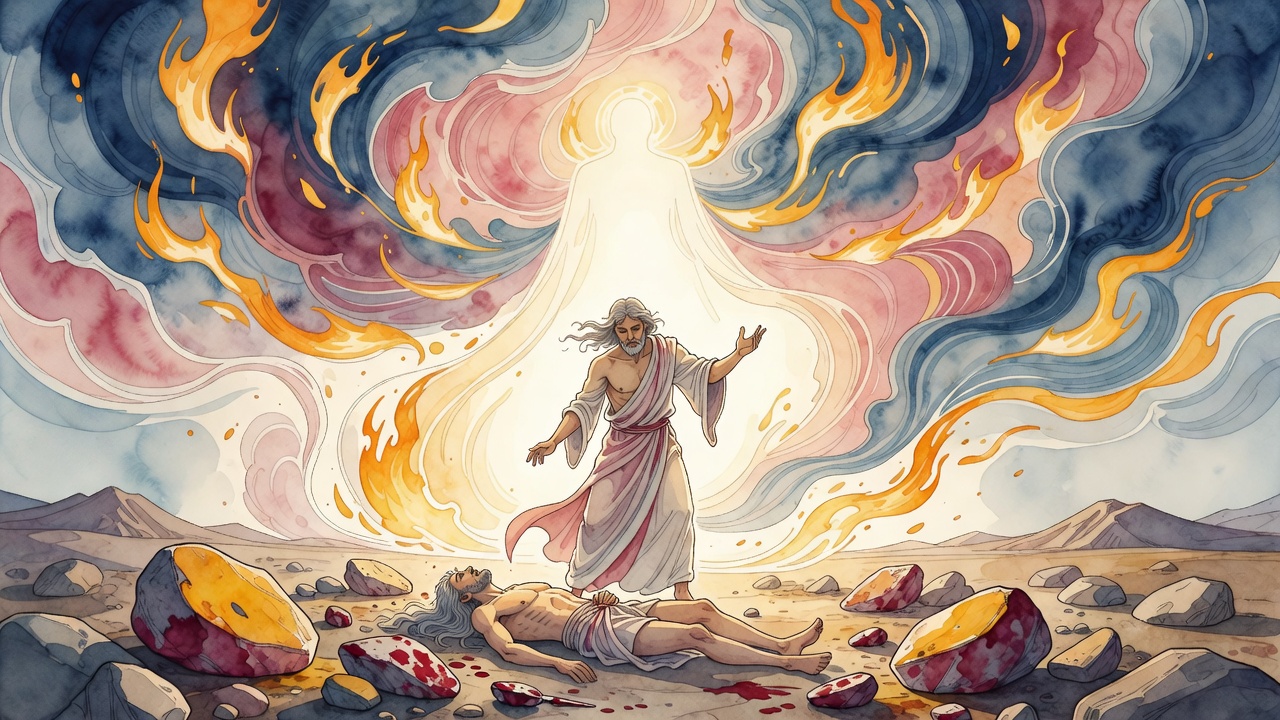
When the question comes, it does not come soft. God asks what Cain has done, and the answer is already rising from the sod. The voice is not one voice. The Targum keeps the Hebrew plural: bloods. The blood of the murder of thy brother, swallowed in the earth, cries before Me from the earth.

One man has fallen. A whole future is screaming. Every child Abel would have raised, every name that would have stood in the line after him, every prayer that would have left those mouths, all of it is counted as spilled. The ground does not hold a secret. It holds a courtroom, and the plaintiff is a lineage that will never walk.

Cain tries the old lie first. He does not know. He is not his brother's keeper. The soil will not join the lie. It has already swallowed the evidence and turned the evidence into speech that Heaven answers before Cain finishes the shrug.

He feels the air change. The field that was private becomes public. There is no fence high enough for a cry that starts underfoot.

The Earth's Mouth

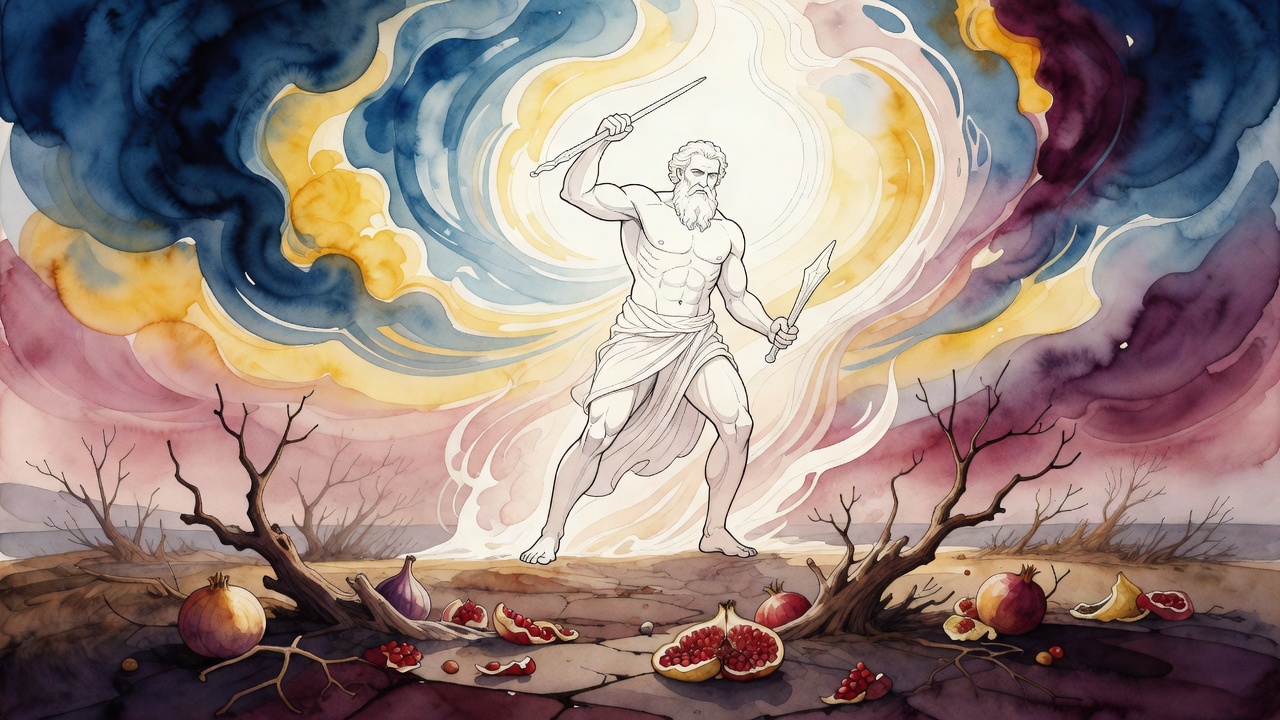
The curse names the partner in the crime. Cain is cursed from the earth that opened its mouth and received the bloods from his hand. The field is not scenery. It is an actor. It drank what Cain poured, and for that partnership it will refuse him forever.

He will work. He will sweat. The ground will answer with thorns and thin harvests. The same mouth that opened for Abel's blood will close against Cain's seed. Restless wandering becomes the only crop left to him. Murder against a brother turns the land into an enemy that never sleeps and never forgets the taste.

Before the stone, Cain's face had already fallen. When God turned to Abel's offering and not to his, the brothers' faces seemed to blaze like fire held too close. The warning had come then: sin crouches at the door, weak at first, then strong. The grammar of the warning used a masculine form for a word that should have been soft. Cain did not beat the bandit at the crossroads. He paid the toll with a brother's life and thought the road was cleared.

What the Bandit Wanted

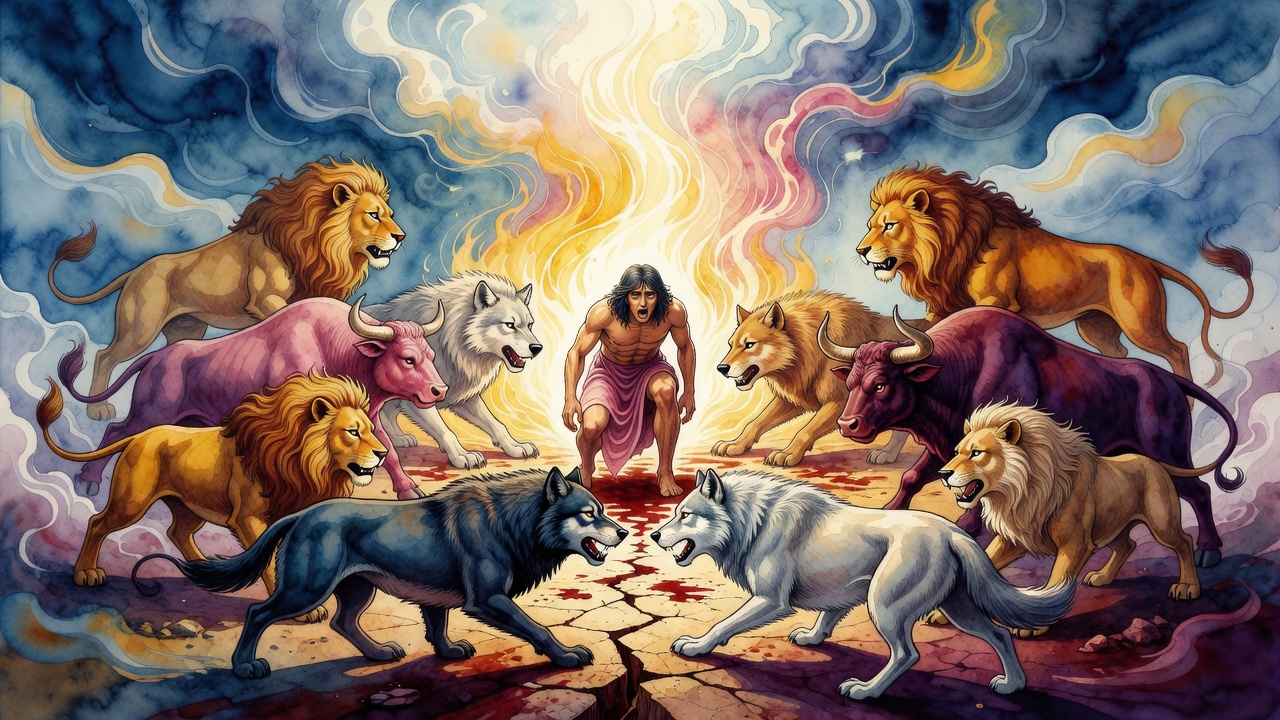
The teachers picture the evil inclination as a roadside thief who demands everything a traveler carries. Most hand it over with a nervous laugh. A clever man stops and strikes instead. There are dogs in great cities trained to feign sleep beside a baker's stall until the baker nods, then snatch the loaf and vanish. The inclination works that way when the will dozes. Cain did not doze. He chose while wide awake.

Generations would pay that thief until Abraham rose and refused. Cain is the first who paid in full and heard, for a moment, only the wind. Then the ground spoke, and the wind was small.

The cry from the sod travels farther than any footsteps. No crime is truly hidden when the witness is the dirt under every shoe on every road that will ever be built from this field outward.

The Mark and the Road

Cain leaves marked and protected, a mercy that does not erase the sentence. He is not free. He is not dead. He is a man the earth will not feed and Heaven will not let others finish. Behind him the field keeps its mouth closed now, but the voice has already reached the court above. The first murder teaches the world its own law: kill one, and you kill a lineage; spill blood, and the earth itself learns how to testify.

Somewhere ahead a city will rise with his name on it, and still the soil of this first field will remember the drink it took. The stone cools in the grass. Abel does not rise. The birds circle lower. Cain walks, and every step is a question the ground has already answered.


← All myths

From the tradition

Sources

3 sources

The texts behind this telling. Some cards carry a translation of the source; others are our own retelling of it, and each card says which. Every card links out to the original.

Targum Pseudo-Jonathan on Genesis 4:10Targum Pseudo-Jonathan on Genesis

Retold in our words. Read the original at the link below.The Targum of Jonathan ben Uzziel, trans. J. W. Etheridge, London, 1862 · Public Domain

God's question to Cain after the murder is a pair of hammer blows. Targum Pseudo-Jonathan on (Genesis 4:10) phrases it as: "What hast thou done? The voice of the bloods of the murder of thy brother which are swallowed up in the sod, crieth before Me from the earth."

The Hebrew plural, demei, "bloods", is preserved. The Mishnah (Sanhedrin 4:5) famously reads this plural to mean the blood of Abel and of all his potential descendants, all of whom were cut off by that single stone. When you kill a person, you do not kill one; you kill a lineage. The blood of an entire future cries out.

The earth has swallowed the blood, but it has not silenced it. The Targumist keeps the image literal: the sod drinks the blood, and then raises a voice. No crime is truly hidden. The ground itself turns witness.

Full source
Targum Pseudo-Jonathan on Genesis 4:11Targum Pseudo-Jonathan on Genesis

Retold in our words. Read the original at the link below.The Targum of Jonathan ben Uzziel, trans. J. W. Etheridge, London, 1862 · Public Domain

Targum Pseudo-Jonathan on (Genesis 4:11) renders the curse God pronounces upon Cain with a vivid expansion of the Hebrew. Where the plain text says Cain is cursed from the ground that opened its mouth to receive his brother's blood, the Targum sharpens the image: "And now because thou hast killed him, thou art cursed from the earth, which hath opened the mouth, and received the bloods of thy brother from thy hand."

Two details carry the weight of the verse. First, the plural "bloods" echoes the rabbinic reading that the murder of one man destroys not only a single life but all the descendants who would have come from him, so that the spilled blood cries out as if it were many. Second, the earth is not a passive setting but an active participant. It opened its mouth, a strange and arresting picture, to swallow the blood that Cain spilled.

This continues a thread already present in the tradition: the ground had in some sense fallen short after the sin in Eden, and now it is implicated again, becoming a witness to the first killing. By drinking in the blood, the soil itself becomes the very instrument of the curse that follows. The same earth that received the blood of Abel will refuse to give Cain its strength; though he works it, it will no longer yield its produce to him, and he becomes a restless wanderer upon it. The crime against a brother thus reverberates outward until even the land turns against the one who committed it.

Full source
Yalkut Shimoni on Torah 36:2Yalkut Shimoni on Torah

Translation of the source text.Torat Emet (Yalkut Shimoni) · CC-BY-NC

Another teaching: Rabbi Elazar said the Noahides offered peace offerings, and Rabbi Yose bar Hanina said they offered burnt offerings. Rabbi Elazar objected: is it not written "and from their fat," from something whose fat is offered? How does Rabbi Yose bar Hanina handle this? From their fattest ones. Rabbi Elazar objected: "and he sent the young men of the children of Israel" (Exodus 24:5). How does Rabbi Yose handle it? Whole ones, without flaying and cutting into pieces. Rabbi Elazar objected: "and Jethro the father-in-law of Moses took" (Exodus 18:12), according to the one who says Jethro came after the giving of the Torah. And this supports Rabbi Yose: "Awake, north wind" (Song of Songs 4:16), this is the burnt offering that was slaughtered on the north side; and what is "Awake"? Something that was asleep and was roused. "And come, south," these are the peace offerings that are slaughtered on the south side; and what is "come"? Something new. This verse also supports him: "this is the law of the burnt offering, it is the burnt offering" (Leviticus 6:2), which the Noahides offered; and when it reaches the peace offerings, "and this is the law of the sacrifice of peace offerings" (Leviticus 7:11), it is not written "which they offered" but "which they shall offer," from here onward.

"And the LORD turned to Abel" (Genesis 4:4): He was reconciled by him. "But to Cain and to his offering He did not turn": He was not reconciled by him. "And Cain was very angry, and his face fell": they became like fire. "Is it not so that if you do well, there is uplift": blessing; "and if you do not do well," uplift, a curse. Another interpretation: if you do well, I forgive your iniquities; and if not, the sin of that man is heaped up and overflowing. "Of David: Happy is he whose transgression is lifted" (Psalms 32:1): happy is the man who is higher than his transgression, and whose transgression is not higher than him. "Sin crouches at the door": it is not written "crouching" [feminine] here, but "crouching" [masculine]; at first it is weak like a female, and afterward it grows strong like a male.

There are dogs in Rome that know how to entice. One goes and sits beside a baker's shop and pretends to doze, and while the shopkeeper dozes, the dog snatches a loaf from the ground, and by the time people gather, the dog has made off and is walking away with the loaf. Rabbi Abba said: this evil inclination is like a lurking bandit who would sit at the crossroads. To everyone who passed by he would say: hand over what you have. A clever man passed and saw there was no hope of robbing him of anything, and began to thrash him. So too for several generations the evil inclination destroyed: the generation of Enosh, the generation of the Flood, the generation of the Dispersion. Once our father Abraham arose and saw there was no hope in it, he began to thrash it. This is what is written, "and I will beat down his foes before him" (Psalms 89:24).

Full source