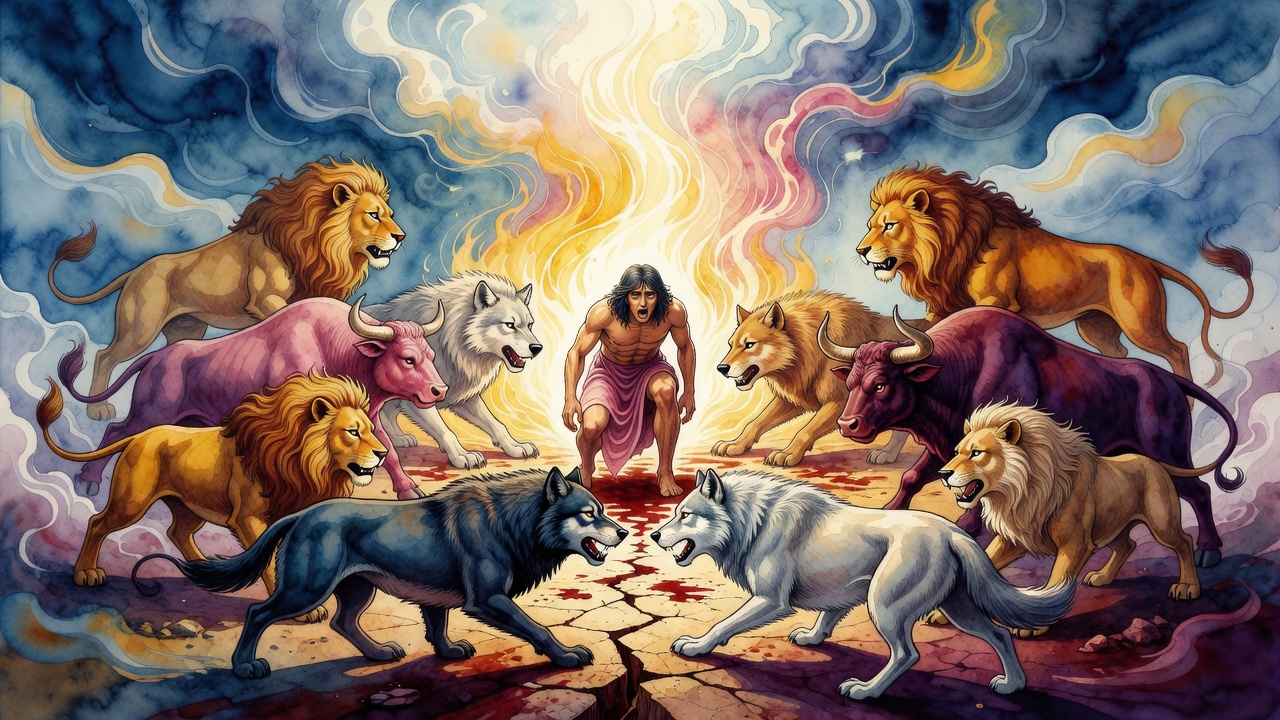
Cain Struck Abel and Azazel Was Standing There
Abraham looked into the picture God held open. Cain's hand was already rising, and Azazel stood in the field as if he had never left Eden.
Table of Contents
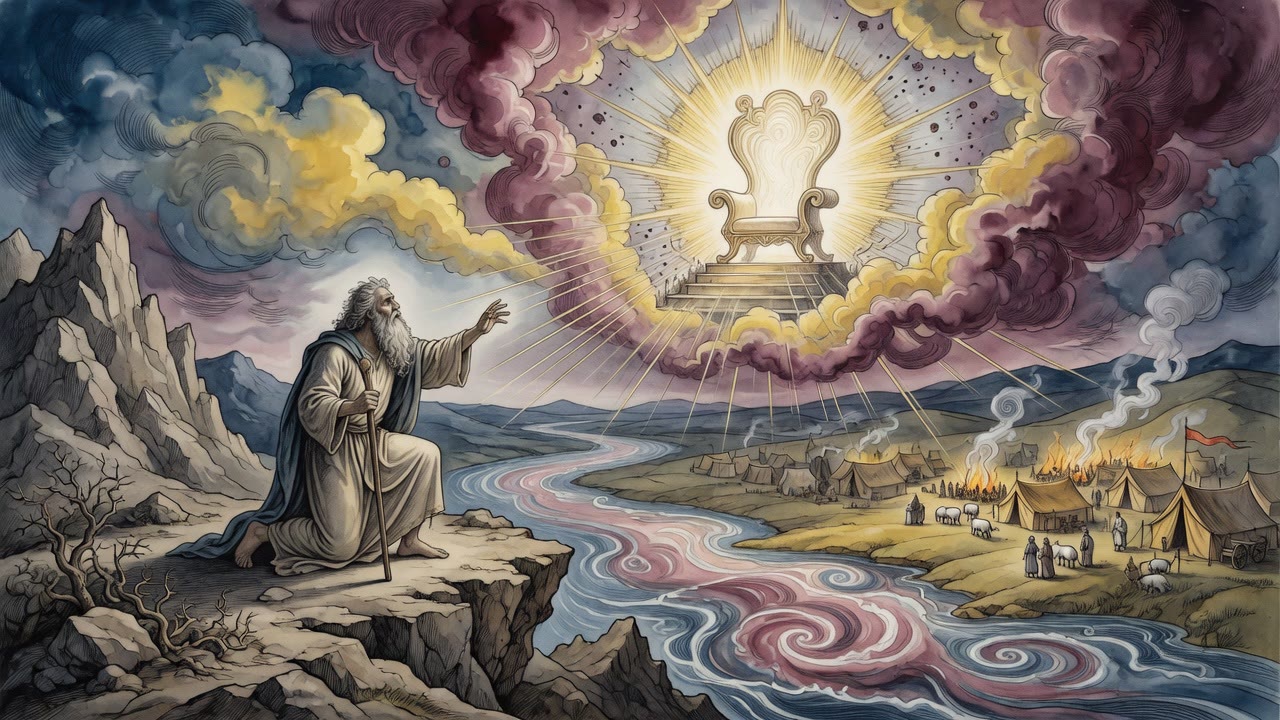
Abraham stood where the last heaven thinned. God had already shown him the garden, the fruit, and the figure who held it out. The question Abraham had asked was still in the air. Why is evil permitted. Why does that figure still work.
 Click for full size
"I will tell you what shall be, and how much shall be, in the last days," God said. "Look now at everything in the picture."
Abraham looked. He saw Adam and Eve. With them, the cunning adversary. Then the next frame opened, and the same force had not gone anywhere.
The Picture Did Not Stop at the Tree
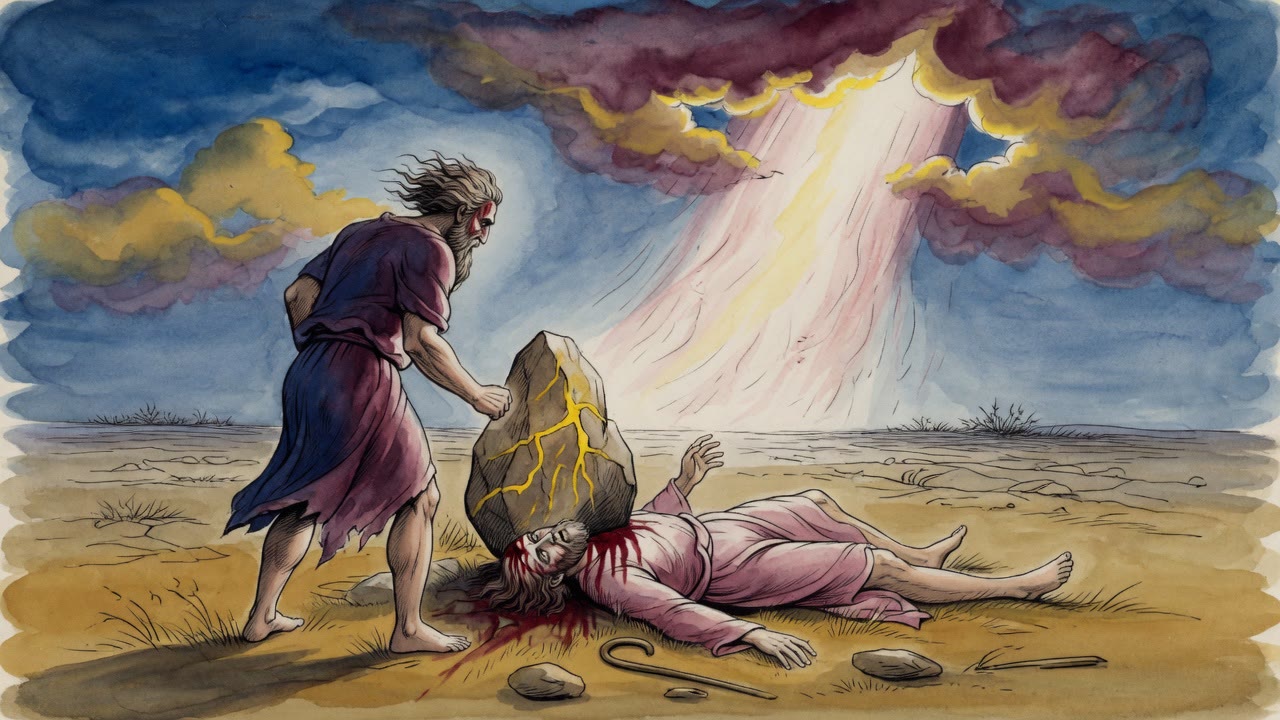
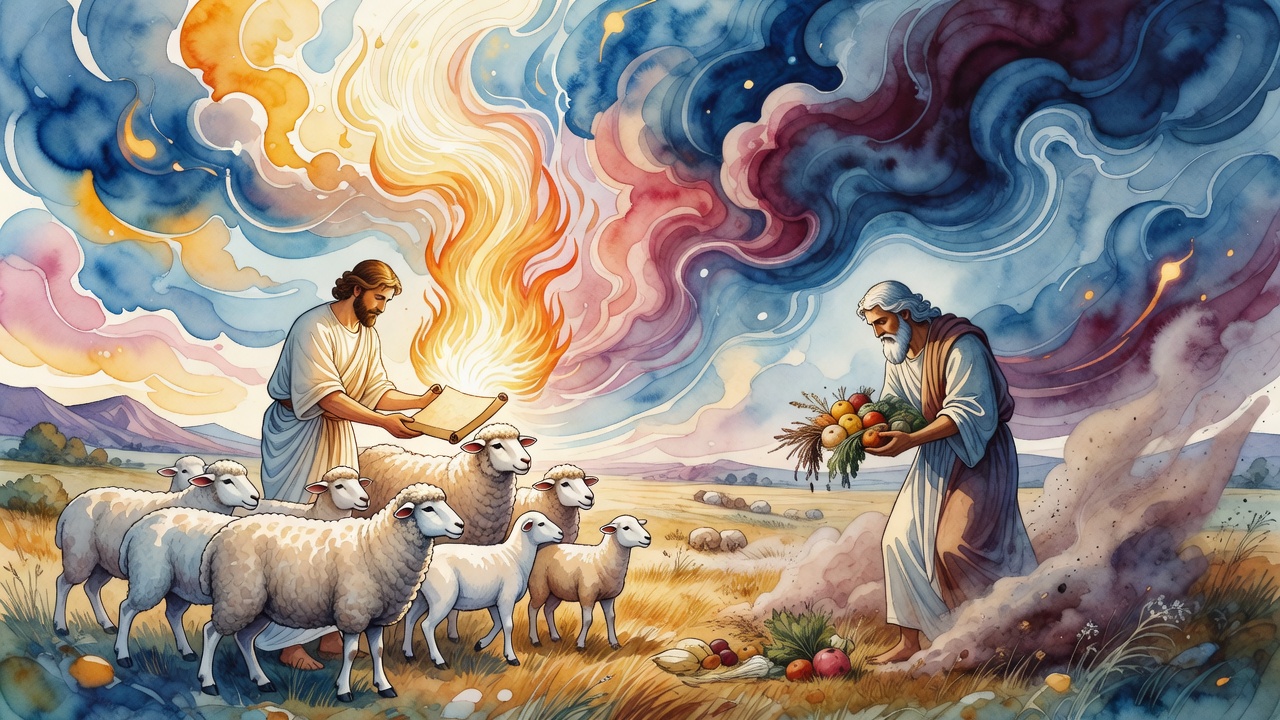
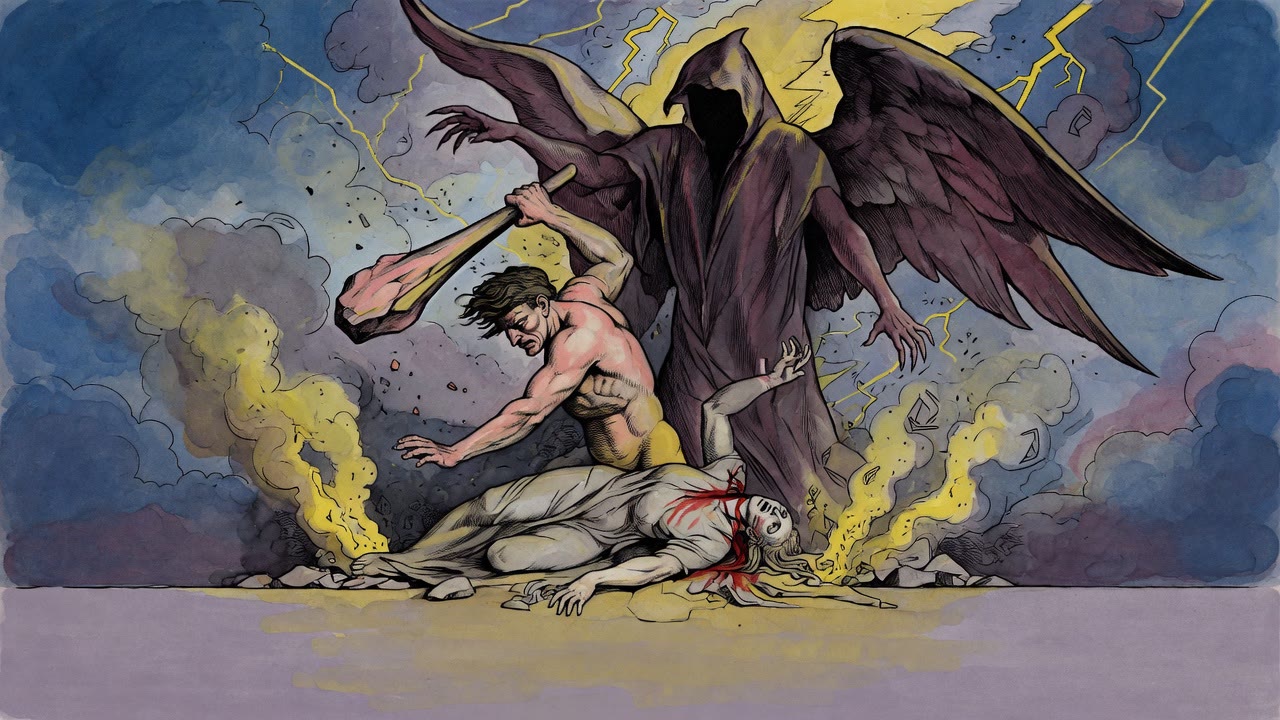
Cain stood in a field with his brother. Abel had wool on his back and a lamb's fat still on his hands from the offering God had accepted. Cain had dirt under his nails from the offering God had not. Between them, close as a second shadow, Azazel was standing there.
Abraham knew the stance. He had seen it beside Eve at the tree. The adversary did not need a new costume. Cain acted lawlessly through him, the way the garden had gone lawless through him. Same shoulder. Same patience.
Down in the field the brothers had tried to split the world so they would not have to share it.
The Land Under One Foot
"Let us divide it," Cain said. He took the land. Abel took the living things, the flocks, the skins, the movable wealth that walks.
Abel stood on soil. Cain pointed at the ground under Abel's heel.
"The land you stand on is mine."
Abel looked at the wool on Cain's back, the cloak cut from a flock that was now Abel's by the terms Cain himself had named.
"The clothes on your back are mine," Abel said. "Take them off."
Cain's mouth hardened. "Fly, then. Get off what is mine."
There is no flying in a field. Abel did not rise. Cain did not strip. The bargain they had made to keep from fighting became the fight. Azazel did not speak. He did not have to. The division had already done his work.
Cain Raised His Hand
Abraham watched the arm go up. In the picture it was slow, as if the heavens wanted him to see the joint, the fist, the moment before the world had blood in it. Cain struck Abel. Abel fell. The first silence after a death entered the ground and did not come back out.
Some tellers put other shouts in that same field. The Temple will be built on my side. No, on mine. The extra sister born with Abel is mine, I am firstborn. No, she came with me. Abraham was not shown a debate. He was shown a blow, and the adversary standing in the place a brother should have stood.
God asked Cain where Abel was. Cain said he did not know. "Am I my brother's keeper?" The lie sat on top of the body. The ground would not keep the secret. "Your brother's blood cries to Me from the ground" (Genesis 4:10). The earth that had opened its mouth to take the blood was cursed for Cain. He would be a wanderer on it.
The Mark and the Watching
Cain said the punishment was greater than he could bear. Anyone who found him would kill him. God set a mark on him so that would not happen. Whoever killed Cain would suffer sevenfold. The wandering was the sentence. The mark was the fence around it. Both were true at once.
Abraham kept looking. He had asked why the adversary is allowed to operate, generation after generation, killing brothers in fields. The picture did not explain the permission. It showed the sequence. Creation. Garden. Fruit. Field. Blood. Tears that would run down every generation after.
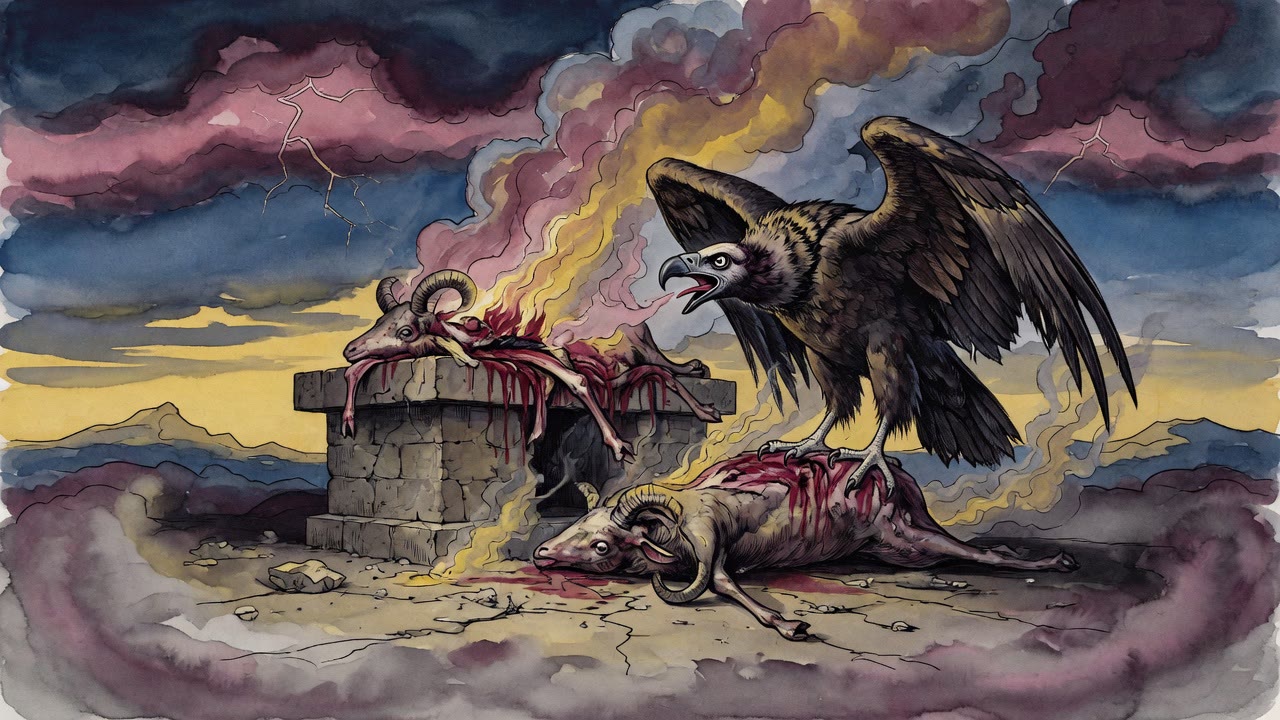
The blood that cried from the ground was not crying into silence. God had taken Abraham up high enough to see the whole run of it, from the tree to the fist, so he would know the scale of what he had agreed to contend with when he walked away from the unclean bird on the heights and finished his sacrifice. Azazel had been at the tree. Azazel was standing there when Cain struck Abel. Abraham closed his hands on the fact and did not look away.
← All myths