An Unclean Bird Landed on Abraham's Sacrifice and Spoke
Abraham had already divided the animals. Evening had not yet come. The bird told him the fire on the heights would eat him too.
Table of Contents
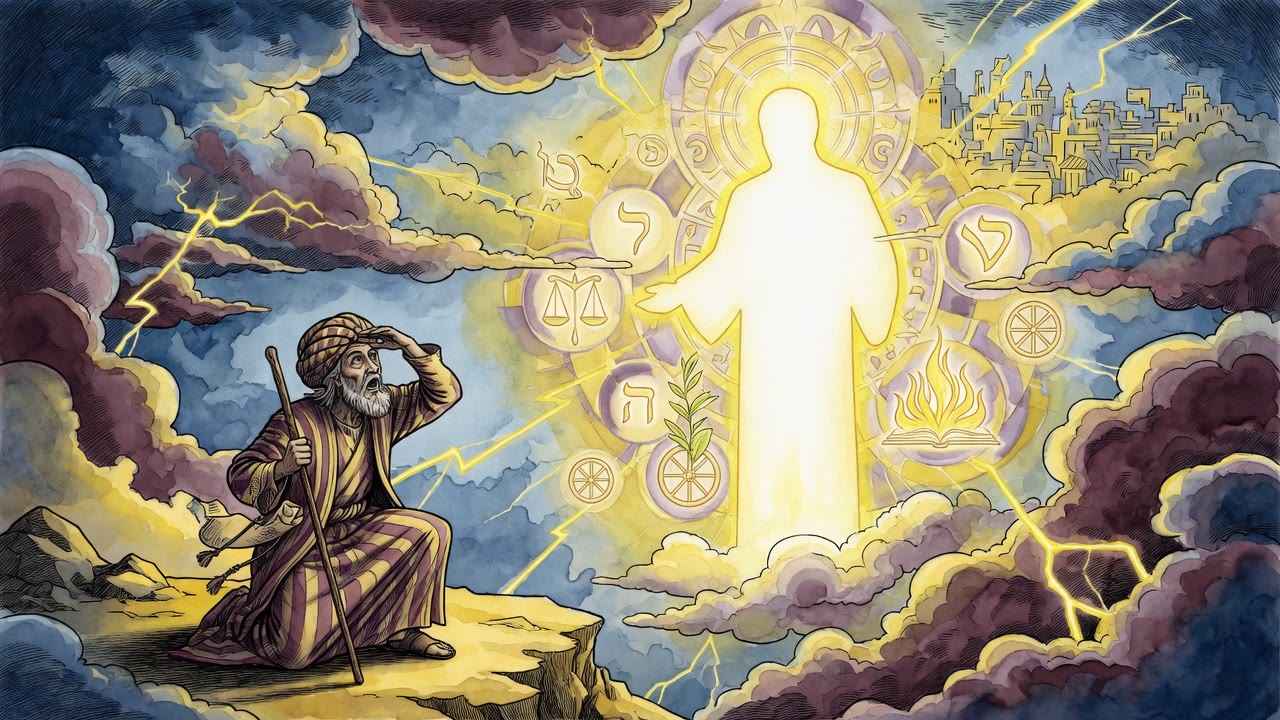
Abraham had done everything the angel commanded. He had brought the animals and slaughtered them and divided them and laid the portions out at the altar. The angel Iaoel had taken the birds. Abraham waited for the evening sacrifice, for the moment he would have to commit the offering to the fire.
 Click for full size
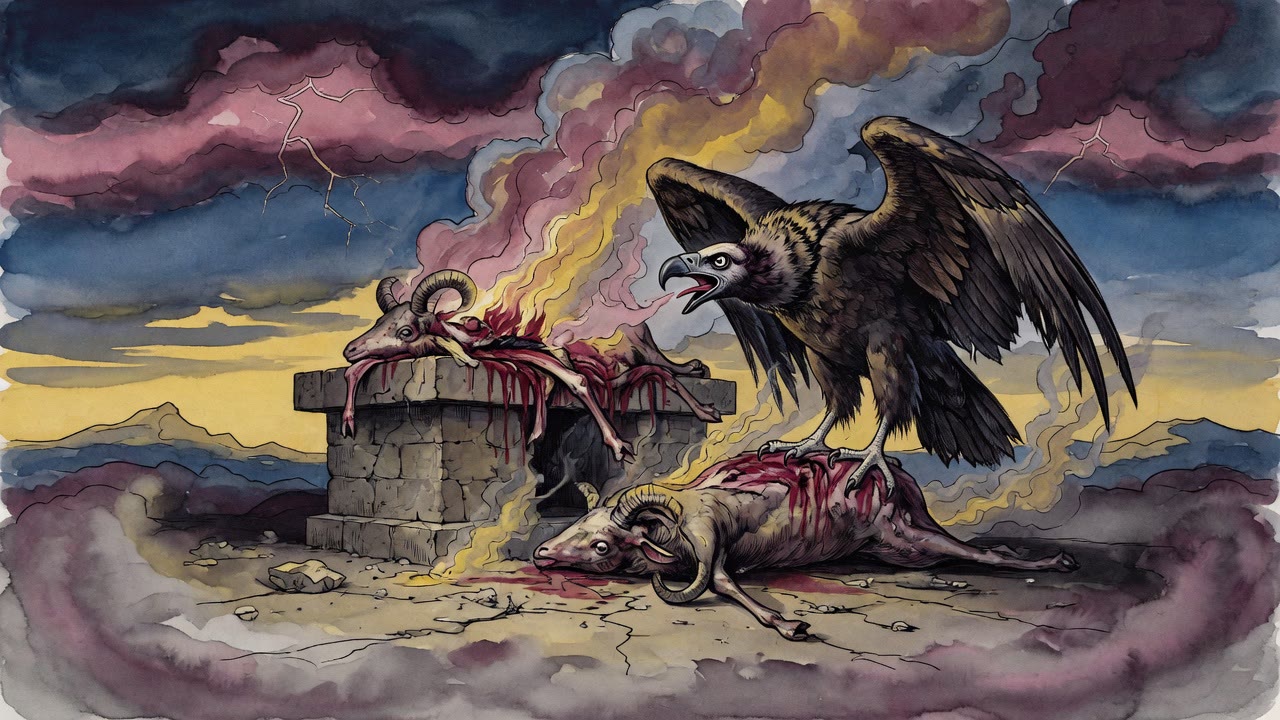
Then an unclean bird descended on the carcasses.
He Waited for the Evening Fire
Abraham drove it away. Birds of prey had come down on divided animals before, on the night of the covenant of the pieces, and he had known what to do with them then. He waved his arms. He shouted. The bird lifted, circled, and came back.
He had no fire yet. Evening had not arrived. The portions lay on the height where no man eats or drinks, and Abraham stood between the meat and the sky with nothing in his hands but the work he had been told to finish.
The bird landed again on the carcasses. Abraham raised his arm a second time.
The bird spoke.
The Bird Told Him to Run
"What are you doing, Abraham, upon the holy heights?" it said. "No man eats or drinks here. There is no food for mortals in this place. Leave. These beings will consume everything with fire and burn you with it. Leave this place."
It sounded like concern. Abraham did not belong on that height. The fire would kill him if he stayed. Go now, the bird said, while there is still time. Every fact in the warning was true. The fire was real. The consumption was real. No mortal had easy standing in an encounter like this. The conclusion was the lie. That was the part that was not from God.
Abraham looked at the portions, then at the bird, then at the empty air where evening still had not come. He did not run. He asked the angel beside him what this was.
Iaoel Named the Bird Azazel
"This is ungodliness," the angel Iaoel said. "This is Azazel."
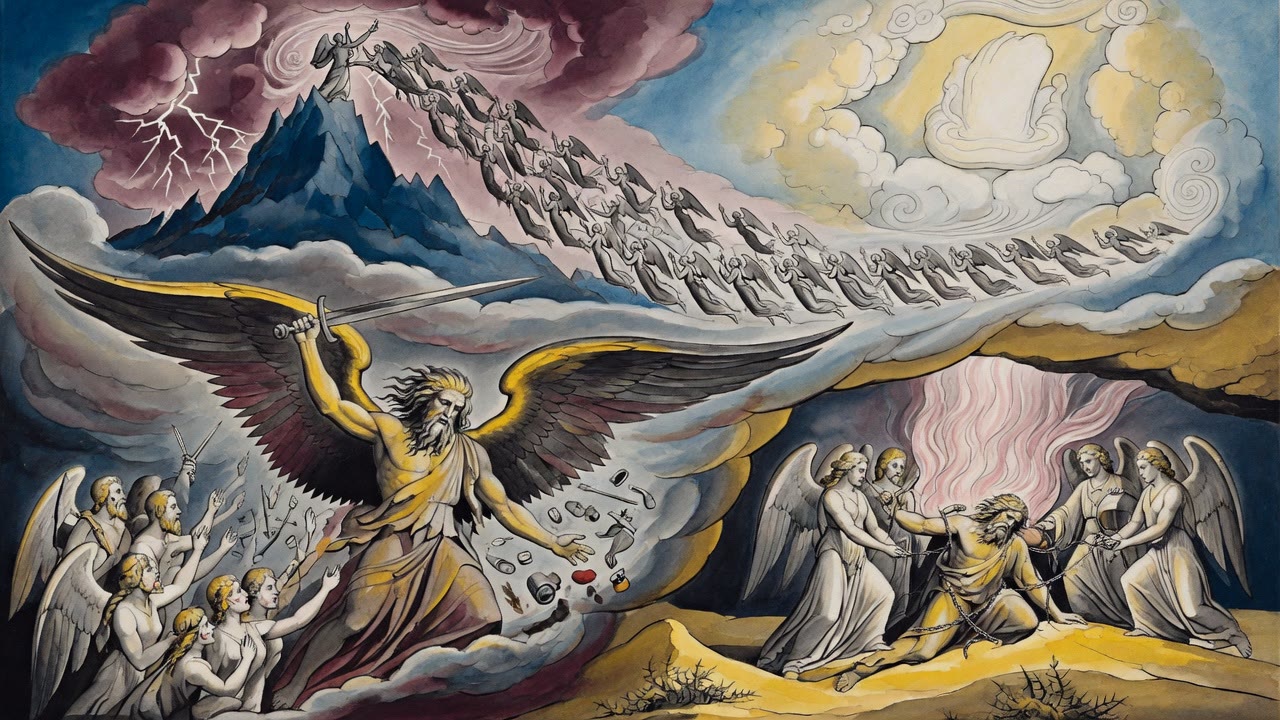
Then he addressed the bird by name. "Disgrace upon you, Azazel. Abraham's lot is in heaven, but yours is upon the earth. You chose this as the dwelling of your uncleanness, and the Eternal Mighty One made you a dweller on the earth. It has not been given to you to play the tempter against all the righteous. Depart from this man. You cannot lead him astray. He is an enemy to you. The vesture that was formerly yours in heaven has been set aside for him."
Azazel left. He did not take the fear with him. Abraham still knew the fire was real. He still knew a body could burn on a height where no one eats. The angel's rebuke had named the speaker. It had not made the height safe. Abraham stayed anyway, with the knowledge of the danger sitting in him beside the command to proceed.
Azazel Offered Him the Earth Instead
Later, in the vision that followed the sacrifice, Azazel spoke again, longer this time, without feathers.
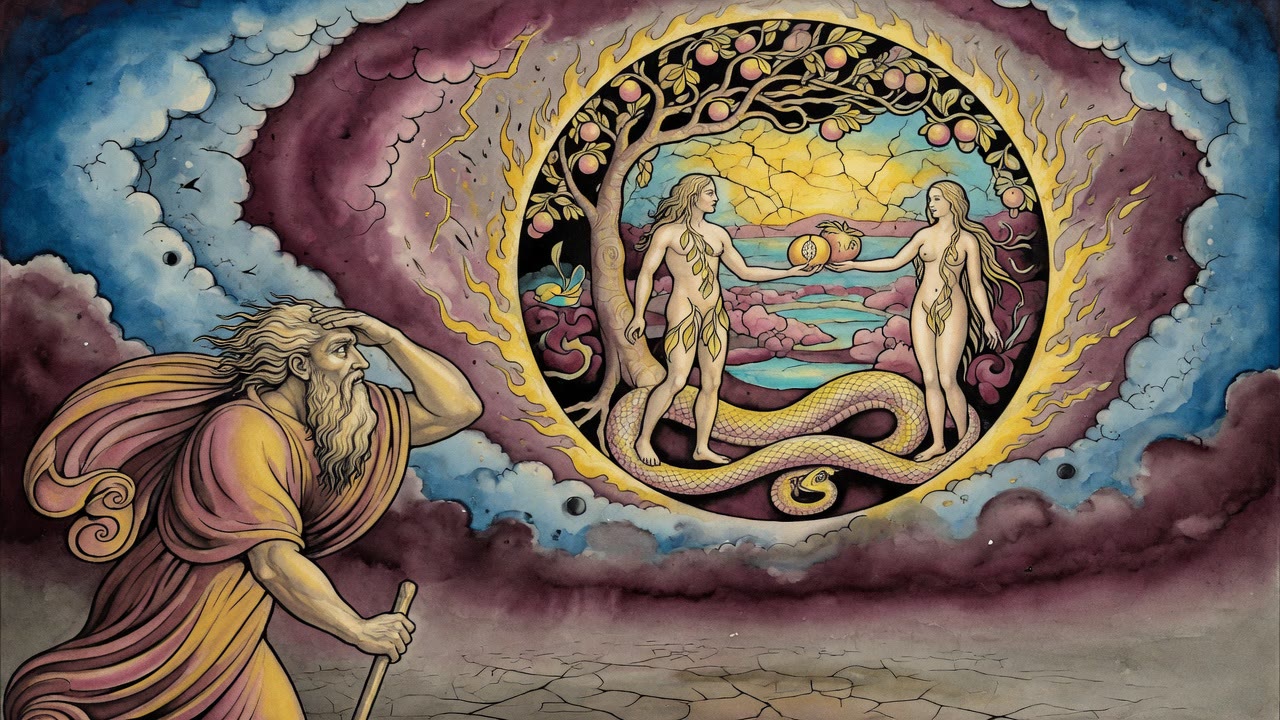
"I have existed since before the world," he said. "I was born from fire. I know things. I have power over the things of this earth. I can give you what you want. Leave this vision. Leave this God. Come with me instead."
That was the fuller form of the sentence at the altar. Not only leave because the fire would burn him. Leave because something else was being offered. The danger of the sacred on one side. The comfort of the available on the other.
Abraham refused both times. He drove the bird away at the sacrifice. He refused the extended speech in the vision. He told Azazel, "The one who made you and me has power over both of us. I will not go with you."
He did not bargain. He did not ask what the earth would pay. He put the Maker between them and closed the door the bird had tried to open.
Three Names Landed on the Same Mountain
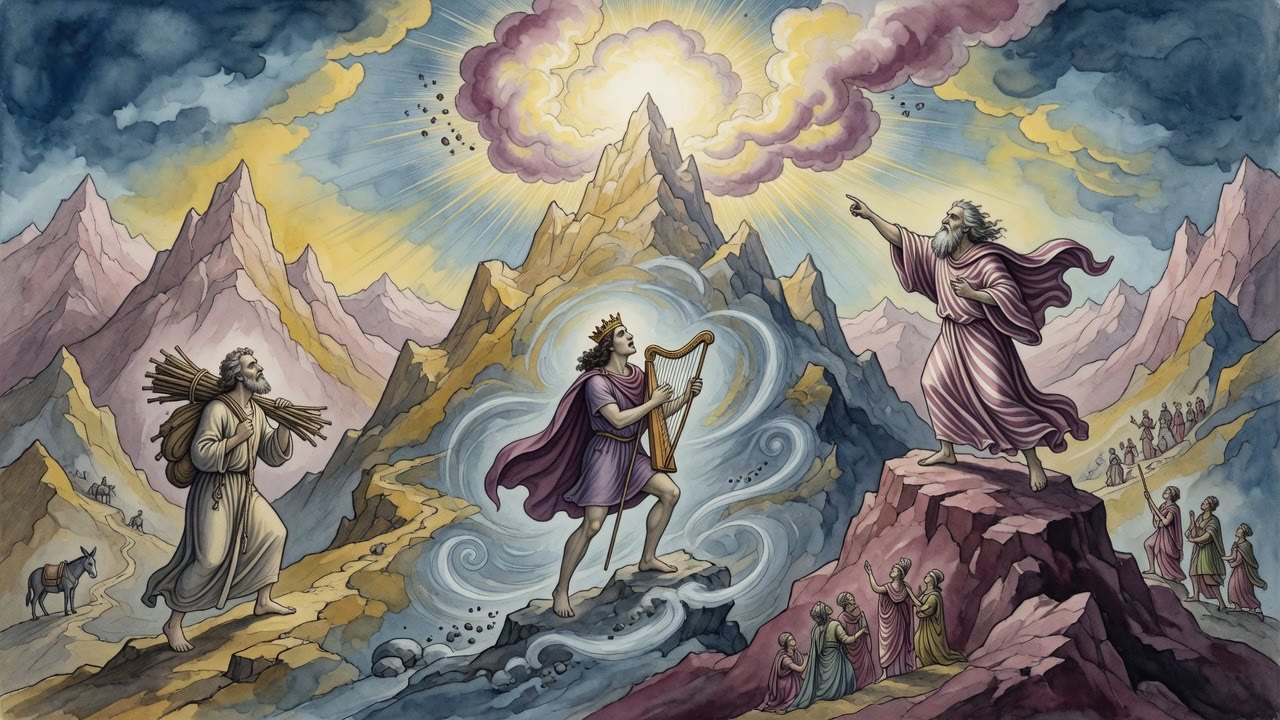
The mountain where this happened received names across the generations. Abraham called it one thing: the Lord will see, or the Lord will be seen (Genesis 22:14). David named it: who will ascend upon the Lord's mountain (Psalm 24:3). Isaiah pointed toward it: the mountain of the Lord's house, established above all mountains at the end of days (Isaiah 2:2).
All three names were given to the same piece of ground where Azazel had landed on the carcasses and told Abraham to run. Nations would later say, "Come, let us go up to the mountain of the Lord." The place of the interference was the place of the seeing. The bird's failure to drive Abraham away was the first condition for everything the mountain would become afterward.
Abraham stood in the evening at last and gave the portions to the fire. The fire came, as the bird had said it would. It did not take him. He had already refused the only exit that would have kept him unburned and unchosen.
← All myths