Abraham Saw Who Was Standing Between Adam and Eve in Eden
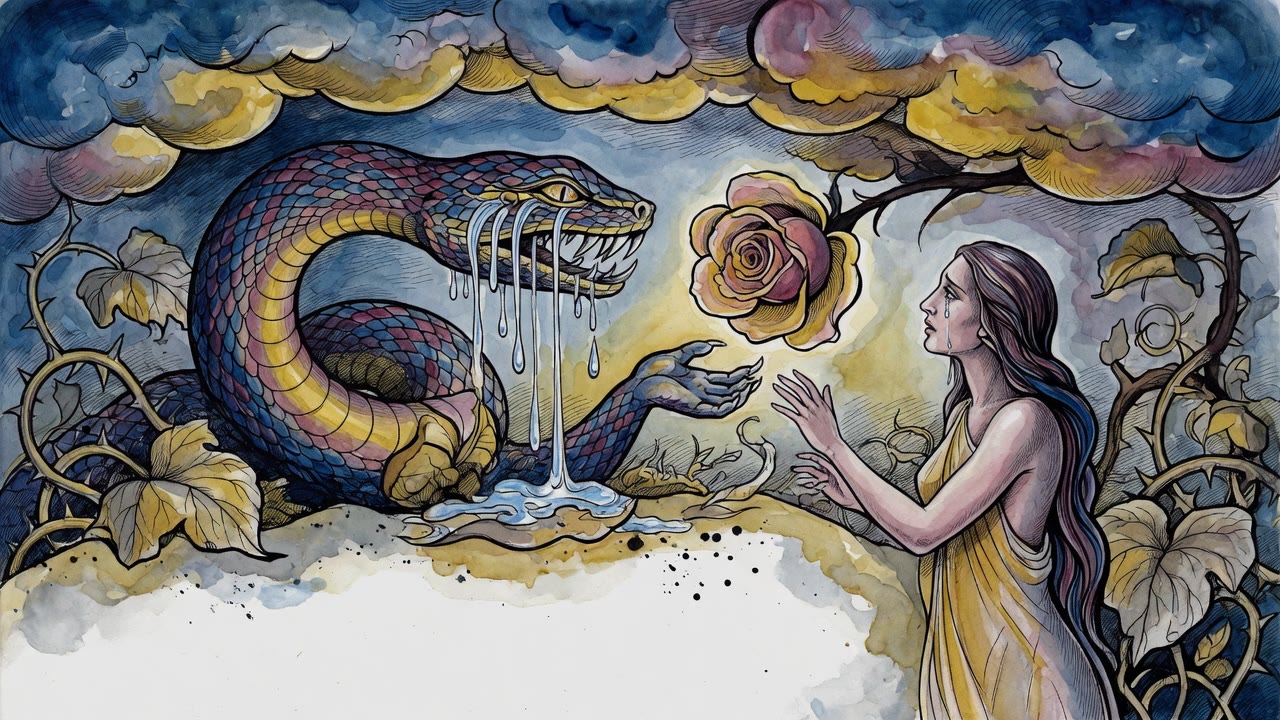
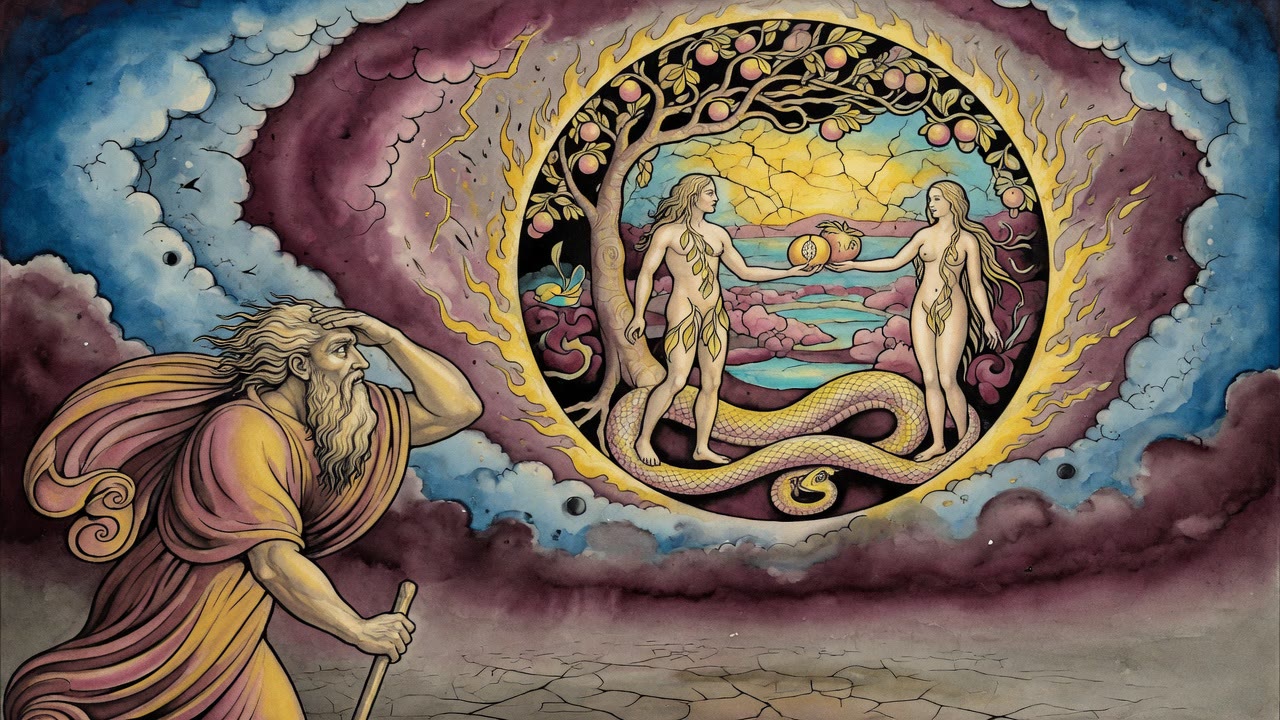
Adam and Eve stood embracing under the tree, and something with a man's hands and twelve wings stood between them, holding out the grapes.
Table of Contents
 Click for full size
Look Again in the Picture
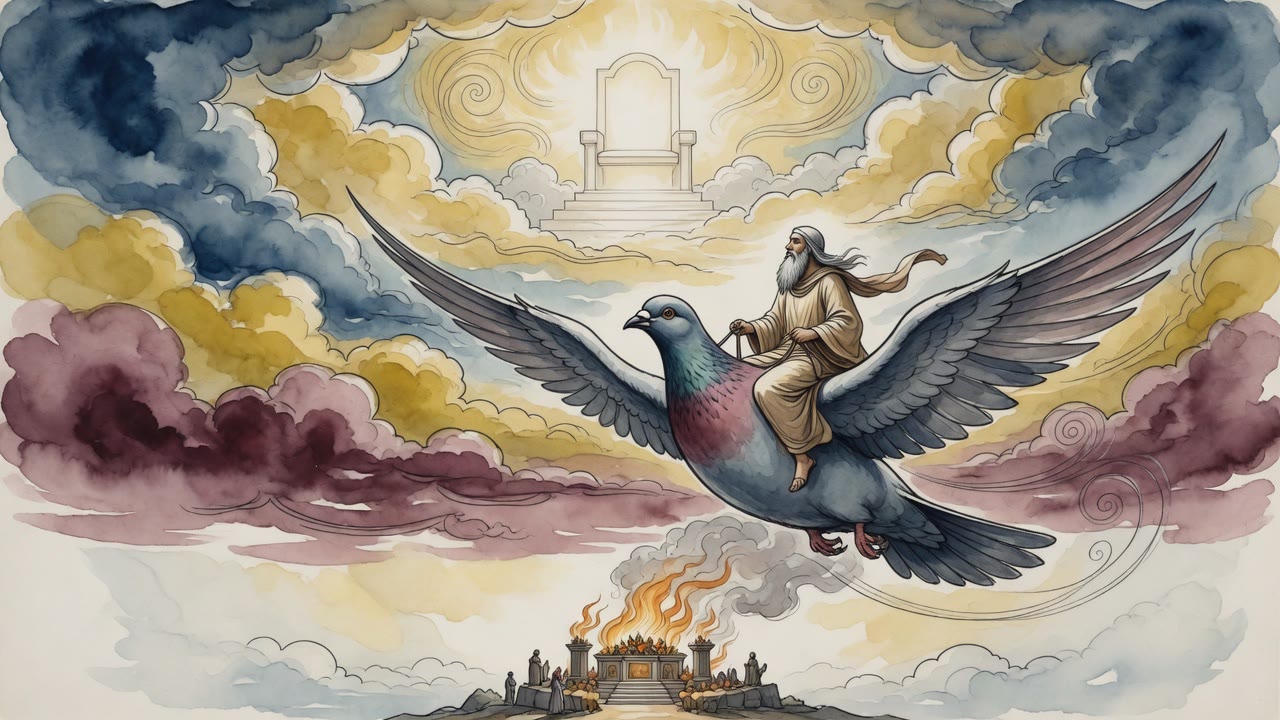
The whole world was laid out under Abraham like a painting, and he had already looked at all of it once.
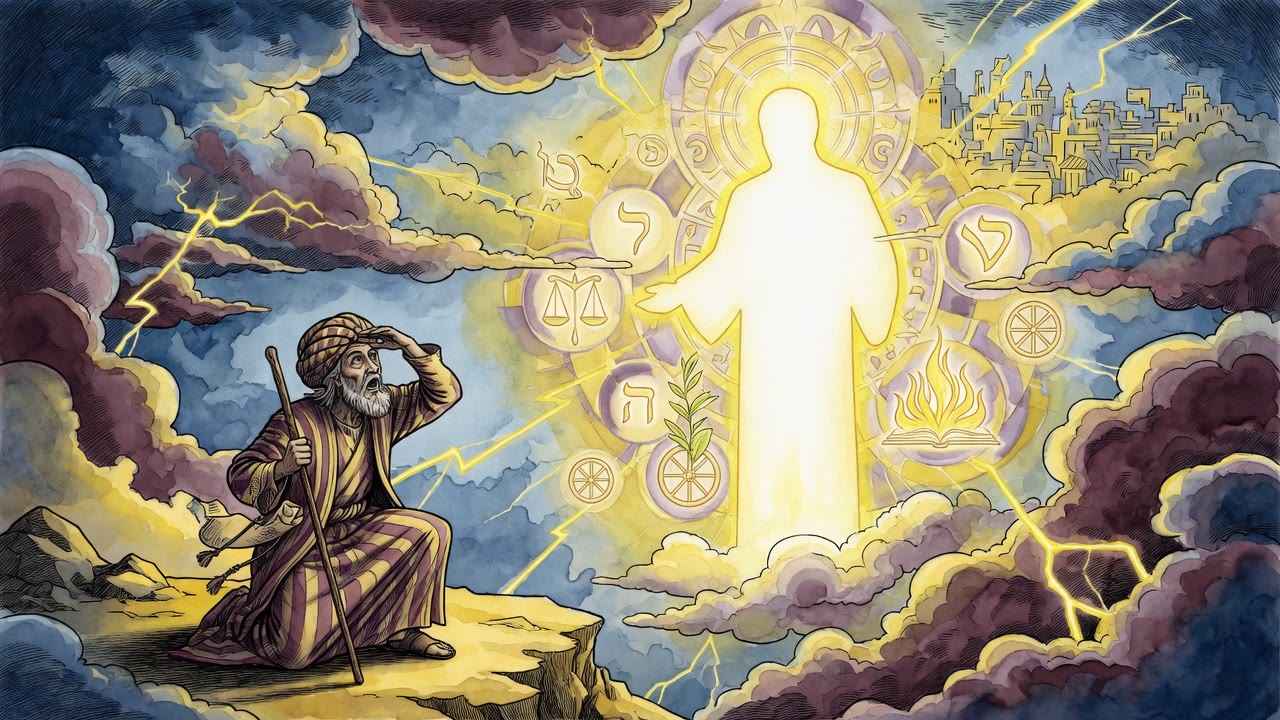
"Now look again in the picture," the voice said. "See who it is that seduced Eve, and what the fruit of the tree is. Then you will know what is to come, and how it will come, for your seed among the peoples at the end of the days."
His eyes went to the side of the Garden.
The Man Was the Size of the World
There was a man there so tall and so wide that Abraham had no measure to put against him, and nothing in the picture to compare him to.
This was Adam before anything happened to him, when his body still ran from one end of the world to the other and had not yet been cut down. He was holding a woman who came close to his shape and his size, and she was holding him back. The two of them stood under one of the trees of Eden with their arms around each other.
The fruit hanging over them looked like a bunch of grapes on a vine.
The One Standing Between Them
Behind the tree there was something in the form of a serpent that had a man's hands and a man's feet, and wings coming off its shoulders. Six on the right side. Six on the left.
It was holding the grapes out to them in its hands, and the man and the woman with their arms around each other were eating.
Abraham could not read what he was looking at. "Who are these two holding each other? Who is this between them? What is the fruit they are eating, Eternal and Mighty One?"
"This is the world of men. This is Adam, and this is their desire upon the earth, this is Eve. And he who is between them is ungodliness, their beginning on the road to ruin. This is Azazel."
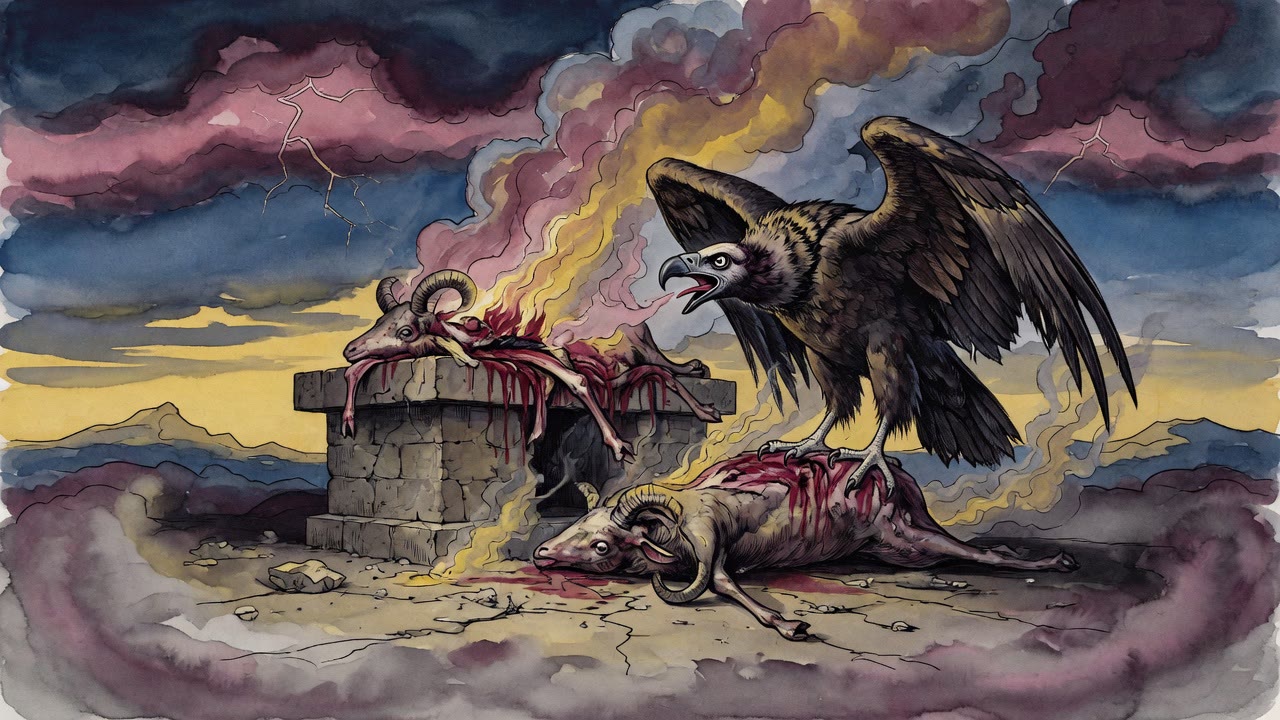
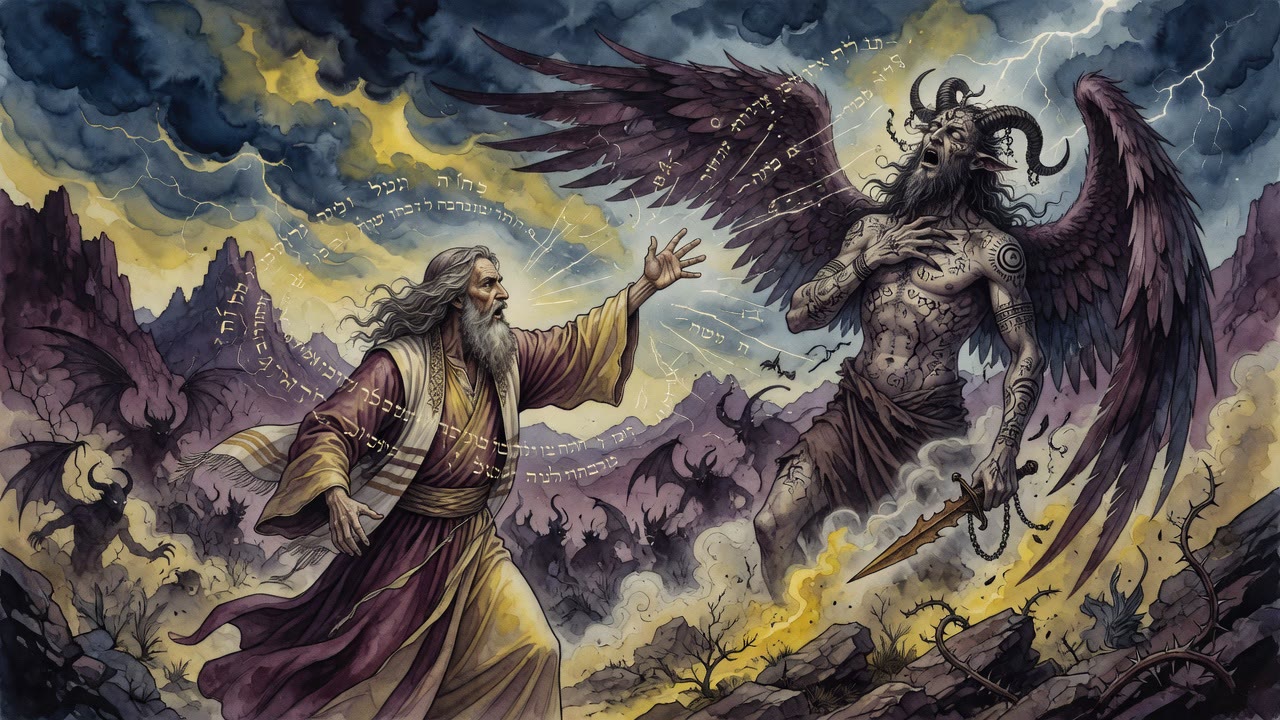
The name landed on a man who had met it before. On the day of his sacrifice, when the birds came down on the carcasses, one of them had spoken to Abraham with a voice and told him to leave the holy heights and run. That thing had a history, and Abraham was now watching the first entry in it.
Why Did You Give Him That Power
He did not stay quiet.
"Eternal and Mighty One, why have You given such a one the power to destroy the generations of men in their works upon the earth?"
The answer came back without any softening in it. "Over those who will to do evil, and how I have hated it in those who do it, over them I gave him power, and to be loved by them."
Loved. Not feared, not obeyed. Abraham pressed again, because the answer left a hole in it big enough to fall through. Why arrange things so that evil would be wanted in the hearts of men at all, when the wanting is the thing that angers You?
Every Tree Shut Its Door
Nobody who came after could agree on what the fruit had been.
Rabbi Meir said it was wheat, because a man with no sense is one who never ate wheat bread in his life. Asked how wheat could be called a tree, he said the wheat of Eden went up like the cedars of Lebanon. Rabbi Yehuda bar Ilai said grapes, clusters of bitterness that brought bitterness into the world. Rabbi Abba of Akko said a citron, since the verse calls the tree itself good for eating, and only the citron has wood that tastes the way its fruit tastes. Rabbi Yosei said figs, and he argued it from what came next.
Because when Adam was put out, he was naked, and he went from tree to tree in the garden asking for leaves.
Every one of them shut against him. Here is the thief who cheated his Maker, they said. Keep your arrogant foot off me. You may not take one leaf from me. He went the whole round of them, the tall ones and the low ones, and not a single tree in Eden would cover him.
The fig opened. The one whose fruit he had eaten was the only one that let him in, the way a prince's son thrown out of the palace for going with a maidservant knocks at every door in the servants' quarter and is refused at all of them until he reaches hers, and she opens it. He sewed her leaves together and put them on.
The Tree Was Never Named
Which fig, then. Rabbi Avin said the kind called berat sheva, because it brought the world its seven days of mourning. Rabbi Yehoshua of Sikhnin said berat elita, because it brought the world weeping.
And Rabbi Yehoshua ben Levi said none of them would ever know, because God has never told any man which tree it was and never will.
His reason was a law about an animal. When a beast is killed alongside the person it was used by, the beast has done nothing at all, and it dies anyway so that it will not walk through the market afterward with people pointing and saying there goes the animal that got so-and-so stoned. If heaven guards the name of a woman that far, and she sinned, then Adam gets at least that much.
So the tree stands somewhere in the story with no name on it, and nobody has ever been able to walk up and point.
← All myths