Abraham Watched the Idols Fall and Did the Calculation
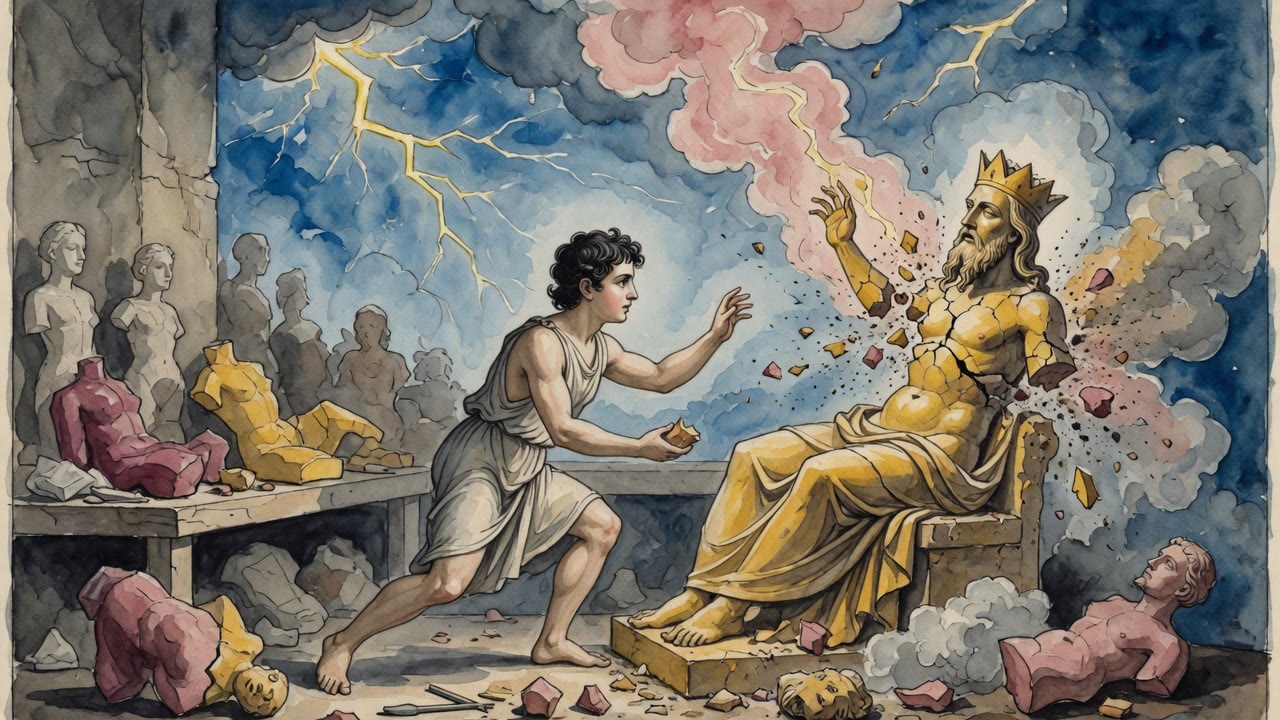
Abraham helps carry an idol home from the workshop. It falls. He asks his father what god cannot hold itself upright.
Table of Contents
 Click for full size
The Idol That Could Not Stand
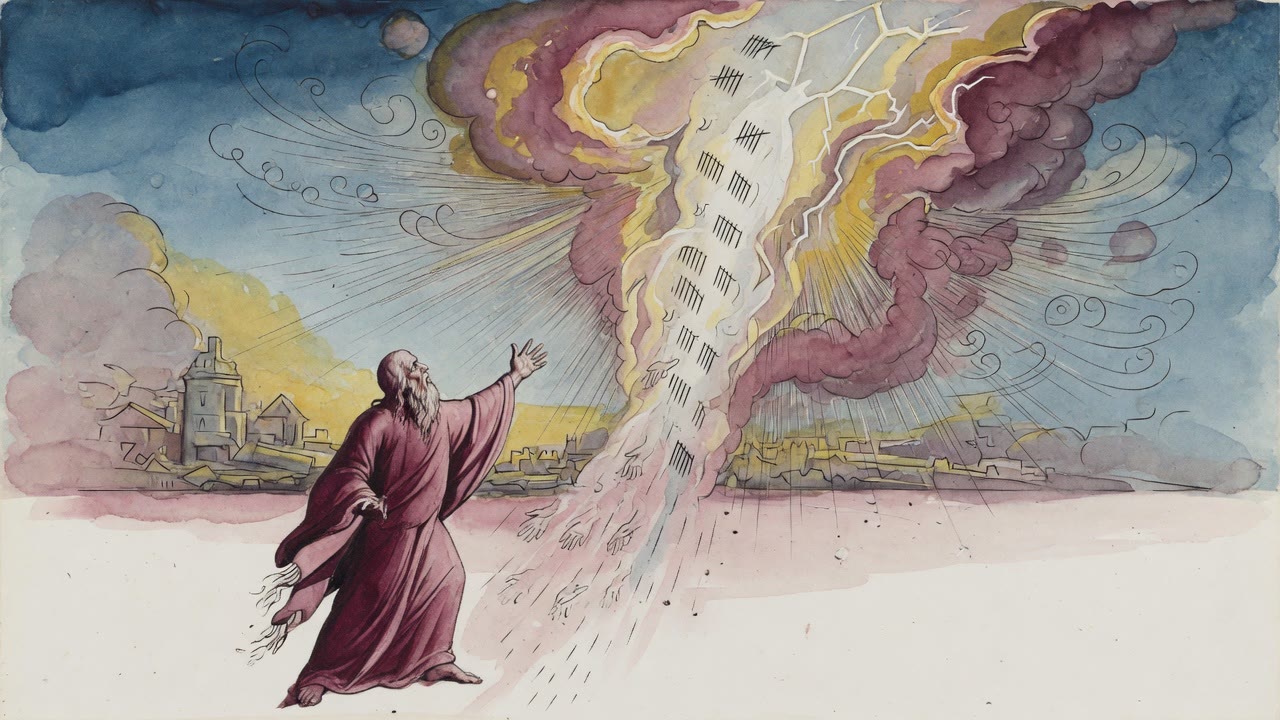
Abraham had been thinking about this for years, but the morning it broke open in him completely was the morning he was carrying an idol home from the workshop and it slipped.
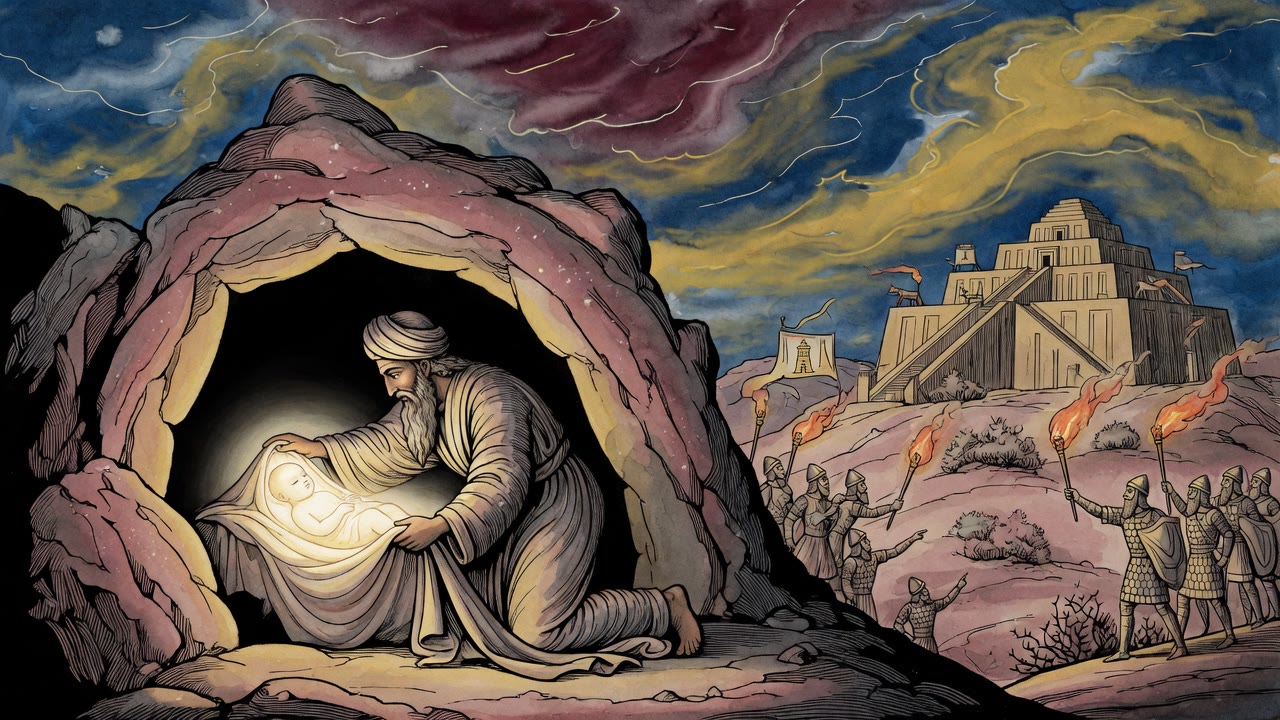
He had been walking home from the river. His father Terah was a craftsman of gods, a man whose entire livelihood depended on the reality of the objects he made. Abraham had been watching the process since childhood: the chisels and lathes, the choosing of wood, the shaping. He had watched his father shape objects with his own wisdom and then set them up in the temple to be worshipped. He had watched people bring them offerings.
The idol Merumath had fallen in the temple and could not rise. It took Abraham alone to haul the idol upright, and even then it wobbled. He could not carry it by himself. He needed two men to get it stable. Abraham stood in the temple looking at the thing his father had made and the thing refused to hold itself up. He said nothing. He went home. But the calculation had already started in him and he could not stop it.
What He Said Walking Home
The words that passed through Abraham's mind were relentless. He was doing mathematics. His father carved these gods with his own hands. His father shaped them with his own intelligence. They owed their existence to his hands. If anything, the gods should worship Terah, not the other way around. The creator outranks the created. What was the logic of the arrangement?
He watched his father sell idols to travelers and neighbors. He watched the buyers carry them home with the same confidence with which a man carries home something useful. The wood had been standing in the forest a week ago. It would rot eventually. In between, it was being called a god and fed with sacrifices it could not eat.
Abraham turned this over from every angle. A god that requires two men to lift it when it falls is not moving the stars. A god made by hands cannot have made the hands that made it. The wood came from somewhere before the carpenter got to it. Where did that somewhere come from? The question pointed in only one direction.
The Fire and the Water
Abraham's search took him through several candidates. He watched the heavens, as the Apocalypse of Abraham preserves his thinking. He tried fire first. Fire was powerful, terrifying, transformative. But fire depended on wood. Water extinguished fire. Water seemed stronger than fire. But earth absorbed water. Earth was swallowed by light. Light was overtaken by darkness. Night dissolved into morning.
Each element he tried had something stronger standing behind it. Each candidate for ultimate authority had a limit, a thing it could not overcome, a superior force it deferred to. Nothing in the created world could be its own source. Everything pointed past itself.
God appeared to him in the middle of this reasoning, not at its beginning. Abraham had already done the work before the revelation came. The Apocalypse of Abraham is specific about this sequence: Abraham arrived at the conclusion that there must be one source for everything, uncreated and self-sufficient, before God spoke to him. The revelation confirmed what the mathematics required.
Terah's Defense
Abraham brought his argument to his father. He asked: what evil are you doing? You carve these things with your chisels. If they are gods, why must you make them? Why can they not stand up when they fall?
Terah's answer was the answer of a man whose livelihood was also his theology: this is how it has always been done. He had not invented the arrangement. He had inherited it from his father and would pass it to his sons. The fact that the idols needed to be carried was not evidence against their divinity. It was simply the way things were.
Abraham could not accept this. The fact that something had always been done was not an argument for its truth. If the logic did not hold, it did not hold regardless of how long the practice had continued. He told his father what his own reasoning had produced: the one who made heaven and earth is not an idol in a temple. He is the one before whom everything else is secondary.
The Departure That Followed
The break between Abraham and the world of his father's house was not clean or comfortable. He left. He was called out of Ur of the Chaldeans toward a land God would show him, with nothing more specific than that. He went because the calculation he had been running since the morning the idol fell in the temple had only one possible conclusion, and the conclusion required him to go toward the source and away from the copies.
He took what he understood about the nature of creation and walked into it, and the tradition that built up around him over the following centuries was built on that original act of reasoning: a man who looked at the objects men made and worshipped, and could not stop asking what made the men.
← All myths