Favor Left Cain's Altar While Sin Crouched
Abel's smoke climbed. Cain's hung low over the fruit. At the door a crouch waited, and the Voice still offered him a turn he did not take.
Table of Contents
 Click for full size
Smoke That Found No Favor
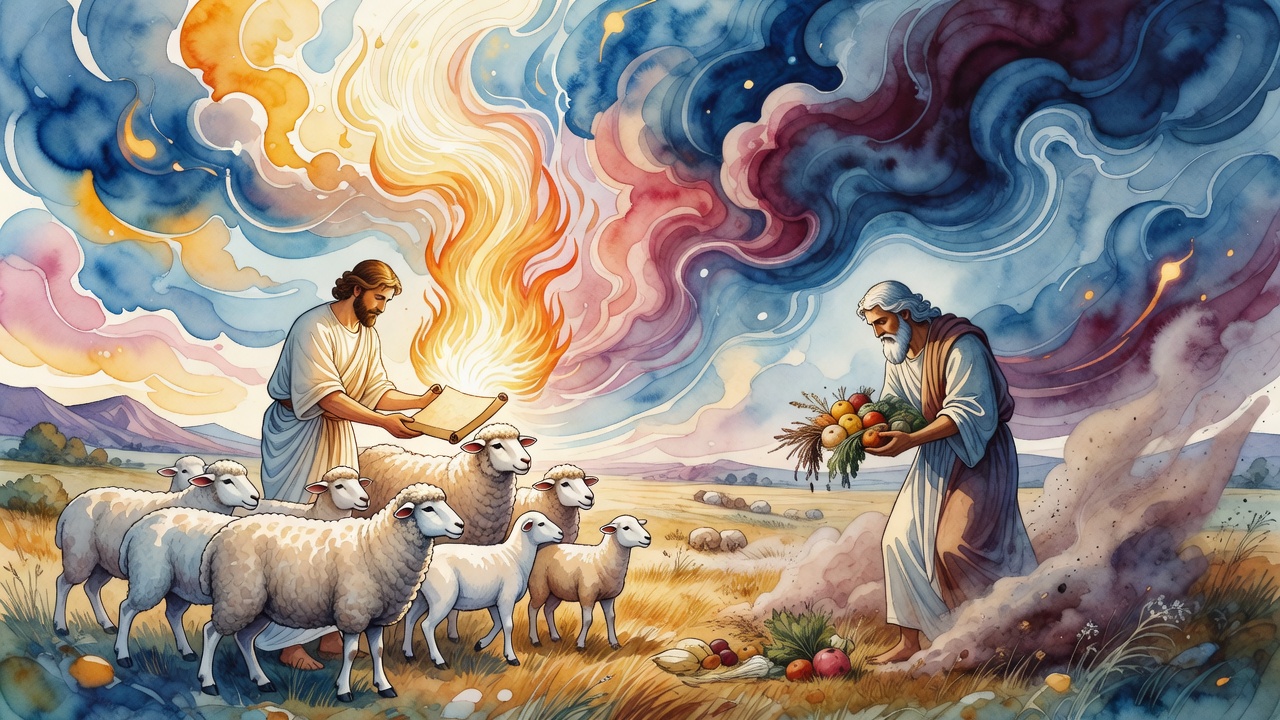
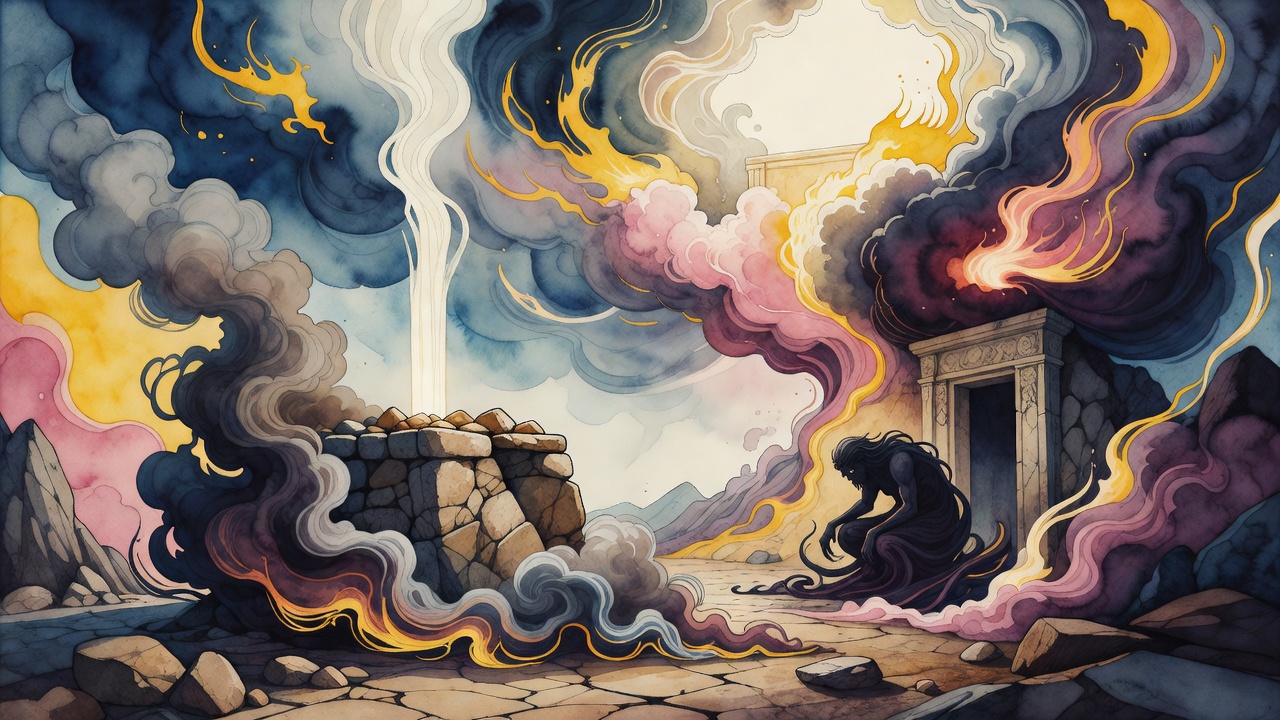
Cain set fruit on the stones and waited for the sky to answer. Abel had already bled a firstling, and the air above Abel's pile thinned and climbed. Over Cain's heap the smoke hung, heavy as a held breath. No fire rejected him with a shout. Favor simply failed to stand before his gift (Genesis 4:4-5).
He felt the difference in his face before he could name it. The field was the same field. The brothers stood a few steps apart. One offering entered favor. One did not. Cain's hands closed on nothing useful. Anger arrived first. Then a quieter thing: the sense that something had moved between him and the Presence, and that the space left behind was not empty.
He had worked the soil until his back learned its seasons. Fruit was not lazy worship in his own account. It was the best the ground had given him. That the best could still miss favor was a thought his pride refused to hold. He looked at Abel's rising line of smoke and measured his brother as a rival instead of a witness.
The Door and the Crouch
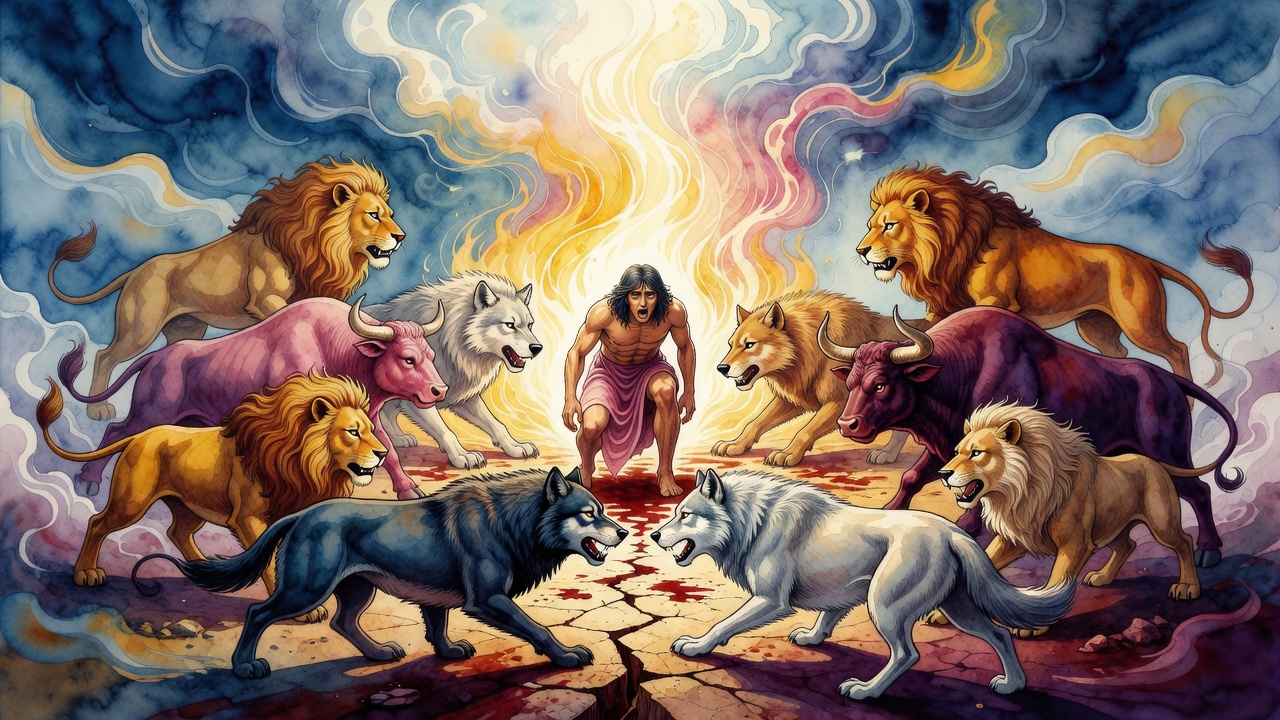
The Voice did not flatter him. It asked why his face fell, then set a picture at the edge of his will. Sin crouched at the door. Desire leaned toward him. Dominion was still possible if he would take it (Genesis 4:7). The warning was short in Hebrew. In the Aramaic hearing that later generations kept, the same line opened into a future ledger: if he would not repair his acts, the sin would be stored for a Day of Judgment; if he would turn, forgiveness waited on the far side of the turn.
Cain heard a door. He heard a crouch. He did not yet hear a brother dead. He could still dominate the thing that wanted him. He could still choose the harder repair.
The crouch is animal and intimate. It is not a second throne in heaven. It is weight at the edge of a choice, breathing the same air as the chooser. Cain's tragedy begins while the door is still open, while the Voice still bothers to negotiate with a face that has fallen.
Blood in the Field
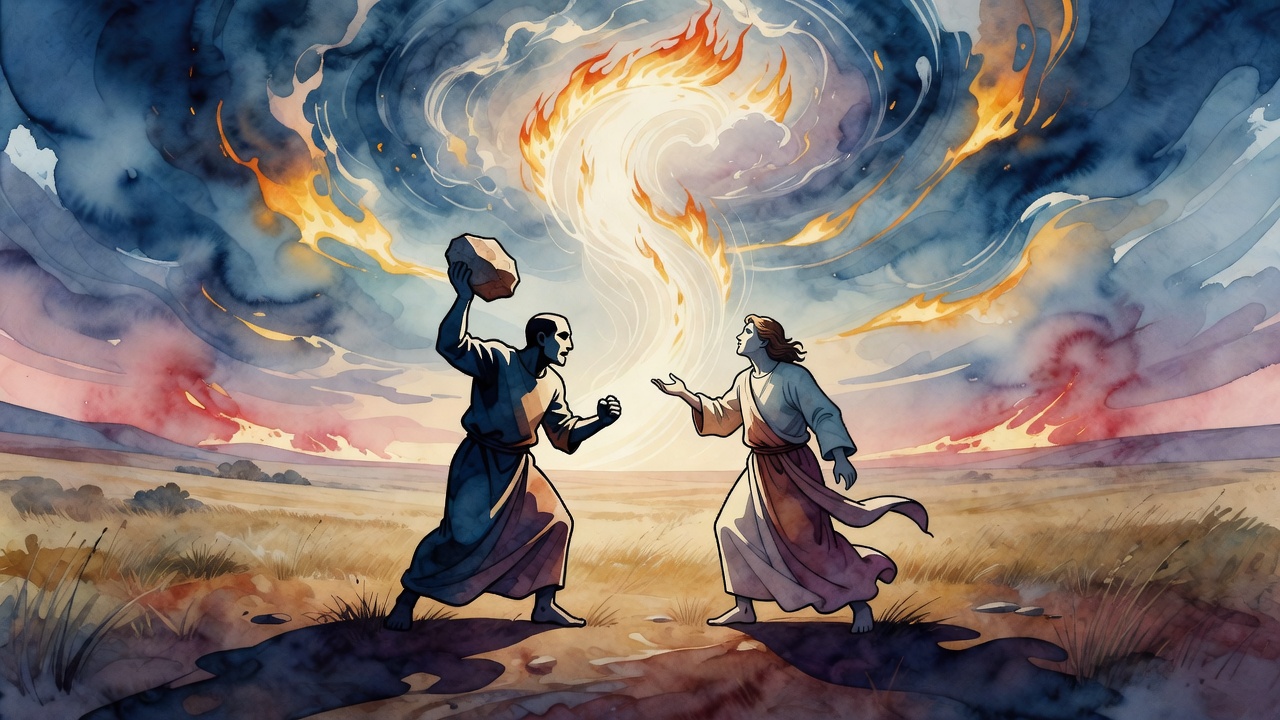
He spoke with Abel in the field. Then he rose against him and killed him. The earth opened her mouth and took the blood. The Voice asked where Abel was. Cain said he did not know. He asked if he was his brother's keeper.
What have you done? The voice of the blood of generations that were to come from Abel complained from the ground. Cain was cursed from the earth that would no longer give him its strength. A castaway. A wanderer.
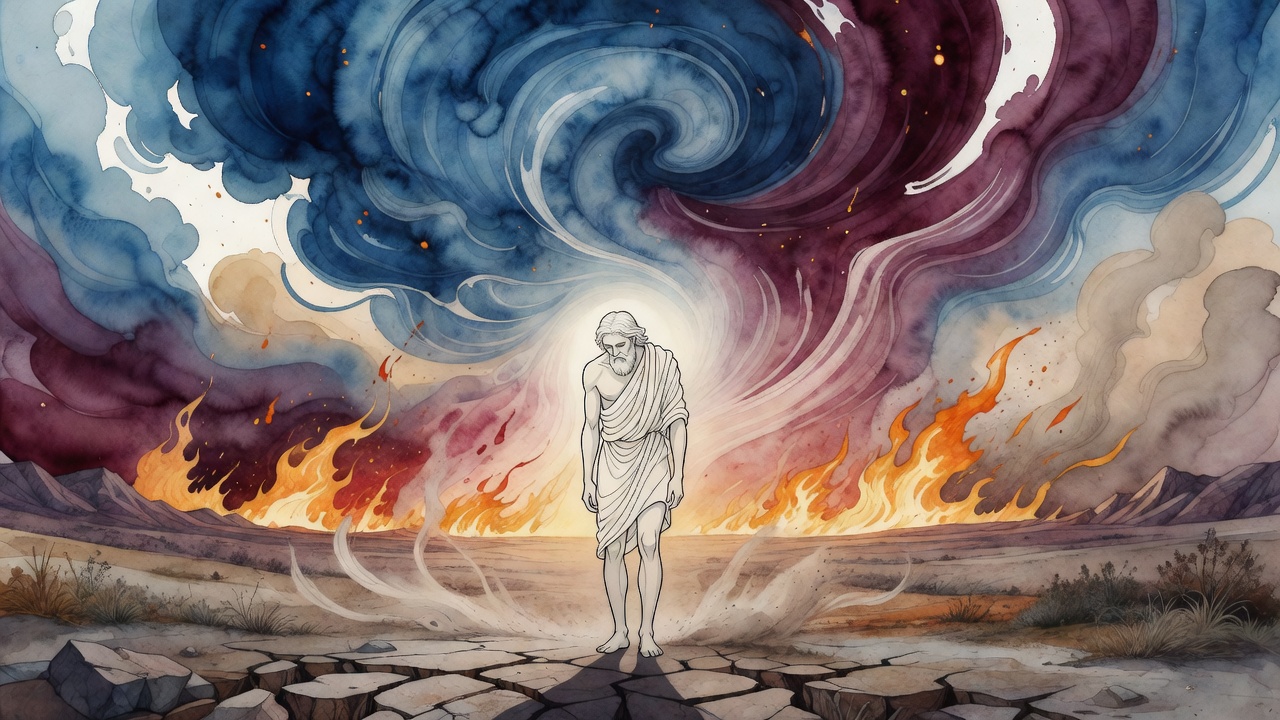
He said his guilt was greater than could be forgiven. He said he would be hidden from the Face. The correction was colder and truer: from before You it is impossible to be hidden. Flight is a geography problem. Guilt is not. God set a mark on him so that anyone who found him would not kill him, and Cain went out from before the Lord toward the land of the wanderer, still under a sky that had already refused to let favor pretend for him.
A Man in Ash Who Wanted a Hearing
Later Job sat in ash and demanded an answer. "Oh that I had one to hear me. Here is my signature. Let the Almighty answer me" (Job 31:35). He wanted a hearing the way Cain had wanted favor, as a right he could force. What he got instead was a world built in pairs, this opposite that, so each side would give the other its name. Without death, life is not called life. Without darkness, light cannot be known. God made both (Isaiah 45:7).
In a body there are four officers: blood, white phlegm, red bile, black bile. When one fails, the spirit leaks the way air leaves a punctured waterskin. White to the east where light is born. Blood to the north and the body's open cuts. The body is a king with four officers over a camp. If one averts his eyes, the kingdom confuses. If one is lacking, the spirit departs.
Cain had wanted Abel's ascent without Abel's cost. He had wanted light without the darkness that would force him to see his own hand. The crouching sin was not a rebel power. It was the underside of a choice he still owned.
The Weaver and the Field
When an unbeliever pressed Rabbi Akiva for proof that God made the world, Akiva pointed at the man's garment. Who made it? The weaver, the man said, as if everyone already knew. Akiva smiled the hard smile of a teacher who has cornered a mind. A house reveals its builder. A door reveals its carpenter. The world reveals the One who set pairs in place and still asks a man to master what crouches at his own door.
Cain's field was that kind of proof, turned inside out. The rejected gift did not prove heaven was blind. It proved that favor is not a right of birth order, and that a closed hand can stand in a world full of open ones. Abel's flock and Cain's soil were both honest trades. Only one heart arrived at the stones ready to be seen.
Akiva's weaver argument will not resurrect Abel. It only refuses Cain the alibi that the world is random cloth with no loom behind it. Someone wove the pairs. Someone still asks for mastery at the door. Cain walked east of Eden with a mark and a sentence. The door remained. The crouch remained. In the field the argument had been simpler. Smoke rose or did not. A face fell. A door waited. A man picked up a weapon instead of a repair.
← All myths