6 min read

Abraham Was Thrown Into the Furnace After Ten Years in Chains

Abraham spent three years in Kuthi and seven in Budri. Then they dragged him from prison and threw him into the furnace of the Chaldees.

Curated by Arthur · Told by Maggid ·
Table of Contents
  1. Ten Years Without a Door That Opened Out
  2. The Kings Aimed at Lot First
  3. War After the Oven
  4. The Hand That Opened the Prison and the Road

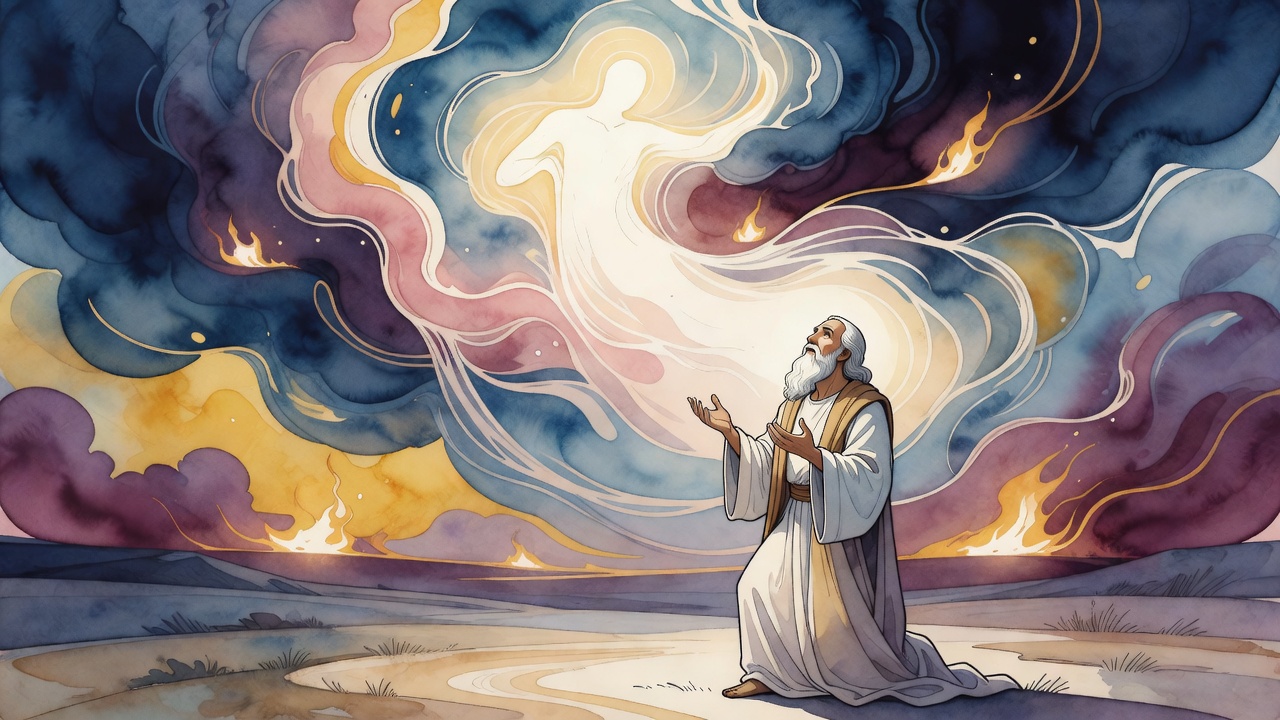
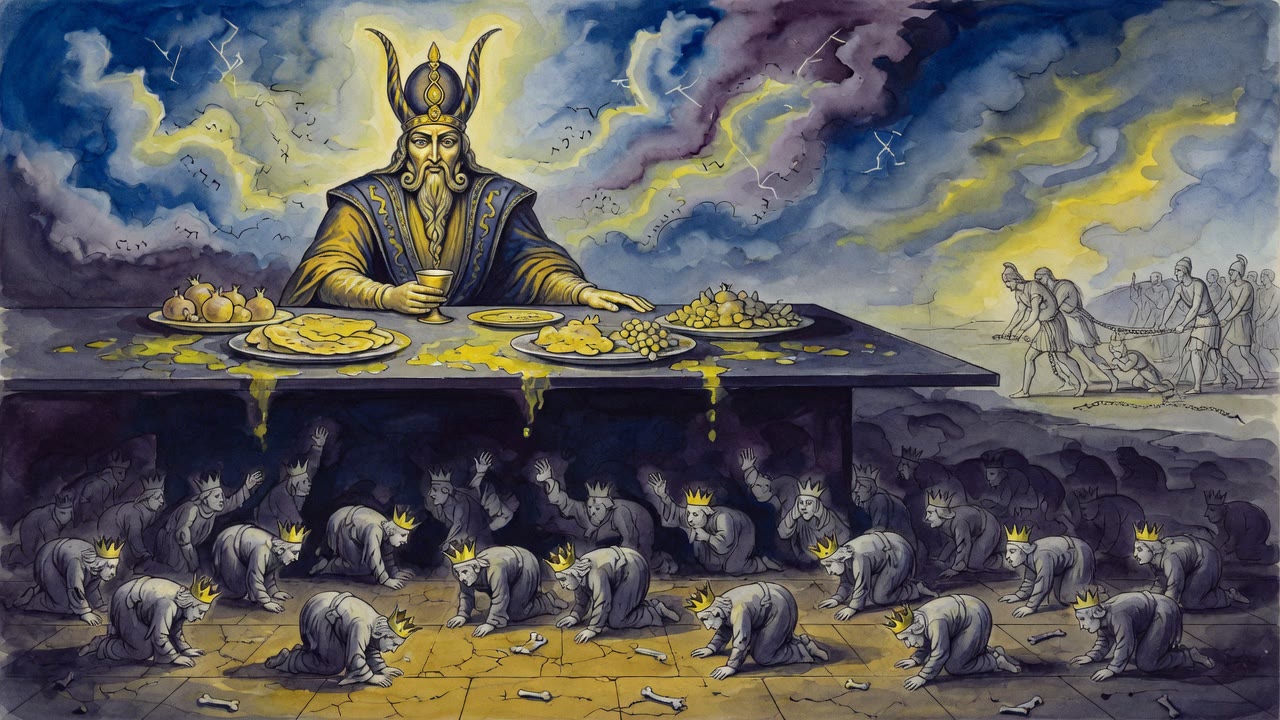
The cell in Budri had no window worth the name. Abraham had already spent three years in Kuthi before they moved him here for seven more. Ten years of stone, iron, and the slow work of keeping one Name alive in a mouth the guards wanted empty. His wrists knew the weight of the irons better than the weight of a staff.
Abraham Was Thrown Into the Furnace After Ten Years in Chains Click for full size

He was not yet the man of the knife on Moriah. He was a prisoner who would not bow to the local gods.

Ten Years Without a Door That Opened Out

They had locked him for preaching one God in a land that ran on many. The years stacked. Kuthi first, damp and narrow, then Budri, where the walls sweated in summer and bit in winter. Food came on a board. Questions came with boots in the corridor. The answer did not change. When the decade finally broke, the jailers did not hand him a road.

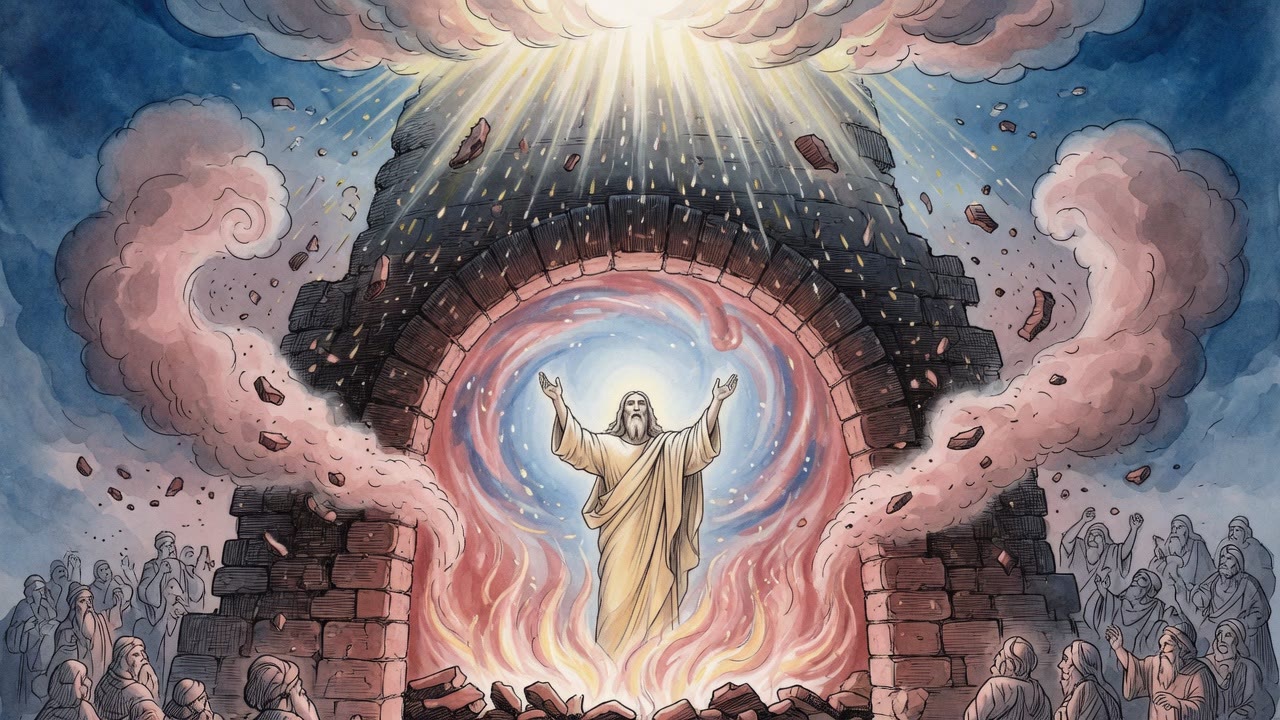
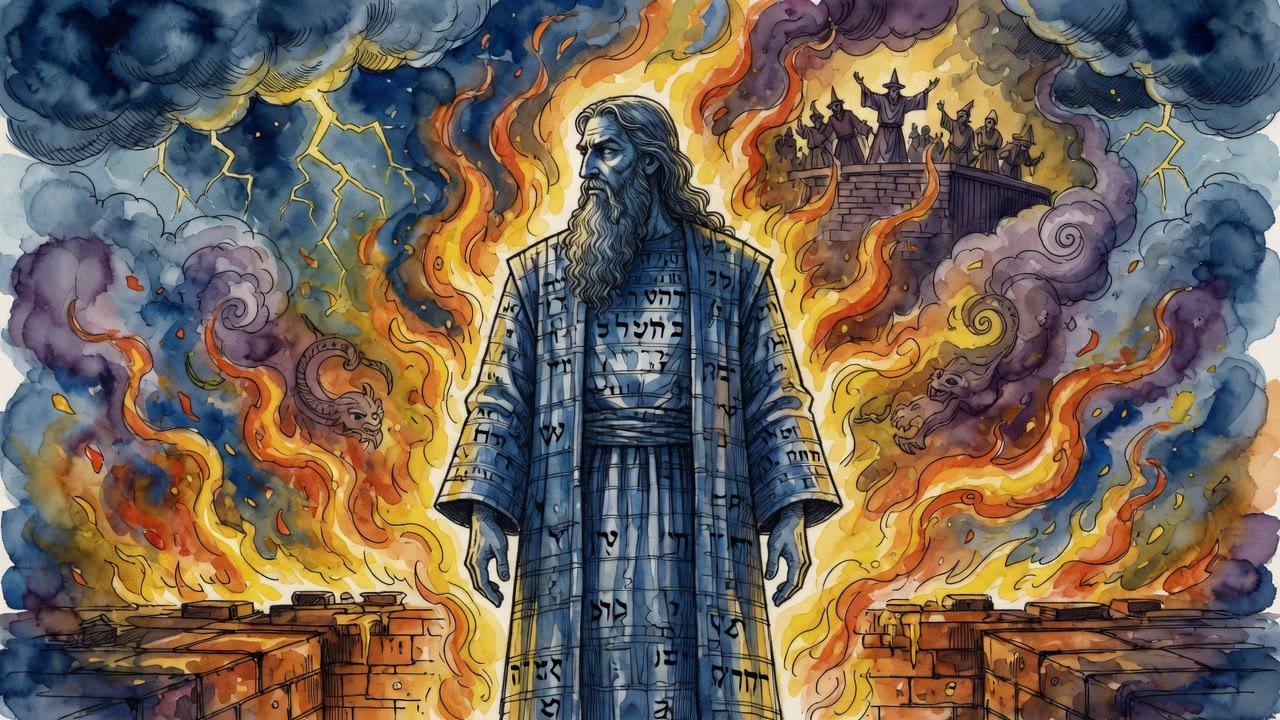
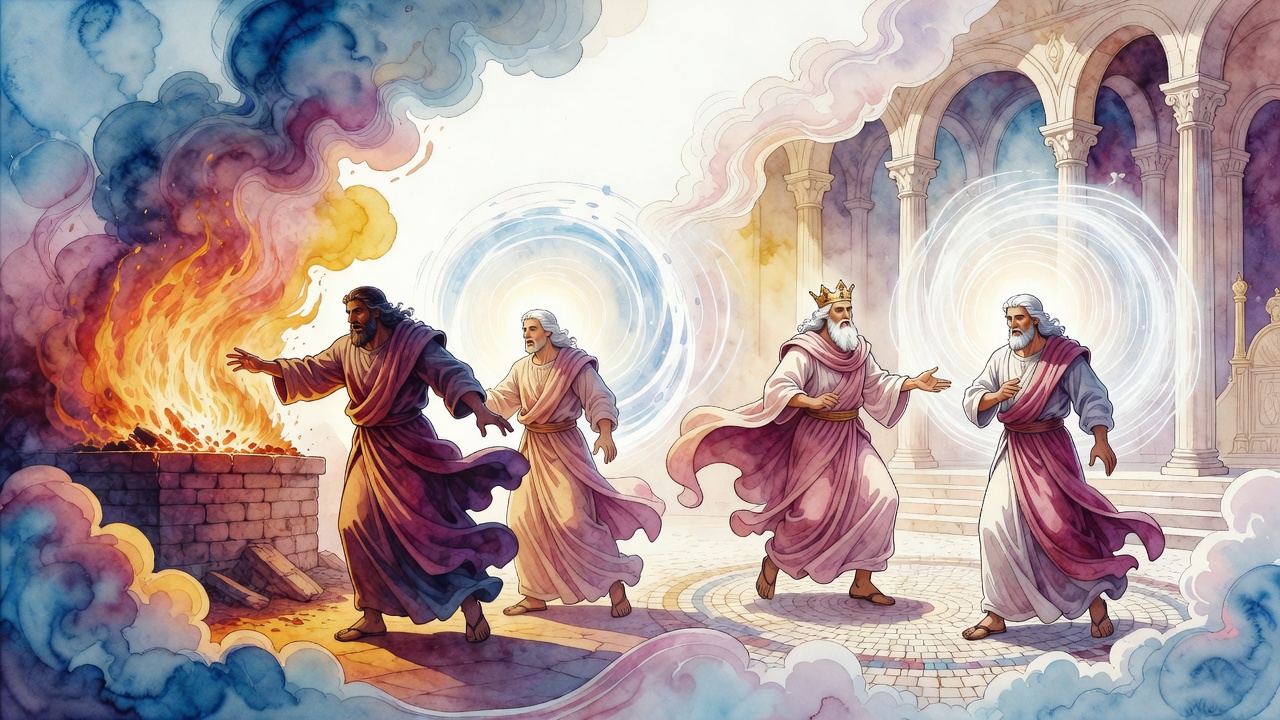
They dragged him from the prison into open light that hurt his eyes. Chains scraped. A crowd had already gathered for the show. They threw him into a furnace of fire.

Heat hit his face before his feet found the floor of the oven. Air tore in his throat. The Chaldean fire was meant to end the argument. No more sermons. No more smashed idols. One body, reduced to a lesson for the square.

The King of Glory put forth His right hand and delivered him from the furnace. The flames did not finish their work. Abraham walked out under a Name that would later say, without blushing at the history, "I am the Lord who brought you out of the furnace of the Chaldees" (Genesis 15:7). Nehemiah's generation would still sing it: God chose Abram and brought him forth out of that same furnace (Nehemiah 9:7).

Ash clung to his hem. Prison had not bent him. Fire had not taken him. The next trial would not wait for him to rest.

Neighbors who had watched him enter the oven stepped back when he walked past them breathing free air. Some looked at the ground. Some made the old signs against spirits. Abraham did not stop to settle their fear. He had a Name to keep speaking and a body that still remembered heat in every joint.

The Kings Aimed at Lot First

Years later, when Abraham's house had grown and his nephew Lot had settled among the cities of the plain, the kings gathered with a single intention: to slay Abraham. They did not march straight at his tent.

"Let us first begin with the house of his brother," they said, "and afterwards let us begin with him."

They struck Sodom and Gomorrah. They took all the goods of the cities (Genesis 14:11). They took Lot and Lot's possessions (Genesis 14:12). The path to Abraham ran through the nephew who had chosen the green of the Jordan and the company of a wicked town.

Word reached Abraham that Lot was gone. A runner spat dust and names. The man who had walked out of a furnace now put armor on servants born in his house. He counted heads in the night. He did not wait for the kings to finish their second step. He moved while Lot still breathed in enemy hands.

War After the Oven

This was the sixth trial in the old counting, not a quiet night of doubt but the clash of armies. Abraham had survived isolation and fire. Now the world itself swung a blade at his bloodline through the side door of Lot's choices.

He divided his men. He pursued by night along the line of captives and carts. He struck the camp when sleep was deepest. He brought Lot back with the recovered goods, and the plunder of Sodom followed them home like a second army of silent weight. The kings who planned to reach him second found him first, already in motion, already refusing the role of a man who waits for the sword to finish its list.

The furnace had proven he would not burn for their gods. The war proved he would not let his brother's son vanish into their camps while he sat counting old scars.

The Hand That Opened the Prison and the Road

Look at the sequence without soft light. Ten years in chains. A furnace meant to erase him. A right hand from Glory that pulled him out. Then, when kings used Lot as bait and shield, Abraham rode toward the danger instead of away from it.

He did not earn a quiet middle age. Each rescue raised the stakes of the next demand. The God who named Himself as the One who brought him from the Chaldean fire would later ask for Isaac on a mountain. Between oven and mountain lay this war for a nephew who had walked toward Sodom with open eyes.

Abraham came home with Lot alive. The kings' plan, first the brother then the man, lay broken on the road. The prisoner of Kuthi and Budri, the man the furnace could not keep, stood again in his tent with smoke from other men's camps still on his clothes.

The fire was behind him. The harder tests were not.

Lot sat in the tent that night with dust still on his sandals. Abraham sat across from him without asking for thanks. Between them lay the simple fact that chains and fire had not trained him to abandon his own when kings made lists.


← All myths

From the tradition

Sources

2 sources

The texts behind this telling. Some cards carry a translation of the source; others are our own retelling of it, and each card says which. Every card links out to the original.

Pirkei DeRabbi Eliezer 26:2Pirkei DeRabbi Eliezer

Retold in our words. Read the original at the link below.Pirke de Rabbi Eliezer, trans. Rabbi Gerald Friedlander, London (1916) · CC-BY

His life was practically a masterclass in overcoming adversity.

Readers often think of Abraham's trials, his nisyonot, as being primarily about faith – being asked to sacrifice Isaac, for example. But the text Pirkei DeRabbi Eliezer (chapter 26) throws another curveball into the mix, reminding us that before the big, well-known trials, there were others, equally daunting.

This chapter focuses on Abraham's early life, a time when he was spreading his belief in one God in a world steeped in idolatry. And let's just say, the local authorities weren't exactly thrilled.

Of a second major trial: imprisonment. Ten long years! Three of those years were spent in a place called Kuthi, followed by seven more in Budri. What would you do? Would your faith waver?

But it doesn't end there. After a decade behind bars, you'd think he'd get a break. Wrong! Pirkei DeRabbi Eliezer recounts how they dragged him from prison and threw him into a furnace of fire. Talk about escalating the situation!

Now, here's where the story takes a truly miraculous turn. The text says, "the King of Glory put forth His right hand and delivered him from the furnace of fire." Can you picture it? Divine intervention, a moment of pure grace in the face of unimaginable suffering.

This rescue is so important that scripture itself testifies to it. The text reminds us of God’s words in (Genesis 15:7), "And he said to him, 'I am the Lord who brought thee out of the furnace of the Chaldees.'" And (Nehemiah 9:7) echoes this, proclaiming, "Thou art the Lord the God, who didst choose Abram, and broughtest him forth out of the furnace of the Chaldees."

These verses aren't just historical footnotes; they're powerful affirmations. They underscore the idea that even in the darkest of times, even when faced with seemingly insurmountable odds, we are not alone. God is with us.

So, what does this ancient story tell us today? Maybe it's a reminder that trials are inevitable. Maybe it's an encouragement to stand firm in our beliefs, even when it's unpopular or dangerous. Or maybe, just maybe, it's a promise that even in the fiery furnaces of our own lives, we too can find deliverance.

Full source
Pirkei DeRabbi Eliezer 27:1Pirkei DeRabbi Eliezer

Retold in our words. Read the original at the link below.Pirke de Rabbi Eliezer, trans. Rabbi Gerald Friedlander, London (1916) · CC-BY

Trials is often remembered as personal, internal struggles. But what happens when those trials come from the outside, from the world itself? to one chapter, chapter 27, of Pirkei DeRabbi Eliezer, a fascinating early medieval Jewish text that retells and expands upon biblical narratives. Here, we find ourselves in the middle of Abraham's many trials. Yes, the Abraham, the patriarch, the father of monotheism. And these weren't just pop quizzes.

This particular trial, the sixth one Pirkei DeRabbi Eliezer describes, isn't about internal faith or personal sacrifice (though those are coming!). This one is about war, about the clash of kings and armies. It’s about being caught in the crossfire of worldly power.

So, what happened? Well, all the kings came together, united against Abraham, with the intention to slay him. The sheer terror? But it gets even more interesting. Their plan wasn't to attack Abraham directly, not at first.

"Let us first begin with the house of his brother," they said, "and afterwards let us begin with him." In other words, they were going after Lot first. Why? Because of Lot, they plundered all the wealth of Sodom and Gomorrah! As it says in (Genesis 14:11), "And they took all the goods of Sodom and Gomorrah." for a second. Abraham's nephew, Lot, had chosen to settle in Sodom, a city known for its wickedness. And now, because of that association, because of Lot’s choices, Abraham was in danger.

The kings didn’t stop there. They captured Lot himself, along with all his possessions. (Genesis 14:12) tells us, "And they took Lot… and his goods." It's a domino effect of consequences, rippling outwards from one decision to impact everyone around.

This passage, though brief, is packed with layers. It’s not just a historical account of a battle. It's a story about the interconnectedness of our lives. And it highlights the precariousness of existence, the way we can be swept up in events beyond our control.

What does this all mean for us today? Perhaps it's a call to be mindful of the company we keep, the choices we make, and the impact they have on those around us. Perhaps it’s a reminder that even in the midst of chaos and conflict, we have the power to choose how we respond, how we act, and who we become. And maybe, just maybe, it’s a reminder that even in our darkest hours, we are not alone.

Full source