Abraham Marched to War Without Any Shield
When kings took Lot, Abraham marched with Eliezer and no shield. Prayer opened the harvest, and later bulls, rams, and goats kept that merit alive.
Table of Contents
 Click for full size
Night March for Lot
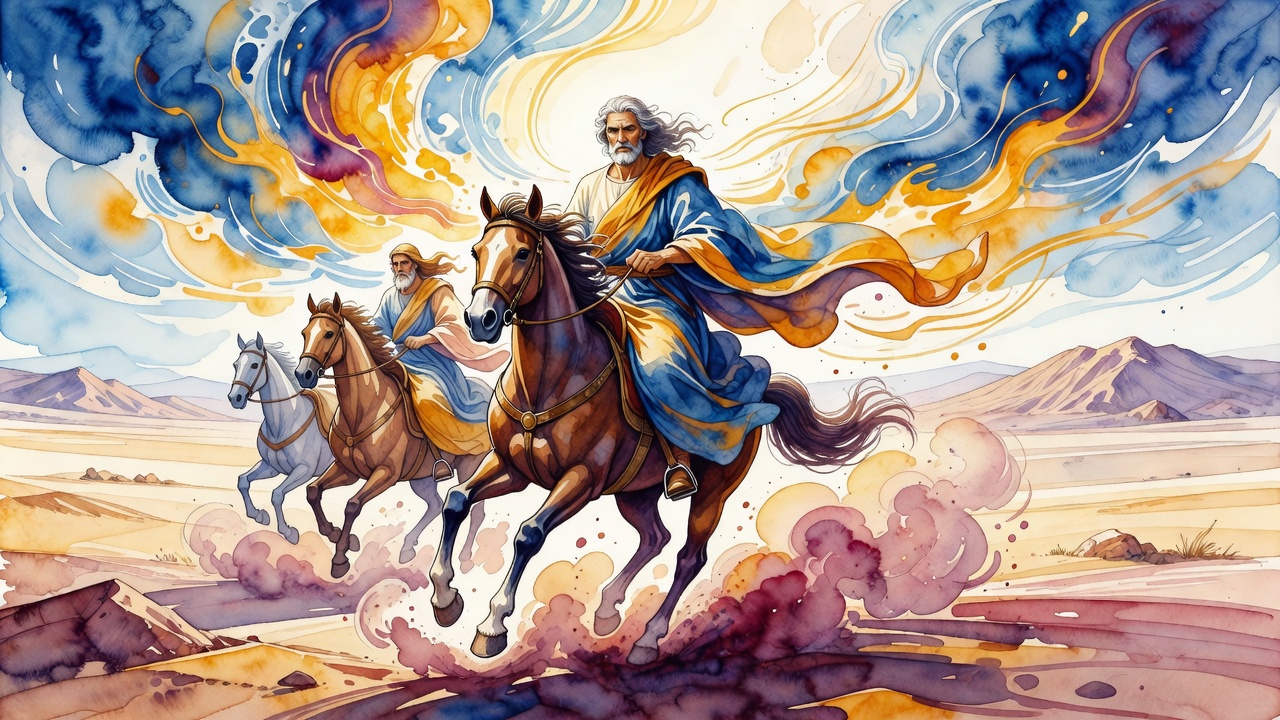
Abraham heard that the kings had taken Lot, and he did not wait for a full army to form. He rose while the camp still slept. A goat stirred and went quiet. Dust stuck to his sandals. He counted men the way a man counts last chances, and the count that stuck in the tradition was three hundred eighteen, the numerical value of Eliezer, the servant who walked with him as if one name could carry a company.
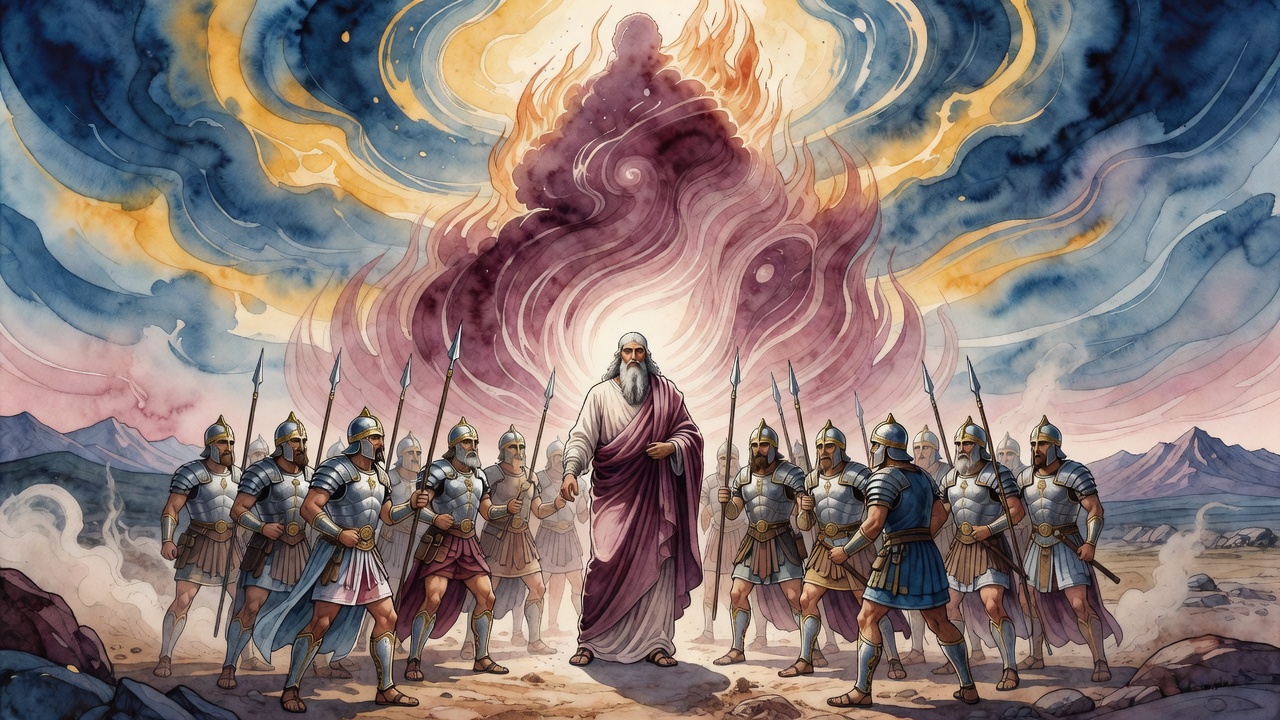
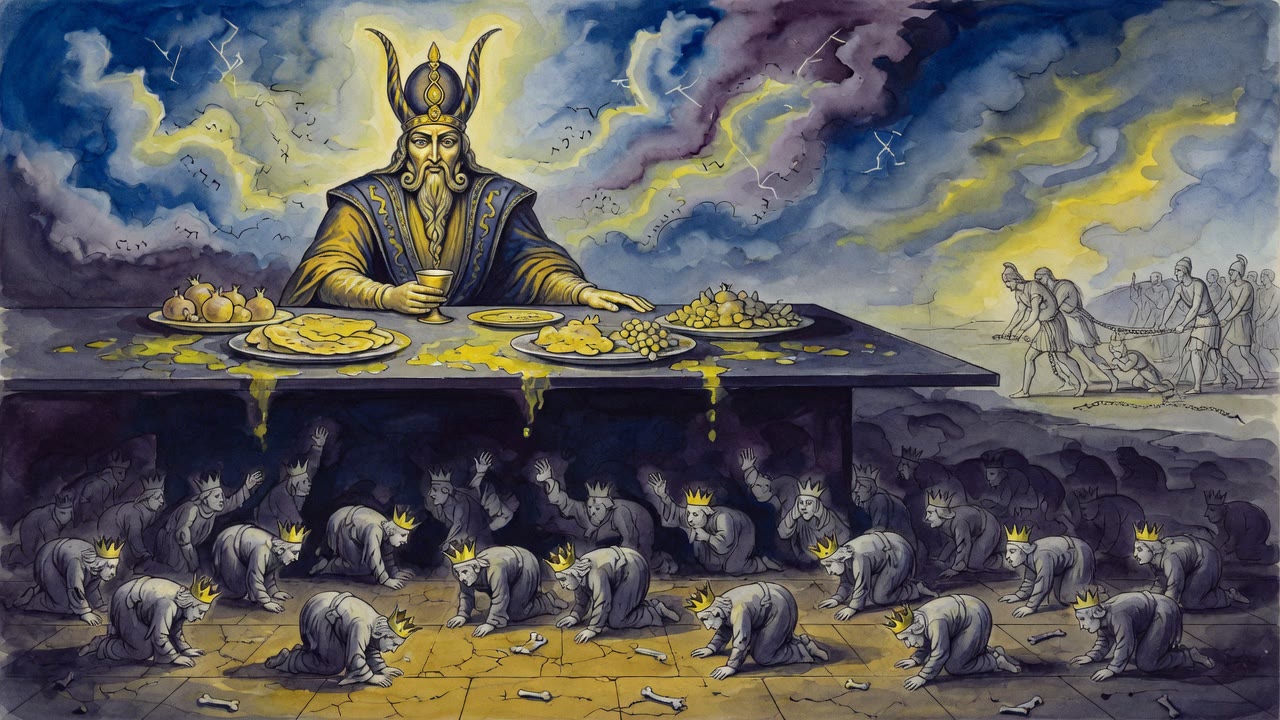
Job's line hung over the road: "His harvest, the hungry eat" (Job 5:5). The midrash heard Nimrod's power as that harvest, and Abraham as the hungry one who would eat it. The same verse says the wealth is set into baskets, and the sages twisted the letters until they heard "without a shield." Abraham went out without the armor kings trust. He went with prayer and a servant and a claim on the living God that sounded, to ordinary ears, like a thin plan.
Eliezer did not ask for a longer roster. The night was already spending itself.
Without a Shield
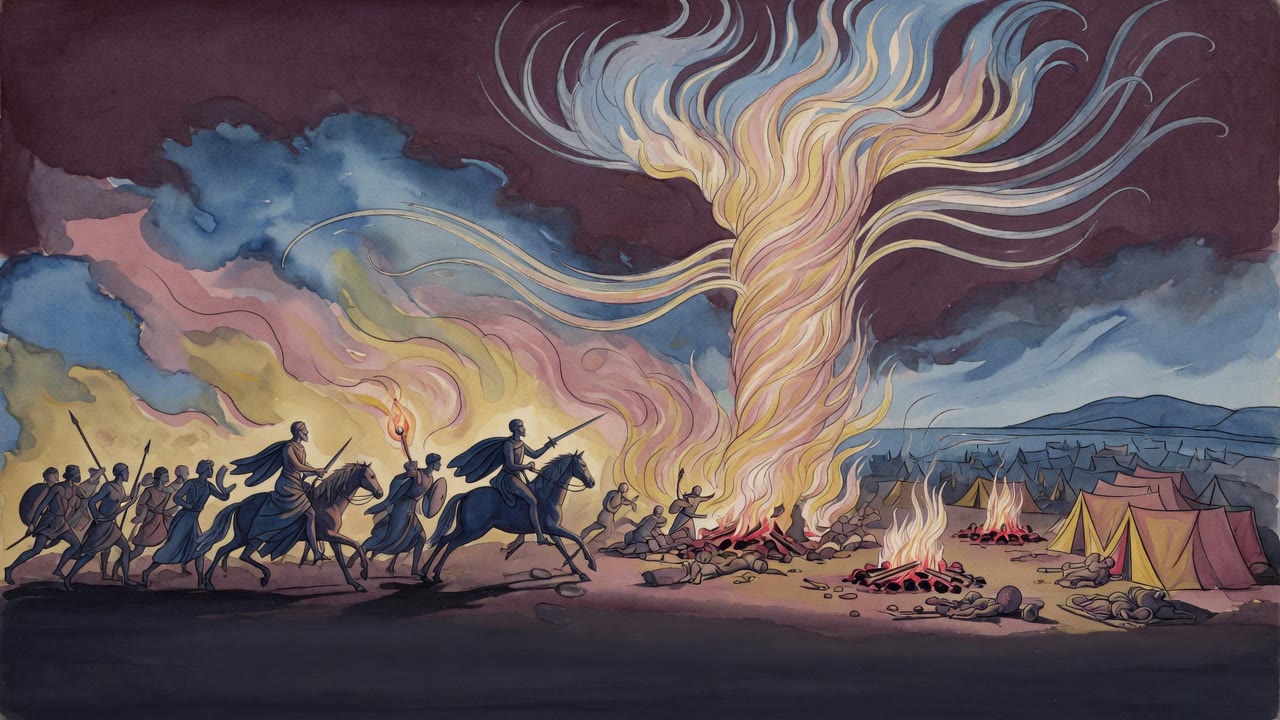
Reish Lakish said in the name of bar Kappara that Abraham's war was not won by iron first. Supplication moved ahead of the spear. The tyrant's store became the patriarch's meal. Thirsty men drank what the powerful had hoarded and called their right. When Abraham returned, Lot walked free, and the kings' confidence lay empty on the ground like a tent cut at the ropes.
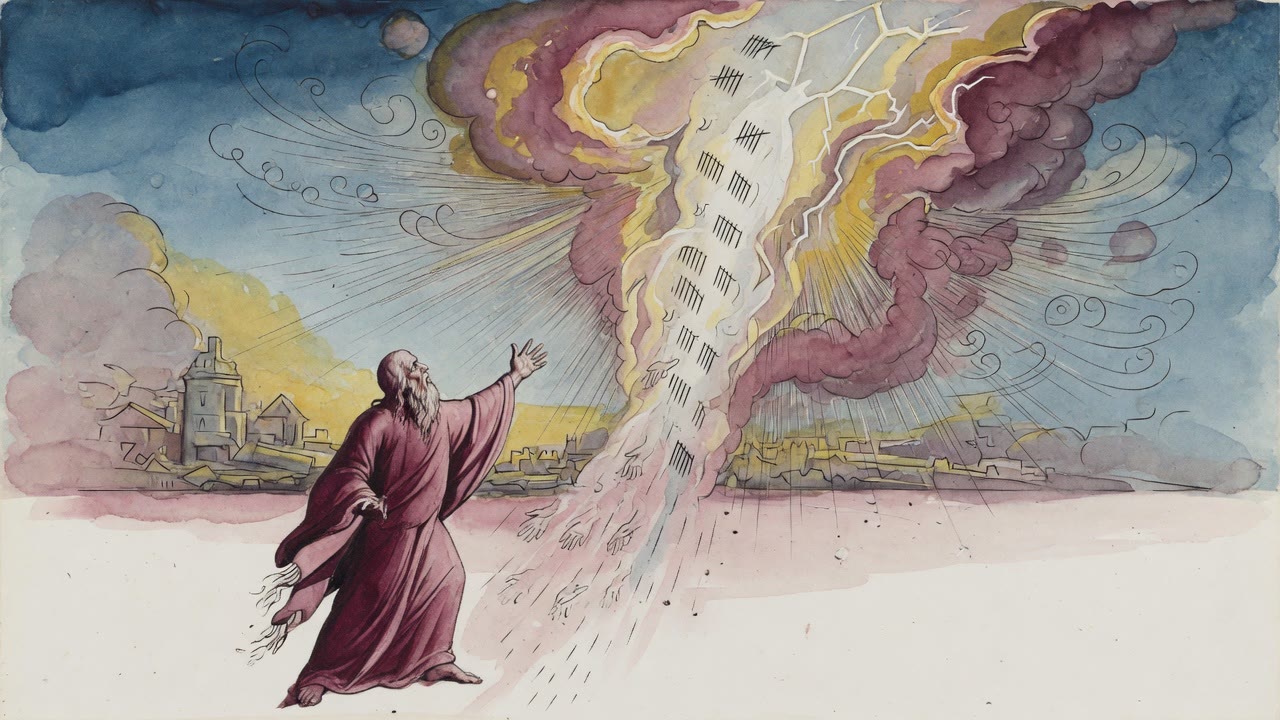
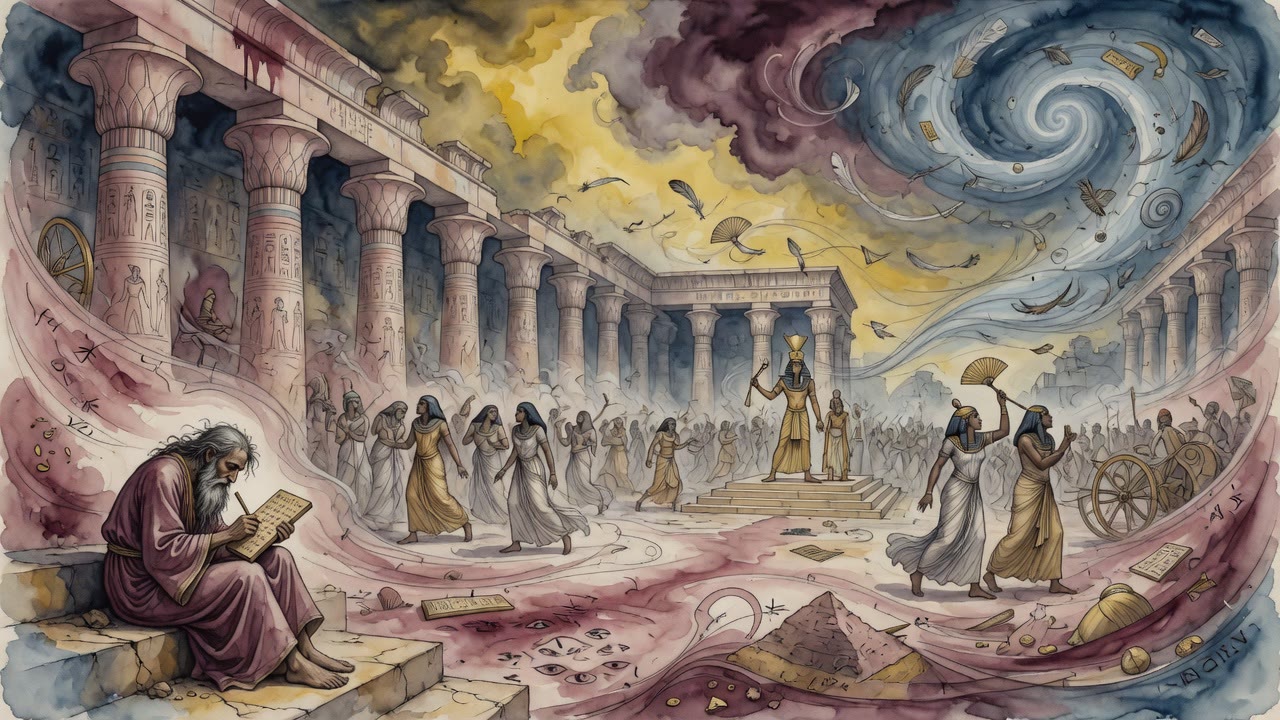
The pattern did not stop with one night. Pharaoh became harvest and Moses the hungry, crying out until the sea itself had to choose a side, and the verse still records the pressure: "Why are you crying out to Me?" (Exodus 14:15). Sihon and Og fell the same way. Sisera met Deborah and Barak while the stars fought from heaven (Judges 5:20). Sennacherib met the prayers of Hezekiah and Isaiah, two mouths against an empire. Haman met sackcloth in Shushan, ash on a people who refused to go quiet. Thirty-one kings of Canaan met Joshua when the Lord said, "Arise" (Joshua 7:10). Again and again the hungry ate what the strong had stacked, and the weapon named first was prayer.
Nimrod's shadow in the midrash is not only one man's name. It is every storehouse that thinks hunger has no claim.
The Omer on the Threshold
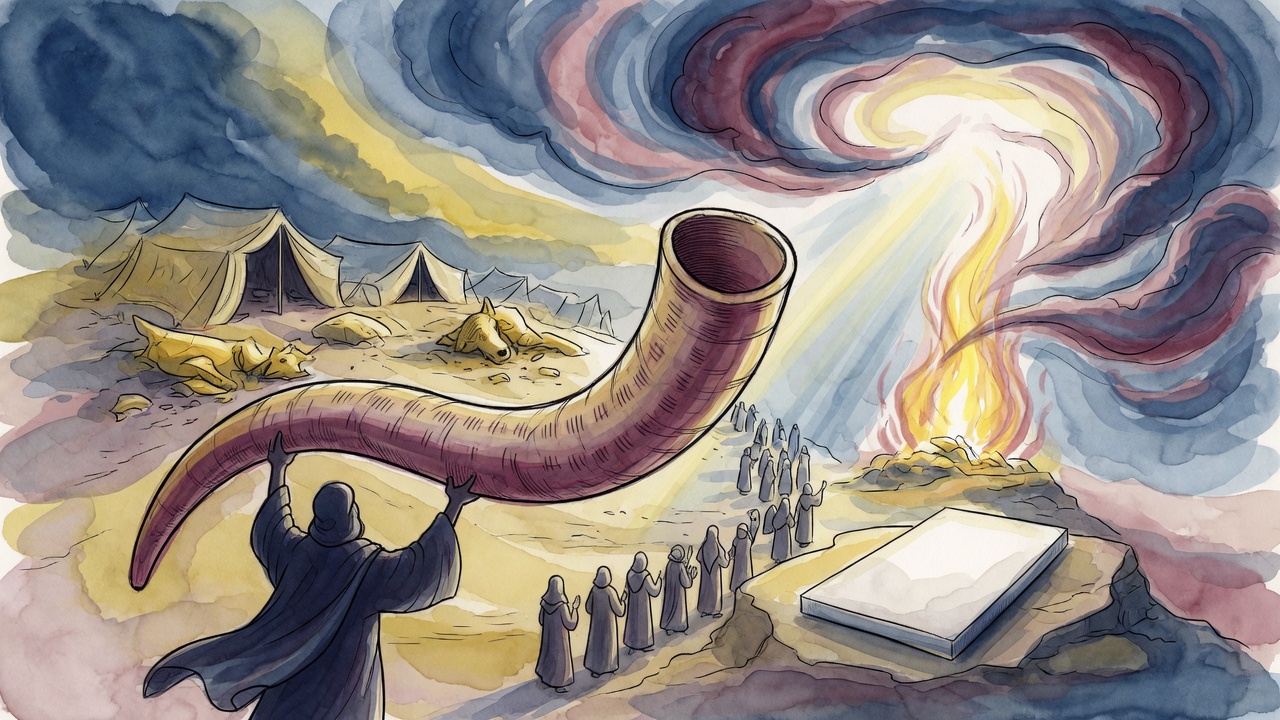
The midrash ties those victories to a sheaf. "When you come into the land... you shall bring an omer" (Leviticus 23:10). The first cut of grain is not decoration. It is the people admitting whose field feeds them before the rest of the harvest is counted as theirs. The same mouth that cries out on the road of war later lifts a measure of barley in the Temple court. Inheritance of the land and inheritance of the tyrant's harvest run on one cord: God answers the hungry who still remember to bring the first of what grows.
A man can win a night and still forget the sheaf. The midrash will not let the forgetfulness stand as wisdom.
Bull, Sheep, and Goat
Another strand of Leviticus Rabbah reads the offerings themselves as patriarchs walking into the sanctuary. "A bull, or a sheep, or a goat" (Leviticus 1:2) is not only livestock on a price list. The bull is Abraham running to the cattle when three guests stood in the heat of the day (Genesis 18:7). Hospitality becomes meat on the altar centuries later, legs still carrying the memory of that run.
The sheep is Isaac under the knife, and the ram caught by its horns in the thicket when heaven refused the son's blood (Genesis 22:13). Mercy took the place of a boy, and the animal kept the memory for every later hand that lifts a sheep. The goat is Jacob sending for two good kids so a blessing could pass under a blind father's palms (Genesis 27:9). Rabbi Berekhya, quoting Rabbi Helbo, heard "good" as good for Jacob and good for his children, because goats would carry atonement on Yom Kippur when one animal went to the wilderness with the people's load (Leviticus 16:30).
War night and altar morning share a ledger. What Abraham did without a shield still funds what Aaron does with blood and lots.
Merit That Keeps Marching
Abraham's night without a shield and Abraham's run to the herd are the same man under different skies. One scene is dust and captives. One scene is bread and water for strangers who looked like men and were more. Both leave a residue the midrash refuses to drop: when Israel stands empty-handed before a larger power, it still carries the hungry patriarch, the bound son, the blessed twin, and the small sheaf that says the field was never theirs alone.
On the road back from the kings, Eliezer did not need to explain the math of his name. Lot's breath was proof enough. The harvest had already changed hands, and the omer waited in a future field for feet that would still know how to be hungry in the right direction.
← All myths