Abraham Saw the End Before He Took a Step
Goats shoved goats on the ridge while the shepherds shouted. Lot looked down at the Jordan plain, wet and shining like a garden, and chose first.
Table of Contents
Abraham stood on the ridge where the flocks had already begun to quarrel and watched dust rise between the shepherds. The land could not hold both households. Goats shoved goats. Men shouted names that would not heal by nightfall. Lot waited for the first choice with the greed of a man who thinks first means free.
 Click for full size
Abraham did not reach for the greener valley first. He fixed the end in his mind before his foot left the rock. The wise man's eyes sit in his head, Ecclesiastes says, while the fool walks in darkness, and one event waits for both (Ecclesiastes 2:14). Abraham put that verse into his bones and spoke as a man who already knew which road would finish clean.
The Verb That Bent the Road
"If you take the left, I will go to the right," he told Lot. "If you take the right, I will go to the left" (Genesis 13:9). The Hebrew did not land as a simple travel plan. He did not say esmola, a plain going left. He said asme'ila, a causing to go left. Even if Lot thought himself clever, Abraham would still be the one who steered him toward the left hand of the fool.
Lot looked down toward the Jordan plain, wet and shining like the garden of the Lord. He chose first. He walked toward cities that would burn later. Abraham turned his face toward the harder ground and kept walking as if the end of the matter had already been named its beginning.
Rabbi Meir used to call the end of a matter its beginning. Before a project, before a bargain, before a separation of brothers, he wanted the finish line visible in the first breath. On that ridge Abraham practiced the same discipline. The sheep still bleated. The dust still rose. The choice had already been scored.
Wheat, Barley, and a Rigged Measure
Rabbi Ḥanina bar Pappa once pictured two men, each holding a kor of grain. One held wheat. One held barley. The first man said, if yours is barley, mine is wheat, and if mine is wheat, yours is barley. Either way he walked off with the better measure.
That is Abraham facing Lot. Offer the choice. Keep the wheat. Let the other man believe he won the first pick while the road itself sorts wisdom from folly. The heart of the wise leans right, the heart of the fool left (Ecclesiastes 10:2). Abraham claimed the right without grabbing first.
Years later, when a litigant refused a living court's ruling, Rabbi Yehuda HaNasi would tell a servant to cause the man to go left, a signal that the claim was wrong and the body should be struck from the other side. The same left hand that Lot chose on the plain still meant the side of the fool in a later house of judgment. Abraham's verb outlived the dust of that ridge.
Eyes in the Head, Darkness on the Road
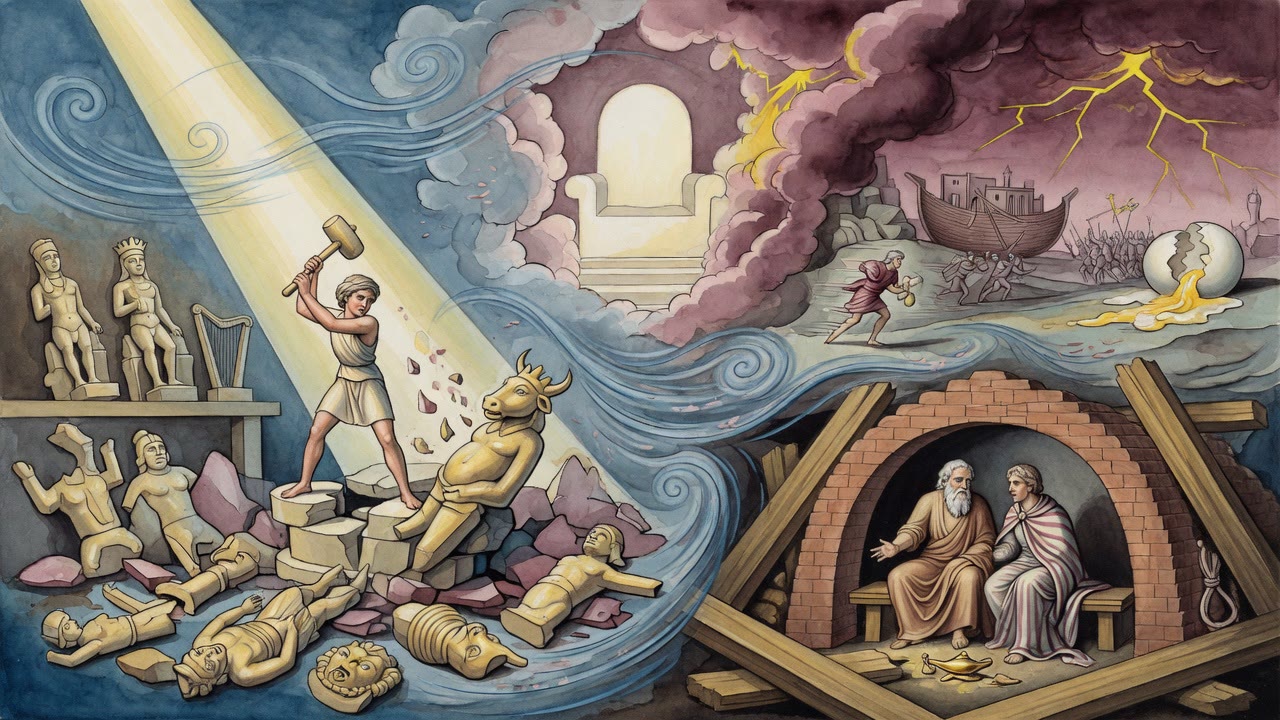
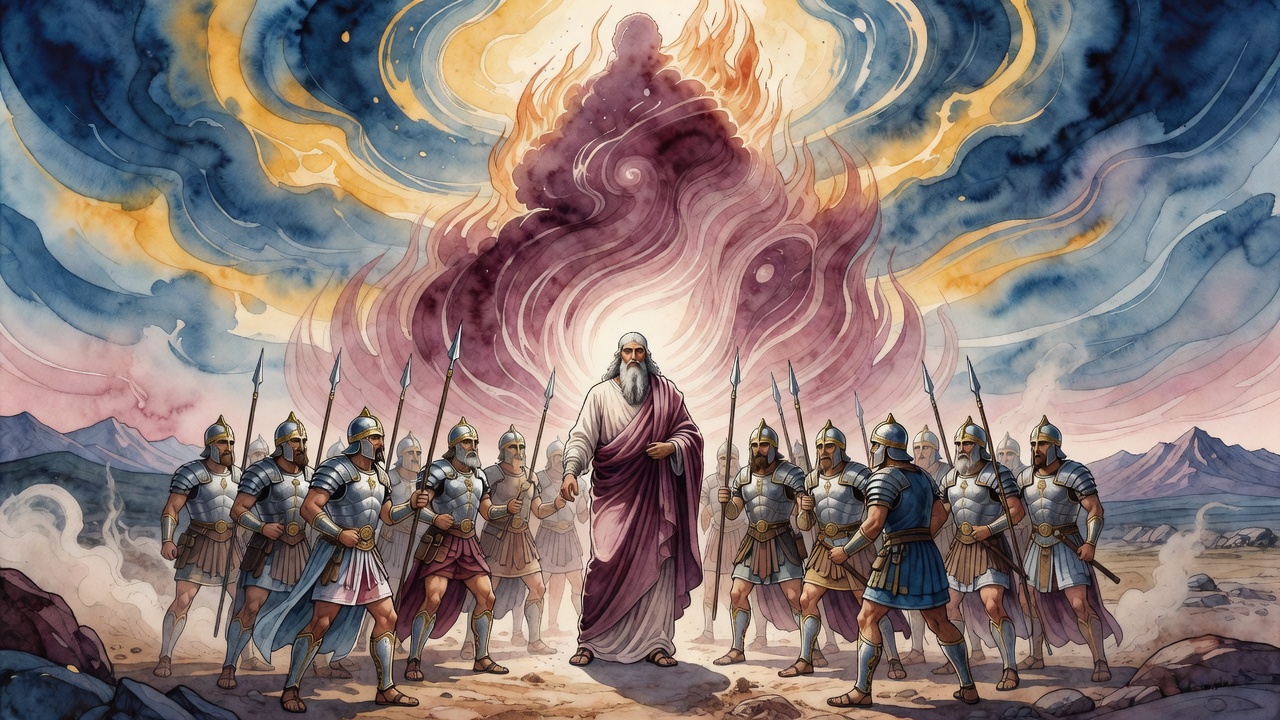
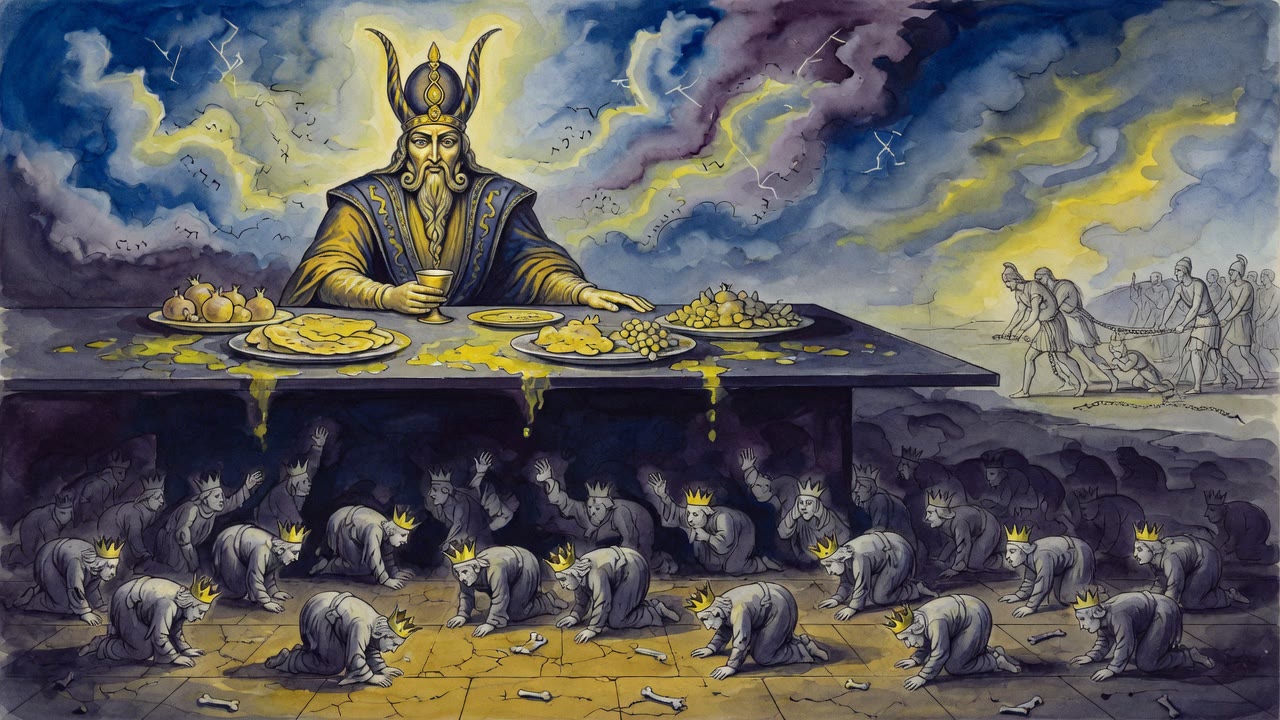
Nimrod built towers and thrones and furnaces and called the work power. He measured the world by how high a man could climb while other men still breathed beneath him. He walked in darkness with both eyes open, because he never pictured the finish while the first brick was still wet. Abraham measured the world by the end of the road he had not yet walked. The wise man's eyes stayed in his head. The fool's stayed on the next brick.
One event will happen to them all. Death waits for the man who sees and the man who will not look. Foresight does not buy Abraham a longer life. It buys him a road that finishes clean. Nimrod's darkness is not night on the ground. It is empire without a last mile mapped.
Abraham left Ur, left Lot, left the plain that glittered, and still carried the end like a lamp inside the skull. When God later asked for the mountain and the knife, that same habit of beginning with the end kept his feet moving before dawn. He rose early because the matter already had a shape in his mind.
Nimrod's name still smells of smoke and empire. Abraham's name still smells of dust and covenant. Both men closed their eyes at last. Only one of them had kept his eyes in his head while they were open.
What Lot Carried Down the Slope
Lot took the plain and thought he had taken wealth. He pitched toward Sodom. The land looked soft. The markets looked full. His shepherds stopped fighting Abraham's shepherds because distance solved what kinship could not. The left road felt like victory for a season.
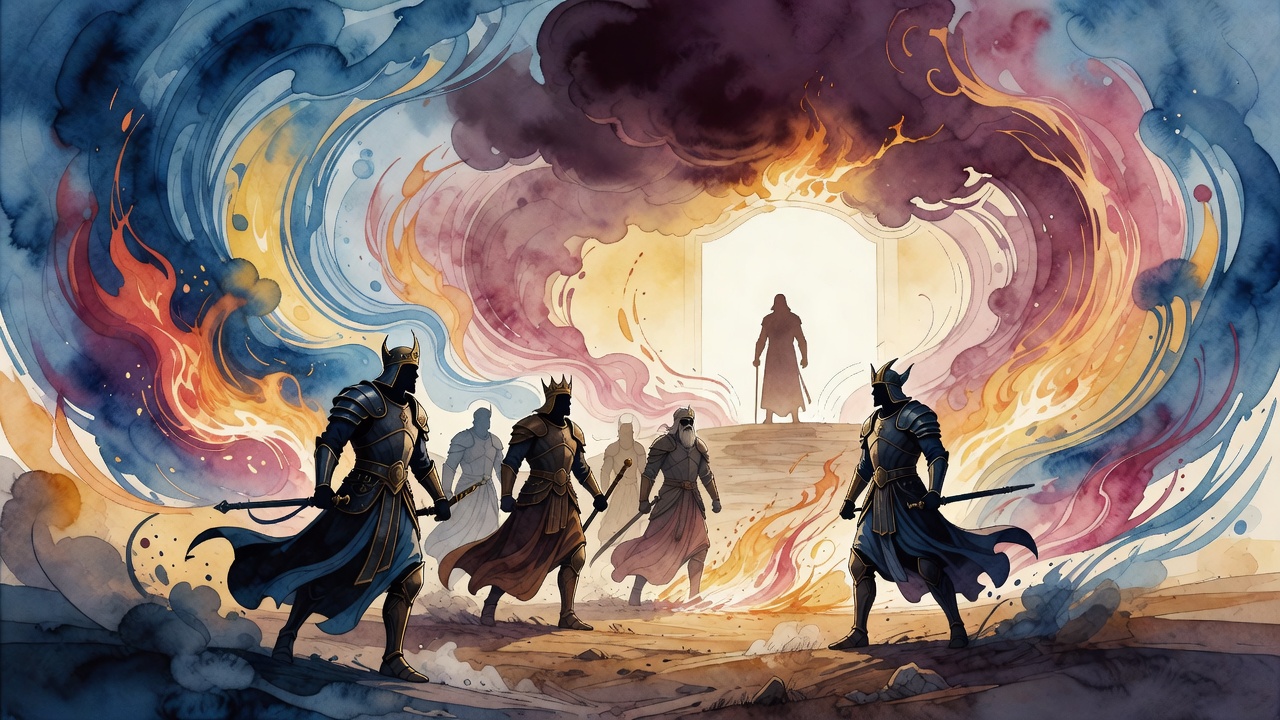
Then the cities filled with laws that hated strangers. Then fire came. Abraham stood on another ridge and bargained for ten righteous mouths while Lot ran with angels gripping his wrist. The first choice had already written the second panic. The fool does not trip only at the end. He trips because he never mapped the end at the start.
Abraham watched smoke rise and did not gloat. Foresight is not glee. It is the weight of having seen the thorns before the smooth mouth of the road invited a brother to rush in. He went back to his tents with the right hand of the wise still claimed and the left hand of the fool still smoking on the horizon.
On the ridge where the flocks first fought, a stone still held the print of two sets of sandals turning opposite ways. One pair chose shine. One pair chose the harder dirt with the end already named. Death would come for both walkers. Only one of them had begun the walk as if the last mile already pressed his heel.
← All myths