God Told Abraham Good News Before Sodom's Fate
Sarah was still inside the tent when the promise landed. The cry from the plain came second. Abraham spent that hour on other people's houses.
Table of Contents
God did not mention Sodom first.
 Click for full size
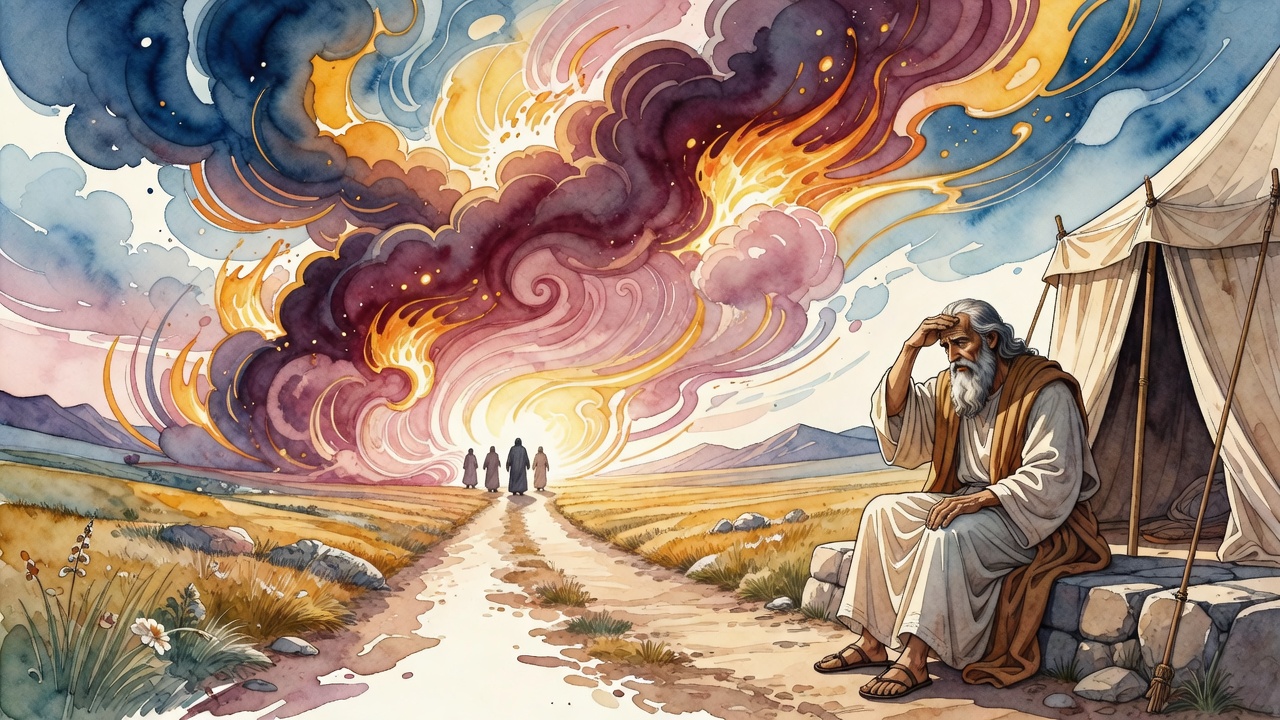
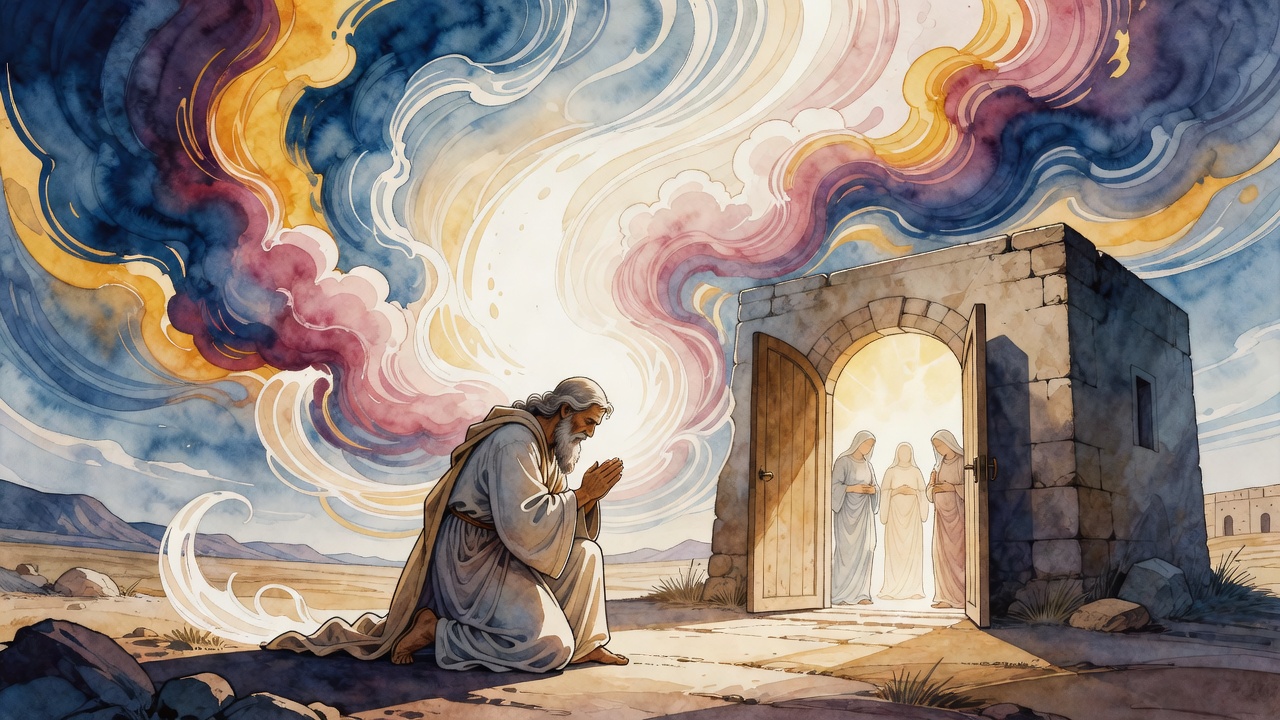
Under the terebinths the day still looked like a visit. Heat on the flaps. Dust on the well path. Abraham standing in the open with food in his hands, the way he always stood when strangers appeared at noon. The Holy One came with a word that could rearrange a tent: Sarah would conceive. A son. A name that would outlast the laugh that first greeted it.
Only after that light did He speak of the cry.
A Son Named Before the Cry
The cry of Sodom and Gomorrah had risen great and loud, a sound that had reached heaven the way smoke reaches a nose (Genesis 18:20). God named it second. Good news as doorway. Judgment as the room beyond it.
Sarah was still inside the tent. The promise had already entered. The cities on the plain had not yet been named in Abraham's hearing. He held a future in his mouth before he was asked to hear a sentence.
Anyone who must tell a companion a disgrace begins with a good word and only then delivers the bitter. They did not invent that sequence from court manners. They watched God use it on Abraham when the day still looked like hospitality and not like a trial.
He Bargained Down From Fifty
Abraham did not pocket the promise and go silent on the cities. The child still unborn did not make him indifferent to children already breathing under a sentence.
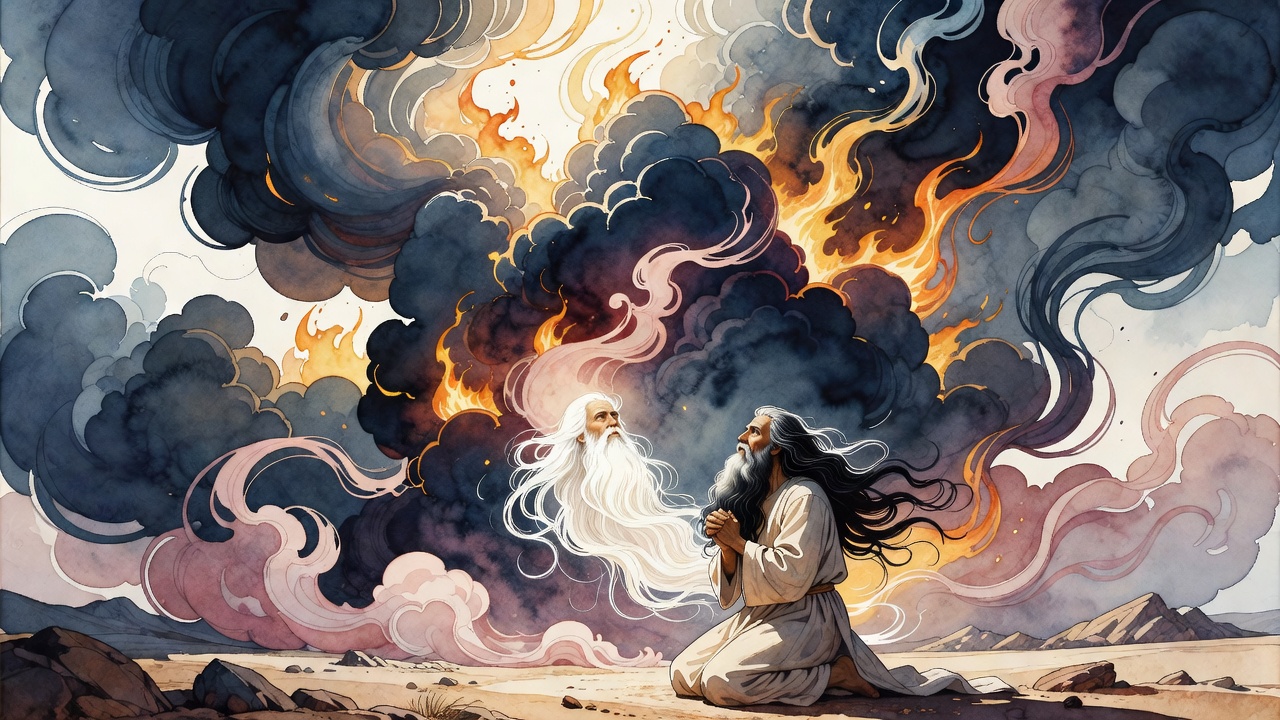
"Sovereign of all worlds," he said, "shall the death of the wicked be like the death of the righteous? Will You consume the righteous with the wicked?"
God answered with a door left open. By the merit of the righteous He would forgive Sodom. Fifty. Then the numbers stepped down like a man descending a ladder he refuses to jump from. Forty-five. Forty. Thirty. Twenty. Ten.
Abraham pressed because the soft word had not made him soft toward strangers under a sentence. The son promised to Sarah did not cancel the nephew living in a doomed plain. He stood as a man who had just been given a future and still spent that future's first hour on other people's survival.
Hunger Came Before the Tent
The man who argued for Sodom had already walked roads that break other spines. Ten trials, each a different shape of the same question: will you still trust when the gift looks like a wound?
One of them was famine in the land he had just been told to enter. Scarcely settled in Canaan, hunger arrived like a second command, mocking the promise with empty fields. He went down to Egypt rather than murmur against the God who had sent him. He did not tear his clothes in the street. He packed and walked.
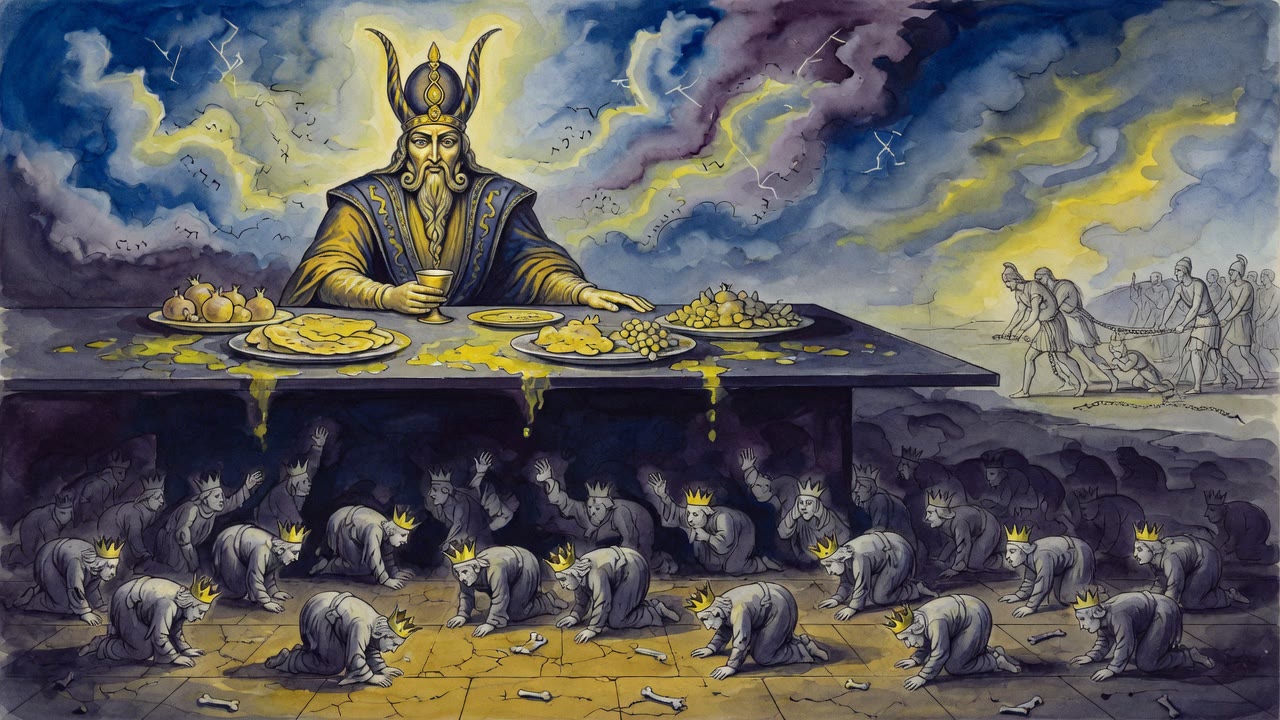
Another trial had been a prison. Ten years: three in Kuthi, seven in Budri. After ten they brought him out and cast him into a furnace, and the King of Glory put forth His right hand and delivered him, the same right hand that would later say, I am the Lord who brought you out of the furnace of the Chaldees (Genesis 15:7).
A man trained by hunger and by fire still had breath left to negotiate for cities that were not his. The good word about Isaac did not create Abraham's mercy. It found mercy already cut into him by earlier roads, earlier nights when the promise looked as if it had failed and he walked anyway.
Sarah Taken on a Passover Night
In Egypt the princes saw Sarah and took her to Pharaoh to be his wife. Is there any man who, seeing his wife taken away to another man, would not rend his garments? Abraham did not. He trusted that God would not let Pharaoh approach her. From outside, the stillness looked like coldness. It was counted as a trial passed in silence.
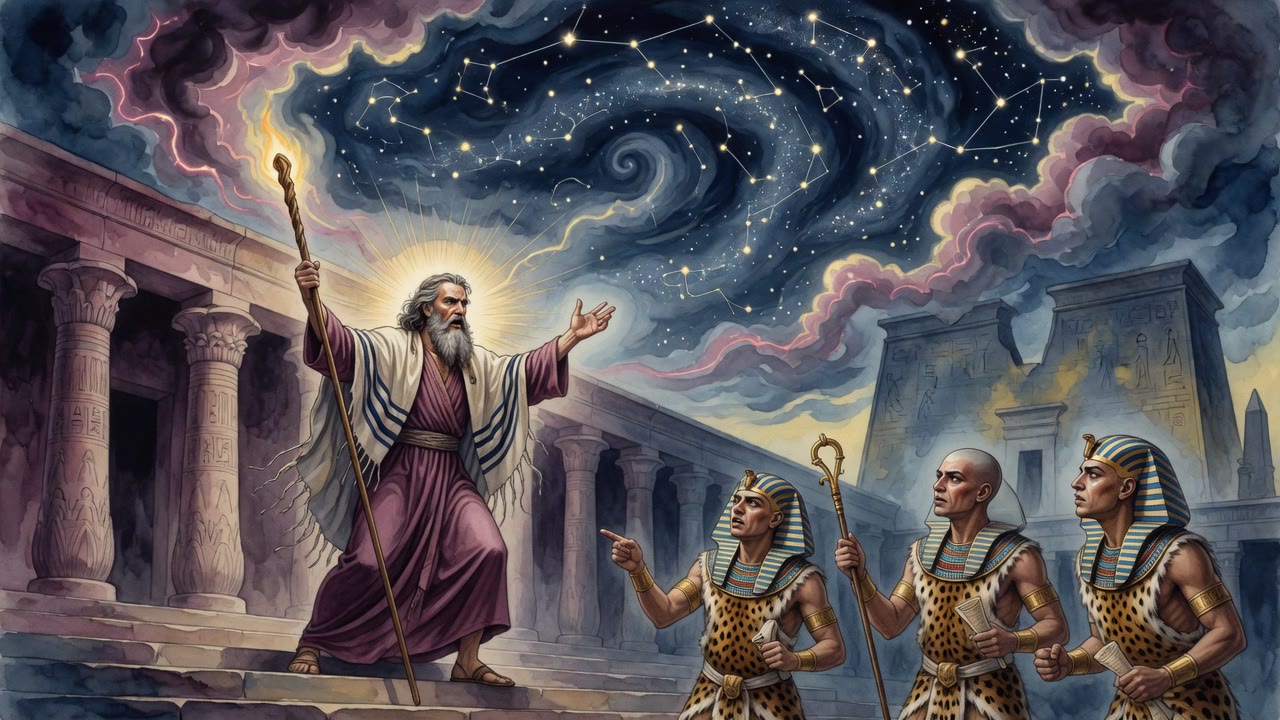
Rabbi Joshua son of Korchah said that the night Sarah was taken was Passover night. God brought great plagues on Pharaoh and on his house, to make known that He would one day smite the people of that land the same way (Genesis 12:17). The later plagues had a rehearsal in a bedroom Abraham was not allowed to enter.
He got her back. He left Egypt. He still had the famine in his body and the furnace in his memory and a wife who had spent a night in a palace that wanted her. Years later, under the terebinths, God opened with a son. Abraham had already learned what it costs to wait for a household to be returned.
He Spent the Hour on Other Houses
Sarah, inside the tent, would laugh and then deny the laugh, and that smaller story would run beside the smoke of the cities. Promise and catastrophe shared one afternoon. The good word did not cancel the hard one. It made the hard one speakable without turning the listener into stone.
Abraham heard judgment as someone already holding a future. That did not make the fire gentle. It made him able to stand and answer without collapsing into panic or into a private joy that stopped at his own flap.
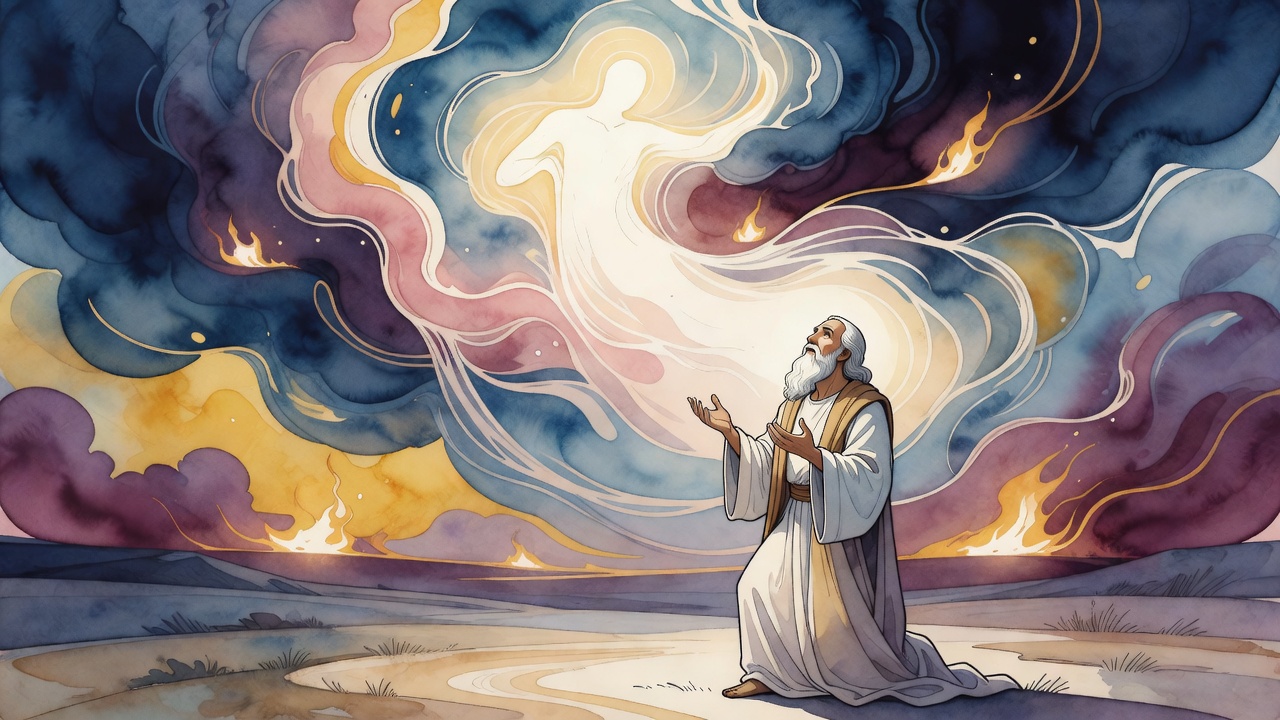
He walked from that conversation into prayer shaped like argument. The cities would still burn. Lot would still need seizing by the hand. Ten would not be found. The sequence remains: a son named first, a cry named second, a man who had already lost a wife for a night and a country to hunger and still used the first hour of Isaac to ask for strangers.
Under the terebinths the dishes were still out. Sarah's laugh was still ahead. Smoke had not yet risen. Abraham's mouth was still open on the number ten.
← All myths