5 min read

Abram Left Haran at Seventy-Five With Lot Beside Him

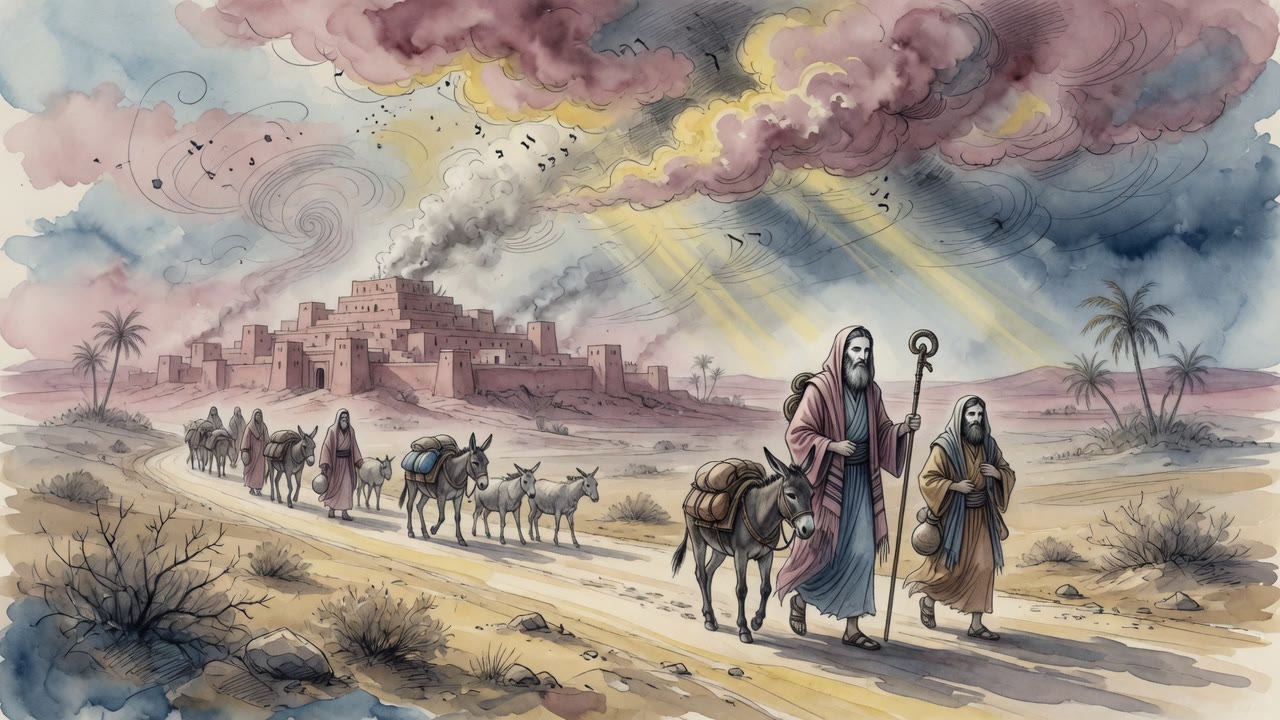
At seventy-five Abram packed the camp and walked south with Lot. Their shepherds fought over stolen grass, and the Voice waited until the nephew left.

Curated by Arthur · Told by Maggid ·
Table of Contents
  1. Seventy-Five Years on the Road
  2. When the Herds Turned Against Each Other
  3. The Choice Between Ridge and Plain
  4. The Horizon That Waited for Silence
  5. What Lot Carried Toward the Cities
Abram Left Haran at Seventy-Five With Lot Beside Him Click for full size

Seventy-Five Years on the Road

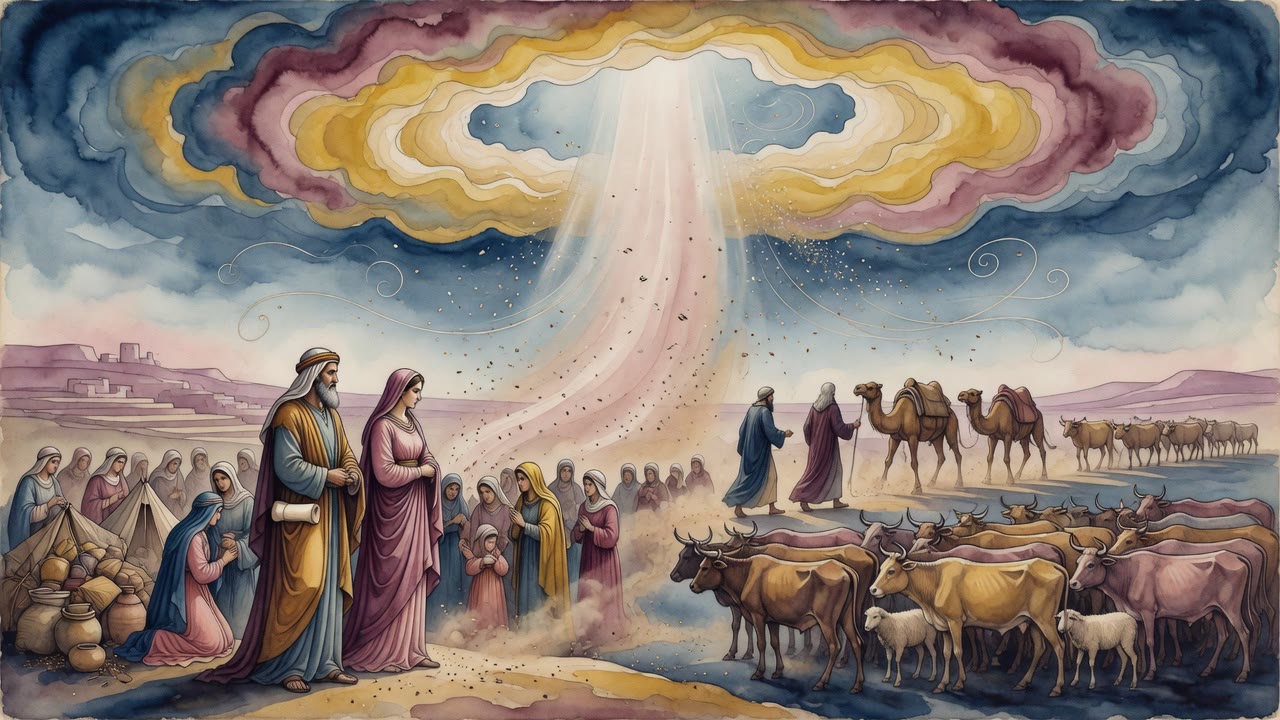
Abram set his foot on the dust outside Haran and did not look young. Seventy-five years sat in his shoulders. The call had not asked for a boy. It asked for a man who had already watched his father stop short of the land and die with the journey unfinished. Lot walked at his side with tents and herds and a future he thought he owned by nearness to his uncle.

They left as the Hebrew marks it, almost like a ledger line. Abram was the son of seventy and five years at his going forth from Haran (Genesis 12:4). No trumpet. No parade. Only the long road toward Canaan, and a nephew whose shepherds would one day teach the camp what ethical failure smells like on open range.

Age was not a disqualifier. Age was the credential. A younger man might still bargain with the Voice. Abram had enough disappointment stored in his bones to hear a command and move before he finished arguing with himself.

When the Herds Turned Against Each Other

In the land of the Canaanites and the Perizzites the grass became a courtroom. Abram had taught his shepherds a hard rule. Do not let the cattle go among the peoples who still hold power in the land. Do not let them make depredations on the pasture of others. Muzzle the appetite. Keep the animals off ground that is not yet yours.

Lot's shepherds reasoned the other way. The land is already promised to Abram's seed, they said. Lot stands next to him like an heir. The grass is practically ours. They let the cattle roam. They grazed what still belonged to other mouths. The strife between the herdsmen was not a fight about water alone. It was a fight about whether a promise licenses theft before the deed is done (Genesis 13:7).

Abram heard the shouting and felt the camp split along a line sharper than any ridge. Kinship could not hide the difference. One house waited. The other took. The Shekhinah (God's indwelling presence) does not like to camp with stolen grass under the tent pegs.

The Choice Between Ridge and Plain

Abram spoke first, as if the younger man were the one who needed covering. Let there be no quarrel between me and you, between my herdsmen and yours. The whole land is before you. If you take the left, I will go right. If the right, I will go left. He offered Lot the better map and kept the quieter conscience.

Lot lifted his eyes toward the plain of the Jordan, green as Egypt in a wet year, and chose the cities that glittered along the low road. He walked toward Sodom with his tents and his clever shepherds and the assumption that inheritance can be cashed early. Abram watched the dust of that departure until the last animal disappeared into the heat.

Separation hurt. Separation also cleaned the air. While Lot remained, the camp carried two ethics in one enclosure. After Lot left, the enclosure held one.

The Horizon That Waited for Silence

Only then did the Holy One speak again. After that Lot had separated from him, the Word came and opened the horizon in every direction (Genesis 13:14). Lift your eyes. North, south, east, west. All the land you see I will give to your seed forever. Walk the length and the breadth of it. The promise that had paused during the quarrel of the shepherds returned like rain after a dry wind.

Prophecy in this tradition seeks clear air. While Abram stood in partnership with a man whose men grazed stolen ground, the renewal of the land-word held back. The Voice is not promiscuous. It waits for the company to match the calling.

Abram stood alone on the ridge with empty space where Lot had been and a map that finally fit the silence. Seventy-five had brought him here. The rest of his life would be measured by how he walked the land without taking what was not yet his to seize.

What Lot Carried Toward the Cities

Lot did not leave empty-handed. He carried herds fattened on other men's grass and a theory that nearness to Abram was the same thing as ownership of the promise. The cities of the plain glittered. The ethics of the ridge did not travel with him. Years later smoke would rise from that choice, but on the day of parting the plain only looked green.

Abram turned back to dust and stone and a horizon that finally spoke. He would walk the land without snatching it. He would wait for seed without inventing heirs from thin air just yet. Seventy-five years had taught him how to begin when younger men think beginning is finished. The nephew's dust settled. The Voice did not.


← All myths
From the tradition

Sources

3 sources

The texts behind this telling. Some cards carry a translation of the source; others are our own retelling of it, and each card says which. Every card links out to the original.

Targum Pseudo-Jonathan on Genesis 12:4Targum Pseudo-Jonathan on Genesis

Retold in our words. Read the original at the link below.The Targum of Jonathan ben Uzziel, trans. J. W. Etheridge, London, 1862 · Public Domain

The verse is almost administrative. Abram leaves Haran at seventy-five. Lot goes with him. The Targum in (Genesis 12:4) does not embroider. And that restraint is the whole lesson.

Targum Pseudo-Jonathan reports the number plainly: Abram was the son of seventy and five years at his going forth from Haran. Seventy-five. The patriarchs of the Hebrew Bible grow old in reverse. Noah begins his ark at six hundred. Abram begins his covenant at seventy-five. Moses receives his call at eighty (Exodus 7:7). The founding gesture of Jewish history is not a young man's gesture.

The Targumist, by refusing to expand, lets the number speak. Age is not a disqualifier in this tradition; it is often a credential. A man with seventy-five years of disappointment behind him, seventy-five years of watching his father not finish the journey, has enough history in him to hear the call without flinching. A younger man might have been too certain to be useful.

Notice what follows. Lot goes with him. The Targum preserves this detail without comment, but it matters. The call said separate from thy kindred, and yet a kinsman follows. Abram's obedience is not perfect. He leaves father and land but not nephew. Every beginning is a little compromised at the edges. The Holy One accepts the journey anyway.

Seventy-five is not too late. It is, sometimes, exactly on time.

Full source
Targum Pseudo-Jonathan on Genesis 13:7Targum Pseudo-Jonathan on Genesis

Retold in our words. Read the original at the link below.The Targum of Jonathan ben Uzziel, trans. J. W. Etheridge, London, 1862 · Public Domain

The Hebrew Bible in (Genesis 13:7) says only that there was strife between the shepherds. Targum Pseudo-Jonathan tells you what the strife was about, and the answer is an ethics lesson disguised as a range dispute.

The Aramaic reports a sharp divergence in livestock practice. Abram has taught his shepherds a rule: do not let the cattle go among the Kenaanaee and the Pherizaee, who still have power in the land, and do not let them make depredations on the pasture of others. Abram's men muzzle the animals. They do not graze where the grass belongs to someone else.

Lot's shepherds reason differently. The land has been promised to Abram's seed, they say, and since Lot is Abram's heir (so they assume), the pasture is practically theirs already. They let the cattle roam. They graze on land that is not yet theirs.

This is the real strife. It is not a fight over water. It is a fight over whether a promise for tomorrow justifies theft today. Abram's ethic is strict: until the land is given, it is not taken. Lot's camp argues that the covenant is a license.

The Targumist is drawing a line that will run through the entire Hebrew Bible. Promised futures do not entitle us to present sins. A covenant is not a coupon. The land belongs to its present inhabitants until the Holy One works the transfer Himself. Abram, the patriarch of patience, enforces this in the way shepherds handle their livestock, a daily, mundane discipline that turns out to be the architecture of a people.

The separation that follows in (Genesis 13:9) is not estrangement. It is the recognition that two men with different ethics cannot share one caravan.

Full source
Targum Pseudo-Jonathan on Genesis 13:14Targum Pseudo-Jonathan on Genesis

Retold in our words. Read the original at the link below.The Targum of Jonathan ben Uzziel, trans. J. W. Etheridge, London, 1862 · Public Domain

The Hebrew Bible in (Genesis 13:14) times the divine address with surgical precision: after that Lot had separated from him. Targum Pseudo-Jonathan preserves the clause verbatim because it is the whole meaning of the verse.

The Holy One does not speak to Abram while Lot is still in the camp. He waits. The Shekhinah, that favorite Aramaic name for the indwelling presence, holds back through the quarrel of the shepherds, through the tense parting, through the moment Abram watches his nephew walk toward the plain of the Jordan. Only when Lot is gone does the voice return.

The Sages in Bereshit Rabbah 41:8 read this as a lesson about the company we keep. Prophecy in this tradition is not promiscuous. It seeks clear air. While Abram was in partnership with a man whose shepherds grazed on stolen ground (as the Targum explained in (Genesis 13:7)), the promise of the land was not renewed. The instant the ethics of the camp were purified, even at the cost of family, heaven spoke.

The speech is generous. Lift up now thine eyes, and look, from the place where thou art, to the north and to the south, to the east and to the west. Where Lot had lifted his eyes toward Sodom (Genesis 13:10), Abram is now commanded to lift his in every direction at once. A four-cornered gaze. A panorama for a man who has just lost his nephew.

The Targum teaches a painful grace. Sometimes the view only opens after someone else has left the frame. The Holy One does not compete for attention. He waits until the space is ready.

Full source