Abram and Sarah Remade Souls Before Leaving Haran
The tent flaps in Haran stayed open after dark. Guests left their household gods on the mats. Heaven stayed quiet until Lot packed his own tents.
Table of Contents
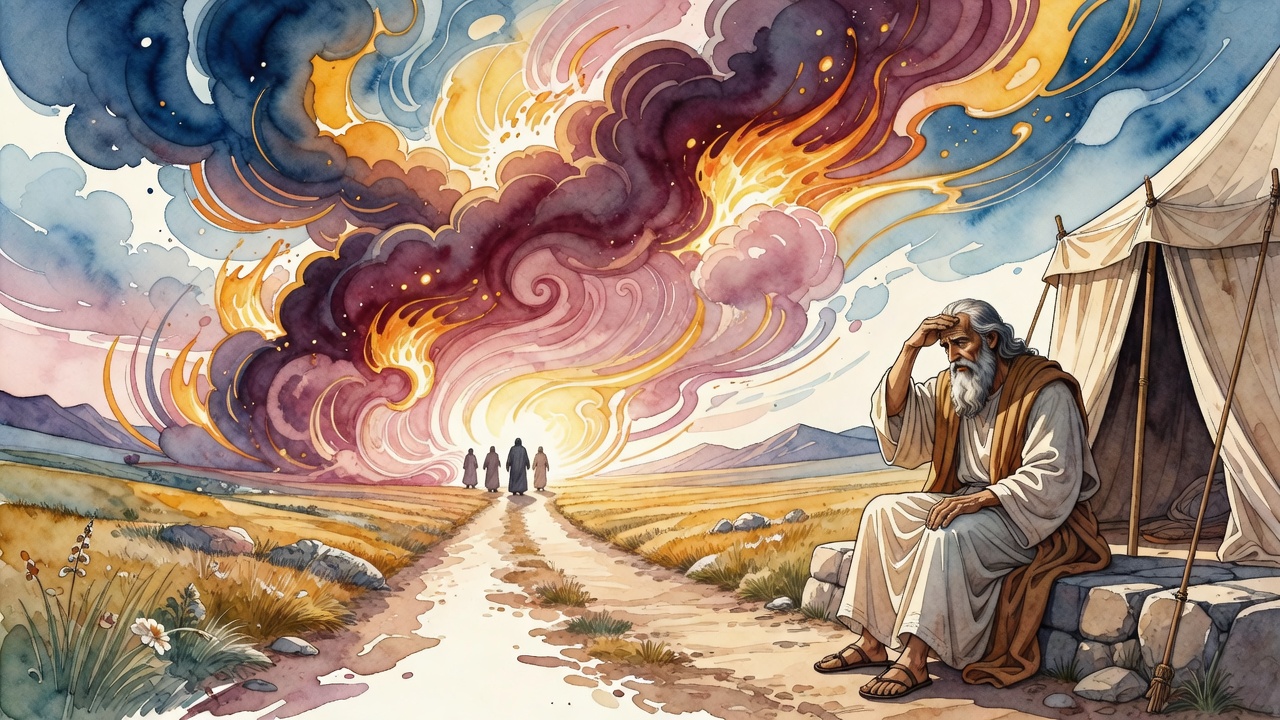
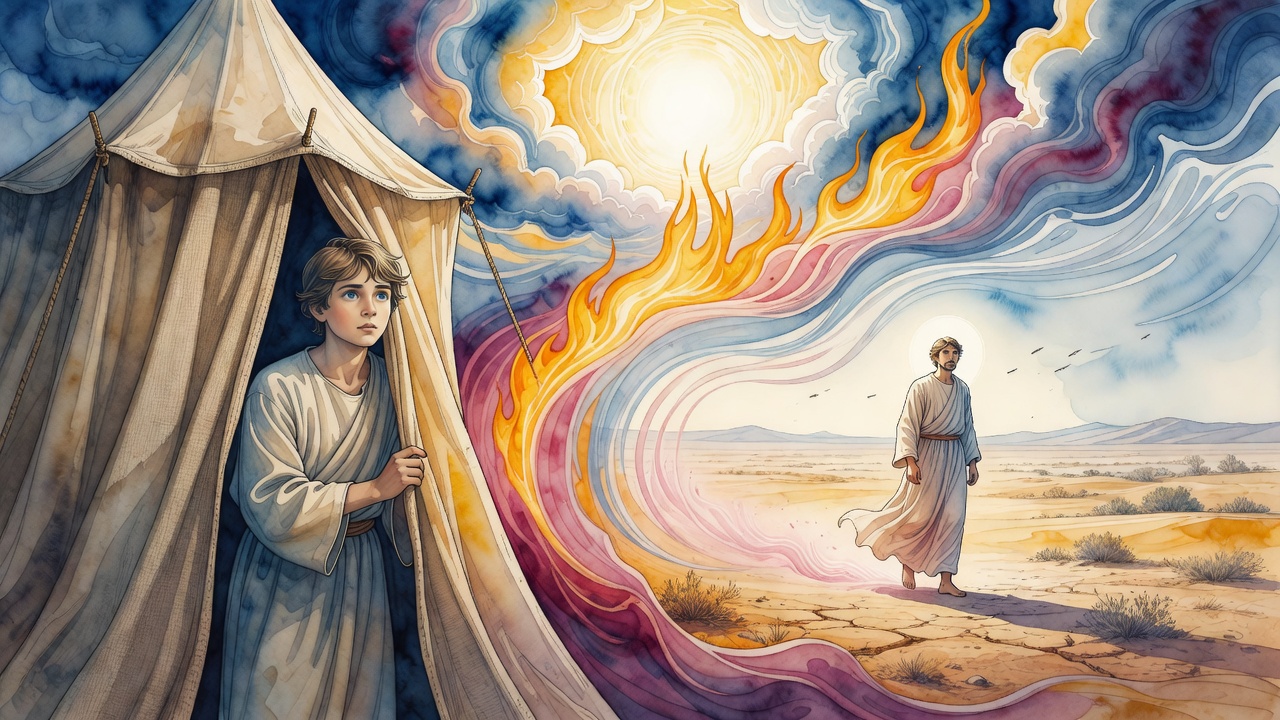
The tent flaps in Haran did not close at dusk. Abram kept a lamp burning by the pole until the last guest had sat long enough to leave a household god on the mat and walk out without it.
 Click for full size
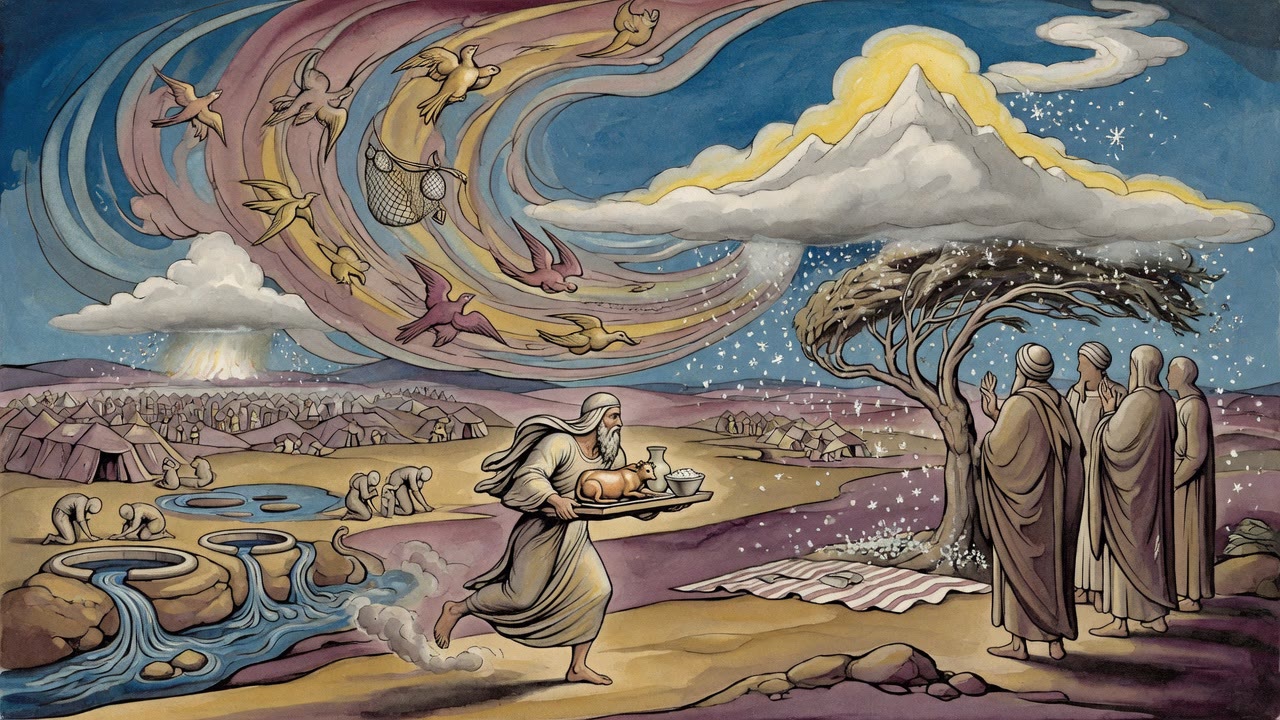
Sarah worked the other side. Women came in with dough under their nails and charms at their throats. They left with their hands empty of wood and stone. Abram took the souls they had made (Genesis 12:5). In Haran that did not mean servants counted like goats. It meant men and women who had eaten bread until they could not go back to mute wood.
The Tent That Would Not Close
Neighbors who already suspected that idols were mute drifted toward the camp. Abram was called the friend of God, and that name pulled hungry people more than any speech. Men sat by his fire to eat, or simply to watch a household live without gods that could be dusted and sold.
He brought the children of the land to the service of the Lord and taught them the ways of heaven. Guests did not depart until something in them had turned. Sarah took the women under the wings of the Presence, the Shechinah (שכינה). Abram took the men. A woman who arrived with a clay figure in her sleeve left it on Sarah's mat. A man who arrived with a joke about the One who answers stayed until the joke died in his mouth.
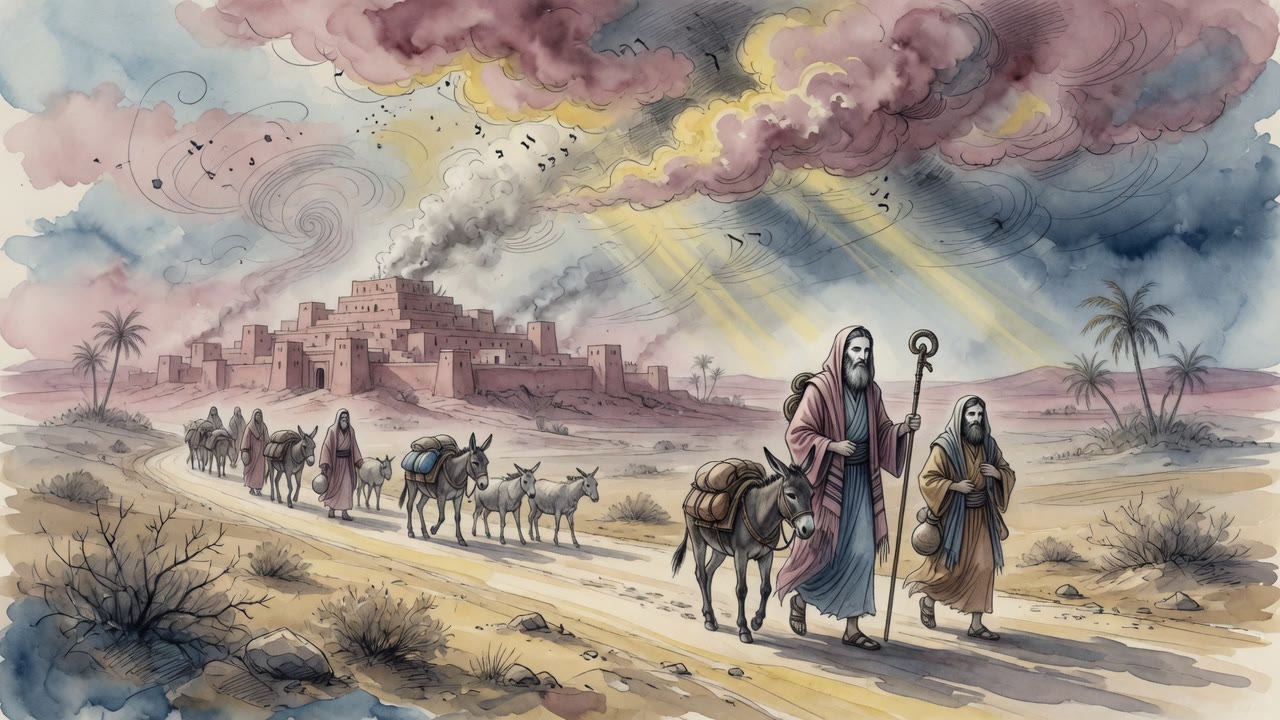
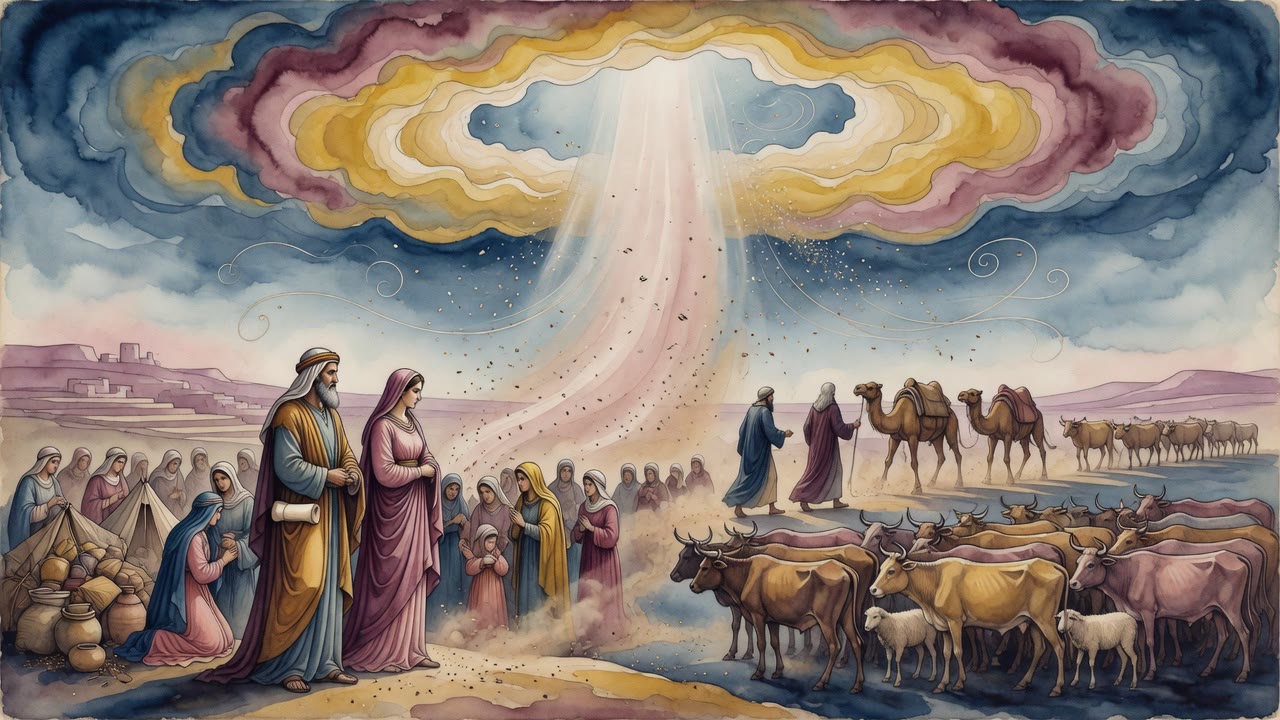
The livestock and the disciples were listed in the same breath when the household packed. Not because they were equal. Because Abram packed everything he loved. Possessions. People. Pupils. The Holy One did not ask him to travel light. He asked him to travel with the ones he had already begun to change.
Souls Packed With the Cattle
They counted heads the way they counted goats. A man who had slept one night under Abram's roof was no longer only a traveler. If he stayed, he learned to bless the One who answers. If he left, he left changed enough that the old shrine in his village felt smaller.
Sarah's side of the tent smelled of bread. Abram's side smelled of smoke. Between them, souls were remade before any border of Canaan was crossed. No Sinai yet. No Temple. No verse hung on a doorpost. Only a husband and wife running a school with open flaps in the dust of Mesopotamia.
The work did not stop at the edge of the camp. Years later Isaac would sit in the academy of Shem, Noah's son, who still remembered a drowned world. The chain did not break. From ark to academy to tent, the first work was teaching. Abram packed the remade souls with the cattle because he would not leave Haran empty of the people he had already turned.
The Scoffer at the Fire
Lot stayed close. Too close. His herdsmen quarreled in the pasture and called theft cleverness. He scoffed where Abram trusted. He treated holiness as a family hobby, a useful uncle's private taste.
Heaven watched the nephew share the uncle's road and held its tongue. So long as the scoffer walked at Abram's shoulder, the divine word delayed. Abram clung to Lot as if a nephew could stand in for an heir, even after the land had already been spoken toward Abram's own seed.
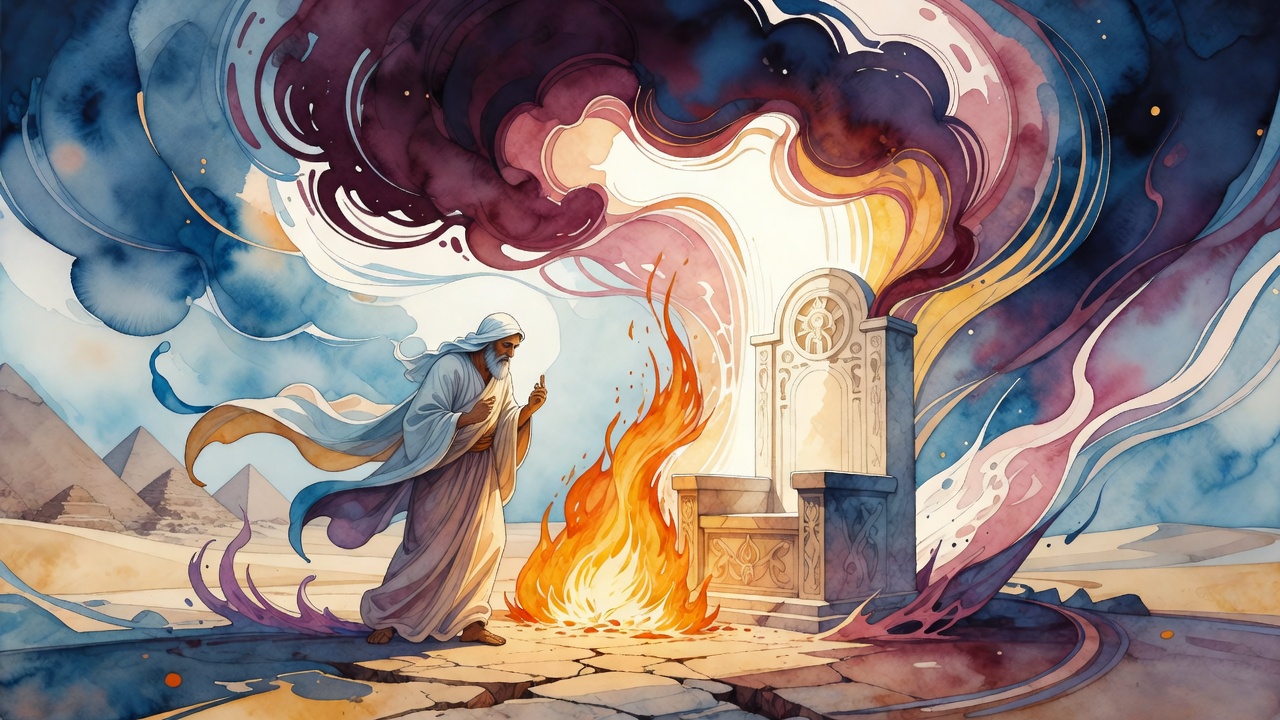
"Cast out the scoffer," the old saying ran, "and contention goes out." Lot's tents finally bent toward Sodom. Abram stood in the gap they left and did not call him back. The air cleared. The lamp by the pole burned in a quieter house. Abram waited.
Dust After Lot Left
Only then did God speak again. "Lift up your eyes," He said, after Lot had separated from him (Genesis 13:14). The image He chose was dust. "I will make your offspring as the dust of the earth" (Genesis 13:16).
Dust covers every road. Dust is useless until watered. Dust grinds down metal. Dust is trodden, and still the road remains while the feet that abuse it wear out and vanish. Abram heard a people scattered, watered, worn, and trampled, and still outlasting the empires that thought walking on them was the same as ending them.
None of that speech came while Lot's jokes still sat at the table. The classroom needed quiet. The converts needed a teacher whose house was not split by a scoffer.
The caravan that left Haran was already a nation in miniature. Sarah's bread. Abram's fire. Souls remade. Then the hard separation, the dust-promise, the long road where teaching would have to survive famine, kings, and the silence of heaven until the next command. Abram packed the souls. Sarah taught the women. Lot left. Then the dust spoke.
← All myths