5 min read

Ishmael Heard the Angel Promise Isaac's Birth

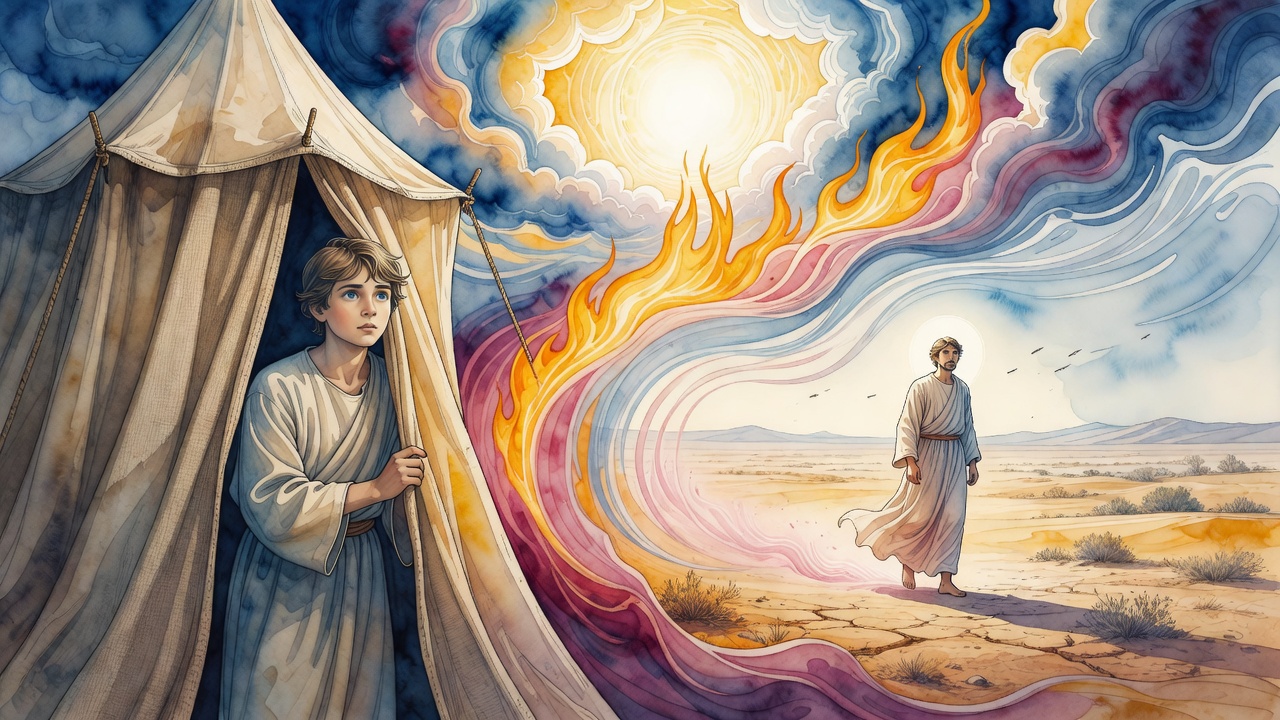
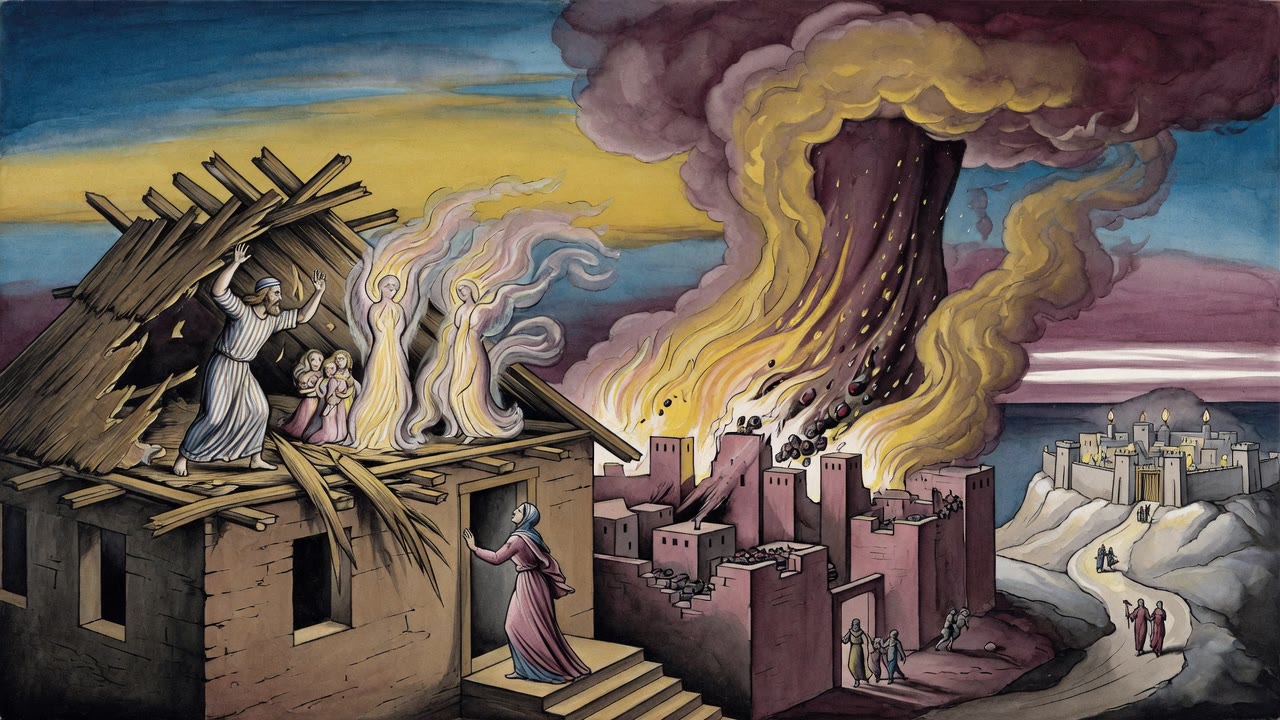
Sarah listened at the tent door. Ishmael stood right behind her, thirteen and newly circumcised, and heard the angel promise Sarah a son within the year.

Curated by Arthur · Told by Maggid ·
Table of Contents
  1. Behind the Tent Door
  2. Laughter Made Flesh
  3. Water and Merit
  4. Two Sons, One Tent's Echo
  5. What the Angel Keeps
Ishmael Heard the Angel Promise Isaac's Birth Click for full size

Behind the Tent Door

Sarah stood listening at the tent door. Behind her stood Ishmael, thirteen, freshly circumcised, already promised twelve princes and a great nation (Genesis 17:20). The angel spoke of a son for Sarah by this time next year (Genesis 18:10). Ishmael marked every word. The Targum does not invent his feelings. It only places his body in the listening line. A boy who carries one covenant mark hears another child named as the carrier of the deeper promise.

The tent walls are thin. Good news for one child becomes the lifelong story of the child standing just behind. Abraham's household is about to stretch in ways no one has prepared for. The stretching begins with quiet eavesdropping, not with a fight. Dust moves at the flap. Heat presses the canvas. The boy does not leave.

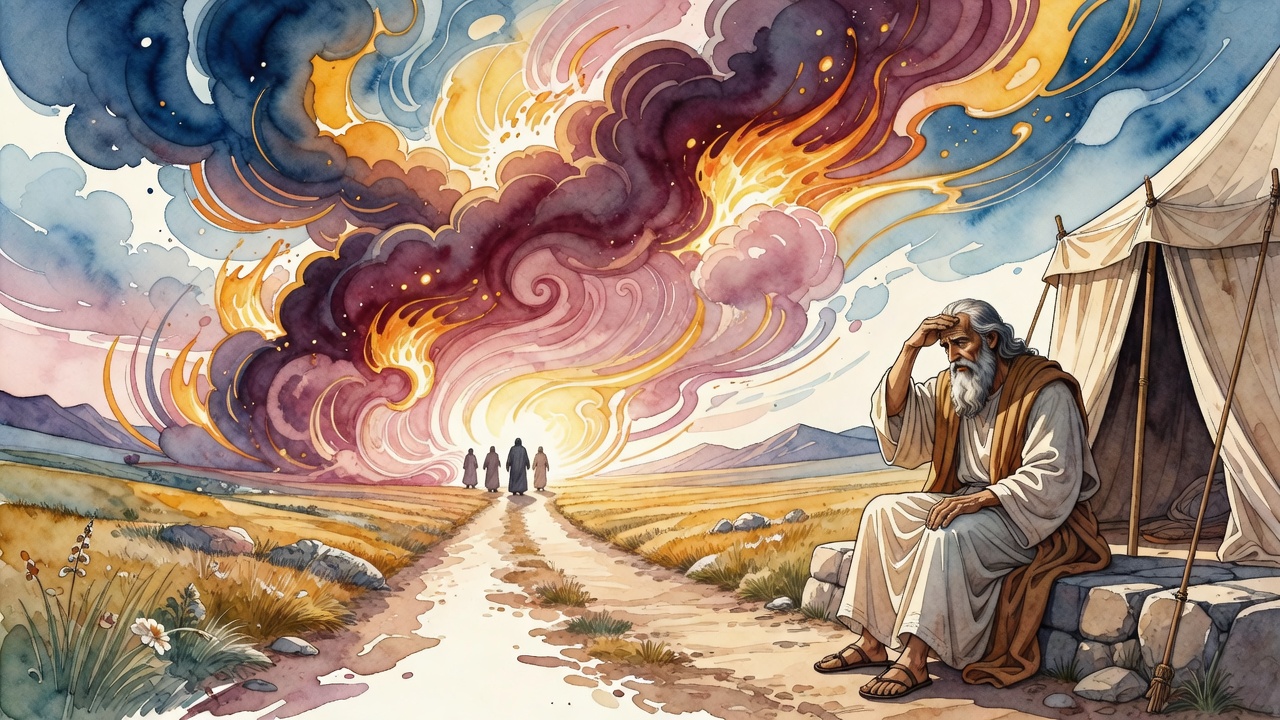
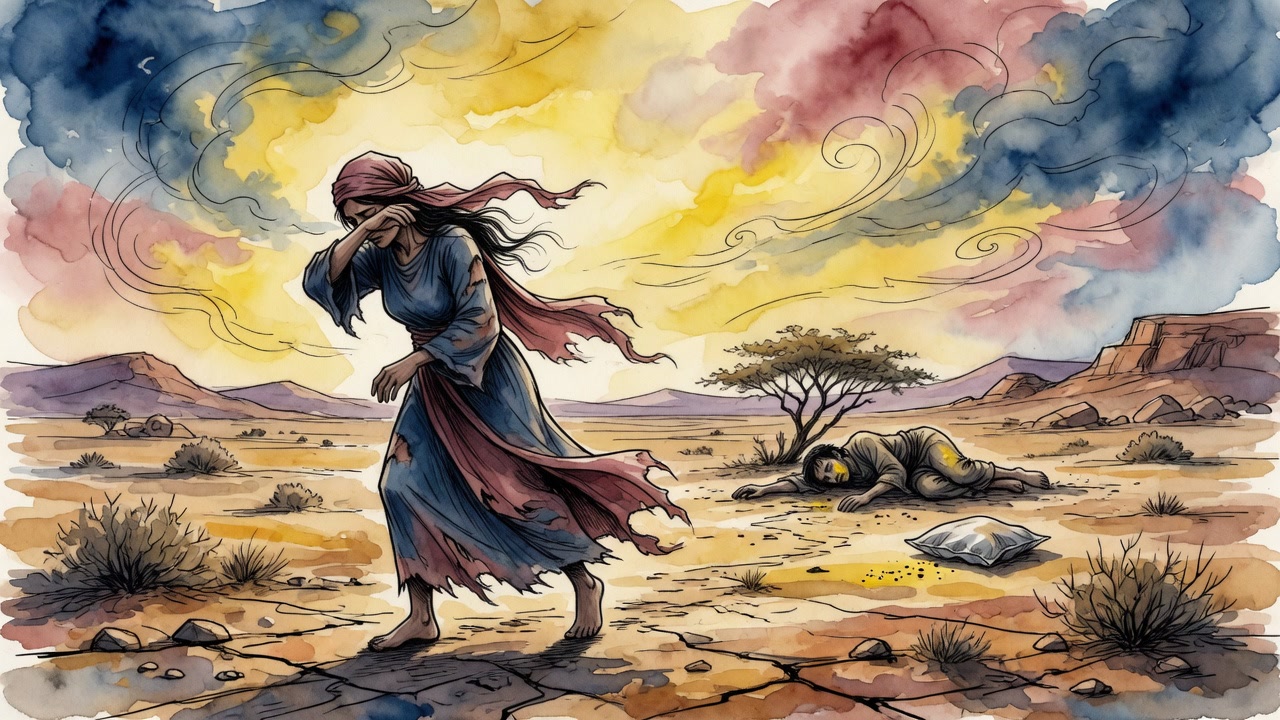
Hagar's voice had already risen and fallen into silence when the angel spoke. The boy under the bush did not argue theology. He needed water more than a speech about merit. Abraham's righteousness arrived as a well, not as a lecture, and the skin that filled became the whole midrash of ba'asher hu sham for a body still able to drink.

Sarah's tent door stays in the mind longer than the angel's wings. A boy can stand in a shadow and hear a future that is not centered on him, then years later lie under a bush and still be covered by a father's zechut. The sources refuse to make that sequence neat. They only keep both scenes true: the overhearing and the well, the laughter and the wilderness, the prince-promise and the other son named Isaac.

Laughter Made Flesh

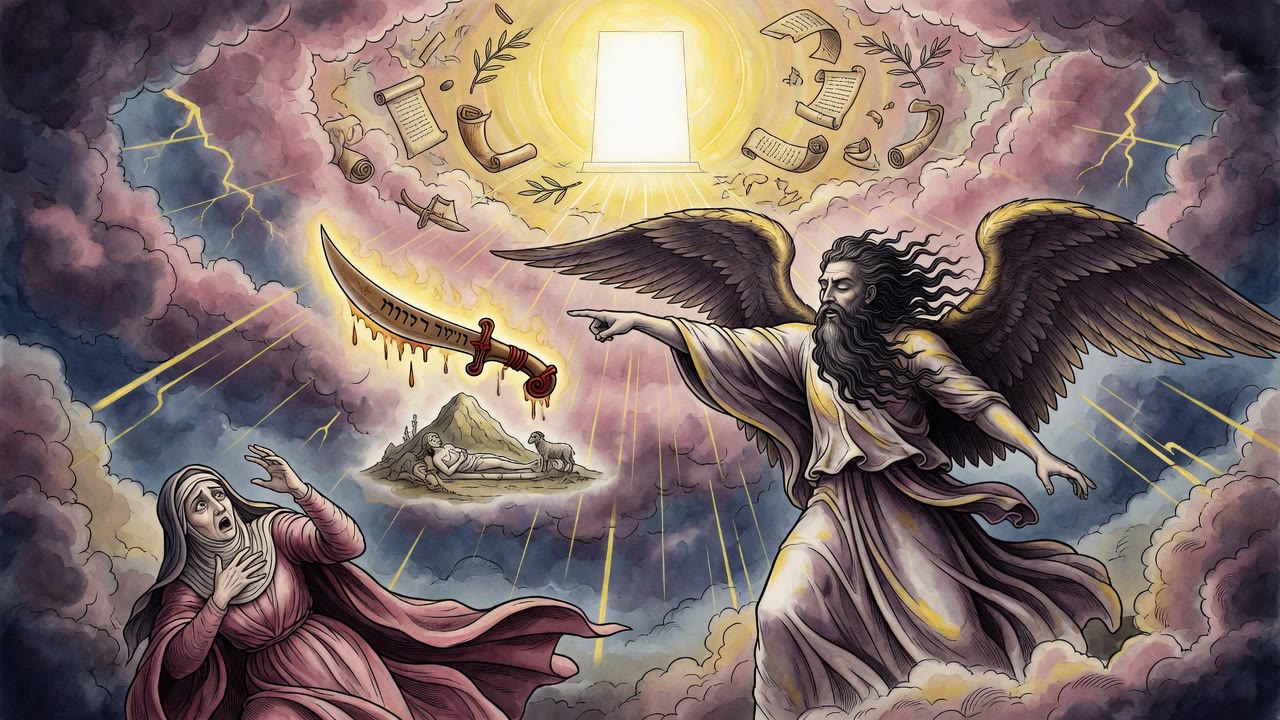
When Isaac arrives, Sarah holds laughter made flesh. She remembers who first carried the promise to her tent: not a neighbor, but a messenger from heaven. How faithful was the angel who announced to Abraham. The word is shliach, envoy of the Holy One. The messenger did not invent the birth. He delivered a date and kept it. Faithfulness here is punctual mercy. The child exists because heaven kept a schedule Sarah once mocked and then entered.

The sources say her laughter healed more than her own mouth. A barren house became a place where nations' children would later nurse. For this hour the focus is smaller. A woman who laughed now names a boy Laughter and feels the weight of an angel who did not forget the tent. Guests who once ate under the oaks are gone. The baby is not.

Water and Merit

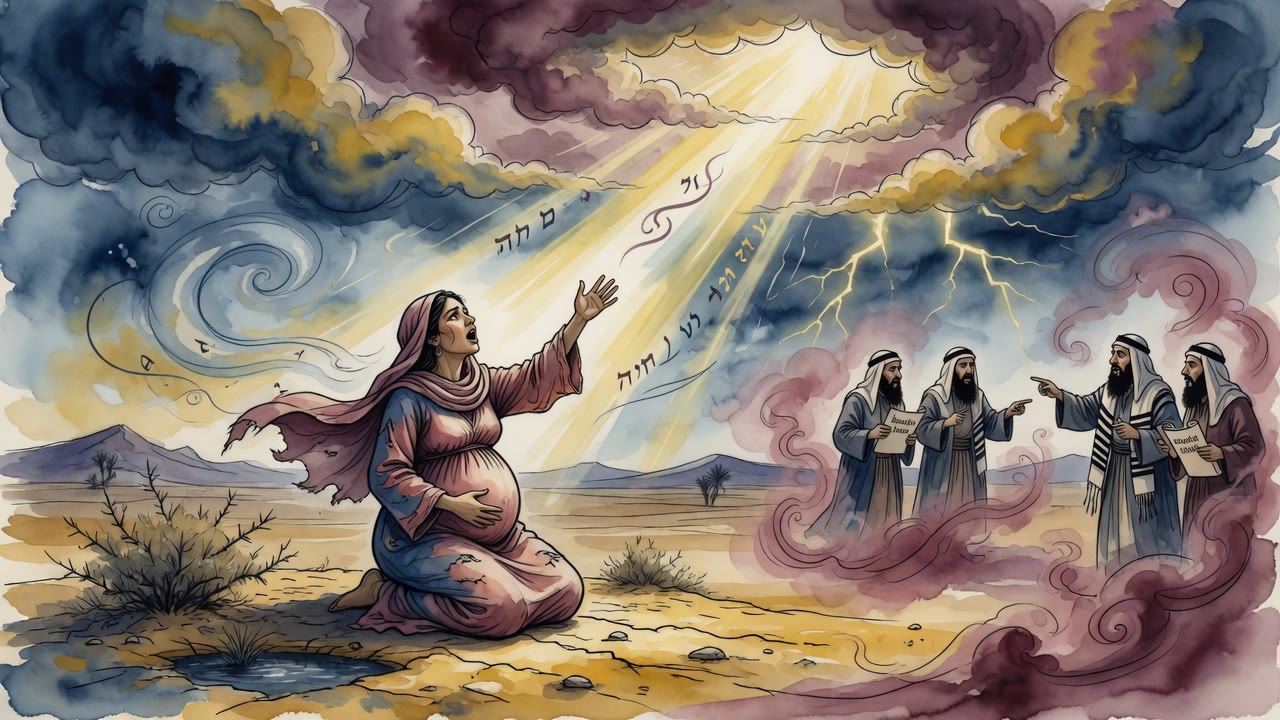
Years later the wilderness scene turns hard. Hagar sets the boy down to die. She will not watch. The angel calls from heaven. The Targum gives the reason out loud: for the righteousness' sake of Abraham. Ishmael lives not because he earned it in that moment, and not only because of his mother's tears, but because his father's zechut reaches farther than anyone standing beside him can see. Neither shall judgment be according to the evil he will do, but according to the righteousness of Abraham is mercy upon him in the place where he is.

Ba'asher hu sham, in the place where he is. At this moment, in this wilderness, the child is judged by his present, not his future. Heaven refuses predestination as a weapon against a dying boy. Right now is what counts. The well opens. The skin fills. The nation of twelve princes remains possible because merit and present innocence both speak. The bow will come later. First, water.

Two Sons, One Tent's Echo

Every later quarrel between the lines is already seeded in the eavesdropping. Ishmael heard Isaac named before Isaac breathed. Isaac grew up inside a house that had already rearranged itself around a promise Ishmael overheard. The angel who was faithful to Sarah's calendar is also the angel who later speaks Abraham's merit over Ishmael in the sand. Same household. Same God. Different pressures on different sons.

Abraham prayed for both. The sources will not let either boy be erased from the map of mercy. They also will not pretend the overhearing was painless. A teenager with a covenant cut in his flesh learns that another covenant story is beginning without him as its center. He marks it. He carries it. Years later, dying of thirst, he is still Abraham's son enough for heaven to open water under a sky that does not explain itself.

What the Angel Keeps

The shliach keeps dates. The shliach keeps merit in view. The shliach does not smooth the brothers into one destiny. Isaac becomes laughter in Sarah's arms. Ishmael becomes a bowman with a well and a promise of princes. Between them stands the door of a tent where both once listened, one meant to hear, one placed by the Targum where history could not claim ignorance.

No one in the scene lectures about sibling rivalry. A boy stands. An angel speaks. A mother laughs, then nurses. A father's righteousness covers a different mother's son in a place with no bread. The myth is the sequence of bodies under one roof and then under one sky, and the refusal of heaven to finish either story with a dry mouth when mercy still has a claim.


← All myths

From the tradition

Sources

4 sources

The texts behind this telling. Some cards carry a translation of the source; others are our own retelling of it, and each card says which. Every card links out to the original.

Targum Pseudo-Jonathan on Genesis 18:10Targum Pseudo-Jonathan on Genesis

Retold in our words. Read the original at the link below.The Targum of Jonathan ben Uzziel, trans. J. W. Etheridge, London, 1862 · Public Domain

The Hebrew says simply that Sarah was listening at the tent door. Targum Pseudo-Jonathan on (Genesis 18:10) puts a second listener behind her. And Sarah was hearkening at the door of the tent, and Ishmael stood behind her, and marked what the Angel said.

Ishmael is thirteen. Circumcised in the previous chapter. Blessed by God with his own promise of twelve princes and a great nation (Genesis 17:20). He is standing right behind his stepmother as the angel announces that, this time next year, she will have a son of her own.

The Targum does not explain what Ishmael feels. It simply notes that he heard it. A teenager, freshly marked with the covenant, overhearing the news that a different child, a child not yet conceived, will be the carrier of that covenant. Every tension that will later erupt between the two sons is already quietly seeded in this moment (Genesis 21:9).

Notice how gentle the angel is. The message is meant for Sarah. But the tent walls are thin, the door is open, and everyone within earshot is going to carry this announcement into the rest of their lives.

The Maggid reads this as the Torah's way of telling us that no promise is made in a vacuum. What you announce to one child, another child hears (Genesis 18:10). How you deliver good news to one person becomes part of the story of the person standing just behind them. Abraham's tent is about to be stretched in ways no one has quite prepared for. And the stretching begins with a young boy listening quietly to an angel he was not meant to hear.

Full source
Targum Pseudo-Jonathan on Genesis 21:17Targum Pseudo-Jonathan on Genesis

Retold in our words. Read the original at the link below.The Targum of Jonathan ben Uzziel, trans. J. W. Etheridge, London, 1862 · Public Domain

When the angel finally calls from heaven, the Targum of Pseudo-Jonathan on (Genesis 21:17) gives the reason out loud: for the righteousness' sake of Abraham. Ishmael lives not because he earned it, and not even entirely because of his mother's tears, but because his father's zechut, the merit of Abraham, reaches further than anyone standing beside him can see.

The Aramaic goes further. Neither shall judgment be according to the evil which he will do, but according to the righteousness of Abraham is mercy upon him in the place where he is. The Targum of Pseudo-Jonathan is answering a question that had already begun to trouble the early rabbis: what about Ishmael's future? What about the descendants who will oppose Israel?

The Aramaic resolves it on a single Hebrew phrase from the verse, ba'asher hu sham, in the place where he is. At this moment, in this wilderness, this child is innocent. He is judged by his present, not his future, and covered by the merit of the father who prayed for kingdoms.

The Maggidim taught that this line is the Torah's quiet argument against predestination. The takeaway: heaven judges the person standing before it, not the person they may become. Right now is what counts.

Full source
Targum Pseudo-Jonathan on Genesis 21:7Targum Pseudo-Jonathan on Genesis

Retold in our words. Read the original at the link below.The Targum of Jonathan ben Uzziel, trans. J. W. Etheridge, London, 1862 · Public Domain

The newborn in Sarah's arms is laughter made flesh. In Targum Pseudo-Jonathan on (Genesis 21:7), she remembers who first carried the promise to her tent: not a man, not a neighbor, but a messenger from heaven. How faithful was the messenger who announced to Abraham. And the Aramaic word is shliach, an envoy of the Holy One.

The biblical Hebrew says simply, Who would have said to Abraham that Sarah would nurse children? The Targum of Pseudo-Jonathan rewrites the rhetorical question as a grateful exclamation. Someone did say it. An angel. And the angel kept his word.

This is a small but telling move. The Aramaic paraphrase, composed in the tradition of the Land of Israel, consistently turns mystery into testimony. Where the Hebrew gasps, the Targum names the source.

The Maggidim taught that Isaac's birth was not a surprise to heaven, only to the woman who had stopped hoping. The takeaway: promises from above may be slow, but they are never false. When you nurse the impossible, remember the one who first announced it.

Full source
Yalkut Shimoni on Torah 93:1Yalkut Shimoni on Torah

Translation of the source text.Torat Emet (Yalkut Shimoni) · CC-BY-NC

(Genesis 21:6) "And Sarah said: God has made laughter for me; everyone who hears will laugh for me." Rabbi Berekhiah son of Rabbi Yehudah son of Rabbi Simon, in the name of Rabbi Shmuel son of Rabbi Yitzchak: Reuben rejoices, what does it matter to Simeon? If Sarah was remembered, what does it matter to other women? Rather, at the hour that Sarah our mother was remembered, many barren women were remembered along with her, many sick people were healed along with her, many deaf people had their ears opened along with her, many blind people had their eyes opened, and many deranged people were restored to their senses.

"Making" is stated here, and "making" is stated elsewhere (Esther 2:18), "And he granted a release to the provinces." Just as the "making" stated elsewhere means he gave release to the world, so too the "making" stated here means He gave release to the world. Rabbi Levi said: He added to the luminaries. "Making" is stated here, and "making" is stated elsewhere (Genesis 1:16), "And God made the two great luminaries."

(Genesis 21:7) "And she said: Who would have spoken [milel] to Abraham?" It is not written here "who would have said [diber]," but rather "who would have spoken [milel]." They hinted that he fathered a child at one hundred years. Rabbi Pinchas in the name of Rabbi Chilkiah: Their father's stalks were dried out [yeveishot], and they became ripened ears of grain [melilot].

Full source