Adam Fell Through Seven Earths and Job Landed on the Ash Heap
Adam did not land on our ground. He landed on a floor with no light in it at all, under a sword that never stopped turning, and had to climb.
Table of Contents
 Click for full size
Adam Woke Up in the Dark
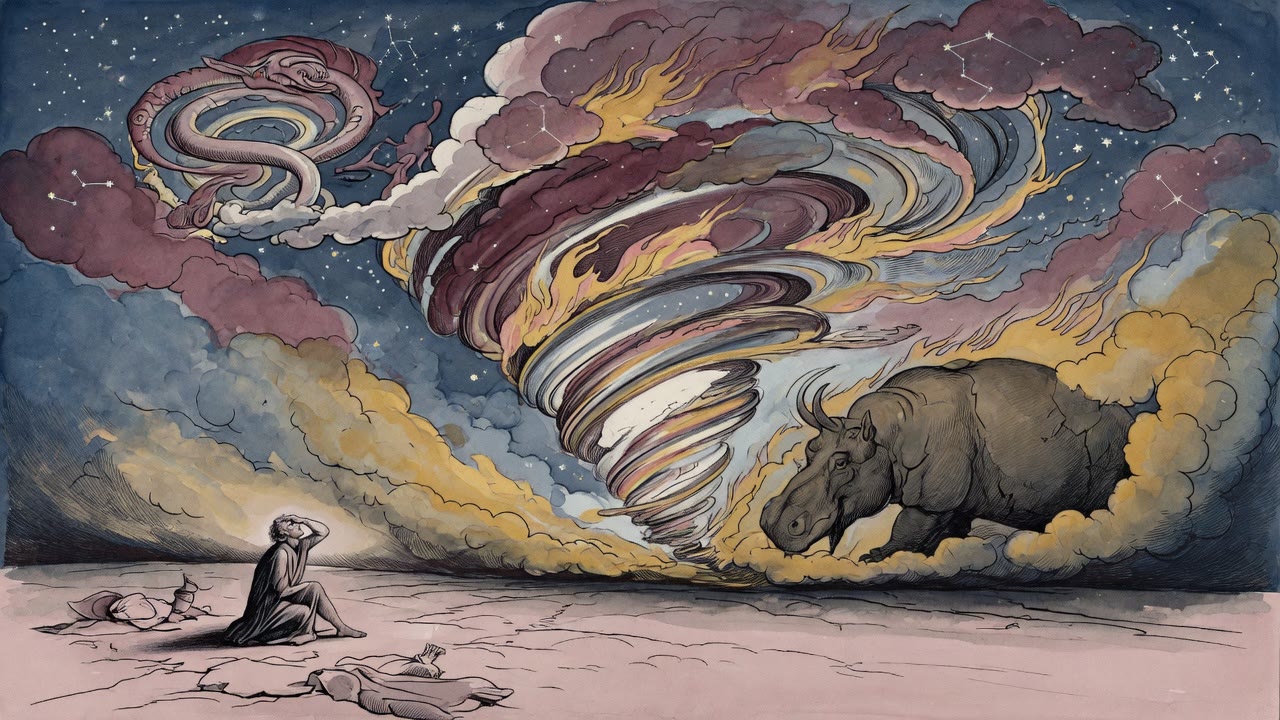
Adam came out of the garden and landed in the dark. Not our dark, the kind that thins toward morning. The lowest of the seven earths has no light in it at all, not a star, not a coal, nothing, and it is called the Erez, and it is empty.
He was terrified. There was one thing to see down there and it was the worst thing available: the sword that turns and turns and never stops, burning in the black at the edge of where he stood. He could not get away from it because there was nowhere to walk to.
He did his penance on that floor, in front of the sword, for as long as it took. Then God came down and led him up one level.
The Second Floor and Its Sad Neighbors
The Adamah has light, of a sort. It has its own sky and its own stars, and the stars are ghosts of stars, and everything is lit at second hand.
Others were already living there. They had come out of Adam's own couplings with spirits, and they are sad the way weather is sad, permanently, without cause or relief. Joy has never happened to any of them. Every so often one of them leaves and climbs to the earth where men live, and the moment it arrives it becomes an evil spirit, and it does what evil spirits do until it goes home again, and then it repents, and then it goes out to the fields and works ground that will not grow wheat or barley or grapes or figs or anything else worth eating.
Cain was born on that floor. So were Abel and Seth.
Cain Went Back Down
After Cain killed his brother he was sent down to the Erez, to the dark and the turning sword that had broken his father.
It broke him too. He repented in that black room, and God accepted it and let him climb, not back to the Adamah but past it, to the third earth, the Arka, which gets a little sun. The Arka was signed over to Cain's children permanently. It is theirs and always will be.
They farm it and plant trees on it and still cannot grow wheat. Some of the Cainites are giants and some are dwarfs, and a great many of them have two heads. That is why nothing there ever gets decided. A Cainite argues with himself all day and both sides lose. He is pious in the morning and looking for trouble by noon, and neither head can make the other one stop.
The Floors Nobody Climbs Back From
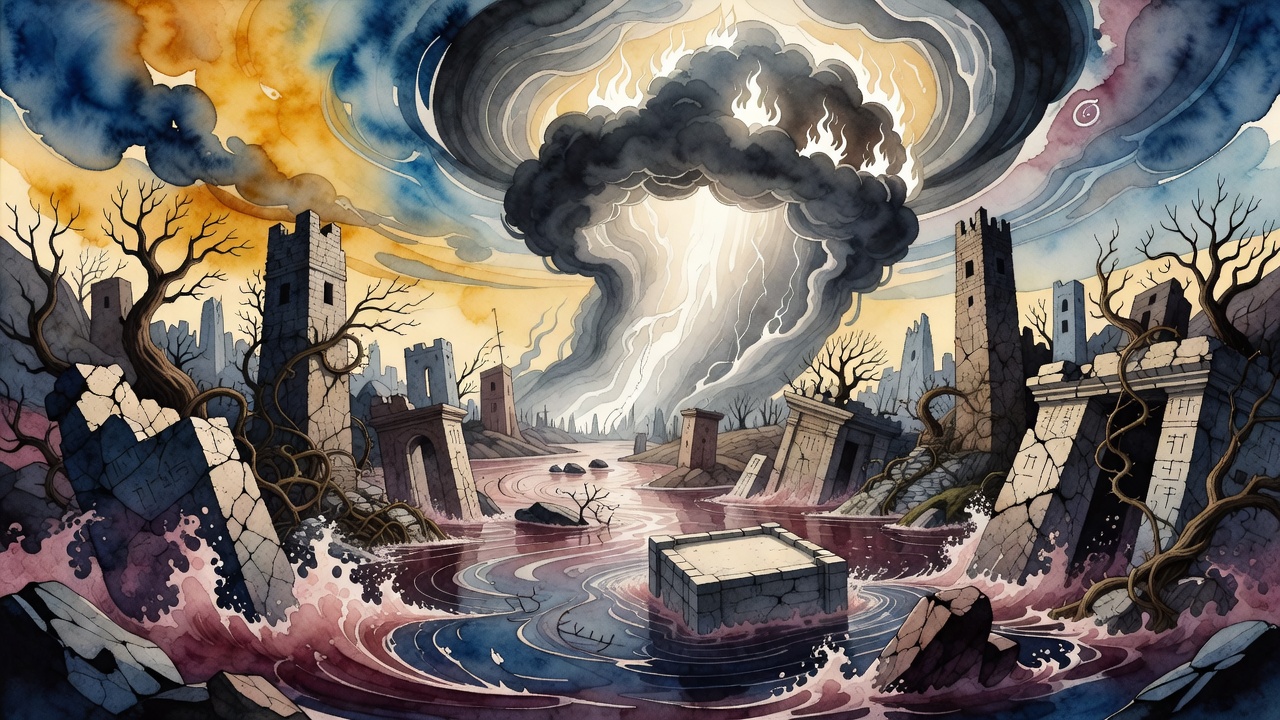
The fourth earth is the Ge, and the men who built the tower were dropped there with their descendants, because the Ge sits close to Gehenna (the realm of judgment after death) and the heat comes through.
They did very well anyway. There is no art they have not mastered and no science they have not finished, and their houses are stacked with money. When a man from our earth turns up among them they take the most precious thing they own and put it in his hands. Then they walk him, smiling, down to the fifth earth.
The fifth earth is the Neshiah, and it is full of small people with no noses, who breathe through two holes in the face. They have no memory. A thing happens and then it has not happened. The visitor from our earth stands there holding his gift and cannot remember what a home is, or that he had one, or which way it was.
The sixth earth, the Ziah, is where the handsome ones live, in palaces, rich, dressed well, dying of thirst. Nothing grows. The name means drought and the name is accurate. When a spring is found they run to it, and once in a while a man of the Ziah squeezes up through the water and comes out on our ground and eats our food with an appetite you would not believe. For all that, they hold their faith more steadily than any other men anywhere.
The Seventh Floor and What Grew There
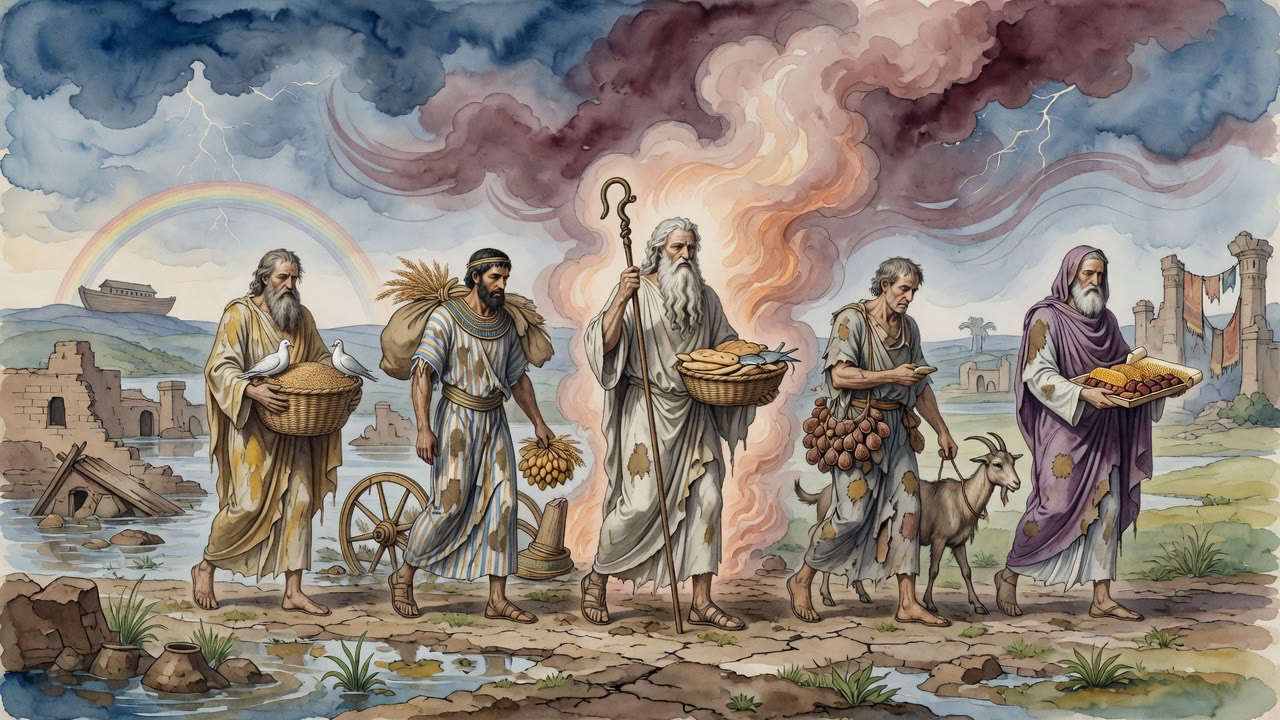
Adam stayed on the Adamah until Seth was born. Then God carried him up, past the Cainites and their two heads, past the Ge and its generous liars, past the noseless people who forget, past the thirsty men in their palaces, and set him down on the Tebel, the seventh earth, where men live. Our floor. The top one.
It took ten generations from Noah to Abraham, and in that time the top floor was worked over thoroughly. Men on the Tebel began to quarrel and to kill, and to eat blood, and to throw up walls and towers and put one man over everyone as king, and to make war, nation against nation and city against city, and to teach their children how to do it. They took captives and sold them. They poured metal into molds and worshipped what came out, each man bowing to the thing he had made himself, with the spirits under Mastema steering them into it.
Reu saw where it was going and named his son Serug, because all mankind had turned aside. The name held. Serug grew up and worshipped idols, and taught his son Nahor to read the sky for omens the way the Chaldeans did. And when Nahor's own son was born, Mastema sent the ravens. They came down on the furrows before a man could cover his seed and took it out of the ground, every day, everywhere, until the fields were bare and the farmers had nothing. Nahor named the child Terah for the ruin of it. Terah's son was Abraham.
The Ash Heap Outside the City
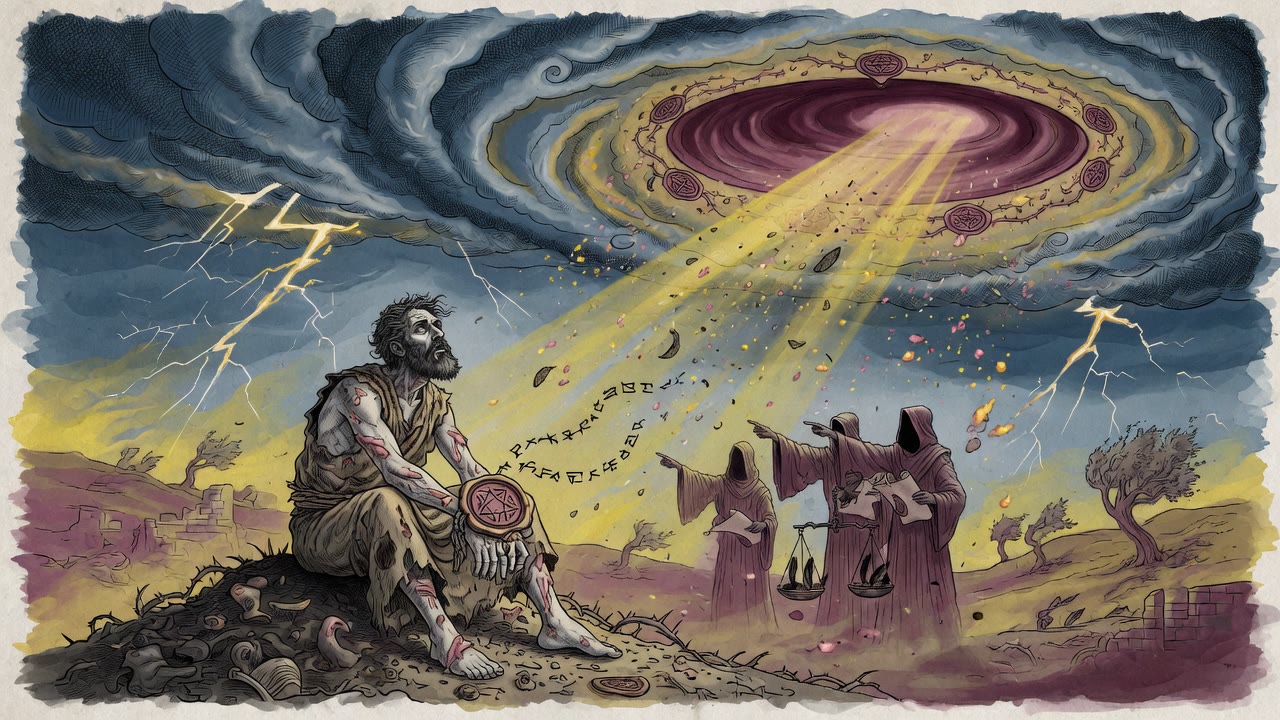
Job never fell through any floor. He was born on the top one, kept his accounts clean, and lost everything anyway.
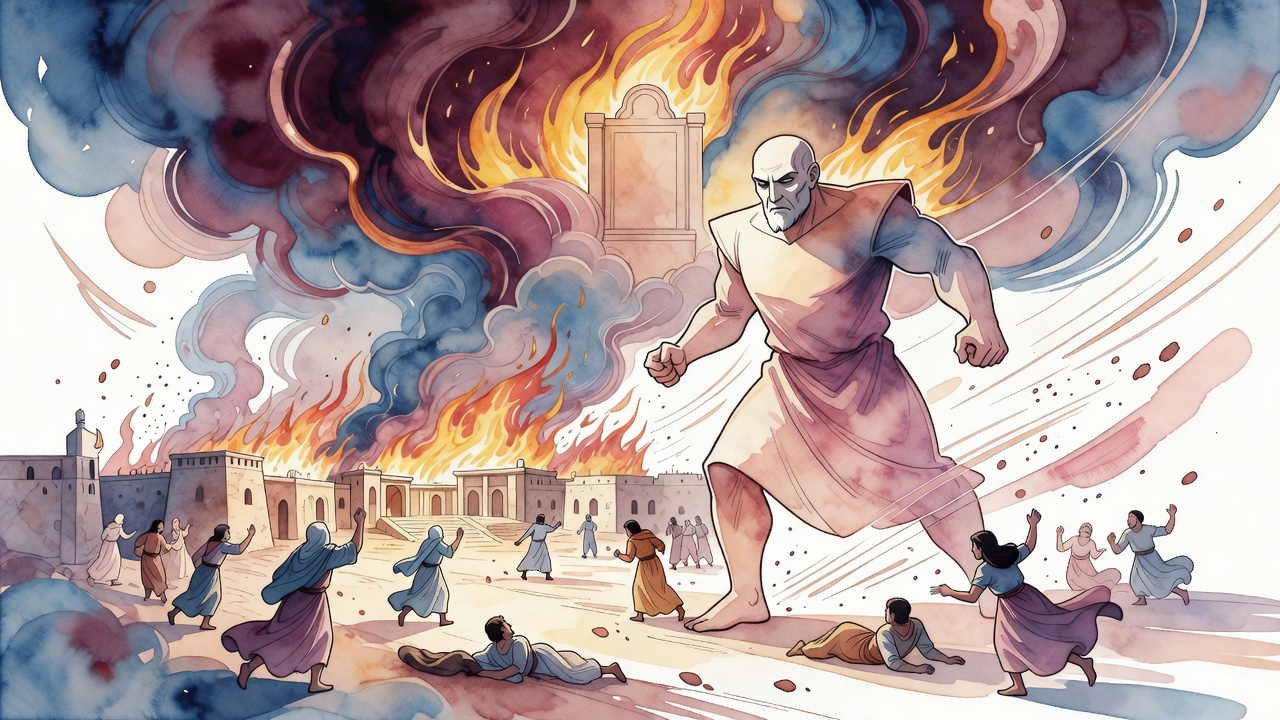
The storm hit his house and the noise threw him off his seat, and he lay on the ground for three hours. Then the leprosy came up over him from the soles of his feet to the top of his head, and the city put him out. He sat down on ashes outside the wall. His legs ran, and what ran off them soaked into the ash under him. The upper half of him crusted over hard, and he scratched at it until his fingernails came away with the tips of his fingers still attached, so he found a piece of broken pot and used that instead.
The vermin came. When one of them tried to crawl off him he picked it up and put it back where it had been.
"Stay in the place you were sent to," he told it, "until God assigns you another."
← All myths