5 min read

The Ancient Holy One Knew Wisdoms True Place

In the lesser assembly the Ancient Holy One held the highest wisdom while Zeir Anpin traced its lower paths. Thirty-two roads left a beginning of light.

Curated by Arthur · Told by Maggid ·
Table of Contents
  1. The Assembly That Spoke Softly
  2. Thirty-Two Paths Leaving a Beginning
  3. Knowledges, Not One Knowledge
  4. When Mother Light Falters Below
  5. Candles Out, Teaching Still Hot
The Ancient Holy One Knew Wisdoms True Place Click for full size

The Assembly That Spoke Softly

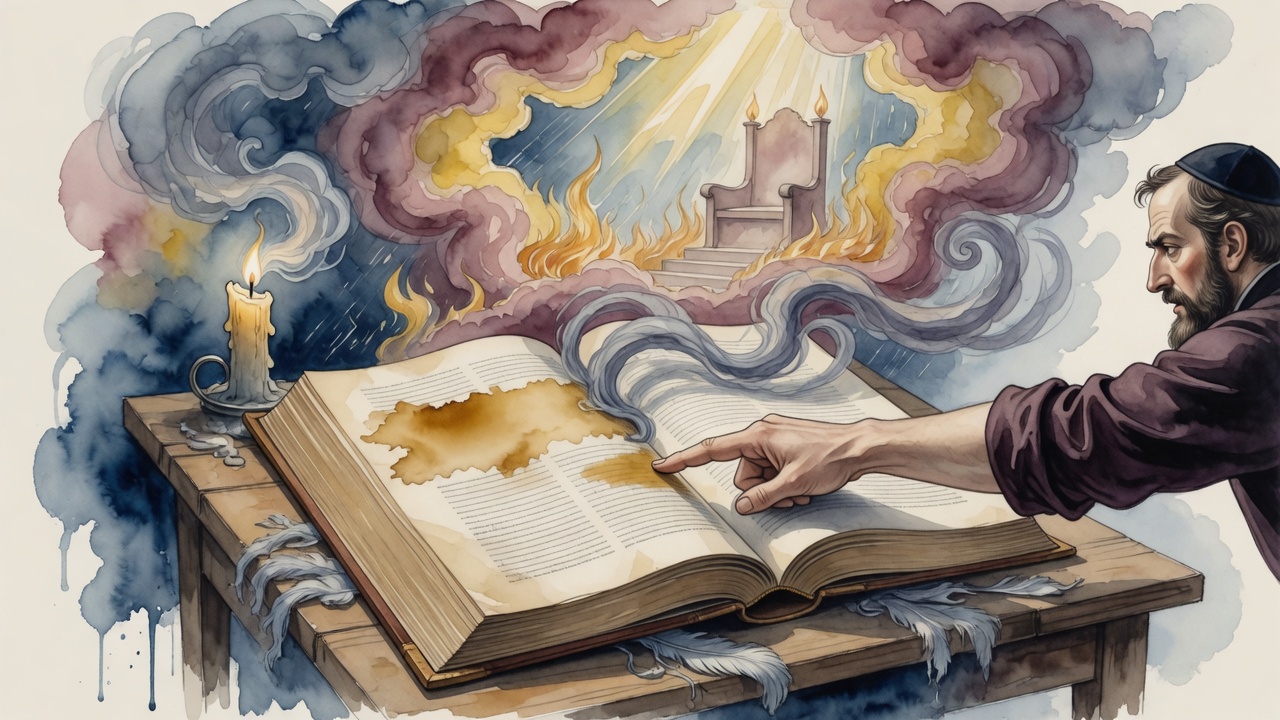
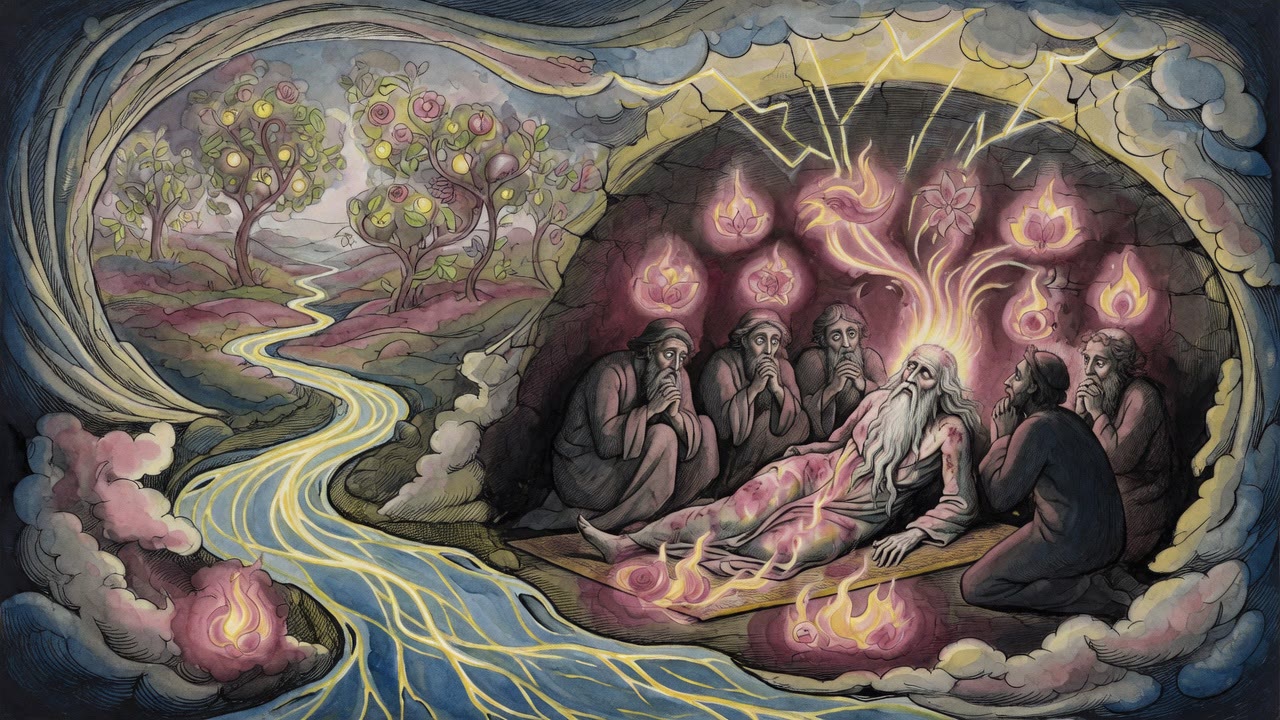
The companions leaned in as if the air itself might bruise. This was not a market argument. This was the lesser assembly, the Idra Zuta, where Rabbi Shimon and those with him touched matters that usually stay sealed behind the teeth of heaven. Candle smoke wrote temporary letters on the ceiling and erased them.

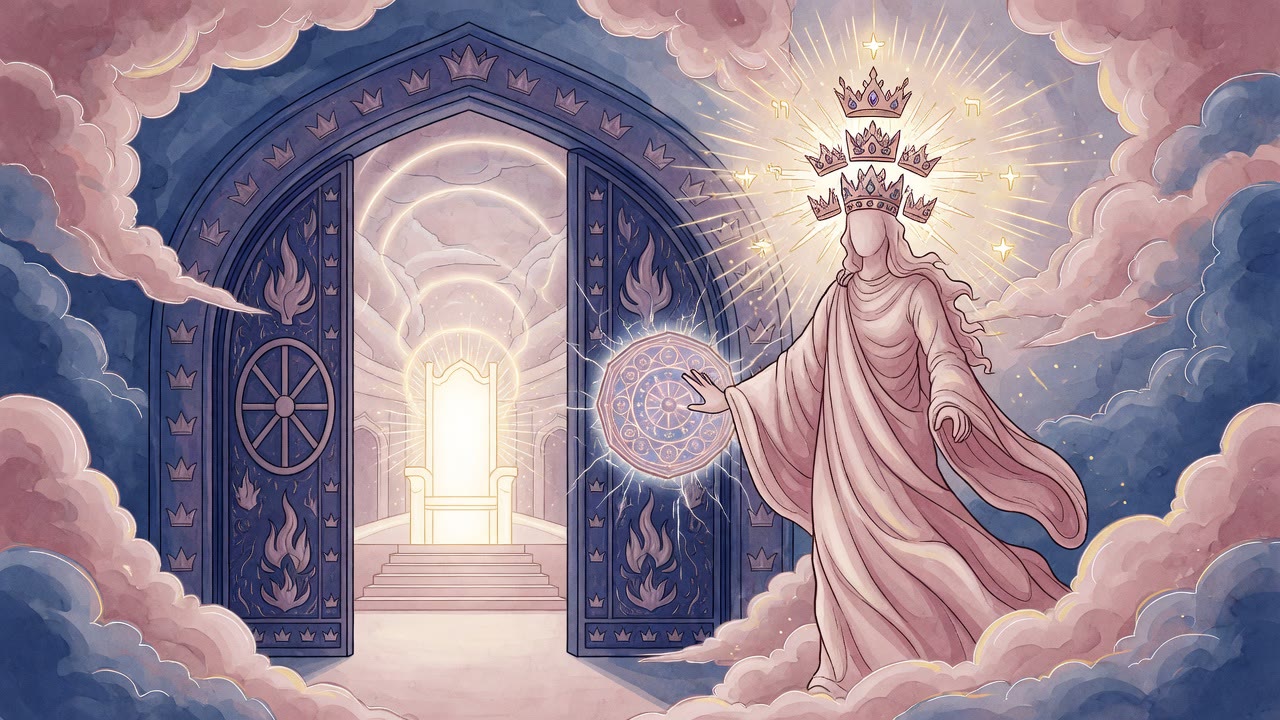
A verse from Job opened the gate: Elohim understands its way. In their reading Elohim here names Zeir Anpin, the Small Face, the divine configuration that runs the revealed drama of the worlds. He understands how Chochmah, wisdom, extends along thirty-two paths into a lower wisdom that creatures can almost bear.

"He knows its place," the verse continues. And "He," they said, is Atika Kadisha, the Ancient Holy One, older than the drama, holding the highest Chochmah the way a skull holds a brain that never sleeps.

Thirty-Two Paths Leaving a Beginning

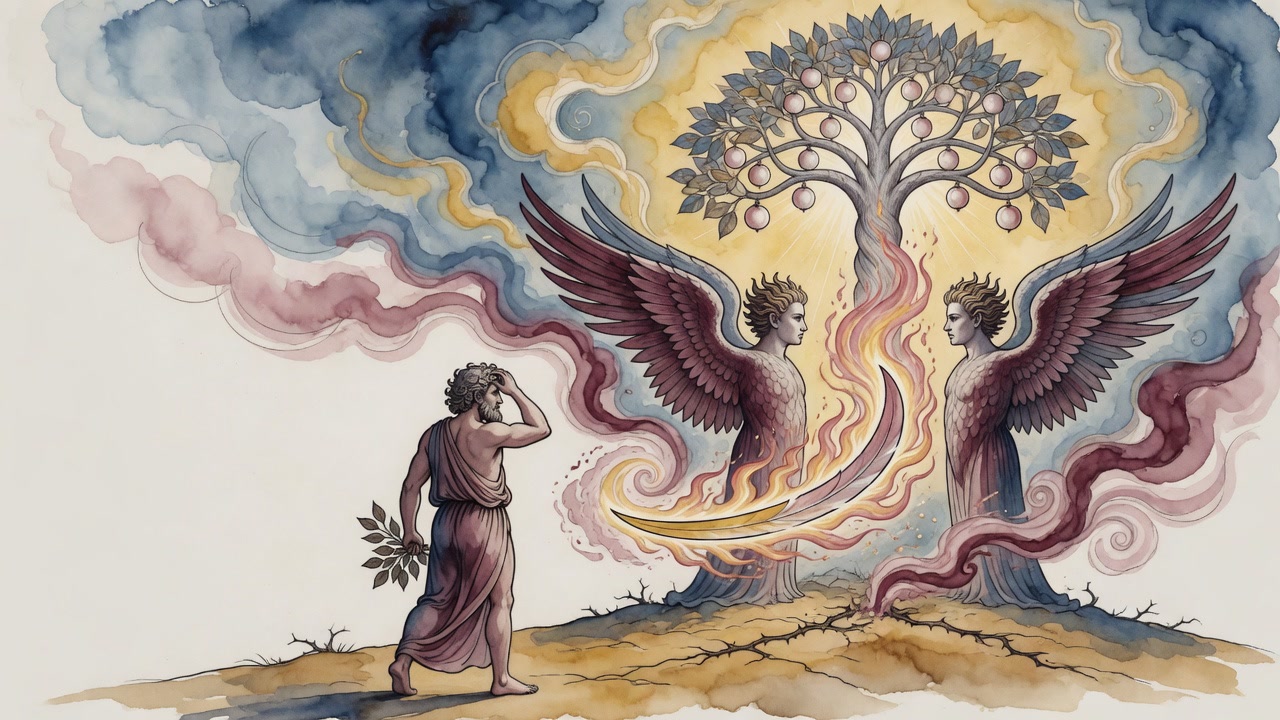
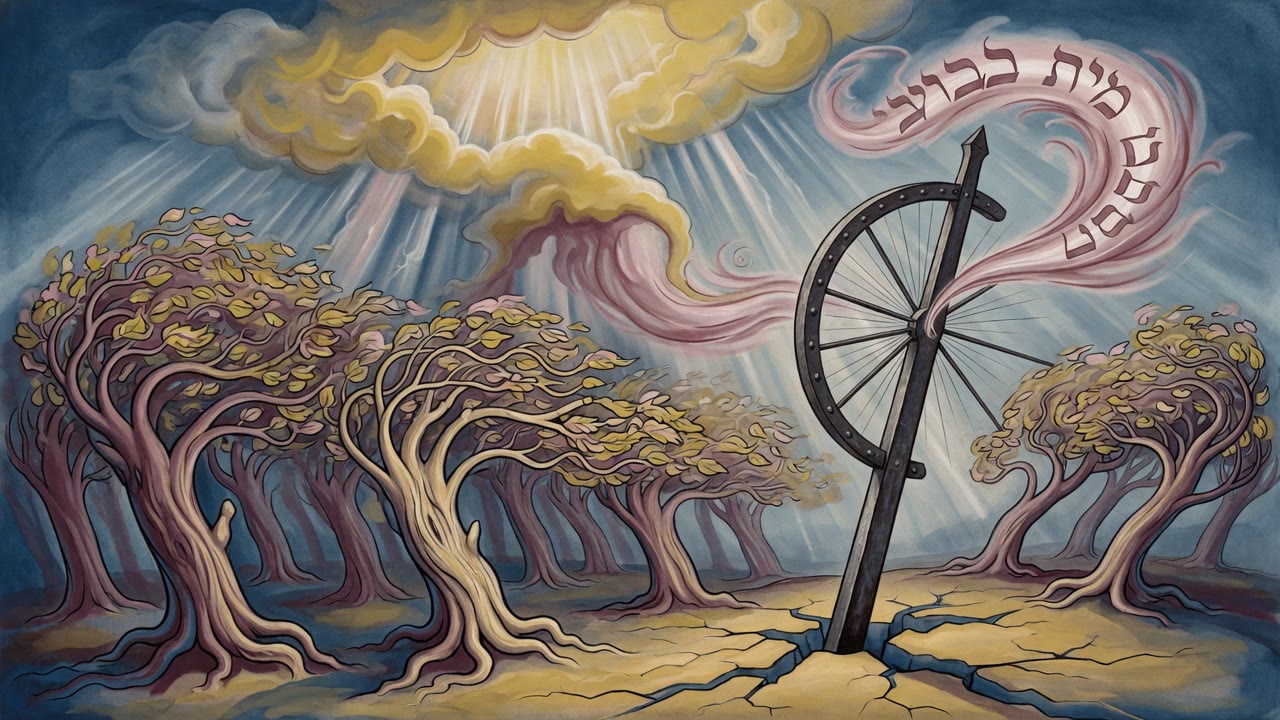
Wisdom is called the beginning of everything. From it go thirty-two paths: twenty-two letters of the holy tongue and ten utterances of "And God said" that split the silence of Genesis into a world. Letters and sayings, text and speech, alphabet and decree.

In the assembly no one treated the arithmetic as a game. Twenty-two plus ten is the skeleton of manifestation. Aba and Imma, father and mother configurations, hold ten within their own understanding, and the letters run like blood through the body of revelation. Creation is not a shrug. Creation is a counted opening.

Atika knows the place of the highest wisdom because that wisdom is not a visitor in Him. It is His concealed brain, the thought that does not need to travel to be true. Zeir Anpin knows the way the paths run downward, the engineering of light into vessels that will not immediately shatter.

Knowledges, Not One Knowledge

Another teaching in the same assembly heard Samuel's mother-line of prayer: for the Lord is an El of knowledges, plural. Zeir Anpin holds more than one Da'at. There is the core brain of knowledge that fills chambers, as Proverbs says chambers are filled by knowledge. There is a second knowledge that enters slowly, almost in secret, the understanding that arrives after the first blaze. There is a third that shines through the minds and stops short of the body, intellect that has not yet become deed.

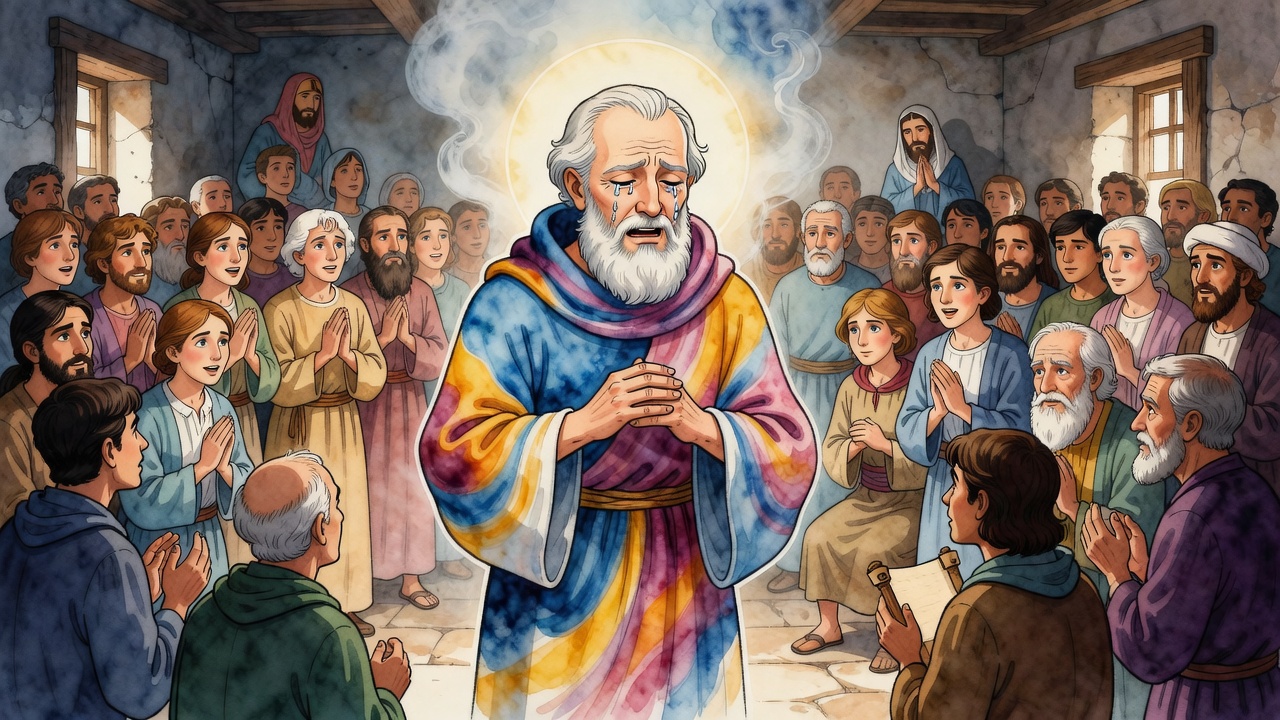
A companion wiped his eye and did not pretend this was easy comfort. Plural knowledge means a person can be brilliant in one chamber and starved in another. Heaven's own revealed face carries more than one mode of knowing. How much more a human being who still forgets names of neighbors.

The assembly did not flatten the three into a slogan. It let them stand as a ladder inside a single skull of divinity: root, slow inclusion, radiant overflow that still awaits embodiment.

When Mother Light Falters Below

Elsewhere in the long map, Imma's light moves to repair her own hinder parts, turning hidden damage toward a full face, while daughter-aspects like the Nukva share interior weather with the mother. Leah becomes a name for back and depth at once. The lower worlds feel it when mother-understanding stutters. Study dims. Mercy arrives late. Children of the map cry without knowing which sefirah (which of the ten divine aspects) failed them.

The Idra's calm about Atika does not cancel that lower weather. It frames it. There is an Ancient One who knows the place of wisdom even when the small face's knowledges quarrel and the mother configuration labors to mend what the back parts suffered. The dawn of creation is not only a past event. It is a structure still deciding whether light will find a place to sit.

Candles Out, Teaching Still Hot

When the companions finally rose, knees stiff, no one clapped. Clapping would have been an insult to the danger. They carried out pieces: a verse from Job re-cut, a count of thirty-two, a plural of knowledge, a Name of an Ancient Holy One who is not a grandfather in the sky but the concealed mind of all beginnings. One student tried to write too soon and found his hand shaking so hard the letters looked like a second, lesser alphabet.

Outside, ordinary night resumed. Dogs argued. A baby cried in a house that did not know it lived under thirty-two paths. Inside the memory of the assembly, Atika still knew the place of wisdom, and Zeir Anpin still traced the ways, and the letters of Torah still ran like bright blood through a world that can be read. Rabbi Shimon rested a palm on the table as if steadying a vessel that might still spill.

The lesser assembly ended. The greater silence around it did not. Some teachings are not meant to become slogans in the street. They are meant to keep a few minds from despair when the lower knowledges fail and someone must remember that the beginning still has a brain. In the street a cart wheel struck a stone and sparked. For a blink the spark looked like a path. Then it was only a cart again, and the companions walked home under stars that did not explain themselves.


← All myths
From the tradition

Sources

3 sources

The texts behind this telling. Some cards carry a translation of the source; others are our own retelling of it, and each card says which. Every card links out to the original.

Idra Zuta 1:51Idra Zuta

Retold in our words. Read the original at the link below.Idra Zuta, The Small Gathering, trans. Michal Ricardo · CC-BY

That feeling is at the heart of the Idra Zuta, a mystical text within the Zohar, the foundational work of Jewish mysticism. The source turns to our toes into its depths.

The Idra Zuta, or "Lesser Assembly," unveils secrets of the divine realm. And right away, we encounter a verse from Job: "Elohim understands its way" (Job 28:23). But what does "its way" truly mean? According to the Idra Zuta, it’s literal. Elohim here refers to Zeir Anpin, often described as the "Small Face" of God, a manifestation of divine expression. Zeir Anpin understands how Chochmah, or Wisdom, with its thirty-two paths, extends and unfolds into a "lower" Chochmah.

Then the verse continues, "He knows its place." And "He" here is Atika Kadisha, the "Ancient Holy One," the most concealed and primordial aspect of the divine. The Idra Zuta tells us that Atika Kadisha knows the actual highest Chochmah, the source itself. This is like Aba (Father) and Ima (Mother), archetypal forces of creation, and especially the Chochmah that’s hidden within Atika Kadisha, because it is its very essence, its brain.

So, what's the deal with these thirty-two paths of Chochmah? The Idra Zuta calls this Chochmah "the beginning of everything." It's from this source that thirty-two paths emanate. These paths encompass the Torah itself, represented by the twenty-two letters of the Hebrew alphabet and the ten divine utterances – "And God said..." – that bring Creation into being, as we find in Genesis. (These ten utterances also correspond to the ten Sefirot (the divine emanations) of Aba and Ima, which are the ten Sefirot of Binah (Understanding), Understanding.)

Now, do the math: twenty-two letters plus ten utterances equals thirty-two. But there’s more to it than simple arithmetic. These thirty-two paths represent Zeir Anpin (associated with those twenty-two letters) rising like female waters to Binah, joining it as the central pillar that unites right and left – a concept we encounter elsewhere in the Zohar.

This Chochmah is a "father of fathers," meaning it's the source of Chesed (Loving-Kindness), Gevurah (Severity), and Tiferet (Beauty) within Zeir Anpin. It’s both a beginning and an end, which is why we have a "higher" and "lower" Chochmah. The higher Chochmah is the origin, the spark; the lower Chochmah is its unfolding, its manifestation in the world. And when Chochmah spreads to Zeir Anpin, it becomes the "father of fathers," the wellspring of all that follows.

As (Psalm 104:24) states, "In wisdom, You have made them all." Everything, according to the Idra Zuta, is incorporated within this Chochmah. It’s the blueprint, the underlying structure, the divine intelligence that permeates all of creation.

So, what can we take away from this glimpse into the Idra Zuta? Perhaps it’s a renewed sense of wonder at the complexity and depth of the universe, and a recognition that there’s always more to learn, more to discover, about the hidden dimensions of reality. It invites us to contemplate the source of all things, the wisdom that underlies creation, and our own place within this grand and mysterious tapestry.

Full source
Idra Zuta 1:70Idra Zuta

Retold in our words. Read the original at the link below.Idra Zuta, The Small Gathering, trans. Michal Ricardo · CC-BY

It's a profound connection, an intimate understanding that comes from deep within. And the Idra Zuta, a section of the Zohar, explores the most concealed aspects of this concept.

As it's written in I Shmuel (1 Samuel) 2:3, “For Hashem is an El of knowledge.” But notice, the text doesn’t say "knowledge" in the singular. It says "knowledges," in the plural. Why?

In Idra Zuta, this is because Zeir Anpin – a Kabbalistic term for the Divine Masculine, often associated with the six Sefirot (divine attributes) from Chesed (loving-kindness) to Yesod (foundation) – possesses three distinct kinds of Da’at.

First, there's the brain of Da’at itself. It's the core, the source. Within this Da’at, all the "palaces" are filled, as it says, “By knowledge are the chambers filled.” (Proverbs 24:4). Everything stems from this central point.

Then, there's another Da’at, a more subtle and concealed aspect. It's not immediately apparent, but it's gradually included within the first, almost secretly. This is the kind of knowledge that creeps up on you, the "aha!" moment that comes after reflection. It's the understanding that develops over time.

Finally, there's the Da’at that shines upon the brains, expanding throughout the entire mind, but stopping short of the body. This is intellectual understanding, the kind that fills your thoughts and shapes your perspectives. It's powerful, radiant, but it doesn't necessarily translate into action or embodied experience.

So, what does this all mean for us? It suggests that true knowledge isn't just about accumulating information. It’s about cultivating different kinds of understanding: the core intuition, the slowly-earned wisdom, and the intellectual illumination. It's about connecting to something deeper, something beyond the surface.

Perhaps the real question isn't how much we know, but how deeply we're willing to connect to the knowledges within.

Full source
Idra Zuta 1:71Idra Zuta

Retold in our words. Read the original at the link below.Idra Zuta, The Small Gathering, trans. Michal Ricardo · CC-BY

Idra Zuta turns to The Name of God and the Flow of Wisdom.

The passage then quotes (Psalms 78:5), "For He established a testimony in Yaakov (Jacob)." Here, Yaakov, whose name was later changed to Israel, isn't just the patriarch we know from the Torah. In Kabbalistic thought, Yaakov represents Zeir Anpin, a complex concept that essentially signifies the "small face" or the revealed aspect of God. Zeir Anpin embodies Da’at, which is knowledge that incorporates both Chochmah and Binah. It's the integration of wisdom and understanding into a unified whole.

The text throws us a curveball. It mentions that in the "Book of Mysteries," things are explained differently. The Idra Zuta acknowledges the existence of other Kabbalistic texts, referred to as "Books of Mysteries," which contained further esoteric interpretations. These "Books of Mysteries" are, sadly, not in our possession today. But not to worry! The text reassures us that both interpretations are valid and complete, even if they seem different The first reading.

The Idra Zuta emphasizes that the verse in Psalms should be understood allegorically, as a hidden message. It's a reminder that the scriptures often contain layers of meaning, waiting to be uncovered through deeper study and contemplation. The idea is that language itself can be a code, a set of symbols pointing towards realities beyond our ordinary perception.

So, what does this all mean for us? It encourages us to look beyond the surface, to seek deeper meaning in the world around us and within ourselves. It suggests that God's presence isn't just a distant concept, but an active witness, a testimony woven into the very fabric of existence. And it challenges us to engage with sacred texts not just as historical documents, but as living sources of wisdom and insight. What testimonies are you witnessing in your own life? What deeper meanings are waiting to be uncovered?

Full source