4 min read

Iron Spoke to the Trembling Trees on the Third Day

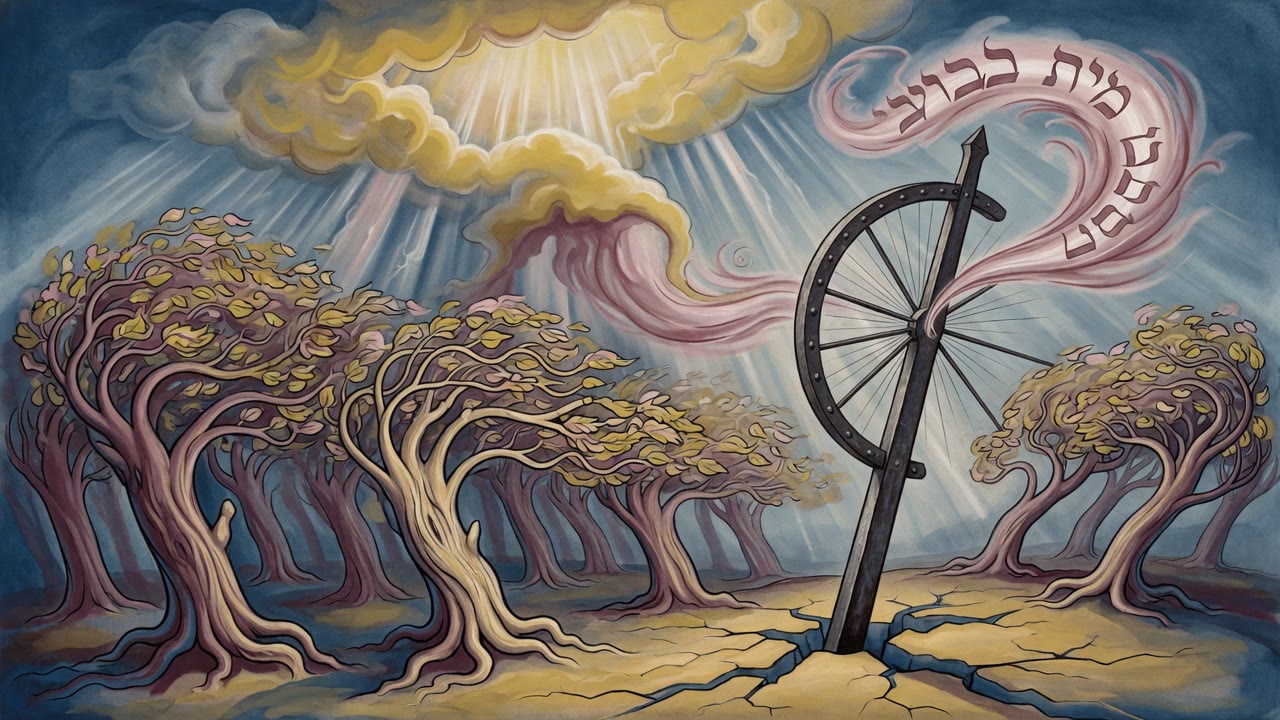
The forests had been standing for a few hours when iron came up out of the same ground. Every tree in the world started to shake at once.

Curated by Arthur · Told by Maggid ·
Table of Contents
  1. Why Are You Trembling
  2. The Day the Riders Were Seeded
  3. Opened in the Language of Blessing
  4. The Nest and the Handle

The world was three days old.

Iron Spoke to the Trembling Trees on the Third Day Click for full size

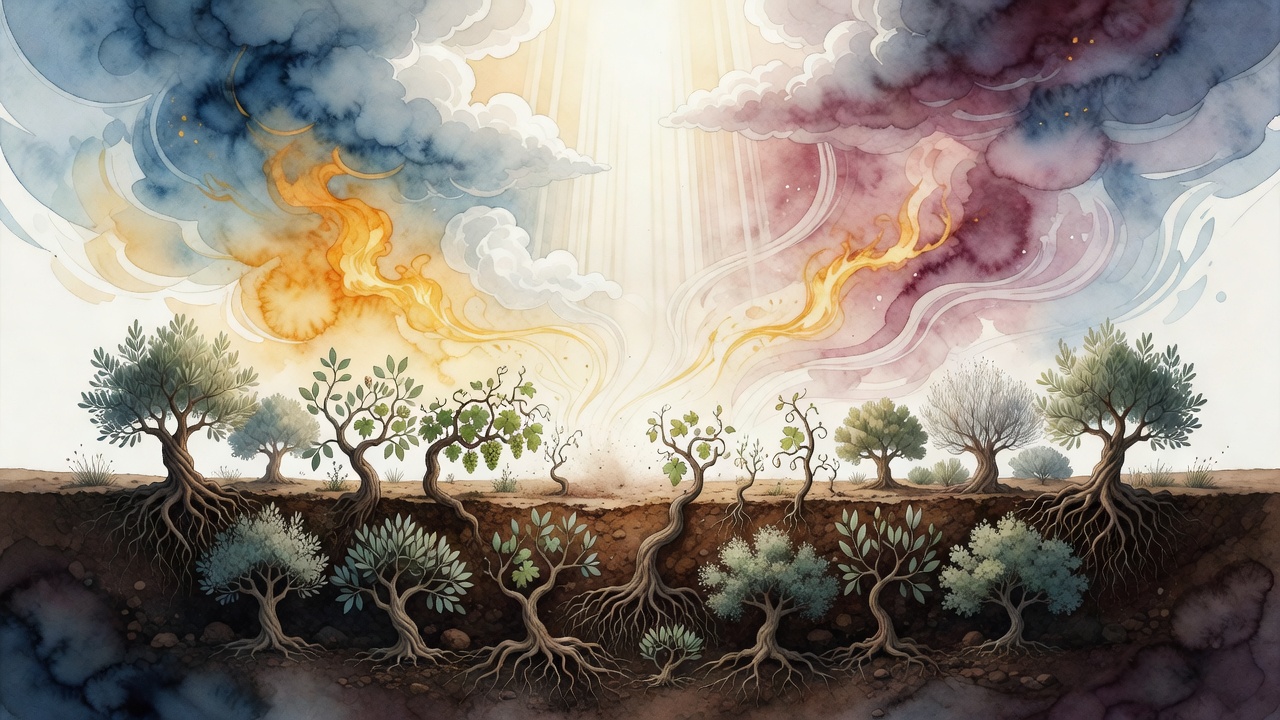
That morning the ground had opened and pushed up everything green at once. Grass, seeding herbs, whole orchards already in fruit, cedars that had never spent an hour as saplings. None of it grew. It arrived. By midday the hills were forested and the figs were ripe on branches a few minutes old.

Then the same ground brought up iron.

And every tree in the world began to shake.

Why Are You Trembling

They had no lungs to say it with, so the shaking said it. Leaves turning the wrong way over. Whole stands of cedar moving with no wind on them. A noise going across the new hills like rain on a roof where there was no rain and would not be rain for another day.

Iron lay in the fresh dirt and listened to the forest be afraid of it.

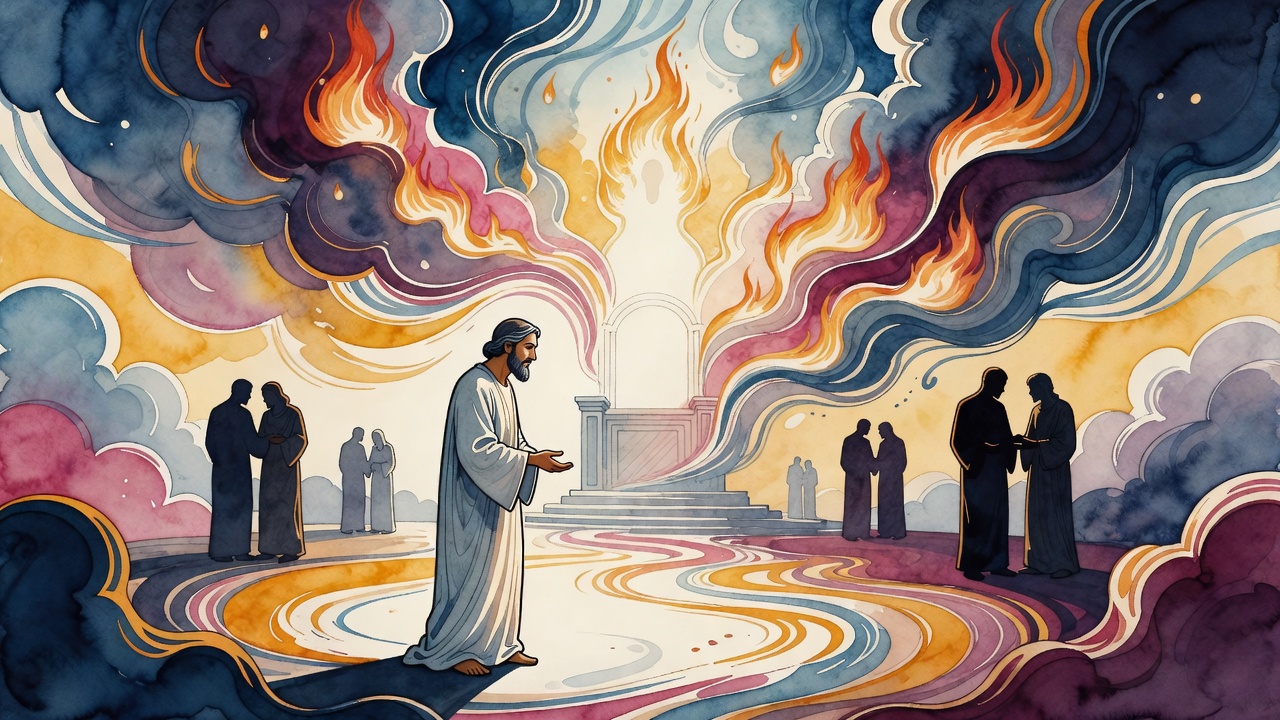
Then iron spoke. Why are you trembling? If no wood of yours goes into me, not one of you will be harmed.

It was not a threat. It came out sounding like peace, and it was true besides. An axe head with nothing to grip is a lump on the ground. A spear point without a shaft is scrap metal. Every blade that ever came down on a tree came down because some tree handed it an arm.

Which is a harder thing to hear on your first morning than the fear you walked in with. The forest stopped being afraid of iron. It started waiting to find out which of them would be the handle.

The Day the Riders Were Seeded

Day three carried more than fruit.

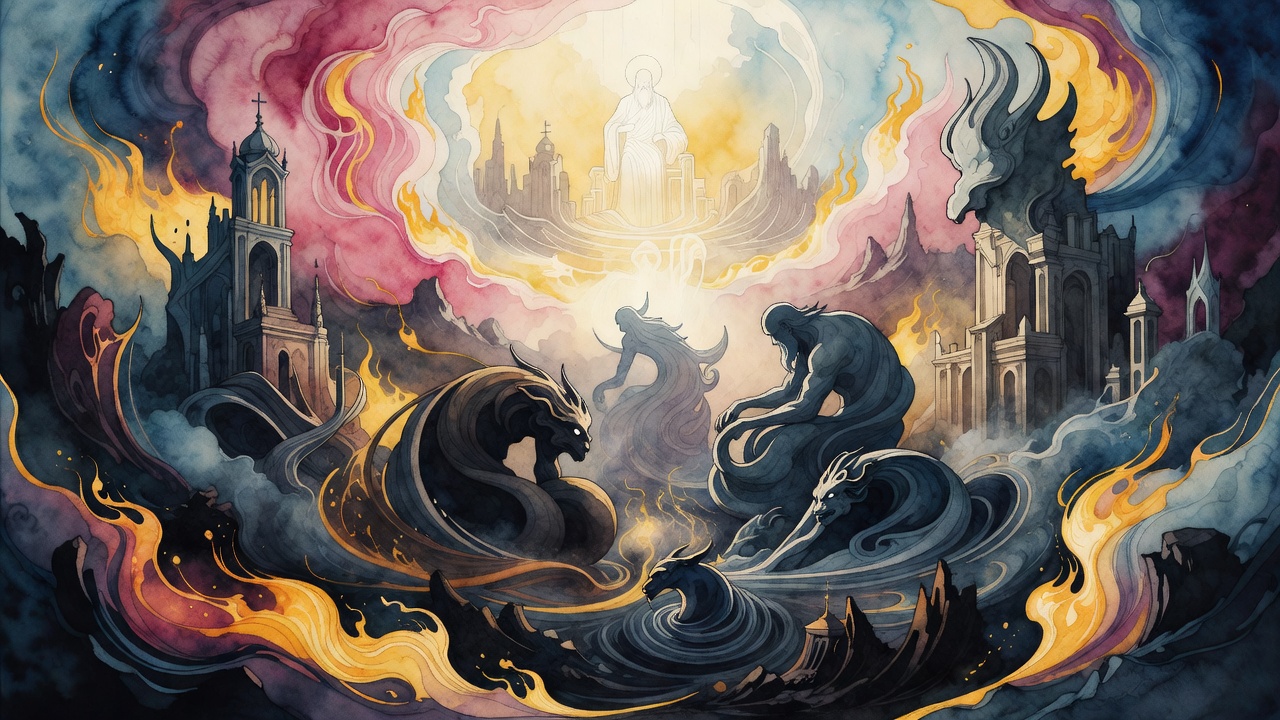
Day three is also the day of the shalishim, the officers who ride in ranks. Warriors were laid down that afternoon alongside the grass. The earth was made on the third day, and the earth had ore in it.

Nobody had sinned yet. Adam was three days off and had not been thought of by anyone in the story. The equipment of every argument the human race would ever have was already lying in the soil, under the orchards, mixed into the day God looked at and called good.

Opened in the Language of Blessing

There was a decision made before any of it, at the first letter of the first word.

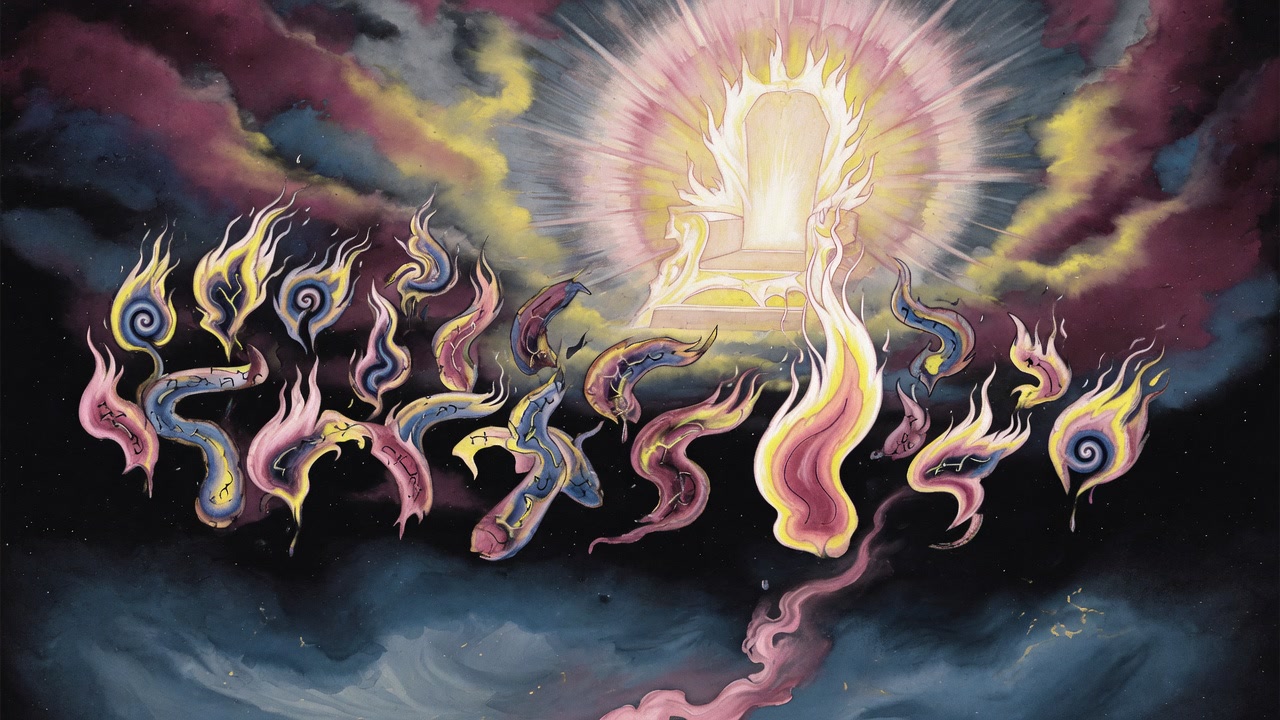
Alef opens the word for curse. Bet opens the word for blessing. Leave a skeptic an alef at the head of creation, the rabbis said, and he will lean back on his bench and ask how a world launched on a curse was ever meant to hold together, and there is no clean answer to hand him.

So the Holy One chose the other letter, and said something over the work that does not sound like a guarantee at all. I am creating this world in the language of blessing. Would that it endure.

Would that it endure. Spoken over ground that already had iron in it.

The Nest and the Handle

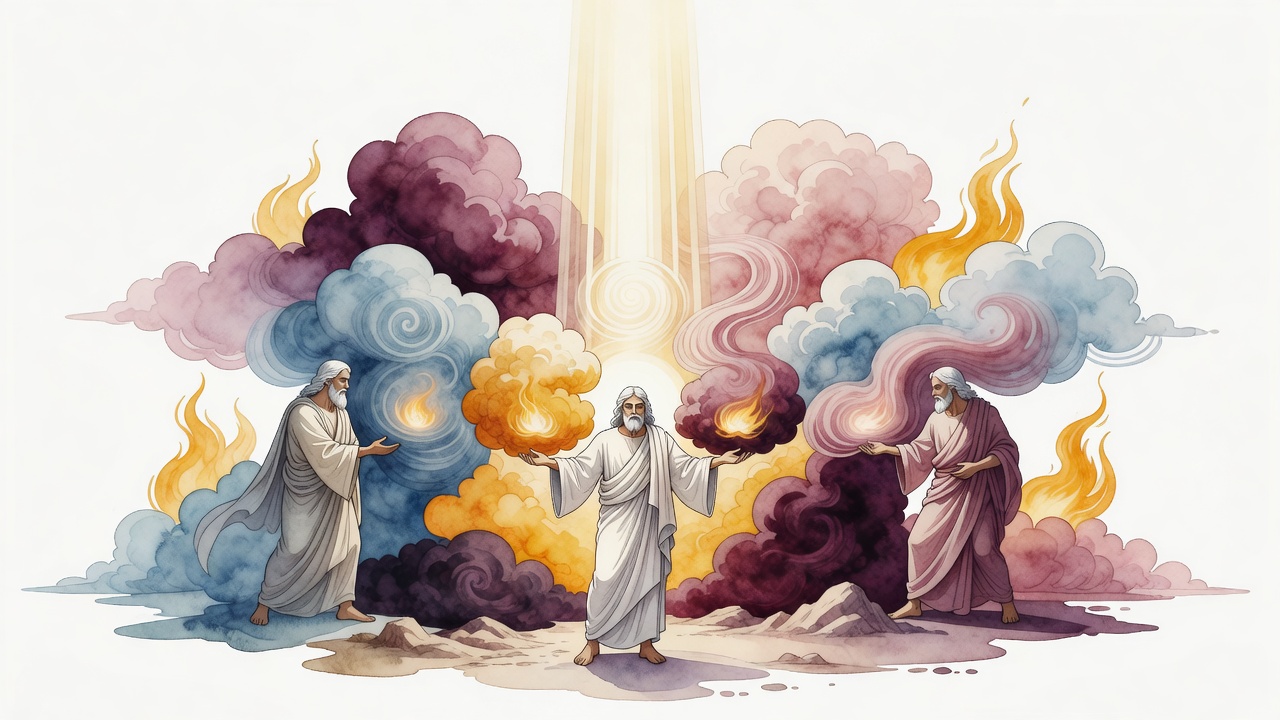
That letter is also a house. In wisdom a house is built, and the house in question is a nest, and what rests in it is freedom itself, the Presence come down to sit somewhere.

Her six sons, who are the six working days, fly up to her on the festivals. The chicks below are Israel, and when the house comes down they do not scatter. They go up with her and travel the roads of exile at her wing.

But a house has to be cut. Somebody walks into the forest with an axe and comes out with cedar for the beams, and the axe he carries in has a handle, and the handle came off a tree in the same stand as the beams.

So the forest supplies both ends of it. The wood that kills it, and the wood the nest is made of. Iron, lying in the dirt on the third afternoon with the trees still shaking above it, said nothing at all about that part.


← All myths
From the tradition

Sources

3 sources

The texts behind this telling. Some cards carry a translation of the source; others are our own retelling of it, and each card says which. Every card links out to the original.

Bereshit Rabbah 5:10Bereshit Rabbah

Retold in our words. Read the original at the link below.The Sefaria Midrash Rabbah, 2022 · CC-BY

Bereshit Rabbah turns to What Made the Third Day of Creation So Special.

Take (Genesis 1:13): "It was evening and it was morning, a third day." But the rabbis of the Midrash (rabbinic interpretive commentary), those masterful interpreters of scripture, saw something much deeper. In Bereshit Rabbah, a collection of rabbinic homilies on Genesis, they explore the significance of the "third day" – yom shlishi in Hebrew.

What makes the third day so special? Well, according to this Midrash, it’s the day on which the groundwork was laid for warriors. Warriors? On the day God created the world? It might seem strange,

The text draws a connection between the word "third" (shelishi) and the word "warriors" (shalishim), pointing to (Ezekiel 23:23), which mentions "warriors and nobles, all of them riding horses.” So, the third day becomes associated with strength, might, and the potential for conflict.

But it doesn't stop there. The Midrash goes on to say that the earth itself was created on the third day, and that includes iron. Now, iron is a crucial element for warfare; it's the metal of swords and spears. The creation of iron, therefore, solidifies the third day's connection to the idea of warriors and the tools they wield.

Imagine the scene: The trees, newly created and standing tall, begin to tremble when iron is brought into existence. What could cause such a reaction? The Midrash provides a beautiful and poignant answer: The iron reassures the trees, saying, "Why are you trembling? If no wood of yours enters me, none of you will be harmed." An axe is useless without a handle. The power of iron, the potential for destruction, is tempered by the need for wood. There's a balance, a dependence. The warrior's strength is ultimately reliant on something else, something seemingly weaker.

This seemingly simple interpretation offers a profound insight into the nature of creation itself. It acknowledges the existence of conflict and potential for destruction inherent in the world from its very beginning. But it also emphasizes the importance of balance, interdependence, and the need for restraint. Even in the face of power, there must be a recognition of the value of what sustains us.

The Zohar, that foundational text of Jewish mysticism, often speaks of hidden sparks of holiness embedded within the physical world. Perhaps this Midrash is hinting at something similar. Maybe even within the creation of something as potentially destructive as iron, there's a spark of connection, a reminder that even opposing forces can be intertwined.

So, the next time you read the creation story, take a moment to pause on the third day. Remember the warriors, the iron, and the trembling trees. Think about the delicate balance between strength and vulnerability, and the surprising connections that bind us all. What other secrets might be hiding in plain sight within these ancient words?

Full source
Yalkut Shimoni on Torah 2:4Yalkut Shimoni on Torah

Translation of the source text.Torat Emet (Yalkut Shimoni) · CC-BY-NC

Another interpretation: Why not [begin] with alef? So as not to give an opening to the heretic to say, "How can the world endure when it was created in the language of cursing?" Rather, the Holy One, blessed be He, said: Behold, I am creating it in the language of blessing. Would that it may endure!

Full source
Tikkunei Zohar 41:7Tikkunei Zohar

Retold in our words. Read the original at the link below.Sefaria-hosted English translation · CC-BY

Take the very first letter of the Torah, the Beiyt (ב) in Be-REiShYT (בראשית) – "In the beginning." The Tikkunei (spiritual repair) Zohar, a central text of Kabbalah, sees this letter as far more than just a starting point. It's a whole house, built with wisdom! As (Proverbs 24:3) tells us, "In wisdom ḥokhmah will a house be built..."

What kind of house are we talking about? Well, it's a house for the Divine Presence, the Shekhinah (the Divine Presence). And it's connected to freedom itself. Think about (Psalm 84:4): "...and the freedom of the nest is hers.." The Tikkunei Zohar equates this "freedom" with the Higher Mother, the "jubilee," referencing (Leviticus 25:10), "And you shall proclaim freedom throughout the land.."

A bird finding its home, which is the Temple. The text suggests that when the Temple is built and secure, freedom – the Higher Shekhinah – finds a nest there. A place of rest, a place of belonging.

Then, the picture expands even further. "…who has placed shatah her chicks…" The Tikkunei Zohar interprets these "chicks" as the six sons of the Shekhinah. Now, in Kabbalistic thought, these sons represent the six sephirot, the divine attributes or emanations, which are also understood as "the six days of active work." These six all fly up towards the Shekhinah, especially on festivals, appointed times, and holy days.

But it doesn't stop there. The text adds that the chicks "who are Israel below," also fly up with Her in exile.

What does this mean? Well, consider the idea that even in times of exile, of being far from our spiritual home, we still have the capacity to ascend, to connect with the Divine. The Shekhinah, representing God's immanent presence, is with us, and we rise with Her.

It's a powerful image of connection, of hope, and of the enduring relationship between the Divine and the Jewish people. The very first letter of the Torah, the Beiyt, becomes a symbol of a house built with wisdom, a nest of freedom, and a pathway to spiritual ascent, even in the midst of exile.

Full source