Parshat Bereshit6 min read

The Plants That Waited Under the Soil for the First Prayer

On the third day every plant rose to the lip of the soil and stopped, waiting beneath the ground for the first mouth that would know to ask heaven for rain.

Curated by Arthur · Told by Maggid ·
Table of Contents
  1. The Green That Stopped at the Threshold
  2. The Roots Spoke in the Dark
  3. The Rain That Would Not Fall
  4. The First Mouth That Understood
  5. The Bursting of the Held Breath
The Plants That Waited Under the Soil for the First Prayer Click for full size

The Green That Stopped at the Threshold

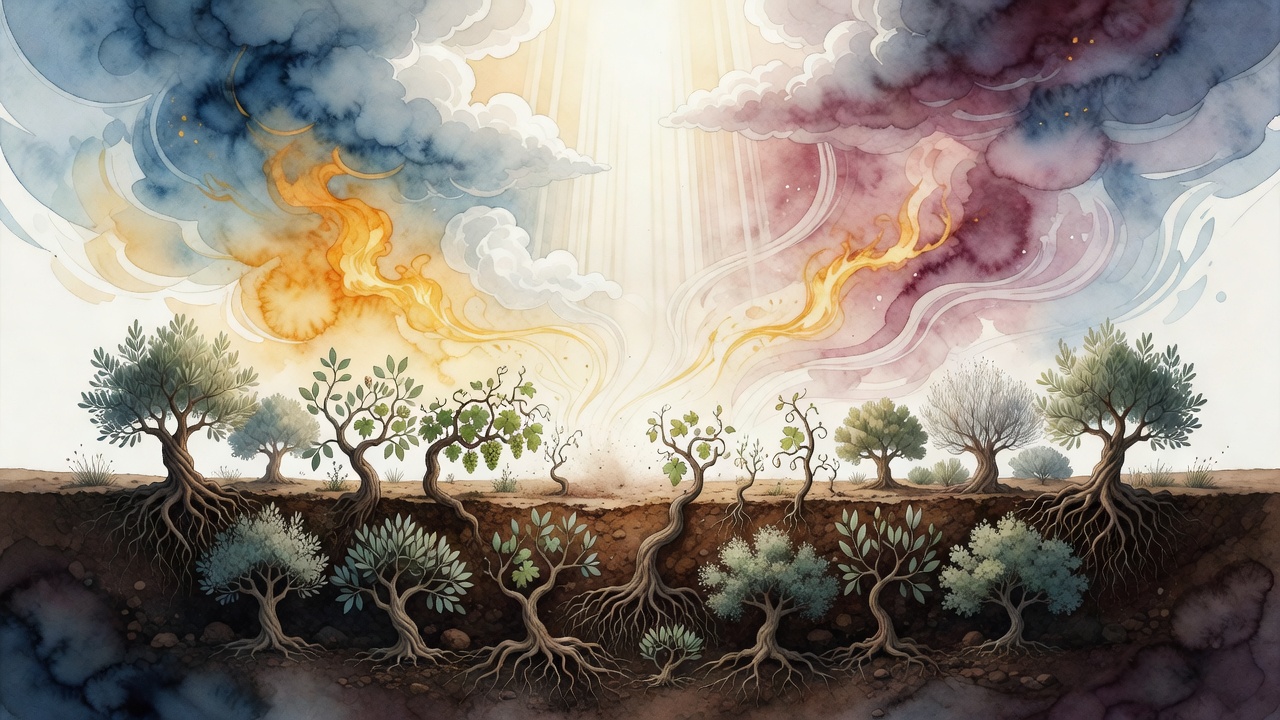
On the third day the word went out and the earth answered. Every seed split. Grass, shrub, and tree pushed up through the dark toward the crust of the world. And at the last hair's breadth of soil, at the lip where root becomes stalk and dark becomes light, they stopped.

Not one blade broke the surface. The wheat held its spear a finger's width beneath the crust. The fig pressed its shoulder against a shelf of rock and did not push through. The vine curled back on itself in the cool dark. All of it waited, poised, leaning up toward a sky it had not yet seen.

Above them the ground lay bare and brown from end to end, and no rain fell.

The Roots Spoke in the Dark

In the dark the plants talked. Root brushed root, and the brushing was speech.

"Did the land bring us forth?" said one. "Did it not?" All their talk was of the land, whether it would yield, whether it would hold.

The carob spoke from far down, for its roots ran deepest of all. The sycamore answered from beside it, its threads driven past the reach of any upper water. "The dew wets only the skin of the earth," they said. "It never reaches us. Who will water the deep ones?"

The wheat, whose root ran fifty cubits into the ground, said nothing and strained upward. The fig, whose root could split stone, held against its shelf and trembled.

And under all their talk ran one longing. Somewhere a creature would come who would eat their fruit and plant their seed and stand in their shade. They strained toward that unmade mouth as much as toward the sky, for a tree grows fruit to call out to whoever will come and plant it, and there was no one yet to hear the call.

So all of them, in the one voice that talk becomes when it grows desperate, turned the talking into asking. "Lord, may the land produce. Lord, may the land flourish." The conversation had become a prayer. But there was no mouth above the soil to carry it, and heaven does not open for a plea that rises from below.

The Rain That Would Not Fall

What the plants could not know, they slowly came to feel. The sky was full of water and would not spill it. The clouds stood banked and heavy. The Holy One held the rain the way a father holds a gift behind his back, waiting for the child to know enough to ask.

For rain, in that first world, was not simply weather. It came as an answer. It fell where a neck had bent, where something had been humbled low enough to look up and plead. And the earth, for all its readiness, carried no such creature. The grasses could long. They could not bow, could not turn a whole world's need into a single asking voice. So the water stayed aloft, and the green stayed under the ground, and the third day passed, and the fourth, and the fifth, and still the fields lay bare.

The First Mouth That Understood

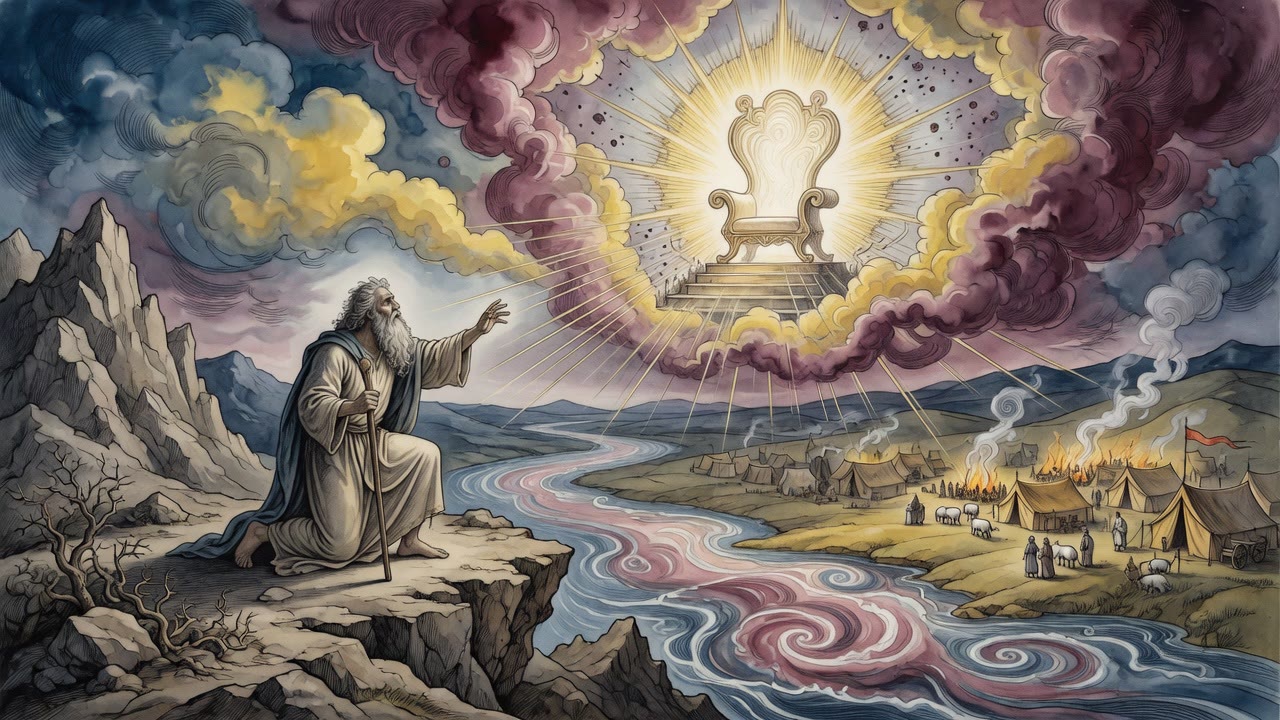
On the sixth day the Holy One took dust from the bare ground and shaped it and breathed, and Adam stood up on the empty earth.

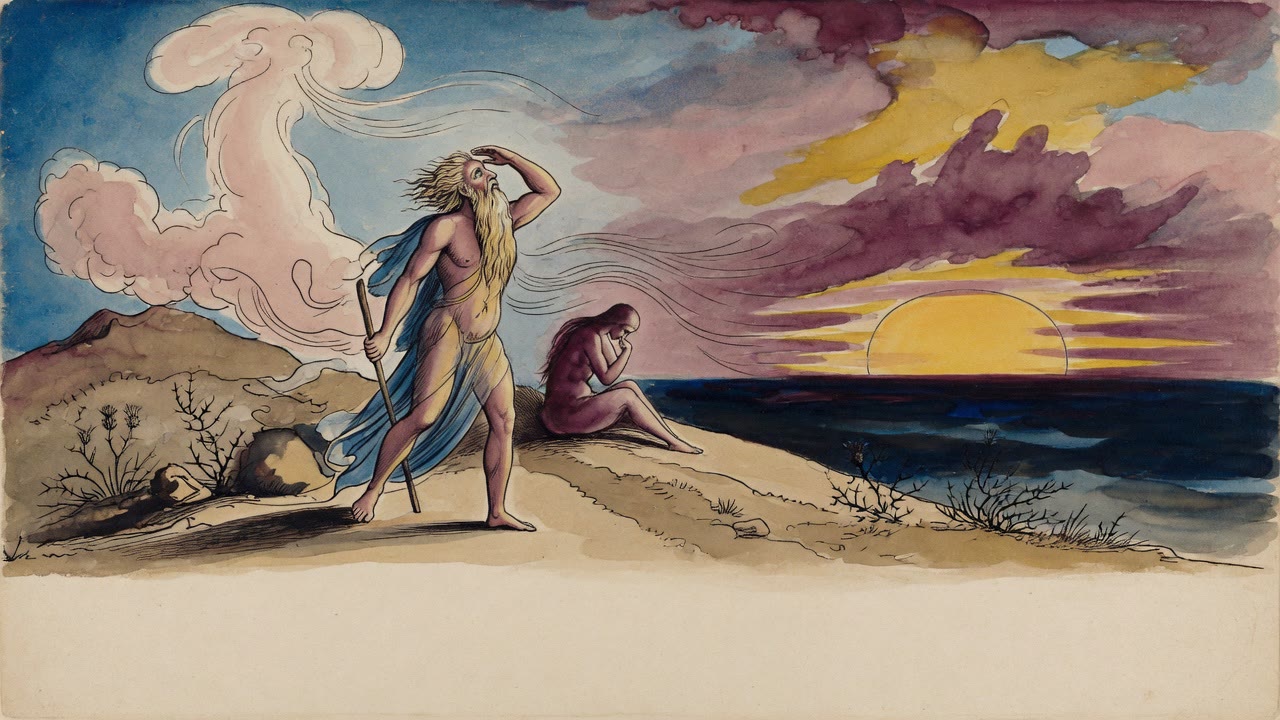
He looked out on a world scraped brown to the horizon. No blade, no leaf, no shade anywhere. Under his feet he felt the strange straining, all that held breath packed just beneath the crust, the whole of creation leaning up against a door it could not open.

And Adam understood the thing the plants could not say for themselves. Heaven was waiting. The water hung above because no one had yet stood on the ground and needed it out loud. The whole design had left one thing undone on purpose, and the undone thing was him.

He lifted his face to the banked and heavy sky. Then he bent. He knelt down on the bare ground and bowed his neck low, the way the whole earth had been leaning low since the third day with no neck to bend for it, and from that low place he asked. "Lord," he said, "let it rain upon the ground."

The Bursting of the Held Breath

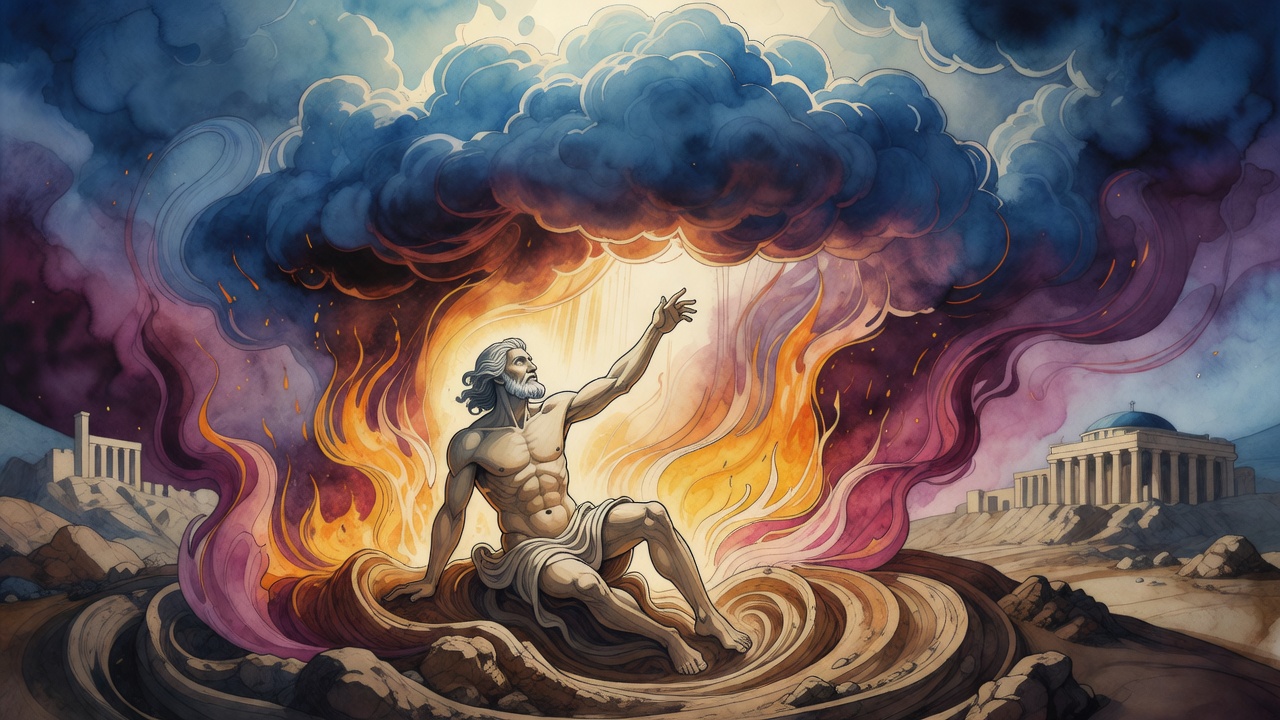
The clouds broke.

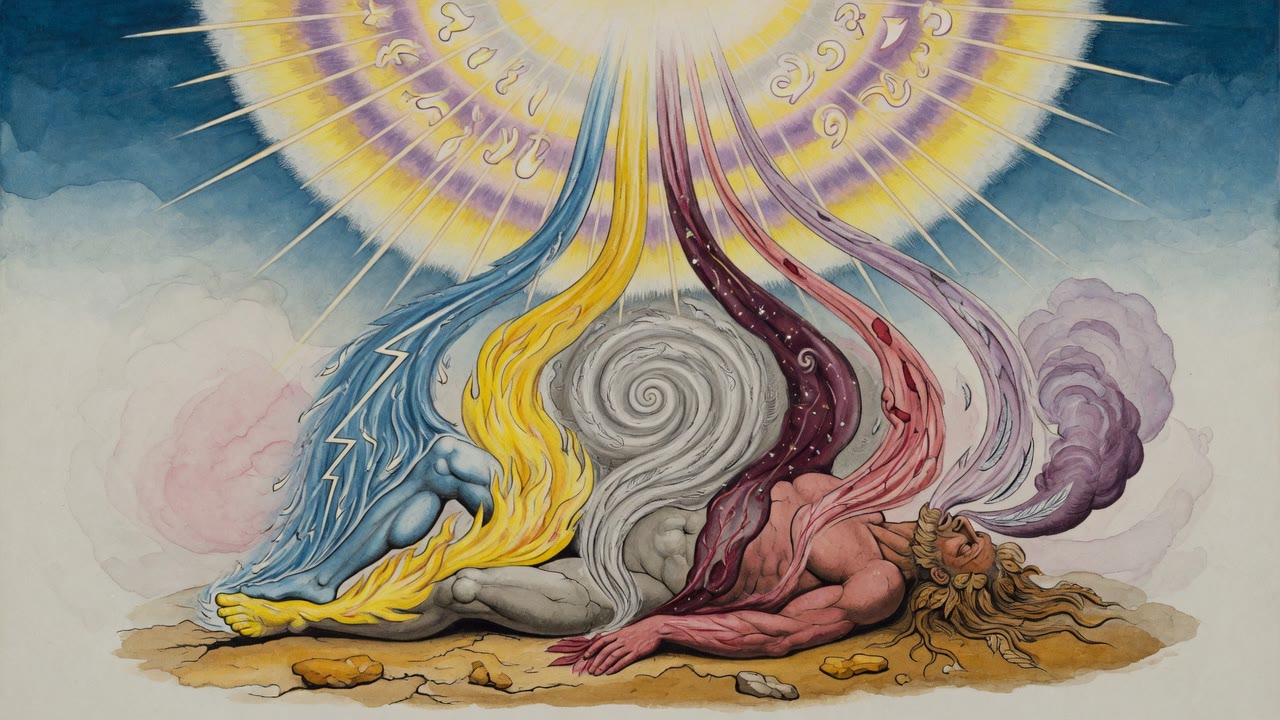
The first drops struck the dust, and the dust drank. Water ran down into the cracks, down past the skin of the earth toward the deep ones. From that day it would keep reaching them. Once in thirty days the waters of the deep would climb to the carob and the sycamore, feeding them from below at their set times, while the grasses drank the rain from above.

And the ground changed its face. Where the rain touched, the brown lifted and greened. Every held stalk felt the door swing and shoved. The wheat's spear broke the crust. The fig split its shelf and stood, and the vine uncurled and climbed. All at once, from end to end, the whole waiting world came up into the light it had leaned toward since the third day, and the bare earth wore a face it had never worn before, green and lifted and running with water.

Adam stood in the middle of it while the rain came down on his shoulders, the first man in the first storm, and around him the grass rose to meet the water he had asked for.


← All myths
From the tradition

Sources

3 sources

The texts behind this telling. Some cards carry a translation of the source; others are our own retelling of it, and each card says which. Every card links out to the original.

Bereshit Rabbah 13:2Bereshit Rabbah

Retold in our words. Read the original at the link below.The Sefaria Midrash Rabbah, 2022 · CC-BY

Our tradition teaches us that the natural world is alive with meaning, constantly communicating, if only we have ears to hear. In Bereshit Rabbah, a collection of rabbinic homilies on the Book of Genesis, the rabbis explore the verse "All the shrubs [siaḥ] of the field" (Genesis 2:5). And what they find is… well, it’s quite extraordinary.

The rabbis play with the word siaḥ. It sounds like mesiḥin, which means "to converse." So, the verse isn't just about shrubs; it's about conversation. Bereshit Rabbah 13 suggests that all the trees "converse with one another, as it were." Imagine the rustling of leaves not as random noise, but as whispered secrets exchanged between ancient beings.

The conversation doesn’t stop there. According to this midrash, the trees also converse with people! How? By bearing fruit. It's as if they're calling out, urging us to plant them and benefit from their bounty. The natural world actively inviting us into a relationship of mutual benefit. The trees were created for our benefit.

There's even a story woven in: a man who harvested his vineyard and stayed overnight, only to be harmed by the wind. Grapes, the story implies, offer protection from malevolent winds while still on the vine; once cut, that protection is lost. It's a reminder of the interconnectedness of things, the way nature provides for us in ways we may not always fully understand.

The midrash then shifts its focus. It suggests that all of people's conversations – their siaḥ – are about the land. "Did the land produce? Did it not produce?" Crops are essential to us, and so they dominate our talk.

And then comes a profound connection: all of people’s prayers are also a form of siaḥ, a conversation. "Lord, may the land produce; Lord, may the land flourish." We're constantly in dialogue, asking for what we need.

Finally, Bereshit Rabbah takes it even further, connecting all of Israel's prayers to the Temple in Jerusalem. “Lord, may the Temple be built; Lord, when will the Temple be built?” Here, the word "field" alludes to the Temple itself (as we also find in Bereshit Rabbah 22:7).

So, what does this all mean? It’s more than just a clever wordplay on siaḥ. It's a reminder that everything is connected – the trees, the land, our conversations, our prayers, and ultimately, our connection to the Divine. It challenges us to listen more deeply, to recognize the conversations happening all around us, and to appreciate the profound interconnectedness of all things. What are the trees whispering to you?

Full source
Bereshit Rabbah 13:14Bereshit Rabbah

Retold in our words. Read the original at the link below.The Sefaria Midrash Rabbah, 2022 · CC-BY

The ancient rabbis certainly did. They saw a deep connection between what happens on Earth and what happens within us.

Consider the verse in (Genesis 2:6): "…and watered all of the surface of the ground." Seems straightforward. Just describing how the Earth was watered. But Rabbi Berekhya, a sage whose insights still resonate today, saw something far more profound in those words.

He suggested that the watering of the Earth was directly linked to a calamity. Now, that might sound a little strange at first. Calamity leading to…water? Where's the connection?

Rabbi Berekhya cleverly draws a parallel. He explains that when bad things happen, when people face hardship, it often leads to repentance, to teshuvah (repentance). And it's this repentance, this turning back to what’s right, that ultimately brings an end to drought – both literally and figuratively.

He then brings in another verse, this time from (Deuteronomy 32:2): "My lesson will fall [yaarof] as rain..." Notice the word yaarof, "will fall." Rabbi Berekhya makes a brilliant, and characteristically rabbinic, wordplay on this. He connects yaarof with the Hebrew word oref, which means "neck." His interpretation? When the "necks" [oref] of the people are broken – metaphorically speaking, when they are humbled and broken by tragedy – at that point, rain falls.

In other words, it's not just about physical rain. It's about spiritual rain, a cleansing, a renewal that comes from facing our own shortcomings. We often think of rain as a blessing, something purely positive. But Rabbi Berekhya is suggesting it can also be a response, a consequence of something difficult.

This idea – that our actions have a direct impact on the world around us – is a powerful one. It’s a theme we find again and again in Jewish tradition. The Zohar, that mystical masterpiece, is filled with such connections. As we find in Midrash Rabbah, the classic collection of rabbinic interpretations, everything is interconnected.

So, the next time you see a storm, or a drought, maybe it’s worth asking ourselves: What kind of spiritual weather are we creating? What inner work needs to be done so that the rains of blessing can truly fall upon us, and upon the world?

Full source
Bereshit Rabbah 13:17Bereshit Rabbah

Retold in our words. Read the original at the link below.The Sefaria Midrash Rabbah, 2022 · CC-BY

Rabbi Elazar bar Rabbi Shimon grappled with this very question. He observed that the land is watered primarily at its upper layer. But what then, he wondered, about the carob tree and the sycamore? Their roots plunge into the depths! How do they survive?

His answer? Each tree, each plant, is watered according to its needs. That the world is designed with such intricate care, providing sustenance precisely where it's required.

Rabbi Ḥanina ben Rabbi Izka and Rabbi Berekhya, citing Rabbi Yehuda, took this even further. ) into the earth? And the roots of a fig tree, they said, could pierce right through solid rock! It’s an image of incredible tenacity and the raw power of life.

Rabbi Levi offered another perspective. He suggested that once every thirty days, the waters from the depths rise up to nourish the carob and sycamore trees. He finds support for this idea in the prophet Isaiah (27:3): “I, the Lord, guard it; at set times I water it.” What a comforting thought, that even in the deepest, darkest places, there is a source of sustenance, a divine hand ensuring survival.

Finally, Rabbi Yehoshua ben Levi brings in a beautiful image of renewal. He says that when the rain falls, it gives the ground a new panim (פָּנִים), a new face. He connects this to the Hebrew word penei (פְּנֵי), meaning "surface," in the phrase "the surface of the ground." The rain doesn’t just water the earth; it transforms it, bringing forth greenery and new life.

So, what does all this mean for us? Perhaps it's a reminder that even when we feel parched, even when we feel like our roots are reaching desperately for sustenance, there is a source of nourishment available to us. Maybe it’s about trusting that we, too, are watered according to our needs. And perhaps, most importantly, it's about recognizing the constant renewal, the fresh face, that is always available to us, just like the earth after a rain.

Full source