Antoninus Dug a Tunnel to Visit Rabbi Judah
An emperor crawled an underground passage to visit the redactor of the Mishnah in secret. Servants died for the friendship, and a disciple raised one back.
Table of Contents
 Click for full size
The Passage Under the Street
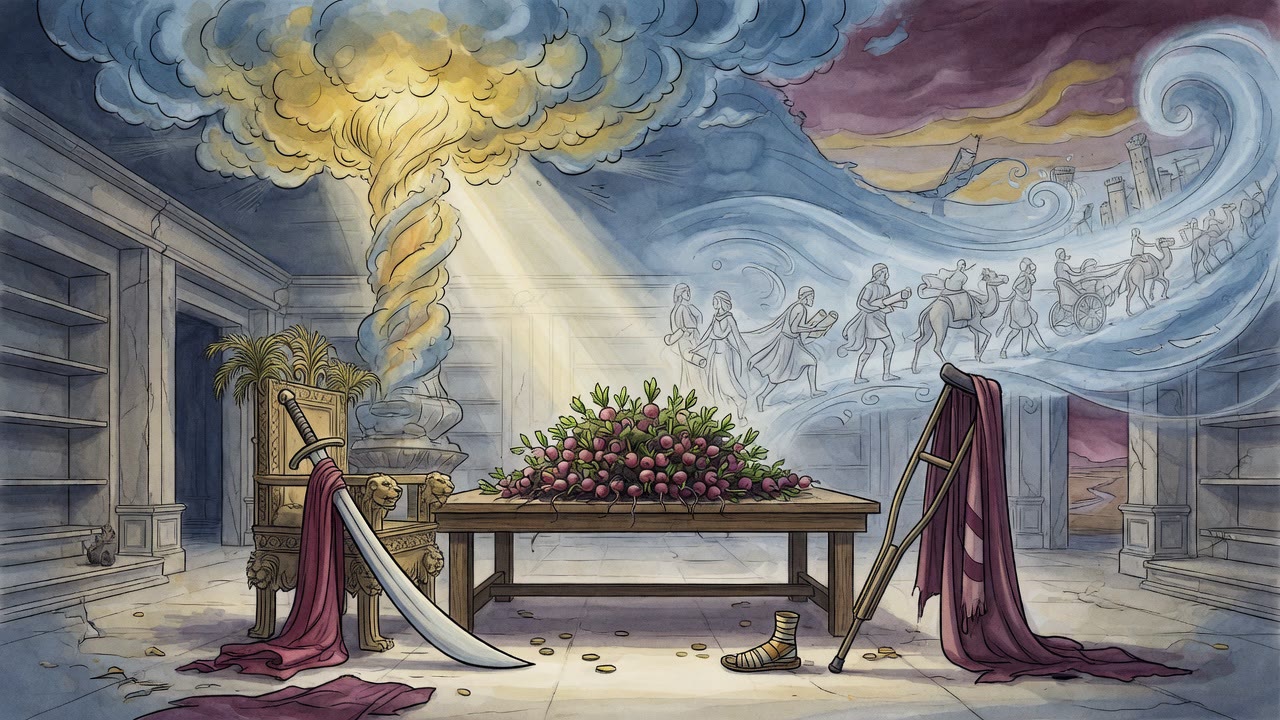
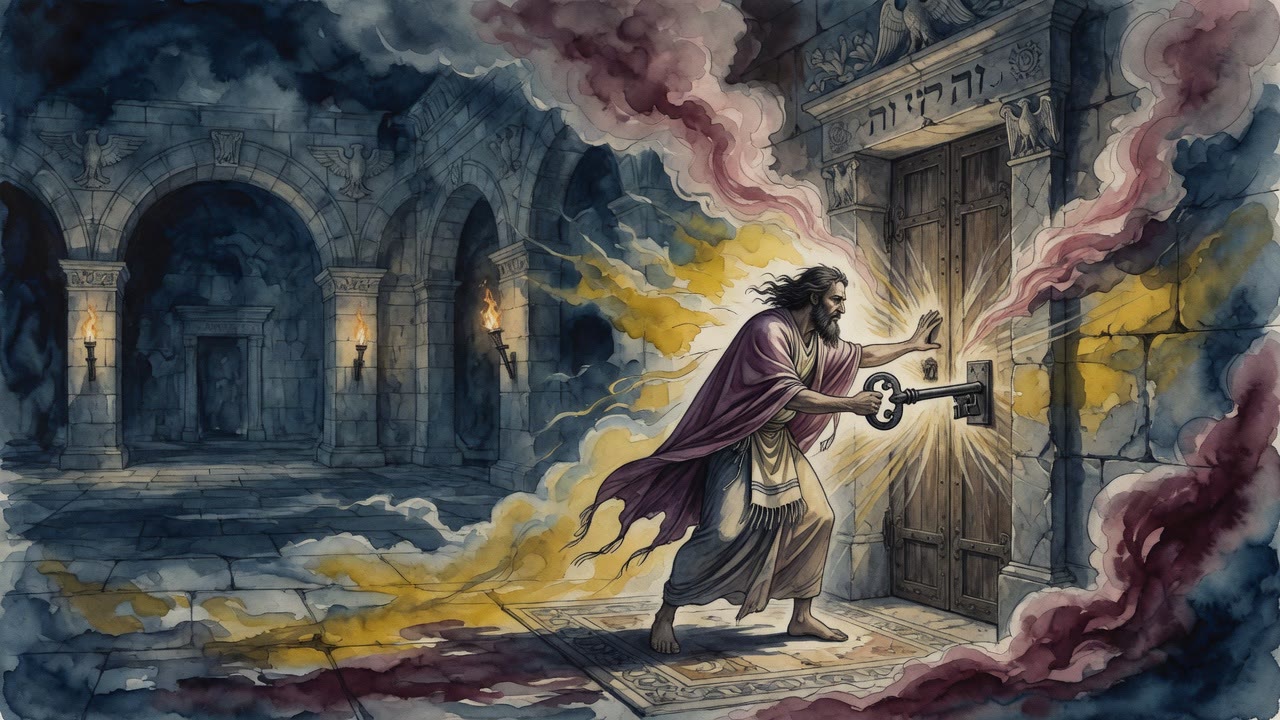
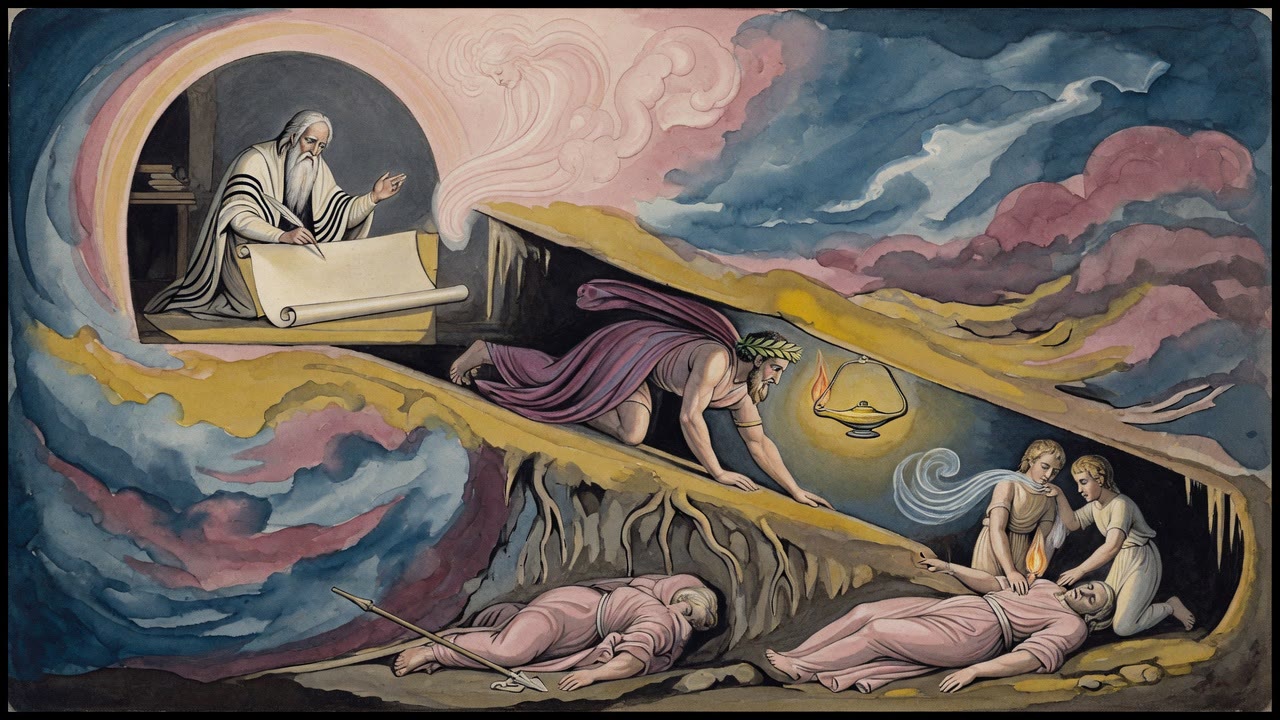
Antoninus could not walk openly to the house of Rabbi Judah the Prince. Rome would not understand a Caesar who needed a Jewish teacher more than he needed another general. So the emperor ordered a tunnel between their homes, a throat of earth under the ordinary street. He traveled that dark way like a man smuggling his own soul past the eyes of the empire. Two servants went with him each time. At the end of the visit they were killed, so that mouths would not carry the secret back to the palace.
Under empire, friendship became a crime scene that repeated itself. The tunnel smelled of damp earth and fear. Judah waited at the other end with Torah and counsel, not with flattery, not with the soft lies rulers buy by the cartload when they are tired of truth.
A Third Man in the Room
One night Antoninus arrived without warning and found a third person with the Rabbi. Hanina ben Hama stood there, a disciple whose presence had not been cleared. The emperor's face went hard in the lamplight. "Did I not order no witnesses?" Judah answered without raising his voice. "Trust him. He is mine." Trust was not a Roman currency that night. Antoninus pointed to a servant who had just been killed and ordered Hanina to call him back if the disciple was truly safe to know secrets.
Hanina prayed. The dead servant opened his eyes and stood as if sleep had been the only death in the room. The air changed. From then on the emperor brought state questions through the dark passage with less theater and more need. He wanted his son to succeed him. He wanted Tiberias eased of certain burdens. He needed a mind that did not belong to the senate's games.
Power had come underground to borrow wisdom, and wisdom had answered with a life returned, which is a kind of answer no decree can counterfeit.
Good Day, Bad Day, Hidden Counsel
Kohelet says, "On a good day be in goodness, and on a bad day consider." Rabbi Abba bar Kahana heard practical counsel in the line. When a good day comes, seize the good at once. When a hard day comes, consider how to repent and be saved. That chain of teachings turns on what overturns a harsh decree. Prayer, charity, and change of deeds stand in the mouth of the sages as forces that move Heaven when the calendar turns against a person or a people.
Antoninus lived both kinds of day in the tunnel. A good day was counsel received in secret, a city eased, a succession path cleared by wisdom rather than only by steel. A bad day was the blood of servants and the knowledge that friendship with Torah under Rome was always one rumor away from disaster. The midrash on decrees does not name him. His body still walks the teaching. Seize the good when it opens. When the dark day comes, do not freeze. Consider, change, ask.
Plants and Hidden Counsel
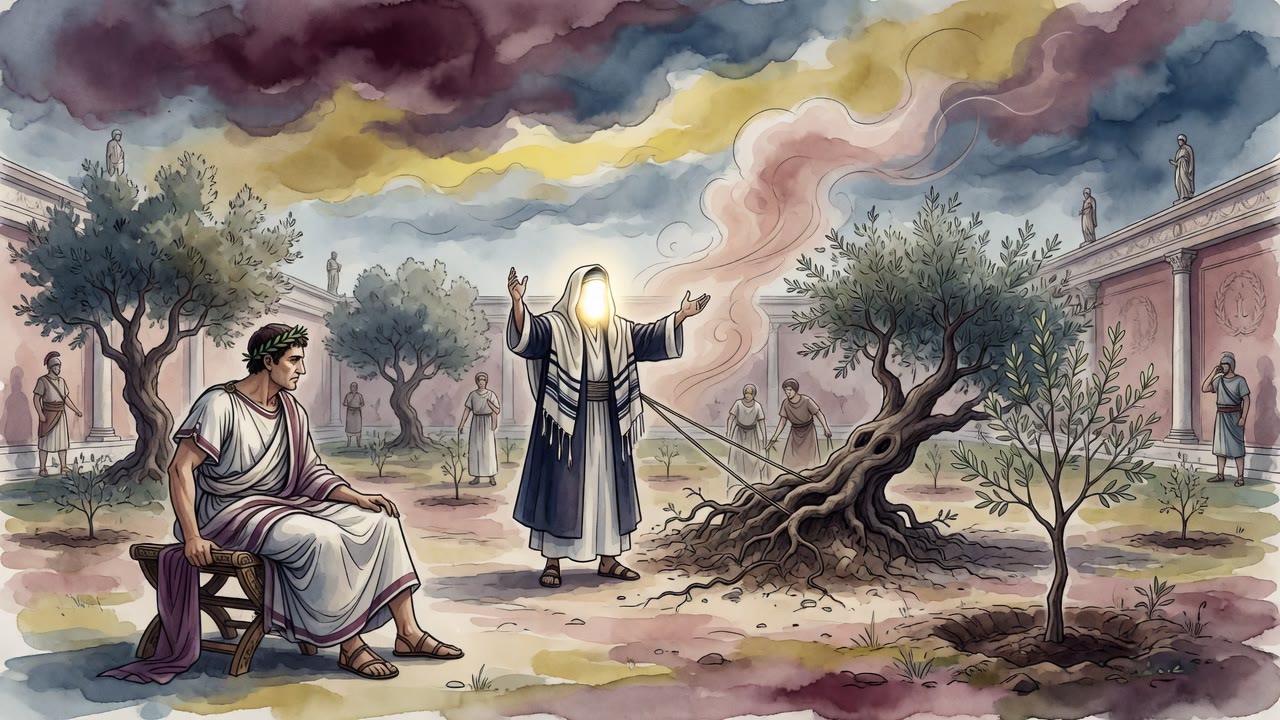
Antoninus once sent plants to Rabbi Judah, a living gift instead of a dead jewel, green things that needed care the way a secret friendship needs silence. Advice moved the other way, through dirt and secrecy and the risk of discovery. The emperor who could order deaths still needed a teacher who would not sell him a comfortable lie about sons and cities.
Empires write their histories in triumphs and roads named after victors. This friendship writes itself in a tunnel, a resurrected servant, and the strange humility of a ruler who asks a rabbi what to do when the map of succession will not stay flat under his hand.
What Secrecy Cost
Do not romanticize the killed servants as if the tale were only a romance of conversation across walls. The story is not clean. It shows how dangerous it was for Torah and crown to sit at one table while Rome watched for weakness. Hanina's miracle does not erase the earlier deaths. It only proves that Heaven sometimes answers when a disciple is forced to stake everything on his teacher's word in front of a man who can end rooms.
A person reading this in safety can still feel the damp of the passage. Some truths only travel underground until the world is ready for daylight. Some friendships are so costly that only God can refund the price, and even then the ledger stays hard to look at without flinching.
The body keeps the lesson when the mouth grows tired of repeating it. Feet, hands, breath, and the pause before a strike are where the story hides its Torah.
← All myths