Antoninus Watched the Old Tree Leave the Garden
Palace corridors had listeners. Rabbi Yehudah ha-Nasi put his hands in the soil and let the emperor read the roots himself.
Table of Contents
Antoninus came with a problem that could get a counselor killed. The imperial treasury was running low. He asked Rabbi Yehudah ha-Nasi for a way to fill it, in a palace where every corridor had listeners.
 Click for full size
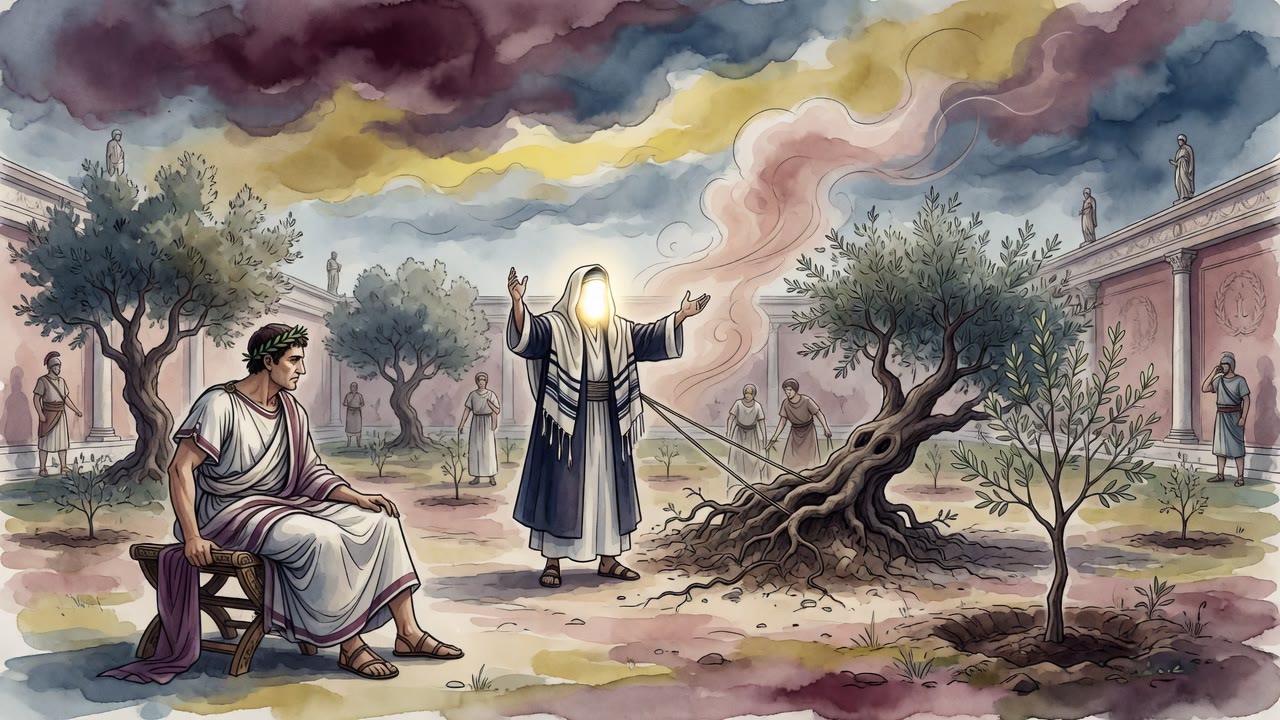
The Rabbi did not give him a list of names. He took the emperor into the garden.
He Pulled the Old Tree
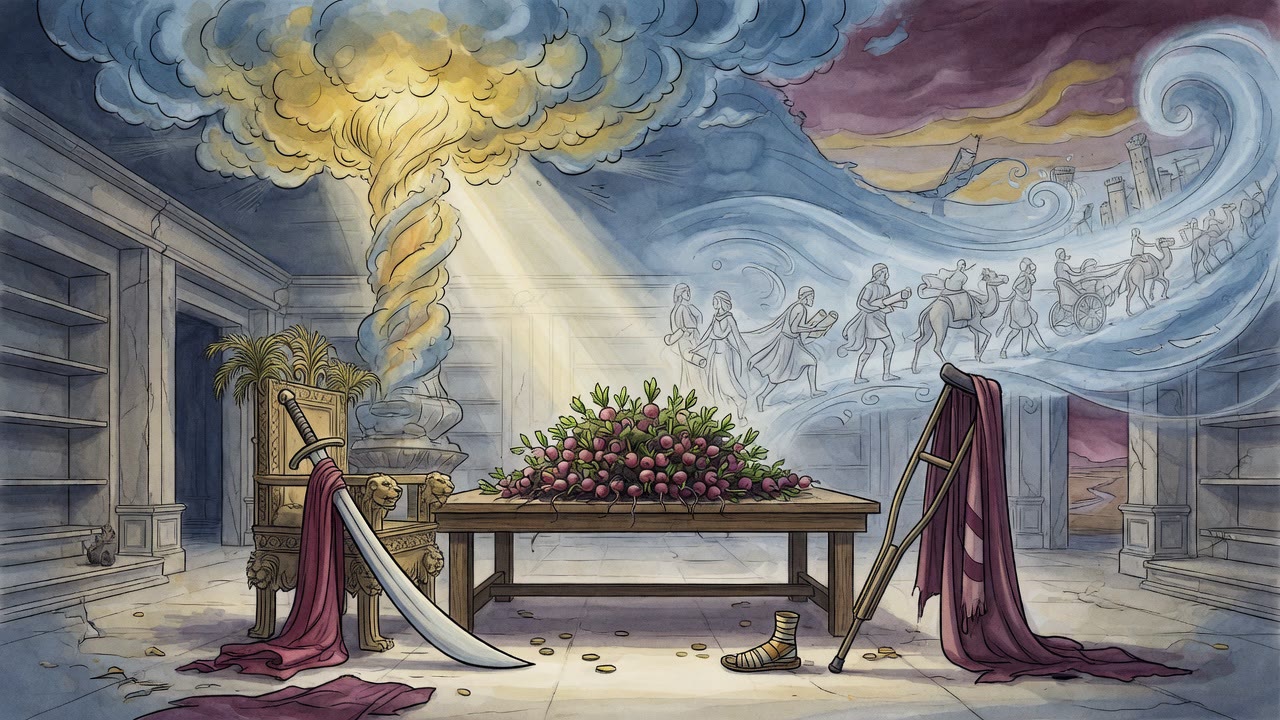
He walked to an old tree in the middle of a row, set his feet, and pulled. Roots tore with a sound like wet cloth. Soil blackened his wrists. He set a young sapling in the hole, pressed the dirt with his heel, and moved down the row.
He did it again. He said nothing.
Antoninus watched until the pattern did not need Hebrew or Latin. Old governors grown fat on bribes would be dismissed. Fresh men, hungry to prove themselves, would collect what the old ones had let lapse. The treasury would refill because the orchard had been renewed.
The Rabbi wiped his hands on his robe. The emperor looked at the young trees as if they might speak a charge he could not unhear. No one in the corridors had a sentence to copy.
Four Hundred Times
In another house Rabbi Patra sat with a student who would not learn. The words slid off the boy's mind the way rain slides off stone. Other teachers stop at ten repetitions, or twenty, or a hundred, and then call the student a lost case.
Patra taught the same lesson four hundred times. He did not put on the sour face that turns a pupil into an enemy of the book. On the four hundredth time the teaching took. The boy looked up. The lock had taken the key.
Heaven offered Patra a choice in that hour: four hundred years added to his own life, or the World to Come guaranteed for his descendants. He chose the line after him. Personal years are a long road. A family that inherits bliss is a longer one.
God granted both. Patience repaid with time. Selflessness repaid with eternity. Patra went back to the bench. The boy was already waiting with the same page open.
A Daughter Kept in the Book
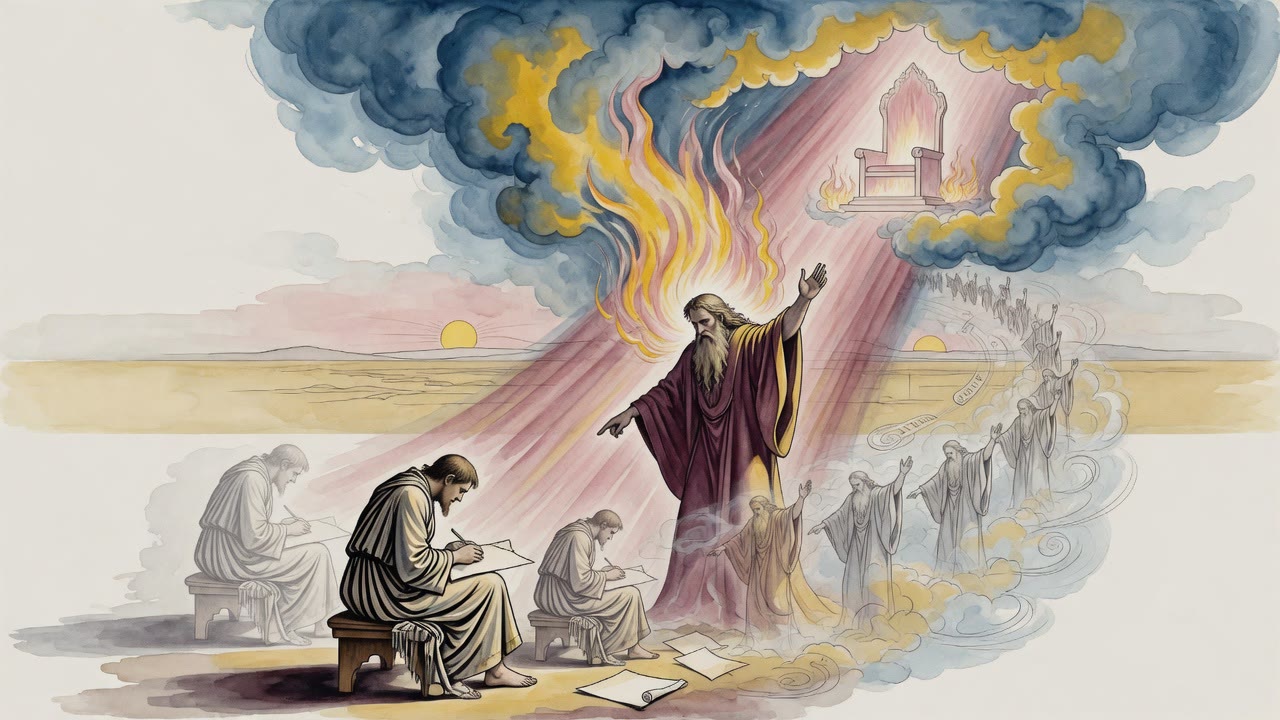
Rabbi Judah took on the education of the daughter of Rabbi Tarfon. The world preferred other inheritances for daughters. He preferred open pages. He raised her in Torah so the chain would not thin when a colleague's household needed another hand.
Around that quiet work other proofs gathered. Rabbi Joseph fasted twice for four days each, eight days of empty mouth, asking only that love of study remain in his family. Not wealth. Not long life. A house of open books over a house of crowns.
The girl learned. Tarfon's line did not go thin. Judah did not announce a reform. He sat and taught until the lamp burned down, then lit it again.
The Furnace Left One Mark
Rabbi Ze'ira sat inside a fiery furnace to test whether his merit could shield a colleague from Gehinnom, the place of punishment after death. He went in for Rabbi El'aa. The flames took the air and licked the cloth.
He came out unharmed except for one singe. Even the righteous walk near the edge. The scorched robe became a badge, not a scandal. Fire had been asked a question, and fire had answered with a burn small enough to wear.
Ze'ira hung the robe where students could see it. He did not explain. The cloth did the teaching, the way the garden had done it for Antoninus.
The Sapling Took the Row
Antoninus went home and issued orders. Old men left their posts. New men took the ledgers. Coin began to move toward the treasury again.
He had wanted a speech. He had been given a spade. No corridor had a sentence to copy.
The old tree was gone from the middle of the row. The sapling did not accuse it. It simply took the place. In the study house a boy repeated a lesson for the four hundredth time. A girl turned a page her father's friend refused to let close. A singed robe hung on a peg, still smelling of smoke.
← All myths