5 min read

Perida Taught One Lesson Eight Hundred Times

A slow student needed four hundred repetitions, then four hundred more. Heaven offered years; Perida chose eternity.

Curated by Arthur · Told by Maggid ·
Table of Contents
  1. Four Hundred, Then Four Hundred More
  2. The Platform That Emptied a Mind
  3. A Broken Spirit on the Altar
  4. What Teaching Costs

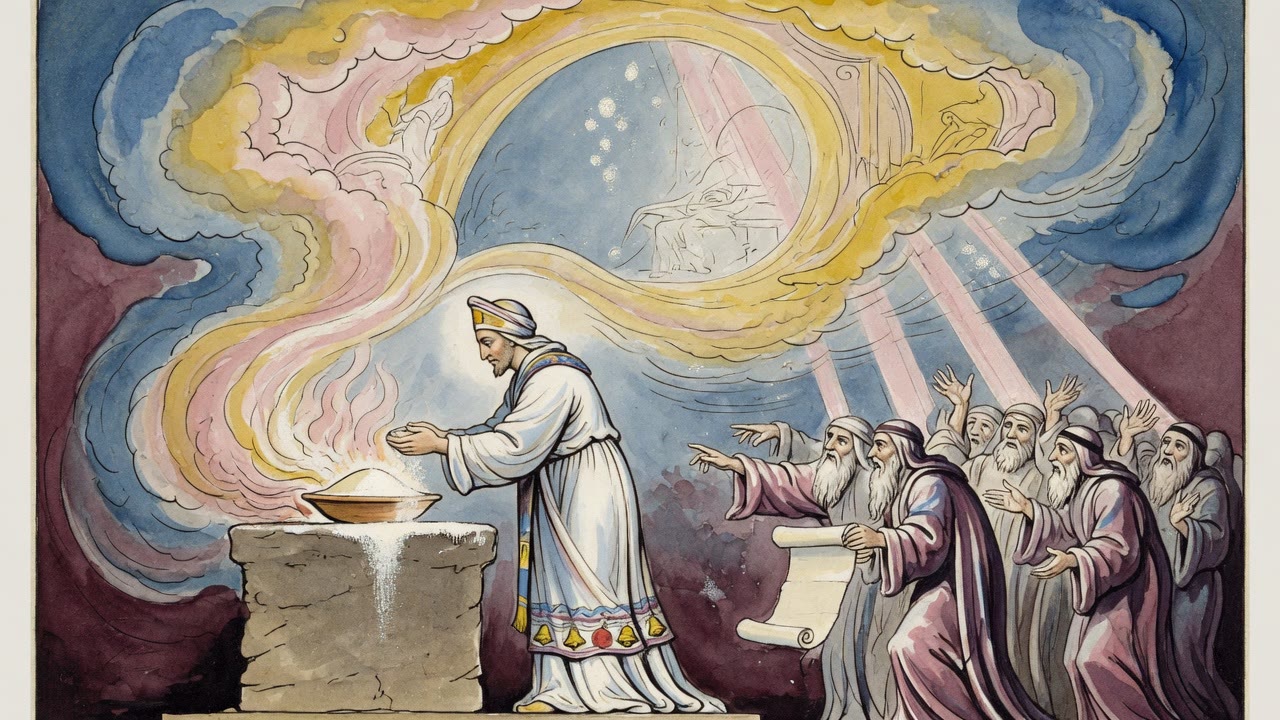
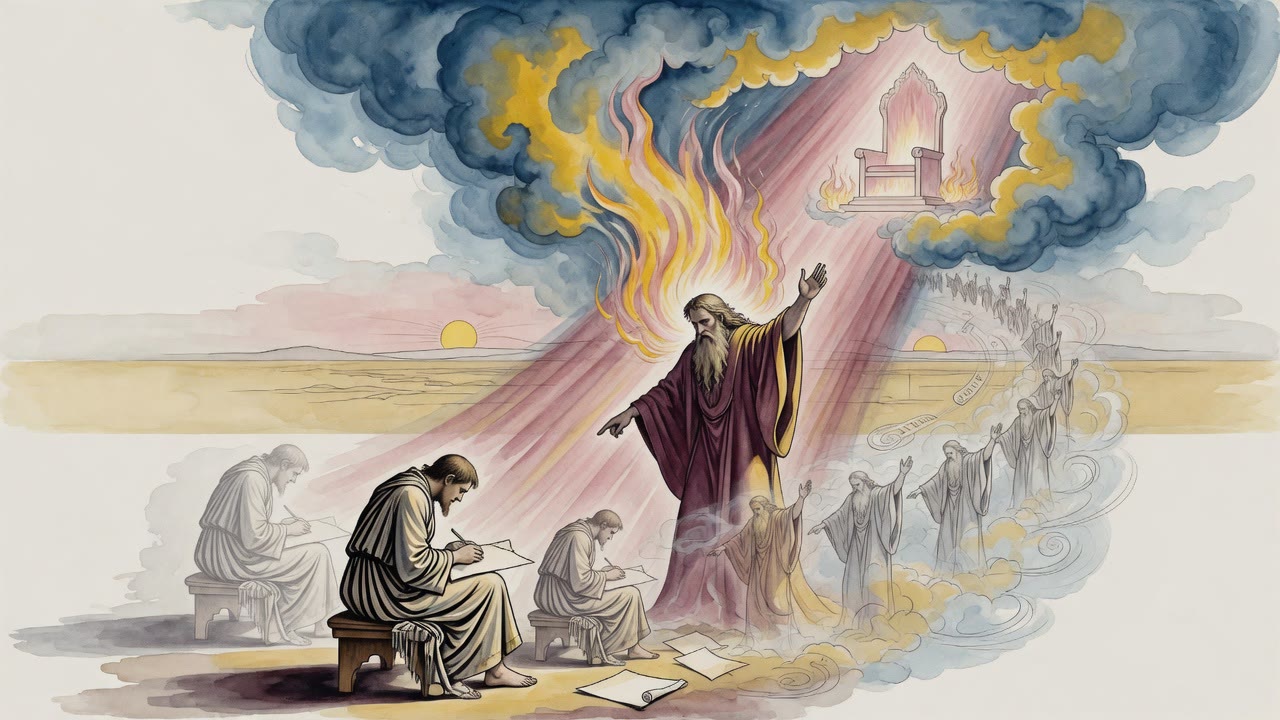
Rabbi Perida sat with a student who could not catch a teaching the first time, or the tenth, or the hundredth. Other pupils nodded after a line or two and went home with full hands. This one needed four hundred repetitions before the words settled into place. The bench under them wore smooth. The hours stacked like bricks.
Perida Taught One Lesson Eight Hundred Times Click for full size

Perida never raised his voice. He never called the time wasted. He turned the page of patience as if patience were the lesson under the lesson, the real tractate hiding inside the words being drilled.

Four Hundred, Then Four Hundred More

One day, after the four hundredth time, the student still did not understand. Perida saw the distraction in his eyes before he heard the confession. "What is troubling you today?" The young man admitted someone was waiting to see the rabbi, and fear of stealing the hour had shattered his concentration into useless pieces.

"Do not worry," Perida said. "Let us begin again."

He taught the same piece another four hundred times. Eight hundred for one teaching, spoken without contempt. A heavenly voice then offered him a choice that would have tempted most men into calculation: four hundred years added to his life, or the assurance that he and his generation would merit the World to Come. Perida chose the World to Come, reasoning that years end and eternity does not. Heaven, pleased with the preference, gave him both rewards and left the story as a measure of what teaching can cost when it is done without pride.

The slow student became, in that moment, the scale on which a generation was weighed.

The Platform That Emptied a Mind

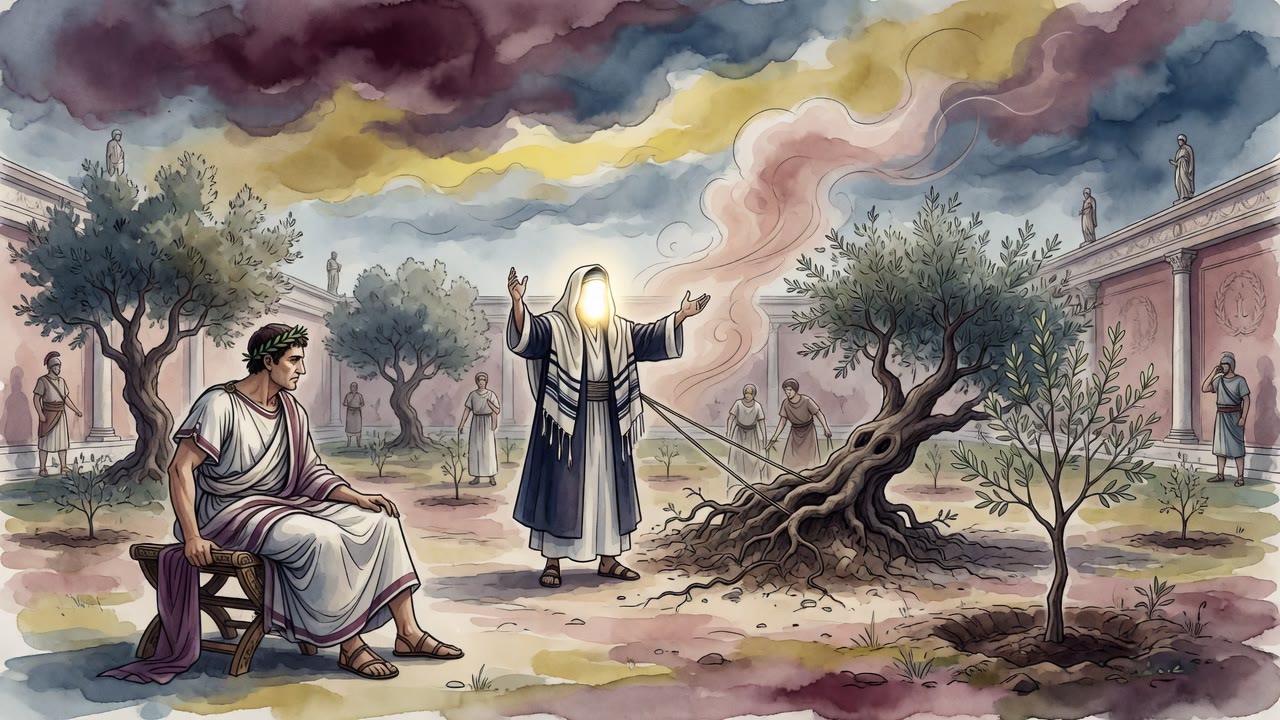
Not every teacher fails by impatience. Some fail by pride that arrives dressed as honor. Rabbi Yehuda HaNasi sent Rabbi Levi bar Sisi to Simoneya to teach Bible and Mishnah and to judge cases for a town that needed a master. The people built him a high platform and seated him like a prize on market day. Questions came in public: hard laws of halitzah when a limb is missing or blood is spat, a knot in Daniel about "the script of truth" and why truth would need recording if it were permanent. Levi's mouth stayed shut. Faces turned. The platform felt higher with every silence.

He returned to Rabbeinu in distress. Rabbeinu heard the questions and knew Levi held the answers. Why the silence in Simoneya? Because the grand seat had made him arrogant, and arrogance had chased the learning out of reach exactly when the town needed it most. Ben Azzai and Rabbi Akiva already argued over Proverbs: demeaning in Torah can grow from humility's hard path or from the crash of self-importance. Levi lived the second path in public, on wood raised too high for a man who forgot he was still a student of heaven.

Elevation without humility emptied a full mind. The town learned nothing that day except how a platform can unmake a scholar.

A Broken Spirit on the Altar

Tanna DeBei Eliyahu sets another scale beside the academy's. Be pleasant in living, careful in fear of Heaven, a maker of peace with parents and teachers and every person you meet. The one who carries no transgression and still stays humble is the one God says dwells with Him on high, for He dwells with the contrite and lowly of spirit. A broken and humble spirit is dearer than all the sacrifices, because a single burnt offering earns its own reward, but a lowly heart is credited as if it brought them all, since the verse speaks of sacrifices in the plural.

Jacob warned Joseph in that spirit: do not say, I am a king and free of sin, and grow proud over others. Wisdom and understanding are given to sanctify the Name, not to build a stage for the self. Perida's repetitions were sacrifice without smoke, an offering of hours. Levi's platform was smoke without offering, honor that cost the town its lesson.

Water, Eliyahu says, is abundant, gives relief, gives life, makes seed grow. A humble heart pours like water. A proud seat dams the flow.

What Teaching Costs

Eight hundred times is not inefficiency. It is a body spending itself so another mind can stand. Heaven did not praise brilliance that day. It praised the refusal to abandon a single head that needed more light than the schedule allowed. In Simoneya the lesson inverted: elevation without humility emptied what study had filled. In Perida's room, humility filled what nature had left slow.

Between them the tradition plants a simple terror and a simple hope. The terror: honor can make you forget what you know. The hope: patience can buy a generation a share in what does not die. The student who needed four hundred, then four hundred more, left the story without a famous name. The teacher who stayed is remembered every time a hard mind meets a harder mercy.


← All myths
From the tradition

Sources

3 sources

The texts behind this telling. Some cards carry a translation of the source; others are our own retelling of it, and each card says which. Every card links out to the original.

Exempla of the Rabbis, No. 179Exempla of the Rabbis (Gaster, 1924)

Retold in our words. Read the original at the link below.The Exempla of the Rabbis, Moses Gaster (1924) · Public Domain

Gaster's Exempla lists "Merit of Repetition," pointing to Eruvin 54b, Midrash HaGadol on Exodus Mishpatim, and Maase Buch No. 132.

The original is an index card for the teaching on review and memory, not the full story.

Full source
Bereshit Rabbah 81:2Bereshit Rabbah

Retold in our words. Read the original at the link below.The Sefaria Midrash Rabbah, 2022 · CC-BY

Our story comes from Bereshit Rabbah, a classic midrashic (rabbinic interpretive commentary) text that dives deep into the Book of Genesis. Specifically, It starts with a verse God says to Jacob: "Arise, ascend to Beit El." Beit El, by the way, means "House of God," a very significant place for Jacob.

Before we get to Jacob, the text quotes (Proverbs 30:32): “If you were demeaned, it is due to arrogance; if you conspired, put hand to mouth.” This verse becomes the springboard for a fascinating discussion between Ben Azzai and Rabbi Akiva.

Ben Azzai takes a hopeful stance. He suggests that if you humble yourself for the sake of Torah – that is, Jewish learning and law – you'll ultimately be elevated through it. And if people slander you? Silence is golden. One person knowing something is bad, but if you start fighting the slander, everyone will hear about it.

Rabbi Akiva, however, offers a sharper perspective. He argues that being demeaned in matters of Torah stems from arrogance. Thinking too highly of your own knowledge can lead to forgetting what you know and feeling embarrassed when you can't answer questions. Ouch. Ever been there? I know I have.

The text then tells a story that vividly illustrates this point. Rabbeinu – which, in this context, refers to Rabbi Yehuda HaNasi, a major figure in Jewish history – was traveling through Simoneya. The people there asked him to provide someone to teach them Bible, Mishna (the core text of the Oral Torah), and to adjudicate their trials.

Rabbeinu sent them Rabbi Levi bar Sisi. Sounds good. Well, the people of Simoneya built a huge platform for him, seated him upon it… and he couldn't answer their questions! They asked him about complicated scenarios related to halitza (a ritual involving a childless widow and her brother-in-law) – specifically, how it's performed if the woman is missing an arm or spits blood. Crickets.

Thinking maybe he was just weak on legal matters, they tried asking him about the meaning of a verse from Daniel (10:21): “However, I will tell you what is recorded in the script of truth”? They pointed out the apparent contradiction: if it's truth, why is it "recorded," implying something temporary? Again, Rabbi Levi bar Sisi had no answer.

Utterly distressed, he went back to Rabbeinu, who, after hearing the questions, revealed that Rabbi Levi actually knew the answers! When asked why he hadn’t responded in Simoneya, Rabbi Levi admitted it was because the grand platform had made him arrogant, and as a result, he couldn’t articulate the Torah he knew. The text then pointedly brings back (Proverbs 30:32): “If you were demeaned, it is due to arrogance.”

There's more wisdom packed into this section of Bereshit Rabbah. We also find the views of Rabbi Abba bar Kahana, who says it's better to keep a good intention to yourself than to voice it and then fail to act on it. Why? Because if you vow to do something good and don't follow through, you're punished (Etz Yosef).

Rabbi Yudan chimes in, suggesting that fulfilling a vow should be as close to your mouth as your hand is, meaning you should act on it quickly. The Rabbis add that just as your hand precedes your mouth when eating, you should already have the means to fulfill a vow when you make it.

Then, the text circles back to Jacob. Because he delayed fulfilling a vow, his "ledger was scrutinized" – meaning he faced difficulties. God tells him, “Arise, ascend to Beit El… and make there an altar.” Rabbi Abba bar Kahana interprets this as a critique: Jacob made a vow in a time of trouble but neglected it when things got better. Rabbi Levi adds a vivid metaphor: "When your sieve is blocked, bang on it" – meaning that if you forget a vow, suffering will remind you.

God essentially tells Jacob that he’s acting like Esau, who makes vows and doesn't keep them.

So, what’s the takeaway here? Perhaps it’s a reminder that true wisdom isn't just about accumulating knowledge. It's about humility, about recognizing that our understanding is always incomplete. And maybe, just maybe, it's about being careful about the promises we make, both to ourselves and to others, and striving to fulfill them. It's a potent reminder that our actions, or lack thereof, have consequences, and that integrity and humility are the cornerstones of a meaningful life.

Full source
Tanna Debei Eliyahu Rabbah 18:9Tanna DeBei Eliyahu Rabbah

Translation of the source text.Tanna debei Eliyahu Rabbah, Warsaw 1880 · Public Domain

A person should always be pleasing in his conduct, devout in his sitting, shrewd in fear of Heaven, and increasing peace with his father and his mother and his teacher who taught him Scripture and Mishnah, and even with every person in the world, as it is said, "A soft answer turns away wrath" (Proverbs 15:1). Happy is the person in whom there is no transgression and no iniquity, but in whom there are good deeds and Torah study, and who is lowly of knee and humble. Of him the Holy One, blessed be He, says: This one dwells with Me on high, as it is said, "For thus says the high and exalted One who dwells forever and whose name is holy: I dwell on high and holy, and with the contrite and lowly of spirit, to revive the spirit of the lowly and to revive the heart of the contrite" (Isaiah 57:15).

And so the Sages said: Your deeds bring you near, and your deeds keep you far. How so? If a person did ugly things and things that are not fitting, his deeds keep him far from the Divine Presence, as it is said, "For your iniquities have made a separation between you and your God, and your sins have hidden the face from you so it does not hear" (Isaiah 59:2). But if a person did good deeds, they bring him near to the Divine Presence, as it is said, "For thus says the high and exalted One... and with the contrite and lowly of spirit." And let a person not say in his heart: Since there is no transgression and no iniquity and no sin in me, I will be proud over creatures and exalt myself over them exceedingly. Rather let him say: I will not act so, in order that my days be full. And let a person know that a low spirit and a lowly spirit are more pleasing before the Holy One, blessed be He, than all the sacrifices in the Torah, as it is said, "The sacrifices of God are a broken spirit; a broken and contrite heart, O God, You will not despise" (Psalms 51:19).

From here the Sages said: If a person offers a burnt offering, the reward of a burnt offering is in his hand; a meal offering, the reward of a meal offering; a guilt offering, the reward of a guilt offering; a peace offering, the reward of a peace offering. But anyone whose mind is lowly, Scripture credits it to him as though he had offered all the sacrifices in the Torah, as it is said, "The sacrifices of God are a broken spirit", for it does not say "sacrifice" but "sacrifices."

And so Jacob our father said to Joseph: My son, do not say, Since I am king and there is no transgression and iniquity and sin in me I will be proud over creatures and exalt myself over them exceedingly. Rather he said to him: My son, do not act so, in order that your days be full. The Holy One, blessed be He, gave a person wisdom and understanding, knowledge and intellect, only to sanctify His great name, as it is said, "They embittered him and shot at him... but his bow remained taut, and the arms of his hands were made agile by the hands of the Mighty One of Jacob, from there, the Shepherd, the Stone of Israel" (Genesis 49:23-24). But you are flesh and blood; have you no heart to know the LORD, to occupy yourselves with Torah and good deeds? Of you it is said, "Unless the LORD guards the city, the watchman keeps watch in vain" (Psalms 127:1), and it says, "Upon your walls, O Jerusalem, I have appointed watchmen; all the day and all the night they shall never be silent, you who remind the LORD, take no rest" (Isaiah 62:6).

"Pour out your heart like water before the face of the Lord" (Lamentations 2:19). Just as this water is abundant for all who come into the world, so with all his limbs a person must do the will of the Holy One, blessed be He. Another interpretation of "Pour out your heart like water": just as this water is a relief of spirit for all who come into the world, in the days of heat and in the days of rain alike, so a person should give relief of spirit to the Holy One, blessed be He, always, all the days of his life. Another interpretation: just as this water is life to all who come into the world, so the house of Israel, I have atoned for them in all the places of their dwelling, and they endure only by words of Torah. Just as this water gives life to all who come into the world, so words of Torah are life to all who come into the world. Just as the building of the world is only by water, so the world stands only by water; were it not for water the world could not stand, so were it not for Israel and the Torah the heavens and earth would not endure, as it is said, "Thus says the LORD, If not for My covenant day and night, the statutes of heaven and earth I would not have set" (Jeremiah 33:25), and it says, "For this is the covenant I will make with the house of Israel... I will put My Torah within them and write it on their heart, and I will be their God and they shall be My people" (Jeremiah 31:33).

Another interpretation of "Pour out your heart like water": just as with this water a person puts seeds in the ground and passes water over them and they sprout and grow fruit and people and all who come into the world live from them, so the children of Israel will be in the future, as it is said, "For I will pour water on the thirsty" (Isaiah 44:3). From here the Sages said: At that time Israel will be divided into four groups. This one will say, "I am the LORD's" (Isaiah 44:5), and this one will call himself by the name of Jacob, and this one will write with his hand to the LORD and surname himself by the name of Israel. "This one will say, I am the LORD's", these are the wholly righteous; "and this one will call himself by the name of Jacob", these are the children of the wicked; "and this one will write with his hand to the LORD", these are the wicked who turned from their evil way and returned and repented; "and by the name of Israel he will surname himself", these are the true converts.

Full source