Judah the Prince Answered Empire With a Riddle
A drunk priest at a banquet said his people were kinder than the Jews. Rabbi Judah answered with a riddle about a master who stores dishes in many houses.
Table of Contents
 Click for full size
Wine and a Taunt at the Table
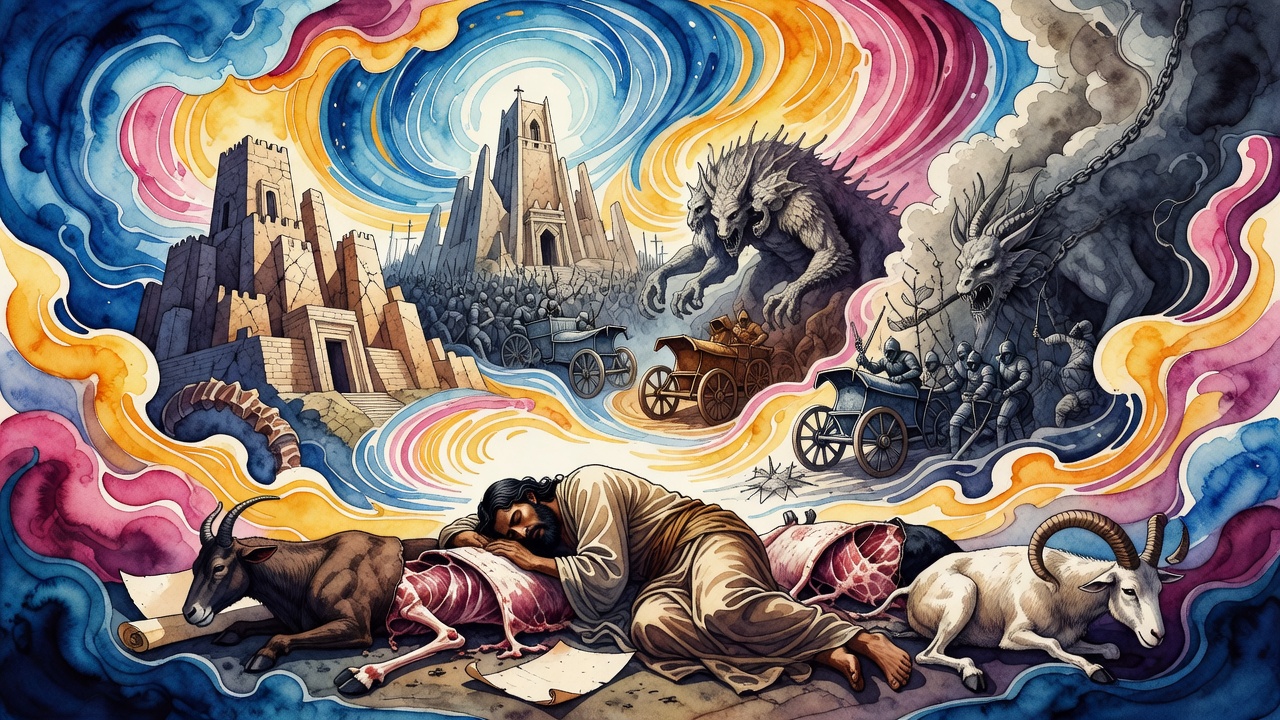
At a banquet a gentile priest, loosened by wine, turned on Rabbi Judah the Prince. We are kinder than you, he said. When Joab conquered Edom he wiped out every male and left only the women. Your books keep the blood. Our hands look clean beside them. The room laughed the way rooms laugh when power thinks it has found a soft target.
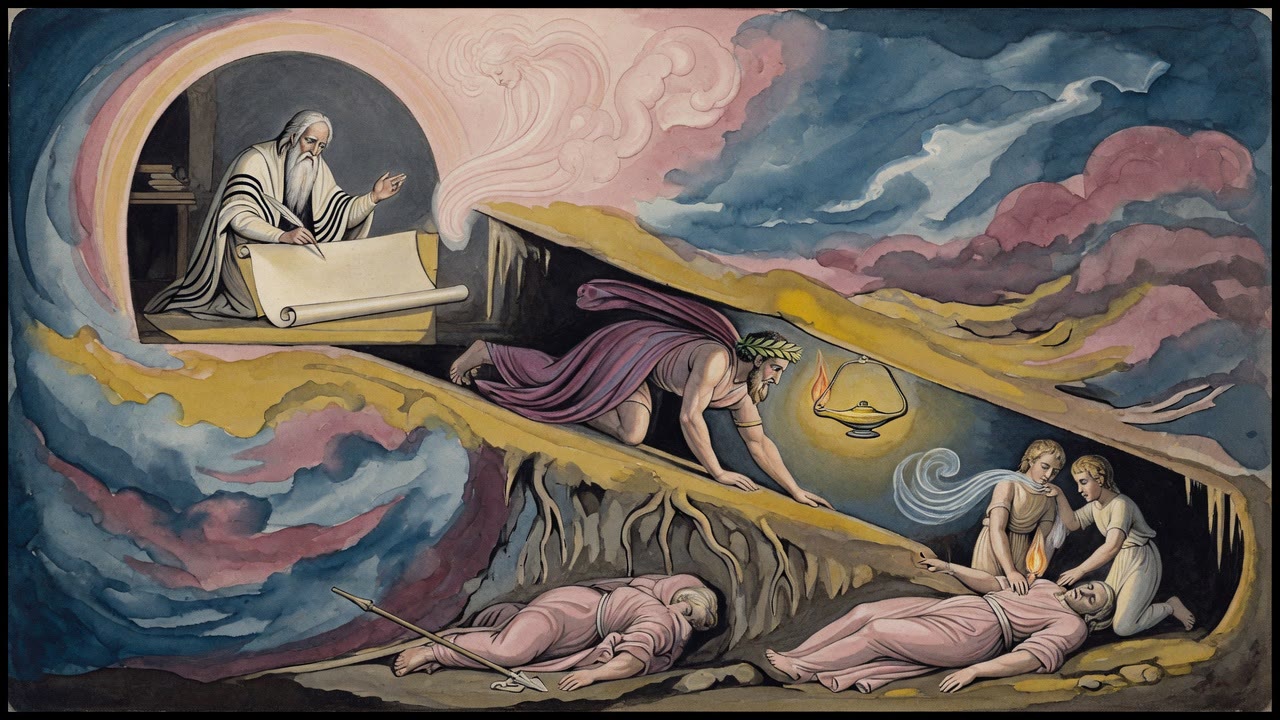
Judah said nothing. He rose, walked to the marketplace, briefed one of his students, and returned to his seat as if the insult had never landed. Then he asked the priest's permission to bring in a disciple with something cheerful to say. Permission was given with a wave of a cup. The trap was already set, and the wine made the priest generous toward his own undoing.
The marketplace had heard Torah in quieter hours. Tonight it lent Judah a voice he could aim like a dart.
The Master and His Vessels
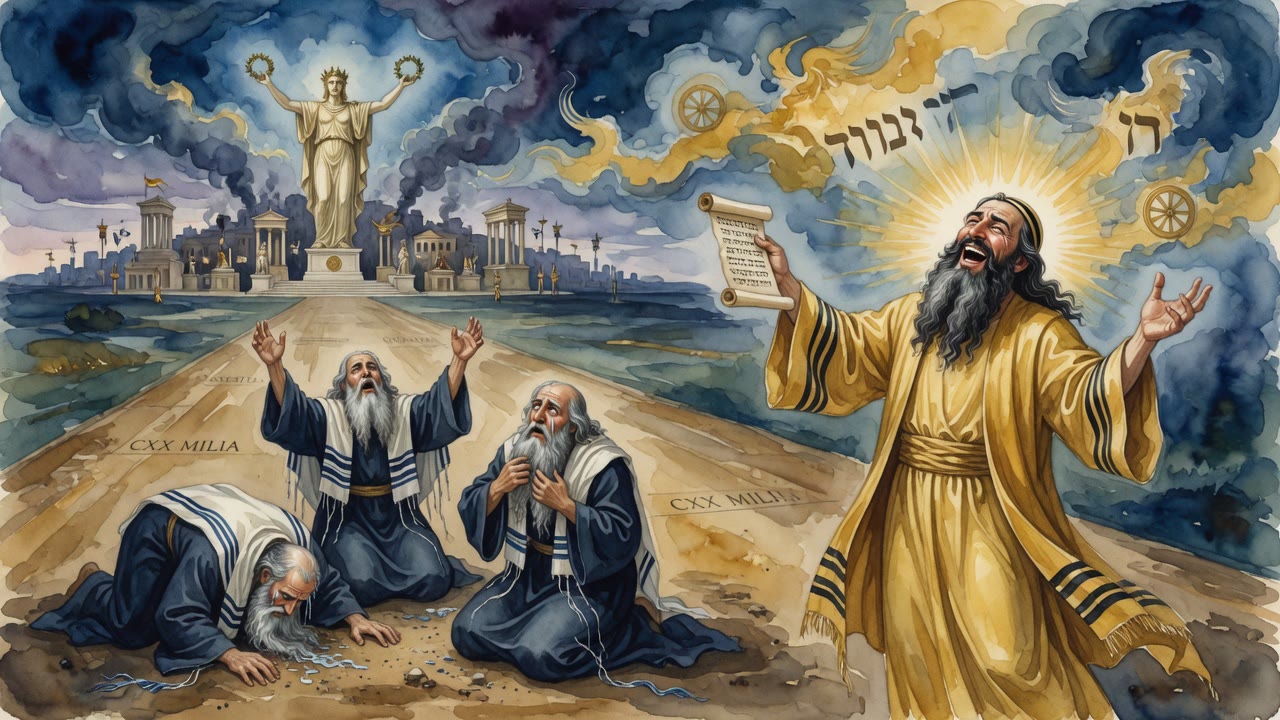
The student entered, stood, and spoke a single riddle three times until it landed. A master of the house knows where he stores his vessels. When he comes home he gathers them back inside. The priest finally understood and rose, lifting his hands toward heaven in a blessing that tasted like defeat turned into praise.
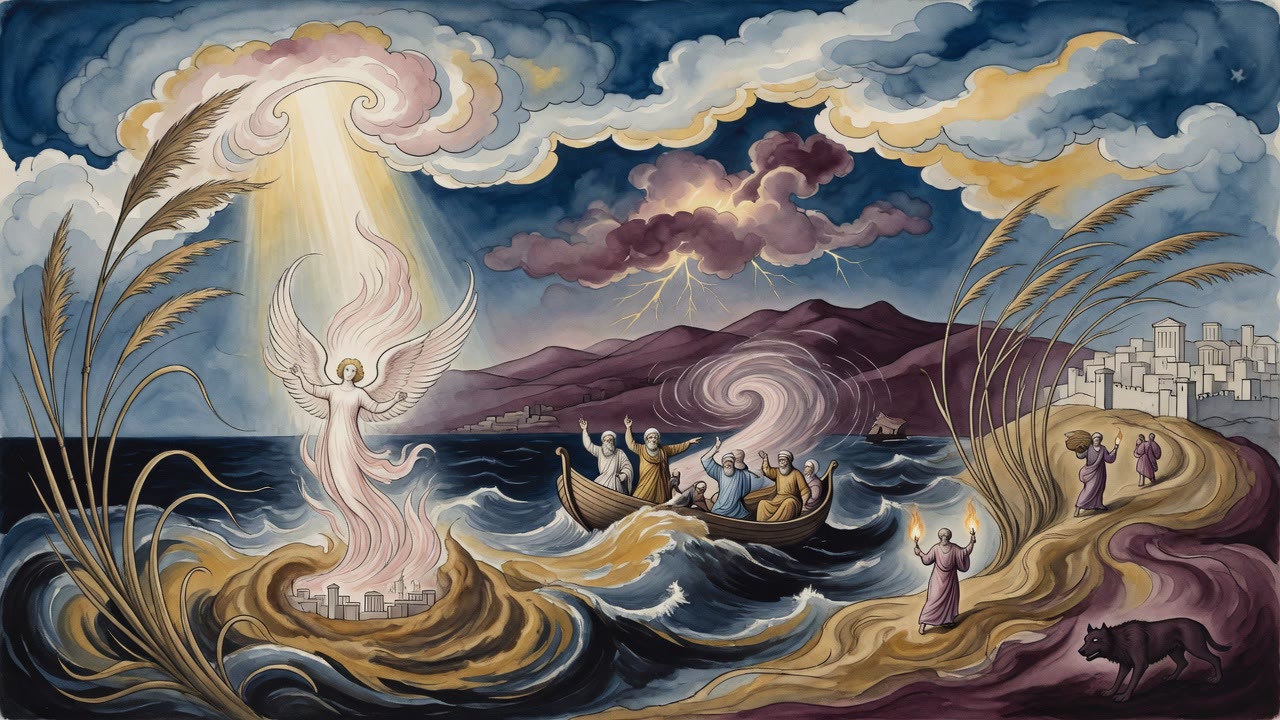
He saw it then. God scattered Israel across hundreds of places on purpose. If enemies destroy those in the Land, the ones in the north and south survive. Destroy those, and Babylon remains. Scattering is not weakness. Scattering is storage. The vessels are kept in many rooms, and the Master knows every shelf, and one day He will bring them all home. What looked like exile looked, under the riddle, like inventory management by a King who refuses to keep all His treasure in one sack for a thief to steal at once.
Judah had not argued history with a drunk priest. He had changed the frame until the priest blessed the frame.
Antoninus Asks About Alexandria
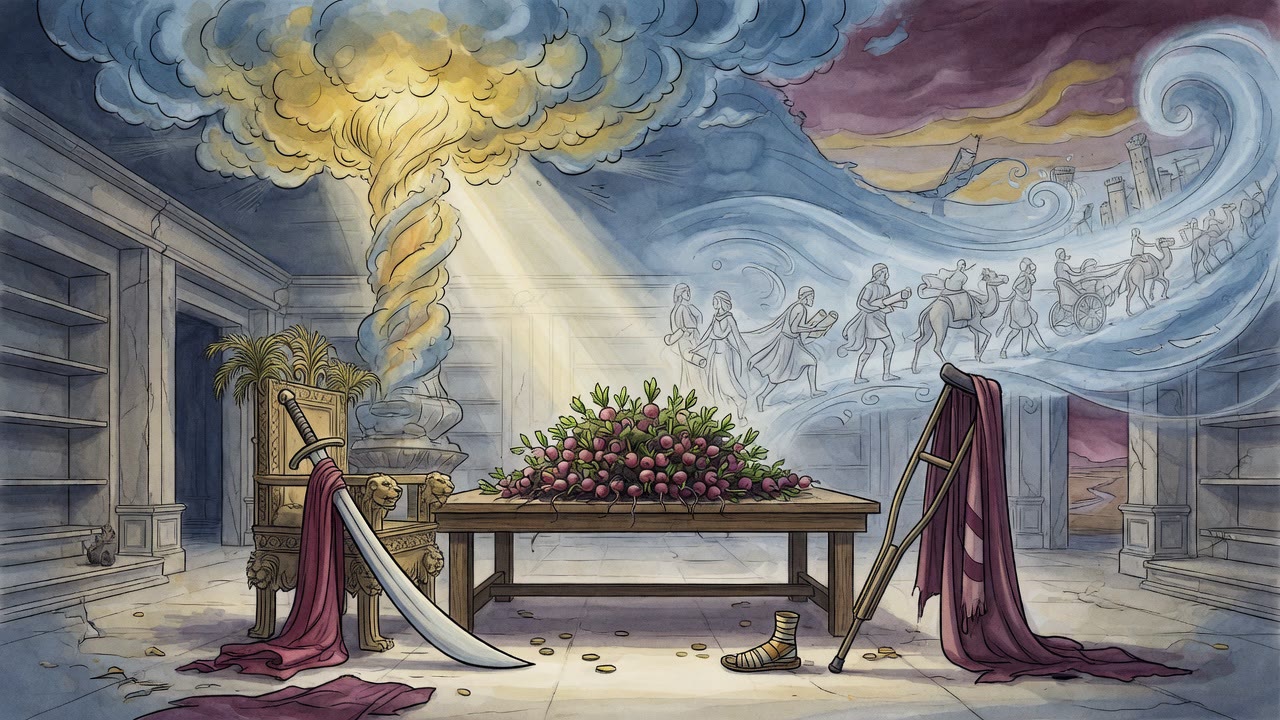
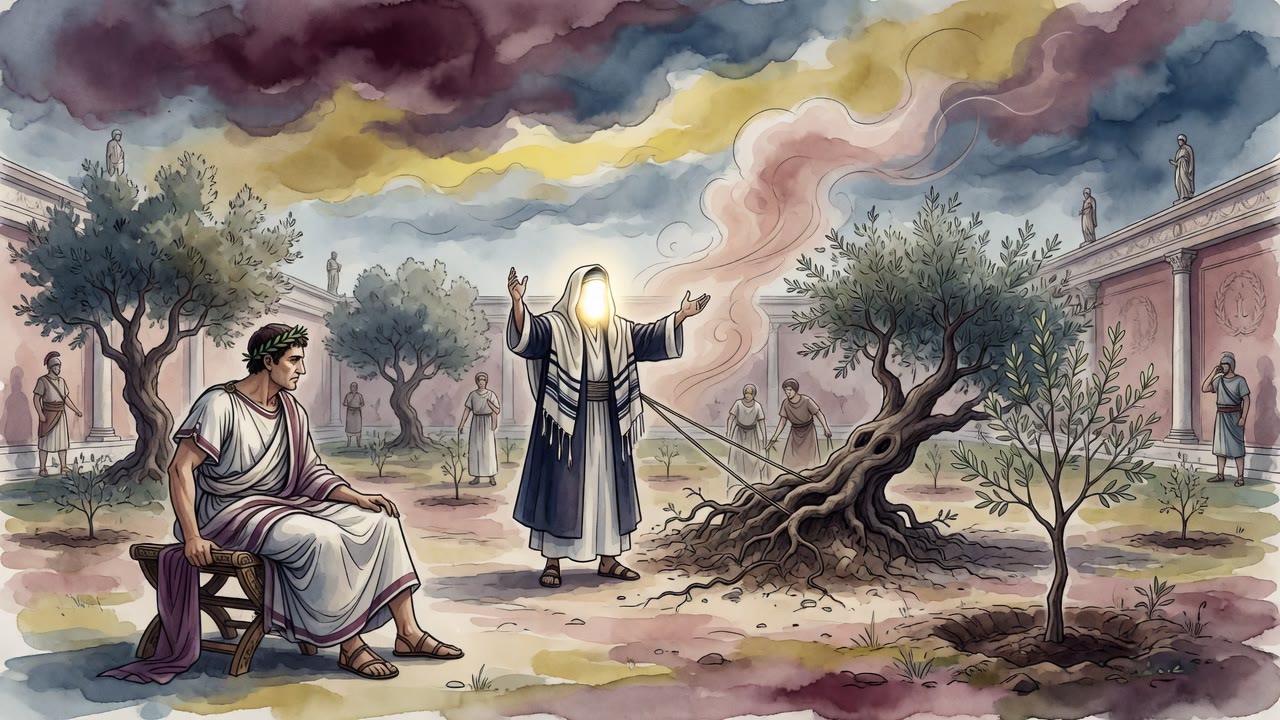
Another day Antoninus, the Roman emperor in the friendship tales of the rabbis, asked Rabbeinu HaKadosh for political counsel. I want to go to Alexandria, he said. Is it possible that a king will arise there who will beat me? The question was practical. Egypt had been a factory of crowns before. Rome did not love surprises on the Nile.
Judah declined a spy's prediction. I do not know, he said. Then he offered something firmer than intelligence. We have it in writing that Egypt is incapable of establishing either a king or a governor again. He read Ezekiel: of all the kingdoms it will be the lowest, and it will not exalt itself again among the nations (Ezekiel 29:15). Antoninus came seeking a map of power. Judah handed him a prophet. The emperor who could move legions was told that a verse had already moved Egypt into a permanent lower register. Prophecy did what scouts could not: it closed a door in the future and left Rome walking a road with one less nightmare on it.
Empire Meets the Written Future
In both scenes the same man stands between Jewish survival and imperial confidence. At the banquet he refuses to trade insult for insult. In the counsel chamber he refuses to pretend that Rome's next move is the last word of history. He uses a riddle for a priest and a verse for an emperor. Different languages. Same spine.
The teaching that follows the banquet riddle widens the lens. A small town that builds a synagogue and a study house multiplies houses of Torah across Israel. Anyone who renews a fresh word of Torah is told from heaven, in effect, build Me a study house and for your sake I will save Israel. Even an army of forty thousand is reckoned armed if a pair of scholars marches among them. Vessels again: not only people in cities, but words in rooms, each room a shelf the Master can find.
Vessels Still on the Road
Judah the Prince compiled the Mishnah and still answered banquet cruelty with marketplace wit. He lived under Rome and still told Rome that Alexandria could not crown a rival by the word of Ezekiel. The vessels of Israel remain stored in many cities. The Master has not forgotten the inventory. Dispersion hurts. Dispersion also frustrates any single fire.
A priest's blessing and an emperor's quieted fear both come from the same source: a sage who knew that Jewish geography is theology, and that the written word can outlast the wine of a night and the anxiety of a throne. Walk the market. Brief the student. Open Ezekiel. Keep building houses of study in towns too small for maps. That is how a Patriarch answers empire without raising his voice.
← All myths