An Angel Planted a Reed in the Sea and Rome Grew From the Silt
On the night Solomon weds Pharaoh's daughter, an angel plants a reed in the sea, and the silt that gathers will one day burn Jerusalem.
Table of Contents
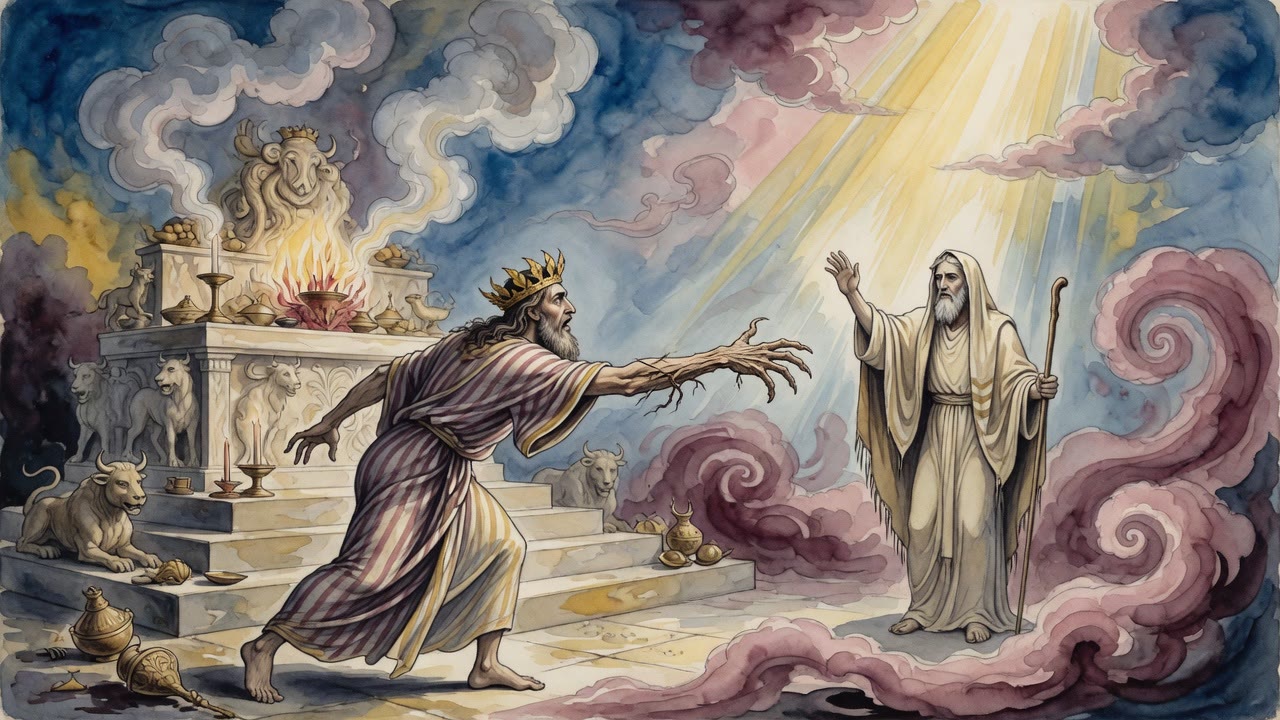
The wedding lamps were still burning in Jerusalem when Gabriel came down to the sea. Solomon had taken the daughter of Pharaoh that night, a marriage that married two thrones and looked, to every counselor in the room, like the shrewdest move a young king could make. Egypt and Israel, bound in one bed. No army could have bought what one wedding had won.
 Click for full size
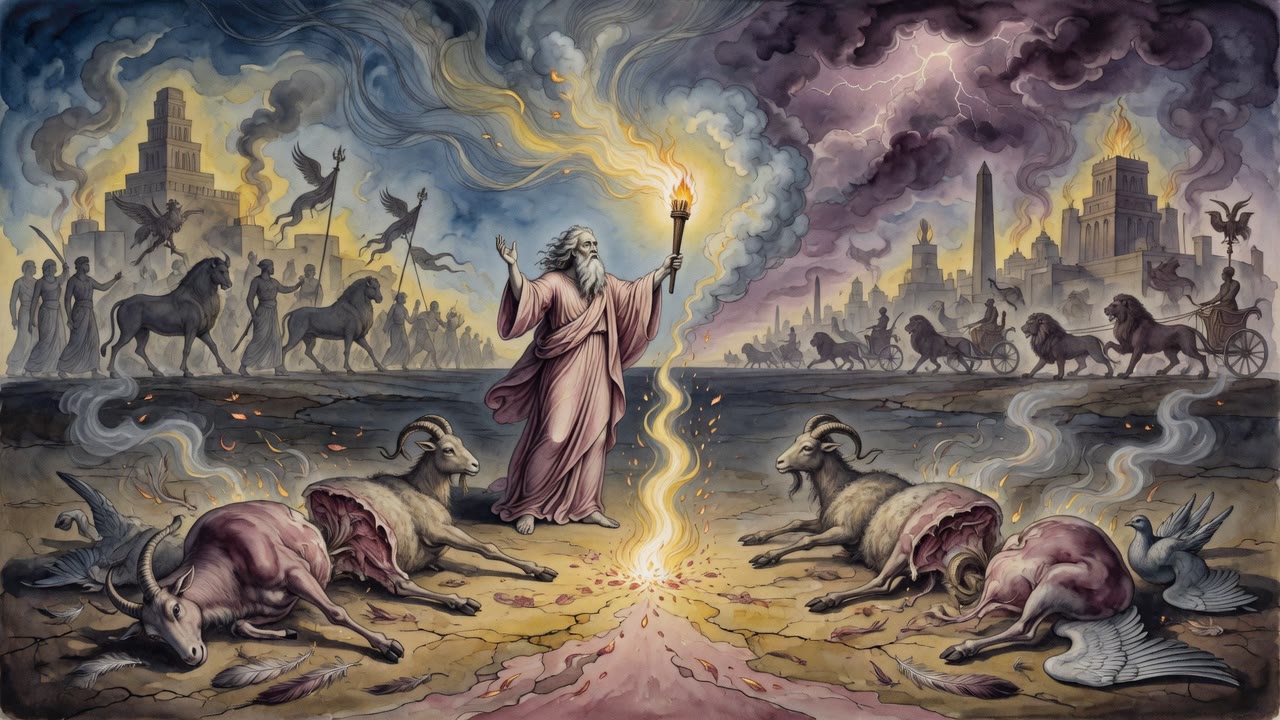
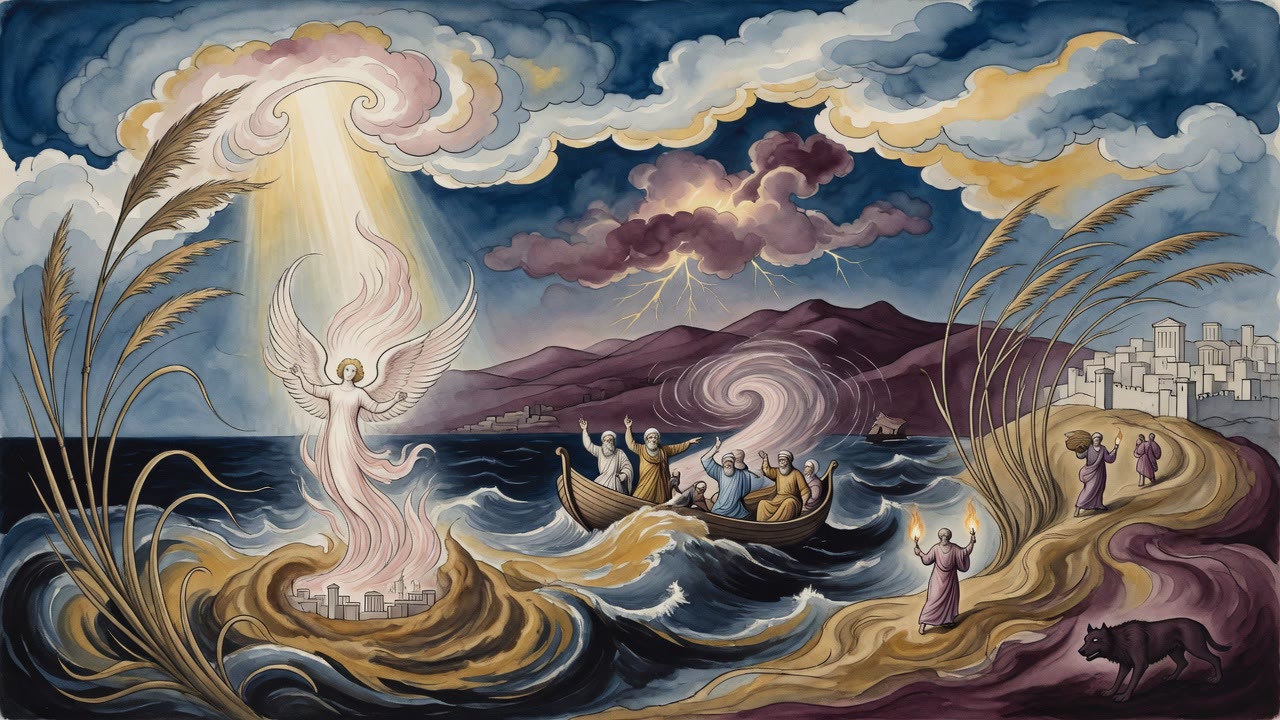
Far from the music, the angel waded into black water and pushed a single reed down into the mud of the seabed. He stirred. The silt clouded, settled, and began to gather around the stalk.
The Angel Stirs the Mud at the Bottom of the Sea
Sand rose where the reed stood. It thickened, packed itself hard, and lifted above the waterline until it was an island sitting alone in the open sea. The island did not stay alone. It reached, year by year, toward the far shore, until at last it touched the mainland and fused to it. On that new ground, raised out of silt and divine displeasure, someone laid the first hut.
One hut. A roof, a wall, a doorway facing the water. Solomon never saw it. He was asleep in a palace that smelled of myrrh, a foreign bride beside him, certain he had strengthened his house. The hut on the far silt would outlast his house. It would swell into streets, then into a city, then into the city that one day put the Temple to the torch.
The marriage lasted a night. What the reed planted would take a thousand years to grow teeth, and then it would not stop.
Four Men Argue Over the Empire
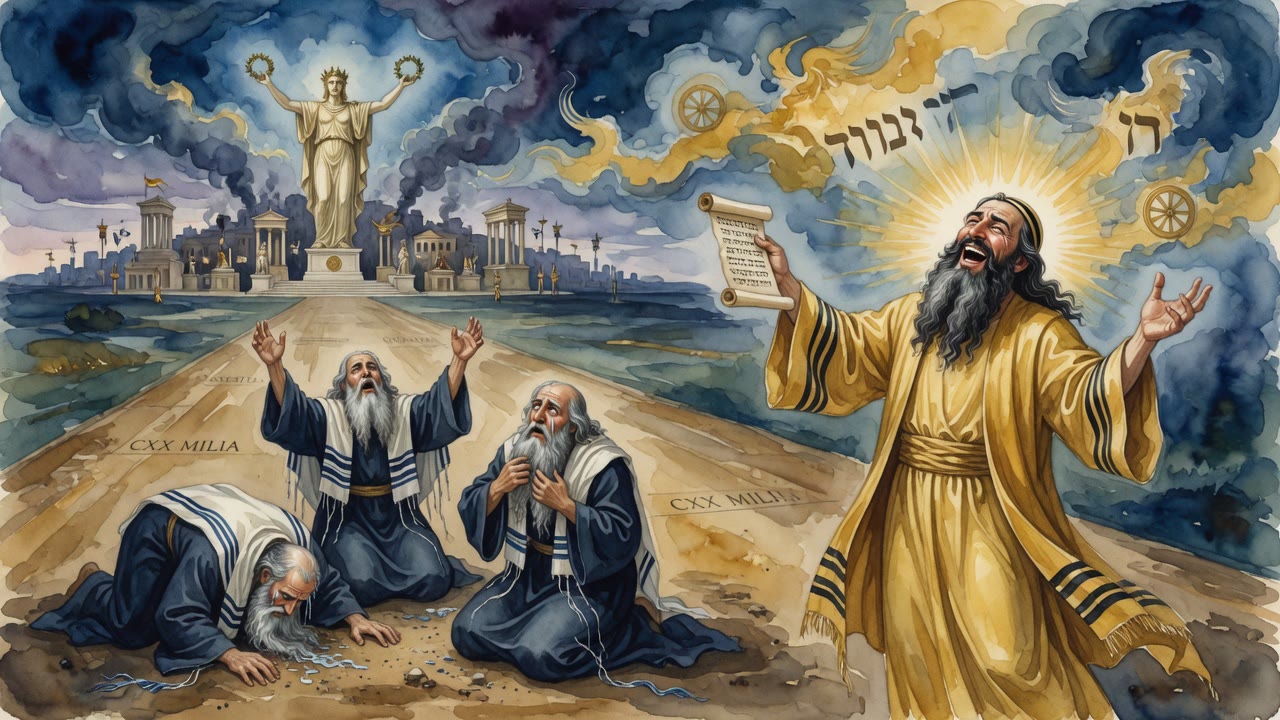
Generations later, in the hills of the Galilee, four men sat together one afternoon and the talk turned to Rome. Rabbi Yehudah ben Ilai spoke first, and he spoke with admiration. "Look at what they have built," he said. "Roads, bridges, marketplaces. Everywhere you walk, you see what they have accomplished."
Rabbi Yose said nothing. He let the praise hang in the air and did not touch it.
Then Rabbi Shimon bar Yochai answered, and there was no softness in him. "Everything they built, they built for themselves," he said. "The marketplaces are for their profits. The bathhouses are for their pleasures. The bridges collect tolls." Three men, three verdicts on the city the reed had raised. A fourth, Yehudah ben Gerim, sat with no rank among them, listening, saying little, remembering every word.
He carried the conversation out of the room. He repeated it. The words moved from mouth to mouth until they reached the ears of Rome itself, and Rome answered each man according to his verdict.
Each Verdict Becomes a Sentence
The one who had praised the empire was raised up. Rabbi Yehudah, who called Rome's roads a wonder, was honored and given a seat of standing. The one who had kept silent was punished for his silence. Rabbi Yose was driven out and exiled to Sepphoris. And the one who had told the truth was condemned to die.
Rabbi Shimon ran. He took his son Eleazar and fled into a cave, and the world he had judged so plainly was now a death sentence pacing the roads behind him. In the cave they buried themselves up to the neck in sand each day and studied without pause, climbing out only to dress when the hour for prayer came. A carob tree sprang up at the mouth of the cave. A spring opened beside it. On fruit and water the two of them lived for thirteen years while the empire forgot them.
When Shimon finally came out, his skin was torn and scarred from the sand and the years. His father-in-law Rabbi Pinchas ben Yair found him, wept at the sight, and washed and tended him back to health. Three men had said the same thing in three registers. Only the one who said it plainly had to vanish into the earth, and only he came back carrying secrets the other two never touched.
The Baskets on the Dreamer's Head
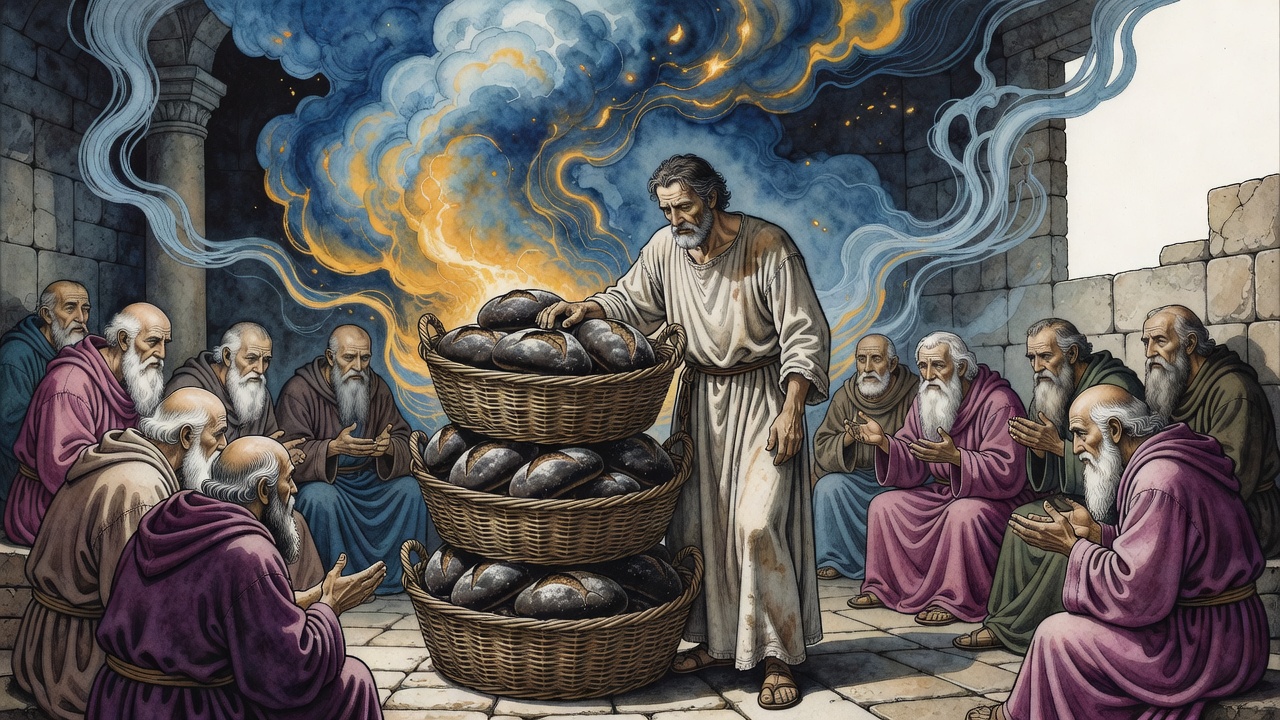
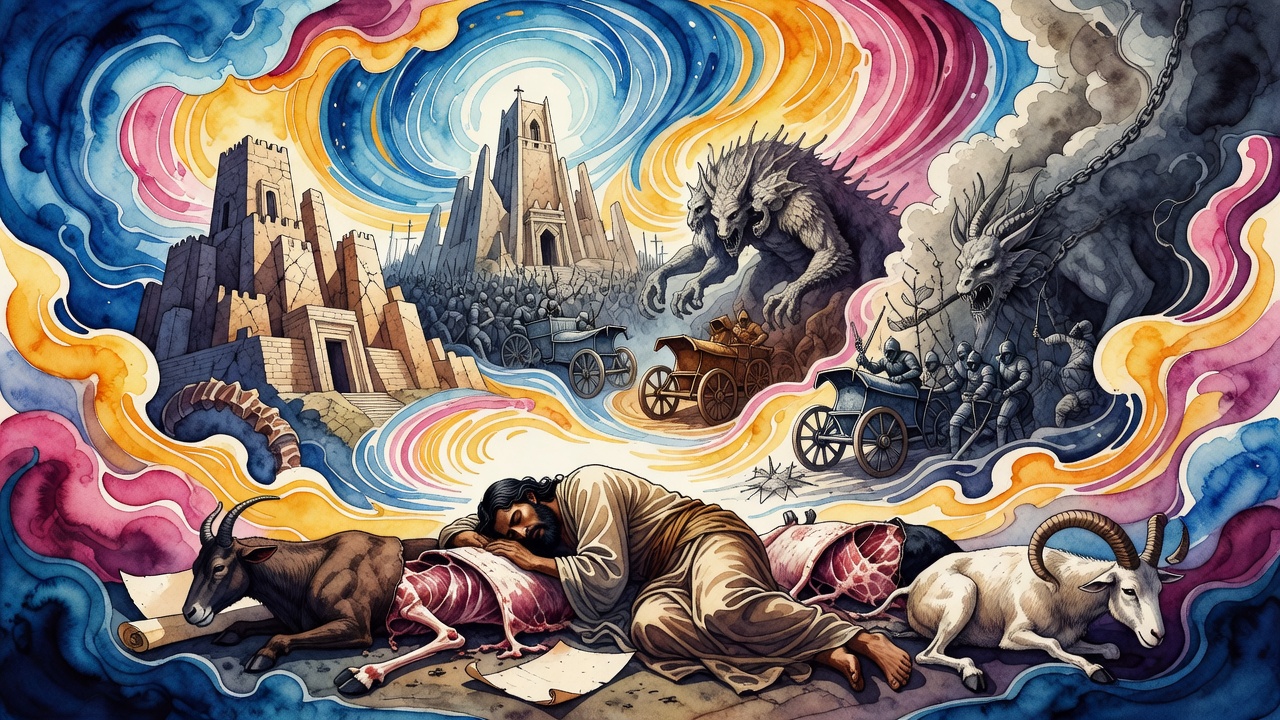
Long before any of them, in an Egyptian prison, a baker had dreamed of bread. Three baskets of white loaves were stacked on his head, and birds came down and ate from the top basket while he stood helpless beneath the weight.
Three baskets were three kingdoms. The uppermost was a fourth, the one that would conscript its soldiers out of every nation under the sky and drive them against the world. The bird that ate from the top would, in its time, come back and eat the lower one too. Joseph read the dream and gave it back to the baker without mercy. "You have brought me bad tidings," he said, "so I bring you bad tidings. In three days Pharaoh will lift your head from your shoulders and hang you on a tree."
On the third day, the day of Pharaoh's birth feast, it happened exactly so. And the cupbearer who lived walked free and forgot the man who had read his dream. Every day that man set conditions to keep Joseph buried in the prison, and every night an angel came and overturned them. He tied his knots and an angel untied them. The Holy One said over the forgetting man, "You forgot him. I have not forgotten him."
Four kingdoms stacked on a dreamer's head. A reed standing in the sea. A city rising from silt that no king noticed until it was old enough to burn his children's house. The same nemesis kept arriving early, planted before anyone could name it, waiting in the mud for the centuries to make it ready.
← All myths