Akiva Laughs While the Sages Weep Toward Rome
Gamliel stopped on the road. Rome's roar had already arrived. Yehoshua covered his face. Akiva laughed and would not take it back.
Table of Contents
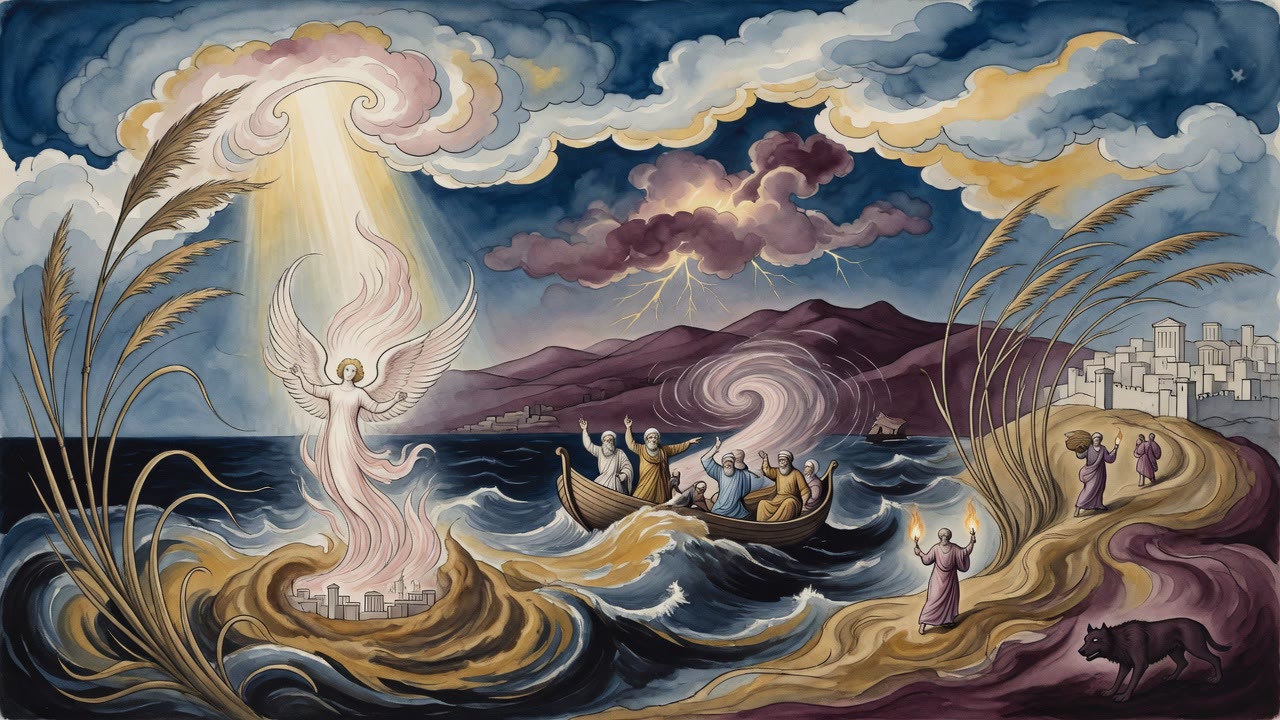
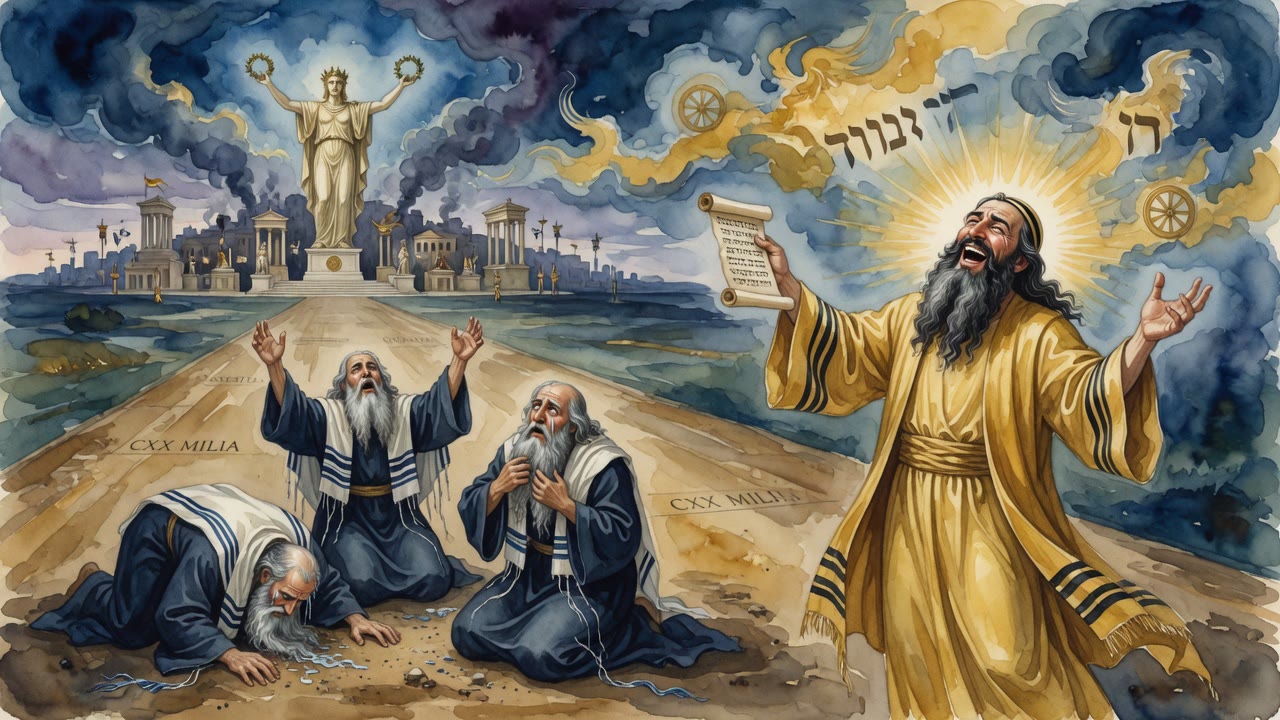
Rabbi Gamliel stopped walking before the others noticed why. The road toward Rome still had dust and scrub. Then the sound arrived. A throng so thick it carried a hundred and twenty mils across open country, a roar of markets and games and worship that did not need a Temple to feel permanent.
 Click for full size
Rabbi Yehoshua covered his face. Rabbi Elazar ben Azaryah bent as if something had struck his ribs. Rabbi Akiva laughed.
The laugh was not loud. It was certain.
The Sound That Reached Them First
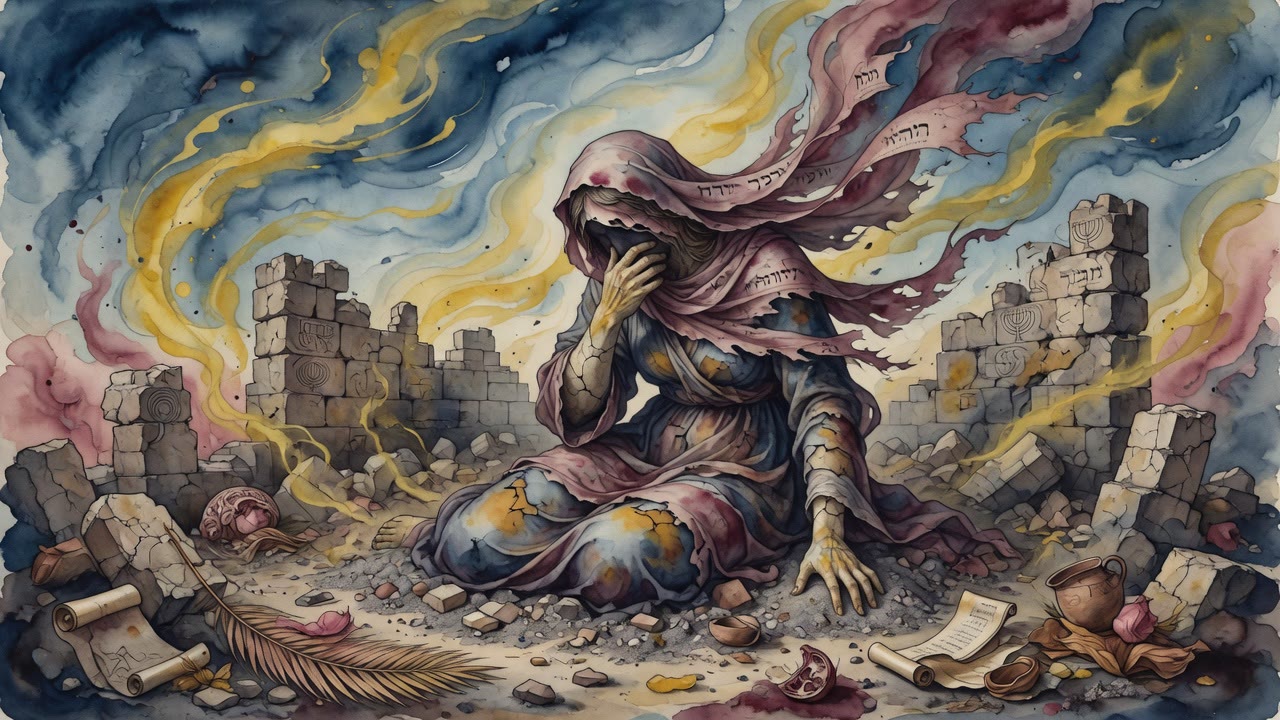
They stood in the road because moving would have made the roar feel closer. Gamliel's mouth had gone dry. Behind them, Judea's hills held ruins. Wild beasts had the run of the courts where the footstool of God had stood. Fire had taken the House. Peace had stayed with people who never carried a covenant.
A wagon passed. Then nothing but the sound. It did not fade. It thickened, as if the empire were walking toward them on the air.
Yehoshua's fingers dug into his sleeves. Elazar stared at the empty sky where Temple smoke used to rise. Akiva's mouth stayed open on that small, sure laugh.
Three Wept and One Would Not
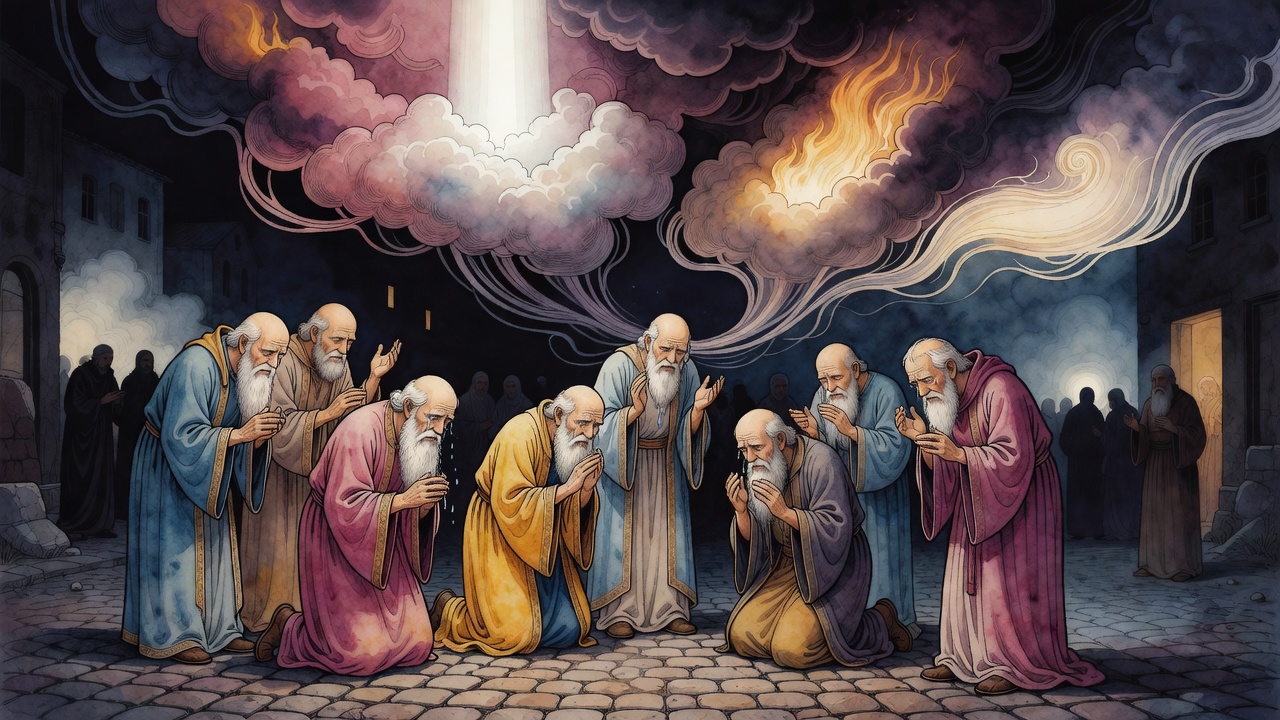
"Why are you laughing?" they demanded.
"Why are you crying?" he answered.
They had a list ready. The idolaters sacrifice and bow and sleep without fear. Their images eat incense while beasts make dens in the place that had been holy. Shall the footstool burn and the throng of Rome still feast?
Akiva's eyes stayed bright. "That is precisely why I am laughing. If He is so forthcoming to His angerers, how much more so to the doers of His will!"
Yehoshua's hands would not unclench. Elazar looked toward a horizon that held no Temple smoke, only the ordinary smoke of kitchens. Gamliel did not stop grieving. Grief is not faithlessness. Akiva did not stop laughing. The road kept them together, four men under one sky.
A Sleeve on the Same Road
Rome did not offer only noise. A rider came down the road in a toga, purple at the hem, a headdress that caught the sun. Dust powdered the cloth and still it looked like winning.
Elazar's gaze snagged on the sleeve. He looked away as if the cloth had heat. A people walking into the land of other nations had been warned not to inquire after their gods by copying walks and wardrobes. The stumbling block is not always an altar. Sometimes it is a sleeve.
To live under Rome is to hear daily how normal idol peace can look. A Jew could want that purple without ever bowing to an image. The rider did not preach. He only passed, looking fed and unbothered, while three sages stood with wet faces in the dust.
Akiva watched him go and kept the laugh in his mouth like a stone he refused to spit out. The throng proved that God can sustain a world that mocks His house. It did not prove that mockery is the last chapter. Purple cloth does not need a missionary. It only needs envy. The laugh was a refusal to measure truth by volume, and a refusal to let the eye rewrite the covenant.
They Walked Into the Noise
They walked again because standing still made the throng louder. Gamliel's face stayed wet. Yehoshua walked as if the road itself had offended him. Elazar kept his eyes on the dirt between his sandals.
Akiva's laugh had already done its work. It had forced them to argue with hope instead of only with grief. If Heaven pays the enemies of God with streets full of wine and marble, then the ledger for the faithful cannot be empty forever. The same Hand that feeds a city of idols still owes the people who keep the Name without a throne room.
None of them pretended the ash was not ash. The footstool had burned. Wild beasts had the run of holy courts. The laugh did not cancel the cry. It shared the road with the cry and refused to let the cry become the only voice left standing.
Akiva did not say the rest out loud. If this is what patience looks like toward those who bow to images, what will patience look like when it turns toward those who never learned to love the purple more than the mitzvah (a commandment)?
Ahead, the throng grew louder. Markets. Courts. Festivals that did not remember Jerusalem. A Jew could mistake that fullness for the last count. Akiva would not let the noise keep score. He read the prosperity of the wicked as evidence about God's patience, not as proof that patience had quit the righteous.
Gamliel wiped his face with the edge of his cloak and took the next step. Yehoshua's hands stayed fists. Elazar lifted his head once, toward the noise, and did not cover his ears. Akiva walked in front of them now, still carrying that small laugh, a door the others could not yet walk through and could no longer pretend they had not seen.
← All myths