5 min read

Rabbi Joshua Locked the Door and Pointed at Latrines

In Rome, Rabbi Joshua locked himself in with a matron, then walked Hadrian past temples and latrines to explain God's missing Name.

Curated by Arthur · Told by Maggid ·
Table of Contents
  1. The Bolt and the Bath
  2. The Princess and the Tent
  3. Hadrian Among the Statues
  4. What Rome Could Not Read

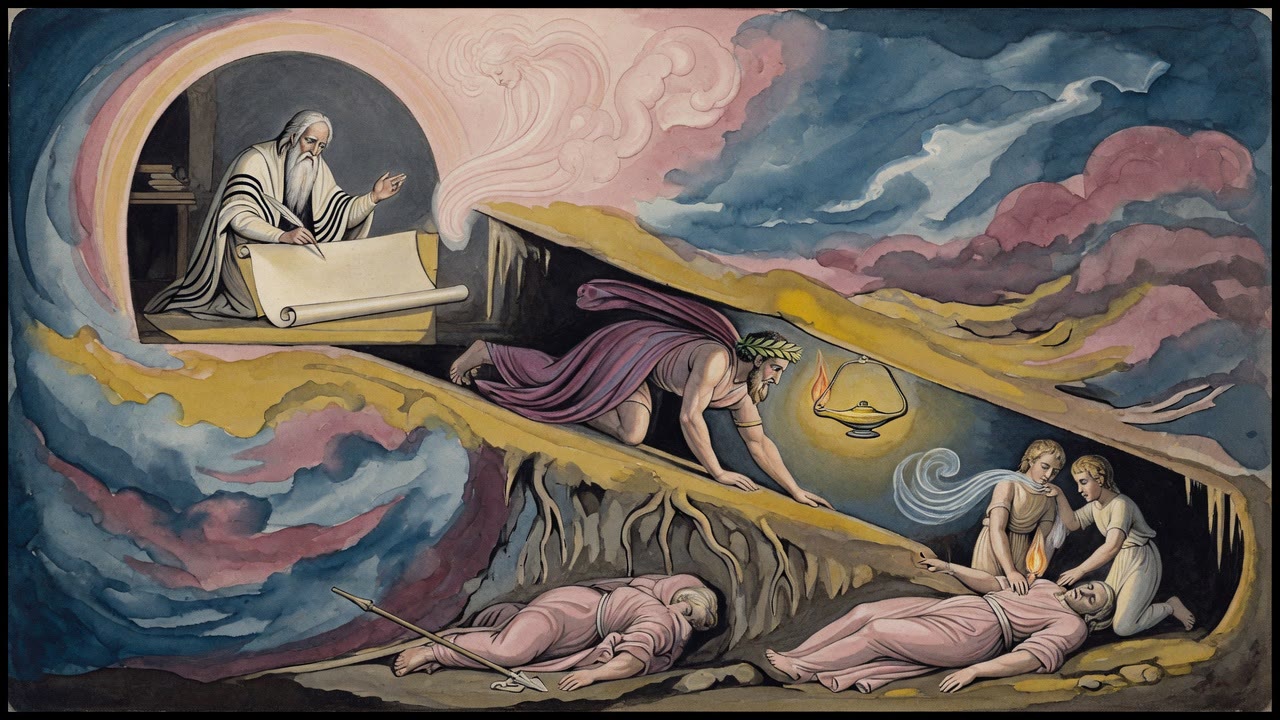
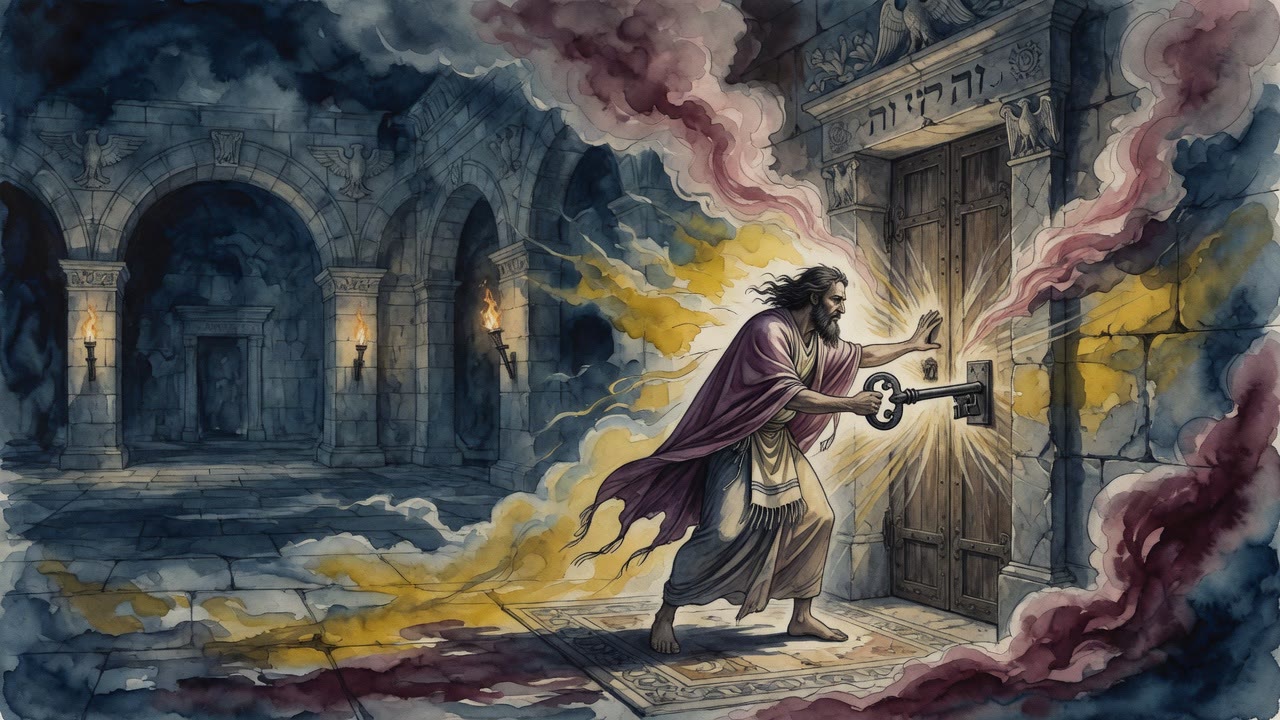
Rabbi Joshua ben Hananiah closed the matron's door from the inside and threw the bolt.
Rabbi Joshua Locked the Door and Pointed at Latrines Click for full size

Rome hummed beyond the wood. Anyone watching from the street saw a Jewish sage enter a Roman woman's house, lock himself in, remain, and later bathe before he walked out. The shape of the act was scandal. The sages who later heard the report did not treat him as a fallen man. They waited for the inside of the bolt, which is a rare patience in any generation that loves a good rumor.

The matron was an ally in matters of state. The meeting could not be held in a courtyard with ears on every column. His life, and the safety of Jews who depended on quiet channels, rode on a conversation no spy could price and no public synagogue could host without getting someone killed.

The Bolt and the Bath

Inside, the talk was about decrees, protections, names that needed to stay off lists. Outside, a neighbor already had a story half written. When Joshua left, he went to bathe. The bath that followed was not luxury. He had taken on impurity in the errand and had to wash it off before ordinary life, and ordinary students, could touch him again.

Appearances can be arranged to look damning. Faithfulness sometimes wears the costume of guilt on purpose, because the alternative is a clean reputation and a ruined people. Joshua carried both the bolt and the bath as tools, not as confessions.

The Princess and the Tent

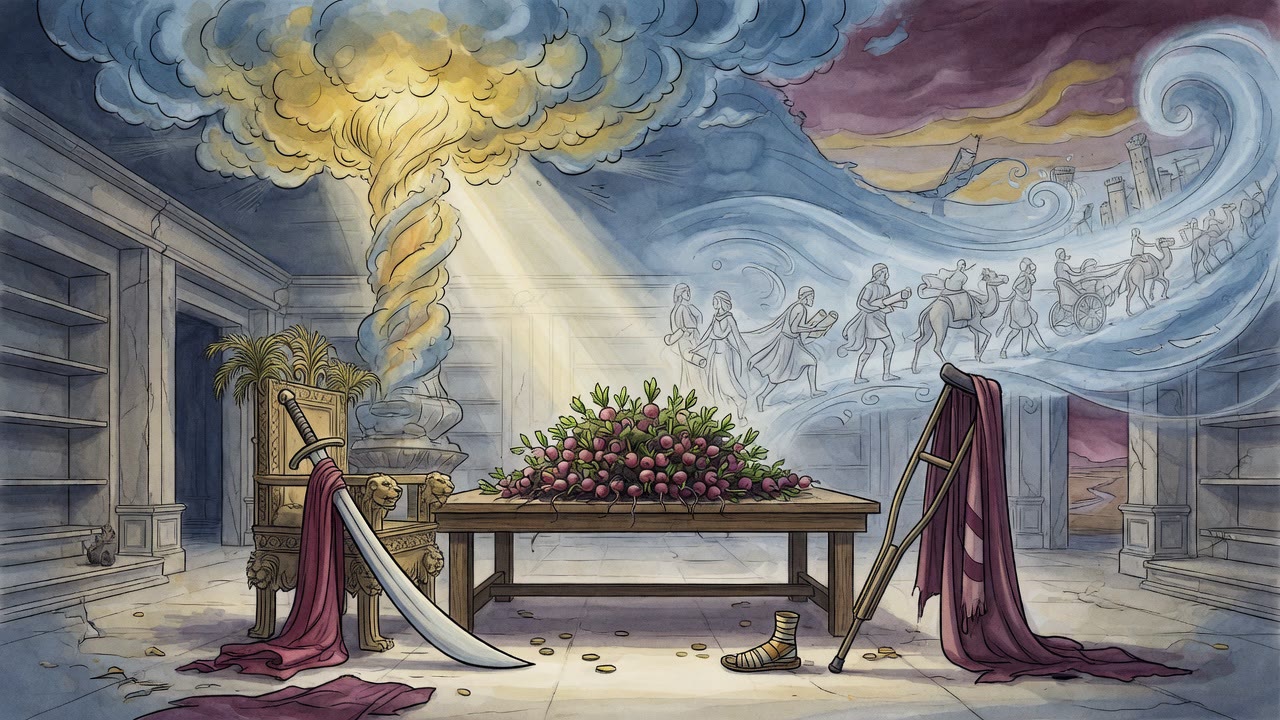
In another hour of the same long war of wits, the emperor's daughter came with a taunt sharp enough to draw a crowd. "Your God is a builder," she said. "Let Him build me a tent here, now, in my father's palace. Let Him perform something I can see."

Rabbi Joshua gave her silence for an answer. Silence is not always empty. Before long a skin disease put her outside the palace walls in a private tent, isolated by the physicians' order so contagion would not walk the marble halls. The shelter she had mocked became the shelter she was forced to inhabit, canvas instead of a miracle on demand.

She sent word asking him to pray the sign away. His reply came short. "Our God gives, but He does not take back again." A tent pitched by Providence is not dismantled on a princess's schedule. A gift that humiliates is still a gift Heaven will not unsend because the recipient found the packaging ugly.

Hadrian Among the Statues

Emperor Hadrian tried a cleaner blade. "Why is the Name of God mentioned only in the first five of the Ten Commandments, and not in the last five? The last five bind all nations, do not murder, do not steal, do not commit adultery, yet God's Name is absent from them."

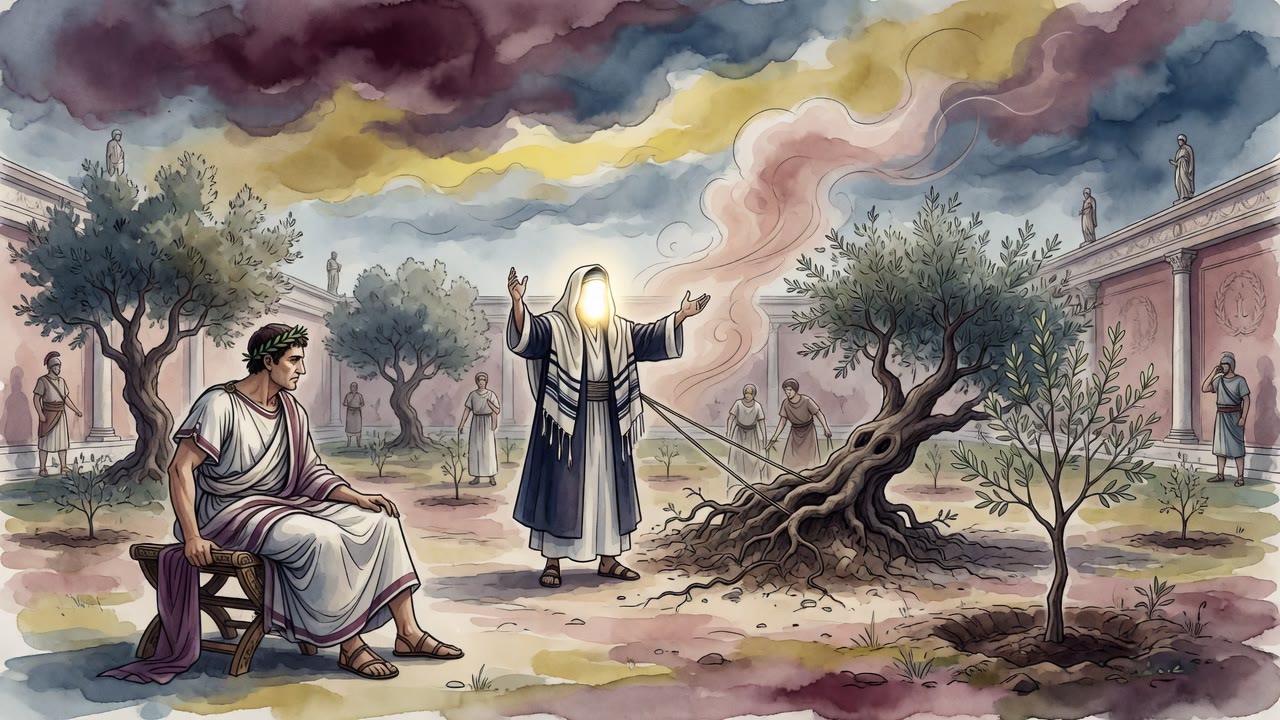
Rabbi Joshua did not open a scroll. He asked the emperor to walk the city. They passed temple after temple, square after square, Hadrian's own likeness in marble and bronze at every corner where a subject might need reminding who owned the air. When they reached the public latrines, the statues stopped as if pride had found a border it would not cross.

"Why, Caesar, is your statue missing from these places?"

Hadrian laughed. "Are you a sage of the Jews, and you ask why my image is not in a latrine?"

Joshua nodded. "And you ask why God's Name is not attached to commandments that forbid robbery, adultery, and murder? The Holy One will not place His Name on the same line as those acts."

The walk ended. The question did not look so sharp with the smell of the latrines still in the air and the emperor's own logic turned around to face him.

What Rome Could Not Read

Locked doors, forced tents, and missing statues were the same lesson in three costumes. Outer form lies. A bolt can hide rescue. A tent can be judgment. An absent Name can be honor, not neglect, a refusal to staple holiness onto the catalogue of human filth.

Rabbi Joshua moved through Rome like a man who understood that empire reads surfaces and Israel must sometimes survive in the grain under the surface. Students later wanted clean stories of open miracles and public debates won with thunder. He gave them latrines and a bath after a secret meeting and a princess sweating under canvas she had demanded as a joke.

When he returned to the study house, he did not boast. He washed again, this time of Rome's dust, and opened a page of Torah as if the street had never tried to invent a different man out of his silhouette against a matron's door.

The bolt stayed in his memory longer than the emperor's laugh. Some victories are only safe if they look, from the wrong angle, like something else entirely.


← All myths
From the tradition

Sources

3 sources

The texts behind this telling. Some cards carry a translation of the source; others are our own retelling of it, and each card says which. Every card links out to the original.

Gaster, Exempla No. 81The Exempla of the Rabbis (1924)

Retold in our words. Read the original at the link below.The Exempla of the Rabbis, Moses Gaster (1924) · PD-US-pre-1929

Rabbi Joshua ben Hananiah did something in Rome that no Jewish sage was supposed to do. He entered the house of a Roman matron, locked the door behind him, spent time alone with her, bathed there, and left, without anyone questioning his integrity afterward (Gaster, Exempla No. 81).

That part is strange enough. The part that is stranger is that the sages, when they heard the story, did not suspect him.

Rabbi Joshua explained later. The matron was a secret ally of the Jews in matters of state. The locked door and the privacy were not for the sake of anything scandalous; they were for the sake of a meeting that could not be held in public. His life, and the safety of the community, depended on no one overhearing. The bathing that followed was not luxurious but ritual, he had come into contact with ceremonial impurity in the course of the errand and had to purify himself before returning to ordinary life.

The story has a deliberate shock at its center. The rabbis are teaching us that appearances can be arranged to look damning, and that a faithful man sometimes does things whose outer shape would condemn him if the inner purpose were not understood.

The lesson cuts two ways. We should never judge a righteous person by the keyhole. And we should guard our own actions so that, when they need to be explained, there is always an explanation worthy of a sage.

Full source
Gaster, The Exempla of the Rabbis (1924), No. 14The Exempla of the Rabbis (1924)

Retold in our words. Read the original at the link below.The Exempla of the Rabbis, Moses Gaster (1924) · PD-US-pre-1929

The Emperor Hadrian once asked Rabbi Joshua ben Hananiah a sharp question. “Why is the Name of God mentioned only in the first five of the Ten Commandments, and not in the last five? The last five apply to all nations — do not murder, do not steal, do not commit adultery — yet God’s Name is absent from them.”

Rabbi Joshua did not answer. He asked the emperor to take a walk through the city with him. As they passed temple after temple, public square after public square, Joshua pointed out the imperial statues — Hadrian’s own likeness in marble and bronze, standing at every corner. But when they passed the public latrines, there were no statues.

Joshua stopped. “Why, Caesar, is your statue missing from these places?”

Hadrian laughed. “Are you really a sage of the Jews, and you ask me why my statue is not to be found in a latrine?”

Joshua nodded slowly. “And you ask me why God’s Name is not attached to commandments that forbid robbery, adultery, and murder? The Holy One will not place His Name on the same page as those acts.”

Later, the rabbi explained to his students why the Torah had first been offered to the other nations and refused. The children of Esau lived by the sword and could not accept “Do not murder.” Other nations were rooted in theft and could not accept “Do not steal.” Each people, he said, rejected the law that most threatened the life they had built. Only Israel accepted it whole.

The rabbinic point is not triumphalism. It is a diagnosis: a commandment you cannot hear is a mirror you cannot stand in front of.

Full source
Gaster, Exempla of the Rabbis No. 10The Exempla of the Rabbis (1924)

Retold in our words. Read the original at the link below.The Exempla of the Rabbis, Moses Gaster (1924) · PD-US-pre-1929

The Sefer HaMa'asiyot, the Book of Exempla, compiled by Moses Gaster in 1924 from medieval Jewish manuscripts, preserves a short and sharp story about the daughter of a Roman emperor and the sage Rabbi Yehoshua ben Chananyah.

The girl was clever and liked to sting. One day she came to the rabbi with a taunt. "Your God, you say, is a builder, the One who framed heaven and earth. Very well. Let Him build me a tent here, now, in my father's palace. Let Him perform something I can see."

Rabbi Yehoshua said nothing. But before long the princess fell ill with a skin disease severe enough that the Roman physicians ordered her isolated, placed, as was the custom, in a private tent outside the palace walls to prevent contagion. The tent she had mocked became the tent she was forced to inhabit.

When she realized what had happened, she sent word to the rabbi asking him to pray for her healing, to undo the sign.

His answer came back short. "Our God gives, but He does not take back again."

The line has more than one meaning. A sign, once granted, is not retracted; a tent pitched by Providence is not dismantled on demand. And there is a gentler reading too, the Holy One's gifts, including the gift of affliction that turns a scoffer toward prayer, are not repented of. Sometimes the answer to "show me a miracle" is a miracle we would not have asked for.

Full source