Ashmedai Hurled Solomon's Ring into the Sea
For three years the king of Israel scraped pots in Ammon. Naama opened a fish for supper. A ring fell into her palm, cold from the sea.
Table of Contents
 Click for full size
Four Hundred Miles from the Crown
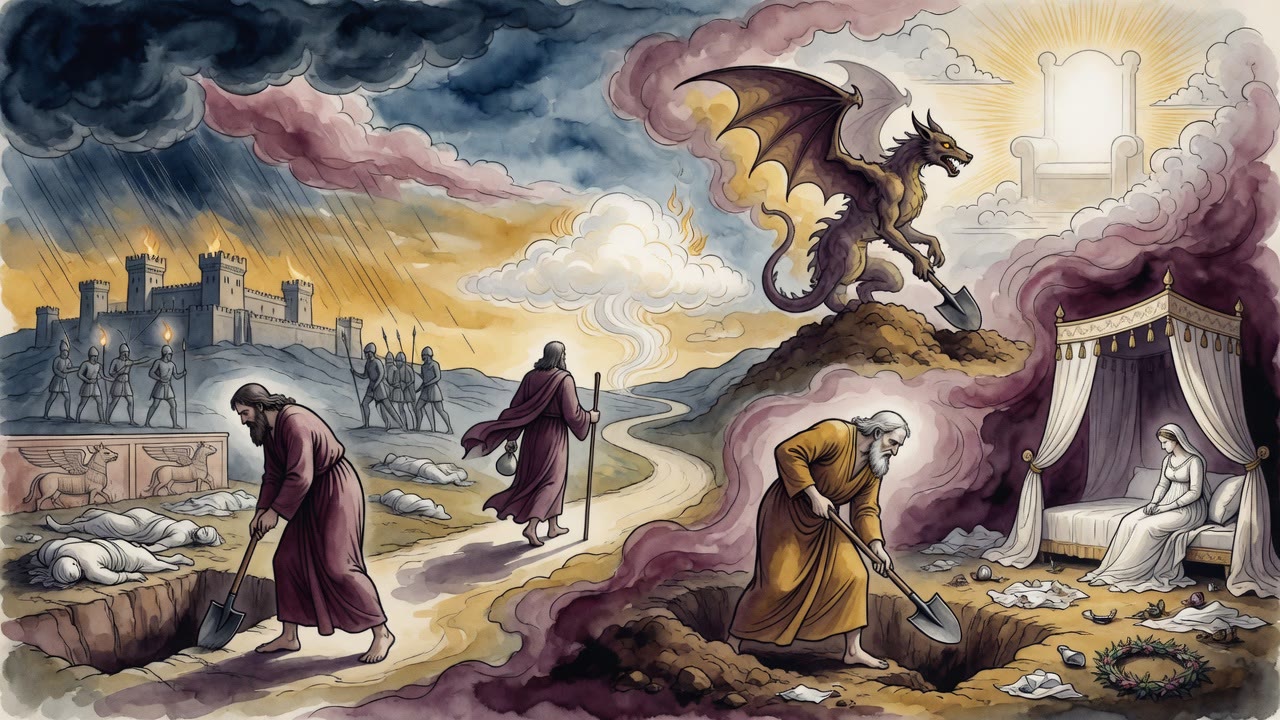
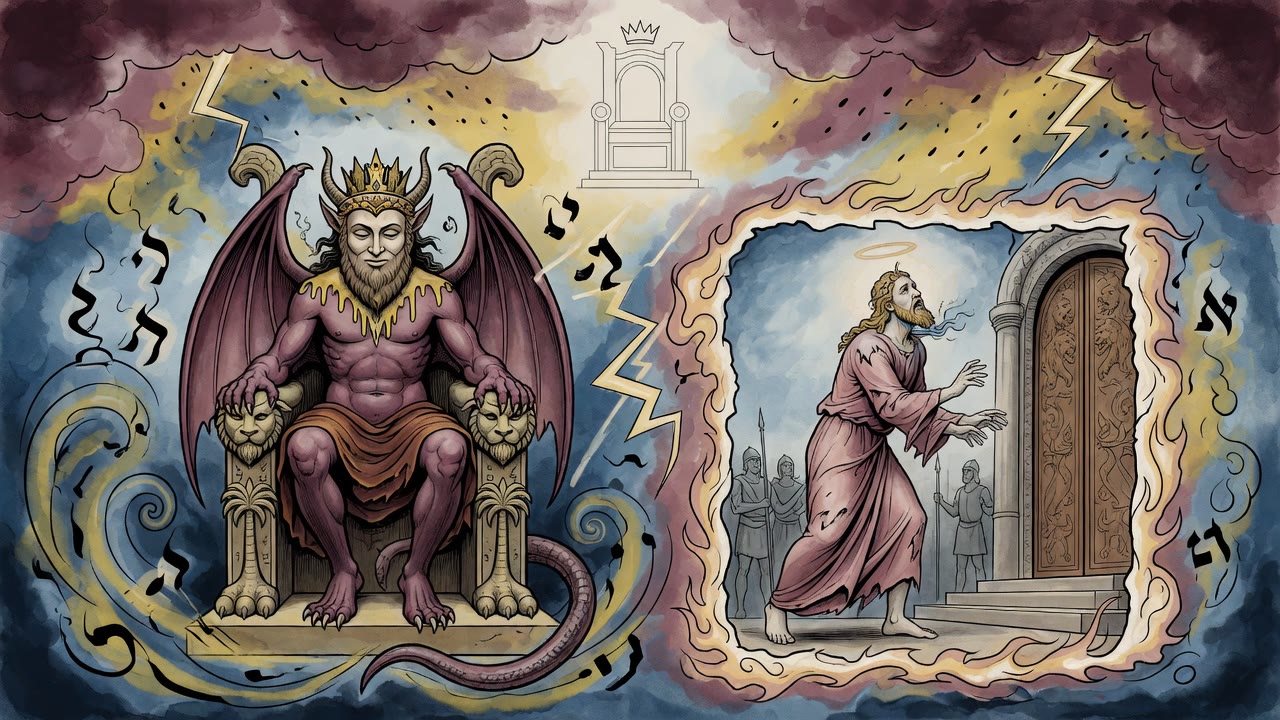
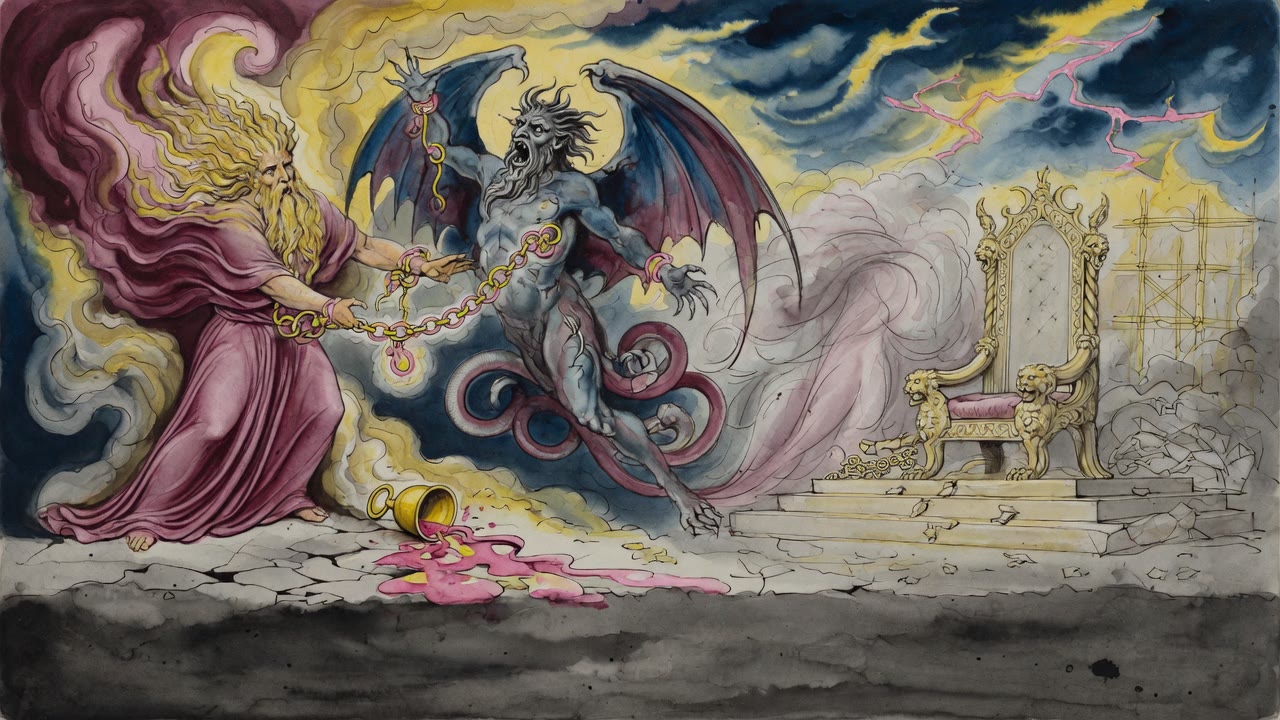
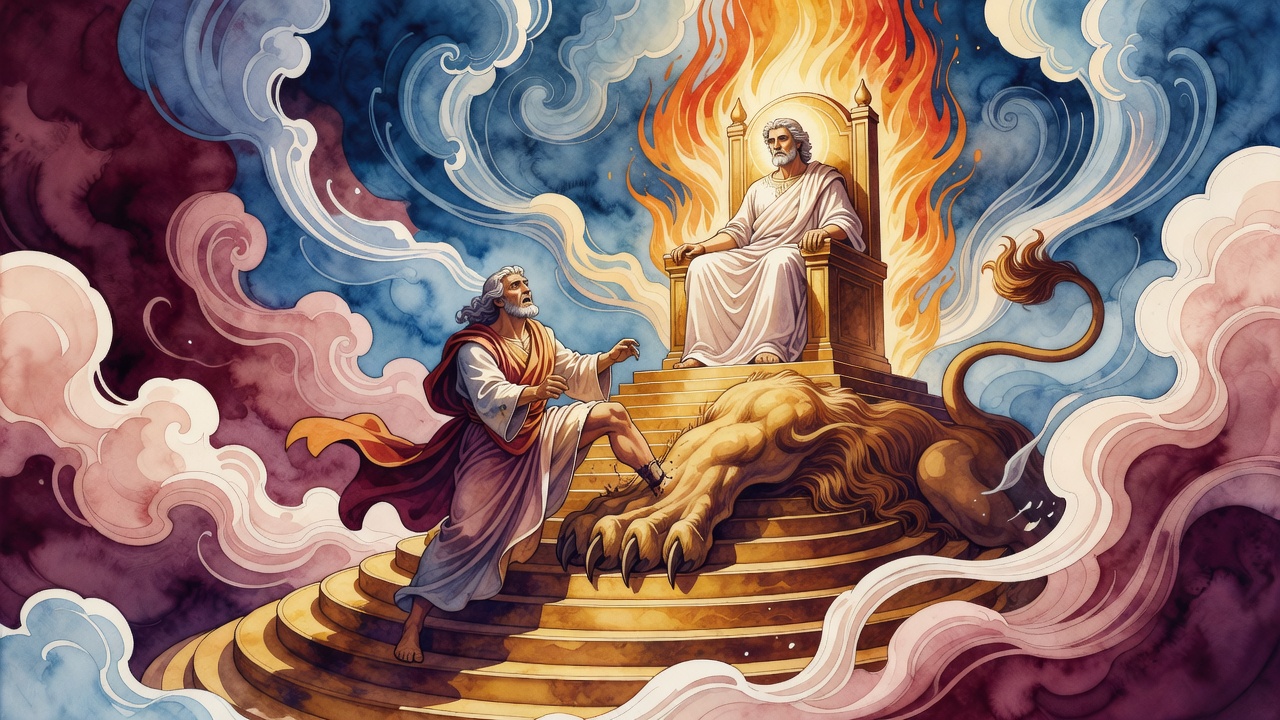
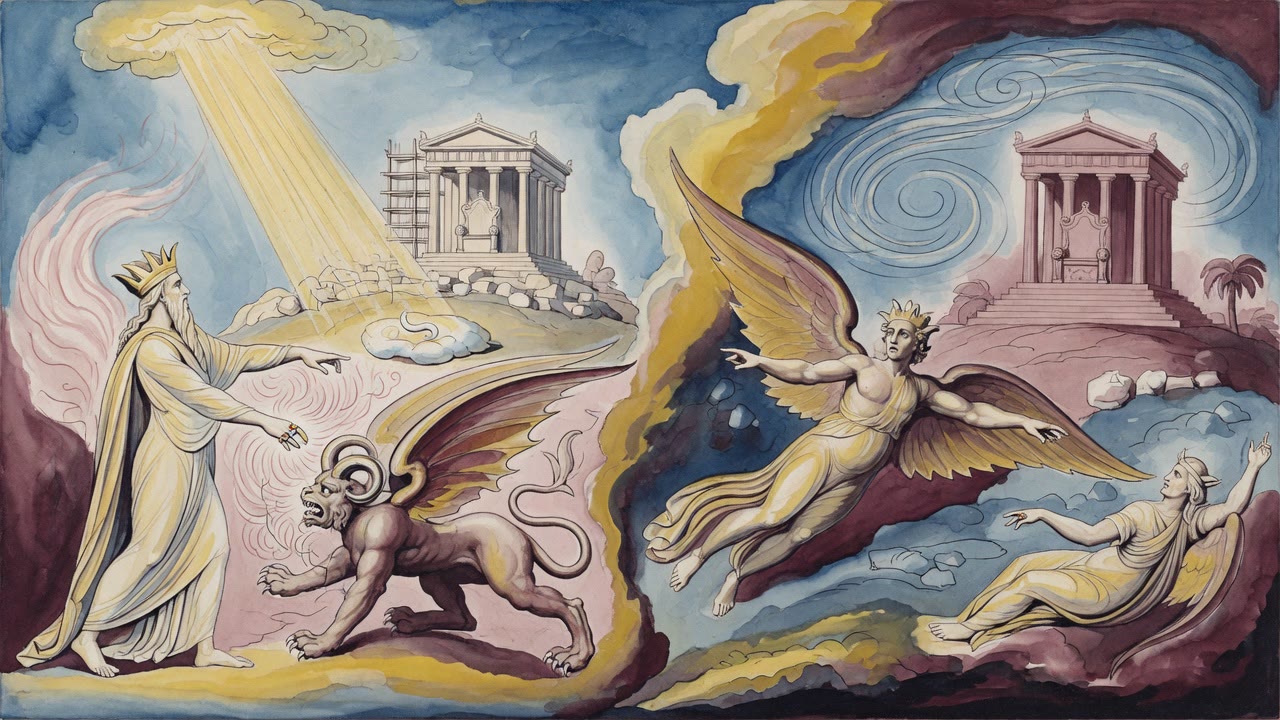
Ashmedai, king of the demons, tore the ring from Solomon's hand and threw it into the sea as if tossing a coin. Without the Name-sealed band, Solomon was no longer master of spirits. The throne room still stood. The servants still bowed to whoever wore the face of power. Ashmedai hurled the true king four hundred miles into a land that did not know his face and did not care.
The wisest king who ever lived begged at doors. He slept in alleys where dogs argued over bones. He learned the weight of a crust that was not his and the sound of a latch closed against him. For three years the seat of David sat under a pretender while the true king scraped pots and swallowed pride like dry bread.
Wisdom without the ring became a private fire. It still burned. It no longer moved armies of shedim.
Cook of Ammon
He reached Mash Kemim and took work as head cook in the palace of the king of Ammon. The court ate well. No one asked the cook's genealogy. Steam and knives and the discipline of hunger taught him a new kind of rule: feed others first, taste last, keep the blade clean, do not waste salt.
Naama, the king's daughter, saw him and would not look away. She watched how he portioned meat, how he wasted nothing, how his hands moved as if they had once signed decrees. She knew her father would never bless a match with a kitchen exile. She fled with Solomon to a farther land under a night that asked no papers.
Two runaways, one of them a king who could not prove it, built a small life out of borrowed names and shared work. They argued over onions. They laughed once without meaning to. Exile makes even a throne-memory kneel to ordinary days.
The Fish That Kept a Secret
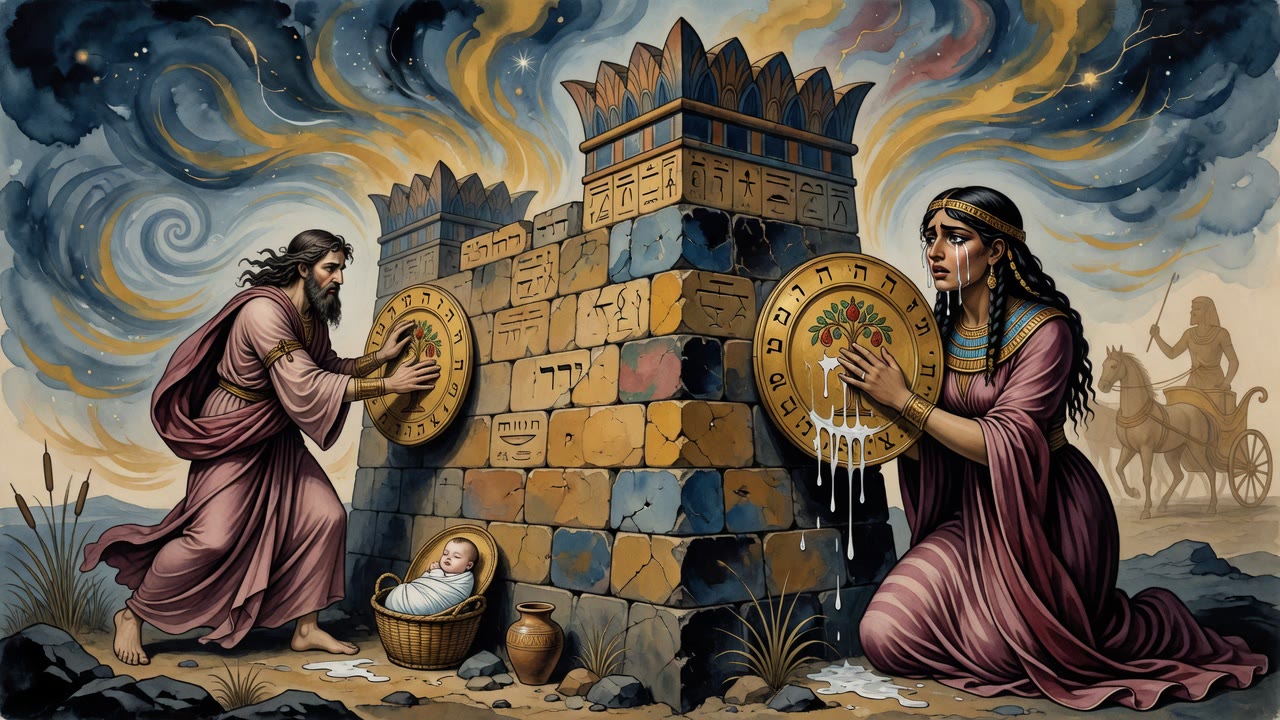
One evening Naama gutted a fish for their meal. The knife opened the belly and a ring slid into her palm, cold and heavy, scaled with the sea's long patience. Solomon knew it before she spoke. The deep had kept what Ashmedai threw away. The ring returned to his finger, and with it the authority the demon had stolen.
Power came back like blood into a numb hand. Lamps seemed brighter. The air listened again. The road to Jerusalem opened, not as nostalgia but as right. The fish on a stranger's table had been the door. A crown thrown into one kingdom can wait at dinner in another, sealed in the belly of something that never cared about thrones.
Ashmedai still ruled his own dark courts. Solomon ruled men again. Between them lay a band of metal that had learned the roads of fish.
The Son Who Would Not Strike the Grave
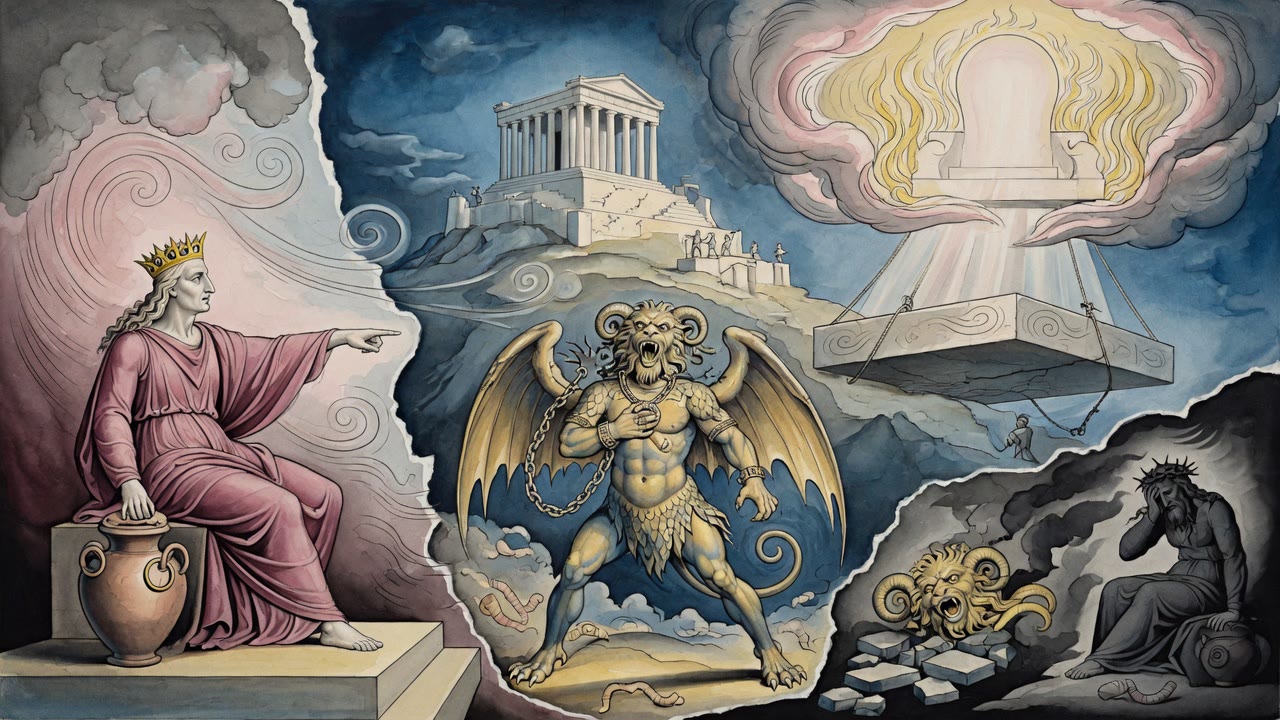
On the road back, and then in the restored court, a case came that smelled of kitchens and of graves at once. Sons quarreled over a father's estate. No one could prove which heir the dead man had meant. A judge ordered them to strike the grave until the dead spoke.
The true son would not lift a rod. He would not desecrate the body even to win silver. The others struck without hesitation. Reverence identified the heir better than a shout. Inheritance without honor is theft dressed as law.
Solomon heard that measure with a cook's ears. He had begged with no ring to prove him. He had scraped pots while a pretender wore his face. Power without the seal had been theater. A heart that will not strike a father's grave is evidence no ledger can fake. He returned to David's seat carrying both lessons: the sea can hide a crown, and a son's refusal can reveal a true line.
The Long Road Back
With the ring restored, Solomon did not become gentle overnight. Exile had sanded him. He remembered doors shut in his face and kitchens that did not care who his father was. That memory traveled with him into the restored court like a second advisor. Power that has begged tastes different from power that has never waited for a crust.
Naama, who had opened a fish and found a kingdom, walked into Jerusalem with the practical eyes of a woman who had gutted dinner in a rented room. Courtiers who bow late often bow deep. She had seen the king without the ring. That knowledge is a kind of crown of its own.
In the restored court a servant once dropped a tray and froze, waiting for royal rage. Solomon only asked whether anyone was hurt. The servant did not understand until years later, when he heard the tale of a king who had cooked for men who never thanked him. Mercy that has starved is not soft. It is precise.
The fish bones were thrown to dogs. The ring stayed on the hand that had begged, cooked, fled, and finally closed again around the Name's seal. Ashmedai's throw had further to travel now. The sea still held other secrets. Solomon judged cases with a patience that smelled faintly of steam and onions. The people did not always know why. The kitchen knew.
The ring sat on the finger that had scraped pots. The sea kept the rest of its secrets.
← All myths