5 min read

Asmodeus Trod Clay While Solomon Built the Temple

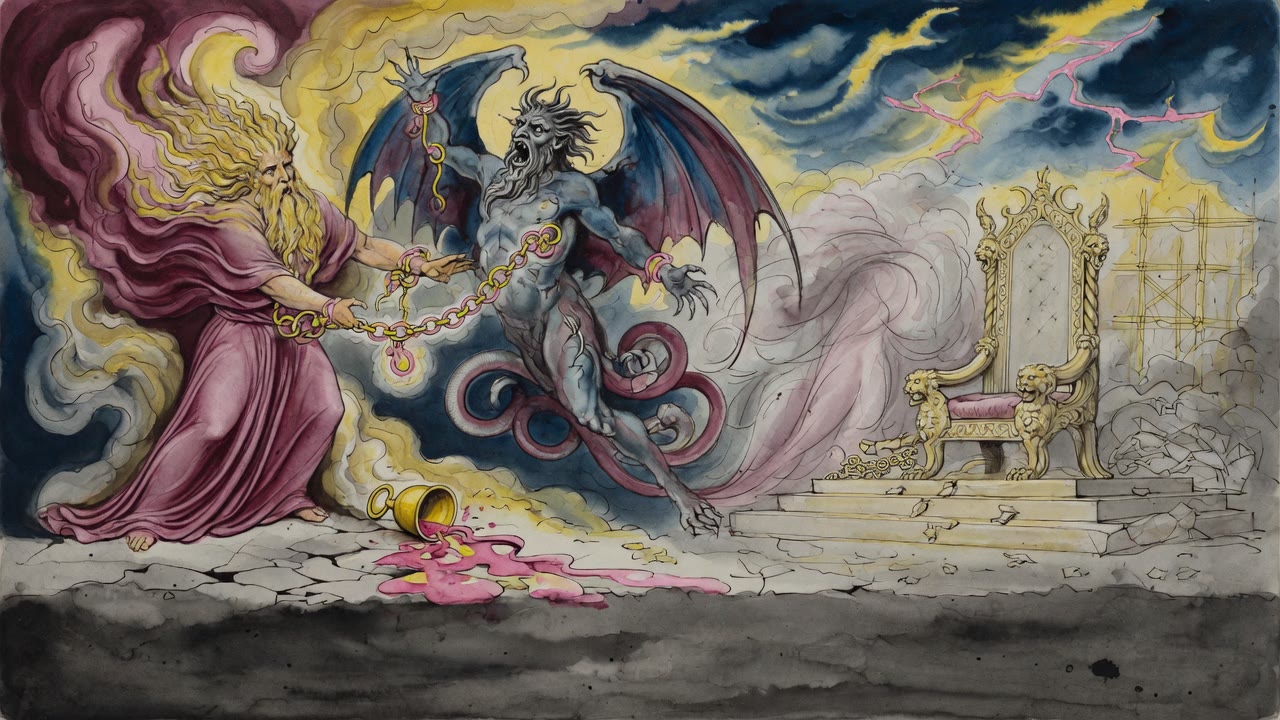
Asmodeus said his business was wrecking marriages. Solomon chained him and made him haul water jars, ten at a time, past fish liver burning on a reed.

Curated by Arthur · Told by Maggid ·
Table of Contents
  1. A Demon in Chains
  2. The Business of Ruined Weddings
  3. Clay, Water-Jars, and Smoke
  4. A King Who Was Heard at Once
  5. Temporary Glory, Lasting Stone
Asmodeus Trod Clay While Solomon Built the Temple Click for full size

A Demon in Chains

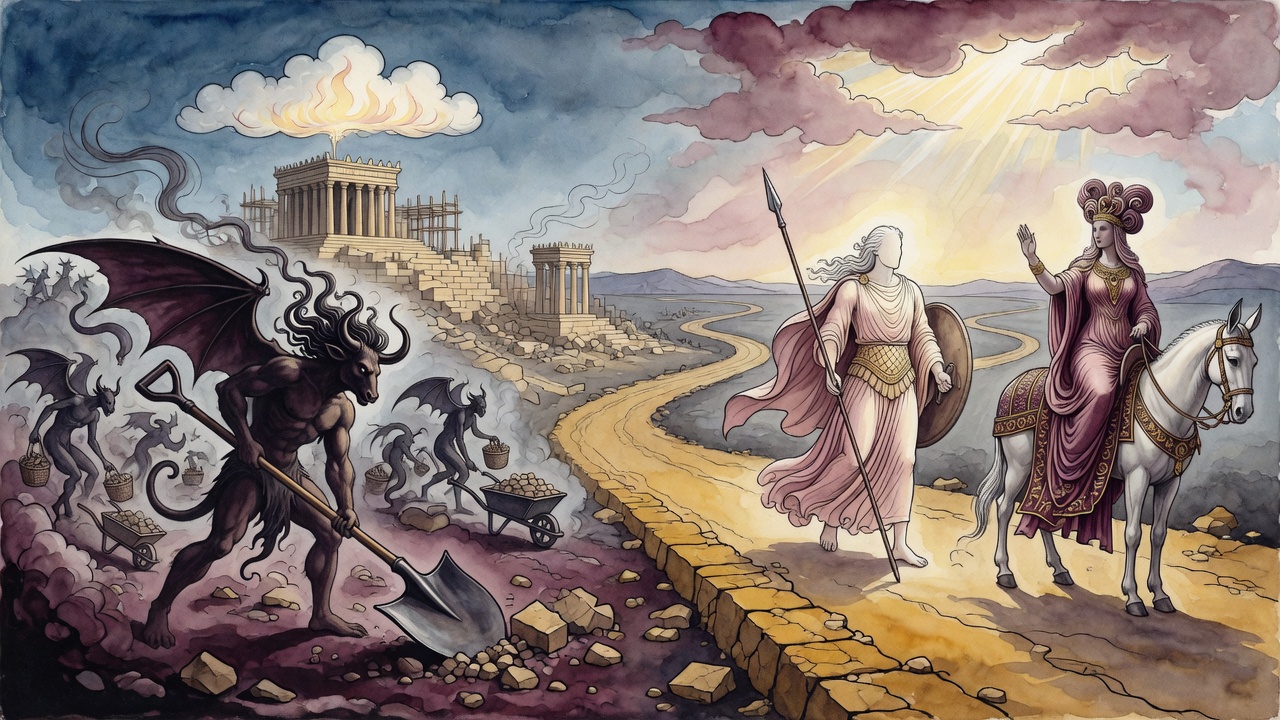
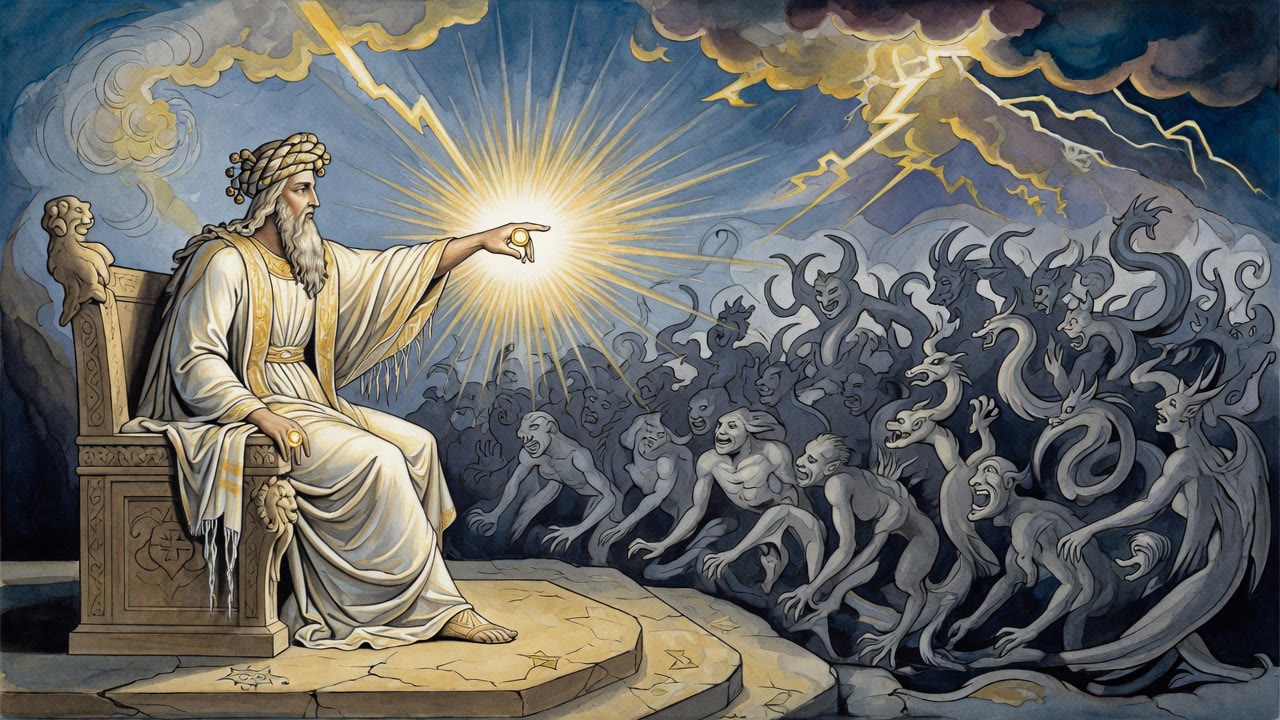
Solomon sat on a throne that could summon what other kings only feared. Demons were dragged before him for the work of the Temple. Onoskelis had already been bound to spin hemp for ropes under the star of the full moon, defeated by the angel Joel. Then the most dangerous of them was brought in chains: Asmodeus.

"Who are you?" Solomon asked. The demon's eyes burned. "Who are you?" he spat back. Bound, he still refused humility. "You are a son of man. I was born of angel's seed by a human woman, half-celestial, half-mortal. My star burns bright in heaven. Men call it the Great Bear. Do not ask me too many questions, king. Your kingdom will be disrupted soon enough. Your glory is temporary." When Solomon's tyranny over demons ended, Asmodeus promised, the spirits would roam free and men would worship them as gods, having forgotten the names of the angels who once kept them in check.

Solomon answered with ox-hide thongs and a tighter bond. Glory that is temporary still has a day's work to finish. The king meant to finish a House before the demons' future found its chance.

The Business of Ruined Weddings

"Now tell me your name and your business. Humbly." Asmodeus yielded enough to speak. "I am called Asmodeus among mortals. My business is to destroy marriages. I plot against the newly wedded so that they never consummate their union. I ruin the beauty of women and estrange their hearts. I drive men into fits of madness and lust, they abandon their own wives and chase after others, night and day, until they fall into sin and murder."

Solomon adjured him by the name of the Lord of Hosts. "By what angel are you defeated?" "By Raphael," Asmodeus admitted, "the archangel who stands before the throne of God. And the liver and gall of a fish, when smoked over ashes of tamarisk, put me to flight." The same remedies that would later free a house in the Book of Tobit were already known in this throne-room inventory of spirits.

A demon who specialized in the night of the wedding now faced a king who specialized in binding. The match was not equal. It was judicial.

Clay, Water-Jars, and Smoke

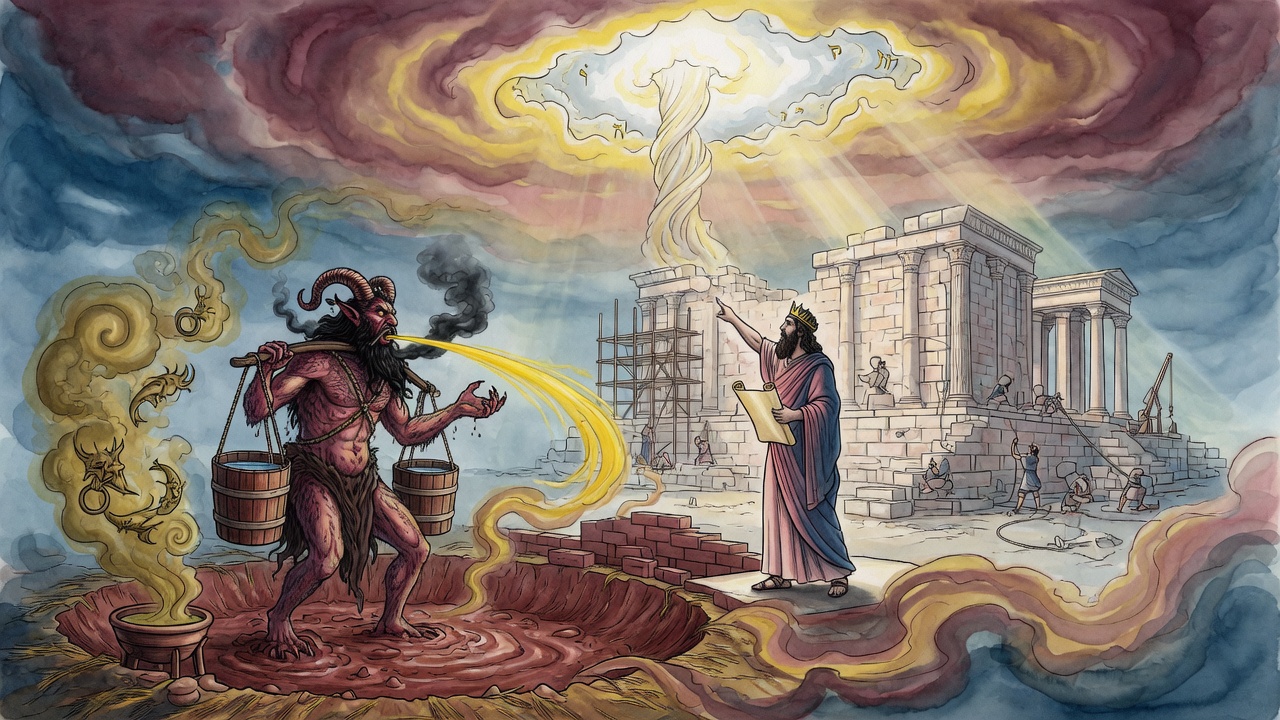
Solomon smiled. He clapped iron shackles on Asmodeus and sentenced him to tread clay for the entire construction of the Temple, the most grueling labor of all. The wrecker of marriages became a beast of burden, hauling ten water-jars at a time. Solomon hung the liver and gall of the fish on a reed and burned them near Asmodeus constantly, so that smoke and flame frustrated the demon's malice while stones rose.

Holy work used unclean strength under constraint. The House that would hold marriage blessings and pilgrim songs was packed with clay a marriage-destroyer was forced to tread. Every jar of water on Asmodeus's shoulders was a reverse wedding gift: not to a couple, but to a nation's altar.

Beelzeboul, prince of demons, was seated and questioned in turn: destroyer of kings, ally of foreign tyrants, inspirer of envy, murder, and war. Solomon's court was not a salon. It was a construction site with a docket of spirits.

A King Who Was Heard at Once

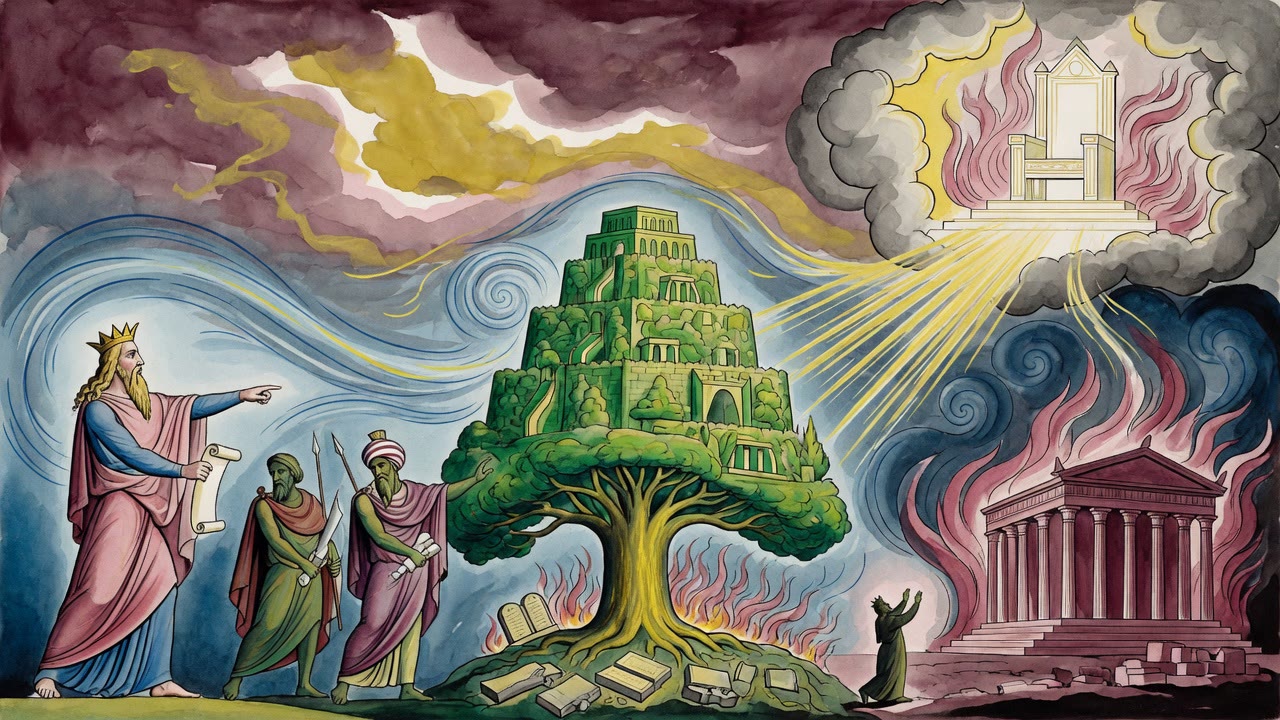
The midrash lists Solomon among three whose prayers were answered as soon as they spoke: Eliezer at the well, Moses when the earth opened under Korah, and Solomon when he finished the Temple's dedication prayer. Immediate hearing is the other face of the demon-binding tales. The same king who forced Asmodeus into clay could open his mouth toward heaven and find the air already answered.

The Wisdom of Solomon opens with a charge to judges: love justice, think well of the Lord, seek Him with purity of heart. Binding demons for a Temple is justice of a strange, mythic kind: power used to protect a place where pure seeking might happen. A throne that only collected spirits for spectacle would be tyranny. A throne that bent them under Raphael's name toward a house of prayer is the legend's claim for Solomon at his height.

Temporary Glory, Lasting Stone

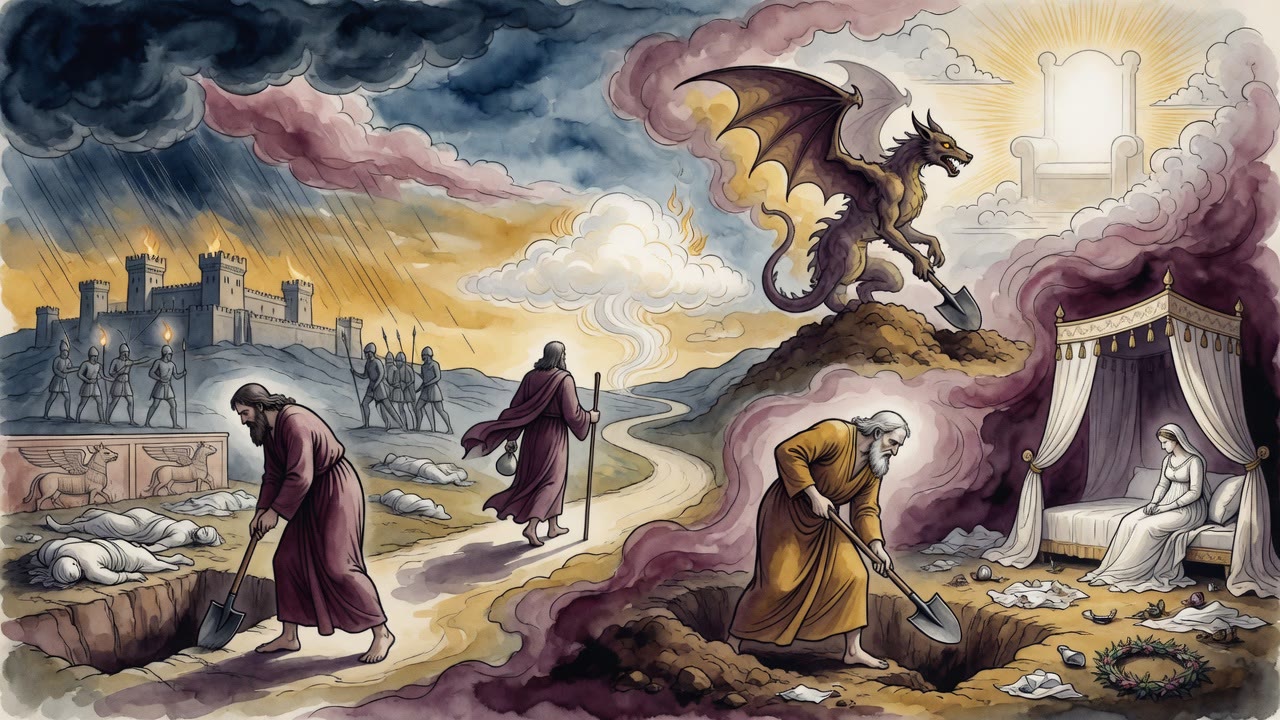
Asmodeus had promised that Solomon's glory was temporary. The legend does not fully disagree. Kings fall. Names of angels can be forgotten. Demons, in these stories, wait for amnesia. While the fish-gall smoked and the clay turned under cursed feet, the Temple still rose. Temporary glory can leave permanent walls if the work is done before the forgetting begins.

The drama ends where it must: not with a demon's theology of the end, but with jars on a spirit's back and a king who knew which angel undoes which plague. Marriages would still need guarding in every generation. The fish and the tamarisk ash would still matter in other books. For one building season, the great enemy of the wedding canopy learned the weight of water and the taste of smoke, and Israel's House climbed out of clay he was not allowed to refuse.


← All myths
From the tradition

Sources

3 sources

The texts behind this telling. Some cards carry a translation of the source; others are our own retelling of it, and each card says which. Every card links out to the original.

Testament of Solomon 19-30Testament of Solomon

Retold in our words. Read the original at the link below.F. C. Conybeare public-domain English translation (1898) · Public Domain

Solomon asked Onoskelis one final question: "Under what star do you pass?"

"Under the full moon," she answered, "because the moon travels over most things."

"And what angel defeats you?"

She hesitated. Then: "The angel Joel." Solomon commanded her to spin hemp for the ropes of the Temple, and she was bound and brought to nothing, forced to labor night and day.

Then came the most dangerous demon of all.

Asmodeus was brought before the throne in chains. Solomon looked at him and asked: "Who are you?" The demon shot him a glance of pure rage. "Who are you?" he spat back.

"You dare answer me like that, bound as you are?"

Asmodeus sneered. "How should I answer you? You are a son of man. I was born of angel's seed by a human woman, half-celestial, half-mortal. My star burns bright in heaven. Men call it the Great Bear. So do not ask me too many questions, king. Your kingdom will be disrupted soon enough. Your glory is temporary. And when your tyranny over us ends, we demons will roam free again, and mankind will worship us as gods, because they will have forgotten the names of the angels who once kept us in check."

Solomon tightened the demon's bonds and ordered him flogged with ox-hide thongs. "Now tell me your name and your business. Humbly."

Asmodeus yielded. "I am called Asmodeus among mortals. My business is to destroy marriages. I plot against the newly wedded so that they never consummate their union. I ruin the beauty of women and estrange their hearts. I drive men into fits of madness and lust, they abandon their own wives and chase after others, night and day, until they fall into sin and murder."

Solomon adjured him by the name of the Lord of Hosts: "By what angel are you defeated?"

"By Raphael," Asmodeus admitted, "the archangel who stands before the throne of God. And the liver and gall of a fish, when smoked over ashes of tamarisk, put me to flight" (Tobit 3:8).

Solomon smiled. He clapped iron shackles on Asmodeus and sentenced him to tread clay for the entire construction of the Temple, the most grueling labor of all. The demon who destroyed marriages was now a beast of burden, hauling ten water-jars at a time. And Solomon hung the liver and gall of the fish on a reed and burned it near Asmodeus constantly, frustrating his unbearable malice with smoke and flame.

Then Solomon summoned Beelzeboul again and seated him on a raised throne. "Why are you alone, prince of demons?"

"Because I alone remain of the angels who descended from heaven," Beelzeboul said. "I was the first angel in the first heaven. Now I control all the spirits bound in the abyss. I have a child, he haunts the Red Sea. He comes to me when he is ready, and I support him."

"What is your employment?" Solomon asked.

"I destroy kings. I ally myself with foreign tyrants. I set my demons upon men so they worship them and are lost. Even the faithful servants of God, priests and righteous men, I lure into wicked desires and lawless deeds. I inspire envy, murder, war. I will destroy the world."

"Bring me your child from the Red Sea," Solomon commanded.

"I will not. But another demon, Ephippas, an Arabian wind demon, will fetch him from the deep."

"By what angel are you defeated?"

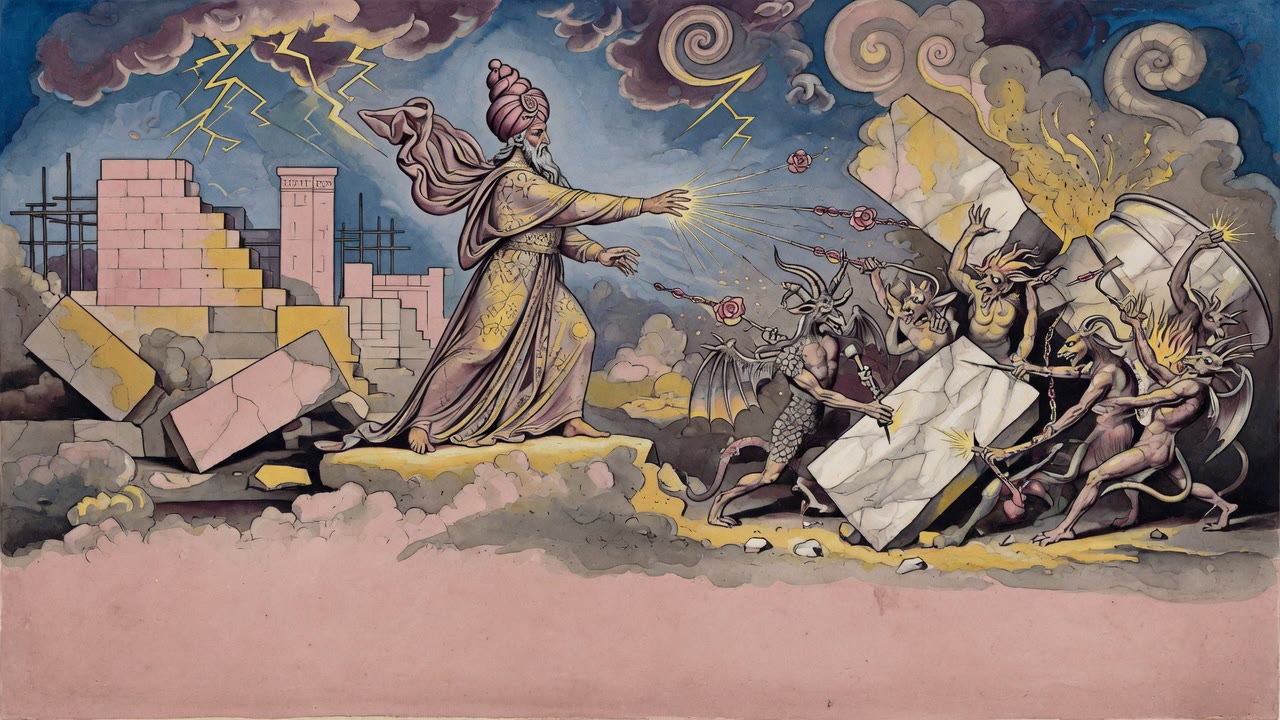
"By the holy and precious name of the Almighty God, blessed be He, the name known to the Hebrews." Solomon was astounded. He ordered Beelzeboul to saw marble for the Temple. And when the prince of demons began to cut stone, all the other demons howled, screaming for their king.

Full source
The Wisdom of Solomon 1:1The Wisdom of Solomon

Retold in our words. Read the original at the link below.Sefaria Community Translation · CC-BY

O judges of the land, love justice! Think well of YHWH, and seek Him with purity of heart.

The wisdom line addresses judges to love justice and seek God cleanly. No royal court scene is staged beyond that charge.

Full source
Bereshit Rabbah 60:4Bereshit Rabbah

Retold in our words. Read the original at the link below.The Sefaria Midrash Rabbah, 2022 · CC-BY

Rabbi Shimon ben Yoḥai, a towering figure in Jewish mysticism, points to three individuals who experienced this incredible immediacy. He says there are three people who were answered in their prayers as soon as they spoke: Eliezer, Moses, and Solomon. Imagine the power, the faith, the sheer chutzpah of believing so deeply that your words would instantly become reality.

Remember the story in Genesis 24? Abraham sends Eliezer to find a wife for Isaac. Eliezer, standing by a well, prays for a sign. He asks that the woman destined to be Isaac’s wife should offer water to him and his camels. And what happens? “It was before he concluded to speak, and behold, Rebecca was coming out” (Genesis 24:15). Boom! Answered prayer, right then and there. In the blink of an eye, Rebekah appears.

Next, we have Moses. Now, Moses had a…complicated relationship with the Israelites. Remember the rebellion of Korah and his followers? They challenged Moses’s leadership, accusing him of overstepping his bounds. Moses, heartbroken and frustrated, calls upon God to vindicate him. The Torah tells us, “It was, as he concluded to speak all these words, the ground that was beneath them split” (Numbers 16:31). The earth opens up and swallows the rebels. A pretty dramatic response, wouldn’t you say? The immediacy of God's response is a clear sign of divine intervention.

Finally, there’s Solomon. The wisest of all men, known for his profound understanding and majestic temple. When Solomon finishes building the Temple in Jerusalem, he offers a magnificent prayer of dedication. And “When Solomon had concluded praying [to the Lord], fire descended from the heavens and consumed the burnt offering and the sacrifices, and the glory of the Lord filled the temple” (II Chronicles 7:1). Fire from heaven! A dazzling, undeniable sign of God’s presence and acceptance.

So, what does this all mean for us? Are we supposed to expect fire from heaven every time we pray? Maybe not literally. But these stories, drawn from Bereshit Rabbah – a classic midrashic (rabbinic interpretive commentary) collection – remind us of the potential power of prayer, of the possibility of a direct and immediate connection with the Divine. They remind us that our words matter, that our intentions matter, and that even in the midst of doubt and uncertainty, faith can move mountains…or perhaps even split the earth.

These three examples – Eliezer, Moses, and Solomon – offer a glimpse into a world where the veil between the earthly and the divine feels incredibly thin. A world where prayer isn't just a ritual, but a conduit to immediate, tangible response.

Full source