5 min read

Solomon Forced Demons to Build the Temple

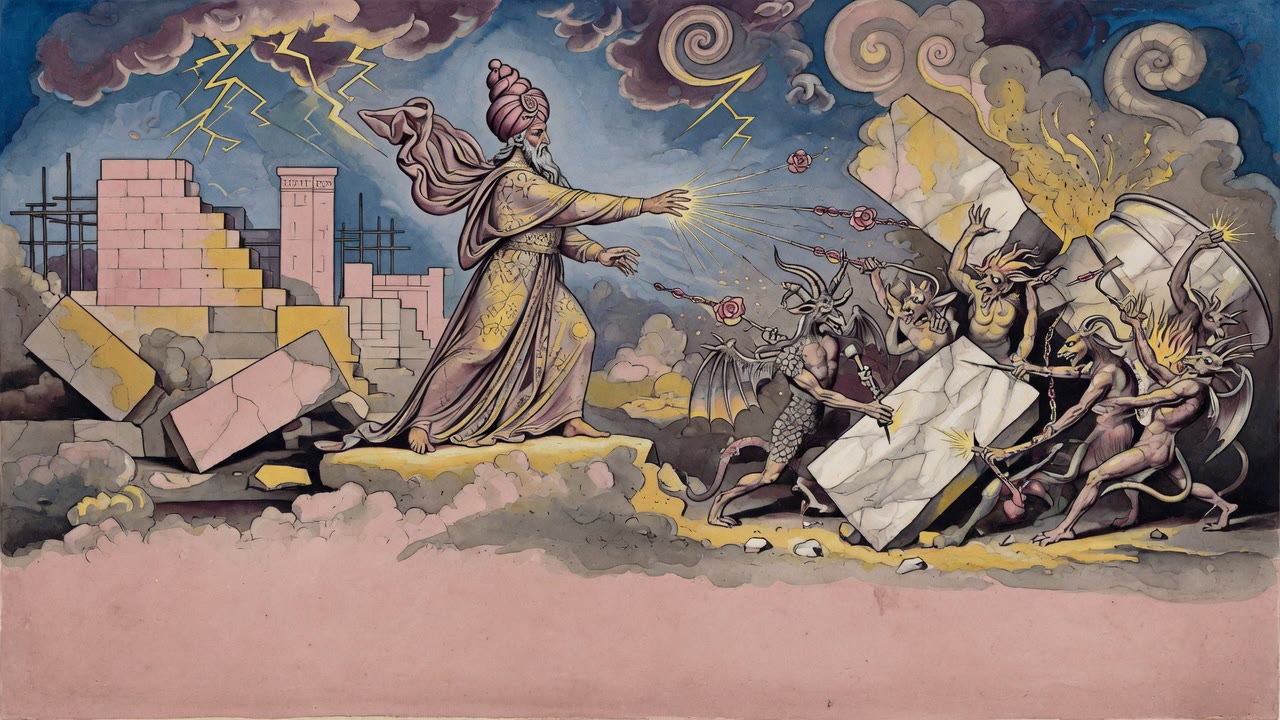
Solomon bound a prince of demons and made him confess his secrets. Then he put the entire court of the underworld to work cutting marble for God's house.

Curated by Arthur · Told by Maggid ·
Table of Contents
  1. The Ring Came Down From Michael
  2. Thirty-Six Spirits and the Manual of Their Undoing
  3. The Temple Rose From Forced Confessions
  4. The Fall That Ended the Power

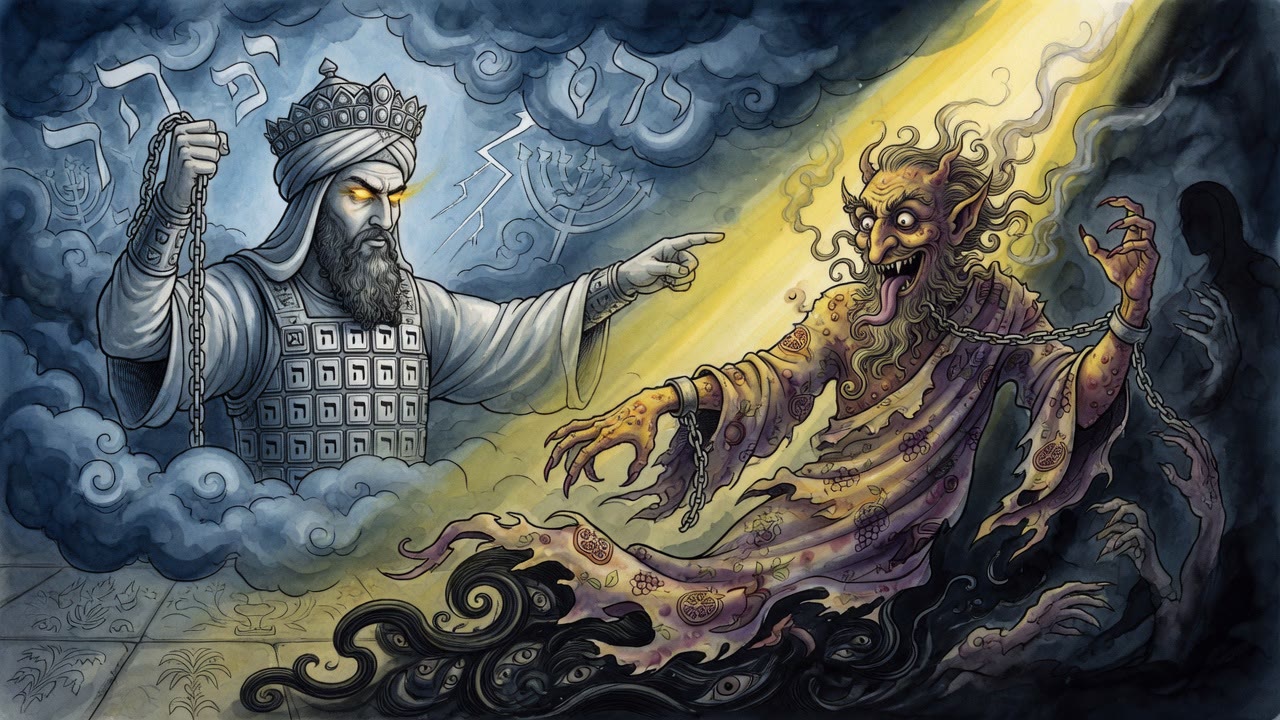
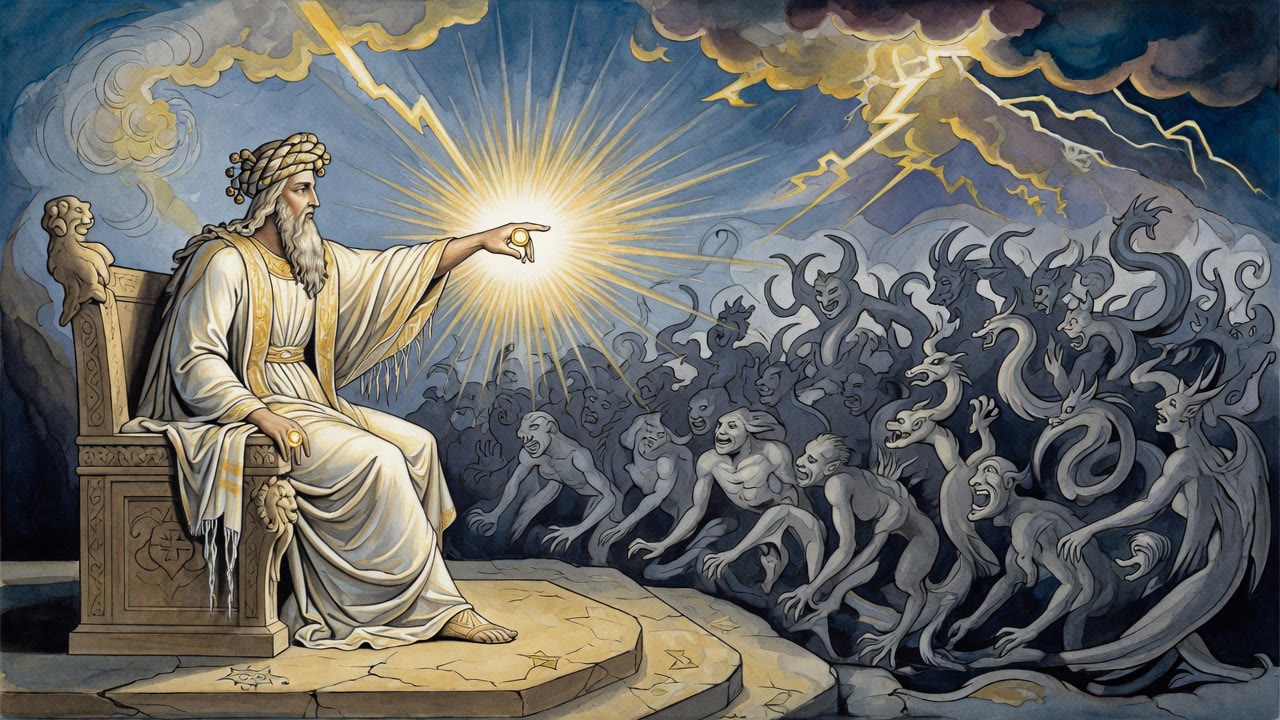
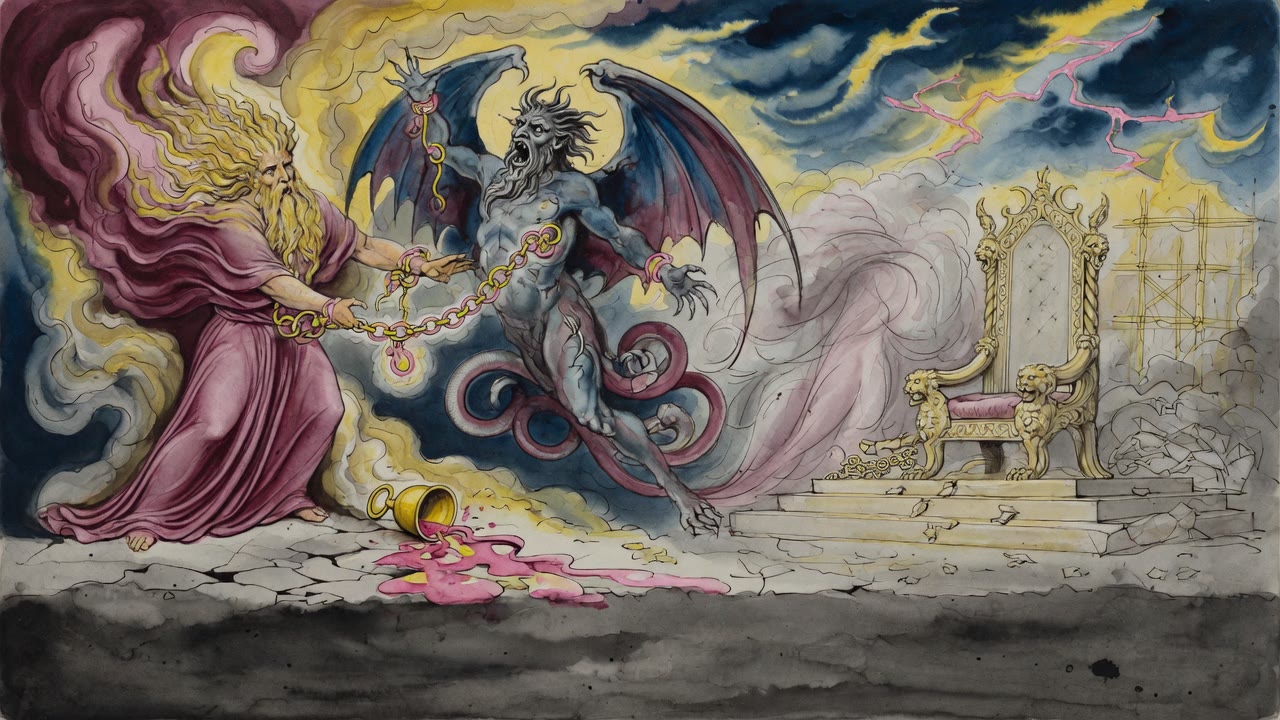
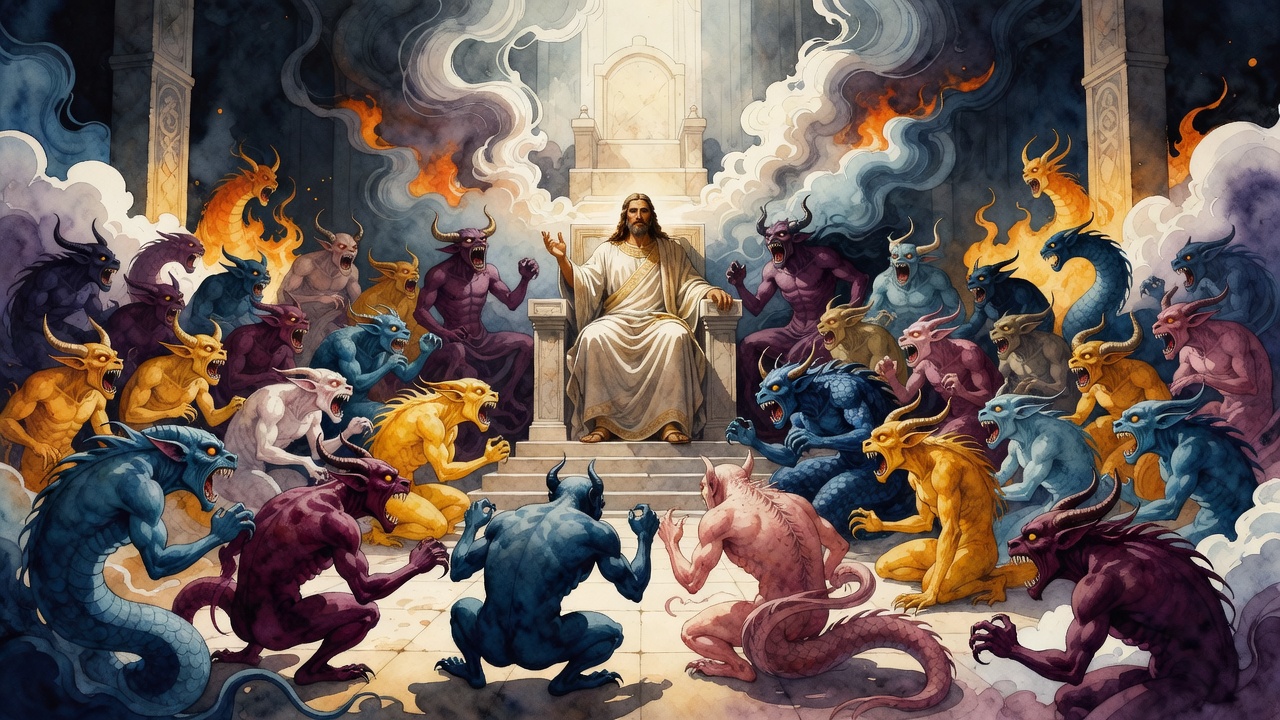
Solomon sat on his throne with a ring on his finger and a demon kneeling in front of him, and he opened his interrogation with the simplest possible question: what is your name.

The demon said Beelzeboul. Prince of the spirits of the air. The most powerful of the aerial demons, whose throne was set at the pinnacle of the sky and who claimed authority over all who fell beneath him. Solomon pointed to the floor. Beelzeboul came down.

The Ring Came Down From Michael

Before the Temple could be built, a boy on the construction site began to waste away. A demon named Ornias was coming every night and draining him. Solomon prayed, and the archangel Michael brought him a signet ring sealed with the divine name. With the ring, Solomon could summon any spirit, bind it, question it, and put it to work. He started with Ornias, then worked his way up the hierarchy until he had Beelzeboul himself standing before the throne.

What Solomon got from Beelzeboul was not labor. Not immediately. He got information. He pressed the demon to describe the workings of heaven. Beelzeboul leaned forward. If you burn gum, incense, and sea-bulbs with nard and saffron, and light seven lamps in a row at dawn, you will see the heavenly dragons coiling along the sky and dragging the chariot of the sun. Solomon cut him off. Be silent. Go saw the marble. The information was noted and set aside. The work came first.

Thirty-Six Spirits and the Manual of Their Undoing

After Beelzeboul, they came one by one. The parade of demons before Solomon's throne described in the Testament of Solomon, a Jewish pseudepigraphical text with layers stretching from the first through fifth centuries CE, reads like the construction of a field manual. Thirty-six spirits of the zodiac, each with its own domain, each compelled to name itself, to describe the affliction it causes, and to reveal the angelic name that cancels it.

Metathiax: kidney pain. Banished by the angel Adonael. Katanikotael: strife in households, hard temper, domestic fury. Write the name of his opposing angel on seven laurel leaves, wash them in water, sprinkle from inside the house outward. Saphathorael: partisan drunkenness. Write six angelic names on a piece of paper, fold it, and wear it against the chest.

Thirty-six confessions. Thirty-six prescriptions. Solomon recorded every one.

The last of the thirty-six was Bianakith. He laid waste to houses. He caused flesh to decay. His countermeasure was simple: write certain holy names on the front door. He would flee from any home marked that way.

Solomon glorified the God of heaven and earth. Then he put the full court to work.

The Temple Rose From Forced Confessions

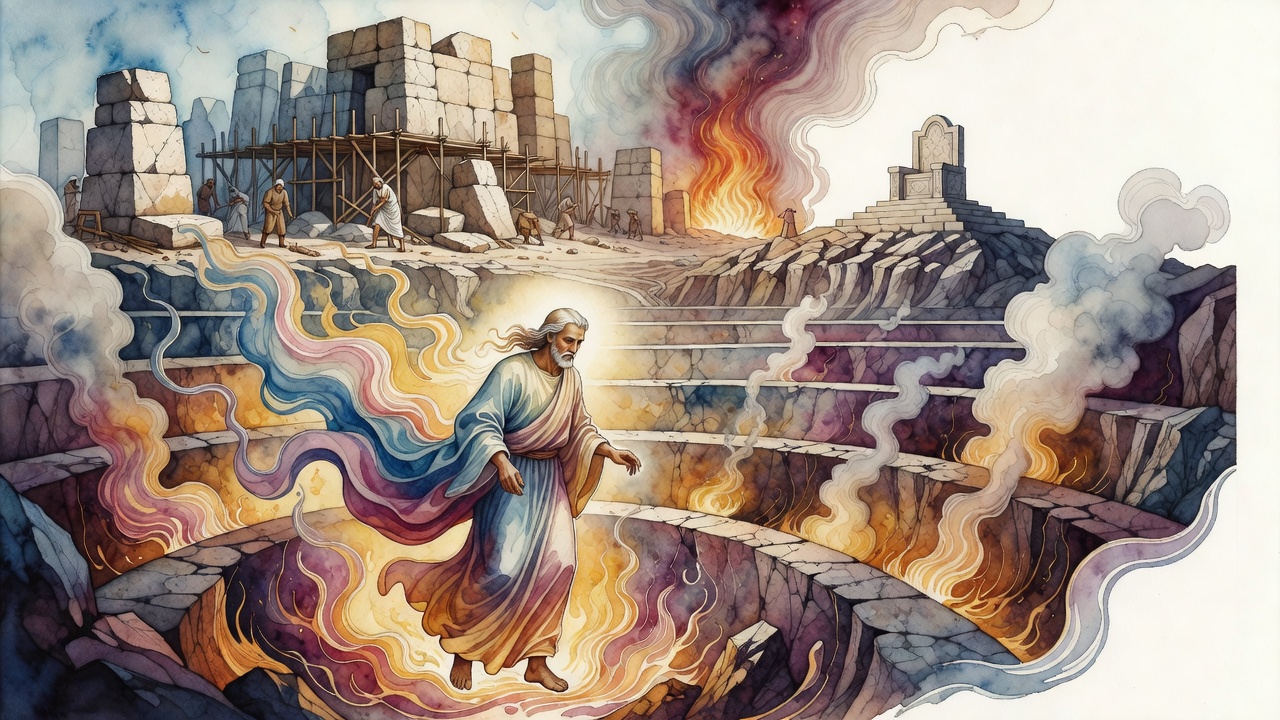
Some demons were set to fetch water. Some he locked in prisons. Some he ordered to work with fire, smelting the gold and silver that would line the walls of the sanctuary. Others cut the marble blocks in the quarry outside the city. The labor that usually required an army of conscripts, tens of thousands of men working in rotating shifts across years, was augmented by a workforce that did not tire, did not eat, and had no choice.

The Legends of the Jews, Louis Ginzberg's early twentieth-century synthesis of rabbinic and pseudepigraphical legend, carries this tradition forward from an angle that focuses on the angelic command structure above the demons. The demons were not working only under the seal of Solomon's ring. There were angelic overseers above them, assigned to ensure that the work of God's house was not sabotaged by the same workforce doing the building. The Temple rose clean despite the hands that cut its stones.

The Fall That Ended the Power

It ended the way every acquisition of extraordinary power ends in Jewish literature. Not with a battle. With a woman.

Solomon's wives brought their gods with them. The Shunamite woman, a foreign queen he loved, made a request. Her god needed a lamp lit. Could he do that for her? Could he just kneel down, just this once. He knelt. The ring did not leave his finger, but the power that had animated it drained out through the compromise. The name he had used to bind a hundred demons could no longer bind anything. He picked up a locust to test it. He spoke over the locust with the formula that had commanded Beelzeboul. The locust jumped away.

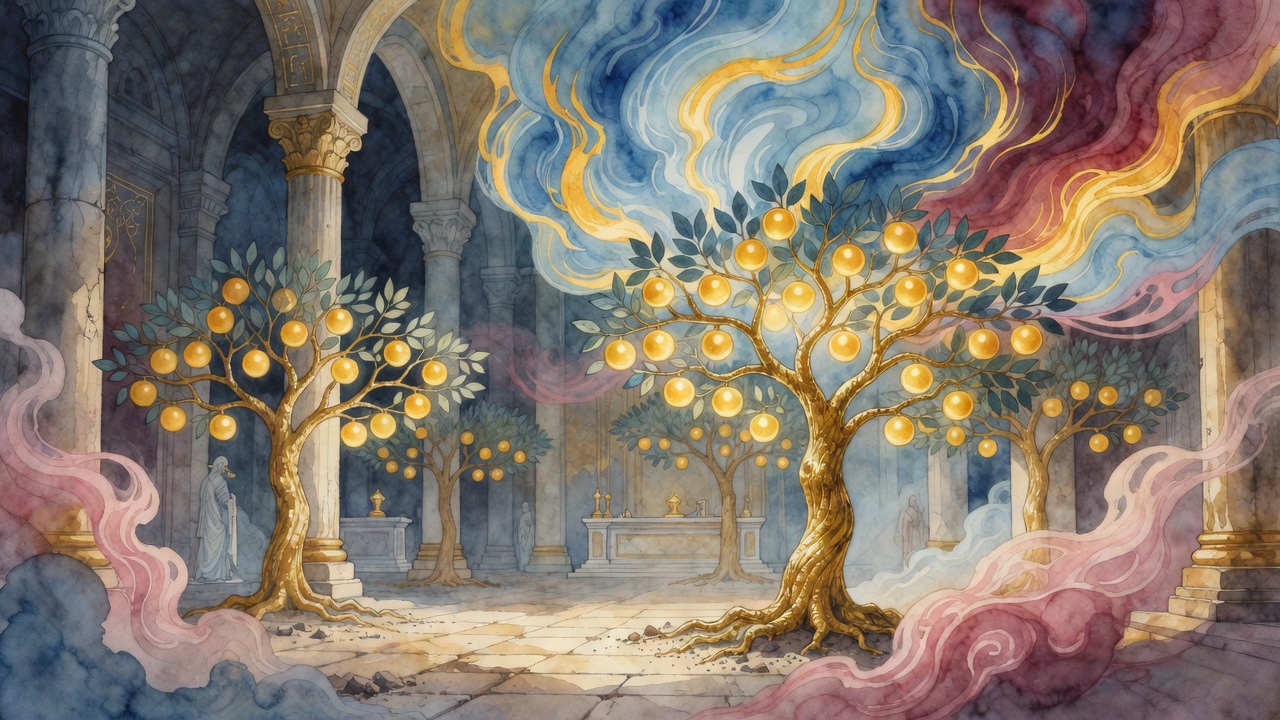
The Temple was already finished. The demons were already locked away. Jerusalem had already rejoiced and the kings of the earth had already come from the ends of the world to see what Solomon had built. But the wisdom itself, the specific channel through which God's authority had run into Solomon's hand, was gone. What remained was ordinary intelligence. Remarkable, but human. The Temple stood. The king who built it was less than he had been.


← All myths
From the tradition

Sources

4 sources

The texts this telling draws on, in full. Open a card to read inline, or expand it for a wider, quieter read.

Legends of the Jews 5:86Legends of the Jews

The familiar telling remembers the human labor, the cedar from Lebanon, the gold and precious stones. But there's a less-told tale, a whisper from the shadows, involving beings not quite of this world: demons.

In legends, Solomon wasn't just a brilliant king; he was also a master of the mystical arts. The stories tell us that, in the beginning of the Temple's construction, things weren't going so smoothly. One of Solomon's pages kept losing his money and food to a mischievous, unseen force. Imagine the frustration! Solomon, unable to catch the culprit, turned to the highest power. He prayed fervently to God, begging for deliverance from this wicked spirit.

His prayers were answered. As we read in Legends of the Jews by Ginzberg, the archangel Michael himself appeared before Solomon. He didn't come empty-handed. Michael presented Solomon with a small ring, a signet ring bearing a powerful seal. "Take, O Solomon, king, son of David," Michael said, "the gift which the Lord God, the highest Zebaot (hosts), hath sent unto thee." With this ring, Solomon could "lock up all the demons of the earth, male and female; and with their help thou shalt build up Jerusalem." A fascinating divine decree, isn't it?

The ring wasn't just any piece of jewelry. It bore a Pentalpha – a five-pointed star – an engraving that held immense power. Solomon, now armed with this divine gift, summoned all the demons before him. Can you picture that scene? A king, empowered by God, facing down the denizens of darkness.

He interrogated each demon, demanding their names and their celestial affiliations. He wanted to know which star, constellation, or zodiac sign held sway over them, and the name of the angel to whom they were subject. According to these legends, knowledge is power. And Solomon, through the ring, had the power to subdue them.

One by one, the spirits were vanquished. Solomon, wielding the power of the ring, compelled them to aid in the construction of the Temple. Imagine those mischievous demons, forced to use their supernatural abilities for something… constructive! It's a evidence of the power of faith and divine intervention. The Temple, a symbol of holiness and connection with the divine, was built not just by human hands, but with the unwilling assistance of the demonic realm. What does that tell us about the complexities of creation, and the surprising ways that even darkness can be channeled toward light?

Full source
Testament of Solomon 31-42Testament of Solomon

Solomon pressed Beelzeboul further. "If you want a respite from your labor, tell me about the things in heaven."

The prince of demons leaned forward. "If you burn gum, incense, and sea-bulbs with nard and saffron, and light seven lamps in a row while in a state of ritual purity, then at dawn, when the sun rises, you will see the heavenly dragons winding themselves along the sky, dragging the chariot of the sun."

Solomon rebuked him. "Be silent. Continue sawing the marble as I commanded." He praised God and called for the next demon.

What came before him was barely a creature. A spirit whose face floated high in the air while the rest of its body curled away like a snail. It burst through Solomon's soldiers, kicked up a terrible dust storm, and hurled it into the air to terrify the court. Solomon stood, spat on the ground, and pressed the ring of God into the dust. The wind stopped instantly.

"Who are you?" Solomon demanded.

"I am Tephras, the spirit of ashes. I bring darkness upon men. I set fire to fields. I destroy homesteads. I am busiest in summer, creeping into the corners of walls by night and day."

"Under what star do you dwell?"

"At the very tip of the moon's horn, when it hangs in the south."

"By what angel are you defeated?"

"By the archangel Azael." Solomon summoned Azael, sealed the demon, and commanded Tephras to hurl great stones up to the workers on the higher levels of the Temple.

Then came something stranger still. Seven spirits appeared before Solomon, bound together, female demons, fair in appearance, who spoke with a single voice: "We are of the thirty-six elements of the cosmic ruler of darkness."

The first said: "I am Deception. I weave snares and excite false beliefs. The angel who defeats me is Lamechalal."

The second: "I am Strife. I bring weapons, timbers, stones, blades. The angel Baruchiachel defeats me."

The third: "I am Klothod, which means Battle. I turn the well-behaved against each other. The angel Marmarath defeats me."

The fourth: "I am Jealousy. I make men forget sobriety. I tear husbands from wives, children from parents, brothers from sisters. The great angel Balthial defeats me."

The fifth: "I am Power. I raise up tyrants and tear down kings. I furnish strength to every rebel. The angel Asteraoth defeats me."

The sixth: "I am Error. I will make you err, O Solomon, as I once caused you to slay your own brother (1 Kings 2:25). I lead souls into necromancy and away from all righteousness. The angel Uriel defeats me."

The seventh spoke last and coldest of all: "I am the worst. I will impose upon you the bonds of false worship. The sacrifice of locusts to Moloch will set me free. And through that act, your kingdom will shatter."

Solomon heard them all. He sealed the seven with his ring and, because they were formidable, set them to the heaviest work of all: digging the foundations of the Temple, which stretched 250 cubits in length. With a single murmur of protest, the seven cosmic demons began to dig.

Full source
Testament of Solomon 81-105Testament of Solomon

The parade of demons continued. One by one the thirty-six spirits of the zodiac stepped forward before Solomon's throne, each confessing the disease it inflicts and the angel whose name can banish it. This was not merely an interrogation. It was the creation of a manual of spiritual warfare, a catalog of every affliction and its cure.

Metathiax, the tenth, causes kidney pain. Banished by the angel Adonael.

Katanikotael, the eleventh, creates strife in homes and sends hard temper. To defeat him: write the name of his opposing angel on seven laurel leaves, wash the leaves in water, and sprinkle the house from inside to out.

Saphathorael, the twelfth, inspires partisanship and drunkenness. Write the names of the angels Iaco, Iealo, Ioelet, Sabaoth, Ithoth, and Bae on paper, fold it, and wear it around the neck.

Bobel, the thirteenth, causes nervous illness. Banished by calling out: "Adonael, imprison Bobel."

Kumeatel, the fourteenth, sends shivering fits and torpor. Banished by Zoroel.

Roeled, the fifteenth, causes stomach pain and bitter cold. Banished by the words: "Iax, be still, for Solomon is greater than eleven fathers."

Atrax, the sixteenth, inflicts incurable fevers. To defeat him: chop coriander, smear it on the lips, and recite: "I exorcise thee by the throne of the Most High God, retreat from the creature fashioned by God."

Ieropael, the seventeenth, causes convulsions. Whisper three times into the afflicted person's right ear: "Iudarize, Sabune, Denoee."

Buldumech, the eighteenth, separates wife from husband. To defeat him: write "The God of Abraham, and the God of Isaac, and the God of Jacob commands thee, retire from this house in peace" and place the paper in the entrance of the home.

Naoth, the nineteenth, settles upon men's knees. Banished by writing: "Depart, Naoth, and touch not the neck."

Mardero, the twentieth, sends incurable fever. Write the name of the angel Raphael on a leaf and tie it around the sufferer's neck.

Alath, the twenty-first, causes coughing and labored breathing in children. Banished by writing: "Rorex, pursue Alath."

Nefthada, the twenty-third, causes painful urination. Write the names "Iathoth, Uriel, Nephthada" on a plate of tin and fasten it around the waist.

Akton, the twenty-fourth, causes rib and muscle pain. Engrave on copper taken from a lost ship: "Marmaraoth, Sabaoth, pursue Akton."

Anatreth, the twenty-fifth, sends burning fevers into the entrails. Defeated by the words: "Arara, Charara."

Enenuth, the twenty-sixth, steals men's minds, changes their hearts, and makes them lose their teeth. Write: "Allazool, pursue Enenuth."

Pheth, the twenty-seventh, causes consumption and hemorrhage. Exorcise in wine and give the patient to drink.

Harpax, the twenty-eighth, sends sleeplessness. Write "Kokphnedismos" and bind it around the temples.

Anoster, the twenty-ninth, causes bladder pain. Grind three laurel seeds into pure oil and anoint the afflicted.

Alleborith, the thirtieth, if a man has swallowed a fish bone, take a bone from the same fish and cough, and the demon retreats.

Hephesimireth, the thirty-first, causes lingering disease. Throw salt rubbed in the hand into oil, anoint the patient, and cry: "Seraphim, Cherubim, help me!"

Ichthion, the thirty-second, paralyzes muscles. Banished by: "Adonael, help!"

Agchonion, the thirty-third, lurks among swaddling-clothes. Write the word "Lycurgos" on fig leaves, then write it again removing one letter at a time. Lycurgos, ycurgos, kurgos, yrgos, gos, os. And the demon flees.

Autothith, the thirty-fourth, causes grudges and fighting. Defeated by writing the first and last letters of the Hebrew alphabet.

Phthenoth, the thirty-fifth, casts the evil eye on every man. Draw an eye that has suffered much, and the demon is defeated.

Thirty-five demons. Thirty-five confessions. Thirty-five angelic names. Solomon recorded them all, building the most detailed demonological catalog the ancient world had ever known.

Full source
Testament of Solomon 106-130Testament of Solomon

The thirty-sixth and final zodiac demon, Bianakith, confessed: "I lay waste houses and cause flesh to decay. But if a man writes certain holy names on the front door of his home, I flee from that place."

Solomon glorified the God of heaven and earth. He commanded the demons to fetch water for the Temple. Some he set to the heavy labor of construction. Others he locked in prisons. Others he ordered to work with fire, smelting gold and silver. He prepared sealed chambers for those yet to be captured.

Then, peace. Profound, extraordinary peace. Solomon's kingdom prospered. His army stood ready. Jerusalem rejoiced. The entire Temple of the Lord was built, and all the kings of the earth came from the ends of the world to behold it, bringing gold and silver, precious stones, bronze, iron, lead, and cedar wood that would never decay (1 Kings 6:1).

Among those who came was the Queen of the South. She entered the Temple and saw the altar of incense with its brazen supports, the gems of the lamps flashing in every color, emerald, sapphire, hyacinth, the vessels of gold and silver and bronze, the hangings dyed red with madder, the pillars made of pure gold. She saw the demons laboring in chains. She heard Solomon's wisdom and fell to the ground, glorifying the God of Israel.

During this time an old workman threw himself before Solomon, weeping. "My only son beats me. He insults me. He pulls out the hair of my head and threatens me with death." Solomon summoned the son, who denied everything. But before Solomon could render judgment, he noticed the demon Ornias laughing in the corner.

"Why do you laugh in my presence?" Solomon demanded.

"Not at you, O king. I laugh at this old man and his wretched son. In three days, the boy will die. The old man seeks to have him punished, not knowing his son's life is already forfeit."

Solomon sent father and son home and told the old man to return in three days. When he did, the old man wore black. His son was dead. Ornias had spoken true.

Solomon pressed the demon: "How did you know?" And Ornias revealed one of the great secrets of the demonic order: "We demons ascend into the firmament of heaven and fly among the stars. There we overhear the sentences pronounced upon the souls of men. Then we descend, by force, or fire, or sword, or accident. And carry out the destruction. If a man does not die by disaster or violence, we transform ourselves to appear human, so that men worship us in our disguise."

"How can you, being demons, ascend to heaven and mingle with the holy angels?" Solomon asked.

"Whatever is fulfilled in heaven is also mirrored on earth," Ornias said. "There are principalities and authorities. We demons fly in the air and hear the voices of the heavenly beings. But we have no firm ground to stand on. We lose our strength and fall, like leaves from trees. Men see us plummeting through the night sky and think the stars are falling. But it is only us, falling because we have nothing to hold on to. We crash like lightning through the darkness. And we set cities aflame and burn the fields."

Meanwhile, Adares, the King of Arabia, sent a letter pleading for help. A terrible wind demon blew from dawn until the third hour each day, killing men and beasts. Nothing could stop it. Solomon sent a servant with a leather flask and the ring of God. At dawn, the servant placed the flask before the demon's blast with the ring over its mouth. The demon blew straight into the flask. The servant sealed it instantly in the name of the Lord God of Hosts.

The flask was brought to Jerusalem, and the wind demon, Ephippas, was forced to lift the great foundation that no worker or demon had been able to move. He hoisted it up the Temple steps and laid it at the pinnacle, fulfilling the scripture: "The stone which the builders rejected has become the head of the corner" (Psalm 118:22).

Ephippas also brought up a demon from the depths of the Red Sea, Abezithibod, who revealed a stunning secret. "I was present when Moses stood before Pharaoh in Egypt. I am the one who hardened Pharaoh's heart. I am the one whom the magicians Jannes and Jambres invoked against Moses. When the children of Israel crossed the Red Sea and the waters returned, I was trapped, held under a pillar in the depths ever since" (Exodus 14:21-28).

Solomon adjured both Ephippas and Abezithibod, and they swore: "The Lord your God lives, we will hold up this pillar until the end of the world. On whatever day this stone falls, the world will end."

And then came the fall.

Solomon took wives from every nation, numberless women (1 Kings 11:1-4). Among them he desired a Shunammite woman, a Jebusite. Her priests demanded a price: worship our gods, Raphan and Moloch. Solomon refused. He knew the glory of God. But the priests told the woman not to lie with him until he complied.

Love did what no demon could. The woman brought Solomon five grasshoppers and told him to crush them in the name of Moloch. It seemed so small a thing. Five insects. A minor act. But Solomon did it. And in that instant, the Spirit of God departed from him. His wisdom dimmed. His words became foolish. He was compelled to build temples to Baal, to Raphan, to Moloch, and to other idols.

The man who had bound every demon under heaven was himself enslaved, not by a spirit, but by desire. The king who forced Asmodeus to tread clay and Beelzeboul to saw marble could not resist a single woman's demand. And so Solomon wrote this testament as a warning: "I, wretch that I am, followed her counsel, and the glory of God departed from me. My spirit was darkened, and I became the sport of idols and demons."

He wrote it all down for the children of Israel. So that those who read it might attend to the end, and not the beginning. So that they might find grace forever.

Full source