Cain Divides the Two Worlds Then Kills Abel
Cain claims this world as his own, mocks judgment, and turns a brotherly quarrel over grazing into the first murder on the open field.
Table of Contents
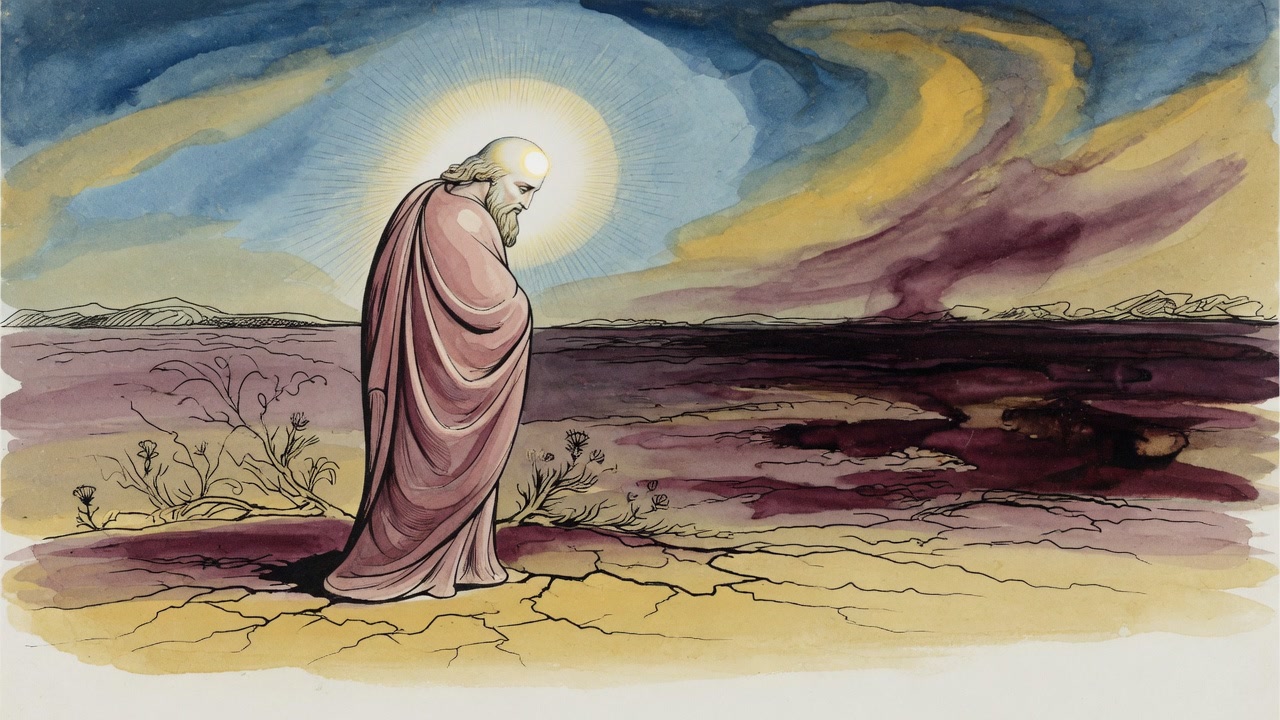
Cain stood over the ash of his own altar and spat the words as if they could break the sky. "There is no judgment, no Judge, and no other world."
 Click for full size
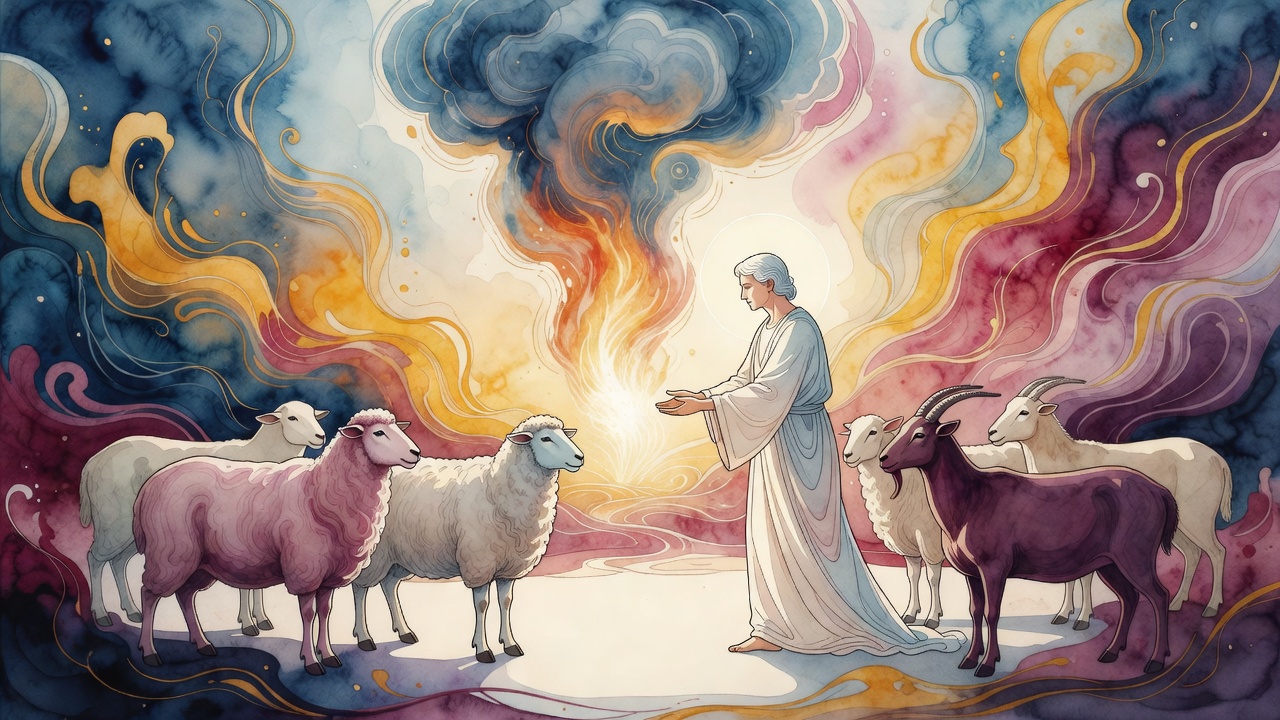
Abel did not raise his voice. He pointed at the smoke that still clung to Cain's stones and the clean fire that had taken his own lamb. "There is judgment. There is a Judge. There is a world beyond this one. Look at your offering. You did not bring it as it should be brought, and so it was not received."
The word "said" in that hour carried the sting of reviling. Cain heaped scorn on the brother whose gift had risen and whose flock still browsed the grass as if the earth itself favored him. Fury rose in him the way heat rises off black stones at noon. He could not strike Heaven, so he looked for a throat he could reach.
The Bargain Over Two Worlds
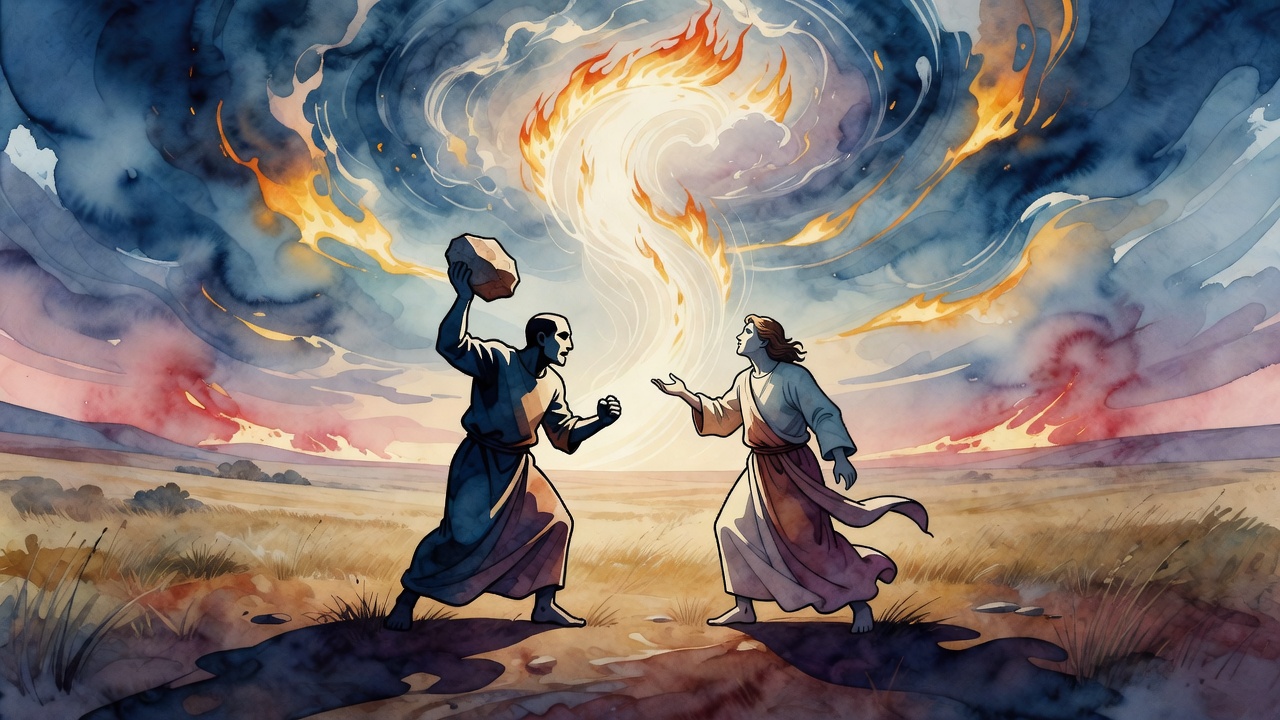
Cain turned mocking. "You believe in another world? Then let us divide. This world is mine. The World to Come is yours."
Abel agreed, thinking peace could be bought with a map. He took the invisible portion and left his brother the fields, the trees, the paths between the sheepfolds. Cain walked away as a man who had just purchased every ridge under the sun with a single sentence.
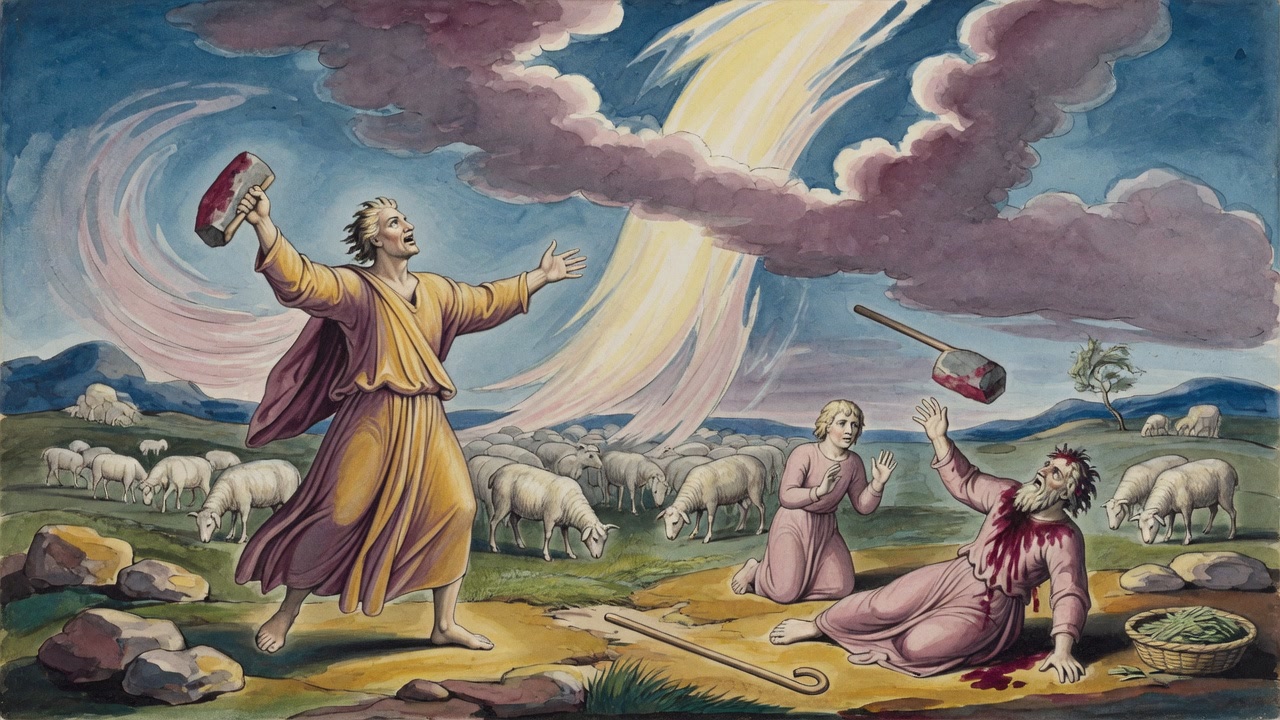
Later he found Abel pasturing the sheep in the open country and snapped the trap shut. "Did we not divide? This world fell to me. Why graze your sheep on my land?"
Abel answered that a shepherd cannot leave a flock to starve. From those words the quarrel broke open. They grappled in the dust until Abel threw Cain down and held him there, breath hard, knees in the dirt. Pity undid him. He released his brother and did not guard his own throat. Cain rose and killed Abel his brother (Genesis 4:8).
What the Fire Refused
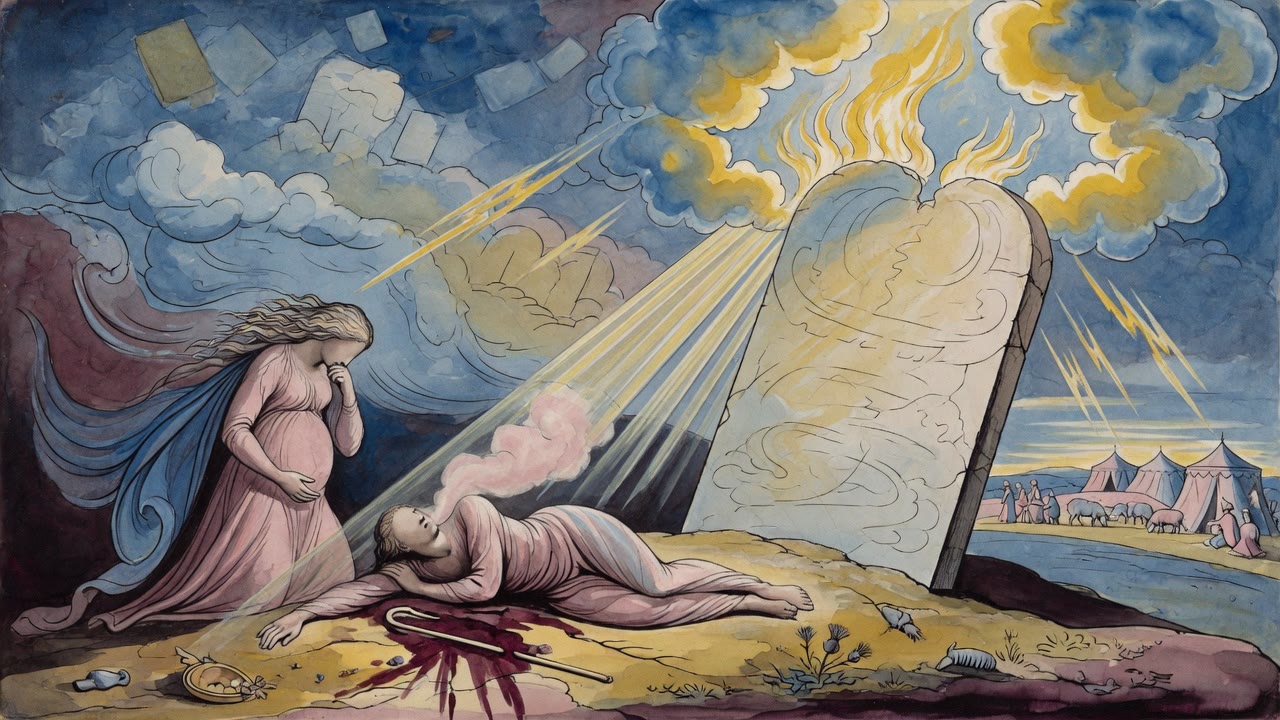
Before the blow, the argument had already been about gifts. Cain brought of the fruit of the ground. Abel brought of the firstlings of his flock and of their fat. Heaven received one and turned from the other, and Cain's face fell like a wall cracking from within.
In the later law of the meal offering, a single word still carries the poor person's handful of flour. The Torah does not say only that a man brings fine flour. It says a soul brings it. The Holy One counts that fistful as if the giver had offered his own life. Quantity never bought the altar. A fat ox piled high does not bribe the Judge who refused Cain's harvest while Abel's smoke went up clean.
A speaker who called himself dust beneath the elders' feet once warned against the arithmetic of bribery. Do not imagine you can sin freely and then buy favor with a meaty bull. A modest ram brought with return and good deeds outweighs a heavy animal laid down as payment for a clenched heart. Cain never learned that measure. He measured land, not soul. He watched his brother's lamb burn and heard in the silence over his own produce a verdict he would not accept.
The Field Where Pity Lost
Abel had strength enough to pin his brother and mercy enough to let him stand. Mercy without caution is a door left open at night. Cain used the opening. The first blood on the field was not a duel of equals. It was a man who had already declared there was no Judge, acting as if no verdict would ever find him.
The flock scattered at the sound. A ewe called and no shepherd answered. The ground that received Abel's body would later open its mouth in testimony. For that hour it only held him, quiet, while Cain wiped his hands and walked away still claiming the world he had divided with his tongue.
He had wanted the visible half of creation. He took it the only way a denier of judgment knows how: by emptying the field of the one witness who still spoke of a Judge.
After the Blow
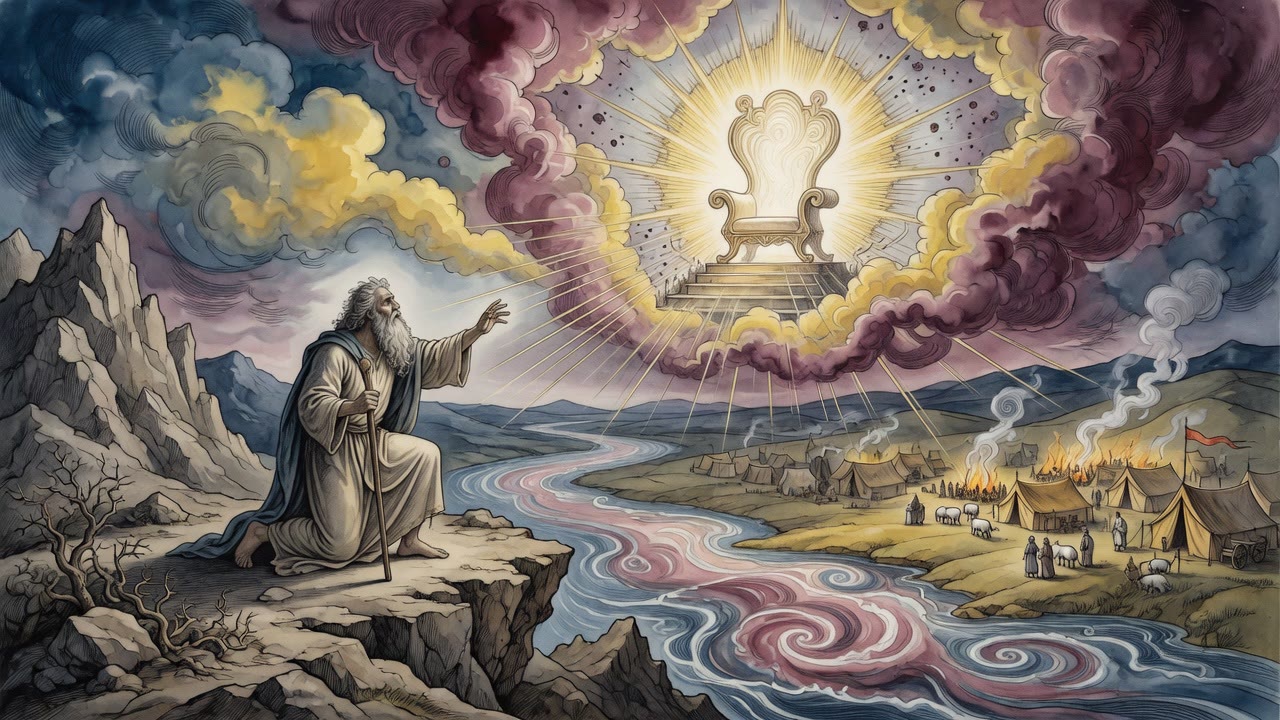
When the question came from above, "Where is Abel your brother?", Cain answered like a man still bargaining with Heaven. The same mouth that denied judgment now tried to dodge it. Am I my brother's keeper? The mark set on him was not a crown. It was a walking sentence, proof that the world he called his own still answered to a Judge he had refused to name.
He would build a city later and name it for a son, as if walls could replace a brother. The soil would not fully receive his seed. The offering he had slighted still hung over every furrow.
Abel rests under the earth he would not abandon to starve his flock. Cain wanders the world he seized with a bargain, carrying the knowledge he tried to kill: there is judgment, there is a Judge, and the offering of a soul still outweighs the harvest of a clenched fist. The division of the worlds did not save him. It only taught him how small a kingdom becomes when the only subject left is the man who murdered for it.
← All myths