5 min read

Captives of Carmel Who Read Footprints Like Torah

Two Jews dragged from Mount Carmel tracked a one-eyed camel by the grass it left uneaten. Their captor called them too clever for any master but God.

Curated by Arthur · Told by Maggid ·
Table of Contents
  1. Rope and Road Dust
  2. Smell of Pots Four Hundred Miles Off
  3. A Heretic at the Mountain Question
  4. Why Every Tree Differs
  5. What the Captor Could Not Own
Captives of Carmel Who Read Footprints Like Torah Click for full size

Rope and Road Dust

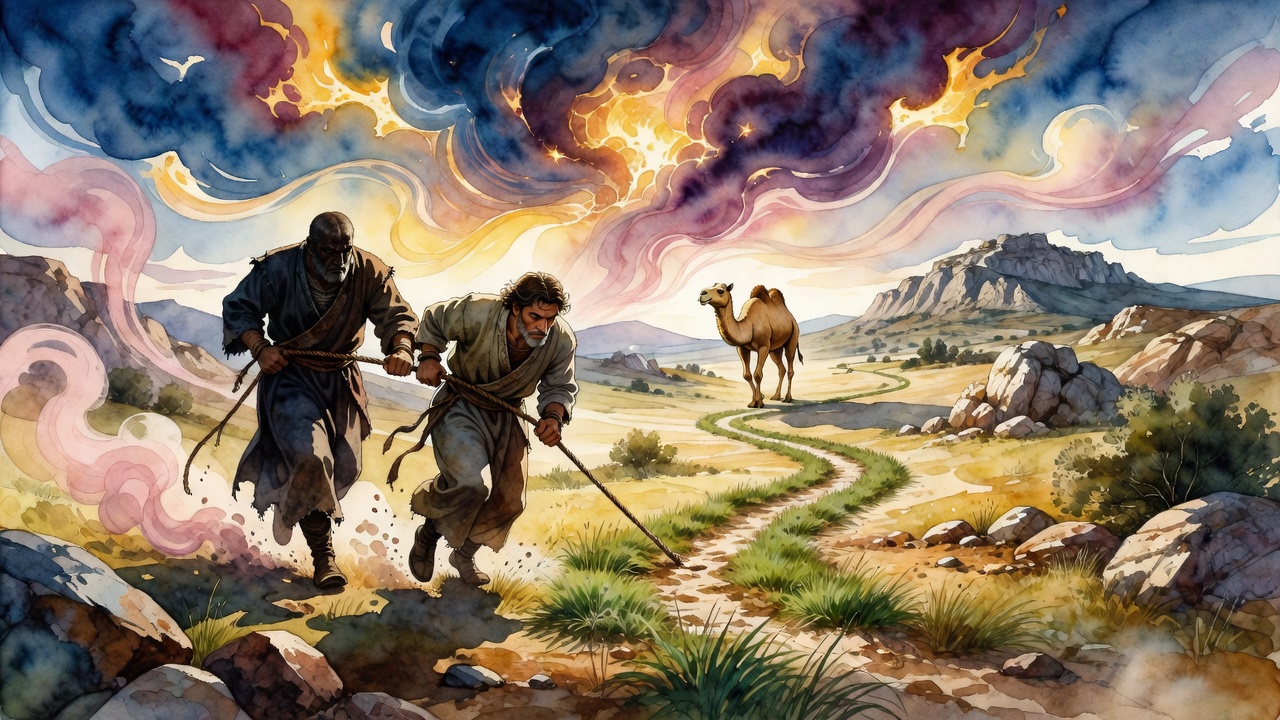
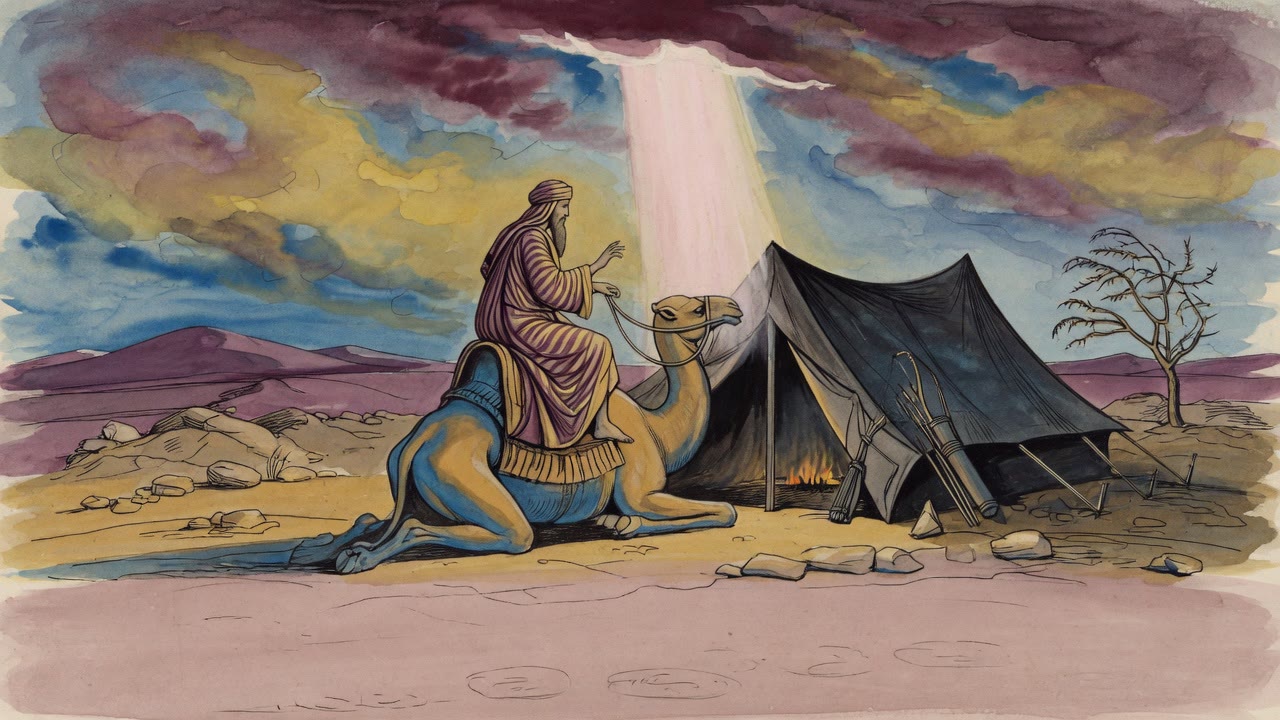
Two Jews were taken captive from Mount Carmel and driven along the road with their hands bound and their futures sold. Their captor walked behind them, bored and watchful, certain that rope was the only intelligence that mattered. One prisoner spoke softly to the other as if the dust itself were a page still open. "A she-camel passed before us. She is blind in one eye. On one side she carries wine, on the other vinegar. Two men lead her, one a heathen and one a Jew."

The captor barked laughter that had no joy in it. "Sons of a stiff-necked people, how do you know that?" They answered without theater. Footprints show a she-camel. She crops grass on one side of the path only, so one eye is dark. Wine soaks into earth one way. Vinegar bubbles another. A heathen is careless with his manners on the trail. A Jew is not.

The captor ran ahead, angry to be taught, and found the caravan exactly as they had said. Fear entered him under another name. He called it irritation, then called it proof that these men would be trouble in any house that tried to own them.

Smell of Pots Four Hundred Miles Off

They walked farther under a sky that did not care who held the rope. The prisoners said they could smell pots boiling four hundred miles off in Judea, a claim that sounds like boast until you remember how homesickness sharpens the senses. The captor snapped. "You are too clever for me. Your God cannot stand you, and how can I?" He brought them home anyway, because clever slaves still have a market price.

His mother, the tale says, saw what he had dragged in and understood that men who read roads like scripture are not ordinary loot. Cleverness here is not a circus trick for a feast. It is the last property exile cannot confiscate. Eyes trained on Torah and field become eyes that refuse to go blank when the rope tightens and the homeland falls behind the horizon.

A Heretic at the Mountain Question

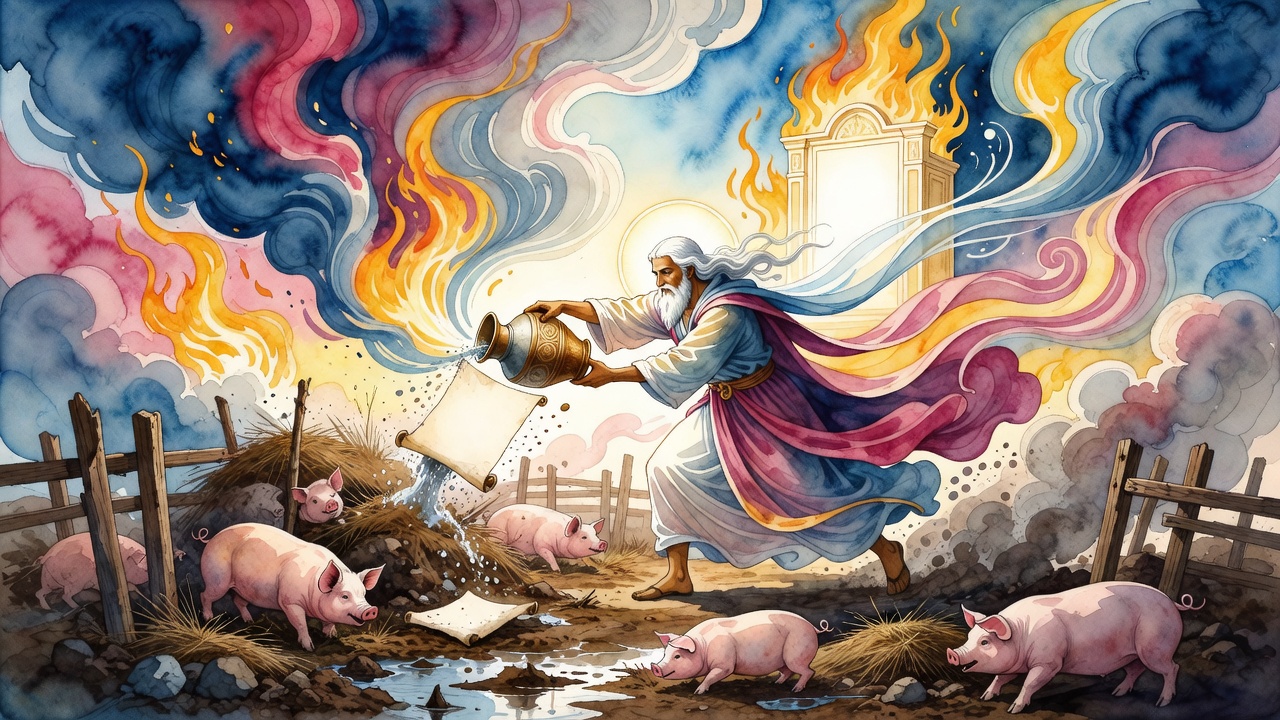
In another exchange a min, a heretic, asked a rabbi whether the Creator of the mountains also created the wind, pressing split-god talk into a single trap. The rabbi refused the split. The One who formed heights formed breath. The same insistence lives in the captives' tracking. The world is legible because it is one work. Tracks, smells, manners, and mountains do not belong to rival makers. They belong to a single authorship that careful people can still read under duress.

The heretic wanted a crack in Heaven wide enough to push an argument through. The captives walked a cracked road and still found order in dust, which is a quieter and harder reply than any debate hall can stage when the wine is free and the danger is only verbal.

Why Every Tree Differs

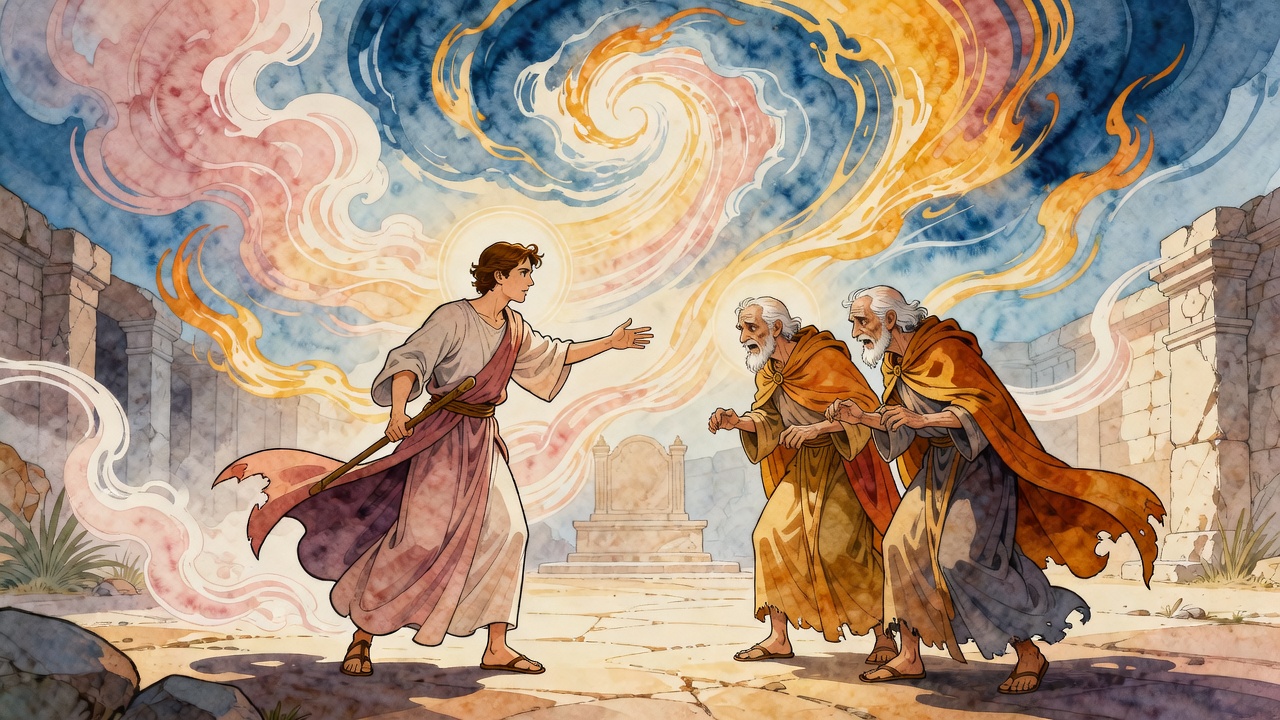
Rabbi Shimon ben Halafta taught that God made every tree different, each with its own fruit and leaf and grain of wood, so that the world would not be a flat field of sameness. Difference is not a flaw in creation. It is a signature. The captives read difference in the road the way a botanist reads bark. One-eyed crop marks. Wine versus vinegar. Manners of two leaders on one rope of a camel.

A people trained to notice difference in trees will notice difference in footprints. A people forced into sameness by empire will still smuggle observation like contraband. That is how Carmel's sons stayed themselves while the rope cut their wrists.

What the Captor Could Not Own

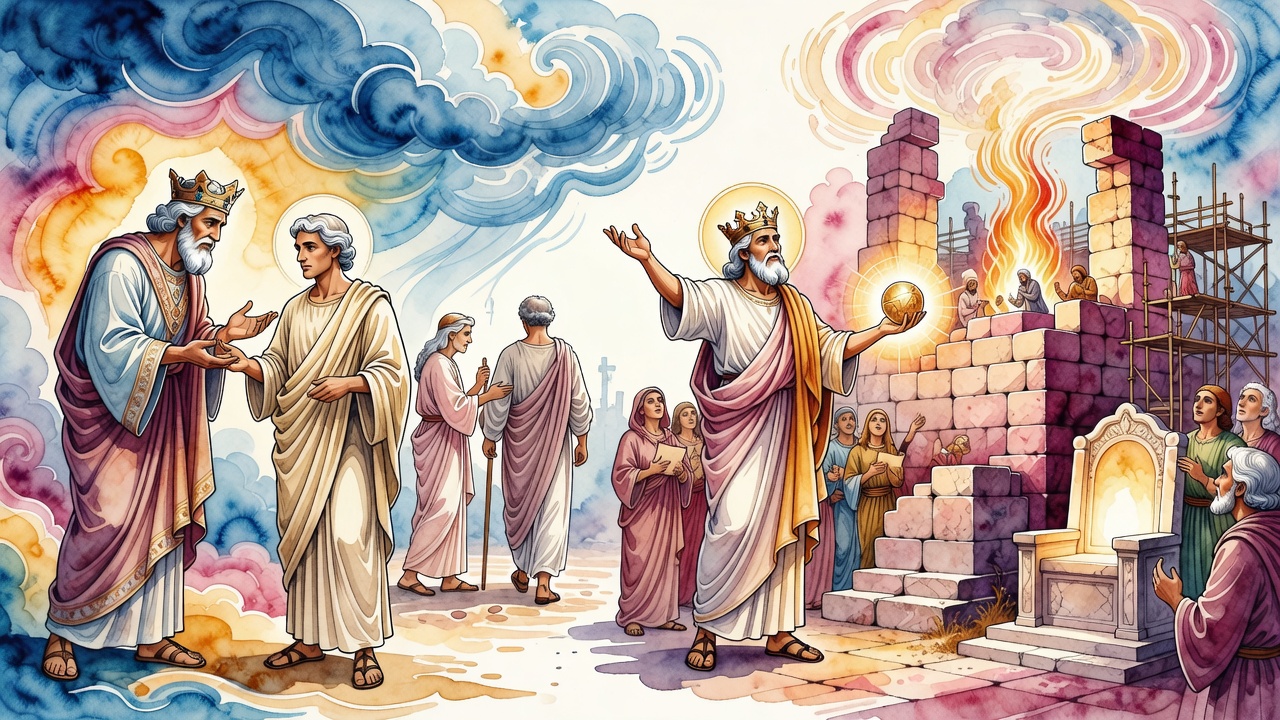
He could own their labor for a time. He could own their sleep and their hunger. He could not own the way their minds walked ahead of their feet, sorting wine from vinegar in the dirt. That is why he cursed their God and still feared their eyes. Empire wants bodies that do not notice. Israel, even in irons, notices, and noticing is a form of freedom that does not wait for a key.

When they finally slept, if they slept, the road kept writing itself behind them. Somewhere a one-eyed camel chewed one side of a ditch. Somewhere pots boiled in Judea. Somewhere a different tree stood ready to prove that Heaven loves variety more than the whip loves silence.

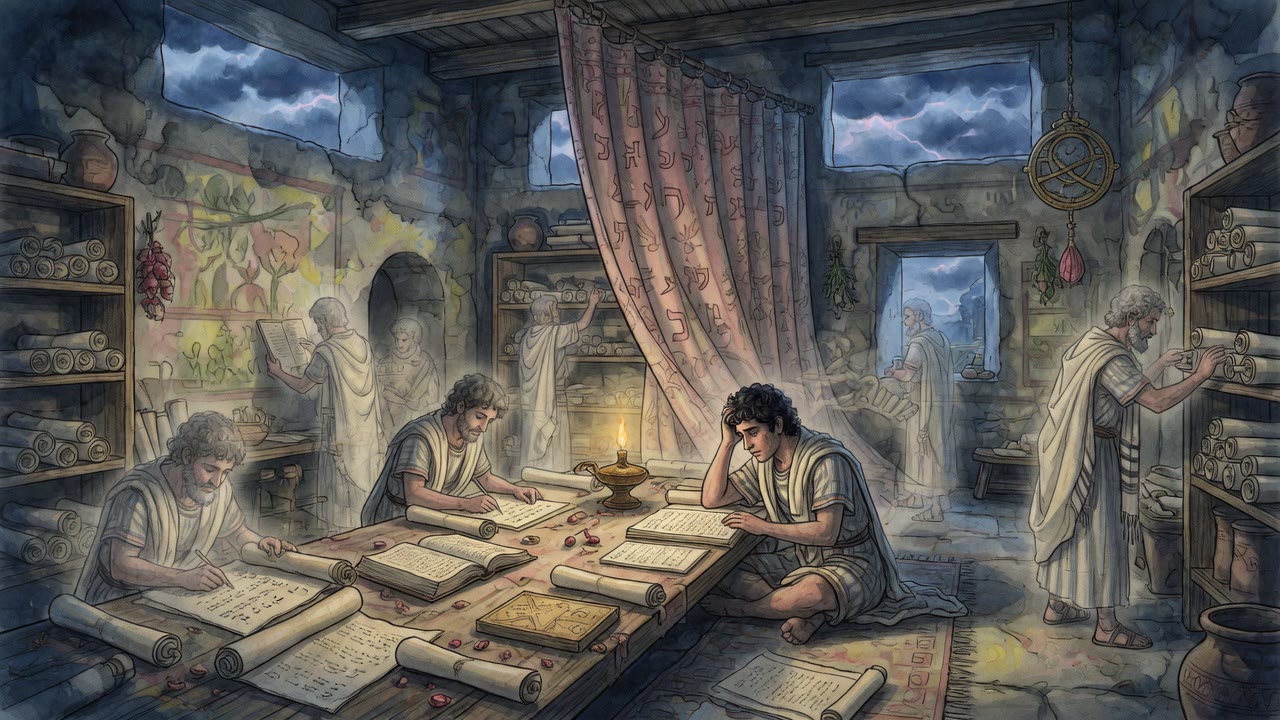
Walk the scene once more in your mind. Hear the door, the rope, the pot, the tunnel dirt. The myth is not a summary. It is a room you can still enter.


← All myths
From the tradition

Sources

3 sources

The texts behind this telling. Some cards carry a translation of the source; others are our own retelling of it, and each card says which. Every card links out to the original.

Exempla of the Rabbis, No. 51Exempla of the Rabbis (Gaster, 1924)

Retold in our words. Read the original at the link below.The Exempla of the Rabbis, Moses Gaster (1924) · Public Domain

Two Jews were carried away captive from Mount Carmel. The captor following them overheard one saying to the other “A she -camel has passed before us, she is blind of one eye and on one side she carries wine and on the other vinegar, and two men lead her the one an heathen and the other a Jew.” The captor said “Oh ye sons of a stiffnecked people, whence do ye know that? ”They replied: “We recognise a she-camel by the foot-prints, the blindness because she feeds only off the grass on one side of the road, the wine dropping down has soaked into the earth, the vinegar makes bubbles, and the heathen is not so careful in his manners as the Jew. The captor ran after them and found the words true.”

- 64

Walking farther they said: ‘‘We smell the pots boiling 400 miles off in Judaea." He replied, “you are too clever for me, your God cannot stand you and how can I?" He brought them home and his mother killed a she-lamb and placed it before them and gave them wine to drink." One said to the other "This flesh smells of the dog and the wine of the corpse." The man asked his mother if this was so and she explained that this lamb had been suckled by a bitch and the vine had grown on the grave of his father. After they had eaten the man began to dance and they said "That is an illegitimate child." He frightened his mother and she owned that she had once made a mistake with a dancer and then he came back and said unto them "Blessed is the Lord who has selected the seed of Abraham and has given them of his wisdom. Wherever you go you will be the masters of your master." And he gave them gifts and set them free and they returned to their own country.

Full source
Exempla of the Rabbis, No. 176Exempla of the Rabbis (Gaster, 1924)

Retold in our words. Read the original at the link below.The Exempla of the Rabbis, Moses Gaster (1924) · Public Domain

A Min, a term the rabbis use for a sectarian or heretic who denied the unity of God, came to challenge a sage with a question dressed as scripture. He pointed to the prophet Amos, who declares that the One who forms the mountains also creates the wind (Amos 4:13), and tried to twist the doubling of verbs into evidence that the Maker of the mountains and the Maker of the wind were two separate powers rather than one God. Such dualist arguments, splitting creation between rival deities, were a recurring assault on Israel's confession that the Lord is One.

The verse itself defeats the heretic's reading, for it names a single subject who forms the mountains and creates the wind and declares to man his thoughts, the God who turns dawn to darkness and treads the high places of the earth. The prophet's whole point is the unrivaled sovereignty of one Creator over every domain, mountain and wind alike. The sectarian had taken a proof of unity and tried to make it a proof of division.

Before the Rabbi could even frame his reply, the man fell from the roof and died. The abrupt ending carries the tale's verdict. The challenge collapsed of its own weight, and the one who came to fracture the oneness of God was struck down before a word of refutation was needed. The story stands as a sharp warning that arguments raised to divide the Creator find their answer not in debate but in the swift undoing of the one who raises them.

Full source
Exempla of the Rabbis, No. 239Exempla of the Rabbis (Gaster, 1924)

Retold in our words. Read the original at the link below.The Exempla of the Rabbis, Moses Gaster (1924) · Public Domain

Rabbi Shimon ben Halafta was known as a man who tested everything through experience rather than theory alone. When a question arose about the nature of children, he did not consult books. He observed life.

The Midrash Hagadol on Exodus (Mishpatim) records that Rabbi Shimon had several sons, and he raised them with careful attention to how their characters developed. He noticed something that other sages had debated only in the abstract: children born of the same parents, raised in the same house, fed the same food, and taught the same lessons could turn out entirely different from one another.

One son was naturally drawn to Torah study. Another preferred working with his hands. A third was restless and adventurous, always running off to explore the fields. Rabbi Shimon did not try to force them all into the same mold. He let each child follow the path that matched his nature.

The sages challenged him. "Should you not direct them all toward Torah?" they asked. Rabbi Shimon replied with a teaching that echoed through generations: "Even God did not create all trees the same. The cedar is tall and strong but bears no fruit. The vine is low and humble but produces wine that gladdens the heart. Each was created for its own purpose."

Bereshit Rabbah (9:1) confirms this principle. When God looked at His creation, He declared it "very good" (Genesis 1:31), not because everything was the same, but precisely because everything was different. A father's task is not to make his children identical. It is to help each one discover the unique purpose for which God created them.

Full source