The Upper Waters Hang on God's Voice and Rain Waited for Adam to Ask
The upper waters floated on God's ongoing voice. The sixth day borrowed time from Shabbat. Rain did not fall until Adam stood and prayed for it to begin.
Table of Contents
 Click for full size
Water floating above the sky with nothing underneath it
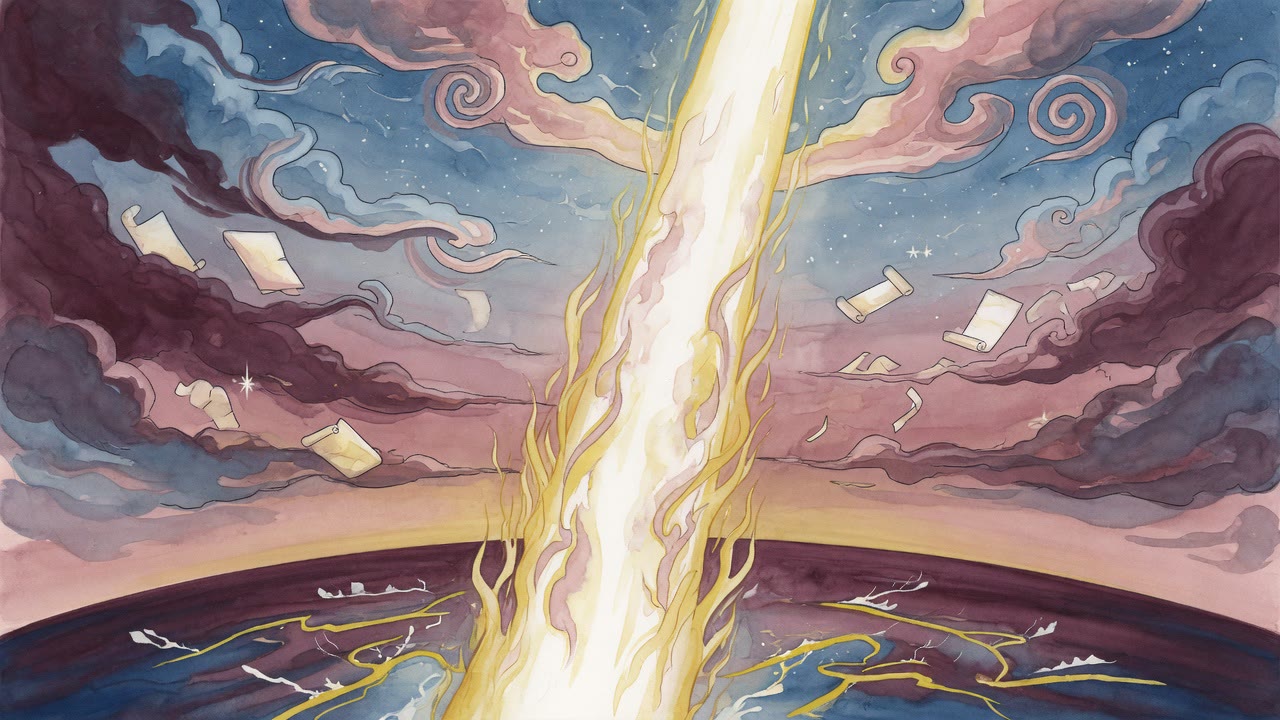
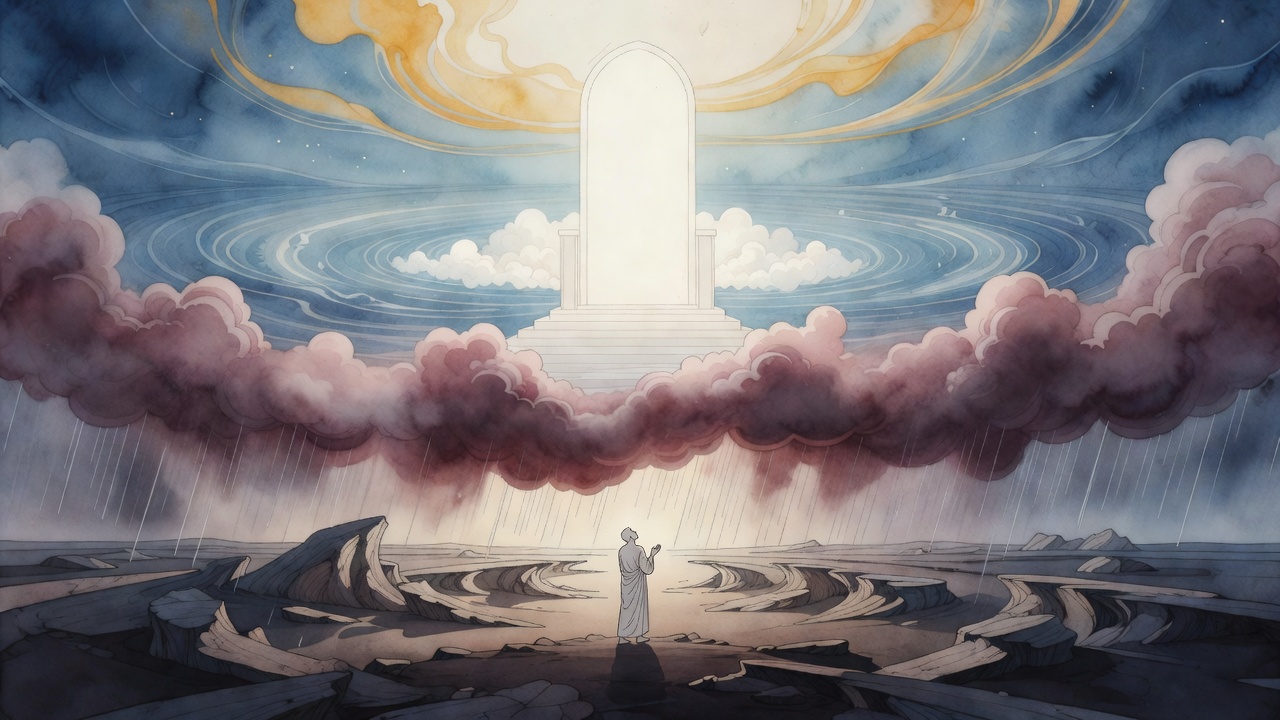
Rabbi Pinchas reported a measurement. The distance from the earth to the firmament equaled the distance from the firmament to the upper waters above it. The sky sat exactly halfway. A cosmic divider, hung in space, with an ocean pressed against its outer face and nothing visibly holding that ocean in place.
Rabbi Tanchuma asked the obvious question. What holds the upper waters up? If they rested on the firmament, the Torah would say so. Instead it says they are above the firmament, not on it. They float without support. The gap between above and on was the rabbis' opening, and they took it.
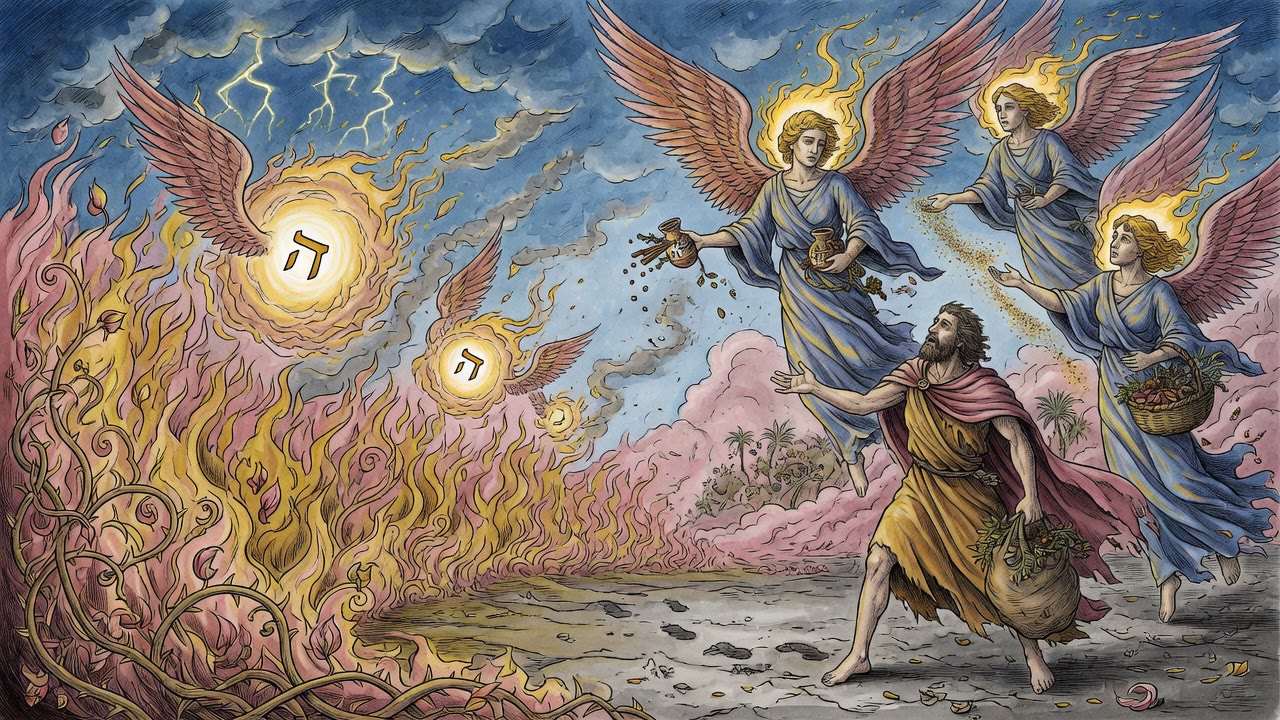
Rabbi Tanchuma's answer was one of the strangest and most precise images in Bereshit Rabbah. The upper waters hang on the voice of God. A single spoken sentence, the sentence God used on the second day when he divided the waters above from the waters below, is still in the air. Still vibrating. The waters are held up by an ongoing act of speech that has not ended. Stop speaking and the sky collapses into the sea.
Creation was not a completed event. It was a continuous performance. The universe was not a machine wound up and left running. It was a spoken word still being spoken.
A flame that does not touch the oil it burns in
Rabbi Acha offered a household image to soften the scale of what Rabbi Tanchuma had just said. Watch a lamp burning in olive oil. The flame does not touch the oil. It sits above the wick that sits in the oil, and the distance between the flame and its fuel is maintained by a process that looks like floating and is actually a kind of continuous combustion that requires exactly the right conditions to persist.
The upper waters and the firmament were the same relationship made cosmic. The water floated above the divider the way a flame floats above oil. Not unsupported. Supported by a process that had to keep running, that could fail if the conditions changed, that was, in that sense, a kind of ongoing miracle rather than a completed fact.
The rabbis were not making God's sustaining of the universe sound precarious. They were making it sound present. The world was not holding itself up. It was being held. Every moment of its existence was an act of continued attention rather than an initial push followed by coasting. The firmament under the waters was not a shelf. It was evidence that the speech of the second day was still in the air.
The extra hour and the borrowed dark
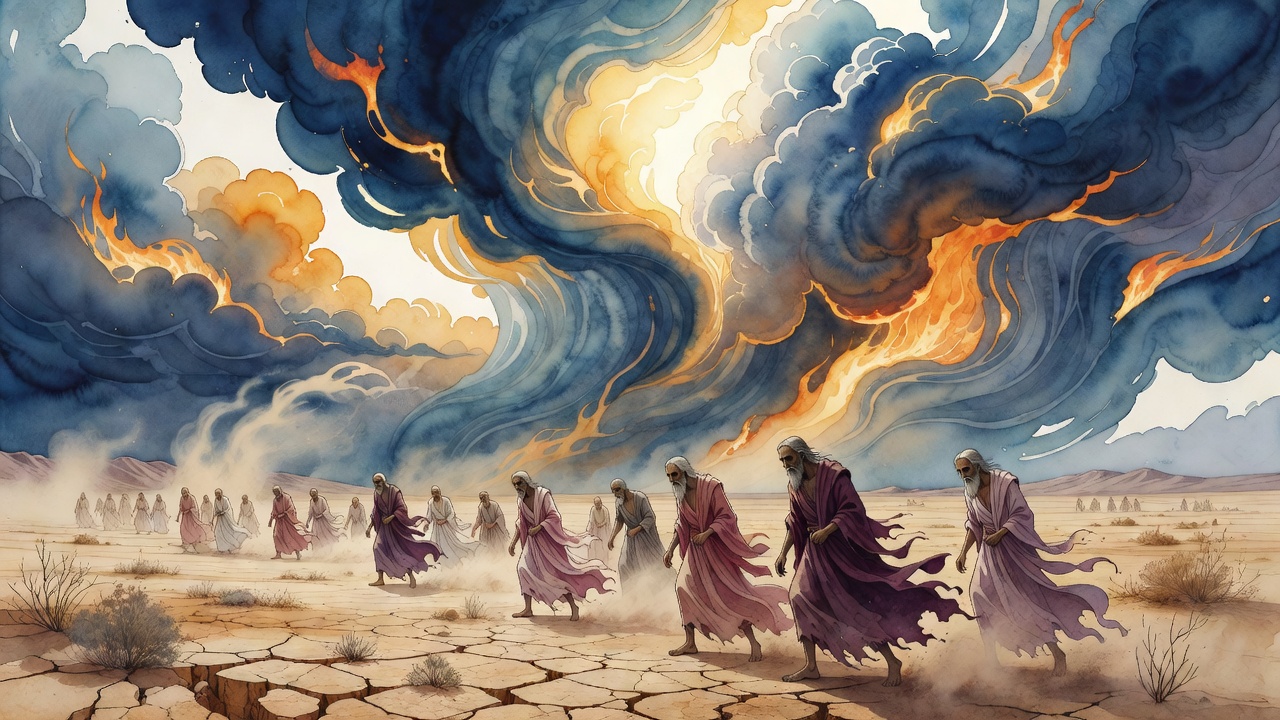
The sixth day ran over. The rabbis who counted the hours of creation noticed that God had finished his work but that Shabbat had not quite arrived. There was a gap, a sliver of Friday evening that was not quite the seventh day but was no longer the sixth. Some of the activities of preparation, the carrying and the finishing and the last touches on what had been made, extended into that liminal time.
The tradition recorded that God borrowed from the coming Shabbat and repaid it later. The Shabbat, in this reading, agreed to lend. The creation of the world required one last hour that did not belong to any of the seven days but was a kind of shared time between the sixth and the seventh. The world was completed in borrowed light, in a moment that had to be negotiated with the sanctified day rather than simply taken.
The rabbis found this significant not as a theological problem but as evidence that even the creation of the world required coordination. Nothing was done in pure isolation. The days worked together. The sacred day was consulted before its time was borrowed. The universe that emerged from this process was not a solo act but a collaboration across a timeline that had to be respected even by the one who had made it.
Rain waited for someone to ask for it
The second chapter of Genesis says that no shrub of the field had yet grown because rain had not come and there was no one to work the ground. The sequence caught the rabbis' attention. Rain had not come. No one was there to work. Then God formed Adam from the dust.
Then it rained.
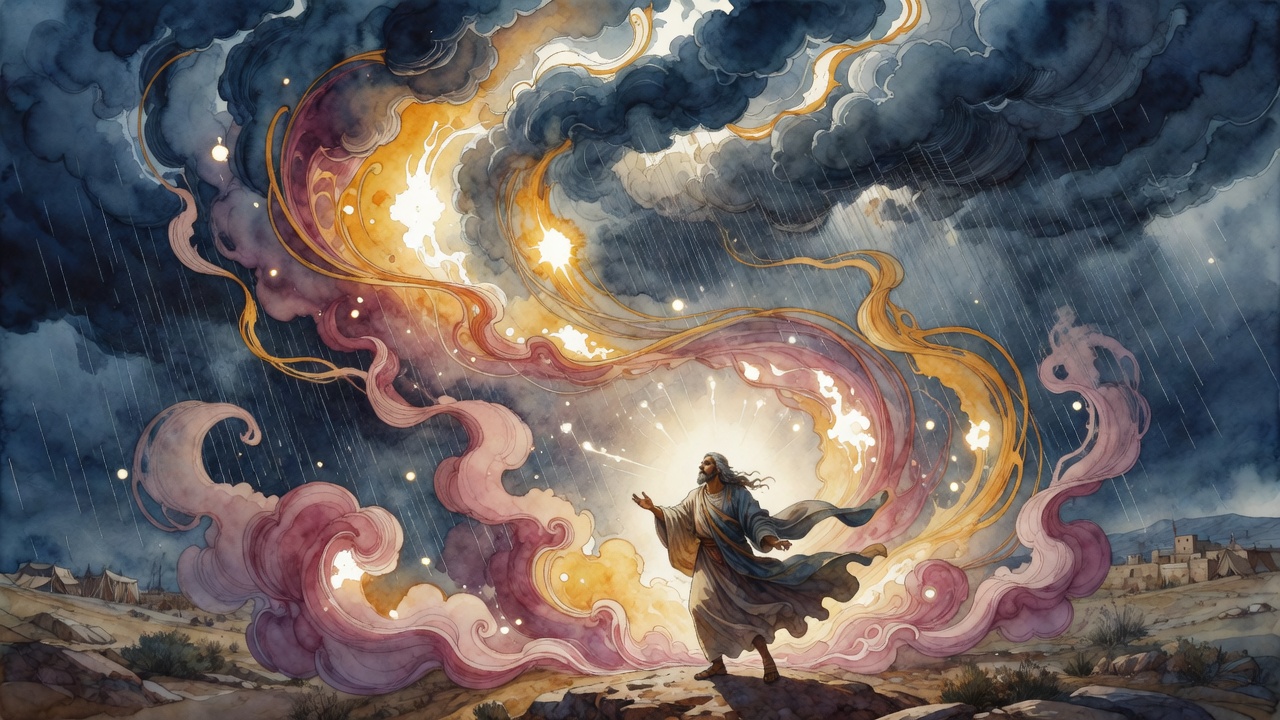
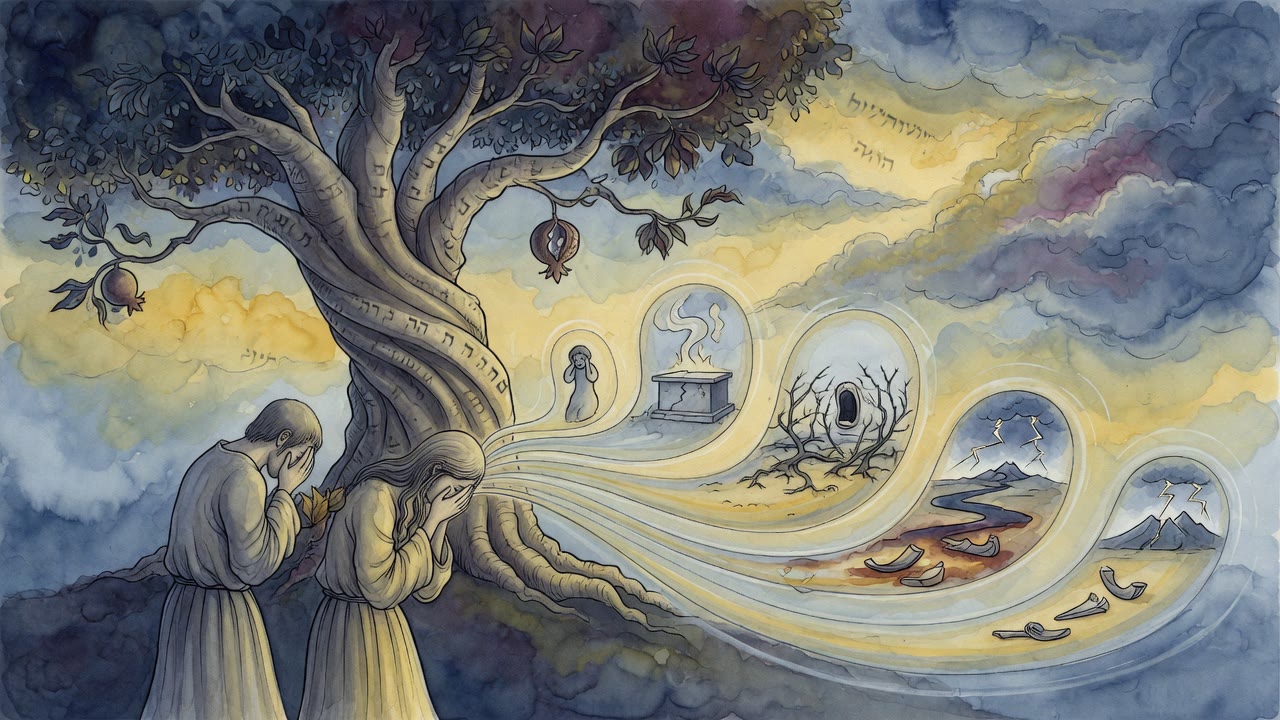
Bereshit Rabbah drew the connection directly. The rain was waiting. The ground had been seeded on day three but lay dormant. The mechanism of germination was installed but not triggered. What triggered it was not a divine command issued independently but Adam recognizing the need and praying for rain.
Adam had not been outside yet. He had been formed and breathed into and given the naming task and not yet walked in the garden. But he looked at the dry ground and understood what it needed, and he asked for it. The prayer went up. The rain came down. The ground that had been waiting produced what it had been seeded to produce, and the story of the garden became possible.
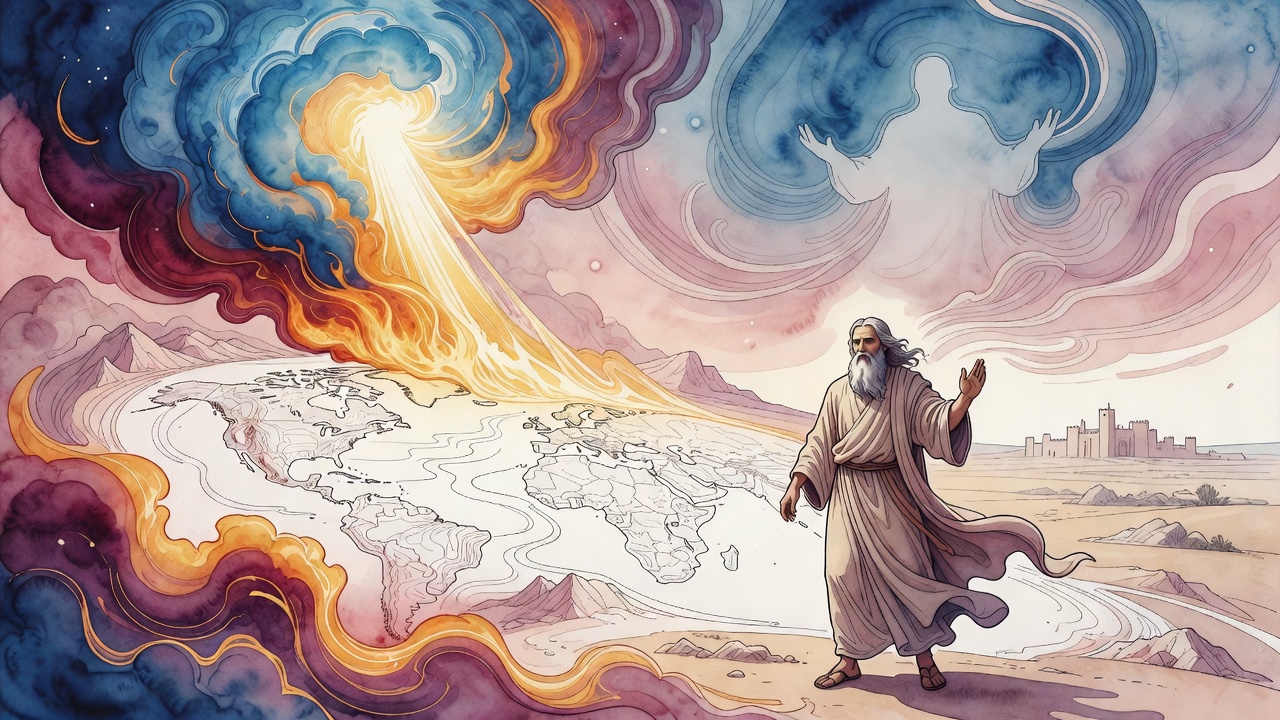
The upper waters floating on a spoken word. The borrowed hour at the end of the sixth day. The rain that waited for a human prayer to release it. Bereshit Rabbah held these three as the same image. God had built the world with specific gaps, not from incompletion, but because the completion was designed to require human participation. The universe that held together because God was still speaking needed a creature who could also speak, who could ask for rain and trigger what was waiting, who could recognize what was incomplete and bring it to completion.
← All myths