Cain's Line Forgot the Prayer and the Rain Came Down as a Flood
Lemekh kept one wife to bear children and gave the other a drink that made her barren. Neither of them had anything left to ask anyone for.
Table of Contents
 Click for full size
Nothing Grew Because Nobody Had Asked
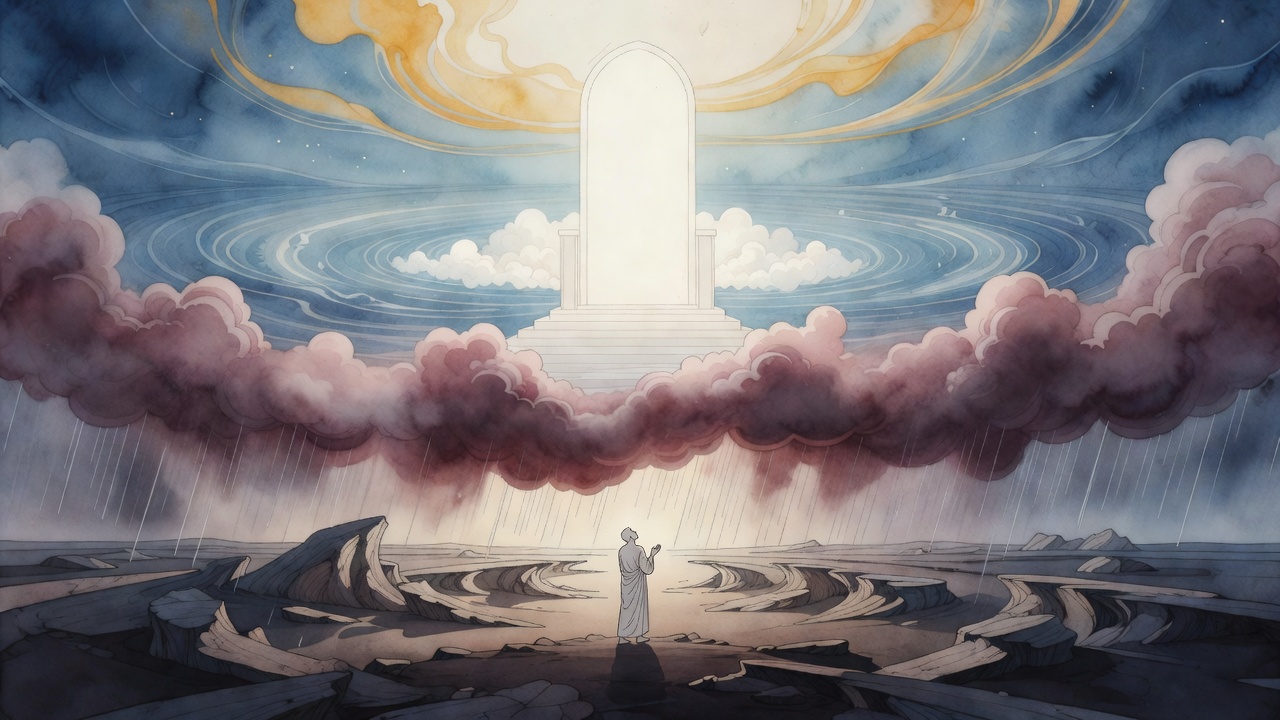
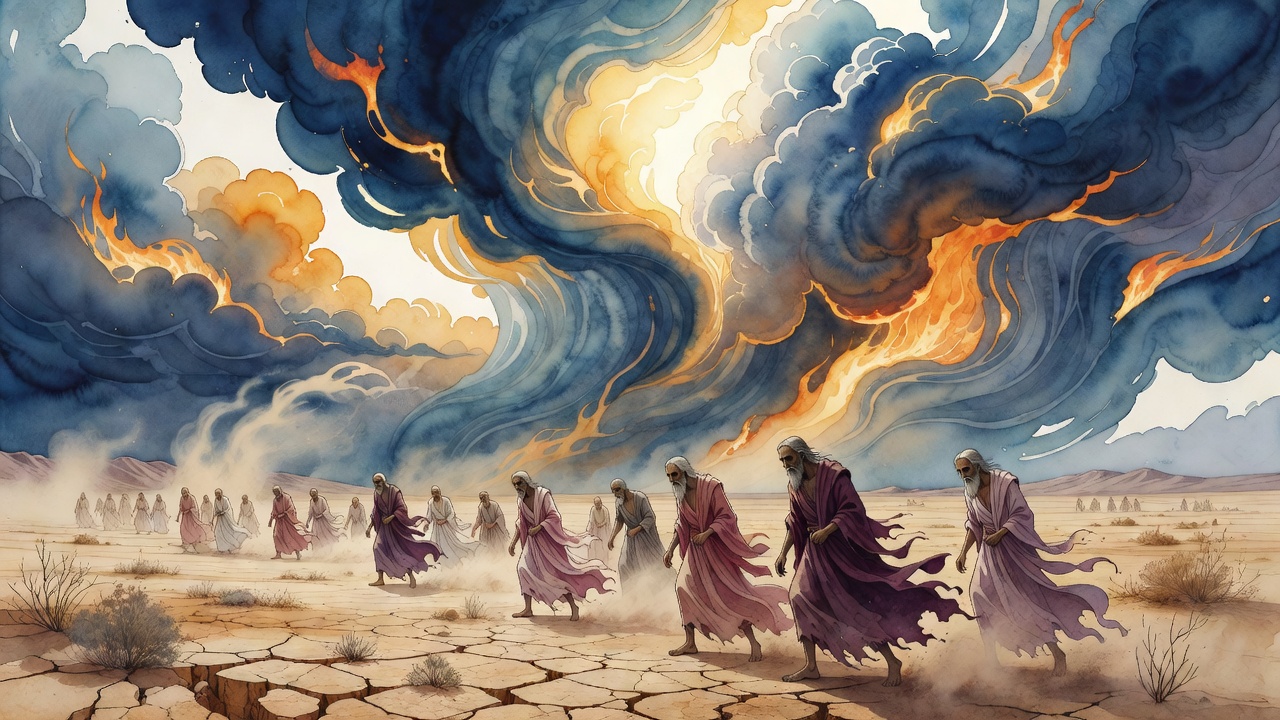
The ground was finished and the ground was bare. The seed was down in it. Nothing had come up.
Genesis gives two reasons in one breath. No rain had fallen on the earth, and there was no man to work the soil. Rabbi Hanina sorted out which trees were which. The ones God grew straight up out of the ground belonged to the garden, a walled place with its own arrangements. Everything past the wall was on a slower clock. Rabbi Hiyya cut through both. Garden trees and open-field shrubs, neither came up until rain fell on them, and rain was not falling.
The world had been built and it was standing still, waiting for weather that had no reason to arrive.
What One Mouth Could Pull Out of the Sky
There was no man to work the ground, the verse says. Bend the word one notch and it stops being farm labor. There was no man to bring people to serve, nobody yet who could get a crowd to lift its head.
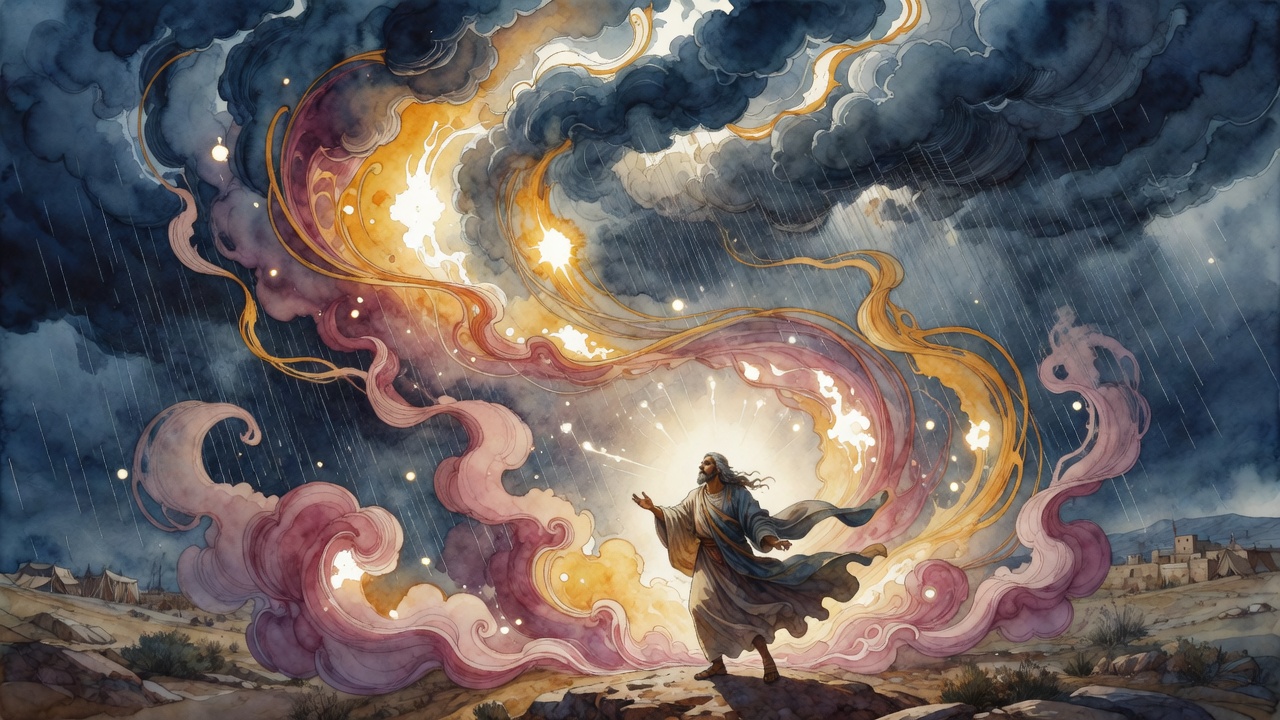
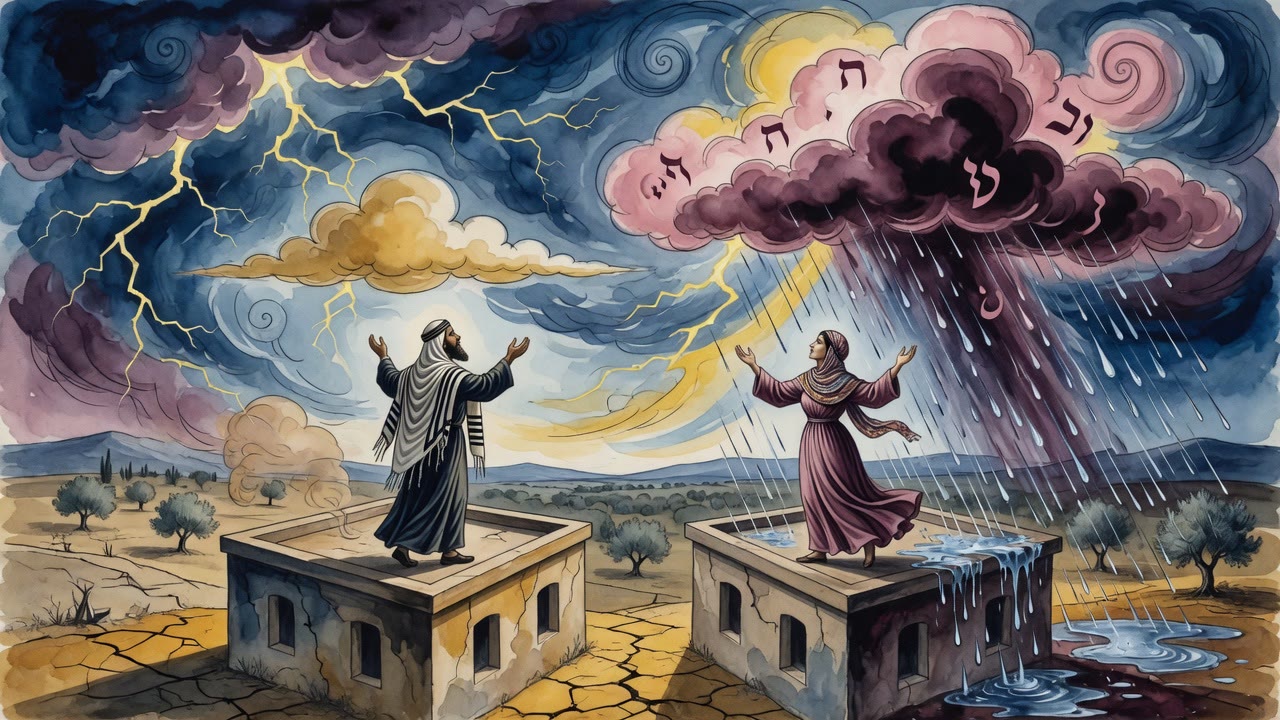
Two names come attached to that job, and both of them are men who pulled rain out of a shut sky with a prayer. Elijah climbed Carmel in a drought and stayed bent to the ground with his face between his knees while a servant went to look at the sea seven times. Honi HaMe'agel drew a circle in the dirt, stood inside it, and told God he was not stepping out of it.
Without a man like that, no agreement gets made with the ground at all. Job puts the question flat. Who brings rain on a land with nobody in it, on a wilderness where no person lives?
Man was made for labor, and there are two kinds. If he earns it, his labor is in Torah. If he does not, his labor is in the dirt.
Lemekh Kept One Wife for Children and One for Show
The generation before the Flood worked out an arrangement, and Lemekh, the most prominent man in it, ran the standard version in his own house.
A man took two wives. The first was for children. Once she had borne them she was finished, and she sat in her husband's house like a widow while he was still alive, in the same rooms, at the same table, not spoken to.
The second was for him. He gave her a drink that made her barren so nothing would come of it and nothing about her would change, and then he dressed her and hung ornaments on her and kept her beside him like a woman for hire.
Job saw the practice from outside and got both women into one line. He keeps company with the barren who will not bear, and to the widow he does no good.
Removed, and Sitting in His Shadow
Their names carried the arrangement in them. Adah, because she was removed from him. Tzilah, because she sat in his shade.
One woman put out of reach inside her own house. One woman kept close and kept empty. That household forgot how to ask for anything, because there was nobody left in it who was allowed to want.
The Names Were the Verdict, Written in Advance
Read Cain's line straight through and it is fathers and sons and nothing else. Rabbi Yehoshua ben Levi read the same list as a sentence being handed down one syllable at a time.
Irad. I will expel them from the world.
Mehuyael. I will wipe them off the world.
Metushael. I will uproot them out of the world.
And Lemekh, which comes apart into a question with nothing under it. What have I to do with you? What do I need from you or from anything that comes out of you?
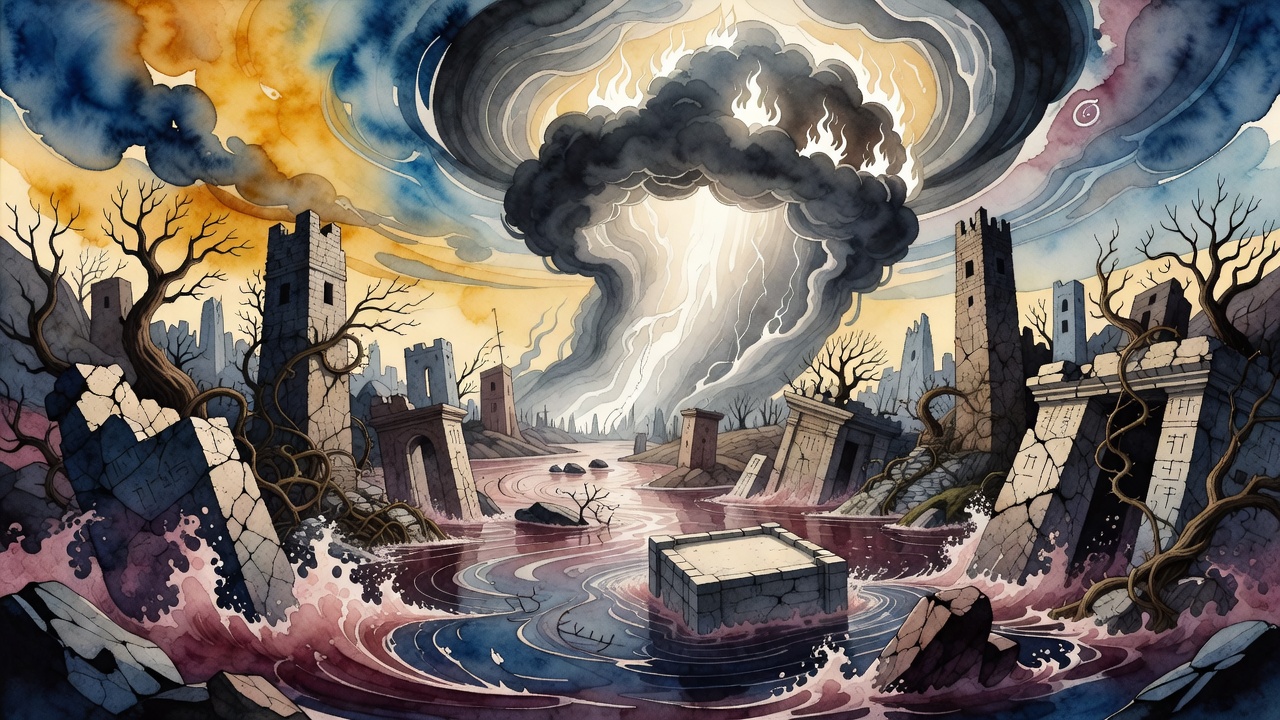
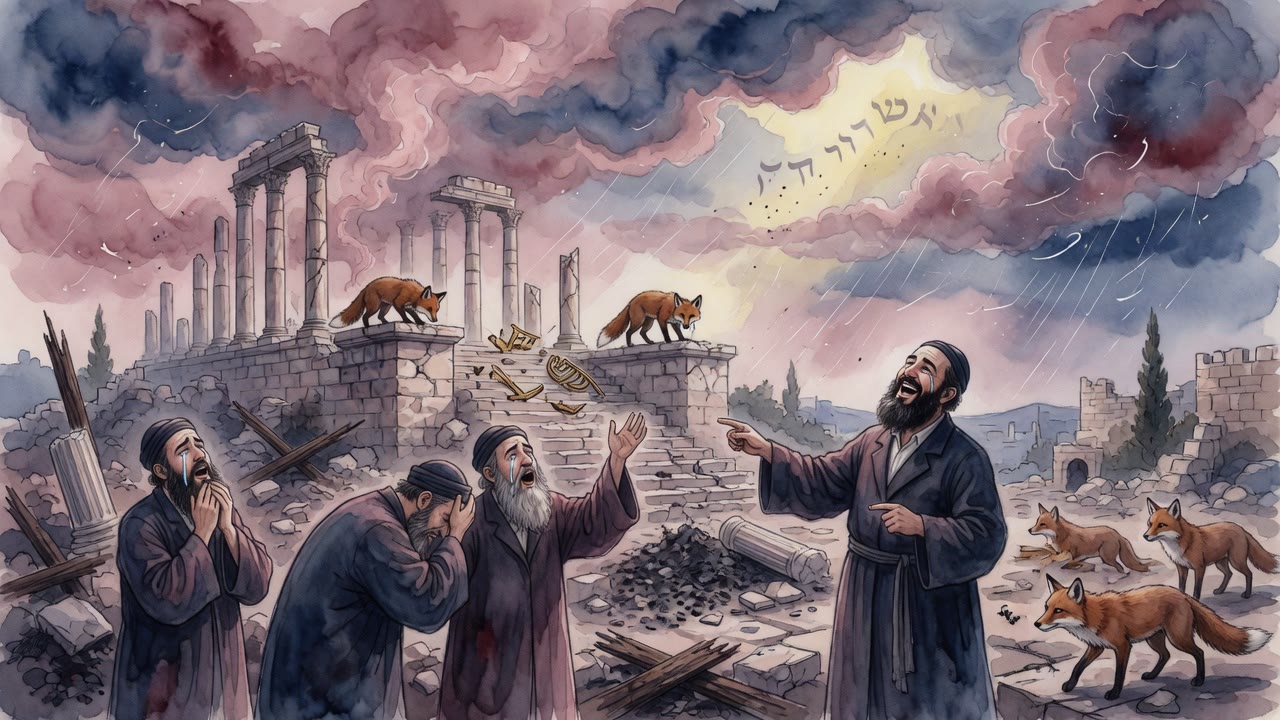
Four generations of men stood over their newborn sons and chose those names, and the ruling was already inside every one of them. Nobody in that line ever asked for rain. Rain came down anyway, forty days and forty nights of it, and the ground that had waited since the first week for one person to look up and ask went under without ever being asked.
← All myths