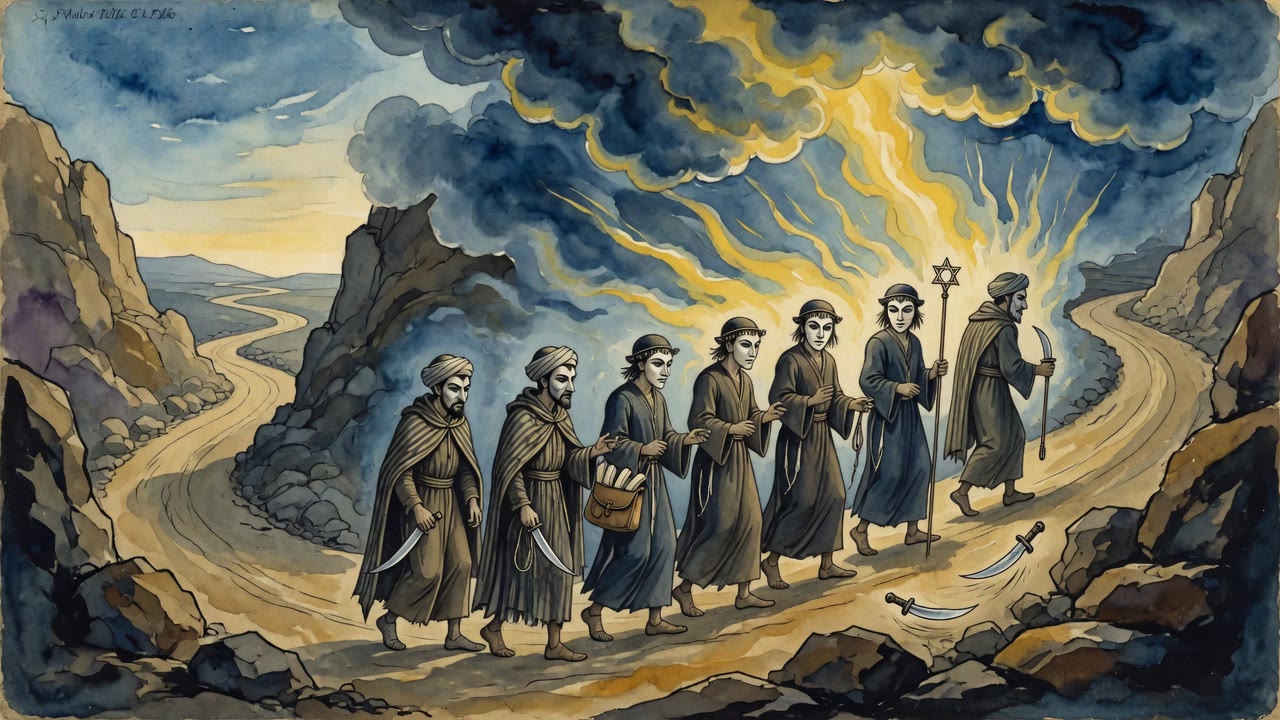
5 min read

Crumbs on His Fingers Opened the Door to Murder

He left a tavern with lunch still on his hands. A stranger read the crumbs, fooled his wife, and the house ended in blood.

Curated by Arthur · Told by Maggid ·
Table of Contents
  1. The Proof at the Door
  2. The Minute He Thought He Saved
  3. Wine and the Thirteen Woes
  4. What the Body Advertises
  5. The House After

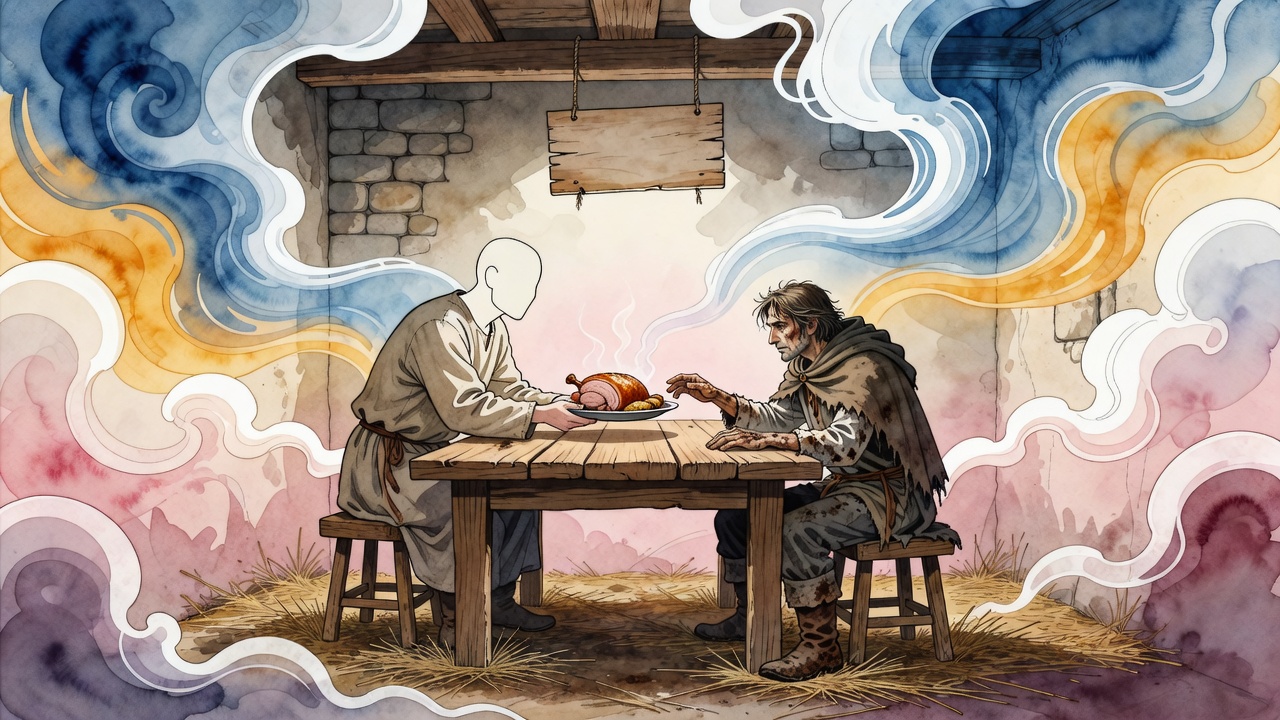
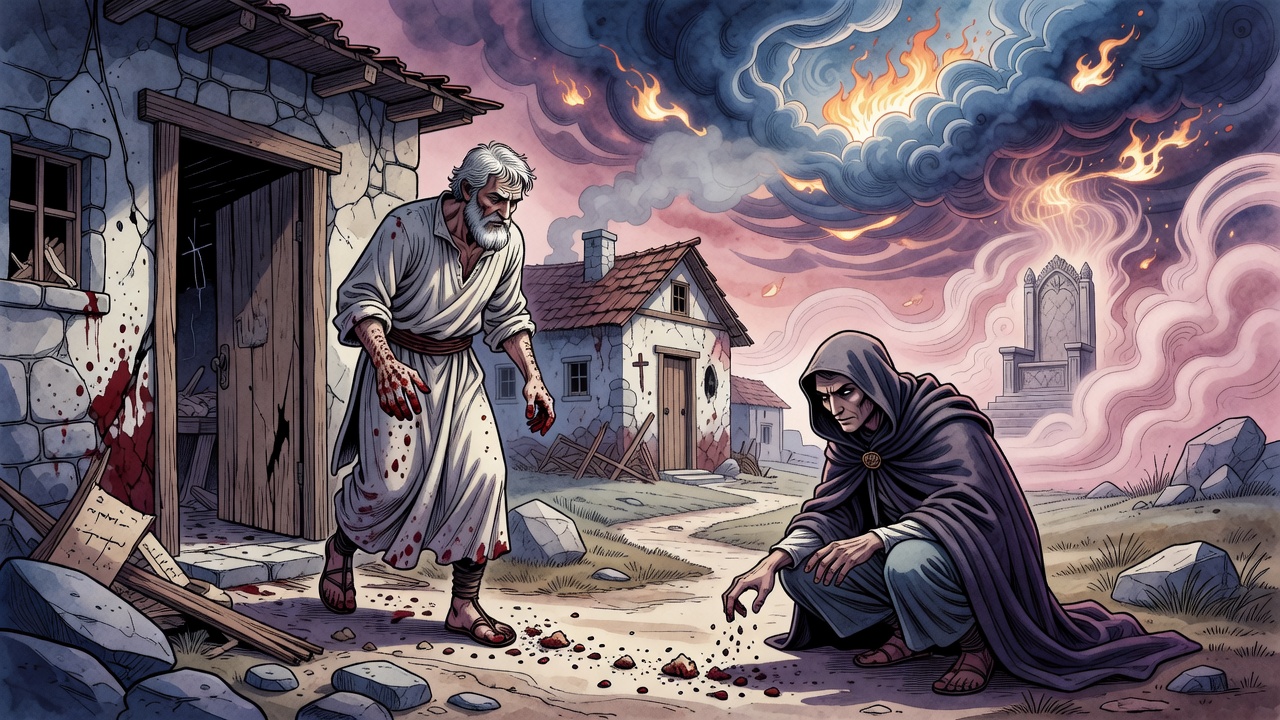
He rose from the table with grease still shining on his knuckles. The bowl of water waited by the door. He walked past it. Outside, the afternoon heat pressed on the street, and he wiped his fingers on his cloak as if that counted for washing.
Crumbs on His Fingers Opened the Door to Murder Click for full size

A stranger watched him leave the tavern. The stranger did not need a name. He needed residue. Bread crust. A spice that clung under a nail. The exact shape of a meal written on skin.

The Proof at the Door

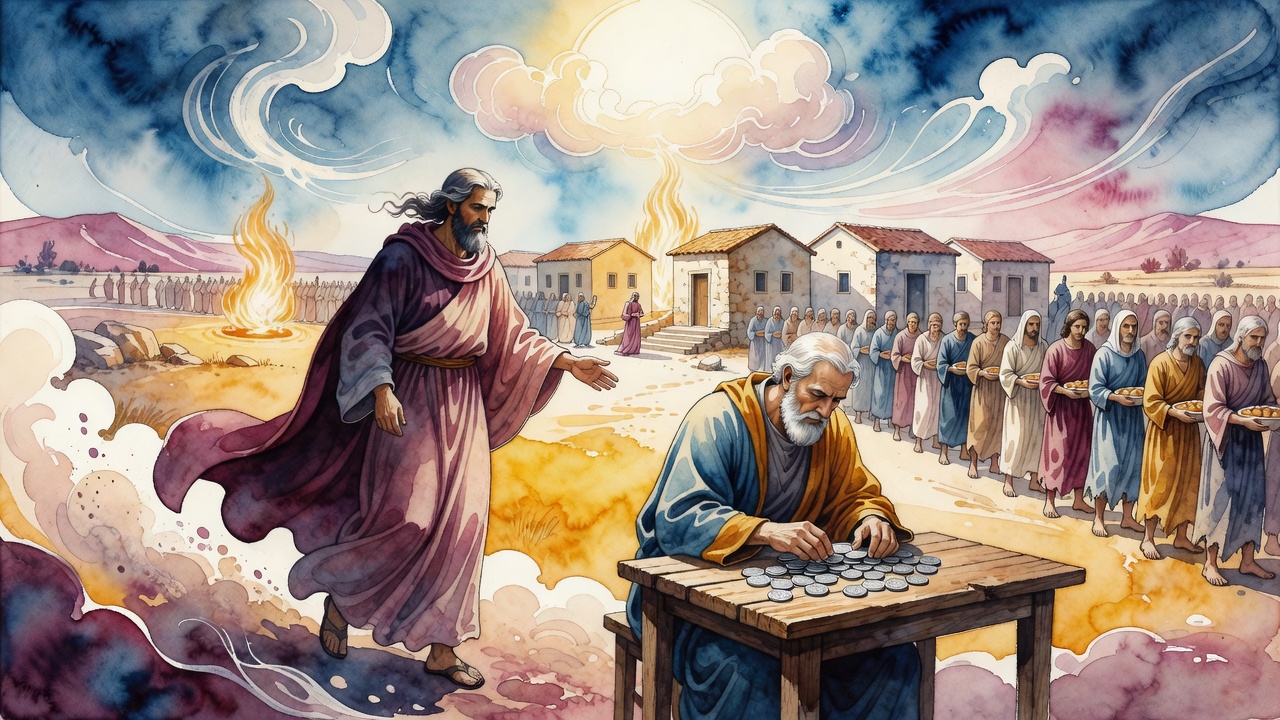
That evening the husband was still away. The stranger knocked. The wife opened. He spoke with the calm of a messenger who already knows he will be believed.

"Your husband sent me," he said. "He told me what he ate so you would know I come from him." Then he recited the lunch, spice by spice, as if he had sat across the table. The wife could not invent another explanation. How would a stranger know the food unless her husband had spoken? She handed over a valuable piece of household property and watched him go.

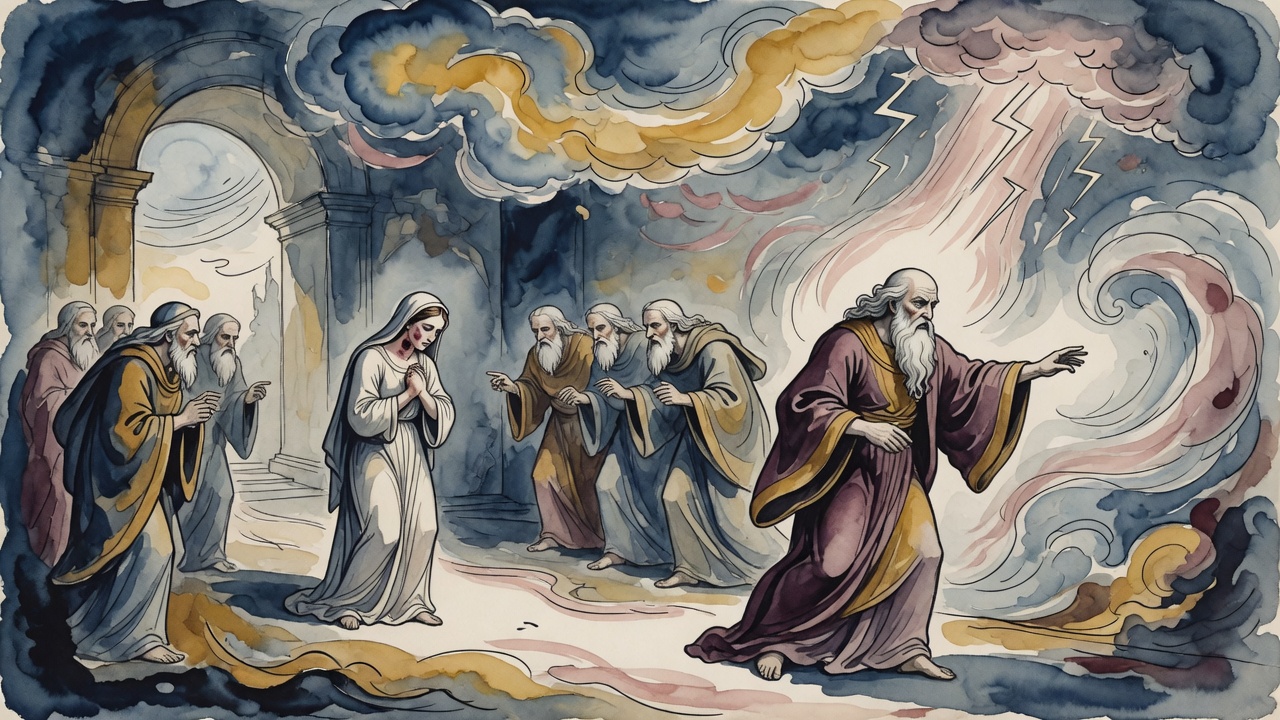
When the husband returned and learned what had left the house, rage filled the room faster than sense. He did not see the unwashed hands. He saw betrayal. In that fury he killed her. The house that had held a meal, a door, and a small neglect now held a corpse and a man who could not unsay the blow.

The sages keep the story cold and short because the mechanism is simple. Netilat yadayim, the washing of hands after a meal, is not only purity theater. It is the erasure of a trail. Skip the water and the body becomes a ledger a thief can read.

The Minute He Thought He Saved

He had saved a minute. The minute cost a wife and a soul. The tradition does not dress the lesson in soft cloth. A small neglect leaves a clue on the body, and a dishonest person knows how to use a clue. The man who thought ritual was for the pious learned that carelessness can dress itself as ordinary life until ordinary life ends in blood.

The stranger never needed force at the first step. He needed the wife to trust a password written in crumbs. Once the password worked, the rest was gravity.

Wine and the Thirteen Woes

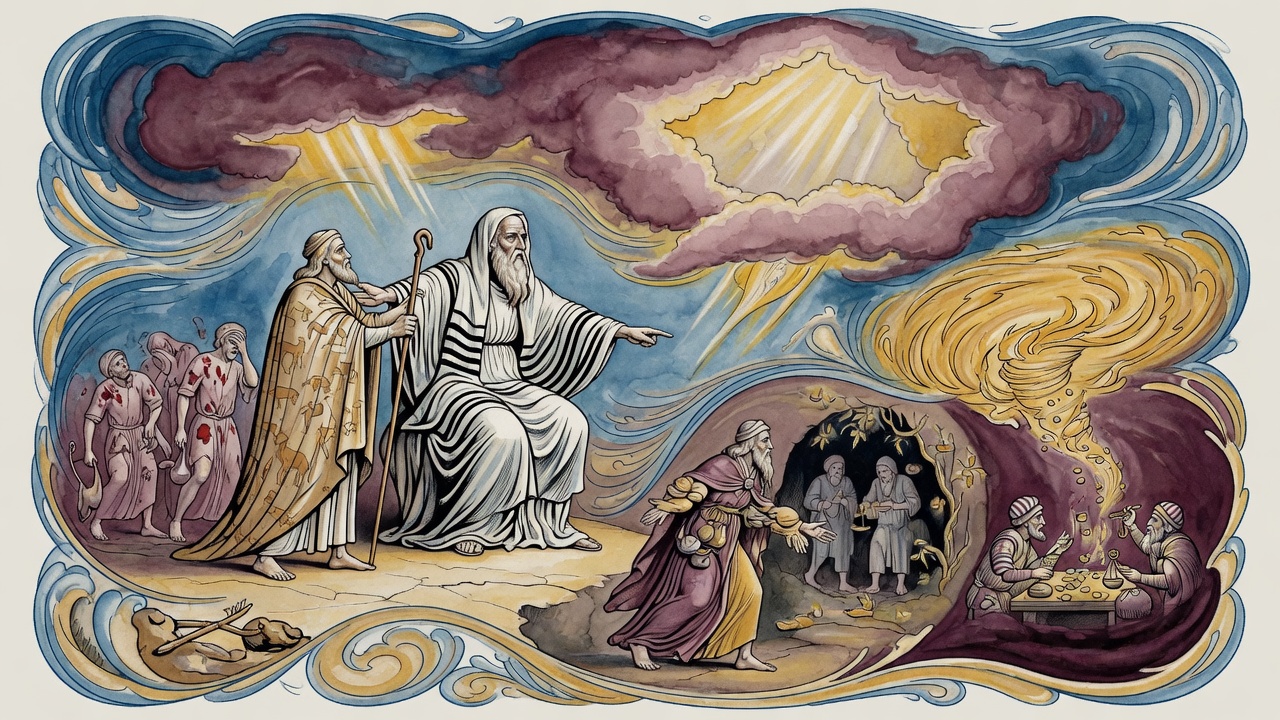
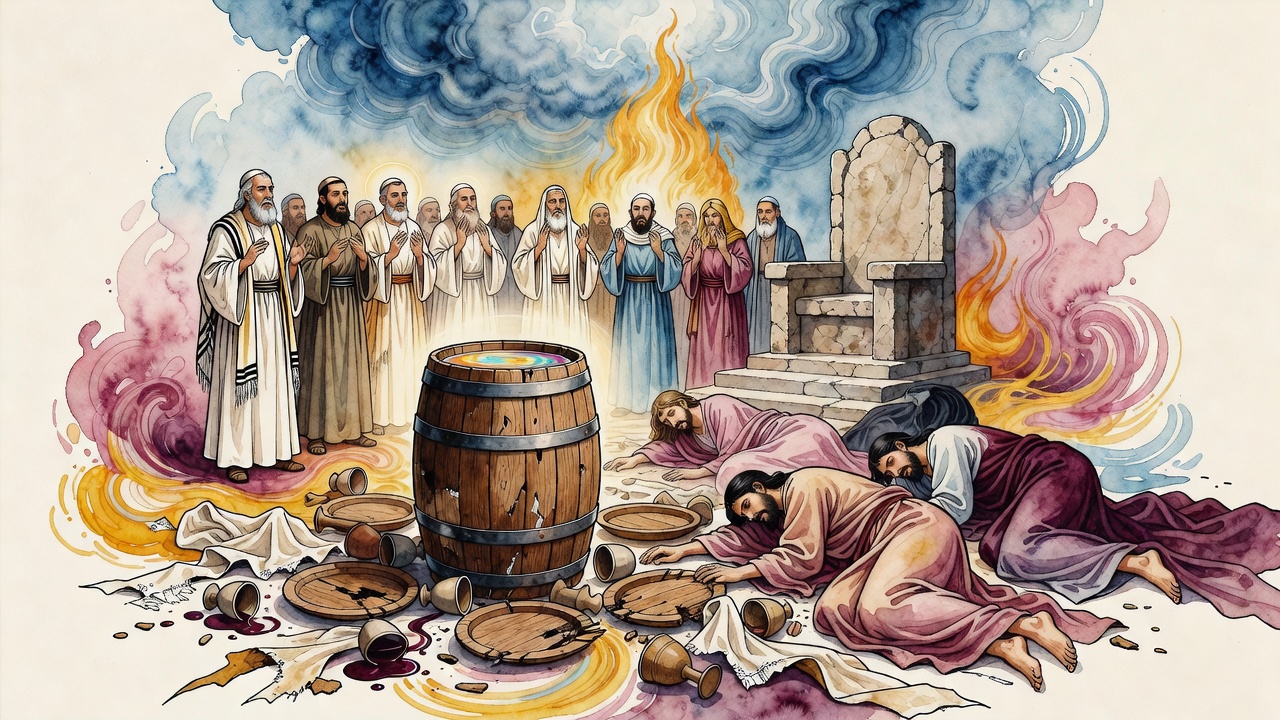
Another chain of ruin begins with a different table. Noah planted a vineyard after the flood, drank, and uncovered himself in his tent (Genesis 9:20-25). Midrash Mishlei reads the damage forward into Solomon's question: who has woe, sorrow, strife, wounds without cause, redness of eyes (Proverbs 23:29)?

Rabbi Simon hears thirteen woes braided into the wine story, thirteen marks of a drink that starts as celebration and finishes as shame. The letter vav keeps appearing in the Genesis account, a small hook in the Hebrew, and the midrash hangs those hooks on the list of troubles. Wine does not only loosen a tongue. It loosens a house.

A man who cannot govern what enters his mouth cannot govern what leaves his house. One story is grease on fingers. The other is wine in a cup. Both are table-sins that refuse to stay at the table.

What the Body Advertises

The body is a public surface whether a person admits it or not. Food on the hands tells a menu. Redness of the eyes tells a night. A wife reading a stranger's certainty as her husband's confidence is not foolish; she is reading the only evidence she has. The husband who never washed handed the stranger that evidence for free.

The sages surround the end of a meal with dignity because meals are where households either tighten or fray. Water after bread is a boundary. Cross it and the next boundary, the door, becomes easier to trick. Cross that and the last boundary is blood.

Noah's vineyard and the tavern lunch sit centuries apart in the telling, yet they share a spine. Appetite without discipline writes a story other people can finish for you.

The House After

Imagine the room the next morning. The valuable object is gone. The wife is gone. The husband stands in the wreckage of a proof he never meant to give. He can curse the stranger. He can curse the wife. He cannot wash the lunch off yesterday's hands.

That is why the exempla keep the detail of spices. Not to moralize about hygiene as fashion, but to make the cause visible. The crime begins before the knock. It begins when a man decides the small sacred act is optional.

Wine's thirteen woes and the unwashed trail are different doors into the same room: the room where a household learns too late that private carelessness has public teeth.


← All myths
From the tradition

Sources

2 sources

The texts behind this telling. Some cards carry a translation of the source; others are our own retelling of it, and each card says which. Every card links out to the original.

Gaster, Exempla No. 159The Exempla of the Rabbis (1924)

Retold in our words. Read the original at the link below.The Exempla of the Rabbis, Moses Gaster (1924) · PD-US-pre-1929

A man was in the habit of rising from his meals without washing his hands properly. He left the table with crumbs and traces of the food on his fingers, indifferent to the small ritual the sages had built around the end of a meal.

One afternoon a stranger happened to observe him leaving a tavern, noted the exact food the man had eaten by the residue on his fingers, and filed the detail away. That evening the stranger went to the man's house while the husband was still away, knocked on the door, and told the wife that her husband had sent him. As proof, he recited exactly what her husband had eaten for lunch, down to the spices. The wife, unable to explain how he could know such a thing unless her husband had told him, believed the story. The stranger walked out with a valuable piece of household property she had handed him.

When the husband returned and learned what had happened, he flew into a rage. He could not see his own carelessness. He could only see what looked like his wife's betrayal. In a fury he killed her (Gaster, Exempla No. 159).

The sages tell the story as a warning about netilat yadayim, the washing of hands, which the tradition surrounds with the dignity of a sacred act. The lesson is not about a single ritual. It is about how a small neglect, like skipping a bowl of water, can leave a clue on the body that a dishonest person will know how to use. The man who thought he was saving a minute lost a wife and a soul.

Full source
Midrash Mishlei 23:3Midrash Mishlei

Translation of the source text.Midrash Mishlei (Buber, Hebrew Wikisource) + Sefaria Community Translation · CC-BY-SA

[3] (Proverbs 23:29): "Who has woe? Who has sorrow? Who has strife? Who has complaining? Who has wounds without cause? Who has redness of eyes?" Rabbi Simon said: Come and see how harsh wine is, for thirteen woes [denoted by the hebrew letter vav in the Genesis verse below] are spoken about it at first impression, and these are: (Genesis 9:20-25): "- Noah began and planted a vineyard, and he drank from the wine and became drunk, and he uncovered himself within his tent, and Ham, the father of Canaan, saw the nakedness of his father, and he told his two brothers outside, and Shem and Japheth took the garment, and they placed it upon both their shoulders, and they walked backward, and they covered the nakedness of their father, and their faces were turned backward, and they did not see their father's nakedness, and Noah awoke from his wine, and he knew what his small son had done to him, and he said, 'Cursed be Canaan; a slave of slaves shall he be to his brothers.'" Solomon came and explained with his wisdom: "Who has woe?" - to one who is drunk; "Who has sorrow?" - woe to this one, woe to his fathers, as it says (Deuteronomy 21:18): "If a man has a stubborn and rebellious son." "Who has strife?" - since he becomes drunk with his wine, he reveals a secret between a man and his friend, and he sends disputes. "Who has complaining?" - since he becomes drunk with his wine, he utters excessive complaints. "Who has wounds without cause?" - since he becomes drunk with his wine, he goes and inflicts a wound and bruise for no reason. Why? Because he has no judgment. "Who has redness of eyes?" - if a person merits and drinks according to his needs, it is sweet to his palate. Rabbi Ishmael expounded: (Genesis 49:12): "Red-eyed from wine" - give him wine, for it is pleasant to his palate. And to whom is it pleasant? Rabbi Eliezer says: to one who drinks according to his needs. Rabbi Joshua says: to an old man, as it is said (Genesis 49:12): "and white-toothed from milk." Rabbi Jeremiah said: Do not read "white-toothed" but "white of years": just as this milk soothes the mind of an infant, so does wine restore the mind of an old man. What is written after it? (Proverbs 23:30): "Those who linger over wine, who go to search for mixed wine." Rabbi Eliezer said: Woe to him who leaves the words of the Torah and rises early for wine, what is written after it? (Proverbs 23:31): "Do not look at wine when it is red, when it sparkles in the cup" - Rabbi Yochanan said: "In the pocket" is written, and "in the cup" is read, and why is this? The buyer gives his eyes to the cup, and the seller gives his eyes to the pocket. What is written after it? (Proverbs 23:32): "In the end, it bites like a snake and stings like a viper" - just as the snake bites and kills, so does wine bite and kill, just as the viper distinguishes between death and life, so does wine distinguish between death and life.

Full source