A Skim of Oil Hid Wine, and the Host Died of Shame
The guests sat for a feast built around oil. The cork came free and wine poured out. He had nothing left that was fit to serve.
Table of Contents
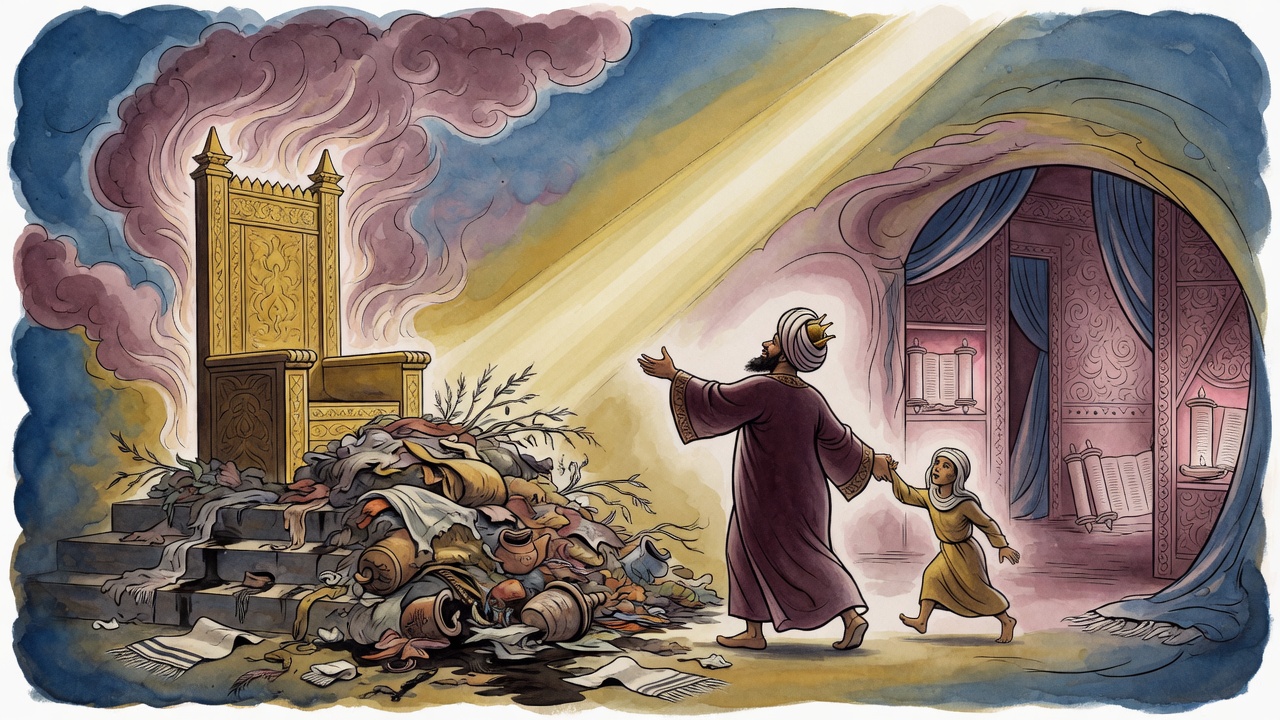
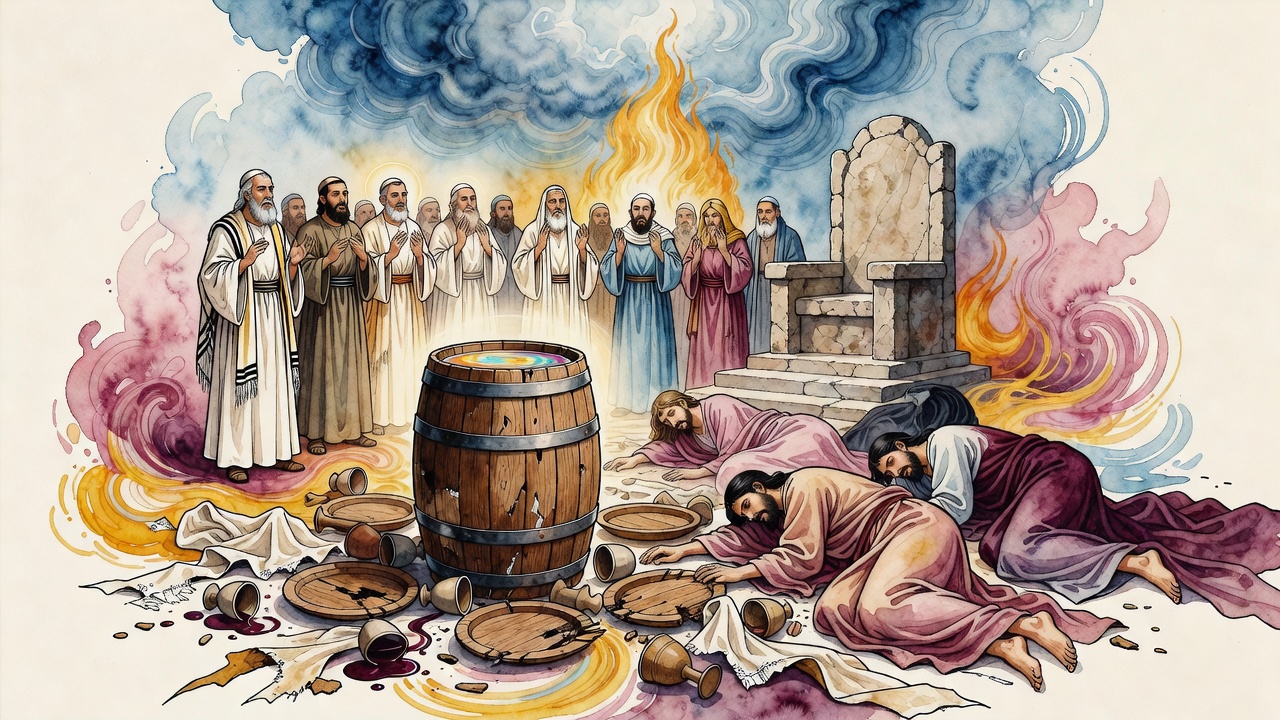
The guests were already in their places. Bread sat on the table. The host had built the meal around oil he believed he held in a neighbor's barrel. A thin skim floated on top, honest as a lid. He pulled the cork.
 Click for full size
Wine poured out. Not oil. The room went quiet in a way no apology could fill.
He had nothing worthy to serve. Shame heavier than hunger drove him outdoors. He took his own life. One lie in a cask had already claimed a soul of Israel. The sender of the barrel may have thought the swap small, a thrifty gloss, a harmless joke. The host's body answered that the joke was never small.
Three Eggs and a Child's Hands
In a time of scarcity a man invited three friends to share three eggs. That was the feast. He stepped out. His young son wandered in. One guest, meaning kindness, gave the boy his share. The other two did the same. The child stood with both hands full and his mouth full of food meant for guests.
The father returned. Fury struck faster than thought. He knocked the boy to the ground, and the boy died under his hand. The mother saw it and threw herself from the roof. The father followed.
Rabbi Eliezar ben Yacob closed the count. Three lives of Israel perished in that affair, and that was the cost of food passed without the host's leave. The guests had meant well. Intention did not put breath back into the child. Scarcity makes every egg a weight on the table. Kindness that ignores the host's face can still start a funeral.
The Shoe That Carried Venom
In the market a man held up a pair of shoes and named them as if the hide had come from proper slaughter. The beast had died of disease. The leather would fail sooner. A serpent may have bitten the carcass, and venom lingering in the skin can kill the wearer. The buyer would walk home in a lie that could reach the blood.
Deception does not need a grand plot. It needs only a surface that lies about what is underneath. A doorway. A kitchen. A market stall. The damage is never small, even when the object is only a barrel, an egg, or a pair of shoes.
After the Fire Aaron Put the Cup Down
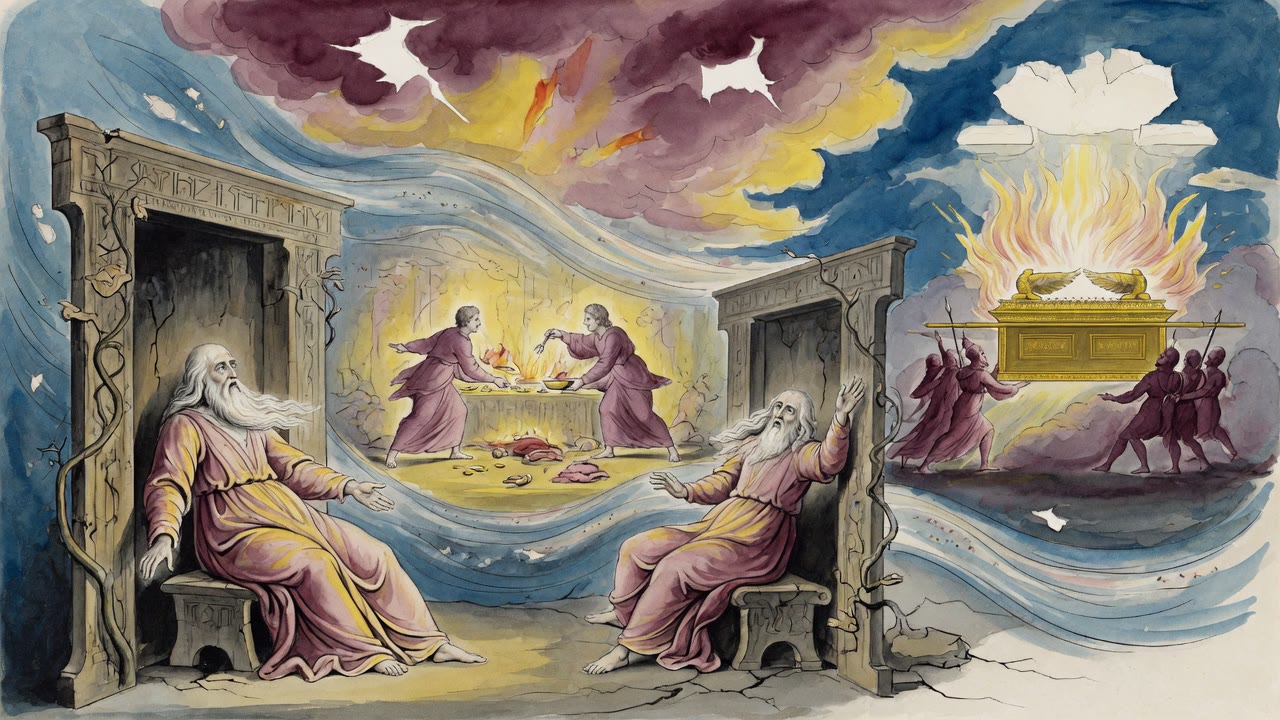
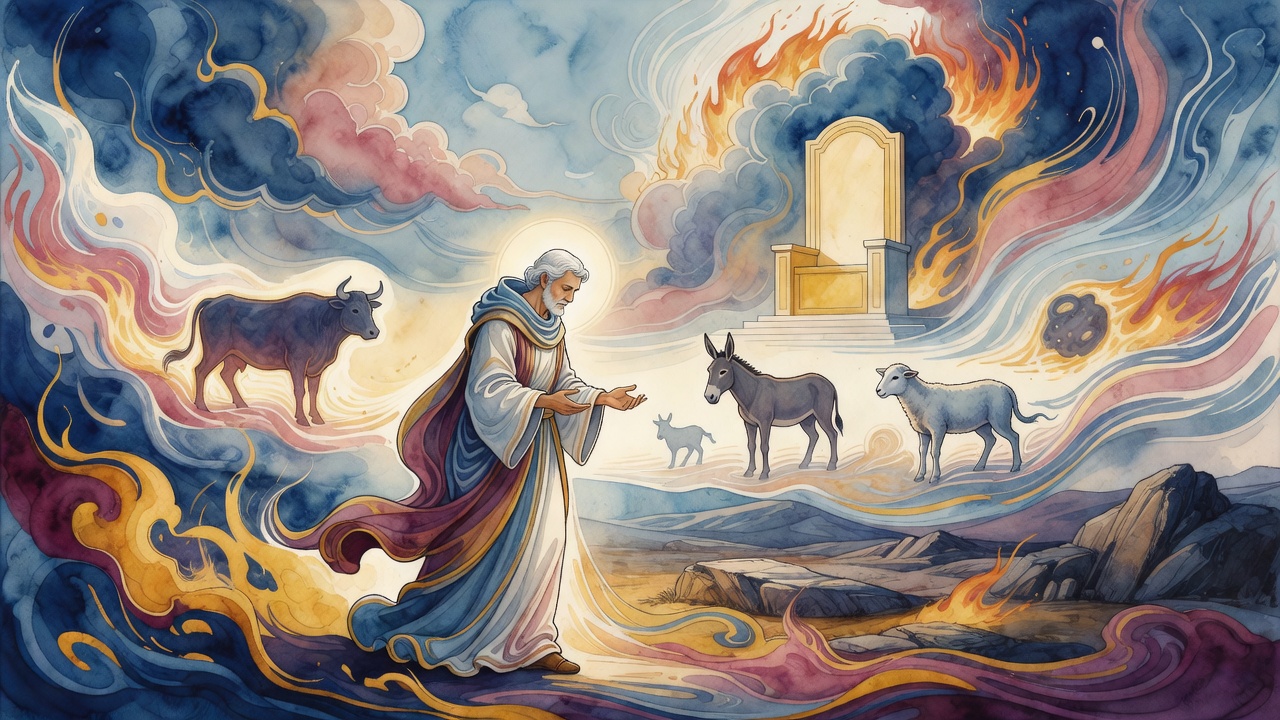
When the LORD spoke to Aaron after the death of his sons, the command came hard and close. Drink no wine or strong drink when you enter the Tent (Leviticus 10:8-9). Two sons had fallen with strange fire still on their lips. Grief sat in the priestly court. The cup sat there too.
Solomon's warning rose in that hour. Who has woe? Who has sorrow? Who has contentions? Who has wounds without cause? Who has redness of eyes? Those who tarry long over wine (Proverbs 23:29-30). Do not look at the wine when it is red. Its beginning gleams and its end is blood. Pleasant outside, rotten within.
The drunkard fixes his eye on the cup. The shopkeeper fixes his eye on the purse. One drowns. The other counts coins. After two sons fell, Aaron was told that the cup itself could reopen a wound the altar had not yet finished grieving. The ban is timed. After the deaths. Before the next entry into holy space. Grief and wine are not allowed to share the same priestly hour.
Shame Faster Than Hunger
Put the cask beside the command. A man dies because a neighbor dressed wine as oil and left him naked before guests. A child dies because three kindnesses collided with a father's honor in a hungry year. Aaron is kept from the cup because wine's harvest is bruises, murky eyes, and blood, and Heaven will not let him carry that harvest past the curtain.
No king is required for the damage. A barrel with a false top is enough. A father who cannot bear the look of his empty table is enough. A priest standing in the ash of his sons is enough, if Heaven still has to say put the cup down.
Wine can be a blessing in its place. A skim of oil on a cask is already a drunkenness of speech. It makes the world look like something it is not until someone pours and pays.
← All myths