5 min read

David Counts Bloodguilt and Joab Counts Israel

David begs release from bloodguilt over Saul, Nabal, and Uriah, then a census plague answers the stain that would not lift from Uriah alone.

Curated by Arthur · Told by Maggid ·
Table of Contents
  1. Deliver Me From Bloodguilt
  2. Saul, Nabal, and the Ones He Did Not Kill
  3. The Hittite Who Would Not Go Home
  4. The Census and the Angel
  5. Enough
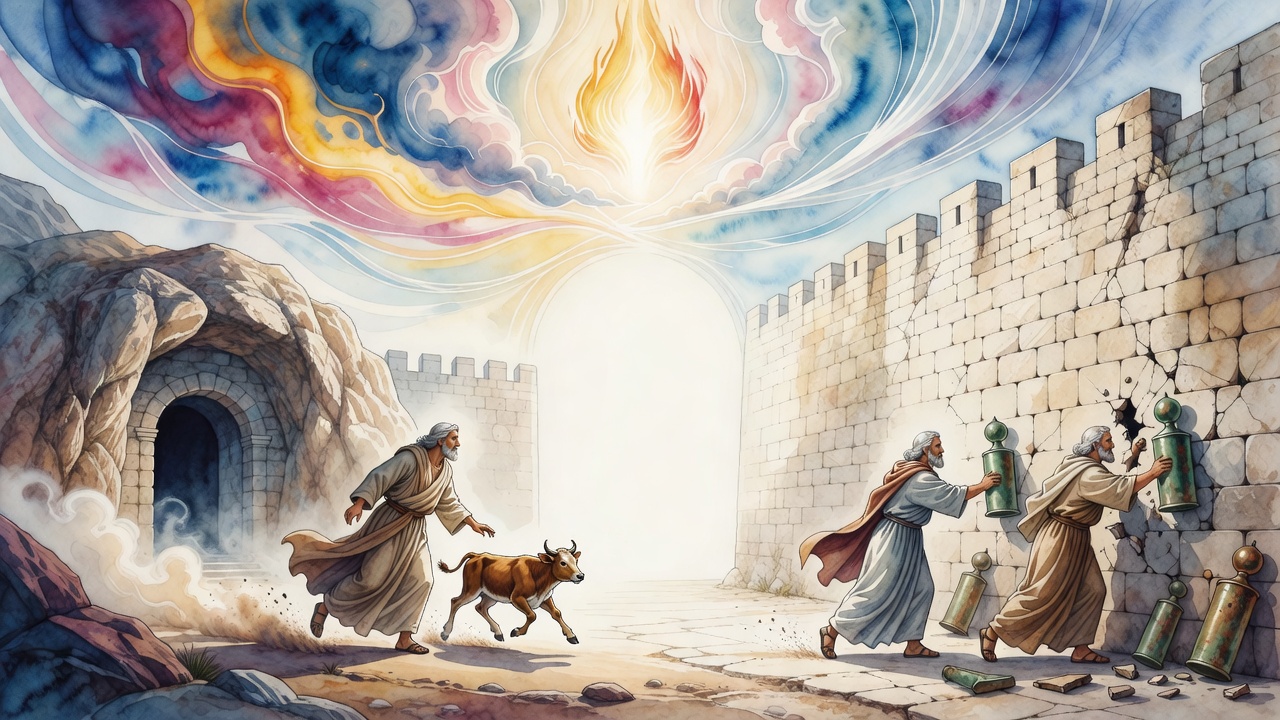
David Counts Bloodguilt and Joab Counts Israel Click for full size

Deliver Me From Bloodguilt

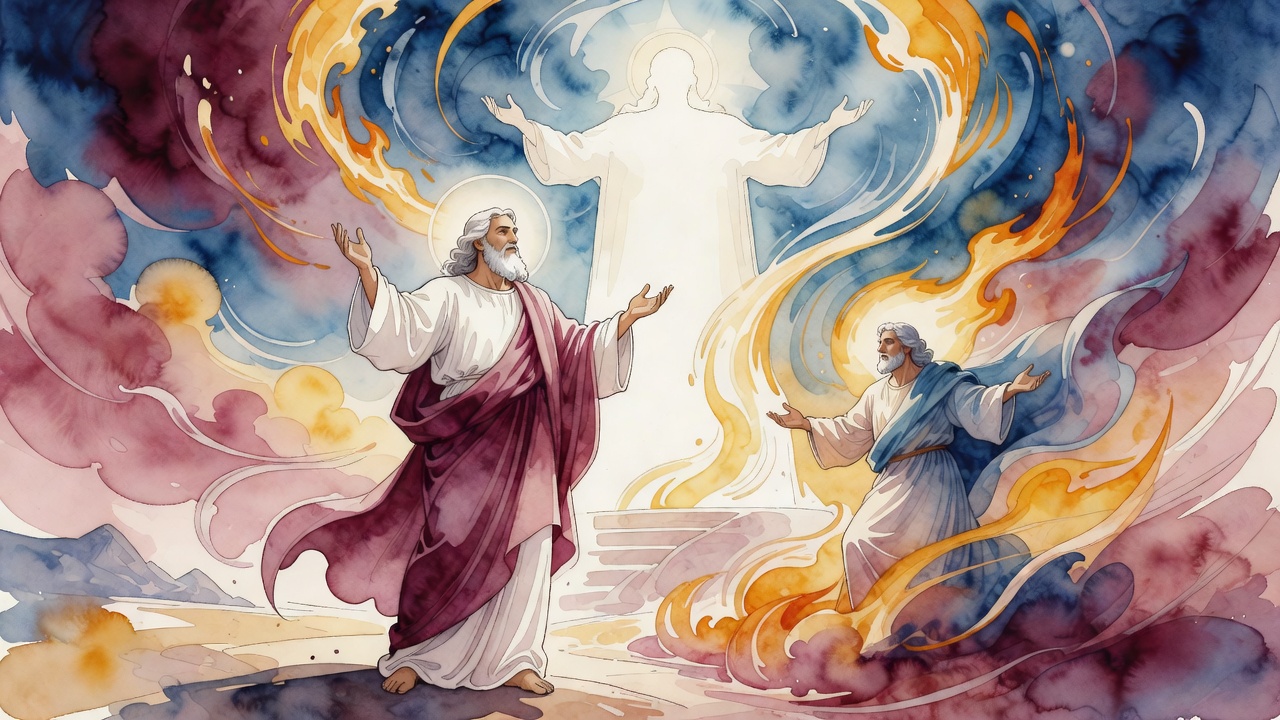
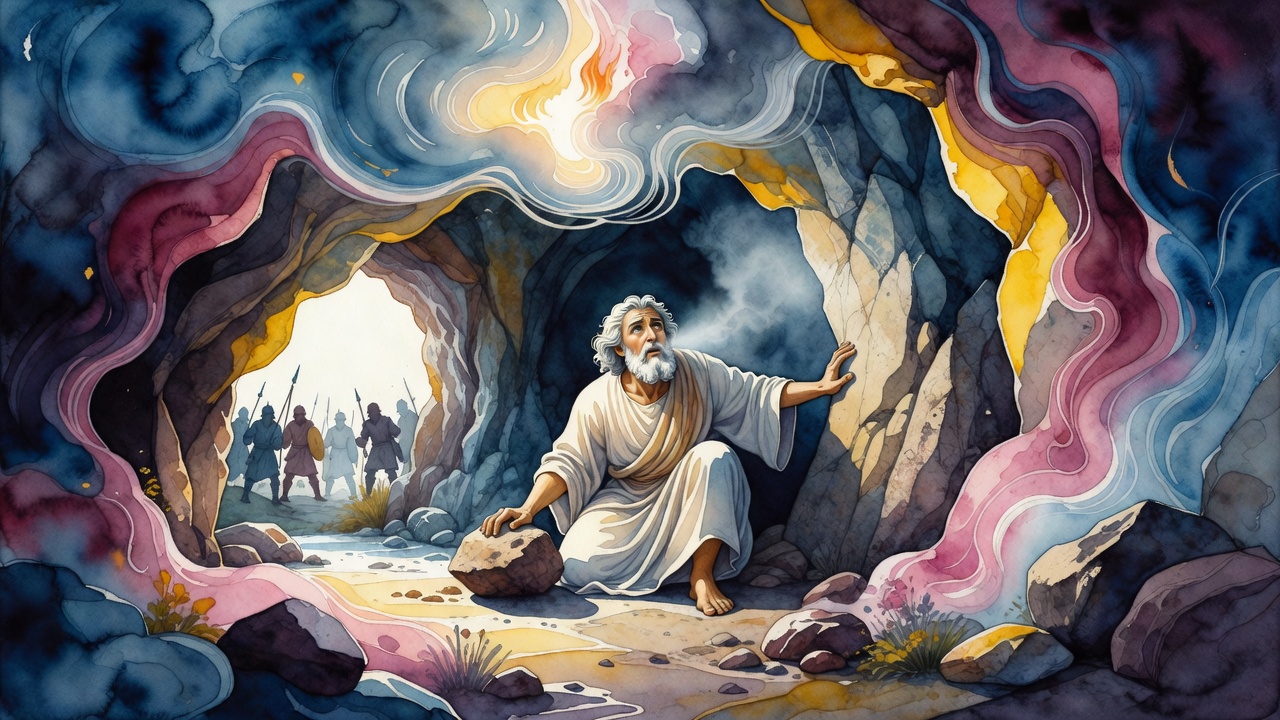
David pressed his forehead toward the floor and named the dead. "Deliver me from bloodguilt, O God." The words were not a general piety. They were a docket. He wanted every death laid at his door examined under Heaven's lamp, not under a rival's gossip.
The room held only his breath and the memory of iron.

Saul, Nabal, and the Ones He Did Not Kill

Rabbi Yehoshua of Sikhnin, in Rabbi Levi's name, answered for him case by case. Saul's blood? Not David's. He had sworn three possible ends for the anointed king: the Lord would smite him, or his day would come, or he would fall in battle. Each end arrived by Heaven's hand. Nabal's blood? The Lord struck the churlish man ten days later while David held back his sword. Samuel's death tore him, yet even there the midrash hears a man who could not mourn as long as a planted tree cut down. Nathan he tested only for secrecy and would have spared. The slain of Gilboa had their number hidden so Gath would not rejoice.

On those counts David stood clear. Then the docket reached Uriah.

The Hittite Who Would Not Go Home

Over Uriah the Hittite the verdict turned. Some counted him among the thirty-seven. Some said his rank was stolen by the sin that killed him. The rabbis heard "thou hast slain him" as a wider fall: David's act cut down many righteous men like Uriah. The king who had dodged so many blood-charges found one stain that would not rinse.

He kept praying. The stain kept its color.

The Census and the Angel

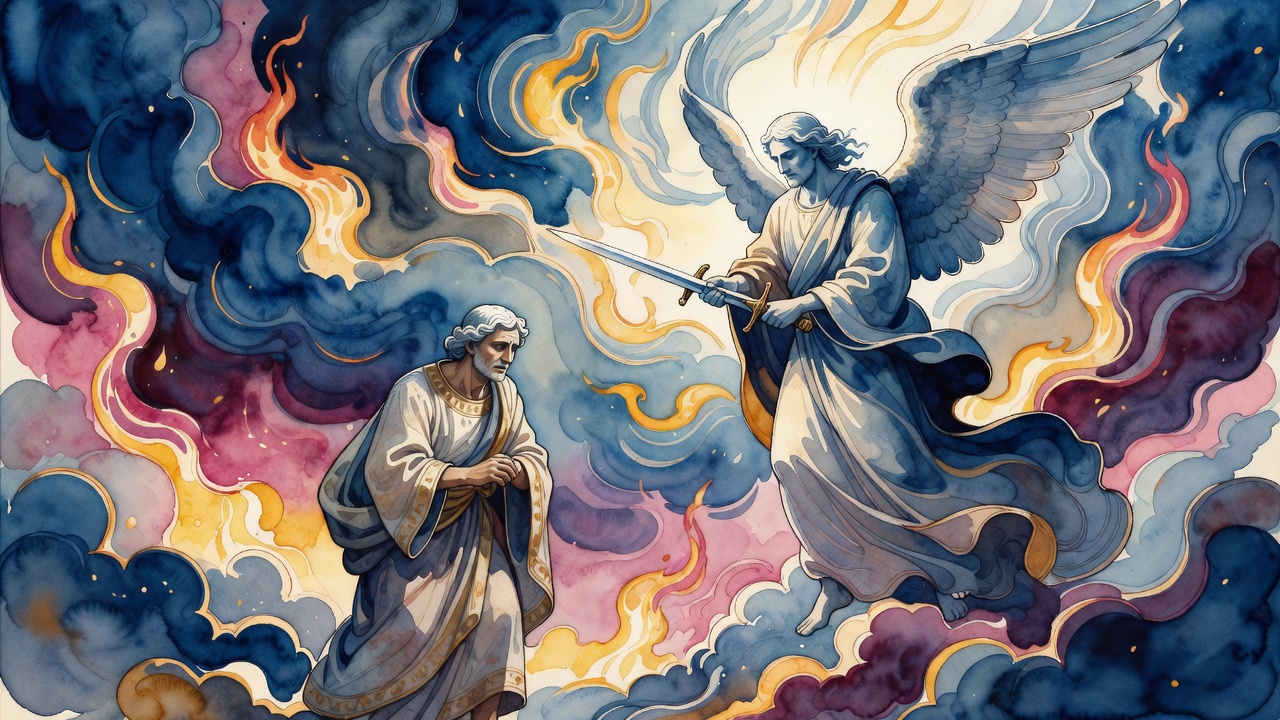
Because of that stain, the teachers said, anger kindled again and David was moved to number Israel. Joab went out counting with a blessing that tasted like warning. "May the Lord add to the people a hundred times over," he said, and Rabbi Shmuel bar Nachman heard death already ruling the king inside that polite arithmetic. A hundred grows to two hundred, two hundred to four hundred. Rabbi Levi said the blessing ripened within twelve months. The plague still came. When the destroying angel stretched a hand over Jerusalem, the Lord said, "It is enough."

Joab's hundreds had measure. Moses once blessed by the thousand without ceiling. The comparison left David smaller than the first shepherd of the people, and still responsible for the count he ordered.

Enough

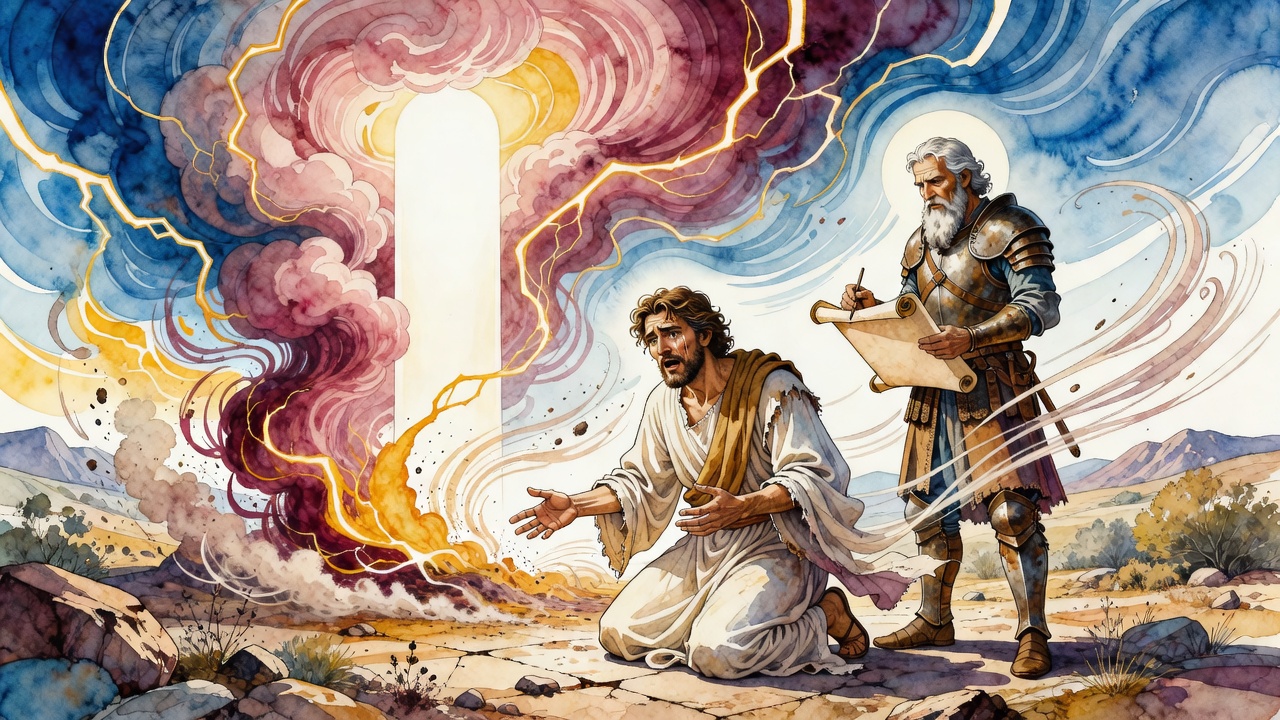
David saw the angel and the threshing floor and the price of a number taken in pride. Bloodguilt had not been a poem. It had been a path from Uriah's door to a nation gasping under a sword from heaven. He bought the floor. He built an altar. He learned again that some stains require more than clever defenses in prayer.

"It is enough," Heaven had said to the angel. David, still counting his own dead in the quiet after, was not sure the word had been spoken to him yet.

Uriah's face returned at odd hours: the Hittite at the door with battle dust still on him, refusing home while the ark and Israel lodged in booths. David had known then that the man's honor was a mirror. He had broken the mirror anyway. Prayer after the fact is a different weapon than restraint before it, and David was learning the weaker steel of the two.

He walked the palace roof where the first look had happened and found no comfort in height. Below, Jerusalem made ordinary noises. A king can be lonely in a crowded capital when one name will not leave the ledger.

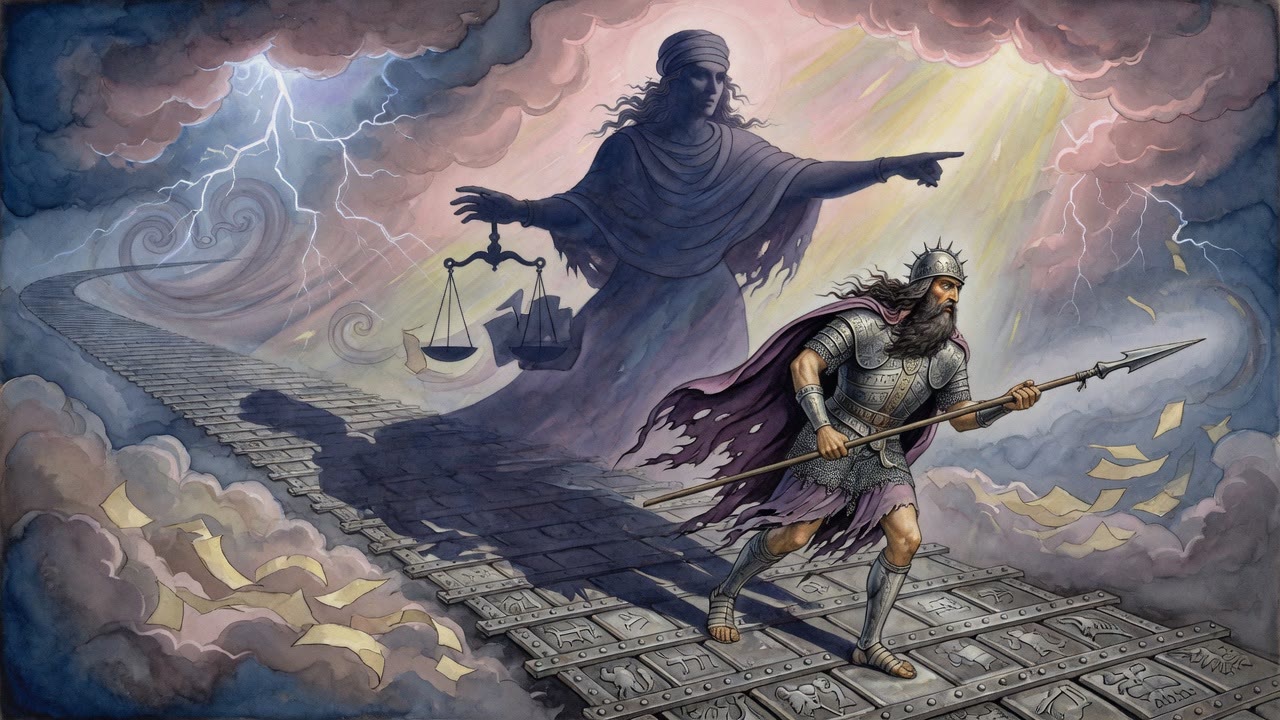
Joab hated the census with a soldier's instinct. Counting fighting men smells like pride dressed as administration. He delayed. He circled. He blessed with a hundredfold increase that sounded loyal and tasted like irony. When the numbers finally arrived they felt heavier than any tribute list. Then the people began to fall, and David understood that his private stain had found a public climate.

He saw the angel at the threshing floor with a sword that made every prior Philistine blade look like a toy. "I have sinned," he said, and tried to pull the punishment onto his own house. Heaven set terms that included purchase, altar, and the end of the plague at a spoken "enough." Enough is a mercy word. It is also a boundary. David lived inside that boundary for the rest of his reign.

At night he still sorted the other bloods. Saul on the mountains. Nabal in his house. The silenced count of Gilboa. Clearing those names did not cancel Uriah. It only made the remaining charge sharper, a single arrow instead of a cloud of accusations. He taught Solomon more than succession. He taught him that some royal mistakes become national weather.

When Joab's hundredfold blessing seemed to flower in later growth of the people, David did not claim it as proof of the census. He remembered Moses blessing by thousands without a limit and felt the gap between a general's careful math and a prophet's open hand. Bloodguilt had taught him to prefer the open hand, even when his own history made him unworthy to fully open it.


← All myths

From the tradition

Sources

2 sources

The texts behind this telling. Some cards carry a translation of the source; others are our own retelling of it, and each card says which. Every card links out to the original.

Midrash Shmuel 25:2Midrash Shmuel

Translation of the source text.Midrash Shmuel, Krakow 1893, Public Domain, on Sefaria · CC-BY-SA

"Deliver me from bloodguilt, O God" (Psalms 51:16), deliver us from bloodguilt. Rabbi Yehoshua of Sikhnin in the name of Rabbi Levi said: For the blood of Saul he was not [slain] on my account. David pronounced three things upon the anointed of the Lord, and all three of them came upon him: "As the Lord lives, but the Lord shall smite him" (1 Samuel 26:10), this happened to him; "or his day shall come and he shall die", this happened to him; "or he shall go down into battle and perish", this happened to him. For the blood of Nabal he was not slain on my account, [as it is said:] "And it came to pass about ten days [after, that the Lord smote Nabal, and he died]" (1 Samuel 25:38). For the blood of Samuel, that his planting was being cut down, and he did not grieve over it even one hour. For the blood of Nathan, that David would send messages behind his back to know whether he would scatter the words; had he scattered the words, he would not have killed him. For the blood of Israel, Rabbi Yehudah bar Rabbi Simon in the name of Rabbi Levi bar Perata: Why did the Scriptures not specify how many slain fell on Mount Gilboa? On account of "Tell it not in Gath" (2 Samuel 1:20). For the blood of Uriah, Rabbi Yehoshua ben Levi said: "Uriah the Hittite; thirty and seven in all" (2 Samuel 23:39). Rabbi Yonah of Botzrah said: that they brought him down from his greatness, for he was fit to be appointed after thirty-six, and they appointed him after thirty-seven. Rabbi Hanina bar Pappa in the name of Rabbi Hanina the scribe brings it from this: "Wherefore hast thou despised the word of the Lord... and thou hast slain him with the sword of the children of Ammon" (2 Samuel 12:9). And the Rabbis say: "thou hast slain him", this teaches that he killed many righteous ones like him.

Full source
Midrash Shmuel 30:1Midrash Shmuel

Translation of the source text.Midrash Shmuel, Krakow 1893, Public Domain, on Sefaria · CC-BY-SA

"Deliver me from bloodguilt, O God, God of my salvation; my tongue shall sing aloud of Your righteousness" (Psalms 51:16). Deliver me from the blood of Uriah, and so forth, a halakhah [follows]. Because of this, "Again the anger of the LORD was kindled against Israel, and He incited David against them, saying, Go, number Israel" (2 Samuel 24:1). "And He said to the angel that destroyed the people: It is enough," and so forth (ibid. 24:16). Rabbi Shmuel bar Nachman said: He hinted to the king that death rules over him, as you say, "And Joab said to the king: May the LORD your God add to the people, however many they are, a hundred times over" (ibid. 24:3), a hundred [becomes] two hundred, two hundred [becomes] four hundred. Rabbi Levi said: Within twelve months Joab's blessings came [to pass]. Rabbi Eliezer ben Yaakov said: Moses's blessings have no limit, "May the LORD, the God of your fathers, add to you a thousand times as many as you are, and bless you as He has promised you" (Deuteronomy 1:11).

Full source