5 min read

David Repaid Nahash's Kindness and Absalom Stole Two Hundred Elders

Nahash of Ammon hid David's one surviving brother and lied about it to Moab's messenger. His son later shaved half the beard off every envoy David sent.

Curated by Arthur · Told by Maggid ·
Table of Contents
  1. The One Brother Who Got Out of Moab
  2. Comforters Sent Home With Half a Beard
  3. Absalom Asked His Father for Two Old Men
  4. He Carried the Letter From Town to Town
  5. What They Prayed at His Table
David Repaid Nahash's Kindness and Absalom Stole Two Hundred Elders Click for full size

The One Brother Who Got Out of Moab

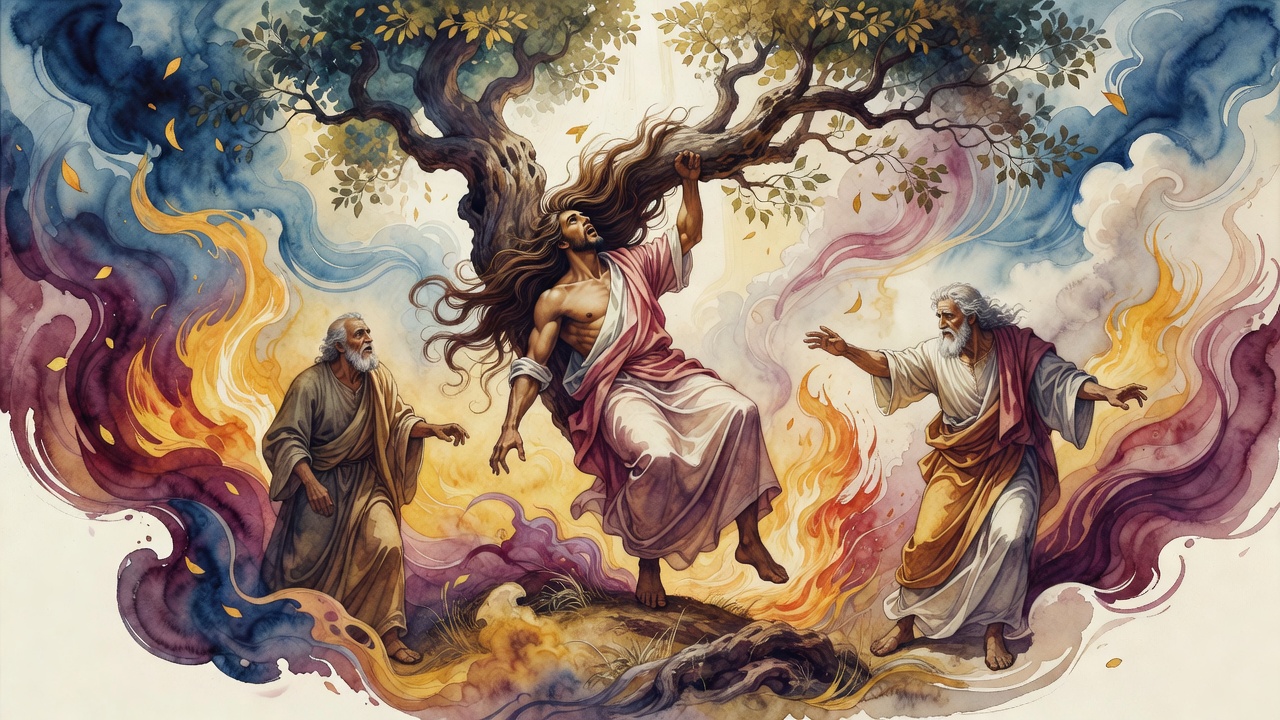
David walked his father and mother across the border into Moab while Saul's men were still hunting him, and he asked the king of Moab for a roof over two old people. "Let them stay with you," he said, "until I know what God intends to do with me." The king took them in and David went back to the hills.

Then the king of Moab killed them. The father, the mother, and David's brothers, all of them, in the house where they had been given beds.

One got out. Elihu ran east and kept running until he reached Ammon, and Nahash the king took him in and put him somewhere out of sight.

A messenger came up from Moab not long after. Has one of David's brothers turned up here.

"No," Nahash said.

He kept the boy hidden until David could come for him. "Do not abandon your friend, or your father's friend." That is the line that hangs over the whole business afterward.

Comforters Sent Home With Half a Beard

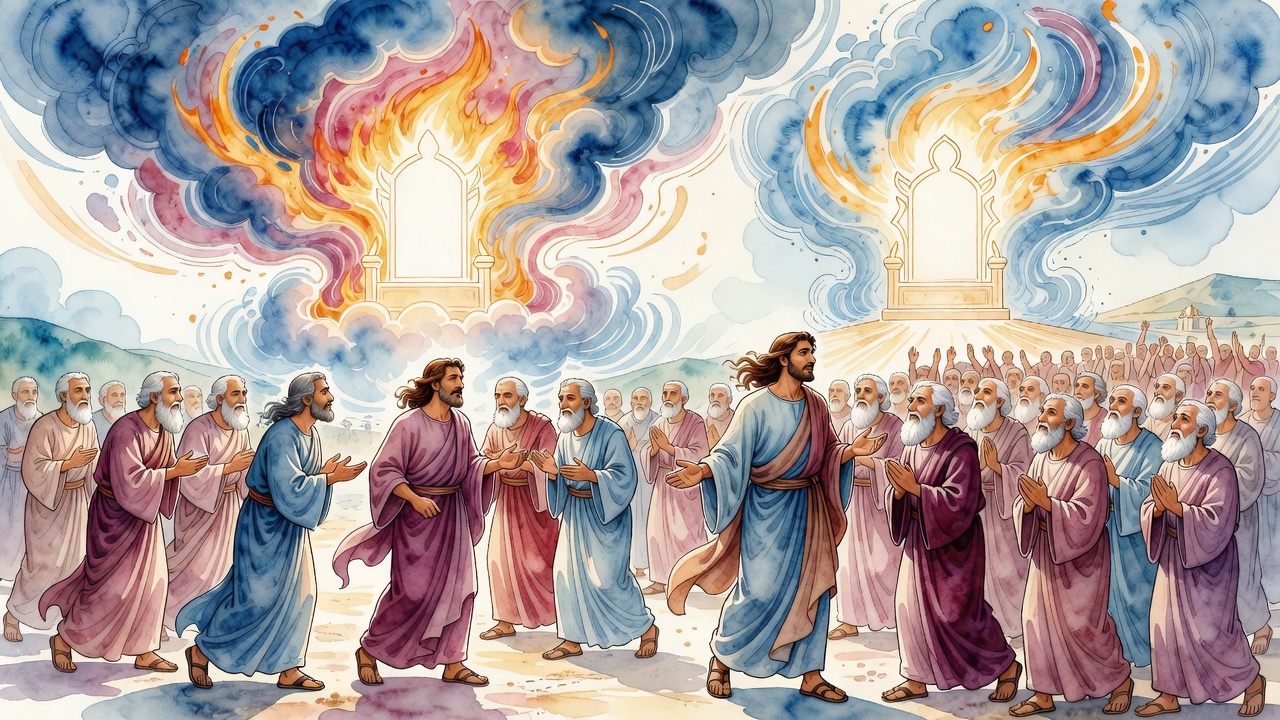
Nahash died, and David moved to repay the kindness while there was still someone to repay it to. "I will deal kindly with Hanun son of Nahash, the way his father dealt with me." He picked men and sent them to Ammon to sit with the son in his mourning.

The princes of Ammon got to Hanun before the delegation did.

"You think he is honoring your father. Look at what his own Torah says about us. An Ammonite shall not come into the assembly of the LORD. You shall not seek their peace or their good, not ever. His God tells him to have nothing to do with us, and he throws that over and sends comforters. These men are here to map your walls."

Hanun had the delegation seized. He had each man's beard shaved off on one side only, and their robes cut through at the waist so they were bare from there down, and then he had them walked out of the city and pointed at the road home.

David sent word ahead to stop them. "Stay in Jericho until your beards grow back, and then come to me."

A man had hidden his brother from a killer, and the payment for it went home half shaved.

Absalom Asked His Father for Two Old Men

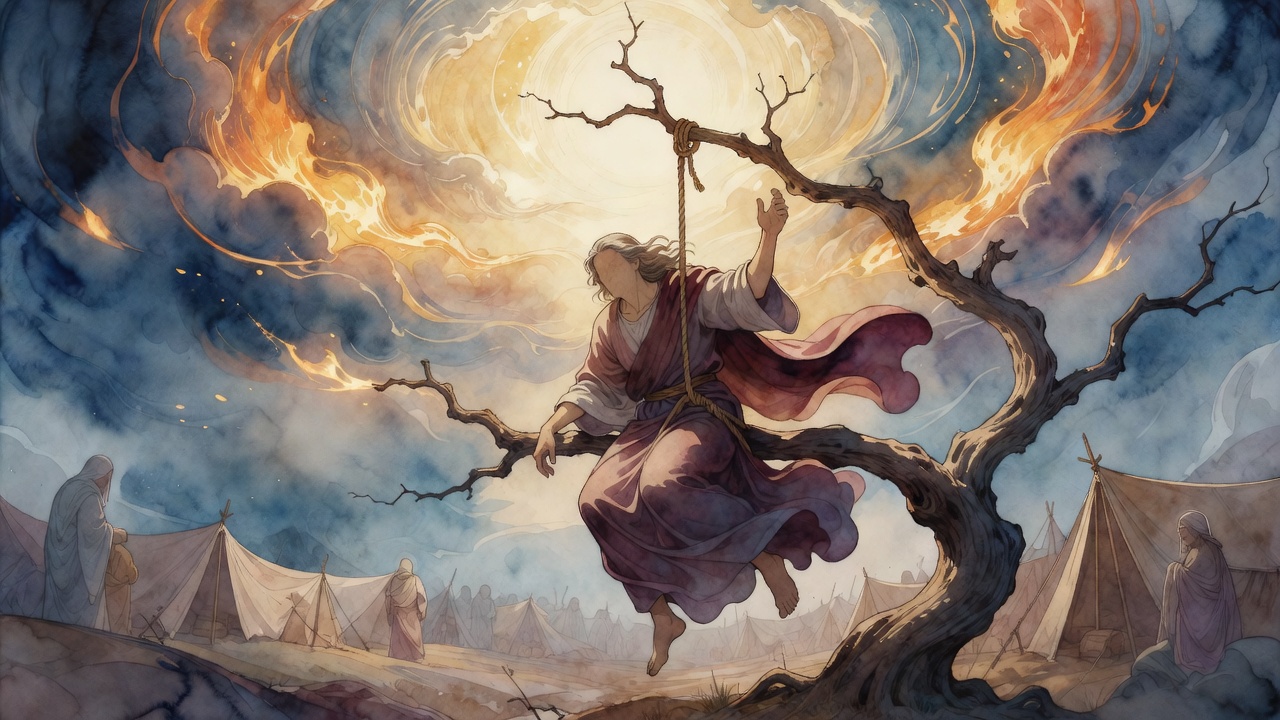
Years later Absalom came to his father with a vow on his tongue. "Let me go down to Hebron and pay what I promised the LORD."

"Go in peace," David said.

Then Absalom asked for one more thing, in the tone of a son who wants to do it properly. "Give me two elders to come along, so that everything I do down there is done by their word."

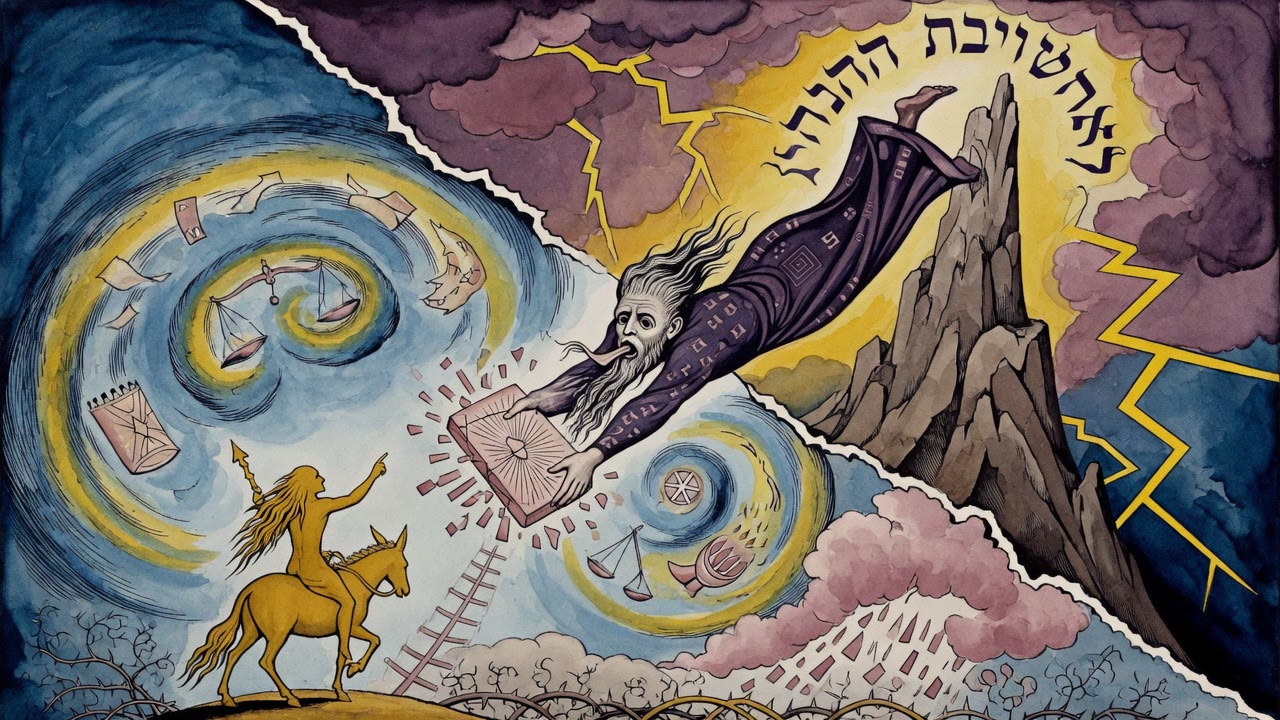
David wrote it out for him. A letter, sealed, saying that any two elders from any town his son chose were to go with him.

Absalom took the letter and left. He did not go to Hebron.

He Carried the Letter From Town to Town

He worked the country one town at a time. In each place he found the two most respected old men and brought out the letter and let them read the king's own hand.

"See what my father wrote for me. He gave me any two I want, out of any town in Israel." Then the turn, delivered warm, with a hand on the arm. "And I am asking for you. I am asking because it is you I love."

Nobody in that position says no.

He stole them two at a time, in daylight, with their king's own letter in his hand. He collected two hundred of them. Rabbi Huna, quoting Rabbi Hiyya bar Abba, says they were two hundred heads of the Sanhedrin, the men who ruled on capital cases and fixed the calendar and were owed a bow in the street. Two hundred of the most careful men alive walked out of their towns behind a prince with a letter, and not one of them knew where the road ended.

What They Prayed at His Table

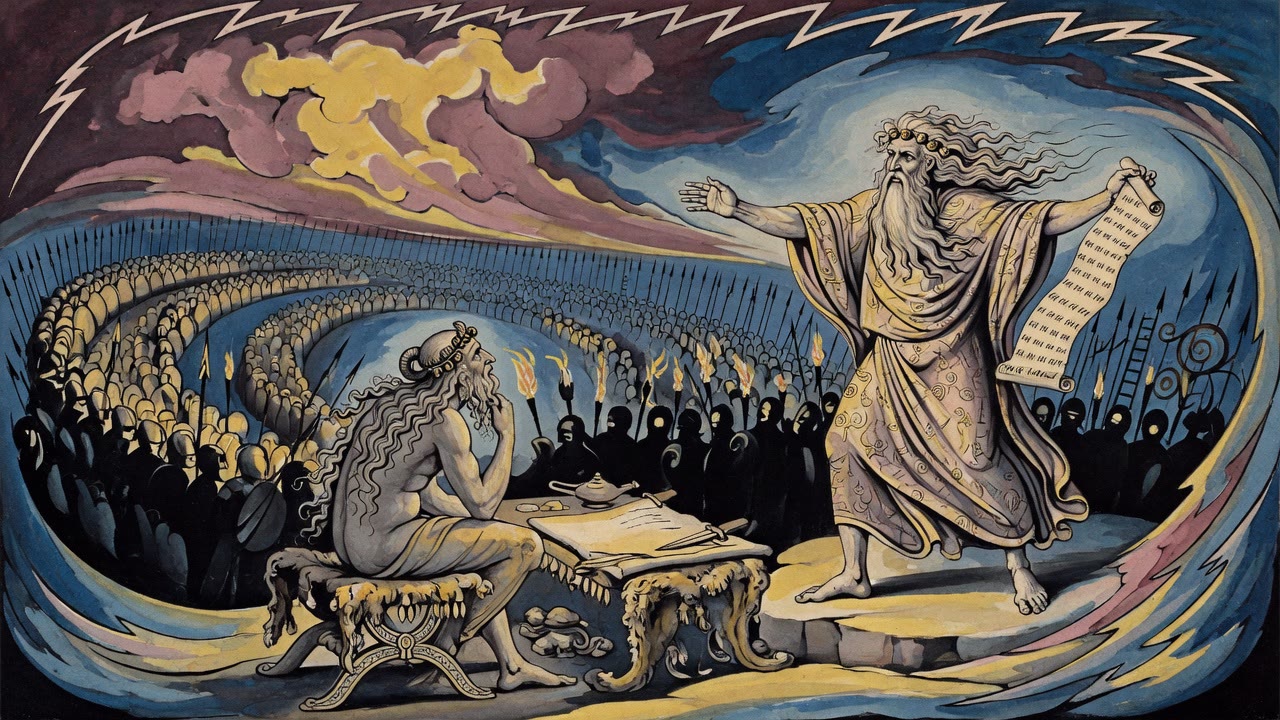
Absalom fed them at Hebron.

He had the seating worked out in advance. Two elders together, and between every pair, one of his own men. The banquet went on and the wine went around and the man in the middle would lean in.

"Look at him. He was made to be king. Why are we still carrying David."

The old men sat there. They had eaten the food, they were at the wrong table in the wrong city, and there was no clean way out of the room.

So they prayed instead, silently, over the noise of the cups, and this is what they asked for. "May it be Your will, LORD our God, that we fall into David's hand, and that David never fall into ours."

Later David sang that his soul had been brought out of that war in one piece, because there were many with him. He was counting the men at Absalom's table.


← All myths
From the tradition

Sources

2 sources

The texts behind this telling. Some cards carry a translation of the source; others are our own retelling of it, and each card says which. Every card links out to the original.

Midrash Tanchuma Buber, Vayera 25:1Midrash Tanchuma Buber, Vayera

Translation of the source text.Midrash Tanchuma (Buber), Public Domain, on Sefaria · CC-BY-SA

(Gen. 20:1:) THEN ABRAHAM JOURNEYED FROM THERE. It is written (in Prov. 27:10): DO NOT FORSAKE YOUR FRIEND AND YOUR FATHER'S FRIEND. This refers to Hanun ben Nahash, king of the children of Ammon, as it is said (in II Sam. 10:1): AND IT CAME TO PASS AFTER THIS THAT NAHASH THE KING OF THE CHILDREN OF AMMON DIED; and (ibid., vs. 2): THEN DAVID SAID: I WILL DEAL KINDLY WITH HANUN BEN NAHASH.

R. Berekhyah said in the name of R. Eleazar ben Pedat: And what kindness had Nahash done with David, that he said (ibid.) AS HIS FATHER DEALT KINDLY WITH ME? Rather, when David fled from Saul, David and all his father's house went to Moab. He said to them: Receive my father's house, as it is said (in I Sam. 22:4): AND HE BROUGHT THEM BEFORE THE KING OF MOAB; and (ibid., vs. 3): AND HE SAID TO THE KING OF MOAB: LET MY FATHER AND MY MOTHER COME OUT, PRAY, WITH YOU. And they received them.

Once David had left, the king of Moab arose and killed David's father, his mother, and his brothers. None of them survived except one, as it is said (in I Chron. 27:18): BELONGING TO JUDAH, ELIHU, OF THE BROTHERS OF DAVID. R. Levi the Priest bar Halafta said that none of them survived except one. And how was Elihu saved? Rather, he fled from the king of Moab and went to Nahash, king of the children of Ammon, who received him. The king of Moab sent and said to Nahash: Has, perhaps, one of David's brothers come to you? He said to him: No. And he guarded him until David came. Therefore David said: I WILL DEAL KINDLY WITH HANUN BEN NAHASH.

When David's messengers came to Hanun, the princes of the children of Ammon said to him (in II Sam. 10:3): IS DAVID HONORING YOUR FATHER IN YOUR EYES, THAT HE HAS SENT COMFORTERS TO YOU? Do not trust David! Why? Because the Holy One, blessed be He, warns him concerning us; it is written in His Torah (in Deut. 23:4): AN AMMONITE OR A MOABITE SHALL NOT ENTER THE ASSEMBLY OF THE LORD, and it is written (ibid., vs. 7): YOU SHALL NOT SEEK THEIR PEACE OR THEIR WELFARE. The Holy One, blessed be He, warns him, yet he nullifies the words of his God and says: I WILL DEAL KINDLY WITH HANUN BEN NAHASH? (II Sam. 10:3:) IS IT NOT IN ORDER TO SEARCH OUT THE CITY? Immediately (ibid., vs. 4): HANUN TOOK DAVID'S SERVANTS AND SHAVED OFF HALF OF THEIR BEARDS. And the Holy Spirit cries out: YOUR FRIEND AND YOUR FATHER'S FRIEND.

And so too Jehoram ben Jehoshaphat: once he became king, he killed all his brothers, as it is said (in II Chron. 21:4): AND JEHORAM ROSE UP OVER THE KINGDOM OF HIS FATHER AND STRENGTHENED HIMSELF AND KILLED ALL HIS BROTHERS.

Full source
Midrash Tanchuma Buber, Vayetzei 17:1Midrash Tanchuma Buber, Vayetzei

Translation of the source text.Midrash Tanchuma (Buber), Public Domain, on Sefaria · CC-BY-SA

[Another interpretation of (Genesis 30:22): "And God remembered Rachel."] This is what Scripture says (Psalms 55:19): "He has redeemed my soul in peace from the battle that was against me, for they were many who were with me." Who spoke this verse? David spoke it at the time when his son Absalom rebelled against him and said to him (II Samuel 15:7): "Let me go, I pray, and pay my vow which I have vowed to the Lord, in Hebron." And his father said to him: "Go in peace." "And he arose and went to Hebron" (II Samuel 15:9).

Absalom said to him: I ask one thing of you, that you give me two elders who will go with me, so that I may act according to their word in everything that I do. He wrote him [a letter] that two elders should go with him from every city he wished. He took the letter and went from city to city, and when he saw the two oldest and finest men of the city, he would show them [the letter] and say to them: See what my father has written for me; but because I cherish you greatly, I ask for you. Thus he did in every single city, until he had taken two hundred elders, as it is said (II Samuel 15:11): "And with Absalom there went two hundred men."

What is the meaning of "two hundred men"? Rabbi Huna said in the name of Rabbi Hiyya bar Abba: Two hundred heads of the Sanhedrin were struck down with him, as you say (Numbers 11:16): "Gather to me seventy men." "They were invited, and they went in their innocence, and they knew nothing" (II Samuel 15:11), for they did not know where they were going.

Absalom made a feast for them, and two elders would be seated with one of those who had rebelled with him in the middle, and that one who reclined between the two of them would say: How fitting Absalom would be as king! Let us forsake David and go along with him. What did they do? Even though they were with him, they would pray only for David. And what did they pray? "May it be your will before you, O Lord our God, that we fall into the hand of David, and that David not fall into our hand." Therefore it is said (Psalms 55:19): "For they were many who were with me."

Full source