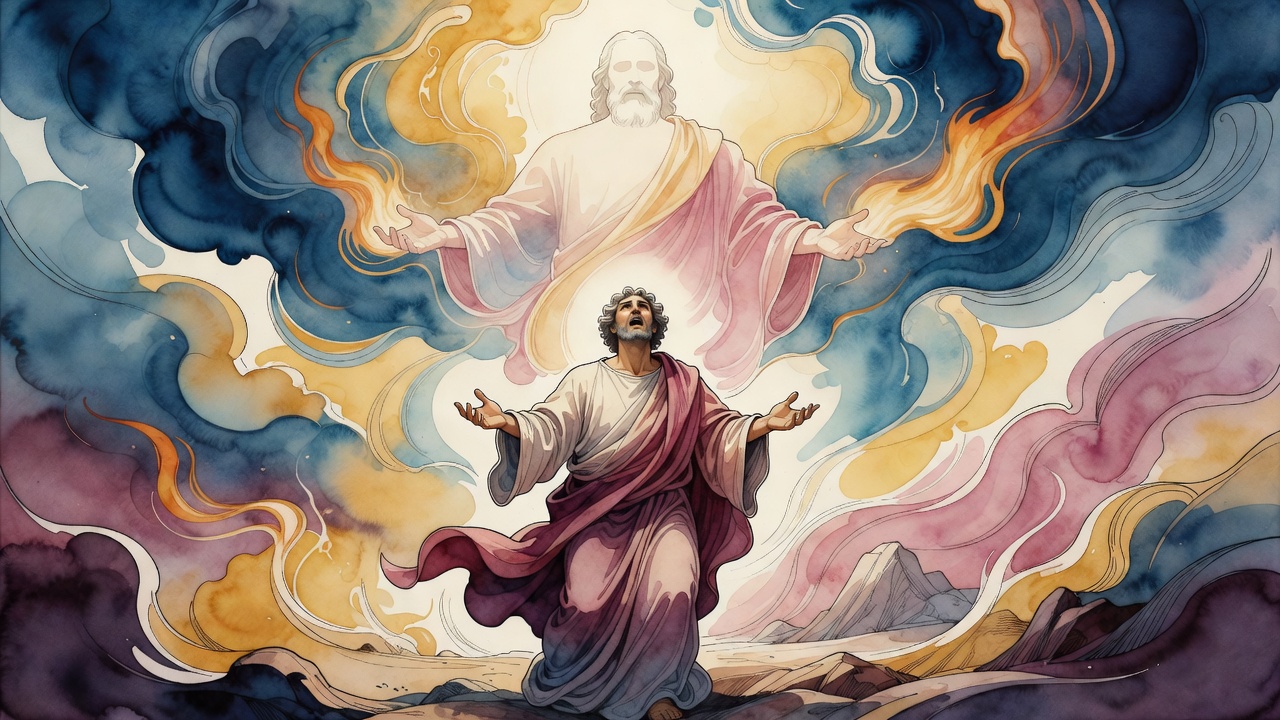
Ahithophel Falls When Wisdom Outpaces Piety
David leaned toward a counselor younger than the throne. Bathsheba was that man's granddaughter. The plans arrived already sewn.
Table of Contents
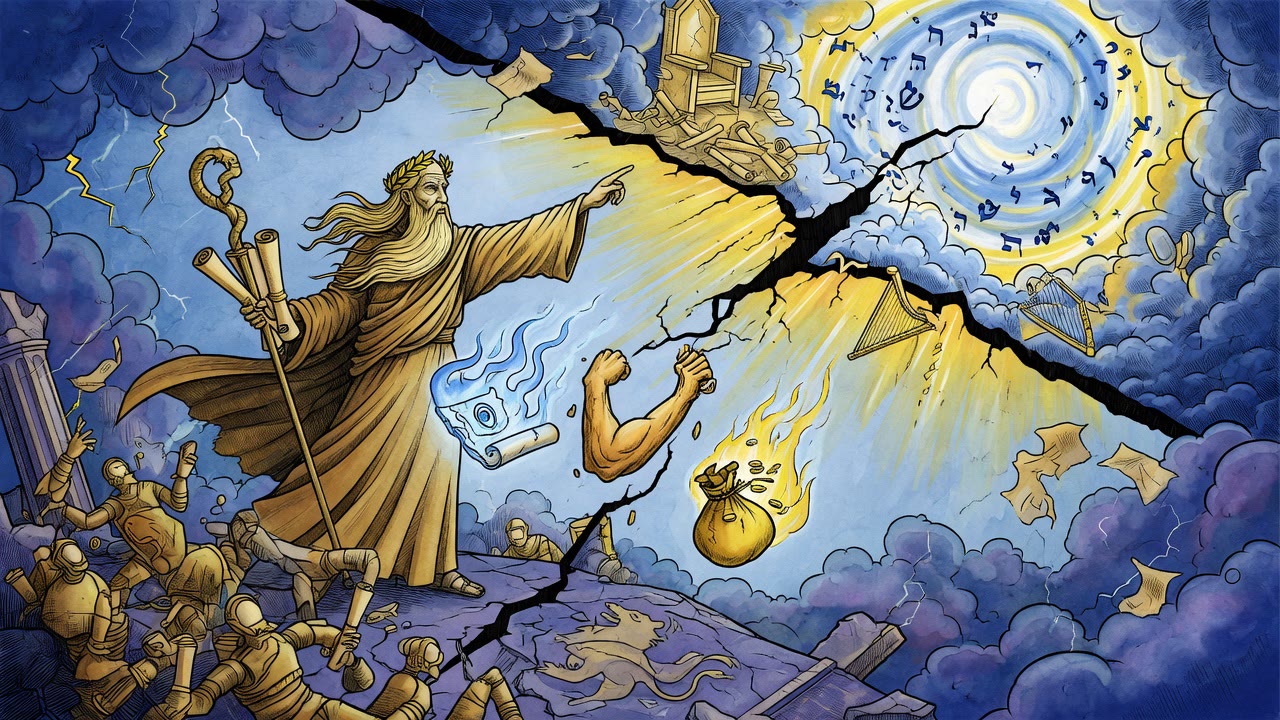
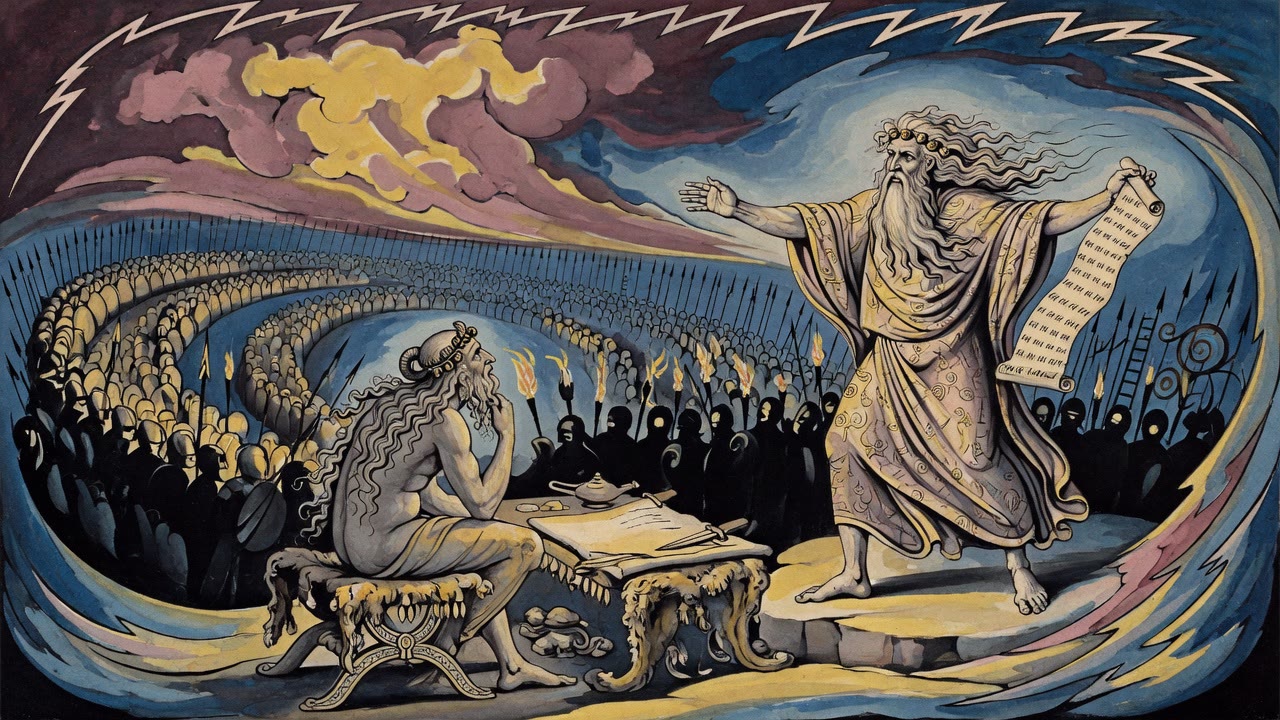
David leaned forward in the chair that was supposed to be the highest in the room. Ahithophel sat where kings lean. His counsel landed so clean that men compared it to the Urim and Thummim, the priestly lots that answer from holiness. When he spoke, the room tightened. When he finished, the plan already felt inevitable.
 Click for full size
David called him teacher. The king who wrote psalms still submitted to a mind sharper than his own years. Ahithophel was only about thirty-three when his life ended. Bathsheba, who would bear Solomon, was his granddaughter. Family and genius braided one seat of influence beside the throne.
The Teacher Younger Than the King
A question rose. Ahithophel answered as if the answer had been waiting in his mouth since morning. Alignment with heaven seemed so steady that men stopped checking the sky.
People who watched him work said his plans arrived whole, like a garment already sewn. That gift made flattery easy and correction hard. No one interrupts an oracle. No one tells a man whose word matches the Urim that fear of heaven is still required.
Scholarship filled him. Speed filled him. The one thing missing was sincere piety, and that absence would undo him.
When the Oracle Joins the Rebellion
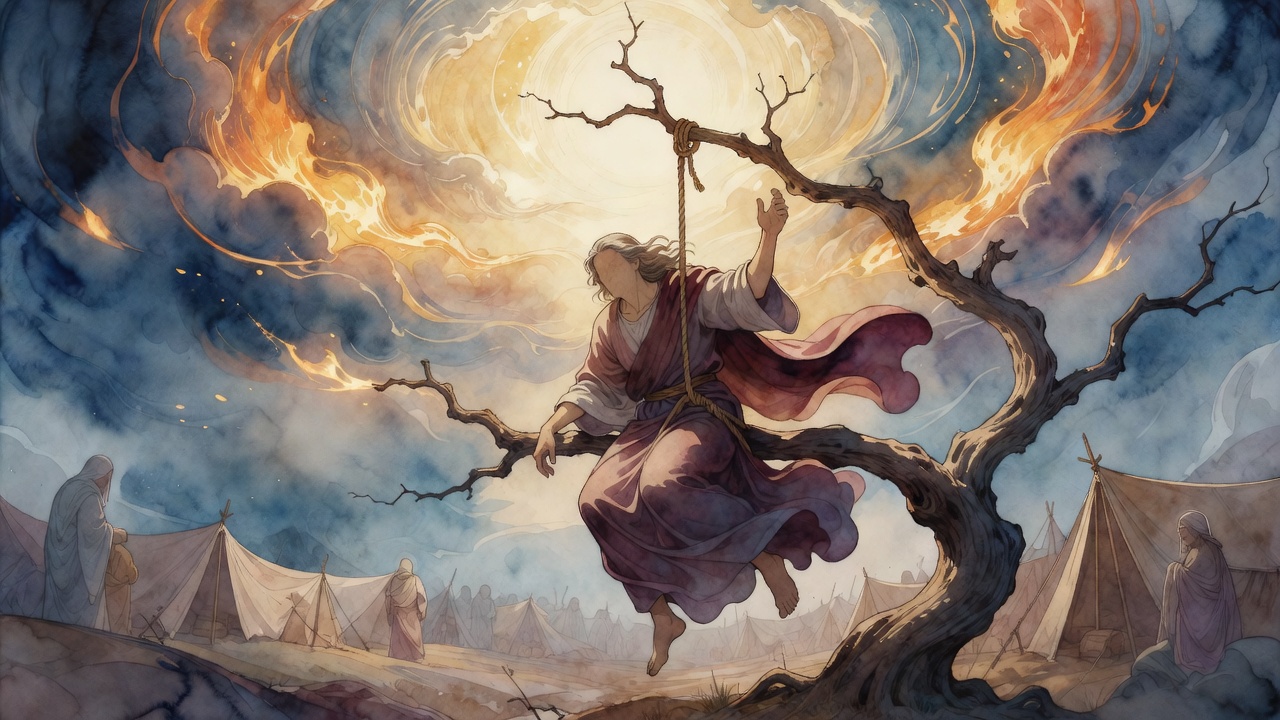
Absalom stole hearts in the gate and then stole a kingdom's peace. Ahithophel chose the son's side against the father. The counsel that had once steadied David now sharpened a revolt. Ambition found a map in a brilliant head that lacked the ballast of fear of God.
Learning without that fear is a blade with no sheath. Ahithophel could read a battlefield and a palace corridor, but he misread the covenant that held David's line. He treated the throne like a puzzle to solve for the stronger claimant of the hour.
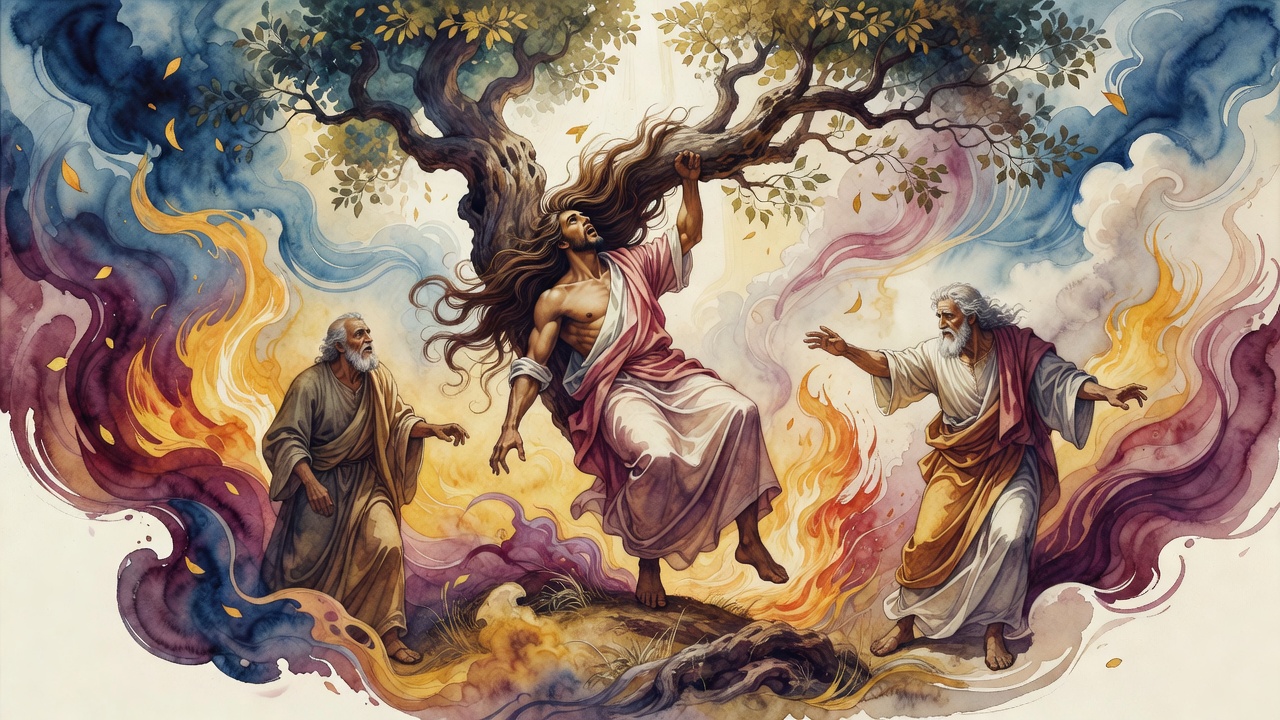
His advice to Absalom was cruel and precise. Heaven did not ratify the precision. When the plan failed, the counselor who had lived like an oracle died like a man who had bet his soul on a wrong map. He forfeited even his share in the world to come.
Absalom's camp had smelled of success for a short season. Counsel that once guarded David taught a son how to shame a father. When heaven closed the road Ahithophel had drawn, he had no alternate piety to fall back on. He had only the map, and the map was ash.
Judah's Lion Against a Later Beast
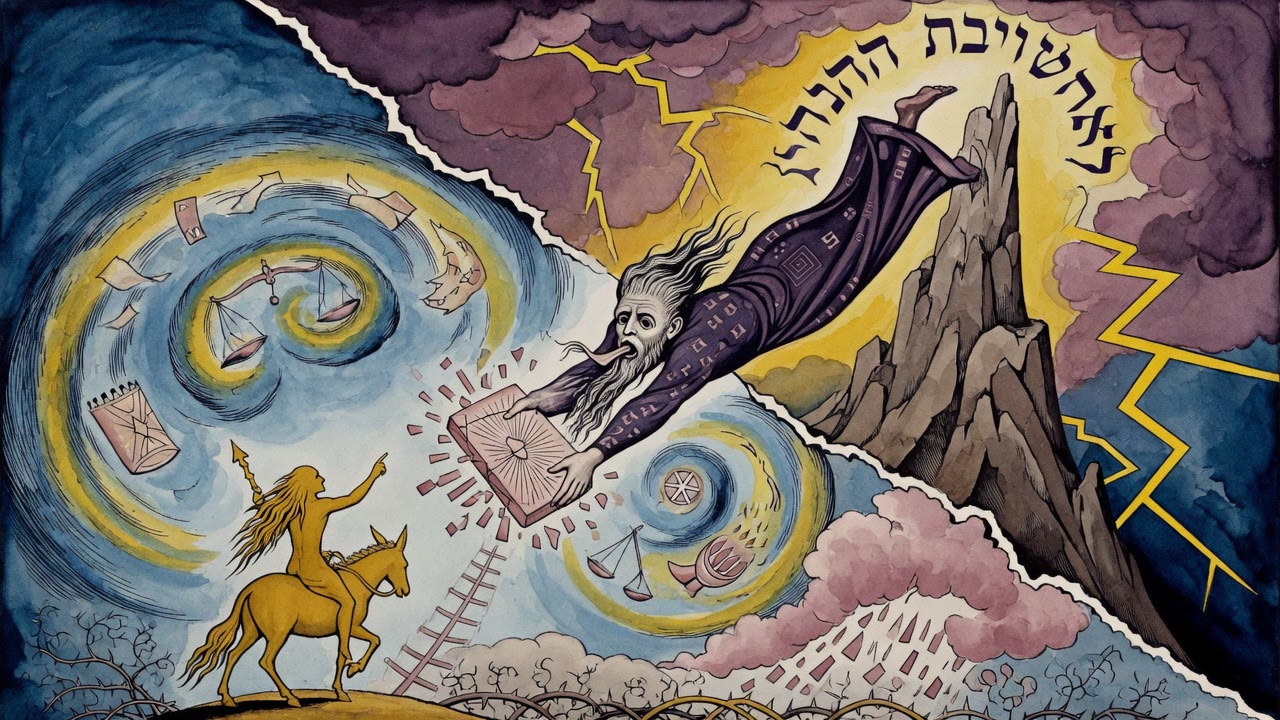
Far from Absalom's camp, Jacob on his deathbed paired tribes with empires the way a father pairs sons with burdens. Judah is a lion cub (Genesis 49:9). Babylon in Daniel's vision is also a lion (Daniel 7:4). Daniel, from Judah's line, would face the lion kingdom and outlast it.
Ahithophel served a king from that same lion line and still chose a rebellion that tried to break it early. The tribe that will outlast beasts of empire is not sustained by pure strategy. It is sustained by the mouth that prays and the heart that fears God.
Joseph was scrupulous regarding his father's honor. Edom demeaned a father's honor. Ahithophel chose the Edom side of that pairing while he still sat in Judah's court. He taught a son how to shame a father, then learned that clever maps die when God closes a door.
The Court Speaks His Name More Quietly
In the years when Ahithophel's word matched the Urim, David listened as a student. That humility was royal. The counselor's later pride was not. He mistook accurate prediction for permission. He mistook kinship with Bathsheba's house for ownership of Israel's future.
A king can say "you are my teacher" and remain king. A teacher who forgets the fear of heaven becomes a hazard wearing wisdom's clothes. The revolt ate the hazard. History kept David and buried the advisor who thought the oracle lived only in his skull.
Outside the city, dust settled on roads Absalom had ridden in triumph for a day. Inside, men who had once deferred to Ahithophel spoke his name more quietly, the way people speak of a knife that cut the hand that held it.
A courtier who once copied Ahithophel's phrases stopped using them. Words that had sounded like wisdom now tasted like revolt. David lived. The teacher who forgot to fear God did not.
The Empty Seat Beside the Throne
No later counselor quite filled the shape Ahithophel left. Some were loyal. Some were holy. Few combined his speed with his learning. The empty seat sat there anyway. Israel still needed minds that can map a war and still bow when God closes a door.
Judah's lion would face Babylon's lion in another age. The pairings Jacob and Moses set in motion do not run on pure brilliance. They run on a people that remembers who keeps the throne when counselors fall.
Ahithophel's wisdom had once sounded like heaven. Without piety it sounded like Absalom. Clever maps die. Fear of God remains the only compass that still points when every corridor of the palace has chosen a side.
← All myths