6 min read

Ahithophel Counted Twelve Thousand Men for Tonight

Ahithophel offered Absalom a night raid of twelve thousand against weary David. Prayer, delay, and judgment unmade the counselor's perfect plan.

Curated by Arthur · Told by Maggid ·
Table of Contents
  1. The Counsel That Everyone Loved
  2. Cast Your Burden
  3. A Sign Against the Betrayer
  4. The Plan Breaks
  5. Ahithophel in Gehenna

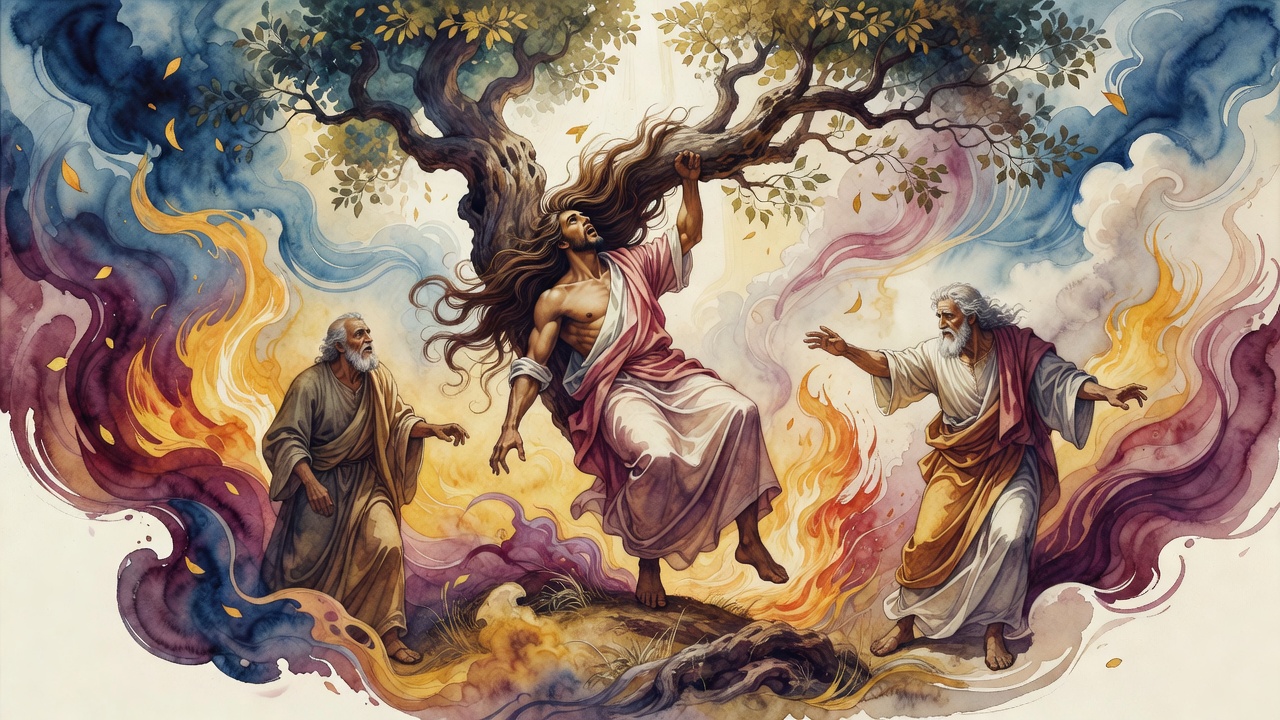
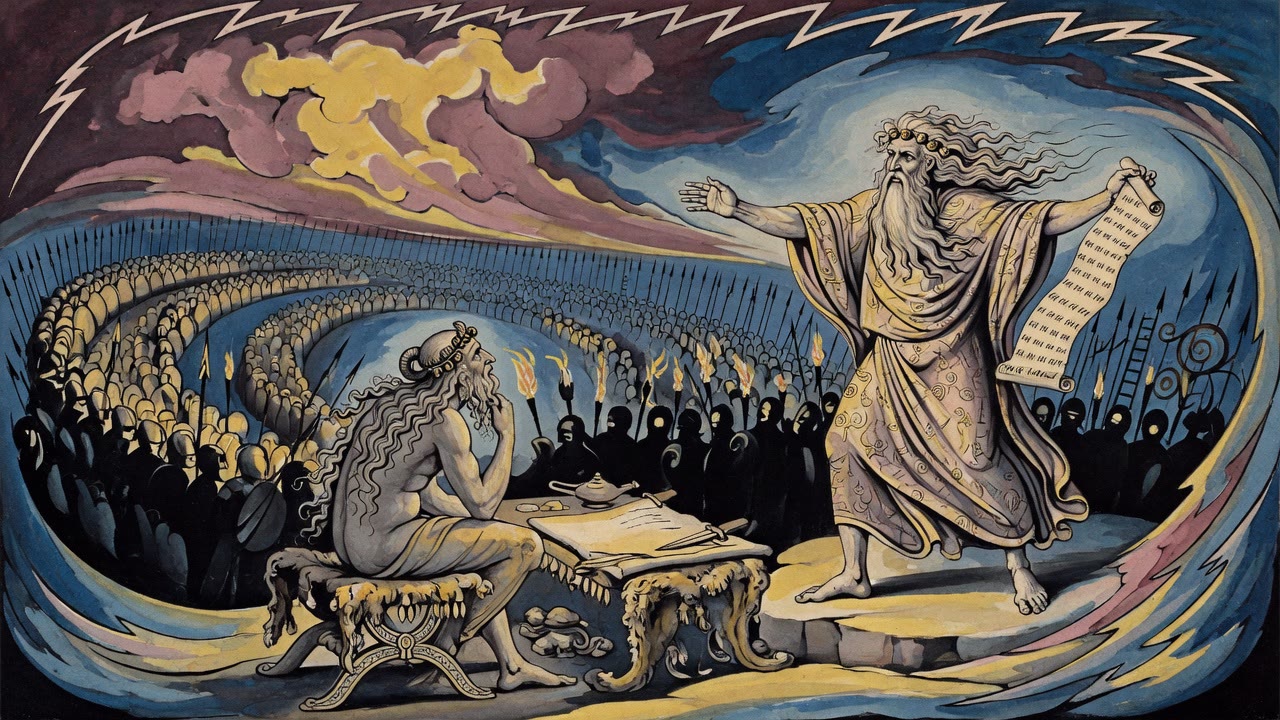
Ahithophel did not raise his voice. He never needed to. In the war council of Absalom, his calm was the sharpest weapon in the room. He looked at maps the way other men look at meat. "Let me choose twelve thousand men," he said, "and I will pursue David tonight. I will attack him while he is weary and weak" (2 Samuel 17:1-2).
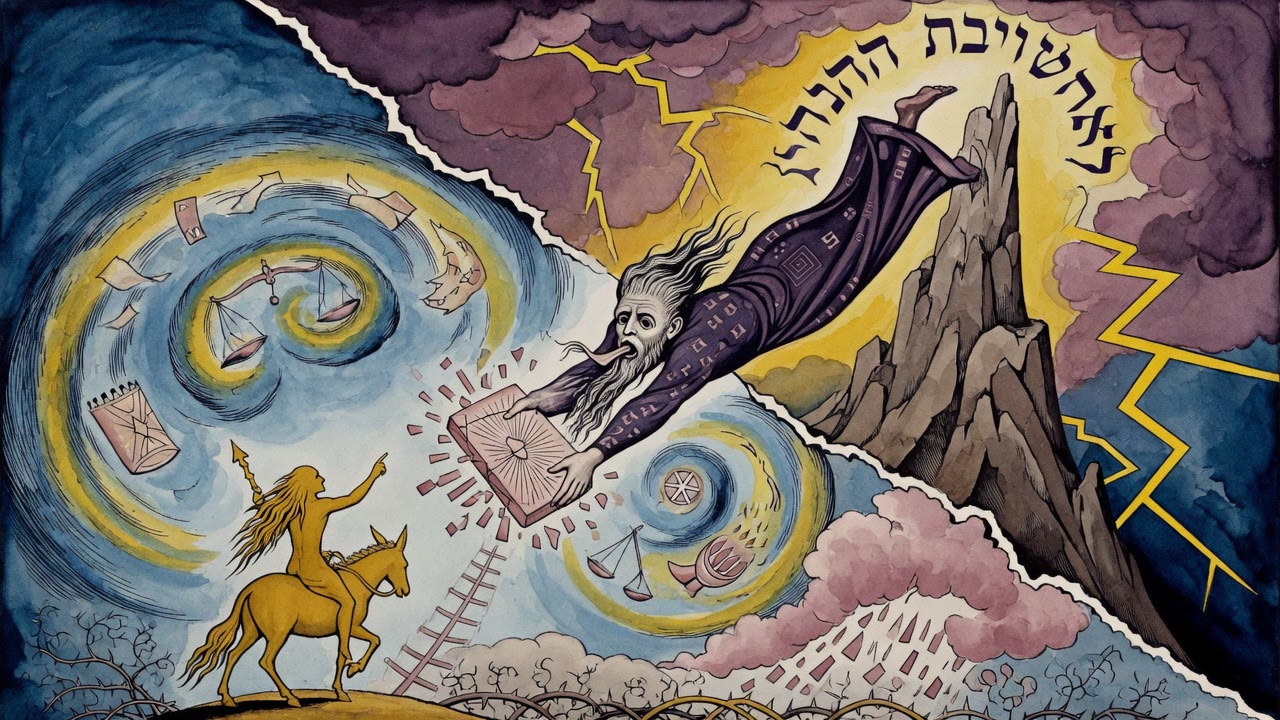
Ahithophel Counted Twelve Thousand Men for Tonight Click for full size

Absalom smiled. The elders nodded as if wisdom itself had spoken. Night was already gathering its cloak. The plan smelled of victory so near you could taste the dust of the chase.

The Counsel That Everyone Loved

David's former confidant had crossed the aisle with a ledger of old grievances and a mind that cut clean. Ahithophel knew David's habits, David's fatigue, the thin line of loyalists straggling behind a king who had fled his own city barefoot. Twelve thousand was not poetry. It was arithmetic. Strike before dawn. Cut the head from the rebellion against the rebellion. Leave the old man no morning.

News of the counsel reached David like cold water down the spine. He had lost the palace. He had lost the public square. Now he watched his own best mind turn into a spear aimed at his ribs. Fear did not arrive as a metaphor. It arrived as a tight throat and a calculation he could not win on paper.

Cast Your Burden

David cried out, and the answer came first as nearness rather than tactics. "Do not be afraid, I am with you. Cast your burden on the Lord and He will sustain you." The promise did not deny Ahithophel's brilliance. It refused to let brilliance have the last word. Heaven claimed a love for flesh and blood that still dared approach, even when the approach smelled of panic.

David prayed once and felt the sky tilt. He prayed a second time and heard nothing. A third time, still nothing. Silence after a first mercy can feel like mockery. He almost stopped. The midrashic memory of that night insists he did not. Persistence was the only strategy left when the enemy owned both the city and the smarter plan.

A Sign Against the Betrayer

"Turn to me and be gracious to me," David begged later, when the wound of that friendship still throbbed. "O Lord of the world, turn away from all Your affairs and turn to me. Make a sign for my benefit." He wanted a public mark against Ahithophel, a visible crack in the counselor's aura. He remembered Nathan's hard comfort after Bathsheba, the word that sin could be carried and still leave a future (2 Samuel 12:13). If God had once turned toward him in disgrace, God could turn toward him in betrayal.

He thought of Jacob facing Esau and Laban, men who also knew how to smile while sharpening terms. The request for a sign was not superstition. It was a demand that heaven enter the rumor mill. Let the court of Absalom see that counsel, however golden, can rot.

The Plan Breaks

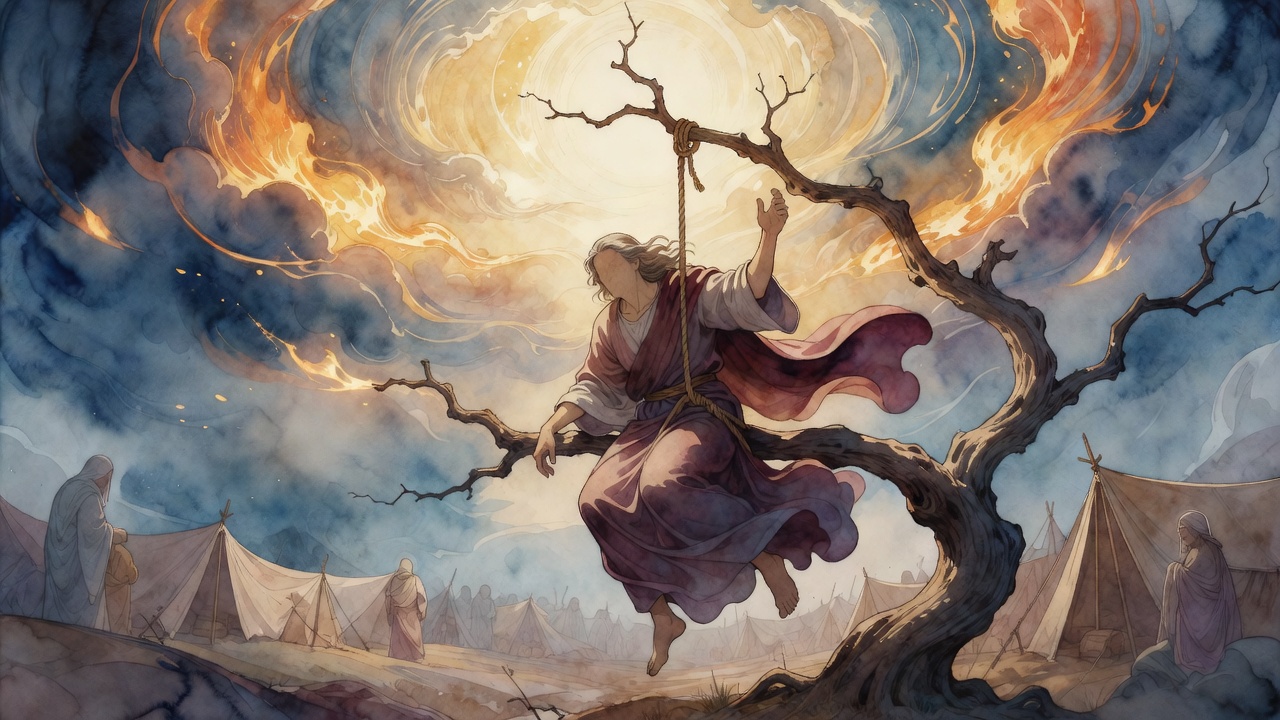
Hushai's counter-speech bought time. Ahithophel's perfect night raid never launched on schedule. David crossed the river with a heart still pounding and a body still upright. The twelve thousand remained a ghost army, a victory that existed fully only in the mouth that proposed it. When Ahithophel saw his word discarded, he did not wait for the slow humiliation of being second-best. He ordered his house, and he ended himself.

The rebellion continued without its brain. Absalom died later in a tree's cruel embrace. David wept for the son and never quite finished grieving the friend who had taught the son how to kill him efficiently.

Ahithophel in Gehenna

The righteous, in a vision colder than any battlefield, saw Ahithophel in Gehenna, the place of fiery purification. Terror took them first. If a man of that stature fell so far, what hope remained for ordinary guilt? Then understanding rearranged the fear. Judgment had a shape. The Holy One displayed the advisor's choices without varnish. The righteous rejoiced, not from spite, but because justice had refused to flatter genius. "Therefore," the teaching lands, "there was no fear." Clarity of consequence quieted the panic of moral free fall.

David's old request for a sign received its last answer in that image. The man who nearly won a war with twelve thousand men and one night could not purchase exemption from the ledger he kept for everyone else.

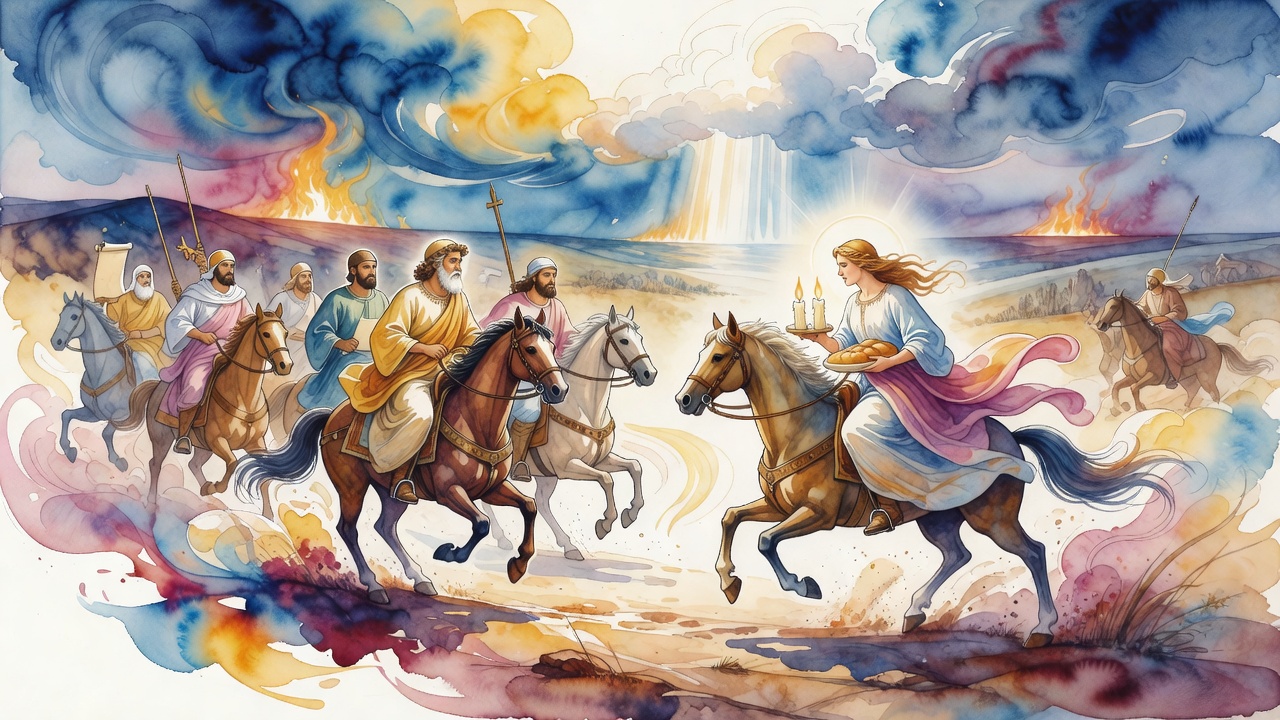
On the road east, David's bare feet found every sharp stone. He asked friends to carry the ark back into the city rather than drag holiness into his flight. Absalom's banquet tables filled with men who yesterday bowed to David. The counselor's shadow stretched longer than the prince's. Soldiers who had shared David's bread now counted for the twelve thousand in their minds, even before any roll was called.

When Hushai finally spoke, his words sounded like loyalty wearing Absalom's colors. Delay was the only weapon left that did not require more troops than David owned. Ahithophel heard the court tip away from him and understood, with the same clarity he brought to every plan, that a discarded prophet of strategy has no second act in a rebel camp. The rope and the house in order were his last orderly counsel to himself.

David climbed the Mount of Olives weeping, head covered, while the city behind him chose a different music. The burden he cast upward did not lighten the climb. It only kept the climb from becoming a free fall into the counsel of the man who knew him best and loved him least that night.


← All myths
From the tradition

Sources

3 sources

The texts behind this telling. Some cards carry a translation of the source; others are our own retelling of it, and each card says which. Every card links out to the original.

Midrash Tehillim 55:3Midrash Tehillim

Retold in our words. Read the original at the link below.Rabbi Mike Feuer, Jerusalem Anthology · CC-BY

Midrash Tehillim turns to The Friendship That Shattered David's World.

The story, as recounted in 2 Samuel, tells us that Ahithophel proposes a swift, brutal attack: "Let me choose twelve thousand men and I will pursue David tonight. I will attack him while he is weary and weak." (2 (Samuel 17:1)-2). The Midrash Tehillim highlights how appealing this counsel was, how readily Absalom and the elders of Israel embraced it.

To see his former confidant, wielding such influence, plotting his downfall?

The Midrash (rabbinic interpretive commentary) tells us that David became afraid, witnessing Ahithophel's sway over everyone. In his fear, David cries out to God. What does God say?

“Do not be afraid, I am with you. Cast your burden on the Lord and He will sustain you."

It’s a powerful message of reassurance. A promise that God is there, ready to shoulder the weight of David's worries. The Midrash goes on to say, "He has a love for flesh and blood and those who come to Him."

But then, the Midrash takes a turn. It says that David prayed to God, and God answered him once. But the second and third time? Silence.

Ever felt that? You pour your heart out, expecting a response, a sign… and nothing. Crickets.

The text then offers a crucial distinction. “But God is not like that. As long as you persist in calling upon Him, He will answer you. Therefore, cast your burden upon the Lord and He will sustain you."

The takeaway? Don't give up. Persistence in prayer, persistent connection, matters. God isn’t a vending machine, dispensing answers on demand. It's about the ongoing relationship. It’s about the continued effort to connect, even when the heavens seem silent.

This Midrash on Psalm 55 isn’t just about King David’s troubles. It's about our own. It’s about those moments when we feel surrounded by bad advice, betrayed by those we trusted, and abandoned by the very source of our hope.

Because even in the darkest nights, hope, like a persistent prayer, can still find its way through.

Full source
Midrash Tehillim 53:3Midrash Tehillim

Retold in our words. Read the original at the link below.Rabbi Mike Feuer, Jerusalem Anthology · CC-BY

It starts with a chilling image: the righteous, the truly good people, terrified because they saw Ahithophel in Gehenna – that's the Jewish concept of hell, a place of fiery purification. Now, Ahithophel wasn’t just anyone. He was King David's advisor who famously betrayed him and sided with Absalom in his rebellion (2 Samuel 15-17). So, seeing him in Gehenna sent a powerful message.

The righteous folks reasoned, "If he acted this way and ended up there, how much worse will it be for us?" It's the fear of falling short, the anxiety of not being good enough, amplified by seeing someone they respected – albeit someone who made a terrible choice – suffering the ultimate consequence.

The Midrash (rabbinic interpretive commentary) tells us that the Holy One, blessed be He, – a common way of referring to God – judged Ahithophel's actions and showed the righteous what he had done. And, surprisingly, they rejoiced! Not out of malice, but because they understood that justice had been served. The implication is that understanding God's justice removes the paralyzing fear. "Therefore," the passage concludes, "there was no fear."

The Midrash doesn't stop there. It offers another interpretation, a glimpse into the future. God, it says, will declare, "I said the people of Israel would ascend Anona, I said the fear of Anona, but I did not say that they would be subjected to the fear of destruction." Anona is a bit obscure; some understand it as a reference to a place of difficulty or trial. The idea is that God promised challenges, even fear itself, but not utter annihilation. There's a crucial difference between facing adversity and being consumed by it.

The passage then quotes (Psalm 14:6): "You would put to shame the counsel of the poor, but the Lord is his refuge." What's this "counsel of the poor?" According to the Midrash, God rebukes the Israelites, saying, "You built your own houses of idolatry!" And even when God commands them to build Jerusalem, they complain, quoting (Isaiah 54:11): "Afflicted one, storm-tossed, uncomforted!"

The Midrash sees a deep irony here. God offers redemption, a chance to rebuild, but the people are so mired in their own perceived suffering, so paralyzed by their past mistakes, that they reject the very thing that can save them. They are giving bad counsel to themselves, a counsel born of fear and despair.

The Midrash concludes with a stark warning: "Woe to the counsel of the poor; they will be put to shame. And so it is said, 'Shame befalls those who reject the Lord.'"

So, what does all this mean for us today? Perhaps it's a reminder to examine the fears that hold us back. Are we afraid of the idea of failure more than we are motivated by the possibility of success? Are we letting past mistakes define our future? And most importantly, are we open to God's counsel, even when it challenges our own limited perspectives? The Midrash Tehillim suggests that true freedom lies not in the absence of fear, but in the courage to face it with faith and a willingness to embrace the possibility of redemption.

Full source
Midrash Tehillim 86:8Midrash Tehillim

Retold in our words. Read the original at the link below.Rabbi Mike Feuer, Jerusalem Anthology · CC-BY

David, our King, isn't shy about expressing that vulnerability. "Turn to me and be gracious to me," he cries out. It's a raw, human plea. He's not just asking for a blessing; he's asking for attention, for a moment of divine focus. "O Lord of the world," he implores, "turn away from all your affairs and turn to me… Make a sign for my benefit."

What kind of sign is he talking about? Well, he specifically wants it against Ahithophel, a trusted advisor who betrayed him. According to the Midrash (rabbinic interpretive commentary), David acknowledges God's past help, saying, "You have helped me through my distress. And you have comforted me through Nathan the prophet, who said, 'The Lord has also forgiven your sin'." (referencing (2 Samuel 12:1)3).

The Midrash Tehillim doesn't stop there. It sees echoes of this plea throughout our history. "You have done a sign with me for good." This line is connected to Yaakov, our patriarch, and his struggles with Esav and Lavan. Just as David needed a sign, Yaakov needed assurance that he wasn’t alone against powerful adversaries. "For You, Hashem (The Name, God), helped me with Rachel, and comforted me with Lavan."

Then, the Midrash draws a powerful image from the Temple in Jerusalem. Remember the lashon shel argaman, "the tongue of crimson wool"? This was a scarlet thread tied to the Temple doors on Yom Kippur (the Day of Atonement). The tradition says that when the prayers of the people were accepted, this thread miraculously turned white. "When the tongue of crimson wool was hung at the entrance of the Sanctuary, they knew that their prayers had been heard."

That image is so potent. It speaks to the deep human need for tangible evidence, for a visible sign that our prayers aren't just vanishing into thin air. "Be with me for good, and let my enemies see and be ashamed," David continues, "so that the nations of the world will say that they are not forgiven." It's a bold statement, a desire not just for personal salvation but for a public demonstration of divine favor.

Finally, the Midrash connects this plea to Rosh Hashanah (the Jewish New Year) and Yom Kippur, the High Holy Days. "You helped me on Rosh Hashanah and comforted me on Yom Kippur, as it is said, 'For on this day shall atonement be made for you, to cleanse you; from all your sins shall ye be clean before the Lord.'" (Leviticus 16:30). These are days of intense self-reflection and repentance, days when we, like David, are most vulnerable and most in need of a sign of forgiveness.

So, what's the takeaway? Maybe it's this: We all need signs. We all need moments of reassurance that we're heard, that we're seen, that we're not alone. Whether it's David pleading for a sign against his enemies, Yaakov wrestling with his past, or the entire nation holding its breath as they await the transformation of a crimson thread, the desire for connection, for validation, is a constant thread woven through our stories. And perhaps, the very act of seeking those signs, of turning towards the Divine with an open heart, is a sign in itself.

Full source