6 min read

Ahithophel Hung Himself When Wisdom Failed

Ahithophel rode his counsel into Absalom's camp sure the war was already won. Heaven had not signed the gift. The rope finished what pride began.

Curated by Arthur · Told by Maggid ·
Table of Contents
  1. The Counsel That Should Have Won
  2. Gifts That Never Touched Heaven
  3. The Rope in His Own House
  4. What Light Refuses to Share

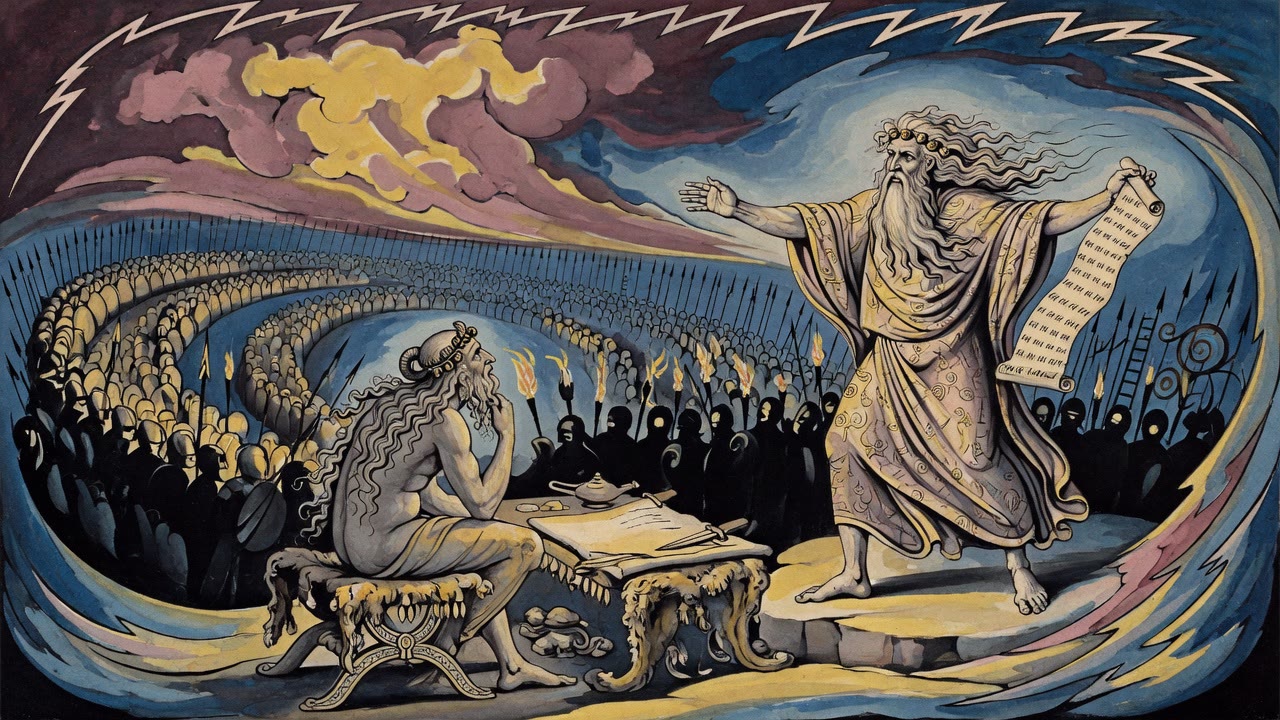
Ahithophel left Jerusalem with his mule and his reputation. The city still whispered his name the way men whisper the weather when a storm is already on the ridge. He had advised kings. He had measured rooms, counted odds, and spoken once, so the court could stop arguing. Now he rode toward Absalom, who wanted his father's throne, and Ahithophel meant to hand it to him by pure calculation.
Ahithophel Hung Himself When Wisdom Failed Click for full size

In his mouth the plan was clean. Strike David tonight while the old king is tired and the camp is raw. Do not wait for speeches. Do not wait for prophets. The night is an ally if taken before dawn makes cowards of everyone.

Absalom listened. The young prince liked the sound of certainty. Ahithophel watched the faces around the fire and felt the old lift in his chest, the lift that comes when a room tilts toward him.

The Counsel That Should Have Won

He laid the map out as if the hills themselves had already agreed. Take twelve thousand. Cross at once. Find the king alone. Cut the head from the house of Jesse and the kingdom will fold without a second battle. Ahithophel did not raise his voice. Wisdom, when it is sure of itself, rarely needs volume.

Men nodded. Someone poured wine. The mule stamped outside the tent, and for a breath the future seemed already past tense, sealed by the cleverest mind in Israel.

Then another counselor rose. Hushai spoke softly, as a friend speaks, and the soft words did more damage than a spear. Wait, he said. Gather more men. Make a show of force. Do not risk a night raid against a king who has survived worse nights than this.

Absalom's eyes moved. The room moved with them. Ahithophel felt the tilt reverse under his sandals. He had not prepared a second speech. He had never needed one.

When the prince chose the other plan, Ahithophel did not argue long. He stood, bowed the smallest bow a proud man can manage, and walked out into air that suddenly felt thinner than the firmament above the camp.

Gifts That Never Touched Heaven

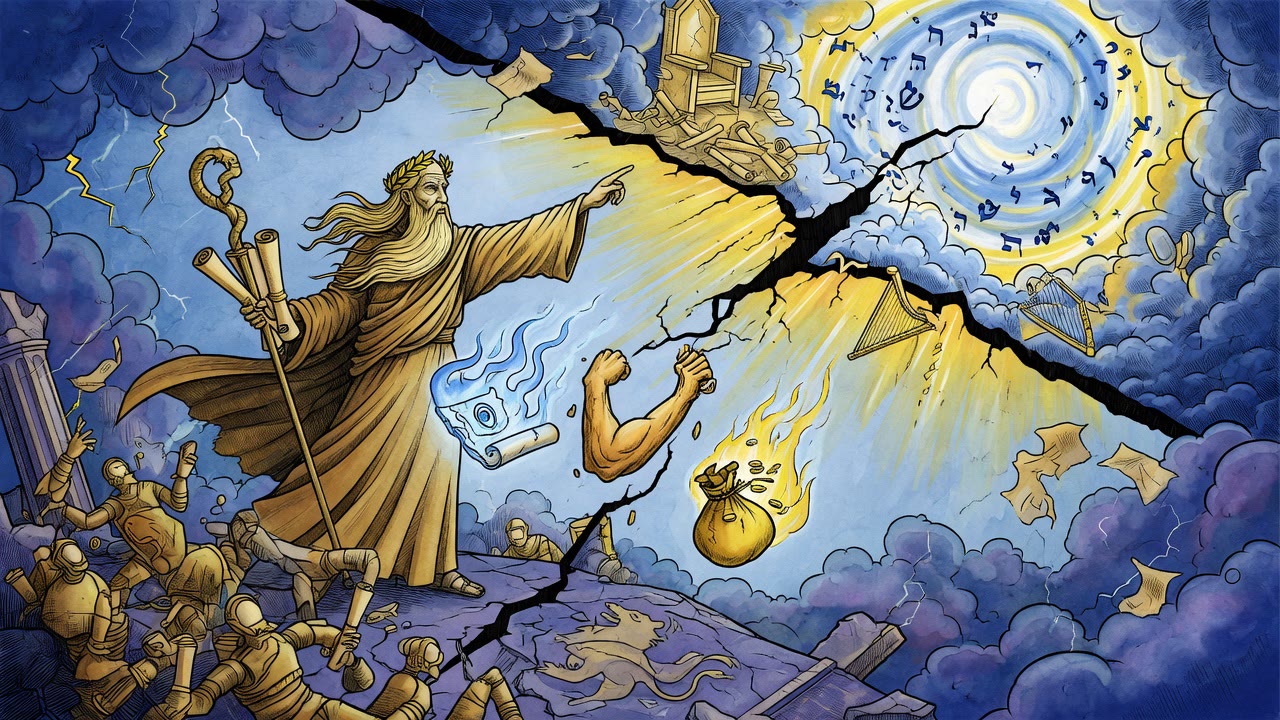
There are three gifts that look like complete lives when a man holds them in his hands: wisdom, might, and wealth. Each gift has already bought a grave. Balaam had wisdom and ended under a sword of his own making. Samson and Goliath had might and both went down in dust. Korah and Haman had wealth and the earth, or the gallows, took it back.

Ahithophel knew those ends the way a physician knows diseases he has never caught. He had always assumed the list was for other men. His gift felt different. His gift felt earned. He could hear a king's trouble and name the hinge of it before the king finished speaking. Heaven's seal felt optional to a mind that sharp.

The answer waited for him on the road home. Without heaven, the gift is a lamp that burns only while the oil lasts. The sun and moon carry only a hundredth of the light that sits before the Holy One. A man who mistakes his hundredth for the whole becomes a thief in a house with two sets of guards. He may mock the inner watch. The outer watch does not laugh with him.

God's eyes, the prophets said, rove the earth. An adulterer waits for night and thinks no eye will see. Ahithophel waited for night in a different way. He trusted the dark of cleverness. He trusted that a perfect plan could hide from judgment the way a sinner hides from a husband. Both hidings fail at the same wall.

The Rope in His Own House

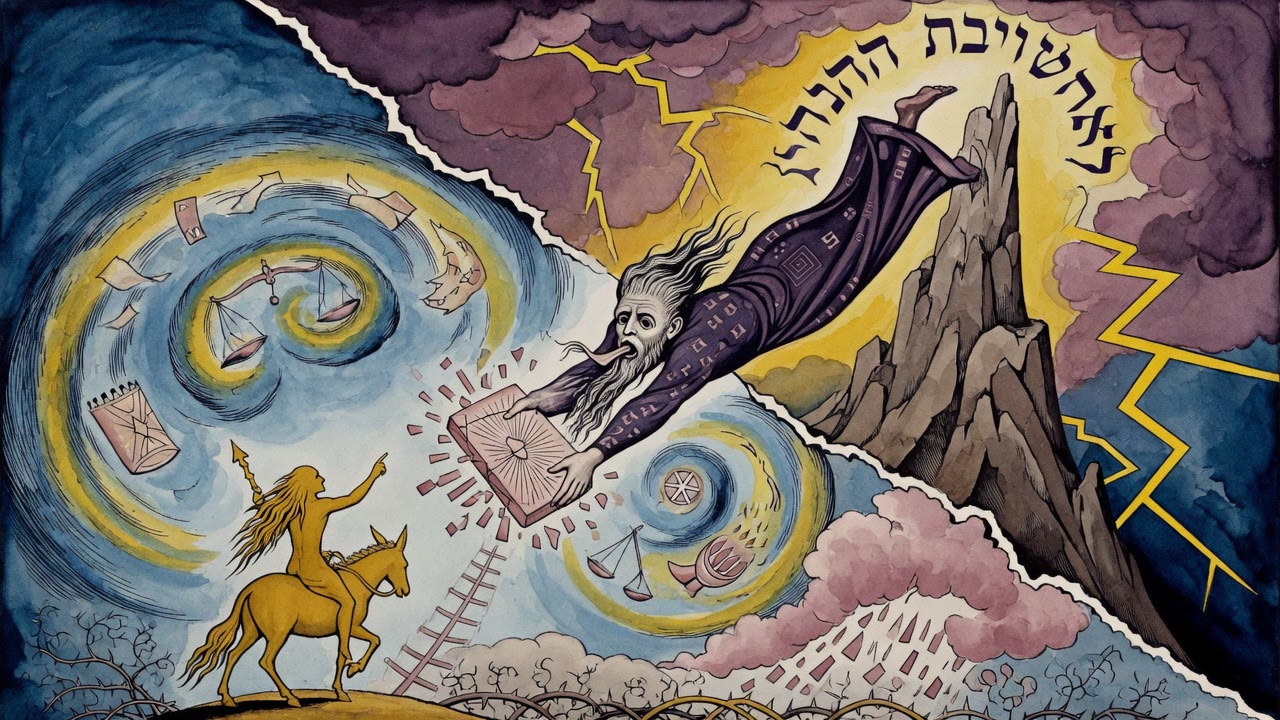
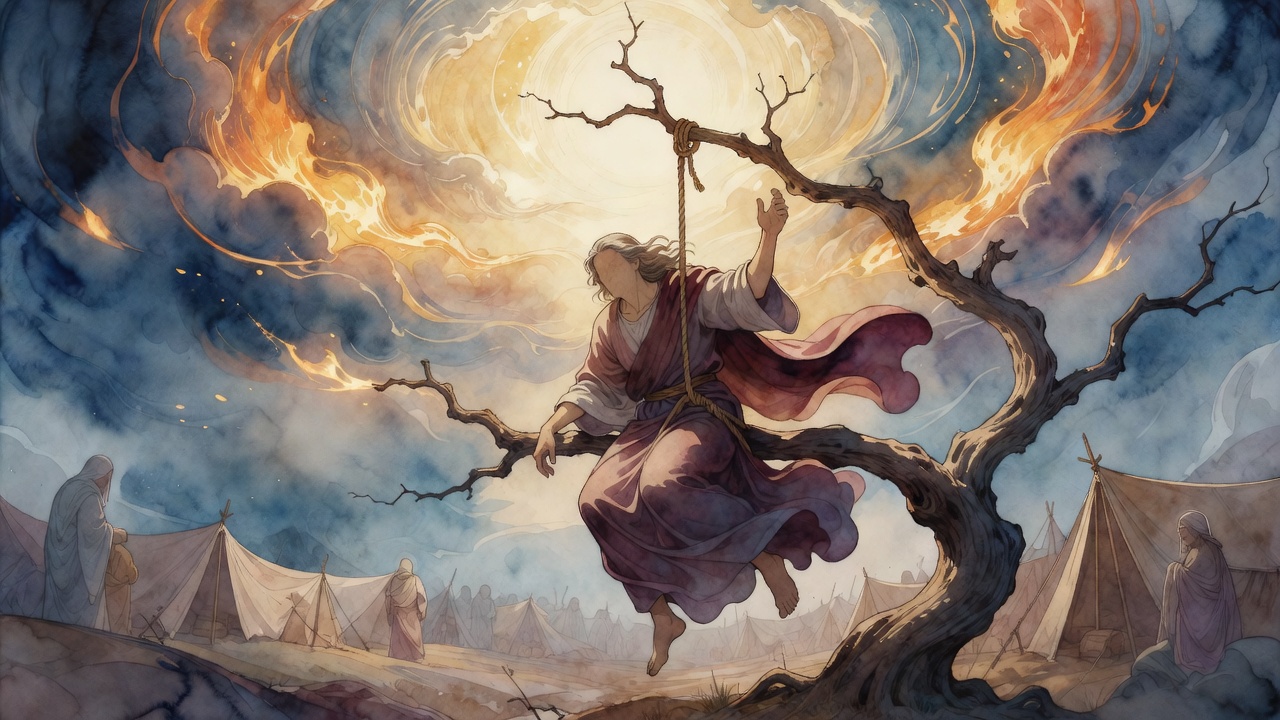
He ordered his household affairs with the same care he once ordered campaigns. He set his house in order. He chose the place. He chose the rope. No angel stopped him. No messenger from Absalom rode hard enough to catch him. The war would go on without his counsel, and that fact was already a kind of death.

When they found him, the mouth that had ruled rooms was closed. The hands that had pointed at maps hung empty. Israel still had a civil war, but it no longer had Ahithophel's certainty, and certainty had been the only god he truly served.

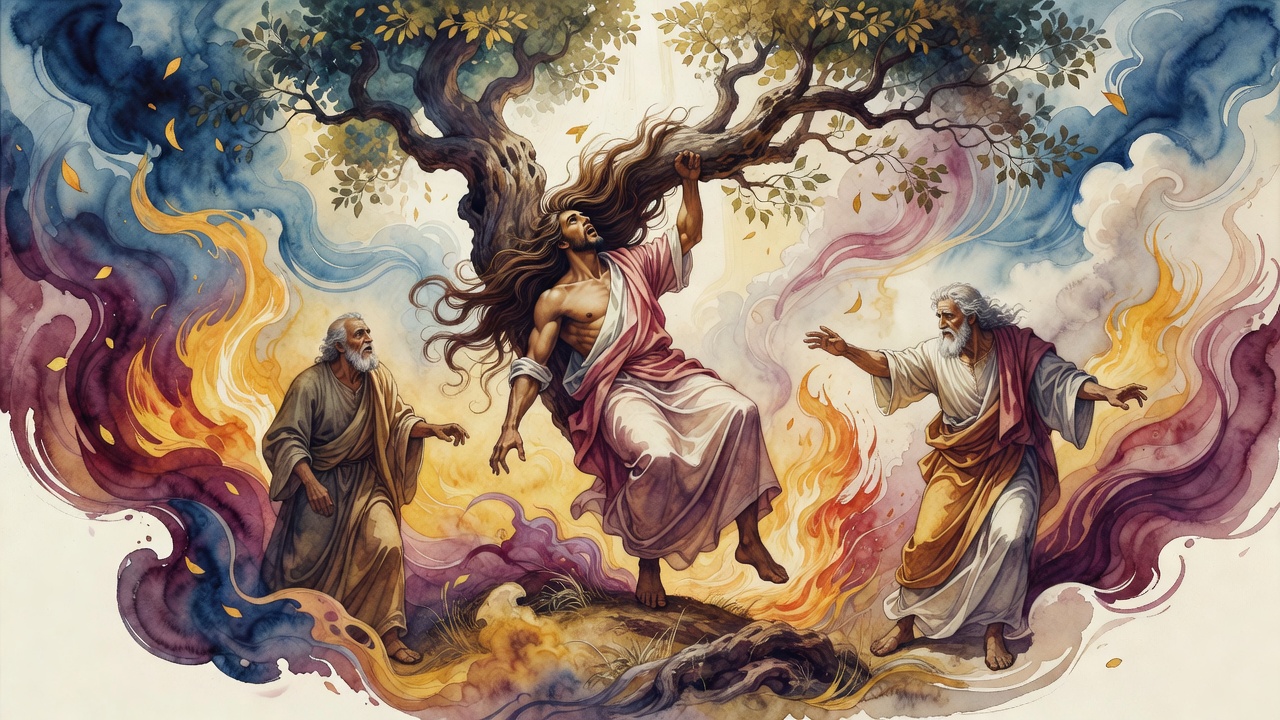
David, far from that house, would survive the night Hushai bought him. Absalom would die later in a tree, another man caught by what he thought he controlled. Measure answered measure across the kingdom, but Ahithophel did not live to see the ledger balance. He had already settled his own account.

What Light Refuses to Share

The priests kindled lamps on the menorah (the lampstand) so the face of service would not go dark. The blessing asks that the Lord shine His face. It does not ask a man to manufacture his own radiance and call it Torah. Ahithophel's light was real enough to dazzle a court. It was not the light that keeps a soul from hanging itself when a plan fails.

He had wanted one irreversible thing: that Absalom take the throne by Ahithophel's design, and that history remember the design. History remembered the rope instead.

In the hills above the camp the stars kept their old positions. Below them a mule stood untethered, still waiting for a rider who would not return to adjust the saddle. Between the stars and the mule, a gifted man had learned too late that brilliance without heaven is only a brighter way to fall. The campfires of Absalom burned on without his map.


← All myths
From the tradition

Sources

3 sources

The texts behind this telling. Some cards carry a translation of the source; others are our own retelling of it, and each card says which. Every card links out to the original.

Bamidbar Rabbah 22:7Bamidbar Rabbah

Retold in our words. Read the original at the link below.The Sefaria Midrash Rabbah, 2022 · CC-BY

The book of Numbers, Bamidbar in Hebrew, recounts the Israelites' journey through the wilderness. In chapter 32, we encounter the tribes of Reuben and Gad. "The children of Reuben and the children of Gad had much livestock; it was very considerable. And they saw the land of Yazer and the land of Gilad, and, behold, the place was a place for livestock" (Numbers 32:1).

Bamidbar Rabbah, a classical Midrashic (rabbinic interpretive commentary) text, unpacks this seemingly simple verse and explores the nature of true wealth, power, and wisdom. It poses a fascinating idea: that there are three gifts in the world that, if acquired, can bring complete fulfillment. These are wisdom, might, and wealth. But there’s a crucial caveat.

These gifts only bring true delight, the Midrash tells us, when they are "gifts of Heaven" – when they come through the Torah. When they are earned and used in a way that is aligned with divine will. Otherwise? Well, then their luster is fleeting. As Solomon wisely observes in (Ecclesiastes 9:11), "the race is not to the swift, nor the battle to the strong, neither yet bread to the wise, nor yet riches to men of understanding, nor yet favor to men of skill; but time and chance happeneth to them all" (Ecclesiastes 9:11).

The prophet Jeremiah echoes this sentiment: "Thus says the Lord: 'Let not the wise man boast of his wisdom, or the strong man boast of his strength, or the rich man boast of his riches, but let him who boasts boast about this: that he understands and knows me..'" (Jeremiah 9:23-24). If these gifts don't come from the Holy One, blessed be He, they will ultimately be taken away.

To illustrate this point, our Rabbis tell of pairs of figures: one from Israel and one from the nations, each possessing one of these gifts. Ahithophel and Balaam, both renowned for their wisdom, yet both met tragic ends. Samson and Goliath, paragons of strength, both ultimately fell. And Korah and Haman, overflowing with riches, both were utterly destroyed. Their downfall? They seized their gifts for themselves, rather than receiving them from the Divine. These figures – legends in their own right – possessed qualities that many of us strive for. Yet, their stories serve as cautionary tales.

And what about the tribes of Reuben and Gad? They, too, were blessed with considerable wealth in the form of livestock. But they loved their possessions so much that they chose to settle outside the Land of Israel. The consequence? They were the first to be exiled, as it is written: "So the God of Israel stirred up the spirit of Pul, king of Assyria, and the spirit of Tilgath-pilneser, king of Assyria, and carried them away, even the Reubenites, and the Gadites, and the half-tribe of Manasseh.." (1 (Chronicles 5:2)6).

The Midrash asks: What caused this? It was their separation from their brethren, driven by their attachment to their acquisitions. The very verse that describes their wealth – "The children of Reuben and the children of Gad had much livestock.." – becomes evidence of their misplaced priorities.

So, what does this all mean for us? Perhaps it's a reminder to examine our own values. What do we truly cherish? Are we pursuing wisdom, strength, and wealth in a way that honors something beyond ourselves? Are we building a life of true, lasting value, or are we chasing fleeting shadows? The story of Reuben and Gad, and the insights of Bamidbar Rabbah, invite us to consider what it truly means to be rich – not just in possessions, but in purpose.

Full source
Bamidbar Rabbah 9:9Bamidbar Rabbah

Retold in our words. Read the original at the link below.The Sefaria Midrash Rabbah, 2022 · CC-BY

The ancient Rabbis grappled with this very human impulse, especially when it came to matters of infidelity and divine justice. to a fascinating passage from Bamidbar Rabbah 9 that explores this idea.

The passage begins by quoting (Jeremiah 23:24): "Can a man hide in concealed places and I will not see him, the utterance of the Lord?" The Rabbis interpret this verse as referring specifically to an adulterer hiding to commit his transgression. (Job 24:15) echoes this sentiment: "The eye of the adulterer awaits the night, saying: No eye will behold me; and he masks his face."

Can anyone truly hide from God? The Midrash (rabbinic interpretive commentary) answers with a powerful parable. He manages to evade the inner guard, but the outer guard catches him. The outer guard scolds him, "You made a mockery of the inside one, but you are unable to make a mockery of me."

This, the Midrash suggests, is how God views the adulterer. You may deceive the woman’s husband, but you cannot deceive God. As (Psalms 2:4) reminds us, "He who resides in heaven will laugh; the Lord will ridicule them." God sees everything. (Zechariah 4:10) tells us "The eyes of the Lord rove throughout the earth," and (Proverbs 15:3) adds, "The eyes of the Lord are everywhere, observing the wicked and the good.”

And what happens then? God becomes a "swift witness," publicizing the adulterer’s sin. (Malachi 3:5) lists those against whom God will be a swift witness, including "adulterers." The text then cleverly connects this to the ritual of the sotah, the suspected adulteress.

The sotah ritual, described in Numbers 5, involves a woman suspected of adultery being brought before the priests. She drinks a special mixture of water and dust, and if she is guilty, she will suffer physical consequences. The Midrash interprets (Jeremiah 23:24) ("And I will not see him [erenu], the utterance of the Lord?") as "I will not display him [arenu]" – God will reveal the adulterer's actions through the ordeal of the sotah. God arranges events to expose the hidden sin. As the verse states, "With your husband you commit a trespass and are deceitful; with Me, you are not able to be deceitful, as I will publicize your actions."

The passage concludes with a chilling story. Two sisters, identical in appearance, lived in different cities. One sister committed adultery, and when her husband became suspicious and planned to subject her to the sotah ritual, she traveled to her sister's city. The adulterous sister confessed her sin, and the innocent sister, in an act of misguided loyalty, offered to take her place. She drank the bitter water and was found innocent. However, when the two sisters embraced, the adulterous sister smelled the bitter water on her sister's breath and immediately died. This illustrates the verse from (Ecclesiastes 8:8): "There is no man who rules the spirit, to retain the spirit; and there is no rule over the day of death. There is no sending a proxy in war, and wickedness will not save the one who practices it."

This Midrash teaches us that no sin is truly hidden from God. While we may deceive others, we cannot deceive the Divine. The story of the sisters serves as a stark reminder that our actions have consequences, and that justice, in its own way, will always prevail. The sotah ritual, though seemingly archaic, becomes a powerful symbol of God's all-seeing eye and the inevitable exposure of hidden transgressions. So, what does this say to us? Perhaps that true freedom comes not from hiding our actions, but from living a life of integrity, knowing that we are always seen, always known.

Full source
Bamidbar Rabbah 15:9Bamidbar Rabbah

Retold in our words. Read the original at the link below.The Sefaria Midrash Rabbah, 2022 · CC-BY

Even the ancient Israelites felt that way, yearning for guidance, for illumination. As they cried out, “Send Your light and Your truth; they will guide me” (Psalms 43:3), they were tapping into a profound idea about the nature of light itself.

What is this light? Bamidbar Rabbah, a fascinating collection of rabbinic teachings and interpretations on the Book of Numbers, explores this very question. It tells us that the light of the Holy One, blessed be He, is… well, it’s kind of a big deal.

The sun and moon is often remembered as the primary sources of light. But according to Bamidbar Rabbah, they're actually drawing their illumination from something far more immense: sparks of a supernal light. This idea is hinted at in the verse, “By the light of Your arrows they will go, by the glow of the flash of Your spear” (Habakkuk 3:11).

How powerful is this supernal light, this original source? Humanity has only been given a tiny fraction of it – just one one-hundredth! As it says, "He knows what [ma] is in the darkness" (Daniel 2:22). Here, the word "ma" is cleverly interpreted as "mea," meaning one hundred. everything we see, all the light we experience, is just a sliver of the true, unimaginable brilliance.

And why create the sun and moon in the first place? Because, the text explains, God crafted them "so they will illuminate before you," as it is stated: “God set them in the firmament of the heavens to illuminate” (Genesis 1:17). They are gifts, designed to guide us, to show us the way.

The text then shifts its focus to the menorah, the candelabrum in the Temple. “Toward the front of the candelabrum, the seven lamps shall illuminate.” King David adds a layer of meaning, saying, “Life is in the light of the king's countenance” (Proverbs 16:15). Here, light isn't just about physical sight; it's connected to life, to joy, to divine presence.

Rabbi Yaakov ben Rabbi Yosei offers another beautiful idea: that joy is withheld from the wicked but freely given to Israel. It's as if the Holy One, blessed be He, willingly makes Himself present, even among flesh and blood, through the symbol of the lamp. He essentially says, "Toward the front of the candelabrum, [the seven lamps] shall illuminate.” He dwells among us, offering light and guidance.

So what does this all mean for us today? Perhaps it's a reminder that even in the darkest of times, there is a source of light that we can tap into. Maybe it’s a call to look beyond the obvious, to seek the hidden sparks of divinity in the world around us. And maybe, just maybe, it’s an invitation to become lamps ourselves, reflecting that light for others who are searching in the darkness.

Full source