5 min read

Ahithophel's Wisdom Split Away From Heaven

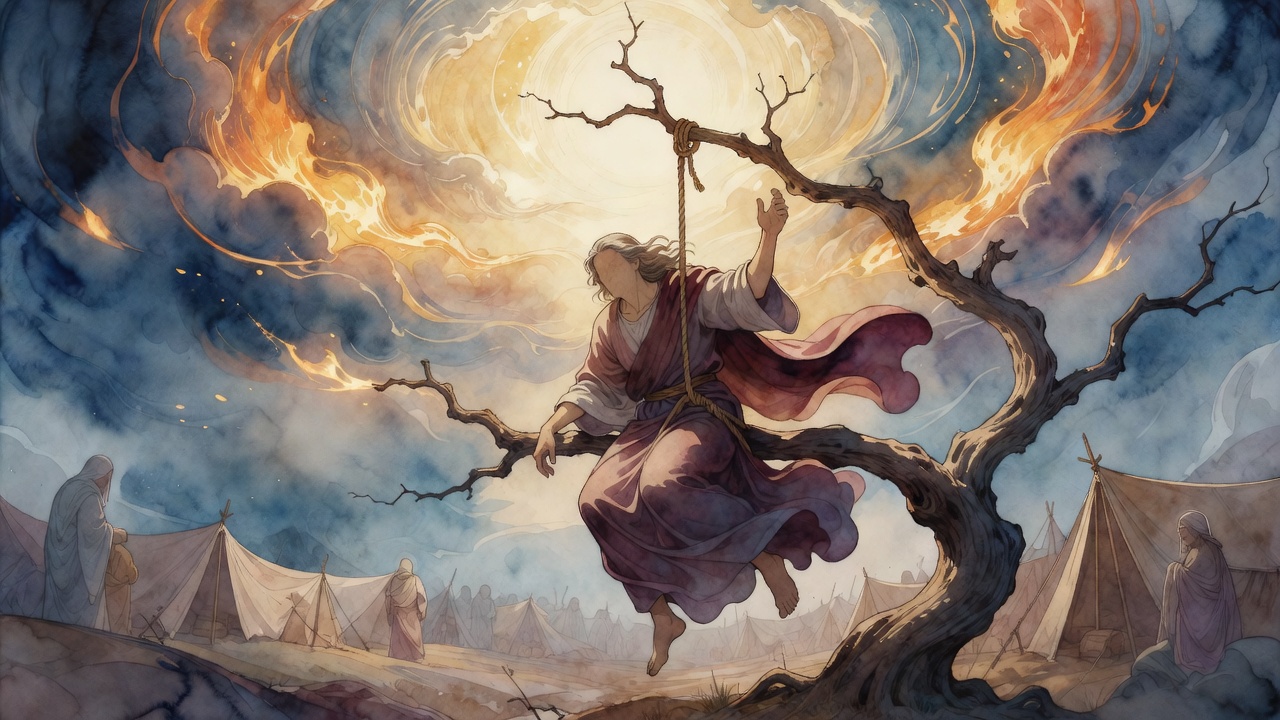
Ahithophel's advice never missed, so David's court took it for something close to prophecy. Then he advised Absalom. When the plan failed, he hanged himself.

Curated by Arthur · Told by Maggid ·
Table of Contents
  1. Wisdom Without a Master
  2. Strength That Ate Its Owners
  3. Wealth That Chose the Wrong Bank of the Jordan
  4. Korah Would Not Wear Jacob's Name
  5. What the Court Still Hears

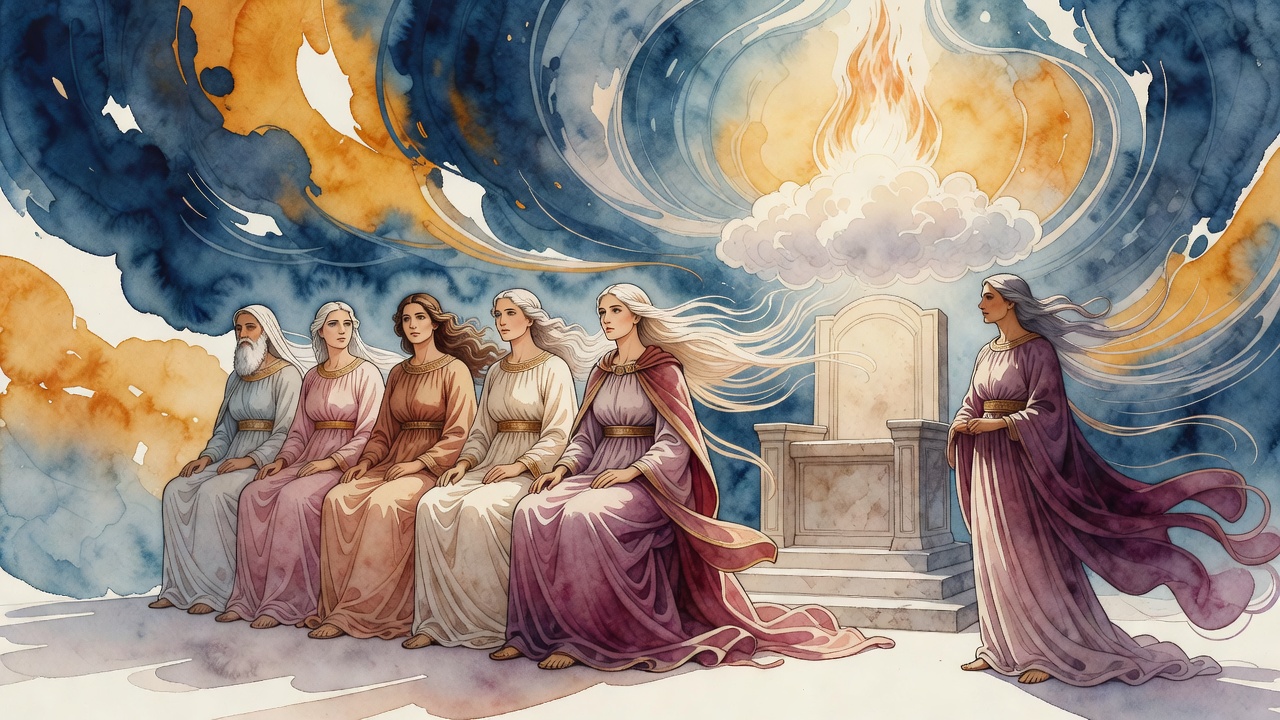
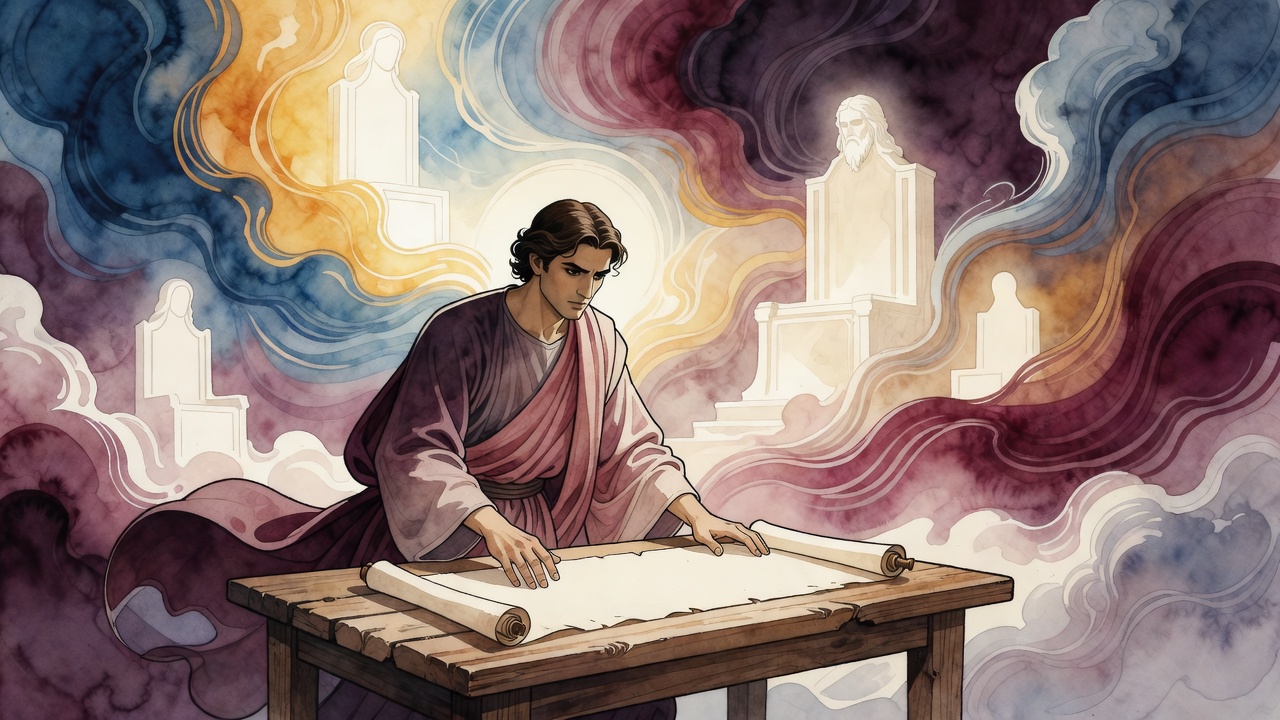
Ahithophel entered David's chamber the way a blade enters a sheath: exact, expected, deadly if turned the wrong way. When he spoke counsel, the court listened as if heaven had hired a human tongue. His wisdom did not stumble. That was the danger. A man whose advice never misses can stop asking who the advice serves.

Ahithophel's Wisdom Split Away From Heaven Click for full size

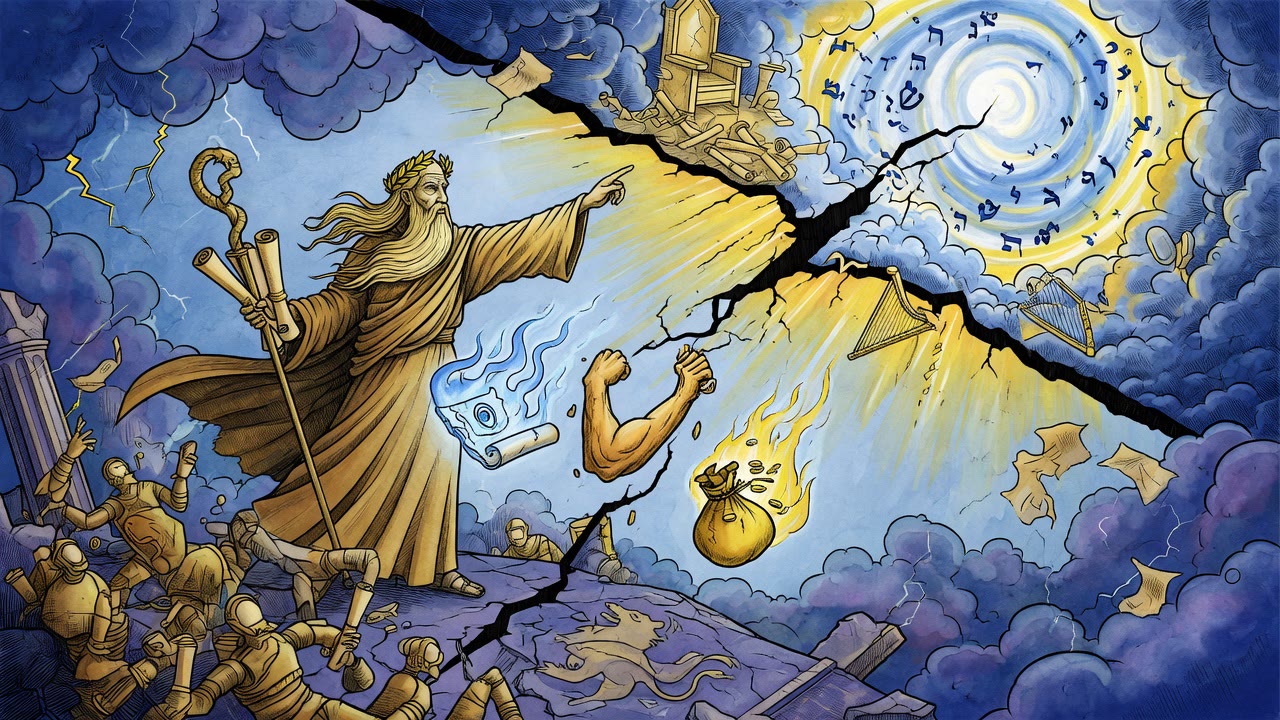
Three gifts, the sages said, were set into the world: wisdom, strength, and wealth. When they come from God and stay bound to God's purpose, they bless. When they cut free, they burn the hands that grip them.

Wisdom Without a Master

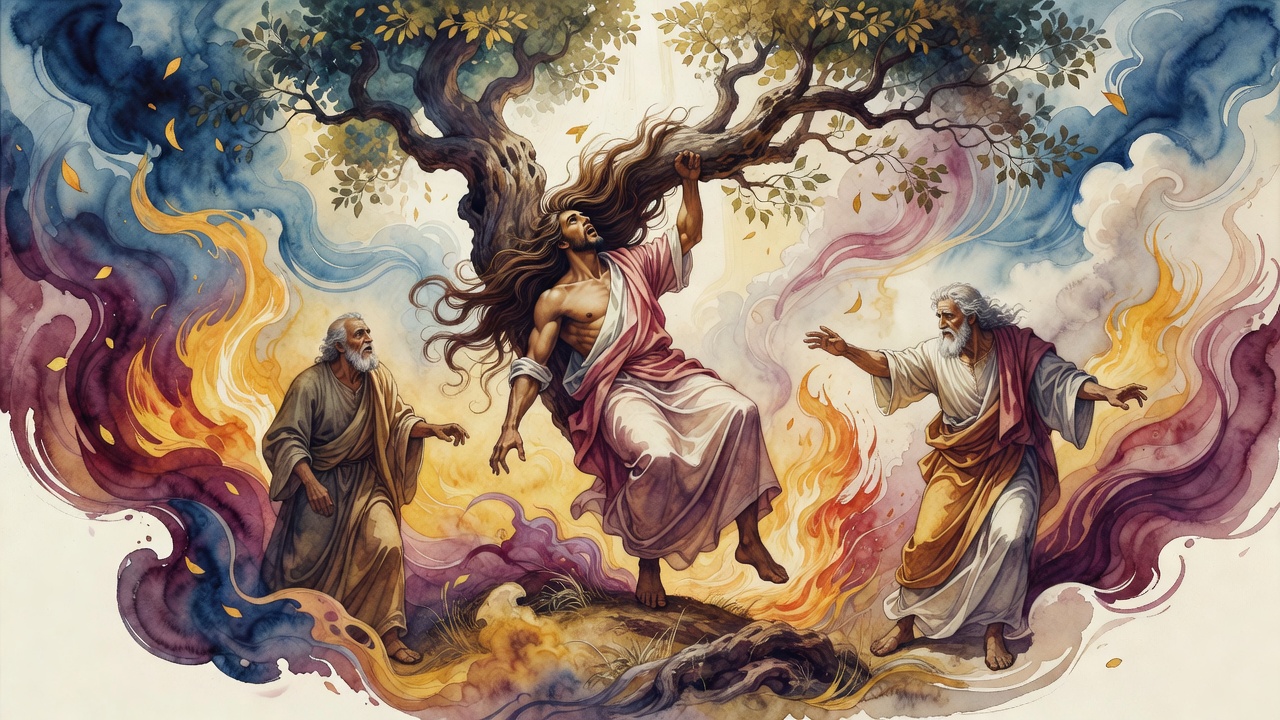
Ahithophel and Balaam both held a terrible clarity. One advised a king of Israel. The other blessed and cursed nations with a mouth heaven could commandeer. Both lost this world and the world to come in the old accounting, not because wisdom is a sin, but because wisdom that answers only to itself becomes a weapon pointed inward. Ahithophel's brilliance fed Absalom's rebellion. The counsel that once steadied David's throne helped shake it. When the plan failed, the counselor's rope finished what pride began.

A gift that will not bow becomes a trap with perfect hinges. The court had called his words almost divine. Almost is the crack where ruin enters. Divine speech serves the Giver. Ahithophel's speech learned to serve the speaker.

Strength That Ate Its Owners

Samson tore gates and lions and finally a temple of enemies down onto his own head. Goliath filled a valley with the noise of his size until a stone found the gap between armor and arrogance. Strength did not fail them first. Purpose did. Muscle without a covenant is only a short storm. The world applauds the storm, then counts the wreckage.

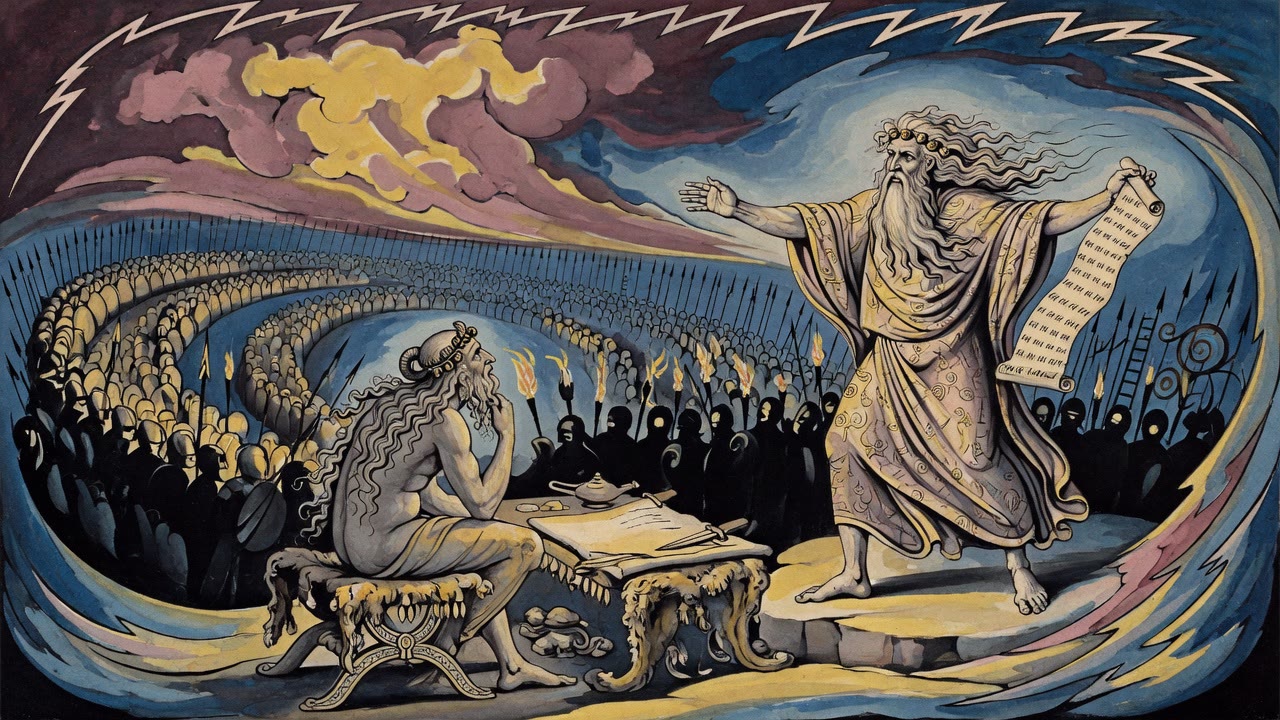
David, who once faced Goliath, later sat across from Ahithophel and learned that a sharp mind can wound a kingdom faster than a giant's spear. The boy with the sling had needed heaven's aim. The counselor with the perfect plan needed heaven's leash. He slipped it.

Wealth That Chose the Wrong Bank of the Jordan

After Midian's spoils filled the pens and tents, the tribes of Reuben, Gad, and half of Manasseh looked at the fat land east of the Jordan and asked to stay. Livestock weighed more, in that hour, than the shared march into the full promise. They settled early. Exile found them early too. Prosperity that splits a people from its brothers becomes the first ticket out of the land.

Korah and Haman complete the wealth pattern in other generations: plenty that feeds envy, envy that feeds plots, plots that open the ground or raise a gallows. The coin itself is neutral. The hunger that rides the coin is not. Korah's tents glittered with claims of equal holiness for every soul, and under the glitter ran a ledger of insulted rank.

Korah Would Not Wear Jacob's Name

When Korah rose against Moses and Aaron, the genealogy stopped short of Jacob. "Son of Izhar, son of Kohath, son of Levi," the verse says, and refuses to write "son of Israel." Jacob had begged that his name not cling to the council of the wicked, not to the spies' panic and not to Korah's quarrel. Let the name Israel rest on the Levites when they stand on the dais to sing, not when they gather a crowd to tear the camp in half.

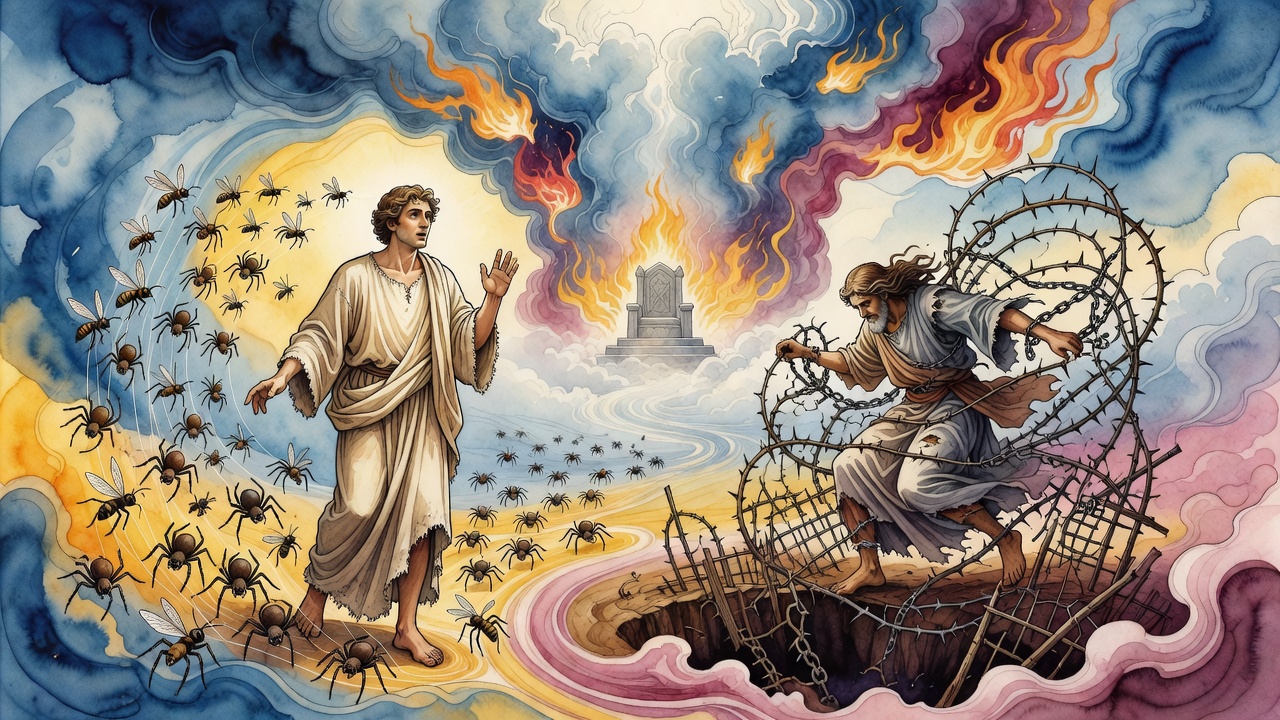
Dathan and Abiram camped near Korah on the south side and died for the neighborhood. Woe to the wicked, and woe to his neighbor. Across the court, Judah, Issachar, and Zebulun camped toward the east near Moses and Aaron and drew learning from the nearness. Geography became destiny. The man who stands beside rebellion inherits its tremor. The man who stands beside Torah inherits its edge.

Moses fell on his face when Korah's challenge came, worn thin by a fourth great failure of the people. A king's friend can reconcile a prince once, twice, three times. At the fourth, even the friend grows tired of knocking on the palace door. Ahithophel, in another century of the story, would learn a similar fatigue from the wrong side: how many times a clever man can trouble a kingdom before the kingdom, or the man, breaks.

What the Court Still Hears

Ahithophel's voice, remembered as almost divine, is the caution carved into the wood of every later chamber. Wisdom, strength, and wealth are not prizes for the clever, the hard, or the rich. They are loans. Return them with interest of loyalty, or they collect the borrower instead.

David kept singing after the counselor was gone. The songs outlasted the perfect advice. Korah's descendants, when they finally stood to sing on the dais, wore Jacob's name again. The quarrel had been refused the name. The music earned it back.


← All myths

From the tradition

Sources

2 sources

The texts behind this telling. Some cards carry a translation of the source; others are our own retelling of it, and each card says which. Every card links out to the original.

Legends of the Jews 6:114Legends of the Jews

Retold in our words. Read the original at the link below.The Legends of the Jews by Louis Ginzberg (1909) · Public Domain

The sages teach us that God bestowed three gifts upon the world: wisdom, strength, and wealth. But these gifts, potent as they are, come with a caveat. If they originate from God, they are a blessing, a source of good. Otherwise? Well, otherwise they can bring ruin. There was Ahithophel, advisor to King David, a man whose counsel was so astute it was considered like divine speech. And then there's Balaam, the non-Jewish prophet known for his powerful blessings and curses. Both were incredibly wise, yet, according to tradition, both ultimately lost not only this world, but also the world to come. Their wisdom, divorced from a higher purpose perhaps, became a source of destruction.

What about strength? We immediately think of Samson, the Israelite judge blessed with superhuman power. He battled the Philistines, performing incredible feats. And on the other side, we have Goliath, the Philistine giant, a warrior of immense stature and skill. Both were forces to be reckoned with, yet both, ultimately, met their deaths because of their strength. Samson’s strength ultimately led to his capture and demise, while Goliath was famously felled by the cunning David.

Wealth, too, follows this pattern. Consider Korah, the Israelite who led a rebellion against Moses and Aaron, fueled by envy and a desire for power. And then there's Haman, the villain of the Purim story, whose vast wealth and influence led him to plot the annihilation of the Jewish people. Both men, consumed by their riches and the power they afforded, perished as a result. The Midrash (Midrash Rabbah, Numbers 18:2) paints a vivid picture of their demise.

That even the most desirable qualities can become a trap.

There’s also the tragic story of the two and a half tribes – Reuben, Gad, and half of Manasseh. These tribes, as the narrative goes, amassed great wealth in livestock after the defeat of the Midianites. The spoils of war filled their coffers. They saw the fertile lands east of the Jordan River – what’s often called "the hither side" – and decided they preferred to settle there, rather than continue into the Promised Land with the rest of their brethren. They asked Moses if they could stay put.

But their choice, driven by their newfound wealth, had profound consequences. As we learn, these tribes, choosing their own comfort and perceived advantage over unity with the rest of Israel, were the first to be driven into exile. Their prosperity, instead of being a blessing, became a cause of their downfall.

What are we to make of all this? It’s not that wisdom, strength, and wealth are inherently bad. Far from it! But these gifts, like all gifts, demand responsibility. They require humility, a recognition that they come from a source greater than ourselves, and a commitment to using them for good. Otherwise, they can become a source of ruin, not just for ourselves, but for those around us.

Full source
Midrash Tanchuma, Korach 4Midrash Tanchuma

Retold in our words. Read the original at the link below.Townsend 1989 translation of Midrash Tanhuma, S. Buber Recension · CC-BY

(Numb. 16:1:) “[Korah who is] the son of Izhar [who is] the son of Kohath [who is] the son of Levi betook himself.” But there is not written "the son of Jacob" [or] "the son of Israel." This text is related (to Gen. 49:6), “Let not my soul come into their council,” i.e. that of the spies; “and let not my glory be joined with their congregation,” i.e. that of Korah. Jacob said to the Holy One, blessed be He, “Master of the world, with reference to the spies and with reference to the dissension of Korah, let not my name be mentioned [in connection with] those evil men, who are going to cause provocation. So when should my name (Israel) be joined upon them? When they are joined together to stand on the dais (as Levitical singers), as stated (I Chron. 6:[17,] 22–23) ‘[These are the ones whom David put in charge of song in the house of the Lord….] The son of Assir [who is] the son of Ebiasaph [who is] the son of Korah [who is] the son of Izhar [who is] the son of Kohath [who is] the son of Levi [who is] the son of Israel.’” (Numb. 16:1, cont.) “Along with Dathan and Abiram.” From here the sages said, “Woe to the wicked one, [and] woe to his neighbor.” As see that Dathan and Abiram were destroyed by the dissent of Korah, because they were neighbors of Korah. As he was dwelling to the south (of the tabernacle), as stated (in Numb. 3:29), “The families of the Children of Kohath were to camp along the side of the tabernacle to the south.” The standard of Reuben was near them, as stated (in Numb. 2:10), “The standard of the camp of Reuben shall be to the south.” However, the standard of Judah was in the east, and with him were Issachar and Zebulun, as stated (in Numb. 2:3), “Now these camping in front to the east shall be the standard of the camp of Judah.” And near them were Moses, Aaron, and his children, as written (in Numb. 3:38), “Those who camped before the tabernacle, in front before the tent of meeting to the east, were Moses, Aaron, and his children.” Because these were near the Torah, they were therefore worthy to be Torah scholars, as written (in Ps. 60:9), “Judah is my lawgiver.” And it is [also] written (in I Chron. 12:33), “And from the Children of Issachar, those who had an understanding of the times.” And it is [also] written (in Jud. 5:14), “and from Zebulon those who wield the scribal pen.” But Dathan and Abiram, who were neighbors to Korah – the one responsible for the dissent – were struck with him and perished from the world. (Numb. 16:19:) “And Korah gathered [the whole community] against them.” He said to them (in Numb. 16:3), “’You have gone too far, for all the congregation are holy, every one of them.’ Every one of them heard on Sinai (in Exod. 20:2 = Deut. 5:6), ‘I am the Lord your God.’ (Numb. 16:3, cont.) ‘So why do you elevate yourselves?’” Immediately Moses trembled, because it was already the fourth transgression on their hands. It is comparable to a king's son who had transgressed against his father. Now his friend effected a reconciliation with him once, twice, and three times. When he transgressed a fourth time, the king's friend became discouraged. He said, “How many times shall I bother the king?” So also [it was with] Moses towards Israel. They had sinned with the calf, and (according to Exod. 32:11) “Moses implored.” In the case of the murmurers, (according to Numb. 11:2) “Moses prayed.” In the case of the spies, (according to Numb. 14:13), “Moses said unto the Lord, when the Egyptians hear [what happened].” [So] in the case of Korah's dissension, he became discouraged. He said, “How often can I bother the Omnipresent?” Therefore (in Numb. 16:4), “When Moses heard this, he fell on his face.”

Full source