6 min read

David Saw the Wicked as Smoke Before the Wind

David watched thin smoke scatter on the wind and found the fate of the wicked in it, not burned, not broken, simply gone before God.

Curated by Arthur · Told by Maggid ·
Table of Contents
  1. The Smoke That Cannot Cling
  2. The King in the Upper Palace
  3. Wax Before the Fire
  4. Isaiah Reaches for the Same Praise
  5. Sons Like Saplings

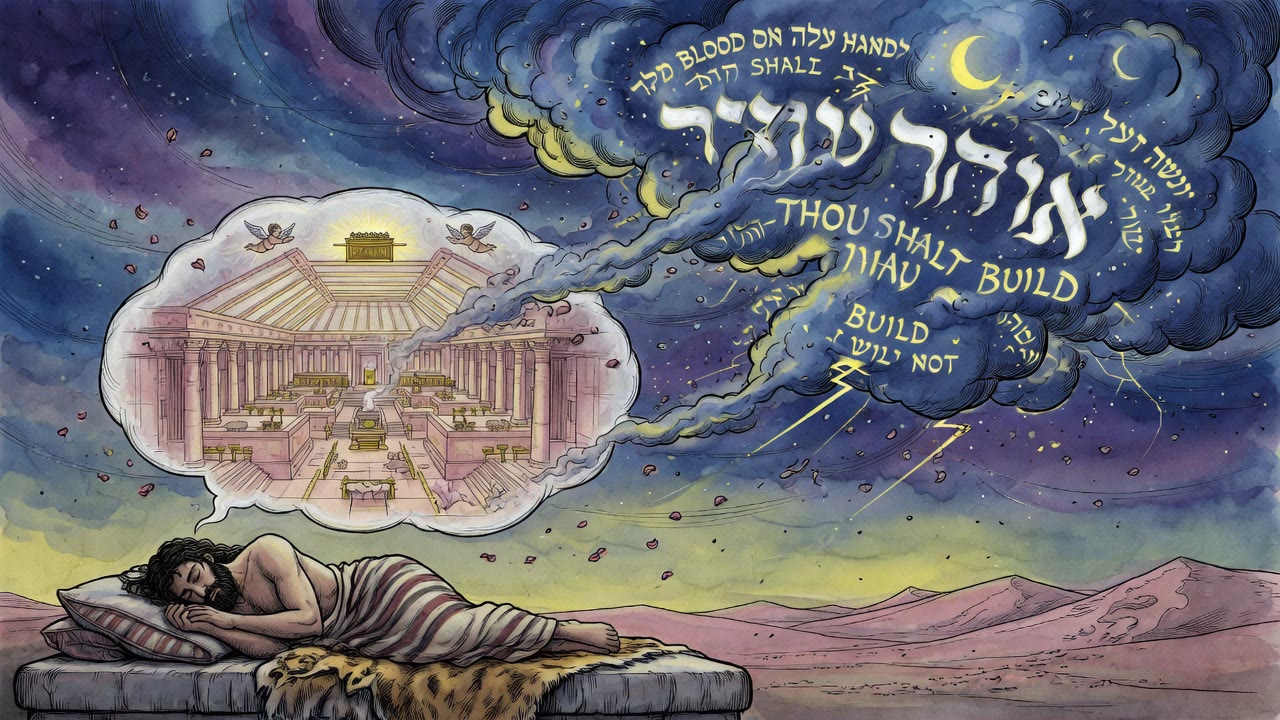
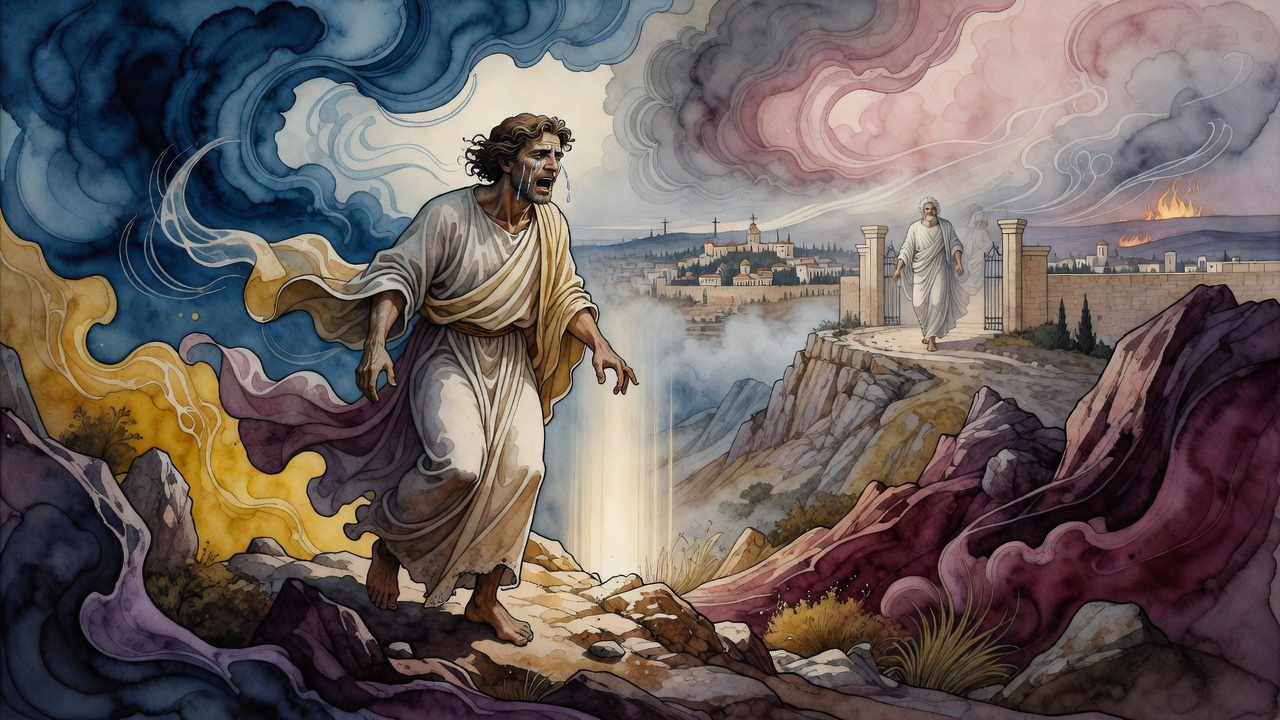
The fire had burned low, and the smoke above it could not hold a shape. David sat watching it, a man with enemies pressing every border and a harp within reach, and the smoke rose, thinned, and tore apart on a wind so slight it did not even stir the coals. He had watched a thousand fires die in the fields outside Bethlehem when his only enemies were the lion and the bear. Smoke had always struck him as the strangest thing in the world. It climbed with such confidence. It vanished with such ease.
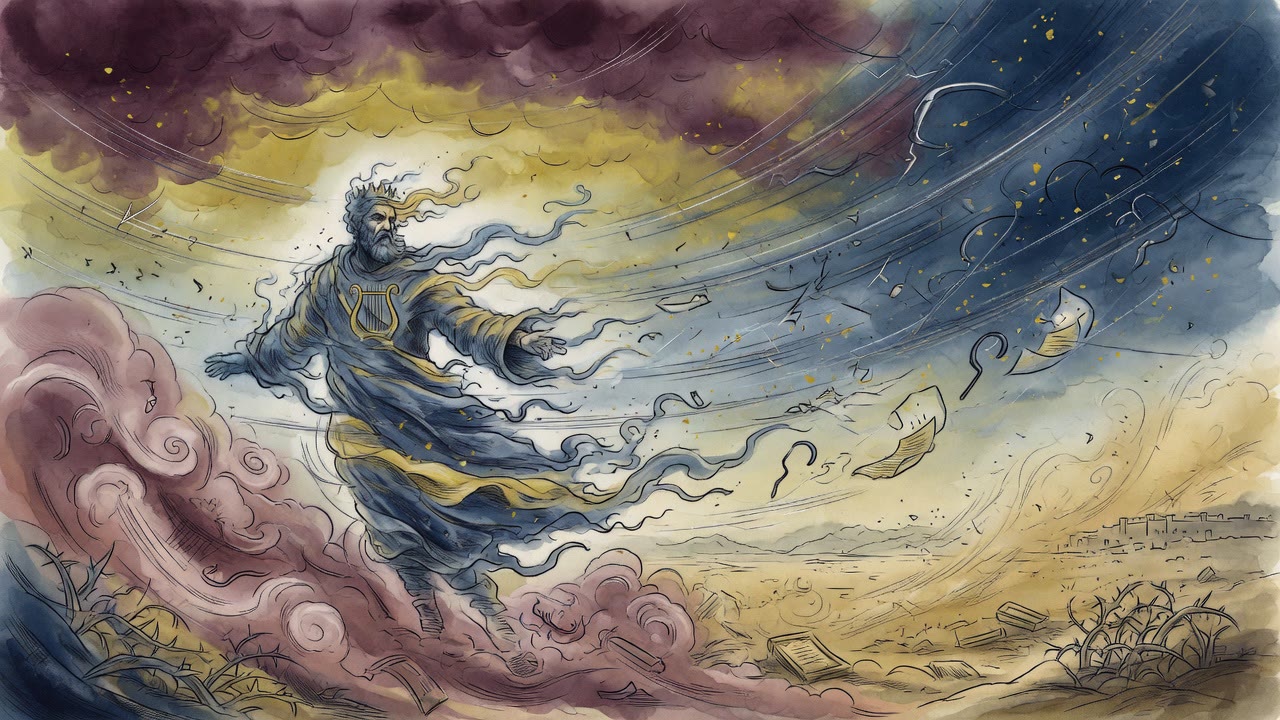
A verse was forming in him that night, a war prayer. Let God arise, let His enemies be scattered. But scattered how? Like what? Not like a wall pulled down, for stones remain. Not like an army routed, for survivors remain. He needed an image for an enemy that left nothing behind at all. The wind moved again, the gray column came apart in the dark, and David had his line. As smoke is driven away, so You drive them away (Psalm 68:2).

The Smoke That Cannot Cling

There are two kinds of smoke, and David meant only one of them. There is smoke with substance, the heavy haze of green wood and wet leaves, smoke that fills a room, sinks into wool, and stings the eyes long after the fire is out. That smoke has presence.

David meant the other kind, the thin ashan, smoke without body, the wisp that the slightest breeze scatters, already dissolving before the eye has finished following it upward. This was his claim about the wicked, and it was a harder claim than fire and sword. They are not a force waiting to be conquered. They are insubstantial from the start, here and then simply not, and the wind that ends them does not even have to try.

The King in the Upper Palace

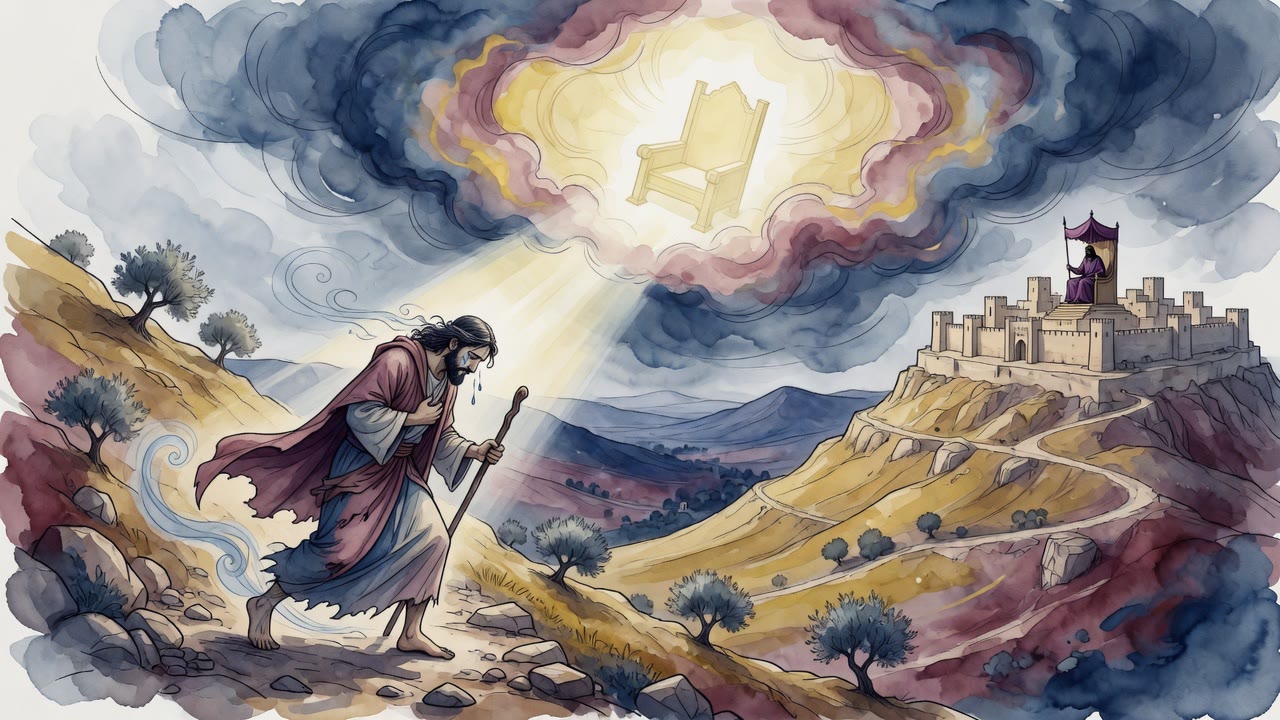
A king dwells in his upper palace, high above the noise of the city. Below him, in the lower palace, his servants kindle a fire. The smoke rises. It drifts up the stairwells and past the columns, and at last it reaches the king himself.

He notices it. A nuisance, perhaps. But it cannot threaten him, and it cannot harm him. He does not summon an army against it. He waves a hand, and the air clears.

So it is with the wicked. Their schemes rise from below toward heaven, climbing with the illusion of significance, and from the ground the column looks tall enough to darken the throne. From the throne it is only smoke. It arrives already coming apart.

Wax Before the Fire

David did not stop at smoke. The same verse carries a second image, as wax melts before fire, so the wicked perish before God (Psalm 68:2). Wax does not fight the flame. It does not have to be struck, or pierced, or thrown down. It loses its shape in the mere nearness of heat, sagging, softening, running into nothing that resembles what it was.

That word, before, carries the whole image. The wicked do not perish under God's blows. They perish before Him, in His presence, the way wax perishes in front of a fire it never touches. Smoke before the wind, wax before the flame, an end that comes not as a battle but as a disclosure of what was never solid.

Isaiah Reaches for the Same Praise

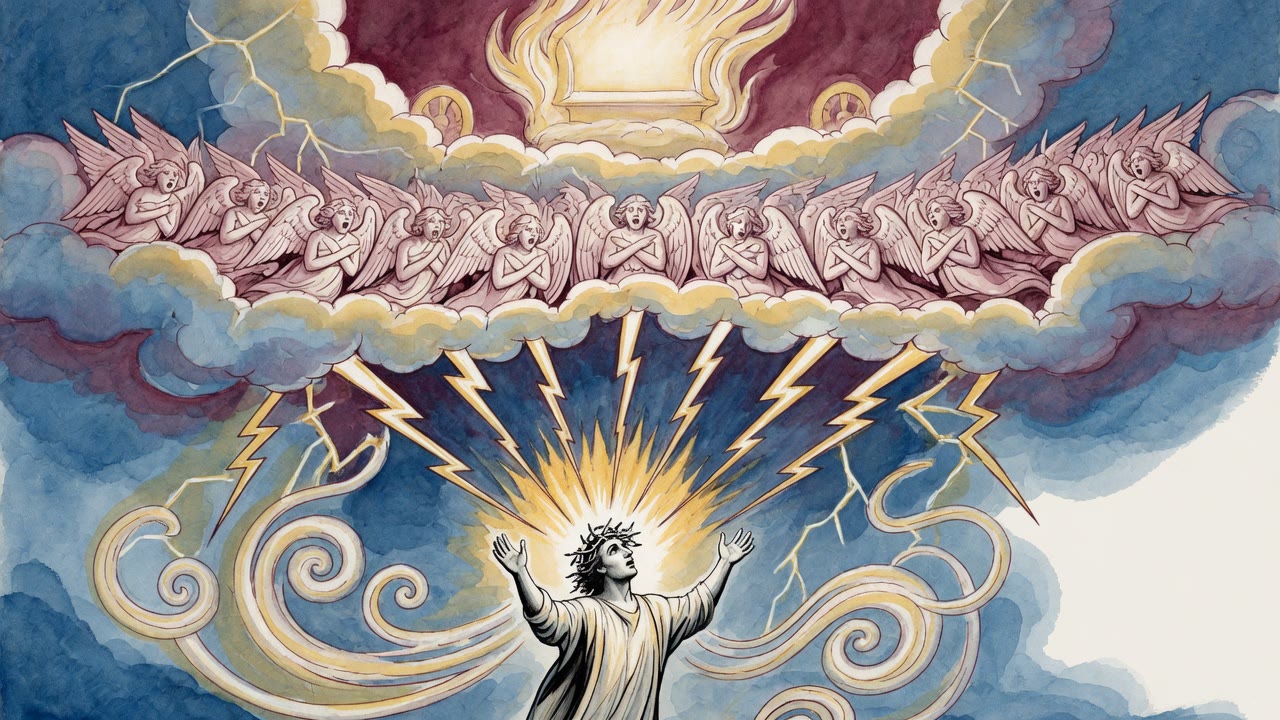
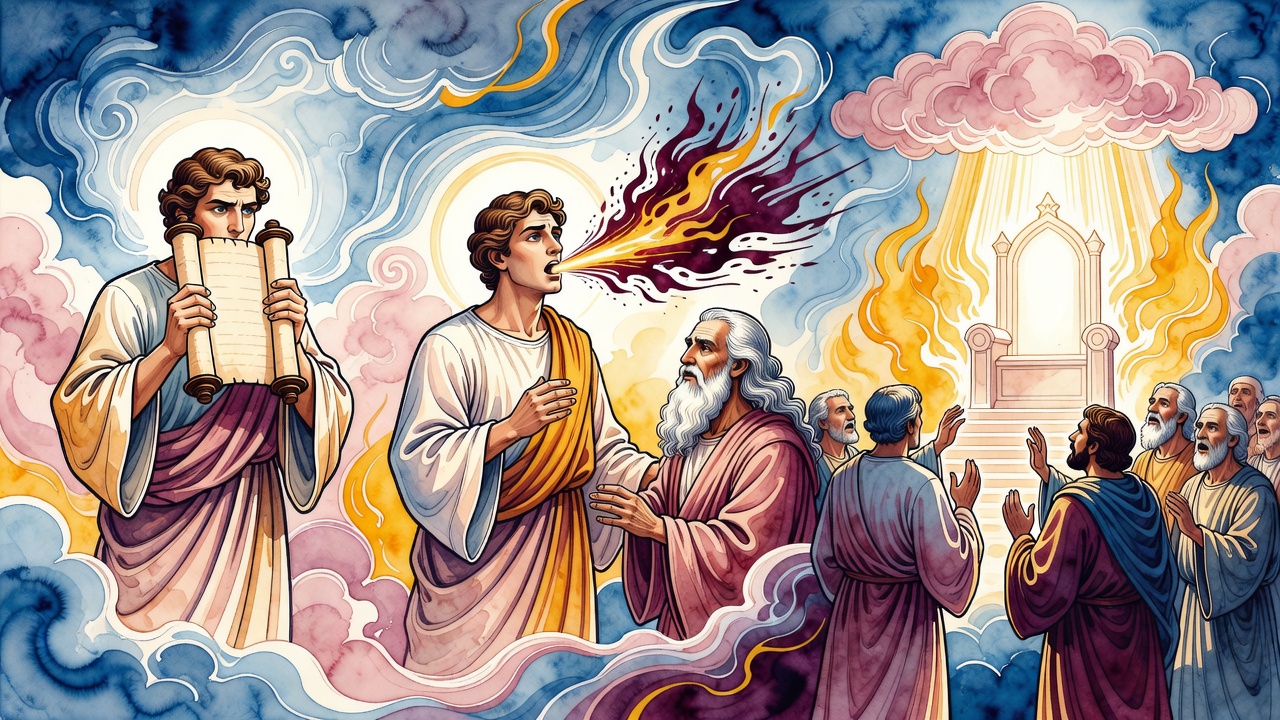
Generations after David, the prophet Isaiah stood in Jerusalem and opened his mouth on the same note. David had sung, "I will exalt You, my God the King" (Psalm 145:1). Isaiah declared, "O Lord, You are my God, I will exalt You, for You have done wonders" (Isaiah 25:1). Two men, centuries apart, the same first movement of the voice.

Neither of them praised in a vacuum. Isaiah's exaltation comes only after he has seen what the wonders are, and they are vast. God will punish the host of heaven on high and the kings of the earth on the earth (Isaiah 24:21). The moon shall be confounded and the sun ashamed (Isaiah 24:23). A great horn will be blown, and the lost and the dispersed will be gathered home from Assyria and from Egypt to worship on the holy mountain (Isaiah 27:13). Only then, after the reckoning above and the ingathering below, does Isaiah say, "I will exalt You."

His praise is the praise of a man standing in cleared air. The smoke has been driven off, the haze that hung between earth and heaven is gone, and what he sees, he names.

Sons Like Saplings

David's exaltation rests on the same ground. His I will exalt You is not a reflex of the pious tongue but an answer to a promise, a vision of what Israel looks like once the insubstantial things have blown away. "Our sons are like saplings, grown tall in their youth, and our daughters are like cornerstones, carved in the fashion of a palace" (Psalm 144:12).

Set the two pictures side by side. The wicked are smoke, rootless, climbing, gone at a breath. The children of the promise are saplings, slow and low to the ground, but rooted, growing toward a height the smoke only pretended to have. The wicked are wax, losing form before the fire. The daughters are cornerstones, carved and weight-bearing.

The fire in front of David sank to red coals. The last of the smoke went wherever smoke goes, which is nowhere. Above the fields the stars held their places, and the shepherd who would be king took up the harp and gave the night its verse, that the enemies of God scatter like smoke, and that what is rooted, remains.


← All myths
From the tradition

Sources

3 sources

The texts this telling draws on, in full. Open a card to read inline, or expand it for a wider, quieter read.

Midrash Tehillim 68:2Midrash Tehillim

Midrash Tehillim, a collection of homiletic interpretations of the Book of Psalms, uses just that image to illuminate the fate of the wicked. In Midrash Tehillim 68, we find a powerful comparison: "As smoke is driven away, so You drive them away; as wax melts before fire, the wicked shall perish before God."

King David, in his dialogue with the Almighty, according to the Midrash (rabbinic interpretive commentary), emphasizes the insubstantial nature of the wicked. They are not like smoke with substance, but rather like smoke that is easily scattered, blown away by the slightest breeze. It's a striking image, isn't it?

The Midrash offers another compelling interpretation, a parable that helps bring the concept home. Imagine a king in his upper palace, far removed from the daily grind. Below, in the lower palace, servants kindle a fire, and the smoke rises, reaching the king. In this allegory, the wicked are likened to that smoke rising from below – a nuisance, perhaps, but ultimately insubstantial and easily dismissed by the Divine King.

The prophet Isaiah echoes this sentiment. He says that those who provoke God might as well be dead. According to Isaiah, their bodies will rot away, and they will become like ashes – nothing more than remnants, easily forgotten. This echoes the Psalmist, who says, "For the wicked will perish, and the enemies of the Lord will be like the glory of the pastures; they vanish, like smoke they vanish away."

So, what happens when the smoke clears? What remains? The Midrash provides a comforting answer: "The wicked will be destroyed, and the righteous will rejoice, as it says, 'The righteous shall rejoice and be glad before God; they shall also be merry and joyful.'"

The image of smoke is a powerful reminder of the transient nature of wickedness. The wicked, like smoke, may seem present, even imposing, but ultimately lack substance and are destined to disappear. But what about us? Are we choosing to live lives of substance, lives that will leave a lasting, positive mark on the world, or are we merely contributing to the smoke? Perhaps reflecting on the image of the vanishing smoke can help us strive for a more meaningful existence, an existence rooted in righteousness and joy.

Full source
Midrash Tehillim 145:1Midrash Tehillim

This midrash, a kind of interpretive commentary, opens by linking David's words in Psalm 145 – "I will exalt you, my God the King" – to the prophet Isaiah's similar declaration in (Isaiah 25:1). Both figures aren't just offering a knee-jerk "thank you." Their praise is rooted in something deeper, something… miraculous. Isaiah declares thanks to God "not in vain, but because You have done wonders." But what wonders, exactly?

The midrash directs us back to earlier passages in Isaiah, describing a time of cosmic upheaval – when God will "punish the host of heaven" (Isaiah 24:21) and "gather together" the dispersed (Isaiah 27:13). "The moon shall be confounded" it says. Only then, after all this, will Isaiah proclaim, "O Lord, You are my God; I will exalt You."

So, too, with David. He doesn't just randomly decide to praise God. His words are a response to a promise, a vision of a blessed future for Israel. As (Psalm 144:12) describes: "Our sons are like saplings… our daughters are like corner pillars carved for the palace."

What does this imagery evoke? Strength, beauty, stability. The midrash asks: "And do they need adornment? Are they not white like lilies and red like roses on the corner of the altar?" The implication is clear: they are already perfect, already radiant in their inherent worth.

The midrash goes on, painting a picture of abundance and peace. The men are tall and strong, "like cedars of Lebanon." And where does all their sustenance come from? God, of course! He provides "from the treasury," echoing (Malachi 3:10): "And you shall eat the old store."

Even the natural world reflects this harmony. Remember the constant threat of predators? "He left the flock because of the wolves," says Zechariah. Or in 1 Samuel, "And a lion and a bear would come and take a lamb from the flock." No more! Now, as (Isaiah 65:25) promises, "The wolf and the lamb shall feed together." This isn't just about sheep; it’s about Israel itself. As (Ezekiel 34:17) says, "And I will give them forage."

The streets, once filled with weeping due to "the angel of death and the terrorist," are now safe. (Zechariah 8:4-5) envisions: "Even elderly men and women will sit in the streets of Jerusalem, each with his staff in his hand due to the many days they have lived… And the streets of the city shall be full of boys and girls playing in the streets." A beautiful image of generational continuity and carefree joy.

And it’s because of this promised future, this vision of wholeness and prosperity, that the Psalmist proclaims: "Blessed is the people for whom this is so" (Psalm 144:15). It's a preemptive blessing, a thanksgiving offered before the blessings fully manifest.

The midrash emphasizes that this isn't a one-time thing. It's not just singing God's praises when a miracle happens. In the future, this gratitude will be constant, an ongoing expression of devotion. "Not like now, when they sing and bless God only when miracles happen to them, but in the future they will not be idle and will always sing and bless God." It will be a continuous offering, "forever and ever" (Psalm 145:2).

We have no other task but to bless You with new blessings, the midrash explains, quoting (Psalm 68:20): "Blessed be the Lord day by day."

So, what does this mean for us? Perhaps it's a call to cultivate a habit of gratitude, not just for the blessings we see in the present, but for the potential for goodness that lies within the future. To praise not just for what is, but for what will be. To trust in the promise, even when the path ahead is unclear. To see the "saplings" and "corner pillars" in our lives, even when they are still taking root. That, perhaps, is the deepest form of praise.

Full source
Midrash Tehillim 104:18Midrash Tehillim

Really adrift. Just you and the vast, unknowable ocean. It's a powerful image, isn't it? And according to the ancient sages, it's also a pretty accurate metaphor for life itself.

Midrash Tehillim, a collection of rabbinic teachings on the Book of Psalms, offers us a fascinating glimpse into this idea. In its discussion of Psalm 104, we find a surprising comparison: the sea is actually greater than the desert. Deserts are vast, desolate, and unforgiving. Yet, the sea holds even more power, more mystery, and perhaps, more danger.

Why? Because, as the Midrash (rabbinic interpretive commentary) points out, the sea is a place where ships sail. It’s a place of journeys, of commerce, of connection… but also, of immense risk. Rabbi Yitzchak bar Moriyan puts it starkly: "If it weren't written 'He who gives a way in the sea' (Isaiah 43:16), one who is in the sea would immediately die." Without God's guiding hand, the sea would be an instant death sentence.

It makes you wonder: What does this "way in the sea" really mean? Is it simply about physical survival? Or is it about something deeper – the ability to work through the turbulent waters of life itself, to find our way through the storms and uncertainties that inevitably come our way?

The Midrash doesn't stop there. It goes on to quote (Psalm 104:29): "You will conceal your face, they will be frightened." This verse speaks to the idea of God's presence, or rather, the potential absence of it. If God were to "conceal his face," the world would be plunged into chaos and fear. Rabbi and Rabbi Nathan both offer interpretations of this verse, highlighting the constant protection God provides. Rabbi emphasizes that without God's protection, "the harmful ones" would quickly overwhelm us. He then quotes (Isaiah 57:19), "'He creates the speech of lips, peace, peace'," connecting divine creation with peace and well-being. phrase, "He creates the speech of lips, peace, peace." It's a beautiful image of divine intervention, not just in grand cosmic events, but in the very words we speak, the very peace we experience. The Zohar, the foundational text of Jewish mysticism, also emphasizes the constant, active role of God in sustaining the universe. It's not a one-time creation, but an ongoing process of renewal and protection.

So, what's the takeaway here? Perhaps it’s this: life, like the sea, can be vast, unpredictable, and even dangerous. We need something to guide us, something to protect us, something to give us a "way in the sea." Whether you call it faith, spirituality, or simply a sense of connection to something larger than yourself, that guiding force is essential for working through the challenges that come our way.

Are we always aware of this divine presence? Maybe not. But the Midrash reminds us that it's always there, working behind the scenes, offering us a lifeline in the midst of the storm. And maybe, just maybe, that awareness can help us face the uncertainties of life with a little more courage, a little more hope, and a little more peace.

Full source