5 min read

Dinah Left the Camp for the Music and Shechem Seized Her

While Jacob studied Torah, Dinah walked toward Shechem's music. The prince seized her, and heaven answered Jacob's old caution with a terrible measure.

Curated by Arthur · Told by Maggid ·
Table of Contents
  1. The Chest That Once Hid Her
  2. Anger Comes In from the Fields
  3. The City Agrees to Bleed
  4. What Remains in the Dust

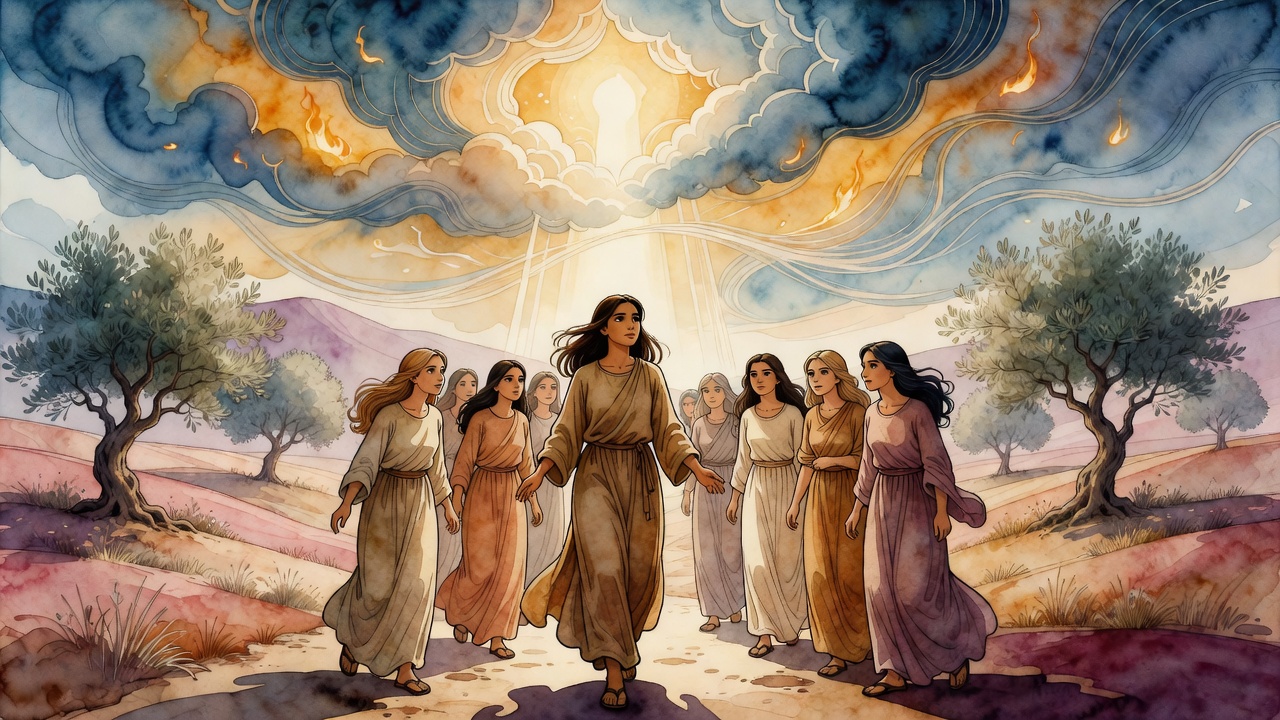
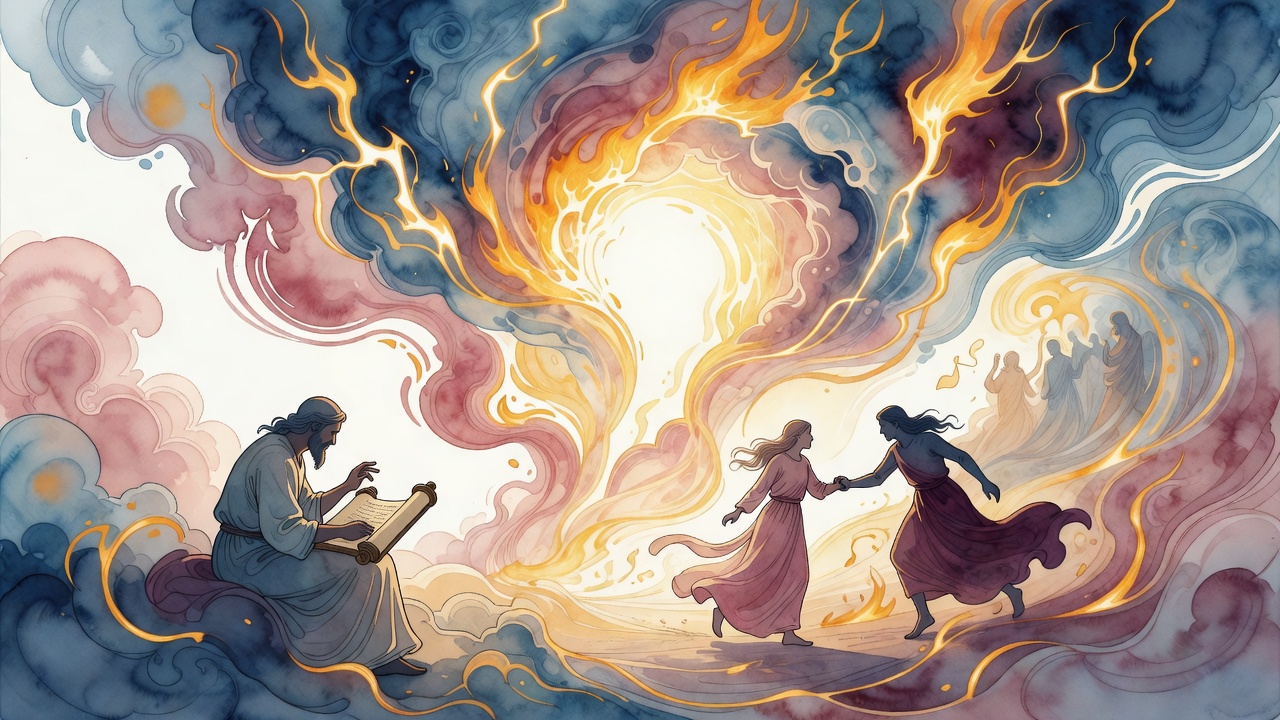
Dinah heard the pipes first. Beyond the tents, Shechem, son of Hamor, had filled the streets with dancing and drums, music aimed like a lure toward the camp of Jacob. Her brothers were bent over Torah. Her father sat with them. She stepped past the tent flap into open dust and sunlight.
Dinah Left the Camp for the Music and Shechem Seized Her Click for full size

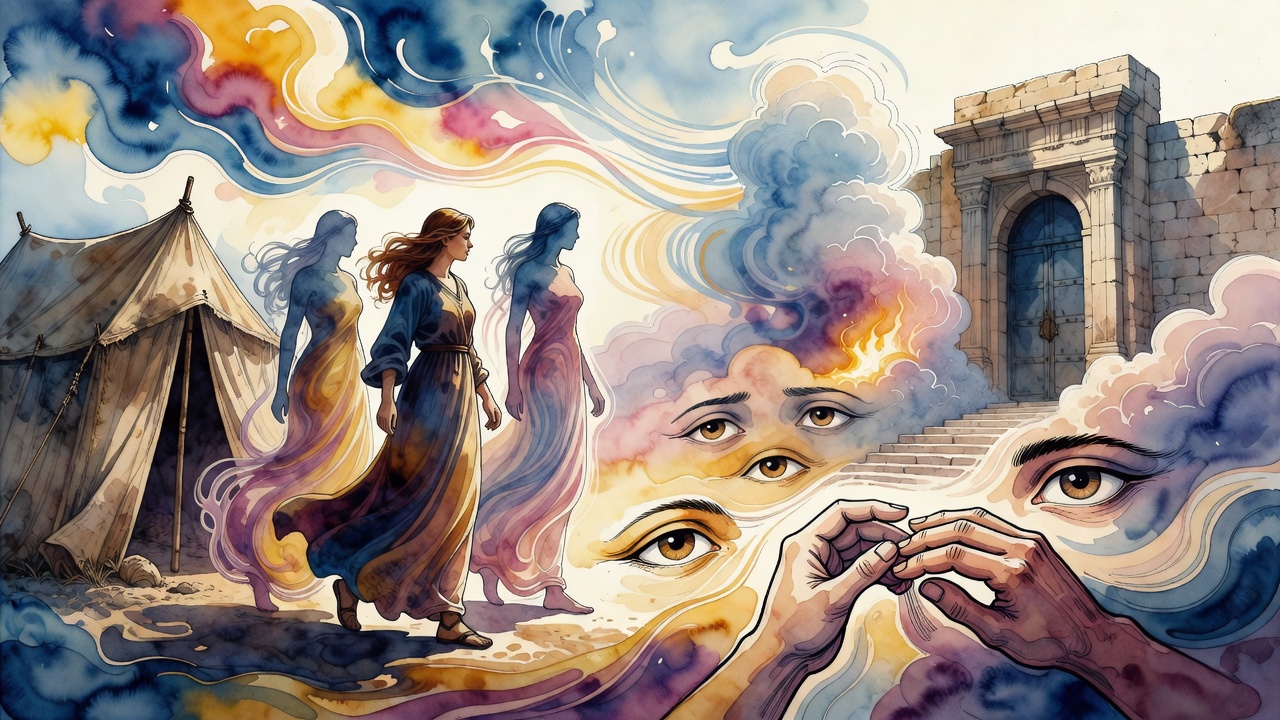
Shechem had planned the noise for her. When she came within reach, he seized her and violated her in beastly fashion. Servants later carried the report back while Dinah was still in his house. The music did not stop when she screamed. The city kept dancing as if nothing had been torn open.

The Chest That Once Hid Her

Jacob sent men to bring his daughter home. Shechem drove them off and, in front of them, kissed and embraced her so the message would stick. Then he pressed Hamor to win her as a wife. Hamor hesitated. The son did not. Ambition and lust rode the same cart.

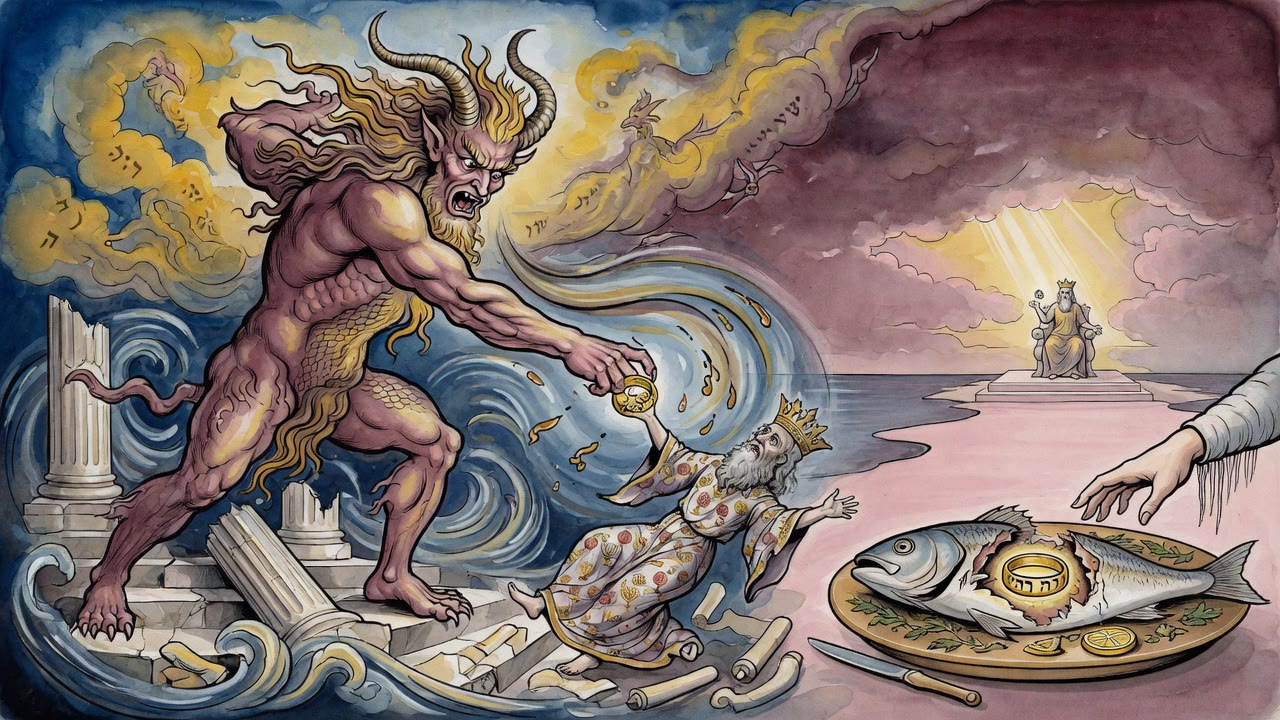
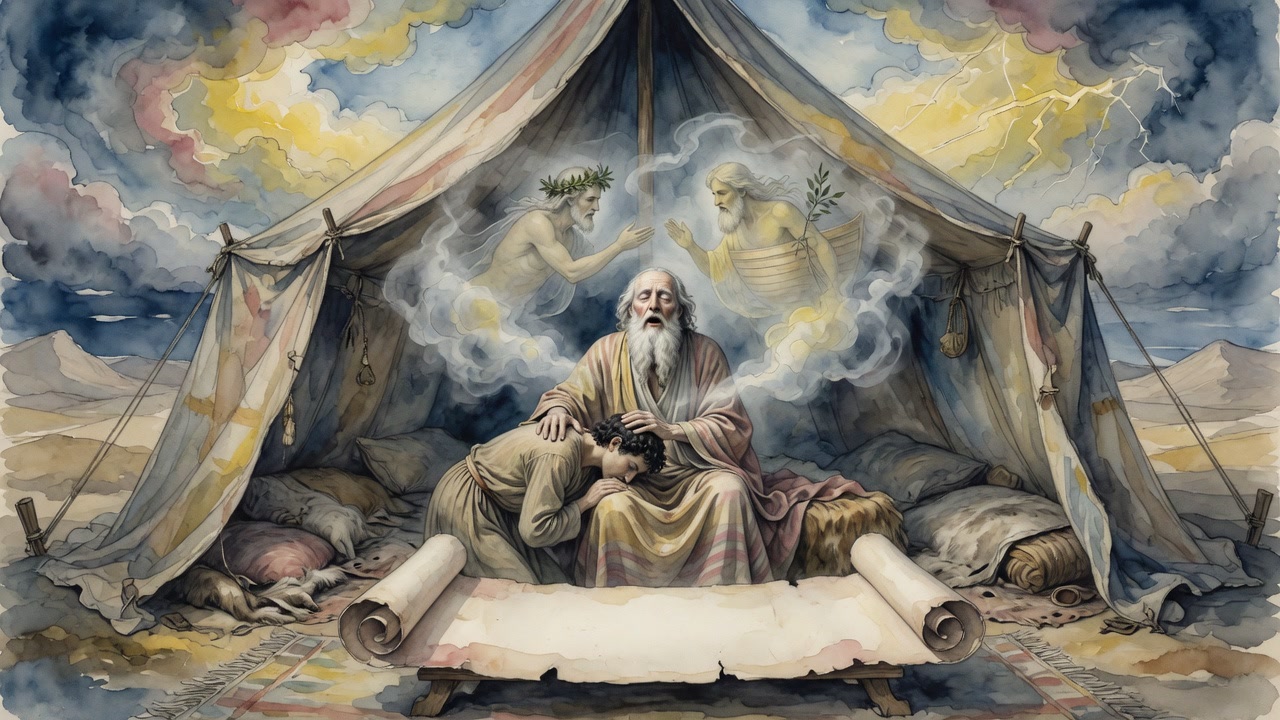
Heaven had already set a ledger against Jacob. Years earlier, facing Esau, Jacob had hidden Dinah in a chest, afraid his brother might take her. Esau was circumcised. Jacob refused the match. God answered the refusal in kind: because Jacob would not give her to a circumcised man, she would fall to an uncircumcised ravisher. Jacob had once boasted, after his dealings with Laban, "My righteousness shall answer for me hereafter." The answer arrived in Shechem's house.

Measure for measure is not a proverb in the air. It lands on bodies. The same justice that later turned Egypt's water to blood because Israel was forced to draw water for masters, and that filled Egyptian beds with frogs because Israel was forced to catch fish, already worked inside Jacob's family. A father locked a daughter away to manage a brother's desire. The lock reopened on an enemy's street.

Anger Comes In from the Fields

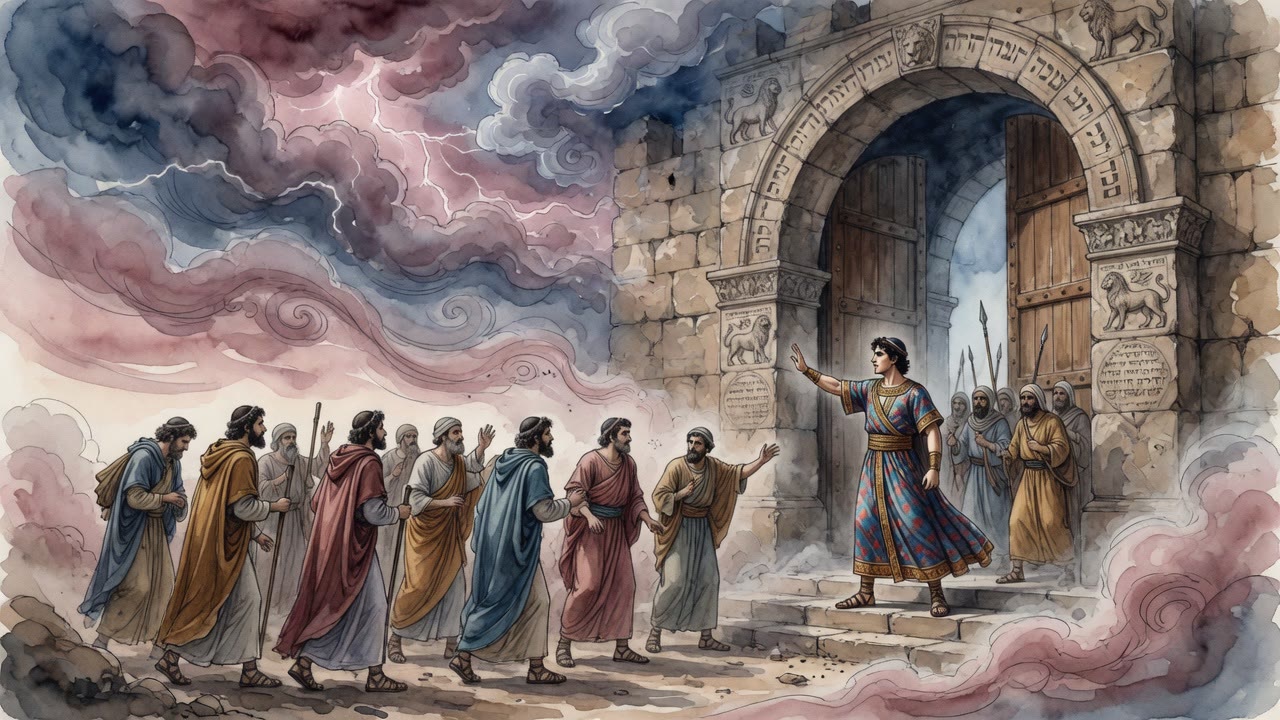
Jacob's sons returned from the fields with dirt still on their hands. The report hit them like a blow. They named Shechem's crime against the commandments given to Noah: robbery and adultery, capital under that older law. Hamor arrived to negotiate. Shechem came after him, still swollen with the confidence of a prince who takes what he wants and then asks the fathers to bless the theft.

Jacob's mouth was slow. Guilt sat in it. The sons' mouths were not. Simeon and Levi shaped a plan that looked like caution and was not. They told Hamor and Shechem they would consult their grandfather Isaac before any marriage. Until then, Shechem must keep away from Dinah. The words sounded like piety. The brothers were buying hours and silence.

Dinah remained where Shechem had put her. Every delay lengthened the hours she spent inside the walls that had failed her. Jacob's righteousness did not open those walls. The servants' orders did not. The music that had drawn her out still belonged to the city that held her.

The City Agrees to Bleed

What followed in the old tellings is the hard turn. The brothers did not stop at words. They moved Shechem's household toward a covenant that would strip the city of its fighting strength, then rose against the men who had treated their sister as prey. The outrage that began with one seizure became a city under the knife. Measure answered measure until the street that planned the dance paid in full.

Jacob would later flinch at the violence and the smell of blood on his sons' names. The ledger did not flinch. Heaven had already counted his caution against Dinah. The brothers counted Shechem's crime against the house of Hamor. No one in the story escapes clean. Dinah's body carries the first wound. Jacob carries the knowledge that his old fear helped open the road. Simeon and Levi carry the irreversible act that cannot be walked back once the city falls.

In Egypt, generations later, the same law would dress itself in plagues. Aaron would strike earth and water. Moses would strike air and fire. God would keep three blows for Himself, like a king arranging war. The pattern is the same pattern that closed on Shechem: cruelty is not random, and the answer is not random either. Water for stolen water. Swarm for forced labor. A ravisher for a chest that refused a circumcised brother.

What Remains in the Dust

Dinah walked toward music. Shechem closed his hands. Jacob remembered a chest and a boast. The sons came in from the fields and refused to leave the crime unmeasured. By the time the street was quiet, no one could put the hours back into the tent, or the daughter back into the safety she never truly had.

The camp would move on. The name of Shechem would stay black in the family's mouth. Measure had done its work where a girl stepped into the street and a father learned that righteousness does not delay the bill forever.


← All myths
From the tradition

Sources

2 sources

The texts behind this telling. Some cards carry a translation of the source; others are our own retelling of it, and each card says which. Every card links out to the original.

Legends of the Jews, VI. Jacob, The Outrage At ShechemLegends of the Jews

Retold in our words. Read the original at the link below.Project Gutenberg eBook #1493, The Legends of the Jews, Volume 1 · Public Domain

The story of Dinah, daughter of Jacob, and the events that unfolded in Shechem, offer a stark and troubling example of just that.

In Legends of the Jews, while Jacob and his sons were immersed in Torah study, Dinah ventured out. It seems she was drawn to the sounds of music and dancing in the streets – entertainment that Shechem, son of Hamor, had deliberately orchestrated to lure her out. The text implies a certain condemnation, suggesting that had Dinah remained at home, she would have been safe. But, alas, she was a woman, and "all women like to show themselves in the street." It’s a sentiment that, viewed through a modern lens, feels incredibly unfair and victim-blaming.

What happened next is undeniably horrific. Shechem seized Dinah and "violated her in beastly fashion." Ginzberg, drawing on various Midrashic (rabbinic interpretive commentary) sources, paints this misfortune as a consequence of Jacob's overconfidence. It says Jacob had previously declared, "My righteousness shall answer for me hereafter" in his dealings with Laban, and that when preparing to meet his brother Esau, he hid Dinah in a chest fearing Esau would want her as a wife. God, according to this account, declared that because Jacob refused to give Dinah to a circumcised man (Esau), she would instead fall victim to an uncircumcised ravisher. Ouch. The text seems to pile blame upon Jacob, suggesting Dinah's tragedy was divine retribution.

Jacob, upon hearing of the assault, sent servants to retrieve Dinah, but Shechem, emboldened, drove them away, even brazenly kissing and embracing her in front of them. He then asked his father, Hamor, to secure Dinah for him as a wife. Hamor initially hesitated, but ultimately yielded to his son's persistent demands.

Meanwhile, Jacob's sons returned from the fields, their anger ignited. In their fury, they declared that Shechem and his household deserved death, citing a violation of the commandments given to Noah against robbery and adultery. As we find in Midrash Rabbah, they considered Shechem's actions a capital offense. Hamor then arrived to negotiate for Dinah's hand, followed by Shechem himself.

It was Simon and Levi who responded with a deceptive plan. They proposed to Hamor and Shechem that they would consider the marriage, but only after consulting their father, Isaac. They stipulated that until then, Shechem should keep away from Dinah. The brothers added that Isaac knew the ways of their father Abraham, and whatever he said, they would reveal to Shechem and Hamor. The two men, satisfied with this response, returned home. According to Legends of the Jews, while they were gone, Jacob's sons plotted to kill all the inhabitants of the city.

Simon then suggested a horrifyingly cunning plan: require all the men of Shechem to be circumcised. If they refused, they would simply take Dinah and leave. But if they agreed, they would attack them while they were still in pain from the procedure.

The next morning, Shechem and Hamor returned to Jacob, and Jacob's sons deceitfully told them that Isaac approved of the marriage, but with the condition that every male in Shechem be circumcised, following the tradition of Abraham. Shechem and Hamor, eager to secure the union, convinced the men of their city to undergo the procedure.

The following day, the men of Shechem were circumcised. However, Haddakum, Shechem's grandfather, and his brothers refused, and warned of retaliation from the Canaanites. Dinah, overhearing their words, sent word of the conspiracy to Jacob and his sons.

Filled with fury, Simon and Levi launched a brutal attack. They killed all the men in the city, sparing no one. While they were looking for spoils outside the city, three hundred women rose against them and threw stones, but Simon single-handedly killed them all, and returned to the city, where he joined Levi. They seized the city's wealth, livestock, and took the women and children captive. Among the captives was a beautiful woman named Bunah, who Simon took as his wife. In the end, forty-seven men and eighty-five women were spared, becoming servants to Jacob's sons and their descendants until the Exodus from Egypt.

This story leaves us with so many unsettling questions. What justice can be found in such a violent and deceptive act of revenge? What are the long-term consequences of such bloodshed on the individuals and the community as a whole? And how do we confront the complexities of interpreting ancient texts that reflect a vastly different moral landscape? The outrage at Shechem is a chilling reminder of the destructive power of anger, revenge, and the enduring need for a more just and compassionate world.

Full source
Legends of the Jews, IV. Moses In Egypt, Measure For MeasureLegends of the Jews

Retold in our words. Read the original at the link below.Project Gutenberg eBook #1494, The Legends of the Jews, Volume 2 · Public Domain

A reader can see them as just random acts of divine power, but Jewish tradition teaches us there’s so much more going on. It's not just about punishment, it's about midah k'neged midah, measure for measure – a cosmic sense of justice.

The story of the plagues, as retold in Ginzberg's Legends of the Jews (drawing from various Midrashic (rabbinic interpretive commentary) sources), paints a picture of a God who is meticulous and intentional in His response to Egyptian oppression. The Torah details ten distinct plagues, each more devastating than the last, but what often gets overlooked is the why behind them.

The tradition says the plagues weren't just randomly selected. They were carefully chosen to mirror, and ultimately avenge, the specific cruelties inflicted upon the Israelites. The Egyptians forced the Israelites to draw water and prevented them from using the ritual baths, the mikvaot. What was the first plague? The water turning to blood. "Because they forced the Israelites to draw water for them…He changed their water into blood." Seemingly a direct response to their actions.

It goes on. The Egyptians made the Israelites catch fish for them, so God brought forth frogs that swarmed their homes, even invading their kneading troughs and bedchambers! Imagine that! As Ginzberg retells, it was considered the most severe of all the plagues. The Egyptians forced the Israelites to sweep and clean, so God turned dust into swarms of lice that covered everything. You start to see the pattern. Even the division of labor in bringing the plagues is significant. God divided the ten punishments: Aaron brought plagues arising from the earth and water, the more solid elements. Moses brought those from air and fire, the more volatile elements. God reserved three plagues for Himself. In this way, God acted like a king preparing for war, strategizing against the Egyptians.

But it's not just about direct retribution. It’s also about striking at the core of Egyptian arrogance. Pharaoh famously boasted, "My Nile is my own; I made it for myself" (Ezekiel 29:3). So, God turned the Nile, the very source of Egypt's life and prosperity, into a symbol of death and decay. The arrogance of Pharaoh was repaid in kind by the plague of blood.

The Midrash takes it even further, suggesting that each plague was a cosmic response to Egypt's desire to destroy the Israelites. The frogs avenge the desire to destroy the people destined to receive the Torah, which is likened to water. The lice avenge the desire to destroy the nation whose seed is like the dust of the earth. Even the darkness, a plague that seems almost merciful in its quiet horror, is seen as divine justice. As we find in Midrash Rabbah, "Darkness…shall come and take vengeance upon the Egyptians for desiring to destroy the nation upon which shineth the light of the Lord."

The tenth and final plague, the slaying of the firstborn, is perhaps the most direct, echoing the Egyptian decree to kill Israelite baby boys. It's a brutal act, but within this framework of midah k'neged midah, it becomes a chillingly logical consequence of their actions.

Now, it's important to acknowledge the difficult questions this raises. Does this mean God is always this literal in meting out justice? Is every suffering a direct consequence of a specific sin? Jewish tradition offers a range of perspectives on this, and it's a conversation that continues to this day.

But what the story of the plagues, as presented in Legends of the Jews and other sources, highlights is the concept of cosmic accountability. Our actions have consequences, not just on a personal level, but on a universal one. The story invites us to consider the ripples we create, and the kind of world we want to build.

So, the next time you read about the plagues, remember it's not just a story of divine power, but a complex and nuanced reflection on justice, responsibility, and the interconnectedness of all things. What kind of ripples are we creating?

Full source