5 min read

Elazar Forgot Liftan Among the Quiet Springs

The brightest disciple of Yohanan ben Zakkai left for Emmaus and good water. When the sages returned, he could not define a simple relish.

Curated by Arthur · Told by Maggid ·
Table of Contents
  1. Five Disciples and One Empty Seat
  2. When Wisdom Spoils Like Bread
  3. Who Interprets a Matter
  4. The Cost of Scenic Exile

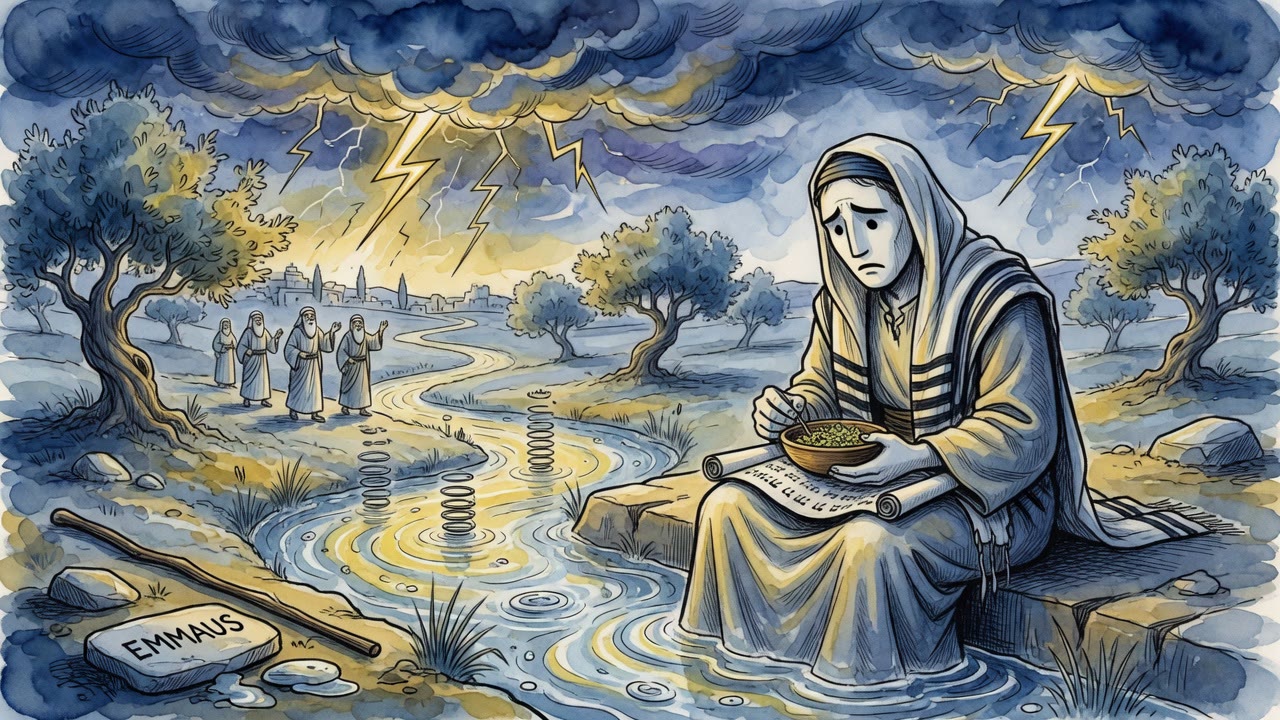
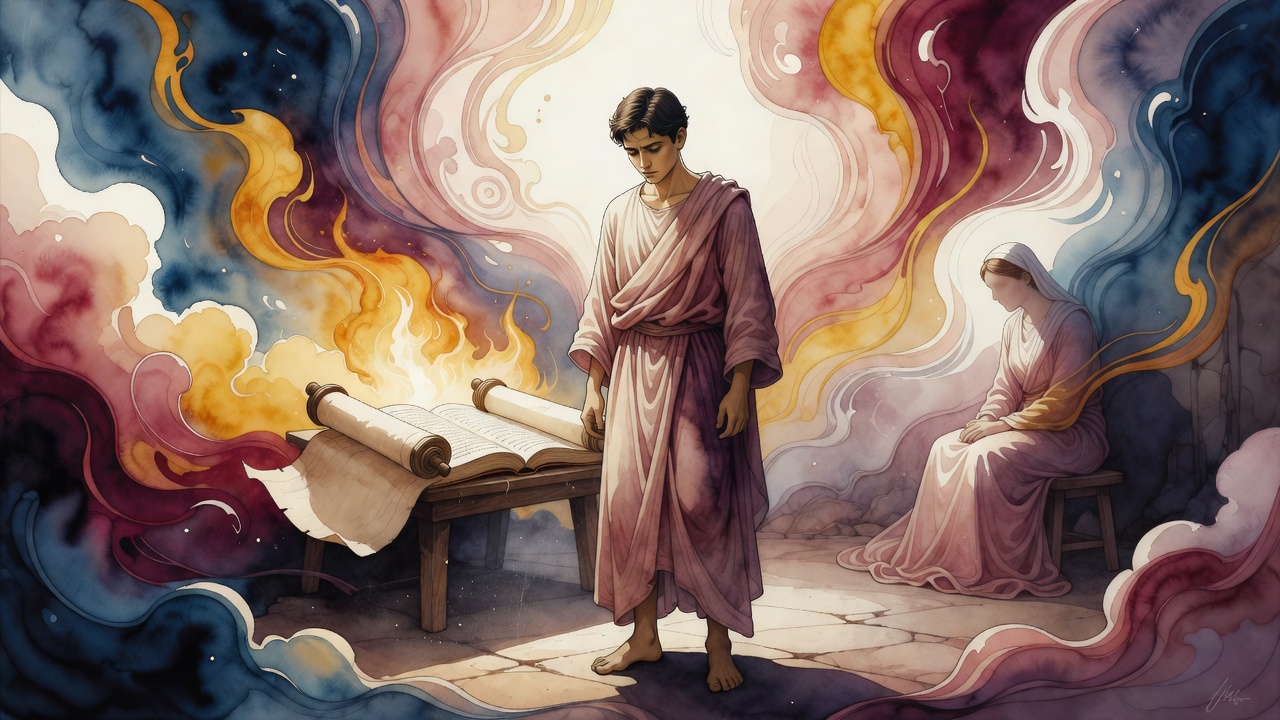
Rabbi Elazar ben Arakh chose the quiet town. Emmaus had good water and soft hills. After Rabbi Yohanan ben Zakkai died, the other disciples packed for Yavneh, the new center of learning. Elazar packed for peace.

Elazar Forgot Liftan Among the Quiet Springs Click for full size

He expected them to follow. A man of his brilliance, he reasoned, was a well. The thirsty come to a well. He sat among orchards and waited for footsteps that never came.

Five Disciples and One Empty Seat

Yavneh smelled of dust and argument. Emmaus smelled of water and fruit. One scent builds a people after catastrophe. The other builds a private afternoon that never ends.

Yohanan had raised five: Rabbi Eliezer ben Horkanos, Rabbi Yehoshua ben Hananya, Rabbi Yosei HaKohen, Rabbi Shimon ben Netanel, and Elazar. While the master lived, they sat at his feet like branches around a trunk. When the trunk fell, four went where the work of Israel went. One went where the scenery was better.

Elazar's wife saw his restlessness when the months stretched. He wanted to rejoin the circle. She asked the sharp question first: who needs whom more? He insisted they needed him. She answered with a picture that stuck in the teeth of the story forever. A leather container of food and mice. Which goes to which? The mice to the container, or the container to the mice?

He stayed. The container of wisdom sat full and still. Mice, if they exist, prefer travel.

When Wisdom Spoils Like Bread

He still wore the title of disciple in other men's mouths. Titles do not review mishnah at dawn. Only the daily grind of question and answer keeps a mind from going soft at the center.

Learning is not a jar that seals itself. It is bread left on a table. Leave it long enough without use and it hardens, then molds, then turns into something that cannot feed anyone. Elazar's brilliance did not explode in a public scandal. It thinned. Day by day the edge of his recall went dull against the soft life of Emmaus.

The sages finally came to visit. They brought a question of purity and bread, a point about liftan, the relish eaten with a loaf. It was not the hardest problem in the house of study. It was ordinary halakhic weather. Elazar opened his mouth and found no word. He had forgotten what liftan meant.

The room went quiet in a different way than Gamliel's humiliation. This silence was pity mixed with shock. The student once called a springing fountain could not name a dish on the table.

Who Interprets a Matter

Moses on the mountain did not receive a silent slab and a shrug. He received teaching layered on teaching until the words could walk down into a camp of ordinary people. Interpretation is labor shared across time.

Kohelet asks who is like the wise person, and who knows the interpretation of a matter. The masters answer that the Holy One is the wisest of all, for by wisdom He founded the earth. When Torah was given, its words could have stayed sealed. God became the interpreter for Moses, unfolding sense beneath the letters so that what was hidden in heaven could be understood on earth.

Interpretation is a living bond. It requires mouth to ear, teacher to student, constant return to the text. God did not hand Moses a closed book and walk away. He taught. Elazar, gifted beyond his peers, treated gift as possession. He left the chain of mouths and ears. The chain continued without him. When he tried to reenter, the simplest link was gone.

The Cost of Scenic Exile

Emmaus was not wicked. Good water is not a sin. The danger was the story he told himself: that colleagues would come, that wisdom waits patiently for its owner, that brilliance is a cistern rather than a river. Rivers stop when cut from the source. Cisterns crack in heat.

The disciples at Yavneh kept arguing, forgetting, remembering, correcting one another. Friction kept their learning alive. Elazar had scenery and a clever wife and a mind that slowly went quiet. When the test came, the quiet answered for him.

He remains in the tradition as a warning with a human face. Not every loss of Torah is persecution. Some losses are comfort. Some are the decision to be a container waiting for mice.

They did not mock him in the street. They left him with the sound of his own silence. That silence is the true ending of the Emmaus chapter: not scandal, but a blank where a definition of relish used to be.

Yohanan had praised Elazar as an ever-flowing spring. Springs stop when their underground feed is cut. The praise became an epitaph for a gift that needed company.


← All myths

From the tradition

Sources

2 sources

The texts behind this telling. Some cards carry a translation of the source; others are our own retelling of it, and each card says which. Every card links out to the original.

Kohelet Rabbah 7:2Kohelet Rabbah

Retold in our words. Read the original at the link below.The Sefaria Midrash Rabbah, 2022 · CC-BY

These questions, and more, bubble to the surface as we explore a fascinating passage from Kohelet Rabbah, a collection of rabbinic interpretations on the Book of Ecclesiastes.

Our story begins with Rabbi Yoḥanan ben Zakkai, a towering figure in Jewish history. He had five exceptional disciples, each a luminary in their own right. You might recognize their names from Pirkei Avot (Ethics of the Fathers 2:8): Rabbi Eliezer ben Horkanos, Rabbi Yehoshua ben Ḥananya, Rabbi Yosei HaKohen (a priest), Rabbi Shimon ben Netanel, and Rabbi Elazar ben Arakh. While Rabbi Yoḥanan ben Zakkai lived, these students sat at his feet, absorbing his wisdom. But what happened after his death?

They relocated to Yavne, a center of Jewish learning after the destruction of the Second Temple. All except one, that is. Rabbi Elazar ben Arakh, seduced by the allure of a tranquil life, retreated to Emmaus with his wife, a place blessed with good water and scenic views. He expected his colleagues to seek him out. But they didn't.

Eventually, Rabbi Elazar wanted to rejoin his fellow scholars, but his wife dissuaded him. "Who needs whom more?" she shrewdly asked. He insisted they needed him. Her response? A memorable analogy: "A leather container [of food] and mice – which goes to which? The mice to the container, or the container to the mice?" In other words, Rabbi Elazar, the "container" of wisdom, was waiting for the "mice" (his colleagues) to come to him. But his wisdom, like food left too long, began to spoil.

The tragic result? When his former colleagues finally visited, they tested him on a complex point of Jewish law (halakha) regarding ritual purity and the consumption of bread. The question involved the concept of liftan, which means a relish or food item eaten with bread. Rabbi Elazar couldn't answer. He'd forgotten the meaning of liftan! The brilliant student, once overflowing with knowledge, had allowed his learning to atrophy.

The story of Rabbi Elazar serves as a cautionary tale. It highlights the importance of continuous engagement with learning and the dangers of intellectual complacency. It's easy to see the appeal of a peaceful life, but at what cost?

The passage then shifts to Rabbi Yehuda HaNasi, also known simply as "Rabbi," another key figure in Jewish history, renowned as the compiler of the Mishnah (the earliest code of rabbinic law). We learn about the process of appointing leaders in the academy (yeshiva) and the court. Rabbi typically appointed two individuals each year – one to head the yeshiva and another to preside over the court. If they proved worthy, they remained. If not… well, let's just say their tenure was short-lived.

As Rabbi's death approached, he advised his son to appoint all the leaders at once and to appoint Rabbi Ḥanina as their head. But why hadn't Rabbi appointed him himself during his lifetime?

Rabbi Yosei bar Zevid explains that the residents of Tzippori had spoken negatively about Rabbi Ḥanina. But Rabbi Bon offers a more specific reason, found in the Jerusalem Talmud (Ta’anit 4:2). It seems Rabbi Ḥanina publicly corrected Rabbi Yehuda HaNasi's pronunciation of a word from the Book of Ezekiel (7:15) during a lecture. Rabbi Ḥanina had corrected the head of the Sanhedrin (the supreme rabbinic court) in public!

Rabbi, understandably embarrassed, asked where he'd learned that pronunciation. Rabbi Ḥanina replied that he'd learned it from Rav Hamnuna, a renowned Bible expert in Babylon. Rabbi then told him, "When you go there, tell him that I appointed you to serve as an elder.” But Rabbi Ḥanina knew this was not going to happen during Rabbi’s lifetime.

After Rabbi’s death, his son sought to appoint Rabbi Ḥanina, but he declined, deferring to Rabbi Afes of the south. Another elder present declared that if Rabbi Ḥanina was appointed first, he would be second, and if Rabbi Afes was appointed first, he would be second. Rabbi Ḥanina then agreed to be appointed third and lived a very long life! He attributed his longevity either to his act of deference or to his habit of detouring to visit Rabbi Shimon ben Ḥalafta on his journeys. It's a beautiful reminder that humility and honoring others can bring unexpected blessings.

Finally, the passage turns to Moses and his frustrations with the Israelites in Egypt. "For exploitation disconcerts a wise man," the verse states, referencing the rebellion of Datan and Aviram. Their actions, according to this interpretation, caused Moses to lose his patience, even leading him to question God's plan.

God, in turn, reminds Moses of his own limitations, saying, "You are flesh and blood and unable to bear them." God then assures Moses that He, the merciful Lord, will ultimately redeem the Israelites. This section emphasizes the importance of patience and understanding, even in the face of adversity. It also highlights the contrast between human limitations and divine mercy.

Perhaps it’s a reminder that wisdom isn't a static possession, but something that requires constant cultivation. Maybe it's a lesson in humility, recognizing that even the most learned among us can benefit from respecting others. Or perhaps it's a call to remember that even in moments of frustration and doubt, divine mercy and understanding are always present.

Full source
Midrash Tanchuma Buber, Chukat 16:1Midrash Tanchuma Buber, Chukat

Translation of the source text.Midrash Tanchuma (Buber), Public Domain, on Sefaria · CC-BY-SA

"Who is like the wise person, and who knows the interpretation of a matter?" (Ecclesiastes 8:1). {There are many lines of interpretation in Scripture, but so as not to trouble before our masters, let us open the matter of our need.} "Who is like the wise person?", this is the Holy One, blessed be He, of whom it is said, "The LORD by wisdom founded the earth" (Proverbs 3:19). "And who knows the interpretation of a matter?", this is the Holy One, blessed be He, who interpreted the Torah for Moses.

Full source