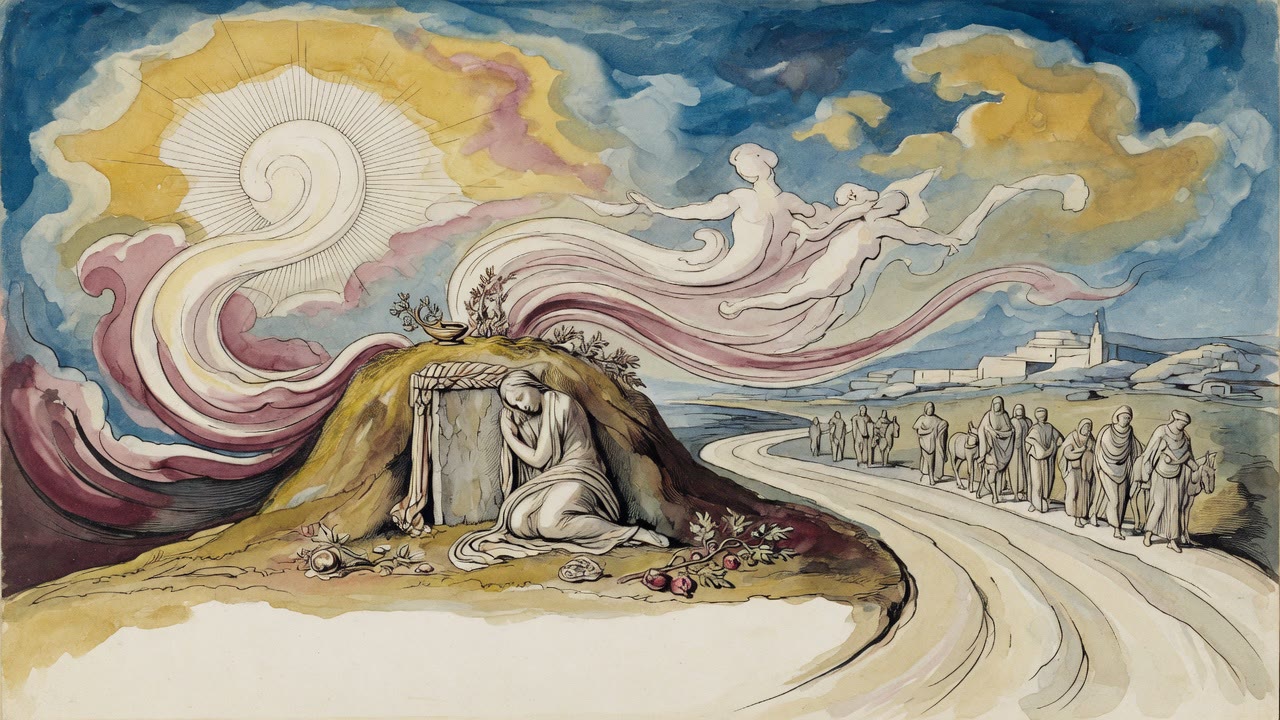
Akiva Carries an Unburied Corpse Toward Torah
Until forty, Akiva could not read a single letter. He tended flocks. Then he found a stranger's body in a field, unclaimed, with birds already at work.
Table of Contents
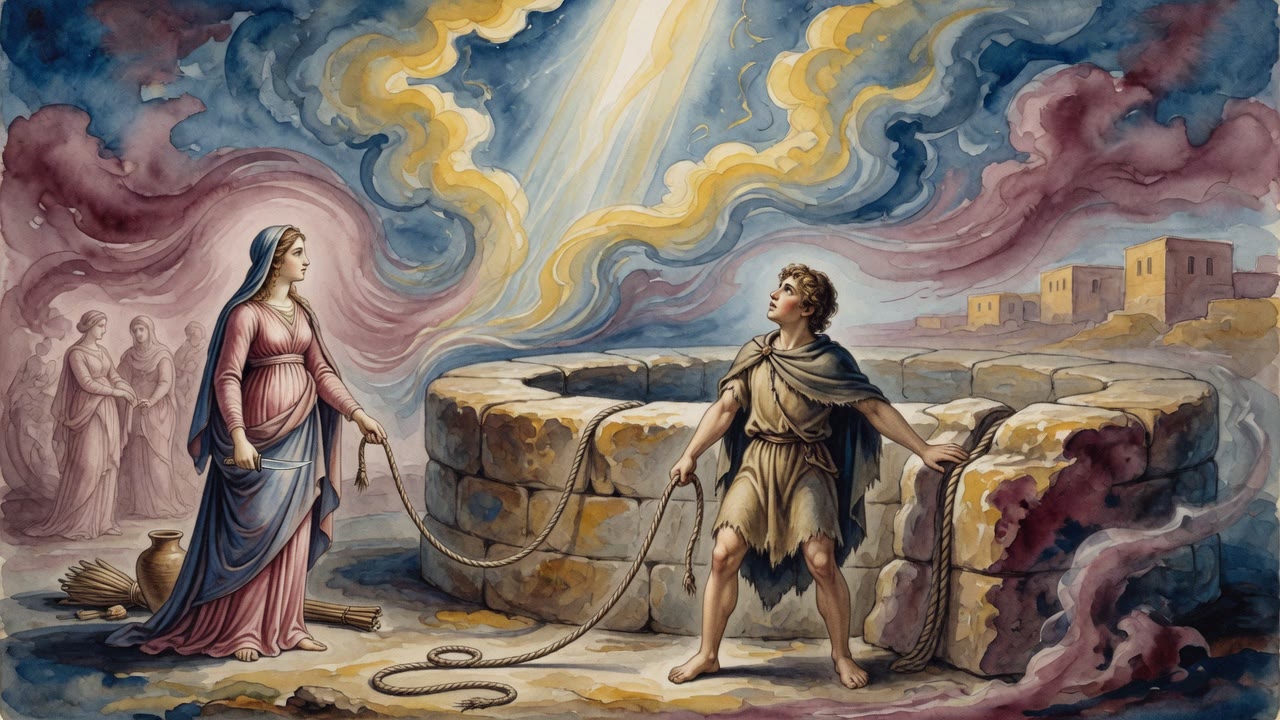
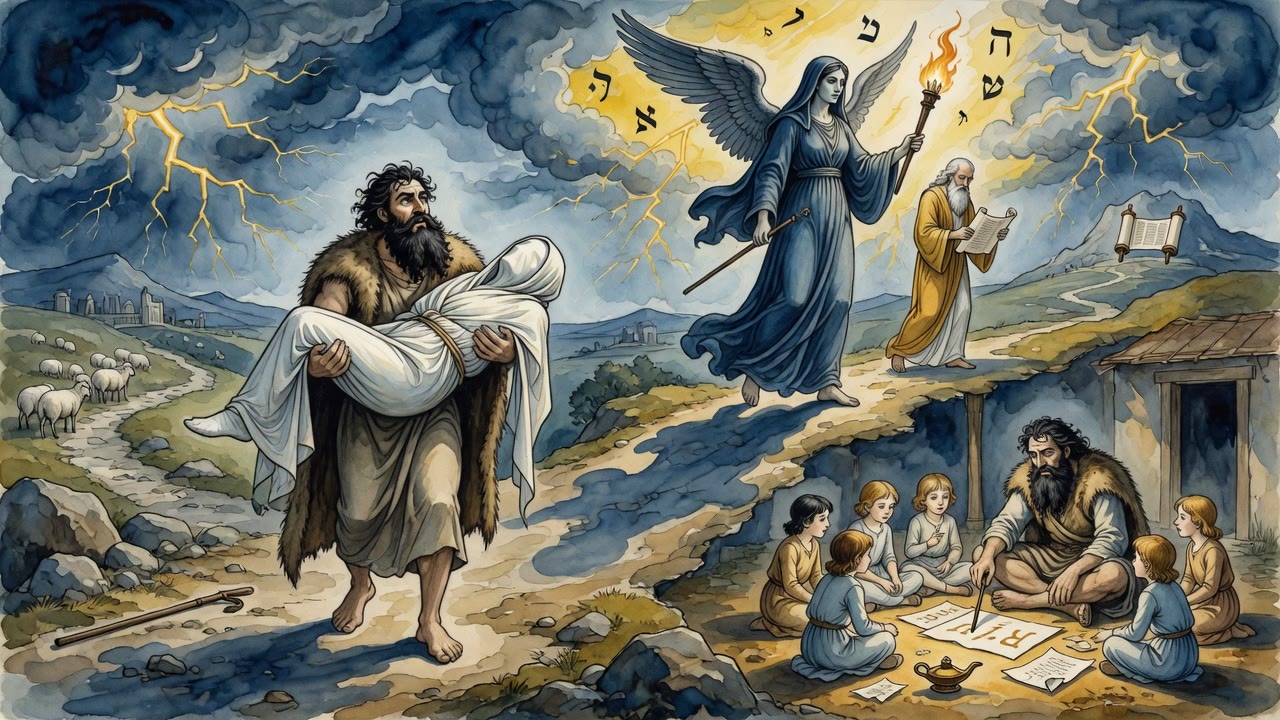
Until the age of forty, Akiva could not read a single letter. He tended flocks and knew the weight of a ewe better than the shape of an alef. One day in the countryside he found an unburied corpse lying in a field. No one had claimed it. Birds had already begun their work. The body lay open to sun and shame.
 Click for full size
Akiva did not yet know the tractates that command burial. He knew in his bones that this was wrong. He lifted the stranger onto his shoulders and carried him to the nearest town, where he arranged a proper grave. The mitzvah was pure compassion, done without learning. The experience shook him into questions. Why does Jewish law command this? What else is written that he had never heard? What did the scholars read so carefully in the synagogue scrolls?
The Schoolhouse and the Wife Who Pushed Him
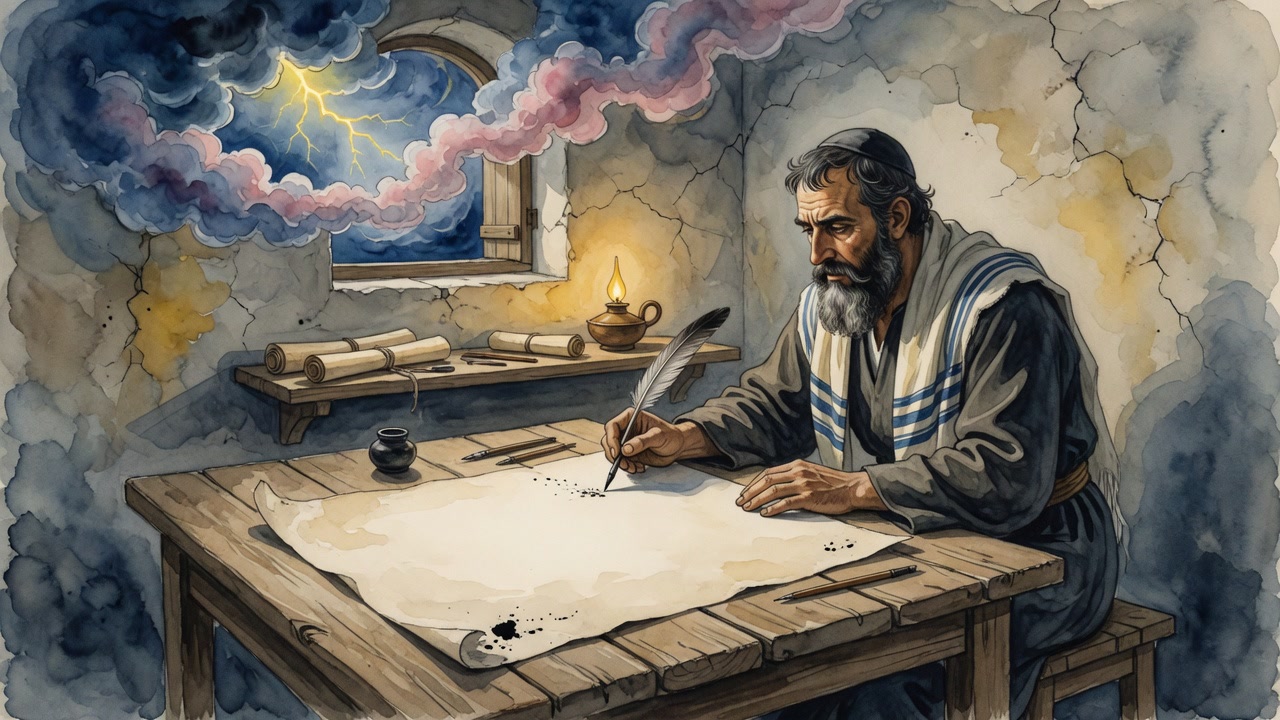
The questions led him to a schoolhouse, where he sat among children half his age and learned the alphabet for the first time. His wife Rachel had married him despite poverty and ignorance and pushed him toward study when pride might have kept him with the sheep. Twelve years later he returned as one of the sharpest minds of his generation, with thousands of students hanging on his words.
The tale refuses the romance that Torah begins with brilliance. It begins with a body on a back. Akiva's first mitzvah (a commandment), burying an abandoned stranger, was the seed from which a forest of wisdom grew. Learning without that seed can become decoration. Learning after that seed becomes rescue.
The Student Who Studied Without Sound
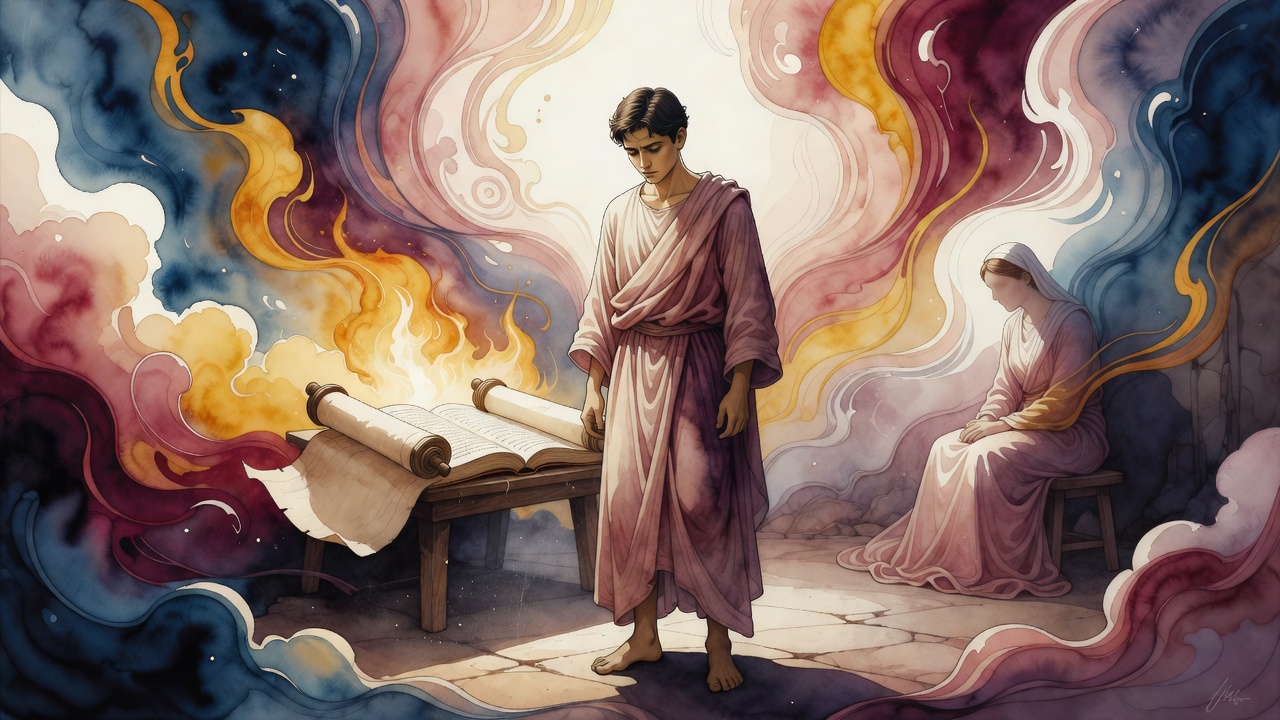
Rabbi Eleazar ben Jacob offered the opposite caution from another angle. So constant was he in learning that even in the heat of the bathhouse he stood and turned study over in his mind. Faithfulness hid a flaw. He kept his lips closed. He reviewed in silence, never giving the words voice. The words slipped away. He fell ill, and his Torah was forgotten. What stripped him? Only this: his lips had stayed shut.
Proverbs had warned that in all toil there is profit, but the talk of lips leads only to want when the lips refuse the labor of Torah. The one who wearies himself over the words gains. The one who holds back ends in lack. Torah held only in silence is Torah already on the road to loss. Akiva, starting from zero, would learn to speak the letters aloud until they lived in muscle.
Fear Before Wisdom, Deeds Before Display
Rabbi Hanina ben Dosa said: he whose fear of sin comes before his wisdom, his wisdom shall endure; but he whose wisdom comes before his fear of sin, his wisdom shall not endure, as it is stated, "The fear of the Lord is the beginning of wisdom" (Psalms 111:10). He used to say also: he whose deeds exceed his wisdom, his wisdom shall endure; but he whose wisdom exceeds his deeds, his wisdom shall not endure, as Israel said at Sinai, "We will do and obey."
Rabban Yochanan ben Zakkai painted the types. Learned and sin-fearing: a craftsman with tools in his hand. Learned but not sin-fearing: a craftsman with no tools. Sin-fearing but not learned: no craftsman, though he holds tools. Rabbi Eleazar ben Azariah added the tree by the water with few branches and many roots, unmoved by four winds, against the desert tree with many branches and few roots that topples in the first gale.
What Akiva Carried into the Study House
Akiva entered learning already holding the tool Hanina named: fear of wronging a human body. He did not begin with cleverness. He began with a corpse that needed a grave. That order is why his wisdom could endure the storms that later tore his generation. He had roots before he had branches.
Eleazar ben Jacob's silent loss warns the other flank. Even deep review dies if it never becomes speech and deed in the open air. Avot DeRabbi Natan keeps the craftsman images so no one confuses shelves of knowledge with a life that can cut and build. The shepherd who carried a stranger and the sage who forgot unspoken Torah and the tree with many roots are one curriculum: start with reverence, give words a voice, let deeds outrun display.
The corpse had a weight that no proverb can lighten. Akiva's shoulders learned a law before his mouth did. In later years, when he expounded stacked interpretations, students would forget that his curriculum began with carrion birds and a field. He did not. Men who start with abstraction often treat bodies as illustrations. Men who start with bodies treat abstraction as a tool for protection.
Rachel's insistence that he study is its own midrash on partnership. She saw more than a shepherd. She saw a mind that had already chosen dignity for a stranger and could therefore be trusted with the dignity of words. The twelve years apart are not a romance novel. They are a cost ledger. Wisdom that endures is often paid for in someone else's loneliness as well as the student's sleep.
Hanina ben Dosa's order, fear before wisdom, is the abstract title of Akiva's biography. Eleazar ben Jacob's forgotten silent Torah is the warning label. Speak the learning. Do the learning. Let roots run deeper than branches. The craftsman images of Yochanan ben Zakkai are almost crude on purpose. A tool in the hand means nothing if the hand will not build, and a skilled hand means nothing if it will not refuse sin. Akiva's path keeps failing those who want genius without reverence.
← All myths